Boots for Ohio Mud and Snow
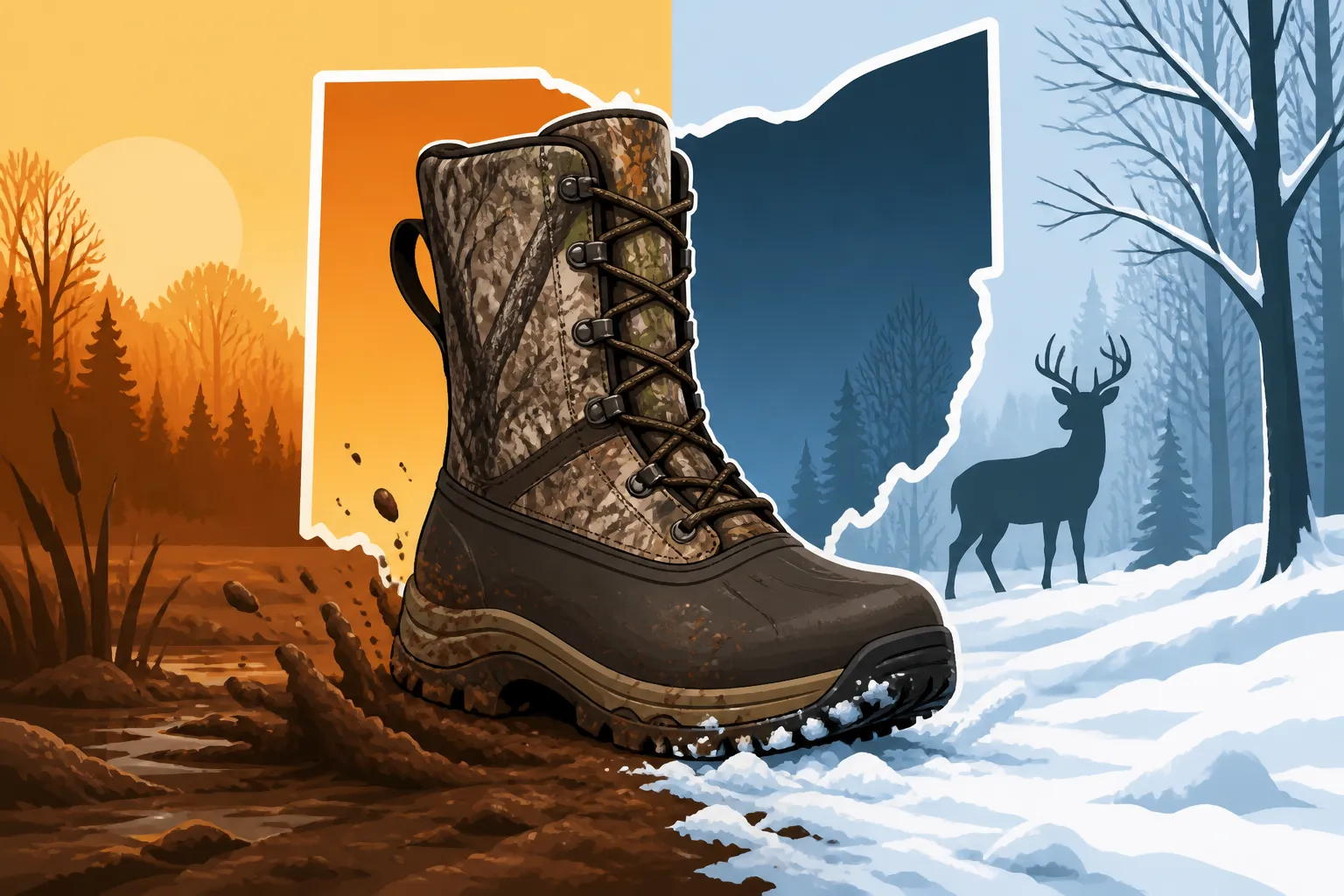
There's nothing quite like the feeling of cold, wet feet to ruin an otherwise perfect day in the Ohio woods. Whether you're slogging through late-fall mud that seems to swallow your boot whole, or breaking trail through crunchy, wet snow during muzzleloader season, the wrong footwear can turn a productive hunt into a miserable ordeal. This comprehensive guide will walk you through everything you need to know about choosing the best hunting boots to keep your feet warm, dry, and comfortable, no matter what Ohio's unpredictable weather throws your way.
Understanding Ohio's Winter Footwear Challenges
Ohio's hunting seasons, particularly for deer, stretch well into the colder months, covering a wide range of challenging conditions. It's rarely a simple "cold and dry" situation here; instead, we often face a messy mix that demands adaptable and reliable footwear.
The Mud Season Realities
Ask any Ohio hunter, and they'll tell you: mud is a constant companion from late archery season through the entire gun season. Early fall might be dry, but once the leaves drop and the rains begin in October and November, many areas, especially in the central and southern parts of the state, become a veritable quagmire. This isn't just a minor inconvenience; deep, sticky mud poses several problems for hunters. It can suck the boot right off your foot if it's not laced properly, it adds significant weight to every step, and it makes quiet movement nearly impossible. Worse yet, mud can compromise your scent control efforts, as it clings to your boots and can carry human odors far afield. For those Hunting Northwest Ohio Farmland Deer, where field edges can turn into a greasy mess after a rain, or Hunting Ohio River Valley Ridges where drainage can be poor, a boot built for mud is non-negotiable.
Navigating Ohio's Snow and Ice
While we might not get the consistent, deep snow of more northern states, Ohio certainly gets its share of winter precipitation. This often comes in the form of wet, heavy snow that quickly turns to slush during a mid-day thaw, or freezing rain that coats everything in a treacherous layer of ice. Hunting during Ohio's Two-Weekend Gun Deer Season or Muzzleloader Deer Hunting in Ohio almost guarantees you'll encounter some form of frozen precipitation. Wet snow saturates uninsulated or poorly waterproofed boots, leading to quickly chilled feet. Slush is even worse, as it acts like an icy bath, seeping into every crevice. Icy trails and frozen ground demand superior traction to prevent slips and falls, especially when navigating uneven terrain or climbing into a stand. A good boot ensures you can maintain your footing, whether you're Tracking a Deer in Fresh Ohio Snow or just walking back to the truck after a long day.
Key Features to Look for in Ohio Hunting Boots
When you're trying to decide which boots to invest in, there are a few critical features that should rise to the top of your list for Ohio's hunting environment. Skimping on these will almost always lead to regret.
Waterproofing is Non-Negotiable
Seriously, if your boots aren't waterproof in Ohio, you might as well be wearing sponges. Between the mud, slush, dew-covered fields, and creek crossings, your feet are constantly battling moisture. Look for boots that explicitly state they are waterproof and use proven technologies. Brands often use membranes like Gore-Tex, or their own proprietary waterproof-breathable barriers. These membranes work by having billions of tiny pores that are too small for liquid water molecules to pass through from the outside, but large enough for water vapor (sweat) to escape from the inside. This balance is crucial for keeping your feet dry from both external moisture and internal perspiration. Don't confuse "water-resistant" with "waterproof"; for Ohio, you need the full waterproof seal.
Insulation for Cold Ohio Stands
Ohio winters can be surprisingly bitter, especially when you're sitting still on a deer stand for hours during Cold-Weather Sitting Strategy in Ohio. The amount of insulation you need depends largely on your activity level and when you plan to hunt. Insulation is typically measured in grams (e.g., 200g, 400g, 800g, 1000g, 1200g, or even more).
- 200-400 grams: Good for early season hunts when temperatures are cool but not freezing, or for highly active hunts where you're constantly on the move.
- 600-800 grams: A solid all-around choice for typical Ohio late-fall and early-winter conditions, suitable for moderate activity and stand sitting down to freezing.
- 1000 grams and up: Essential for prolonged sits in frigid temperatures, especially during Muzzleloader Tactics in January Cold or Hunting the Ohio Early-January Muzzleloader Week. These boots prioritize warmth above all else, often at the expense of some bulk.
Remember, a boot's insulation isn't the only factor; the type of sock you wear and how well the boot fits (not too tight, allowing blood flow) also play huge roles in keeping your feet warm.
Traction for Slippery Terrain
Walking through Ohio's public lands, whether it's the steep, leaf-covered slopes of Wayne National Forest or the slick, frozen furrows of a harvested cornfield, demands excellent traction. A boot's outsole is its connection to the ground, and a good one can prevent a nasty fall. Look for several key features:
- Deep, Multi-Directional Lugs: These deep indentations on the sole bite into soft ground, mud, and snow, providing grip. Multi-directional patterns help with traction in various directions, not just straight ahead.
- Aggressive Heel Brake: A distinct heel edge helps prevent slipping when descending steep hills, especially important in the rugged terrain of southeastern Ohio.
- Rubber Compound: Softer rubber compounds generally offer better grip on wet and icy surfaces, though they might wear slightly faster. Some specialized boots incorporate ice-gripping compounds. When comparing options, paying attention to the sole design can make a big difference in your confidence and safety while navigating uneven and slippery ground.
Types of Boots for Specific Ohio Hunting Scenarios
Just as you wouldn't use the same rifle for squirrel hunting as you would for deer, different Ohio hunting scenarios often call for different types of boots. Understanding the strengths and weaknesses of each style can help you build a well-rounded hunting footwear wardrobe.
Rubber Boots for Mud and Waterfowl
Rubber boots are perhaps the quintessential Ohio hunting boot, and for good reason. Their seamless construction means they are inherently 100% waterproof, making them ideal for the notoriously wet and muddy conditions that plague many of our hunting seasons. They excel when you're Hunting Lake Erie Marsh Zone Waterfowl or slogging through flooded timber and muddy farm fields where you expect to encounter standing water or deep muck.
The primary advantage of rubber boots is their imperviousness to water and mud, but a significant secondary benefit is their scent-neutrality. Unlike leather or synthetic fabric boots that can absorb and radiate human scent, rubber boots do a much better job of containing odors, a crucial factor when you're after wary whitetails. Modern rubber boots also come with varying levels of insulation, from uninsulated models perfect for warm early archery days to heavily insulated versions (often 1000g or more) designed for bitter cold duck blinds or Muzzleloader Tactics in January Cold. The main drawbacks are breathability (they can get sweaty, especially when active) and generally less ankle support than lace-up models, which can be a concern on very steep or rocky terrain. For many hunters, a pair of Rubber Boots for Mud Season Hunting is an absolute necessity.
Insulated Leather/Synthetic Boots for Deer Hunting
For hunters who spend more time traversing challenging terrain or need superior ankle support for long walks, a good pair of insulated leather or high-quality synthetic hiking-style hunting boots is often the preferred choice. These boots offer a blend of durability, support, and breathability that rubber boots can't match.
Leather and synthetic boots typically feature a robust lacing system that allows for a customized, snug fit, providing excellent ankle stability—a huge plus when navigating the steep, broken ground of places like Shawnee State Forest or Zaleski State Forest. While they are waterproof thanks to internal membranes, they do require more care and conditioning to maintain their waterproofing compared to rubber. The breathability of these boots is generally superior, which helps manage foot sweat on more active hunts. They come in a wide range of insulation levels, making them versatile for everything from crisp November rut hunts to the colder parts of gun season. Many hunters find these to be their go-to for Hunting the Ohio Rut in Early November or for covering ground while Still-Hunting Shawnee State Forest Ridges. When looking for durable hunting gear, many popular outdoor brands are often reviewed and recommended by resources like GoHunt.
Pac Boots for Extreme Cold and Late Season
When the mercury truly plummets, and you're committed to a long, static sit during Ohio's late deer season, pac boots step in where other boots might fail. These are typically heavy-duty, over-the-calf boots characterized by a removable inner liner made of felt, wool, or synthetic insulation, encased in a waterproof rubber lower shell and a durable leather or synthetic upper.
Pac boots are designed for maximum warmth in brutally cold, inactive conditions. The removable liner is a key feature, as it allows you to easily dry out any moisture at the end of the day, preventing that clammy feeling that leads to cold feet. They are often rated for temperatures well below zero and are truly meant for extreme cold. However, their bulk and weight make them less suitable for long, active hikes. They also offer less dexterity and feel for the ground. For those intrepid souls Hunting Deer After a January Thaw that turns into a deep freeze, or those committed to all-day stands during the coldest days of Muzzleloader Deer Hunting in Ohio, a good pair of pac boots can be a game-changer. These are specialized tools for specific, demanding conditions, ensuring your feet stay warm even when everything else is numb.
Fit, Care, and Longevity for Your Ohio Boots
Even the best, most expensive hunting boots are useless if they don't fit right or aren't properly maintained. Taking the time to get these details right will dramatically improve your comfort and extend the life of your investment.
Getting the Right Fit and Break-In
Choosing the right size and fit is paramount. Many hunters mistakenly buy boots that are too tight, especially with heavy socks, which constricts blood flow and leads to cold feet and blisters.
- Try Before You Buy: Always try on boots with the specific type of hunting socks you plan to wear. Do this later in the day when your feet are slightly swollen.
- Room to Wiggle: You should have enough room to wiggle your toes, and your heel should lift only slightly. Too much heel lift will cause blisters.
- Insoles: Don't underestimate the power of aftermarket insoles. They can significantly improve comfort and support, especially for long days on your feet.
- Break Them In: New boots, especially those with stiff leather, need a break-in period. Wear them around the house, then on short walks, gradually increasing the distance before taking them on a full-day hunt. This helps the boot conform to your foot and prevents painful blisters in the field. This advice is critical for any hunter, whether they are Hunting Small Private Tracts in Ohio or deep in public land.
Maintenance for Maximum Lifespan
Ohio's wet, muddy, and sometimes icy conditions are tough on footwear. Proper care isn't just about keeping your feet dry; it's about making your boots last.
- Clean Immediately: After every hunt, especially if your boots are covered in mud, clean them off. Mud can dry and crack leather or rubber, and acids in soil can degrade materials over time. Use a stiff brush and water.
- Dry Properly: Never dry boots by a direct heat source (like a campfire or radiator), as this can damage leather, adhesives, and waterproof membranes. Instead, remove insoles, unlace the boots fully, and let them air dry in a well-ventilated area. Boot dryers with gentle, circulating air are excellent investments.
- Condition Leather: For leather boots, periodically apply a good quality leather conditioner to keep the leather supple and prevent cracking. This also helps maintain its water resistance.
- Store Properly: When not in use, store your boots in a cool, dry place away from direct sunlight. Don't leave them stuffed in a bag or trunk where moisture can accumulate and lead to mildew.
Socks: The Unsung Hero of Foot Comfort
You can have the best boots money can buy, but if you're wearing the wrong socks, your feet will still be miserable. Socks are absolutely critical for moisture management and insulation.
- Material Matters: Avoid cotton at all costs. Cotton absorbs moisture and holds it against your skin, quickly leading to cold, clammy feet and blisters. Opt for wool (like Merino wool) or synthetic blends designed for athletic performance. These materials wick moisture away from your skin, even when wet, helping your feet stay dry and warm.
- Layering: For colder weather, consider a layering system: a thin, synthetic liner sock to wick moisture, and a thicker wool or synthetic outer sock for insulation. This also helps prevent friction and blisters.
- Fit: Socks should fit snugly without being too tight. Bunched-up socks create pressure points and can cause blisters.
Remember, truly warm feet start with dry feet. No amount of insulation will save you if your socks are saturated with sweat or external moisture. Pairing quality Insulated Boots for All-Day Sits with the right socks is essential for success during the brutal Hunting the Second Gun Weekend Before Christmas.
Popular Brands and Where to Find Ohio-Ready Boots
When you're outfitting yourself for the challenging conditions of Ohio hunting, there are several brands that consistently deliver quality and performance in hunting boots. It's worth exploring their offerings to find the pair that best suits your needs and budget.
Brands Known for Durability and Performance
While specific models and features change, some brands have a long-standing reputation for producing reliable hunting footwear that holds up to the rigors of the field. Companies like Kenetrek, Schnee's, Crispi, and Danner are often lauded for their high-quality leather and synthetic boots, offering excellent support, durability, and waterproofing for challenging terrain and conditions. For rubber boots, Muck Boot Company, LaCrosse, and Bogs are household names, renowned for their 100% waterproof construction and varying levels of insulation, making them staples for muddy fields and swampy areas.
When researching these brands, you'll find that many outdoor gear review sites and hunting publications, including resources like GoHunt, often feature detailed breakdowns and comparative analyses of different models. These reviews can be incredibly helpful in understanding how a particular boot performs in real-world scenarios, offering insights into things like traction on wet rocks, breathability during active hunts, or how well the insulation holds up during an extended sit in sub-freezing temperatures. They can guide you towards options best suited for the specific demands of Hunting Ohio Farmland Deer or the rugged hills of Hunting Southeast Ohio Appalachian Foothills.
Local Versus Online Shopping Considerations
Deciding where to buy your hunting boots involves weighing the benefits of a physical store against the vast selection of online retailers.
- Local Outdoor Retailers: Shopping at a local outdoor gear store or sporting goods shop offers a huge advantage: you can try the boots on. This is absolutely critical for fit. You can walk around the store, feel the weight, test the ankle support, and ensure there are no pressure points with your preferred hunting socks. Local experts can also offer personalized advice based on their own experiences with Ohio hunting conditions. They can explain the nuances of different insulation types and sole patterns face-to-face.
- Online Retailers: Online stores offer an unparalleled selection, often at competitive prices. You can research dozens of brands and models from the comfort of your home. However, the obvious drawback is the inability to try them on. If you opt for online, make sure the retailer has a generous return policy, allowing you to try them on at home and return them if the fit isn't perfect. Reading extensive customer reviews can help, but nothing beats actually putting the boots on your feet. For specialized needs, like finding a boot for Hunting Small Woodlots Near Suburban Columbus that might require specific features, online research can lead you to niche options.
Ultimately, whether you choose to buy local or online, prioritize fit and suitability for Ohio's varied terrain and weather.
Comparing Boot Types for Ohio Hunters
To give you a clearer picture, here's a quick comparison of the primary boot types we've discussed, highlighting their typical advantages and disadvantages for Ohio hunting.
| Feature | Rubber Boots | Insulated Leather/Synthetic Boots | Pac Boots |
|---|---|---|---|
| Waterproofing | Excellent (100% seamless) | Very Good (membrane-based, requires care) | Excellent (rubber lower, insulated upper) |
| Insulation | Varies (uninsulated to 1600g+) | Varies (200g to 1200g) | Excellent (often 1200g+ or extreme ratings) |
| Traction | Good (deep lugs, can be slick on ice) | Very Good (aggressive soles, specialized compounds) | Good (but bulk can reduce ground feel) |
| Ankle Support | Minimal to Moderate | Excellent (lace-up, stiff uppers) | Moderate (due to bulk) |
| Scent Control | Excellent (minimal scent absorption) | Moderate (can absorb human scent) | Good (rubber lower, removable liner) |
| Breathability | Low (can cause sweaty feet) | Moderate to Good (membrane allows vapor escape) | Low (designed for extreme cold, not airflow) |
| Durability | Good (puncture resistance varies) | Excellent (if well-maintained) | Excellent (heavy-duty materials) |
| Best Use Case | Mud, swamps, waterfowl, still hunting (scent) | Active hunting, rugged terrain, cold weather | Extreme cold, prolonged static sits |
Choosing the right boots for Ohio hunting isn't about finding one magical pair that does it all, but rather understanding your typical hunting conditions, activity levels, and personal comfort needs. Investing in quality footwear, and taking good care of it, will pay dividends in comfort, safety, and ultimately, enjoyment of your time in the field. So, lace up, step out, and enjoy what Ohio's wild places have to offer!
Disclaimer
This article is for general informational purposes only and does not constitute professional advice. Laws, prices and regulations vary by location and change over time. Consult a qualified professional for guidance on your specific situation.