Hunting Southeast Ohio Appalachian Foothills
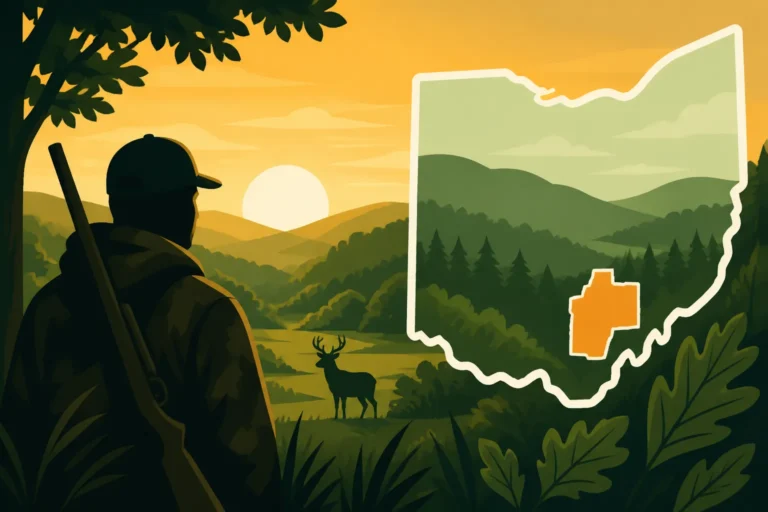
Let's be real, the Appalachian foothills of Southeast Ohio aren't for the faint of heart. This isn't flatland hunting where you can see for miles across a field. We're talking about steep climbs, deep hollers, thick timber, and winding ridges that can test even the most seasoned hunter's resolve. But for those willing to put in the work, these rugged hills hold some incredible opportunities for deer, turkey, and small game. This guide is all about equipping you with the knowledge and tactics to not just survive, but truly thrive when hunting this challenging yet rewarding region.
Understanding the Unique Terrain and Habitat of Southeast Ohio
Hunting in Southeast Ohio's Appalachian foothills is a whole different ballgame compared to the flatter, more agricultural parts of the state. The landscape dictates everything, from how animals move to where you should set up your stand. If you want to be successful here, you first have to speak the language of the hills.
The Rugged Landscape of Appalachian Ohio
Imagine an endless series of rolling hills, deep ravines, and narrow creek bottoms. That's the backbone of Southeast Ohio. Elevations can change dramatically over short distances, creating microclimates and distinct travel corridors that deer, turkeys, and other game species use to their advantage. You'll find yourself climbing steep, shale-covered slopes, then dropping into dark, damp hemlock thickets, only to emerge onto a breezy ridgetop overlooking miles of hardwood forest. This constant up and down means your legs will get a workout, but it also creates natural funnels and pinch points that are gold for hunters.
The soil here is often thinner and rockier than in other parts of Ohio, which influences vegetation. You'll see plenty of oak and hickory, but also pines, especially in areas that have been timbered and replanted. Water sources are abundant, with countless small springs and creeks carving their way through the landscape, always something to keep an eye on when scouting. Understanding these subtle shifts in elevation, soil, and water is like deciphering a map that tells you where game will feed, bed, and travel.
Key Habitat Features for Game
The diverse habitat in the Appalachian foothills creates a rich tapestry for wildlife. Hardwood ridges, dominated by oak and hickory, are absolute magnets for deer and squirrels, especially when the mast crop is heavy. These high points offer food and vantage, allowing animals to survey their surroundings. Down in the hollows and along creek bottoms, you'll find thicker undergrowth, often with dense brush and even some evergreen stands like pine or cedar, providing excellent thermal cover during cold snaps and secure bedding areas.
Old logging roads and timber cuts are also critical features. These can act as easy travel routes for deer moving between bedding and feeding areas, or as clearings that attract sunning turkeys. When you scout, look for the edges where different habitat types meet – where a thick pine stand transitions to open hardwoods, or where a steep slope levels out onto a ridgetop. These transition zones are often high-traffic areas for game, offering a mix of food, cover, and travel efficiency. For a deeper dive into scouting this specific type of land, check out Reading Aerial Photos for Southeast Ohio Deer.
Prime Public Hunting Opportunities in Southeast Ohio
One of the greatest gifts of Southeast Ohio is the sheer amount of public land available to hunters. While other regions of the state might be dominated by private farms, the Appalachian foothills boast vast tracts of state and national forest, as well as numerous wildlife areas. This means incredible opportunities for those willing to explore.
Wayne National Forest: A Hunter's Paradise
The Wayne National Forest is a gem, covering over a quarter-million acres across multiple units in Southeast Ohio. It's truly a hunter's paradise if you understand how to navigate it. The terrain within the Wayne is classic Appalachian – steep, timbered hillsides, winding creek drainages, and remote pockets of wilderness. Deer, turkey, and squirrels are abundant, and you'll even find coyotes and other furbearers. Because of its size, you can really get away from the crowds here, especially if you're willing to walk a mile or two from the nearest road.
The key to hunting the Wayne is doing your homework. Different units, like the Athens, Ironton, and Marietta districts, have their own unique characteristics and access points. Some areas might be actively timbered, creating fantastic new growth and cover, while others are mature, unbroken forest. Using a good mapping application like onX Hunt or GoHunt is invaluable here, allowing you to study contour lines, identify potential funnels, and mark remote access points long before you ever step foot in the woods. These apps can highlight old logging roads or trails that aren't visible on standard paper maps, giving you an edge. For more on this vast area, consider Wayne National Forest Hunting.
Ohio State Forests and Wildlife Areas
Beyond the Wayne, Ohio manages several incredible state forests and dozens of wildlife areas in the southeastern part of the state. Places like Shawnee State Forest, often called "Ohio's Little Smokies," offer some of the most rugged and remote hunting experiences in the state. Shawnee State Forest Hunting covers nearly 64,000 acres and is renowned for its older-age class bucks and challenging terrain. Similarly, Zaleski State Forest, Tar Hollow State Forest, and Vinton Furnace State Forest offer substantial acreage with diverse habitats.
Ohio Wildlife Areas, while often smaller than the state or national forests, are typically managed intensively for wildlife. Areas like Woodbury Wildlife Area, Salt Fork Wildlife Area, and Wolf Creek Wildlife Area are great examples. These areas often have a mix of timber, old fields, and even small food plots, providing excellent opportunities for deer, turkey, and small game. The important thing to remember is that rules and regulations can vary slightly between different types of public land, so always check the Ohio Department of Natural Resources (ODNR) website for specific area regulations before you go.
Here's a quick look at some key public land types in Southeast Ohio:
| Public Land Type | Primary Game Species | Typical Terrain | Key Features | Average Hunting Pressure |
|---|---|---|---|---|
| Wayne National Forest | Deer, Turkey, Squirrel, Coyote | Rugged hills, deep hollows | Vast, remote, old logging roads, diverse timber | Moderate to Low (deep) |
| Shawnee State Forest | Deer, Turkey, Squirrel | Very rugged, steep ridges | Remote, mature timber, challenging access | Moderate |
| Other State Forests | Deer, Turkey, Squirrel | Hilly, mixed timber | Managed timber, some remote areas | Moderate |
| Ohio Wildlife Areas | Deer, Turkey, Squirrel, Rabbit | Varied, often flatter near fields | Food plots, clearings, managed habitat, easier access | Moderate to High |
Deer Hunting Strategies for the Hills
Hunting whitetails in the Appalachian foothills requires a distinct approach. You can't just slap a stand up anywhere and expect results. The terrain dictates deer movement in very predictable ways, and learning to read it is your biggest advantage.
Reading the Ridge for Whitetails
Deer in Southeast Ohio are masters of using the topography to their advantage. Ridgetops serve as major travel corridors, especially during the rut, as bucks will cruise them searching for does. But not just any ridgetop. Look for subtle saddles or dips in the ridge line – these are natural funnels where deer prefer to cross, making them prime ambush points. Similarly, benches (flat areas along a hillside) offer deer easier travel and secure bedding spots away from the prying eyes of hunters on the ridgetop or in the valley. A good mapping app can reveal these benches and saddles instantly, helping you narrow down your scouting efforts.
When you're walking a ridge, pay close attention to which side is steeper or has thicker cover. Deer will often bed on the leeward side of a ridge (the side protected from the wind) or on benches overlooking thick cover. Entry and exit routes are crucial; you need to be able to approach your stand silently without alerting deer below or above you. Consider using terrain features, like a small creek bed or a logging road, to mask your approach. Knowing where deer are likely to be bedding, feeding, and traveling, and understanding how the wind and thermals affect those movements, is paramount. For detailed tactics on this, dive into Reading a Ridge for Southeast Ohio Deer.
Still-Hunting and Stand Placement in Steep Terrain
Still-hunting (moving slowly and deliberately through the woods) can be incredibly effective in the Appalachian foothills. The constant elevation changes and thick cover often mean shorter sightlines, making it harder for deer to spot you from a distance. Move into the wind, take a few steps, then stop and glass thoroughly. Use the terrain to break up your silhouette, peeking over ridges or around points. The steepness can also work in your favor, allowing you to gain an elevated position for better visibility or to slip along contours undetected. Remember, in this kind of country, you often hear deer before you see them, so sharp ears are just as important as sharp eyes.
When it comes to stand placement, flexibility is key. Fixed treestands or saddle hunting setups are popular here because they allow you to adapt to changing conditions and specific terrain features. Instead of looking for the "perfect tree" on a flat, open woodlot, you're looking for the perfect feature – that pinch point in a saddle, a well-used trail crossing a bench, or a funnel created by a logging road and a steep drop-off. Always consider the prevailing wind and thermals. Warm air rises and cold air sinks, so understanding how air currents move up and down hillsides at different times of day is critical to keeping your scent out of a deer's nose. Early morning hunts often see thermals pulling your scent downhill, while afternoon hunts have rising thermals. This dynamic means that what works in the morning might not work in the evening from the same stand location.
Turkey Hunting in the Appalachian Foothills
Spring turkey hunting in Southeast Ohio is an experience like no other. The gobblers here are tough, savvy, and often require a lot of legwork to find and call in. But the reward of hearing a thunderous gobble echo through a deep holler is absolutely worth the effort.
Roosting and Calling Tactics
Just like deer, turkeys use the terrain to their advantage. They'll often roost on ridgetops or along the steep sides of hills, preferring tall trees that offer a clear view and a safe perch from predators. In the evenings, you can often "put birds to bed" by listening for their fly-up cackles or doing some locator calling (like an owl hoot or crow call) around sunset. Knowing where a bird is roosted gives you a massive advantage for a morning setup. For more on this, check out Roost Hunting Ohio Gobblers.
Calling tactics in the big woods can be different than in open farm country. Your calls will carry farther, but they can also sound less realistic if you overdo it. Start with soft, subtle calls – a few tree yelps, some soft clucks. Once the bird is off the roost, you can become more aggressive, but always listen to how the bird is responding. A common frustration is when a gobbler "hangs up" on a distant ridge, unwilling to commit. This is where patience and understanding the terrain become critical. Sometimes, you need to circle around and get above the bird, or entice him across a holler by being incredibly realistic and drawing him into a natural travel path. Decoy placement is also key; often a single hen decoy, or a hen and jake, positioned where the gobbler can see them from a distance, can make all the difference.
Run-and-Gun Approaches on Public Land
Given the vastness of the public lands in Southeast Ohio, a run-and-gun approach is often the most effective way to cover ground and find responsive birds. This means moving frequently, stopping to call from different points along a ridge or in a valley, and then moving again if you don't get a response. It's physically demanding, requiring you to navigate steep inclines and dense brush, but it significantly increases your chances of encountering a gobbler.
When moving, try to stay quiet and keep an eye out for fresh turkey sign – tracks, droppings, and scratch marks in the leaves. Focus your efforts on ridgetops, which turkeys use for travel, and look down into saddles or open timber where they might be strutting. If you get a response, quickly assess the terrain. Can you get between him and his hens? Is there a good setup location that offers clear shots and a backrest? Turkeys have excellent eyesight, so setting up against a wide tree or in thick brush is crucial for concealment. Be prepared to move and adapt if the gobbler isn't coming to your calls; sometimes closing the distance or changing your setup is what it takes. For aggressive tactics on public ground, read Run-and-Gun Turkey Tactics on Public Land.
Small Game and Predator Hunting
While deer and turkey get a lot of attention, Southeast Ohio also offers fantastic opportunities for small game and predator hunting. These pursuits are a great way to extend your season, hone your woodcraft, and fill your freezer with delicious wild meat.
Squirrel and Rabbit Hunting in Hardwoods
Squirrel hunting is a cherished tradition in the Appalachian hardwoods, and for good reason. The vast oak and hickory forests provide ample food for both gray and fox squirrels. Early season, when the leaves are still thick, requires patience and good listening skills. Scan the canopies for movement, listen for the tell-tale cutting of nuts, and try still-hunting slowly along ridgetops. As the leaves fall, squirrels become easier to spot, but they also become warier. Concentrate your efforts around areas with abundant mast, especially mature oak groves. Squirrel Hunting Ohio Oak Ridges provides excellent strategies for finding these bushy-tailed critters.
Rabbit hunting often takes place along the edges of the hardwoods, where they meet thick briar patches, old field edges, and creek bottoms. These areas provide the dense cover rabbits rely on for protection. Running beagles is a classic and highly effective method, but still-hunting or employing small drives through thickets can also be productive. Look for areas with tangled vines, downed trees, and brush piles – classic rabbit habitat. These pursuits are not only fun but also a great way to introduce new or younger hunters to the outdoors, teaching them basic hunting skills and ethical practices in a less demanding environment than big game hunting.
Coyote and Predator Hunting in the Big Woods
Coyotes are abundant throughout Southeast Ohio, thriving in the mix of timber and agricultural lands. Hunting them can be a thrilling challenge, especially in the rugged terrain. Calling coyotes is the most popular and often most effective method. Use distress calls (rabbit, fawn, bird) to attract them, but be aware that they are incredibly wary and will often circle downwind to scent check. Because of the hilly terrain and dense cover, setup location is critical. You need to be able to see downwind and have clear lanes of fire, often over shorter distances than in open country.
Night hunting for coyotes is also legal in Ohio with the proper permits and equipment, offering a unique and exciting experience. Thermal or night vision optics can be a huge advantage for spotting these elusive predators in the dark timber. Beyond coyotes, you might also encounter bobcats (though they are not legal to hunt in Ohio), foxes, and raccoons. Predator hunting is a great way to help manage local populations and can provide an adrenaline rush that's hard to beat. Coyote and Predator Hunting in Ohio offers a comprehensive guide to these tactics.
Essential Gear for Mountain Hunting
Hunting the Appalachian foothills of Southeast Ohio demands reliable gear that can stand up to the rugged conditions and keep you safe and comfortable. Skimping on essentials here can lead to a miserable, or even dangerous, experience.
Optics and Navigation Tools
In thick timber and rolling hills, your vision is often limited. That's where good optics come in. A quality pair of binoculars, ideally 8×42 or 10×42, is indispensable for picking apart distant brush, spotting subtle movements, and identifying game in low light. You'll use them constantly, scanning ridges and hollows for any sign of a deer or turkey. Optics for Appalachian Ohio Ridges goes into more detail. A rangefinder is also a must-have, especially with the varied terrain. Distances can be deceptive in hilly country, and knowing the exact yardage to your target is critical for ethical shots, whether you're bowhunting or using a straight-wall rifle.
For navigation, don't rely solely on your phone. While mapping apps like onX Hunt and GoHunt are incredibly powerful for scouting and in-field navigation, battery life can be an issue. Always carry a traditional compass and know how to use it, along with a paper map of your hunting area. These apps allow you to download offline maps, which is essential because cell service is often spotty or non-existent in the deeper hollows of the Wayne National Forest or Shawnee State Forest. Mark your truck, your stand locations, and any significant terrain features you find. Having a backup power bank for your phone is also a smart move.
Clothing and Footwear for Rugged Conditions
Your clothing and footwear choices are paramount for comfort and safety in Southeast Ohio. Layering is key, as temperatures can swing dramatically from early morning chills to warm afternoons, and your exertion level will vary with the steep climbs. Start with a moisture-wicking base layer, add an insulating mid-layer, and top it off with a quiet, durable outer shell that offers protection from wind and rain. Wool or high-quality synthetics are generally preferred over cotton, as they retain insulating properties even when wet. For colder conditions, consider a heavier outer layer, perhaps with a good insulation value. For tips on managing the cold, see Cold-Weather Sitting Strategy in Ohio.
Footwear, however, might be the single most important gear choice. You need sturdy, waterproof boots with excellent ankle support and aggressive tread. The terrain is often uneven, slick with mud, wet leaves, or loose shale, and a twisted ankle far from the road is a serious problem. Invest in high-quality hunting boots that are broken in before you hit the woods. Ensure they are waterproof for those inevitable creek crossings and damp mornings. Blaze orange is a mandatory safety requirement during certain firearms seasons in Ohio, so make sure you have enough to be visible to other hunters. For more on this, check out How Much Blaze Orange Ohio Requires.
Navigating Hunting Pressure and Access
While Southeast Ohio offers vast public lands, it's also a popular destination for hunters. Understanding how to find solitude and respecting the rules are crucial for a successful and enjoyable experience.
Finding Solitude on Public Land
It's no secret that opening day of gun season on Ohio public land can feel a bit like a small army has descended upon the woods. But even on pressured properties, solitude can be found if you're willing to work for it. The general rule of thumb is: the farther you walk from a road or parking area, the fewer hunters you'll encounter. Most hunters stick close to easy access points, so venturing a mile or two (or more!) into the deeper recesses of Wayne National Forest or a large state forest will often put you into untouched territory. Using a mapping app to identify remote access points, or parking at less obvious spots, can also give you an edge. Check out Finding Ground Others Walk Past for more on this.
Another tactic is to hunt during less popular times. Weekdays, especially outside of opening weekends, generally see significantly less pressure. The late archery season or the muzzleloader season in January can also offer quieter woods. Don't be afraid to explore areas that look "too steep" or "too thick" on a map; these are often overlooked by other hunters and can hold pockets of undisturbed game. Remember, deer and turkeys are incredibly good at finding these safe havens, and if you can navigate the difficult terrain, you might just find your private honey hole.
Understanding Public Land Rules and Ethics
Hunting on public land comes with responsibilities. First and foremost, always know and follow the specific regulations for the area you're hunting. This includes season dates, bag limits, legal implements, and any unique rules (like restrictions on ATVs or tree stand setup). The ODNR website is your best friend here. Beyond the written rules, there are unwritten rules of etiquette and ethics. Be respectful of other hunters. If you arrive at a parking area and see another vehicle, consider moving to a different spot to give everyone space. If you encounter another hunter in the woods, a simple wave and a friendly nod are usually sufficient.
When setting up treestands on public land, always follow the rules regarding when stands can be placed and removed, and ensure they are clearly marked with your name and address or hunter ID. Take out everything you bring in, including trash, spent shells, and any flagging tape you used for marking trails. Being a good steward of the land ensures that these valuable hunting opportunities remain available for future generations. For questions about specific public land regulations, the Scouting Ohio Public Land Before Season post offers a lot of useful information.
Disclaimer
This article is for general informational purposes only and does not constitute professional advice. Laws, prices and regulations vary by location and change over time. Consult a qualified professional for guidance on your specific situation.