Optics for Appalachian Ohio Ridges
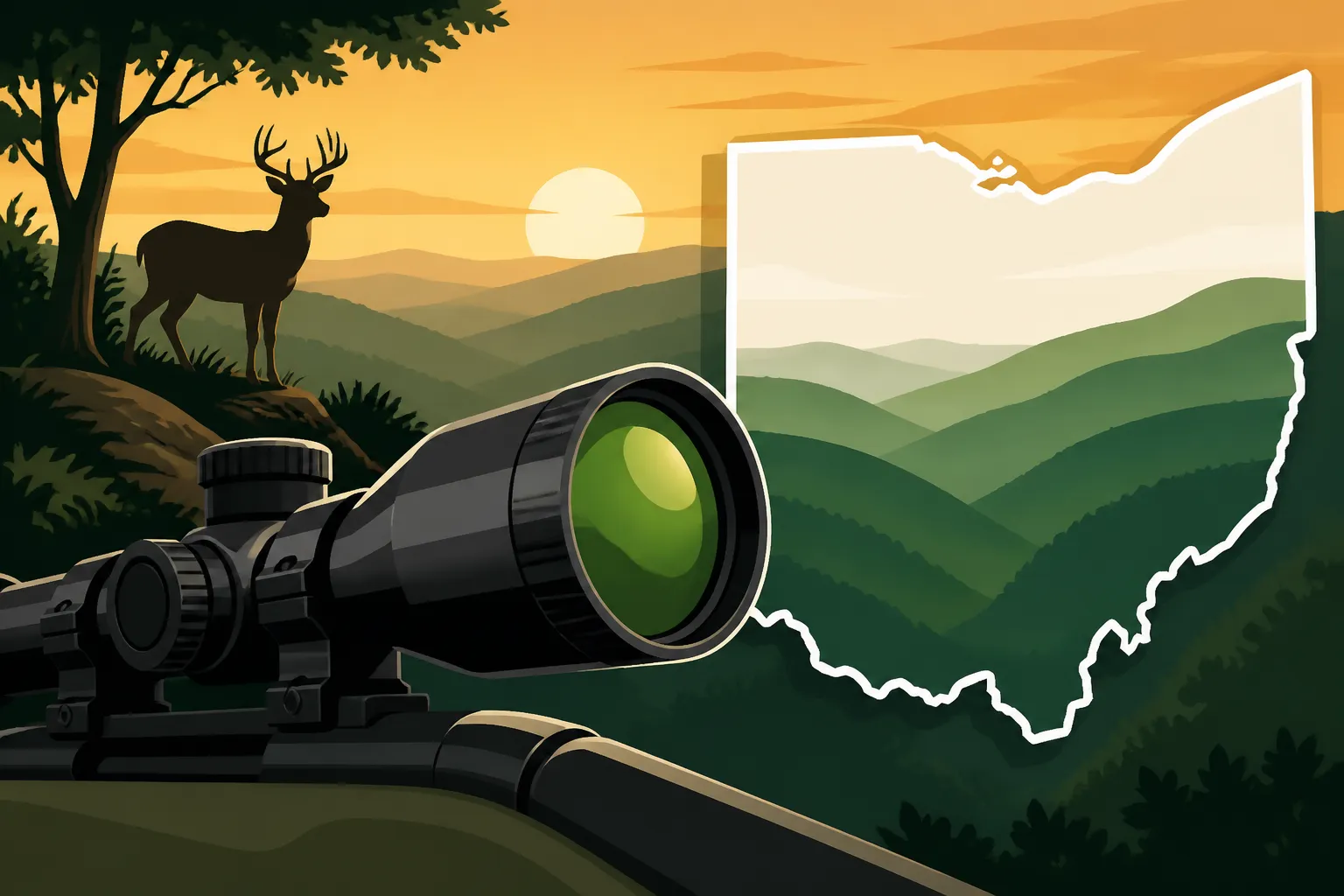
Hunting the steep, winding ridges and hollows of Appalachian Ohio presents a unique set of challenges that can make even seasoned hunters feel like they’re starting from scratch. The dense timber, ever-changing elevations, and often dim, early morning or late evening light demand more than just a keen eye; they demand the right optics to truly understand your surroundings and make ethical shots. This comprehensive guide will walk you through everything you need to know about selecting, using, and maintaining the perfect optics to conquer those challenging Ohio ridges, ensuring you can spot that elusive buck, range your shot accurately, and navigate the rugged terrain with confidence.
The Unique Challenges of Appalachian Ohio Terrain for Optics
Appalachian Ohio is a world away from the flat farmlands of the northwest part of the state. Here, you're dealing with deep ravines, steep inclines, thick stands of timber, and often, a dense understory that can swallow a deer whole. This isn't wide-open prairie hunting where you can spot a deer a mile away. Our ridges demand a different approach to optical gear, one that prioritizes low-light performance, ruggedness, and a balance of magnification and field of view.
Navigating Dense Timber and Steep Grades
When you're slipping through the hardwoods of Wayne National Forest or climbing the hills of Shawnee State Forest, your line of sight is rarely more than 100-200 yards, often much less. You might be looking down into a hollow, up a steep slope, or across a narrow finger ridge. The timber is often mature, casting deep shadows, and the undergrowth can be surprisingly thick in places, especially along old logging roads or clear-cut edges. A deer can materialize and vanish in seconds, making quick target acquisition and identification crucial. The constant change in elevation also means that what looks like a short shot might actually be quite far due to the angle, or vice versa, bringing the need for accurate rangefinding to the forefront. This dynamic environment is why specialized optics are not just a luxury, but a necessity for success and safety.
Furthermore, the physical demands of this terrain mean that carrying excessive, heavy gear is counterproductive. Every ounce counts when you're gaining hundreds of feet in elevation or traversing miles of uneven ground. You need optics that are robust enough to withstand bumps and drops, yet light enough not to become a burden by the end of a long day of still-hunting. The choice of binoculars, rangefinders, and rifle scopes must reflect this balance, ensuring they are not just optically superb, but also practical for the arduous task of hunting these challenging lands. Consider how a lighter, yet powerful, setup can improve your overall hunting experience and reduce fatigue, especially if you're planning multi-day trips deep into the backcountry.
Dealing with Low-Light Conditions and Shadows
Sunrise and sunset are prime times for deer movement, but they are also when the Appalachian woods are at their darkest. The deep valleys and thick canopy mean that the sun might not hit the forest floor until well after official sunrise, and it can dip below the ridges long before sunset. This creates perpetual low-light conditions that challenge even the best optics. You need glass that can gather every last photon of light, allowing you to discern antler tines from branches or a deer's shoulder from a tree trunk. The difference between a clear shot and a questionable one often comes down to the quality of your glass in these critical moments.
Beyond the dim light, the varied topography creates a mosaic of shadows and bright spots. A deer might be standing in a sun-drenched clearing one moment and then step into a deep, dark shadow the next. Your optics need to handle these extreme contrasts without losing detail or introducing glare. High-quality lens coatings become paramount here, reducing reflections and maximizing light transmission. It's not just about seeing something in the dark; it's about seeing clearly enough to make an accurate shot and confidently identify your target, especially when Hunting the Ohio Rut in Early November when big bucks are often on the move during these twilight hours. Choosing optics with excellent edge-to-edge clarity and minimal chromatic aberration will significantly enhance your ability to pick out details in these challenging light transitions.
Binoculars: Your Primary Scouting Tool
In Appalachian Ohio, your binoculars are arguably your most important piece of gear next to your weapon. They are your eyes in the timber, helping you pick apart distant hillsides, scout potential bedding areas, and identify game without constantly raising your rifle. Choosing the right pair involves understanding magnification, objective lens size, and critical features for rugged use.
Magnification and Objective Lens Size for Woods Hunting
When it comes to binoculars for our Ohio ridges, you're generally looking for a balance between magnification, field of view, and light-gathering capability. An 8x or 10x magnification is usually ideal. An 8x provides a wider field of view, which is excellent for quickly scanning dense woods and tracking moving animals. You’ll have a more stable image, too, which is a huge benefit when you're breathing hard after a climb or trying to hold steady in a cramped treestand. This wider view makes it easier to follow a deer that's slipping through the trees. Binocular Choice for Ohio Whitetails really emphasizes this balance.
A 10x binocular gives you a bit more reach, which can be beneficial for picking apart distant ridges or checking out openings across a valley. While the field of view is narrower, and the image can be a bit harder to keep steady without support, the extra magnification can sometimes be the difference between identifying a legal buck and letting it walk. Paired with a larger objective lens, a 10x can be a powerful tool for Finding Sign in Big Appalachian Timber or observing deer movement from afar without disturbing them. For objective lens size, 42mm is generally considered the sweet spot. This provides excellent light-gathering capabilities without making the binoculars overly bulky or heavy, which is a real concern when you're traversing steep terrain.
Field of View and Eye Relief Considerations
Field of view (FOV) is incredibly important in the thick woods of Appalachian Ohio. A wider FOV means you see more of your surroundings through the binoculars, which is critical for quickly locating deer that might be moving through dense cover. Imagine a deer slipping through a thicket; a wider FOV increases your chances of picking it up before it disappears. Binoculars with a wider FOV (often indicated in feet at 1,000 yards) are invaluable for scanning brushy draws or dense stands of trees where deer could be bedded or feeding. Lower magnification (like 8x) generally provides a wider FOV than higher magnification (like 10x) with the same objective lens size, which is why many hunters prefer 8x for heavily timbered areas.
Eye relief refers to the distance your eye can be from the eyepiece and still see the full, unvignetted image. This is a crucial, yet often overlooked, feature, especially for hunters who wear eyeglasses or sunglasses. Generous eye relief (typically 15mm or more) allows you to use your binoculars comfortably while wearing eyewear, preventing that annoying "tunnel vision" effect. For long periods of glassing, good eye relief also reduces eye strain, helping you stay focused and alert during those critical hunting hours. Always test binoculars with your preferred eyewear to ensure a comfortable fit and full field of view.
| Binocular Specification | Best Use Case for Appalachian Ohio | Pros | Cons |
|---|---|---|---|
| 8×42 | All-around, dense timber, tracking | Wide field of view, stable image, good light gathering, lighter | Less magnification for distant objects |
| 10×42 | Longer distances, open ridges, detailed scouting | More magnification, good light gathering | Narrower field of view, harder to hold steady |
| 10×50 | Low light, open areas, stationary glassing | Excellent light gathering, high magnification | Heavier, bulkier, narrower field of view, harder to hold steady |
| 12×50 | Extreme long-range, specific glassing points | Highest magnification, good light gathering | Heaviest, narrowest field of view, requires tripod for stability |
Rangefinders: Pinpointing Distances in Hilly Country
In flat country, judging distance can be relatively straightforward. Add in steep angles, dense cover, and the optical illusion of elevation, and suddenly a 50-yard shot looks like 30, or a 100-yard shot feels like 150. A good rangefinder isn't just a convenience; it's a vital tool for ethical and accurate shooting in Appalachian Ohio.
Why Angle Compensation is Critical
When you shoot uphill or downhill, gravity affects the bullet's trajectory differently than on flat ground. A rifle scope zeroed for a flat 100 yards will shoot high on an uphill shot and low on a downhill shot if you aim for the exact distance reported by a standard rangefinder. This is where angle compensation comes into play. A rangefinder with angle compensation (often labeled as "ARC" for Angle Range Compensation or similar terms) calculates the "shoot-to" distance, which is the equivalent horizontal distance your bullet actually travels. This feature is absolutely critical when Reading a Ridge for Southeast Ohio Deer and taking shots across varied terrain.
For example, if you're looking down a steep ravine at a deer that's 70 yards away, but the angle compensated distance is 55 yards, you need to hold for 55 yards, not 70. Failing to account for this can lead to a missed shot or, worse, a wounded animal. Many modern rangefinders include this technology, making them indispensable for anyone hunting in Ohio's hill country. Always ensure your rangefinder has this capability and understand how to interpret its readings, as it will dramatically improve your accuracy and confidence when shooting at angles.
Features to Look for in a Ridge-Hunting Rangefinder
Beyond angle compensation, several other features are beneficial for a rangefinder used in Appalachian Ohio. Maximum range is important, but for dense woods, often the ability to range targets under 100 yards accurately and quickly is more useful than a 1,500-yard capability. Look for models that perform well at close ranges and in cluttered environments, as branches and brush can sometimes interfere with readings. Some rangefinders have a "brush mode" or "tree mode" which helps prioritize the target closest to you, ignoring the vegetation in between.
Scan mode is another great feature. It allows you to continuously range multiple targets as you pan across an area, which is perfect for picking up a walking deer or quickly checking distances to several obstacles. Size and ergonomics matter too; a compact, lightweight unit that fits comfortably in your hand or a chest harness is ideal when you're constantly on the move. Look for durable, waterproof designs, as Ohio weather can be unpredictable. Brands like Sig Sauer, Vortex, and Leupold offer excellent rangefinder options with these features, providing reliable performance in challenging conditions. The ability to range quickly and consistently in the broken timber is vital, especially when you are setting up in a new spot or trying to confirm a distance through a tight shooting lane.
Integrating Rangefinders with Mapping Tools
Modern hunting is increasingly reliant on technology, and smart hunters are finding ways to integrate their rangefinders with digital mapping applications. While your rangefinder gives you an instantaneous "shoot-to" distance, platforms like GoHunt can help you understand the broader topography. Imagine ranging a distant ridge line from your stand, then quickly checking that point on your mapping app to see if it aligns with a known bedding area or a funnel. This synergy helps you not only make the shot, but also understand why that shot opportunity existed and how deer are using the terrain.
Some advanced rangefinders can even connect via Bluetooth to your smartphone, displaying range data directly on a mapping interface or interacting with ballistic calculators. While this might be overkill for some, for those who embrace technology, it offers an unprecedented level of precision and situational awareness. Even without direct integration, using your rangefinder in conjunction with scouting features on an app allows you to mark specific points of interest with accurate distances, helping you plan your approach and stand placement more effectively for future hunts.
Rifle Scopes: Maximizing Accuracy in Low Light and Variable Ranges
When it's time to make the shot, your rifle scope needs to perform flawlessly. In Appalachian Ohio, this means a scope that excels in low light, offers versatile magnification, and can withstand the rigors of being bumped and jostled in tough terrain.
Variable Magnification for Close and Long Shots
The terrain in Appalachian Ohio rarely offers uniform shooting distances. You might have a 30-yard shot into a thick ravine one minute and a 150-yard shot across an open hardwood flat the next. This is why a variable magnification scope is absolutely essential. A common range like 3-9×40 or 2-10×42 provides excellent versatility. The lower magnification settings (2x or 3x) offer a wide field of view, making it easy to acquire targets quickly in dense cover or track a moving deer at close range. This is incredibly helpful when hunting thickets where deer often appear suddenly.
As the range opens up or you need to make a more precise shot, you can dial up the magnification (to 9x or 10x). This allows you to place your shot accurately on a deer across a hollow or on a distant ridgetop. The key is finding a scope where the entire magnification range is clear and bright, without significant loss of image quality at the higher end. The ability to quickly adjust your magnification to suit the specific shooting scenario is a massive advantage in the dynamic environment of Ohio's hill country, where shots can present themselves from unexpected places and at varying distances.
Objective Lens Size and Low-Light Performance
Just like with binoculars, the objective lens size of your rifle scope plays a crucial role in its low-light performance. A larger objective lens (typically 40mm, 42mm, or 50mm) gathers more light, resulting in a brighter, clearer image during dawn, dusk, and heavily shaded conditions. For many hunters in the Appalachian region, a 40mm or 42mm objective is a perfect balance, providing excellent light transmission without making the scope too bulky or requiring excessively high mounting. While a 50mm objective can gather even more light, it often adds significant weight and requires higher scope rings, which can affect your cheek weld and shooting comfort.
However, simply having a large objective lens isn't enough. The quality of the glass and the anti-reflective coatings applied to it are equally, if not more, important. High-quality multi-coated lenses reduce glare, maximize light transmission, and provide superior contrast and color rendition. This is what truly allows you to pick out the subtle details of a deer in deep shadow, even as shooting light fades. Brands like Vortex, Leupold, and Meopta are known for their exceptional low-light capabilities, making them popular choices for hunters who understand the unique demands of Hunting Southeast Ohio Appalachian Foothills. Investing in a scope with superior glass quality will pay dividends when those precious minutes of legal shooting light are ticking away.
Reticle Types and Turrets for Hunting
Choosing the right reticle (the aiming point inside your scope) is a personal preference, but for Appalachian Ohio hunting, simplicity and clarity are often best. A duplex reticle, with its thicker outer posts and thinner crosshairs in the center, is a classic choice. It's quick to acquire in low light and doesn't obscure too much of the target. Some hunters prefer a simple illuminated reticle, which provides a bright dot or crosshair that can be invaluable in deep shadows or against dark backgrounds, without being overly distracting. However, ensure the illumination is adjustable, so it doesn't wash out your vision in very low light.
As for turrets, for most Ohio deer hunting, a basic capped hunting turret is sufficient. Shots are typically within 200 yards, and most hunters will zero their rifle at 100 or 150 yards and use holdover for slightly longer shots. Exposed target turrets, while precise for long-range target shooting, can be prone to accidental adjustment in the field and are generally unnecessary for the ranges encountered in thick timber. However, if you're consistently making shots over 200 yards across wider valleys, a scope with a ballistic reticle (such as a BDC or mil-dot/MOA reticle) or exposed, locking turrets could be beneficial, especially when combined with a precise rangefinder to account for drop. Remember, keep it simple and rugged for the challenging environment of the Appalachian ridges.
Spotting Scopes: When to Consider More Power (and When Not To)
While binoculars and rifle scopes are mainstays, a spotting scope occupies a more niche role for Appalachian Ohio hunters. It's not for everyone, but in specific situations, it can be an invaluable tool.
Advantages for Long-Distance Observation
If you're primarily hunting vast, open clear-cuts, gas lines, or agricultural fields nestled between the ridges, a spotting scope can be a game-changer for long-distance observation. It allows you to glass distant hillsides, identify bedding areas, and thoroughly scout a large area without putting boots on the ground. For instance, if you're trying to determine if a distant deer has legal antlers or to observe its behavior patterns from a discreet distance, the high magnification (typically 20-60x) of a spotting scope is unmatched. This can be particularly useful if you're able to set up on a commanding ridge overlooking a large portion of public land, allowing you to survey a vast amount of territory that would be impossible with binoculars alone.
Imagine sitting on an elevated perch near Where Shawnee State Forest Bucks Bed, looking down into multiple fingers and hollows, trying to locate deer that are feeding or traveling. A spotting scope can reveal details like the size of a buck's rack, the presence of fawns with a doe, or even patterns of movement that you wouldn't notice with binoculars. It's a tool for patience and strategic observation, allowing you to meticulously dissect a landscape for signs of life. For serious trophy hunters or those who enjoy extensive pre-season scouting, a spotting scope can provide crucial intelligence that informs their hunting strategy.
Portability and Practicality in Dense Woods
However, the advantages of a spotting scope come with significant drawbacks in much of Appalachian Ohio's hunting environment. Their size and weight, combined with the need for a stable tripod, make them cumbersome for active hunting. When you're constantly moving, still-hunting through thick timber, or navigating steep, uneven terrain, hauling a spotting scope and tripod quickly becomes a burden. Most of the shots encountered in the dense woods are relatively close, making a spotting scope unnecessary for actual shot placement. You're unlikely to be using it to spot a deer at 50 yards.
For the vast majority of hunters who are focused on aggressive, mobile tactics like Still-Hunting Shawnee State Forest Ridges or setting up mobile treestands, a spotting scope simply isn't practical. The time it takes to set up, locate your target, and break down the equipment often outweighs any potential benefit in these fast-paced scenarios. While they shine in wide-open, long-distance observation, their utility dramatically diminishes in areas where your line of sight is limited to a few hundred yards at best. Hunters need to honestly assess their hunting style and the specific areas they frequent before investing in a spotting scope, as it's a specialized tool with a narrower application for the average ridge hunter.
Essential Optics Accessories for Ridge Hunting
Having the right optics is only half the battle; protecting them and making them comfortable to use is just as important. A few key accessories can significantly enhance your hunting experience in the rugged Appalachian terrain.
Binocular Harnesses and Straps
If you've ever had your binoculars swinging wildly around your neck while climbing a steep hill or trying to crawl through thick brush, you know the value of a good binocular harness. A harness distributes the weight of your binoculars across your shoulders and back, rather than concentrating it on your neck, which can cause discomfort and fatigue over a long day. More importantly, it keeps your binoculars secure and close to your chest, preventing them from bouncing, snagging on branches, or getting damaged. When you're moving silently through the woods, you don't want your gear clanking around or getting in the way.
Look for harnesses that are comfortable, adjustable, and allow for quick, quiet access to your binoculars. Many harnesses also feature small pockets for lens cloths, rangefinders, or even a small game call. Brands like FHF Gear, Vortex, and Kuiu offer excellent harness systems that are built for the demands of active hunting. Investing in a quality harness is a small price to pay for increased comfort, protection for your valuable optics, and the ability to maintain stealth as you navigate the challenging terrain of Wayne National Forest or other public lands.
Lens Cleaning Kits and Protective Covers
The Appalachian woods are full of dust, pollen, rain, and mud. All of these can quickly compromise the clarity of your optics. Carrying a dedicated lens cleaning kit is non-negotiable. This isn't just about wiping dirt off with your shirt (which can scratch expensive coatings); it's about properly caring for your glass. A good kit typically includes a soft brush to remove loose debris, a microfibre cloth, and a lens cleaning solution or wipes. Use the brush first, then a very light spray of cleaning solution if needed, and finally the microfibre cloth. This simple routine will keep your lenses spotless and ensure you're always getting the clearest possible image.
Protective covers are equally important. Many binoculars and scopes come with objective and eyepiece covers, but often they are flimsy or easily lost. Consider upgrading to more robust, tethered covers that stay attached to your optics. For binoculars, a fitted objective lens cover and an eyepiece rainguard will protect against rain, dust, and scratches when not in use. For rifle scopes, flip-up lens caps (like those from Butler Creek or Vortex Defender series) offer instant protection and quick deployment, which can be invaluable when a shot opportunity arises suddenly in adverse weather. Keeping your lenses clean and protected ensures their longevity and optimal performance, safeguarding your investment from the harsh elements often encountered during hunting season in Ohio.
Maintaining Your Optics in Ohio's Variable Weather
Ohio weather, especially in the Appalachian region, is notoriously unpredictable. One day it's mild and sunny, the next it's a cold downpour, followed by heavy snow. Your optics need to be ready for anything, and proper maintenance is key to their longevity and performance.
Dealing with Fogged Lenses and Rain
Fogged lenses are a hunter's nightmare. They can instantly render your expensive optics useless and potentially cost you a shot opportunity. Fogging typically occurs when warm, moist air meets a cold lens surface. While high-quality optics are often nitrogen-purged and O-ring sealed to prevent internal fogging, external fogging is still a concern. Anti-fog lens treatments or wipes can help prevent moisture from condensing on the outer lens surfaces. When you move from a warm truck into cold, damp woods, try to let your optics acclimate slowly by keeping them covered until you're at your stand. This gradual temperature change can minimize external fogging.
Rain is another constant threat. Even if your optics are waterproof, prolonged exposure can still introduce issues, and water droplets on the lens surface will distort your view. Keep your binoculars in their harness or under your rain gear when not actively glassing. For your rifle scope, flip-up caps are fantastic for keeping rain off the lenses. When the rain lets up, gently wipe away any standing water with a dry, clean microfibre cloth. Never rub a wet, dirty lens, as this can grind grit into the coatings. Drying your optics completely at the end of the day, especially if they got wet, will prevent water spots and potential corrosion. This attention to detail is vital for optics that need to perform consistently through an entire season, especially when you're out Hunting the Second Gun Weekend in December in nasty weather.
Storage and Long-Term Care
Proper storage is crucial for the long-term health of your optics. When not in use, always store your binoculars and scopes in a cool, dry place, ideally in their original box or a padded case. Avoid storing them in areas with extreme temperature fluctuations, like a garage or attic, as this can degrade seals and internal components over time. If you live in a humid environment, consider using silica gel packets in your storage case to absorb moisture and prevent mold or mildew growth, which can damage lens coatings.
Before storing your optics for an extended period (like the off-season), give them a thorough cleaning. Remove any dirt, dust, or moisture from both the external surfaces and, most importantly, the lenses. Make sure all caps and covers are in place. Periodically check any moving parts, like focus rings and diopter adjustments, to ensure they operate smoothly. If you notice any stiffness or grit, a professional cleaning or service might be in order. By following these simple long-term care practices, your optics will be ready to perform reliably season after season, ensuring they're always in top shape for when Ohio's Archery Season Runs Into February or any other late-season hunt.
Balancing Performance with Practicality and Budget
Let's be real: hunting gear can get expensive, and optics are often one of the biggest investments. While it's tempting to chase the absolute best, the most effective approach for Appalachian Ohio hunting is to find the sweet spot between performance, practicality, and your budget.
Investing in Quality Where It Counts Most
When it comes to optics for our challenging Ohio ridges, there are certain areas where skimping on quality will quickly lead to frustration. Your binoculars are often the first place to invest, as they are your primary scouting tool. A high-quality pair with excellent low-light performance and a wide field of view will be used constantly throughout your hunt. Don't go for the cheapest pair; look for reputable brands known for their glass quality, durability, and warranty. Similarly, your rifle scope is critical. You need it to hold zero, provide a clear image, and perform reliably when the moment of truth arrives. A scope that fails in low light or can't withstand a bump will ruin a hunt faster than almost anything else.
For other items, you might be able to be a bit more flexible. While a top-tier rangefinder is great, a mid-range model with angle compensation will likely serve you just as well for typical Ohio shot distances. A spotting scope, as we discussed, is often an optional luxury rather than a necessity. Focus your dollars where they will have the greatest impact on your ability to find, identify, and ethically harvest game in the unique conditions of Appalachian Ohio. A significant investment in high-quality binoculars and a dependable rifle scope will provide the best return on your dollar, ensuring you have the clarity and confidence needed when it matters most.
Considering Different Budget Levels
Hunters come from all walks of life, and not everyone has an unlimited budget for optics. The good news is that there are excellent options at various price points.
-
Entry-Level (Under $300-$500): At this level, you can find perfectly functional binoculars and rifle scopes from brands like Bushnell, Nikon, and Athlon. Look for options with fully multi-coated lenses and decent light transmission. You might sacrifice a bit on edge-to-edge clarity or extreme low-light performance, but these will still be a significant improvement over no optics at all. For a rangefinder, you can find basic, reliable models without all the advanced features. This level is perfect for new hunters or those on a tight budget who still need reliable tools.
-
Mid-Range ($500-$1500): This is often the sweet spot for many serious hunters. Here you'll find excellent performance, durability, and features for the money. Brands like Vortex, Leupold, Meopta, and some offerings from Tract and Zeiss Conquest lines provide superb glass, advanced coatings, robust construction, and often generous warranties. You'll get much better low-light performance, sharper images, and more precise adjustments. Angle-compensating rangefinders are standard at this level. This budget allows you to invest in a quality setup that will last for many seasons.
-
High-End ($1500+): At the top tier, you're looking at premium brands like Swarovski, Leica, Zeiss, and Nightforce. These optics offer unparalleled optical clarity, edge-to-edge sharpness, exceptional low-light performance, and bombproof construction. While the performance gains might be incremental over mid-range, they are noticeable, especially in the most challenging conditions. These are investments that often last a lifetime and provide the ultimate confidence in the field. This level is for the discerning hunter who demands the absolute best and hunts frequently in extreme conditions.
No matter your budget, remember to read reviews, compare features, and if possible, try out optics in person. Ask other local hunters what they use for Hunting Ohio River Valley Ridges or Hunting the Nelsonville Ranger District. The best optics for you are the ones you can afford, that meet your specific needs for Appalachian Ohio hunting, and that you'll use effectively and comfortably every time you hit the woods.
Disclaimer
This article is for general informational purposes only and does not constitute professional advice. Laws, prices and regulations vary by location and change over time. Consult a qualified professional for guidance on your specific situation.