Still-Hunting Shawnee State Forest Ridges
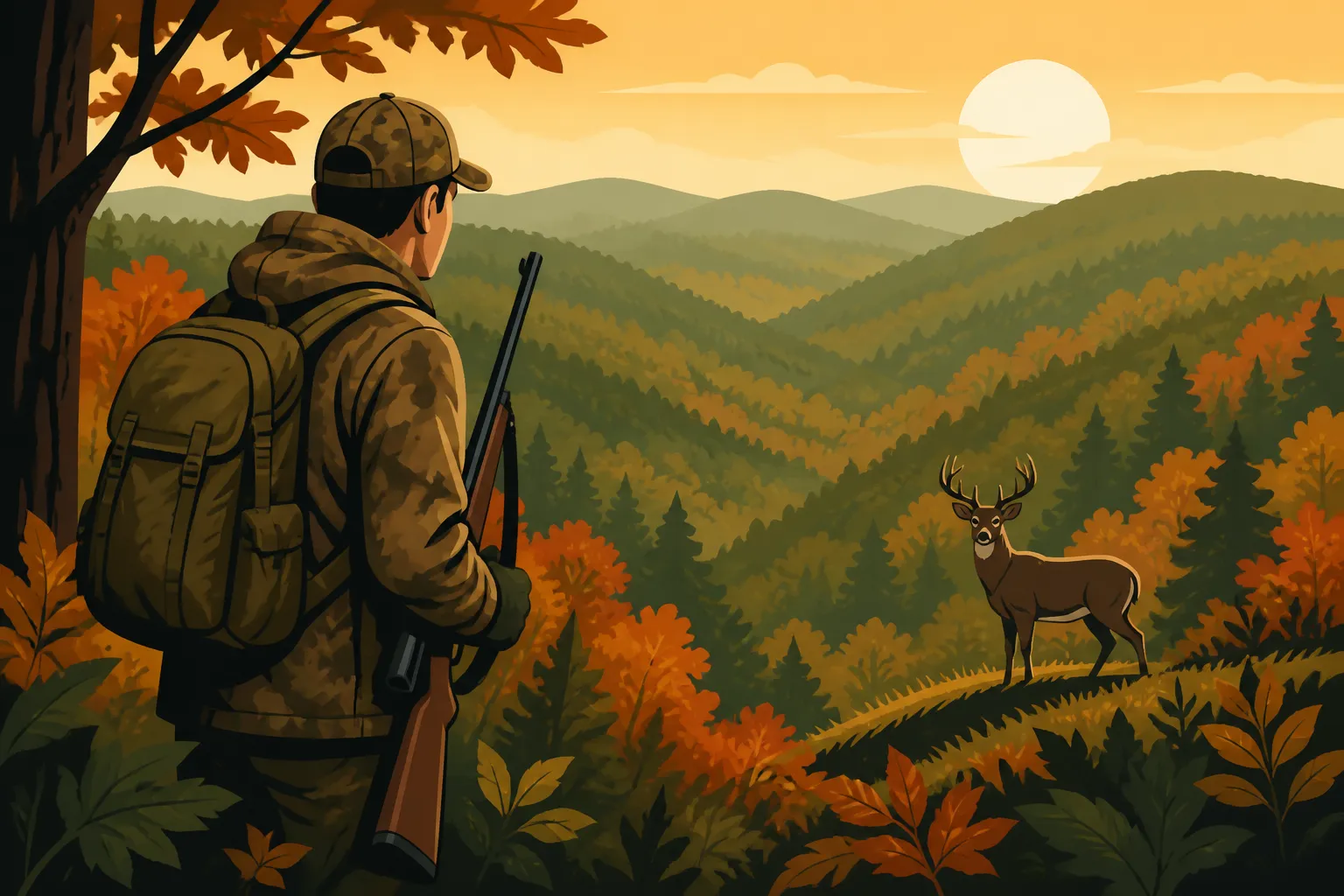
The vast, rugged expanses of Shawnee State Forest can feel overwhelming for any hunter, with its steep hills, dense timber, and seemingly endless ridges. Many hunters get discouraged, feeling lost or unsure how to effectively pursue deer in such challenging terrain. This guide is designed to cut through that frustration, offering a comprehensive look at still-hunting tactics specifically tailored for navigating and succeeding on Shawnee's iconic ridges, turning daunting landscapes into productive hunting grounds.
Understanding Shawnee's Unique Terrain and Deer Behavior
Still-hunting the ridges of Shawnee State Forest isn't like hunting anywhere else in Ohio. This isn't flat farmland or even rolling hills; this is true Appalachian country, characterized by steep elevation changes, deep hollows, and dense, mature timber. Understanding these unique characteristics and how deer interact with them is your first step to success.
The Appalachian Influence on Shawnee's Topography
Shawnee State Forest, often affectionately called "Ohio's Little Smokies," is a prime example of the rugged, unglaciated Appalachian foothills. The terrain here is a dramatic mosaic of steep ridges, sharp drop-offs, and narrow valleys carved by countless drainages. Unlike the relatively uniform elevations found in other parts of the state, Shawnee offers a constant up and down, often with little in the way of flat ground. This continuous change in elevation creates complex wind and thermal patterns that are crucial for a still-hunter to master. The forest is predominantly mature hardwoods, primarily oak, hickory, and maple, which means open understories in some areas but also thick briar patches and laurel thickets on certain slopes or in regenerating cuts. This mix provides both visibility and dense escape cover for deer, making them masters of their environment. For a deeper dive into the region, check out our piece on Hunting Southeast Ohio Appalachian Foothills.
Deer Habits and Patterns on Ridge Systems
Deer in Shawnee State Forest are creatures of the ridge systems. They utilize these elevated pathways for travel, bedding, and often feeding, as they offer both security and efficient movement across the landscape. Bucks, especially mature ones, will often bed on points or benches just below the ridge top, where they can watch their backtrail and have the wind in their face, or at least across their scent cone. Does and fawns might bed in similar areas, but often utilize thicker cover on sunnier slopes in colder weather or denser pockets in general. They're rarely found out in wide open, exposed areas. When moving, deer often travel just off the main spine of a ridge, on a bench or terrace, using the subtle terrain features for concealment rather than walking right on the exposed top. These "sidehill" movements are key to understanding their travel patterns. Identifying these subtle breaks in topography is paramount to effectively Reading a Ridge for Southeast Ohio Deer.
Impact of Habitat on Deer Movement
The diverse habitat within Shawnee heavily influences how deer move and where they spend their time. Mature oak stands are magnetic during mast years, drawing deer to the ridge tops and slopes where acorns fall. However, in years with poor mast crops, deer will quickly shift to other food sources, like greenbriar, honeysuckle, or browse in recent timber cuts. These clear-cuts, while sometimes difficult to navigate due to dense regrowth, can be absolute magnets for deer seeking food and thermal cover. Knowing how to find and hunt Late-Season Food Sources for Ohio Whitetails becomes critical. Water sources, often found in the bottoms of hollows or in small seeps along slopes, also act as focal points, especially in drier periods. Furthermore, areas of dense evergreen cover, like scattered pine plantations or thick laurel patches, provide excellent thermal and security cover, particularly during harsh winter weather or intense hunting pressure. Understanding these micro-habitats and how they change with the seasons and weather is crucial for predicting deer movement.
Essential Gear and Preparation for Still-Hunting
Still-hunting in Shawnee State Forest demands more than just your typical hunting setup. The rugged terrain and unpredictable Ohio weather require thoughtful gear choices that prioritize comfort, silence, and navigation. Being unprepared can quickly turn an exciting hunt into a miserable, and potentially dangerous, experience.
Footwear and Layering for Varied Conditions
Your feet are your foundation when still-hunting, and the steep, rocky, often muddy slopes of Shawnee will put them to the test. Waterproof, ankle-supporting boots with aggressive tread are non-negotiable. Look for models from brands like LaCrosse or Schnee's that offer both durability and comfort for miles of walking. Rubber boots can be excellent for scent control and wet conditions, but ensure they provide adequate support for side-hilling. As for clothing, layering is your best friend. Ohio's weather can swing wildly, from frosty mornings to mild afternoons, or sudden downpours. Start with a moisture-wicking base layer to manage sweat, add an insulating mid-layer (fleece or merino wool works wonders for quiet movement), and top it off with a quiet, waterproof/windproof outer shell. Wool is especially forgiving if it gets wet, still offering some warmth. Avoid noisy fabrics like stiff nylons or crinkly rain gear. Remember, you're constantly moving, generating heat, but you'll also be pausing for extended periods, cooling down quickly. A good pair of gaiters can also be a lifesaver for keeping debris and moisture out of your boots on those long, steep ascents and descents. Our guide on Boots for Ohio Mud and Snow offers further insights.
Optics and Navigational Tools for Dense Timber
While still-hunting suggests close-range encounters, quality optics are still vital for picking apart the dense timber of Shawnee. A good pair of 8×42 or 10×42 binoculars (like those from Vortex or Leupold) will allow you to scan ahead, identify subtle deer movement, or pick out a tines through thick cover without moving your entire body. A rangefinder is also crucial for confirming shot distances, especially when hunting with a firearm or crossbow in varying terrain. Distances can be incredibly deceptive in the hills. For navigation, a reliable GPS unit or a smartphone app like GoHunt or onX Hunt is absolutely essential. These apps, with their detailed topographic maps and satellite imagery, allow you to pinpoint your exact location, identify property boundaries (crucial on public land), and mark sign or potential bedding areas. Downloading offline maps is a must, as cell service is often nonexistent in the deep hollows of Shawnee. Always carry a physical compass and a printed map as a backup – batteries die, and technology fails. Planning your entry and exit routes using a mapping app like GoHunt before you even leave home is a smart move. Our article on Optics for Appalachian Ohio Ridges has more suggestions.
Weapon Choice for Close-Quarters Hunting
The dense timber and often close-range encounters typical of still-hunting in Shawnee dictate specific weapon considerations. While Ohio's straight-wall cartridge rules for deer have opened up many options, a nimble, quick-handling firearm is often preferred. A straight-wall rifle chambered in something like .350 Legend or .450 Bushmaster offers excellent knockdown power and accuracy for shots typically under 150 yards, which is usually the maximum range you'll get a clear shot in Shawnee's thick woods. Shotgun slugs are also highly effective, especially with a rifled barrel. For archery hunters, a vertical bow or crossbow (both legal during Ohio Archery Season Opening Day) can be incredibly effective in the tight quarters, but shot windows will be small and fleeting. Regardless of weapon, ensure it's sighted in for the effective ranges you anticipate and that you are proficient in quick, off-hand shots. Carrying your weapon comfortably and quietly is also critical; a good sling is a must for those long treks.
Mastering the Art of Silent Movement and Observation
Still-hunting is as much a mental game as it is a physical one. It's about blending into the environment, moving with intention, and honing your senses to detect deer before they detect you. In a place like Shawnee, where deer are accustomed to human presence, mastering these elements is paramount.
Pacing and Stealth Techniques
The core principle of still-hunting is to move slowly, pausing frequently, and covering ground with extreme stealth. Think of it as hunting at a snail's pace. A common rule of thumb is to take no more than 10-20 steps before pausing for a full minute or more. During these pauses, you're not just resting; you're intently observing your surroundings. Place each foot carefully, heel first, rolling your foot forward to detect sticks or leaves that might snap. Use the terrain to your advantage: walk on softer ground when possible, use logging roads or old skid trails only if they are quiet and you're confident deer aren't using them as primary travel routes. When crossing obstacles like blowdowns or briar patches, take your time and move deliberately. The goal is to move like a ghost, making no sudden movements or sounds. If you hear another hunter, give them plenty of space and avoid pushing deer towards them. This slow, deliberate movement prevents you from spooking deer out of their beds or as they browse.
Utilizing Wind and Thermals to Your Advantage
In the hilly topography of Shawnee, understanding and using wind and thermals is probably the single most important factor for a successful still-hunt. The wind, of course, is the general directional airflow. Always try to hunt into or across the prevailing wind. Thermals, however, are localized air currents that rise as the air warms (updrafts in the morning/day) and fall as it cools (downdrafts in the evening). In the morning, as the sun hits the ridge tops, warm air will begin to rise, creating updrafts that carry scent uphill. This means you should hunt from bottom to top or along benches, letting your scent be carried away from deer above you. In the evening, as the air cools, heavy air settles into the hollows, creating downdrafts. At this time, you'd want to hunt from top to bottom, keeping your scent carried downhill and away from deer below you. The transition times, mid-morning and mid-afternoon, are when thermals can be shifty and unpredictable, swirling as the air equalizes. This is when careful observation and potentially even a wind checker powder become your best friends. Our detailed guide on Wind and Thermals on an Appalachian Ridge can provide even more insight.
Scanning and Pausing: The Art of Observation
Many still-hunters fail because they spend too much time walking and not enough time looking. When you pause, don't just stare straight ahead. Systematically scan your surroundings, piece by piece, like solving a puzzle. Use your binoculars to pick apart dense thickets, look for horizontal lines (a deer's back, a leg) in a vertical world of trees, or catch the subtle flicker of an ear or tail. Pay special attention to areas of transition: where one type of cover meets another, the edge of a bench, or the top of a rise. Look through the woods, not just at them. Often, a deer will appear as a faint outline or a patch of off-color fur. This requires patience and a keen eye. Listen intently during your pauses – the rustle of leaves, a distant twig snap, or the soft blowing of a deer can all give away their presence. Developing this "hunter's eye" and acute hearing takes practice, but it's what separates those who simply walk through the woods from those who truly hunt them.
Reading the Woods: Interpreting Sign and Terrain Features
Still-hunting is a constant process of deduction, much like a detective piecing together clues. The woods of Shawnee are littered with information about deer movement, feeding, and bedding habits, if you know how to read the signs and understand how terrain shapes these activities.
Identifying Bedding Areas and Travel Corridors
Deer, especially mature bucks, are masters of security. In Shawnee, bedding areas are typically found in dense cover, often on points or benches just below the crest of a ridge, offering good visibility downhill and excellent scent control with prevailing winds and thermals. Look for areas with tangled briars, thick regenerating timber, or dense laurel patches. Beds themselves are usually oval depressions in the leaves or grass. Once you locate a bedding area, you can often deduce the travel corridors deer use to approach or leave it. These might be subtle trails along a bench, through a saddle, or paralleling a drainage. These trails are not always obvious, well-worn paths like those you'd find in agricultural areas; they might just be slight depressions or areas with disturbed leaves. Before your hunt, tools like GoHunt can help you analyze topographical maps to identify potential bedding points and connecting travel routes, giving you a strategic advantage. Our article on Where Shawnee State Forest Bucks Bed expands on this.
Locating Food Sources and Water on Ridges
Deer in Shawnee rely heavily on natural food sources, which dictate their movement patterns outside of the rut. Oak trees are kings in this region, and a good mast crop year means deer will spend a significant amount of time on ridge tops and slopes, gorging on acorns. In years where acorns are scarce, deer will shift to other browse, such as greenbriar, honeysuckle, sassafras, and young saplings found in regenerating timber cuts or along logging roads. Identifying these secondary food sources is critical for consistent success. Water is also a necessity. While deer can get moisture from vegetation, they will still visit natural seeps, small springs, or creek bottoms, especially during dry spells. Look for these crucial elements and incorporate them into your still-hunting route, as they are natural magnets for deer. This knowledge is essential for understanding Hunting After a Poor Acorn Year.
Interpreting Scrapes, Rubs, and Tracks
While still-hunting, keep a keen eye out for classic deer sign. Tracks can tell you about deer presence and direction of travel. Larger, deeper tracks often indicate a mature buck, especially if they are dragging slightly. Rubs, where bucks scrape their antlers on trees, are territorial markers and also indicate buck travel routes, particularly during the pre-rut and rut. Look for fresh rubs, as older ones fade quickly. Scrapes, where bucks paw away leaves and urinate, are communication hubs, often found along ridge lines, logging roads, or the edges of dense cover. A fresh scrape with pawed earth and an active licking branch above it is a strong indicator of recent buck activity. Don't forget to look for droppings – fresh piles are a clear sign that deer are currently utilizing the area. Combining these signs with terrain features helps you build a mental map of deer activity, guiding your still-hunting path. More on this can be found in Finding Sign in Big Appalachian Timber.
Tactical Approaches to Ridge Hunting
Still-hunting is not a random walk through the woods; it's a strategic maneuver where every step has a purpose. Adapting your tactics to specific ridge features and conditions is what separates consistent success from mere luck in Shawnee's challenging environment.
Hunting Ridge-Top Saddles and Funnels
Ridge-top saddles and funnels are prime locations for still-hunting in Shawnee. A saddle is a low spot or dip in a ridge line, acting as a natural cross-ridge travel corridor for deer moving from one side of a ridge to another, or from hollow to hollow. These natural bottlenecks concentrate deer movement. Funnels, on the other hand, might be created by changes in timber density, steep rock outcroppings, or even old logging cuts that force deer to travel through a narrower strip of woods. When still-hunting, approach these areas with extreme caution, as they are high-traffic zones where deer are often moving with purpose. Spend extra time observing these areas from a distance before moving into them. Position yourself so you can see down both sides of the ridge into the draws and hollows that feed into the saddle or funnel. This tactical approach is crucial when you are Hunting a Ridge-Top Saddle for Rutting Bucks.
Working Downwind Benches and Draws
While ridge tops are key, deer often utilize benches and draws for bedding and travel, especially when pressured or seeking thermal protection. Benches are relatively flat sections of terrain that interrupt a steep slope, often running parallel to the ridge line. These act as natural highways for deer, offering easier travel than the steep slopes above or below. When still-hunting, consider working along these benches, keeping the wind or thermals in your favor. Draws, or small hollows, that cut into the side of a ridge also serve as natural travel routes and funnels, often containing thicker cover or water sources. Deer will frequently travel up or down these draws. The key is to work these features methodically, always being mindful of your wind and thermal advantage. Deer often feel secure on these downwind benches, believing anything below them is exposed to their scent.
Post-Front Hunting and Weather Influence
Weather plays a huge role in deer activity, and still-hunting after a significant weather front can be incredibly productive. A cold front, especially one that brings a drop in temperature and stable high pressure, often triggers increased deer movement as they feed heavily to stock up on calories. Fresh snow can also be a still-hunter's dream, not only making movement quieter but also revealing fresh tracks and making deer stand out against the white background. When Reading Ohio Snow for Fresh Deer Movement, pay attention to the depth and age of tracks to find fresh activity. Conversely, heavy rain or strong winds can keep deer bedded down, but as soon as the weather breaks, they are often up and moving. Overcast, drizzly days can also be excellent for still-hunting, as the damp ground makes for silent walking. Pay attention to the forecast and time your hunts to coincide with these favorable conditions.
Here's a quick reference table for still-hunting common Shawnee ridge features:
| Feature | Description | Still-Hunting Tactic | Key Considerations |
|---|---|---|---|
| Ridge Top | The highest elevation of a continuous hill system, often featuring mature timber. | Walk just off the crest, using available cover. Scan both sides into hollows and benches. | Wind can be swirly; prioritize scent control. Focus on finding scrapes/rubs along the spine. |
| Saddle | A low spot or depression along a ridge line, creating a natural travel corridor. | Approach slowly and cautiously, often from downwind. Observe from a distance before entering. | High traffic area, deer are often moving through. Expect quick, fleeting encounters. |
| Bench | A relatively flat, horizontal strip of terrain on a steep slope, often parallel to the main ridge. | Work slowly along the bench, moving into the wind or with thermals. Focus on picking apart cover above and below. | Deer often travel or bed on benches for easier movement and security. |
| Point | A finger ridge or spur extending off the main ridge, often ending abruptly. | These are prime bedding areas for mature deer. Hunt them slowly, focusing on edges and pockets of dense cover. | Be ready for bedded deer. Approach from below or across the wind. |
| Draw/Hollow | A depression or small valley cutting into the side of a ridge, often containing thicker vegetation or a water source. | Hunt up or down the draw, using the terrain for concealment. Pay attention to thermals. | Deer use these as travel corridors, especially to access water or escape pressure. |
| Recent Timber Cut | Areas recently logged, resulting in dense regrowth (briars, saplings) and downed timber, but also new browse. | Move slowly along the edges, looking for deer feeding or bedding in the thickest parts. Use binoculars to scan for deer sign. | Very dense and noisy to navigate. Focus on where deer enter/exit. Excellent food and bedding cover. |
Safety and Ethical Considerations in Deep Woods
Hunting in Shawnee State Forest is an incredible experience, but its remote and rugged nature also brings inherent risks. Responsible hunters prioritize safety and adhere to ethical practices, ensuring a positive experience for themselves and the preservation of the resource.
Planning Your Hunt and Communication
Before you even step foot into Shawnee's vast woodlands, a detailed plan is crucial. This includes studying maps (GoHunt and other mapping apps are fantastic for this), identifying your primary and secondary hunting areas, and planning your entry and exit routes. Tell someone exactly where you are going and when you expect to return. This is non-negotiable, especially when hunting alone. Pack a small, but comprehensive, first-aid kit, whistle, fire-starting materials, and a headlamp – even if you plan to be out before dark, unexpected delays can occur. Familiarize yourself with the specific boundaries of Shawnee State Forest Hunting and any adjacent private land, to avoid accidental trespass. Always carry sufficient water and high-energy snacks; the steep terrain will quickly deplete your energy. Being prepared for any eventuality will make your hunt safer and more enjoyable. Remember to have your Ohio Resident Hunting License Cost and deer permits in order.
Wildlife Encounters and Environmental Awareness
Shawnee is home to more than just deer. You might encounter other wildlife like turkeys, coyotes, bobcats, or even the occasional black bear. While black bears are not a stable Ohio species, sightings are increasing, so be aware of your surroundings. Understand that you are a visitor in their home. Practice Leave No Trace principles: pack out everything you pack in, and leave the forest as you found it. Avoid disturbing sensitive areas or damaging habitat. Be mindful of other users on public land, including hikers, mountain bikers, and other hunters. Courtesy and respect go a long way in ensuring everyone can enjoy this shared resource.
Post-Harvest Recovery and Carcass Handling
Should your still-hunt prove successful, the work isn't over. Recovering a deer from a steep Shawnee hollow can be a monumental task. Have a plan for recovery before you take the shot. Marking the shot location, last seen location, and blood trail with flagging tape (removed after recovery) or GPS waypoints is essential. Take your time tracking; waiting an hour or more, especially for a marginal hit, can greatly increase your chances of recovery. If you're Dragging a Deer Off a Steep Ridge, consider using a deer cart or sled for easier transport, though even these can be challenging in extremely rugged terrain. Field dress the animal quickly to begin the cooling process. If temperatures are warm, consider quartering the animal and packing it out in game bags to prevent spoilage. Always follow all Ohio regulations for checking your deer, whether it's through the Ohio ODNR's online system or at a designated check station. Proper meat care ensures you make the most of your hard-earned harvest.
Disclaimer
Please note that hunting regulations, seasons, and access can change. Always consult the most current Ohio Department of Natural Resources (ODNR) hunting regulations before heading afield. This guide provides general information and recommendations, but it is your responsibility to know and follow all applicable laws.