Hunting Amish Country Farmland Deer
Hunting deer in Ohio’s expansive farmlands, especially the unique patchwork found in Amish communities, can be incredibly rewarding but also uniquely challenging. You’re often dealing with a landscape that doesn’t fit the typical big-woods hunting mold, and securing access requires a different approach than simply checking public land maps. This guide will walk you through understanding the specific dynamics of deer in Amish country, from gaining permission to adapting your hunting strategies, ensuring you’re both effective and respectful.
Understanding the Unique Landscape of Ohio's Amish Country
When you picture deer hunting in Ohio, your mind might immediately go to the deep woods of the Appalachian foothills or the vast state forests. However, some of Ohio’s most robust deer populations thrive in the agricultural heartland, particularly in areas with significant Amish settlements like Holmes, Wayne, Geauga, Tuscarawas, and Coshocton counties. This terrain presents its own set of puzzles for the hunter.
The Rarity of Public Access and Reliance on Permission
One of the biggest hurdles many hunters face in these rich agricultural areas is the sheer lack of public hunting land. Unlike the sprawling Wayne National Forest or large state wildlife areas, much of Ohio’s Amish country is privately owned and actively farmed. This means that if you’re hoping to pursue deer here, you absolutely must secure permission from landowners. And this isn't always as simple as a quick knock on the door or a cold call.
It can be incredibly frustrating to scout a promising area, see all the deer sign, and then realize every acre is private with no obvious way to gain access. The traditional method of knocking on doors can feel awkward or intrusive. What’s crucial to understand is that Amish landowners often operate on trust, reputation, and community relationships. They're not typically interested in formal hunting leases or commercial hunting operations. Instead, access is often granted based on a personal connection, a good word from a neighbor, or even a trade of services. Imagine offering to help bale hay, mend fences, or assist with another chore in exchange for the privilege to hunt. This builds a relationship, which is far more valuable than any payment in their eyes. For a deeper dive into securing such opportunities, check out our guide on Asking an Ohio Farmer for Permission.
Agricultural Diversity and its Impact on Deer
The types of crops and farming practices in Amish communities create a unique buffet for deer, influencing their diet, size, and movement patterns. You’ll see vast fields of corn, soybeans, wheat, and hay, interspersed with pastures for their horses, dairy cows, and other livestock. These aren't just food sources; they're also prime bedding and travel cover.
Deer in these regions often grow larger and healthier due to the consistent, high-calorie food availability year-round. A standing cornfield, for instance, isn't just a meal ticket; it's an impenetrable fortress offering incredible cover from human pressure and harsh weather. Deer will bed deep within these fields, emerging only under the cover of darkness or during intense rut activity. As the seasons progress, the available food changes. Early season might see deer hitting soybean fields or alfalfa plots. As fall deepens, they'll shift to cornfields, especially after harvest, scavenging dropped kernels. Later, they might rely on lingering green winter wheat or even feed with livestock in pastures. This constant shift requires hunters to be highly adaptable and observe what crops are available and being utilized.
The lack of vast, unbroken timber blocks means deer often rely on these agricultural fields and the small, dense pockets of cover associated with them. This is a stark contrast to hunting areas like the Appalachian Ohio ridges, where big woods dictate movement.
Key Deer Movement Patterns on Amish Farmland
Deer in Amish country move differently than their big-woods cousins. Their lives revolve around the rhythm of the farm and the fragmented pockets of cover available. Understanding these localized patterns is key to finding success.
Adapting to Smaller Woodlots and Hedgerows
Without miles of unbroken forest, deer in Amish country master the art of using linear and fragmented cover. Instead of bedding in a deep hollow of a 500-acre timber block, they’ll utilize a dense fencerow only 10 yards wide, a brushy creek bottom, a small woodlot tucked behind a barn, or even a thicket in a low-lying ditch. These seemingly insignificant strips of cover become vital arteries for deer travel, connecting feeding areas to bedding locations.
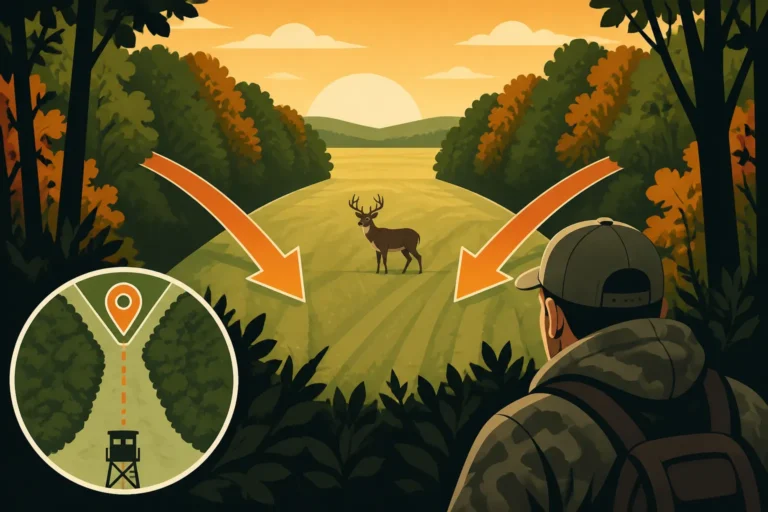
These smaller cover elements act as highways and hideouts. Deer will often travel along the inside edge of a fencerow, keeping just out of sight from open fields. They might bed down in the thickest part of a small woodlot during the day, only to emerge at dusk to feed in an adjacent corn or soybean field. The challenge for hunters is to identify these linear travel corridors and bedding areas without pushing deer out of these confined spaces. Approaching these spots without being detected is critical, as deer have very limited escape routes compared to larger forested tracts. For practical strategies on how to position yourself along these critical lines, consider tactics like those described in Setting Up on a Northwest Ohio Field Edge.
The Influence of Human Activity and Livestock
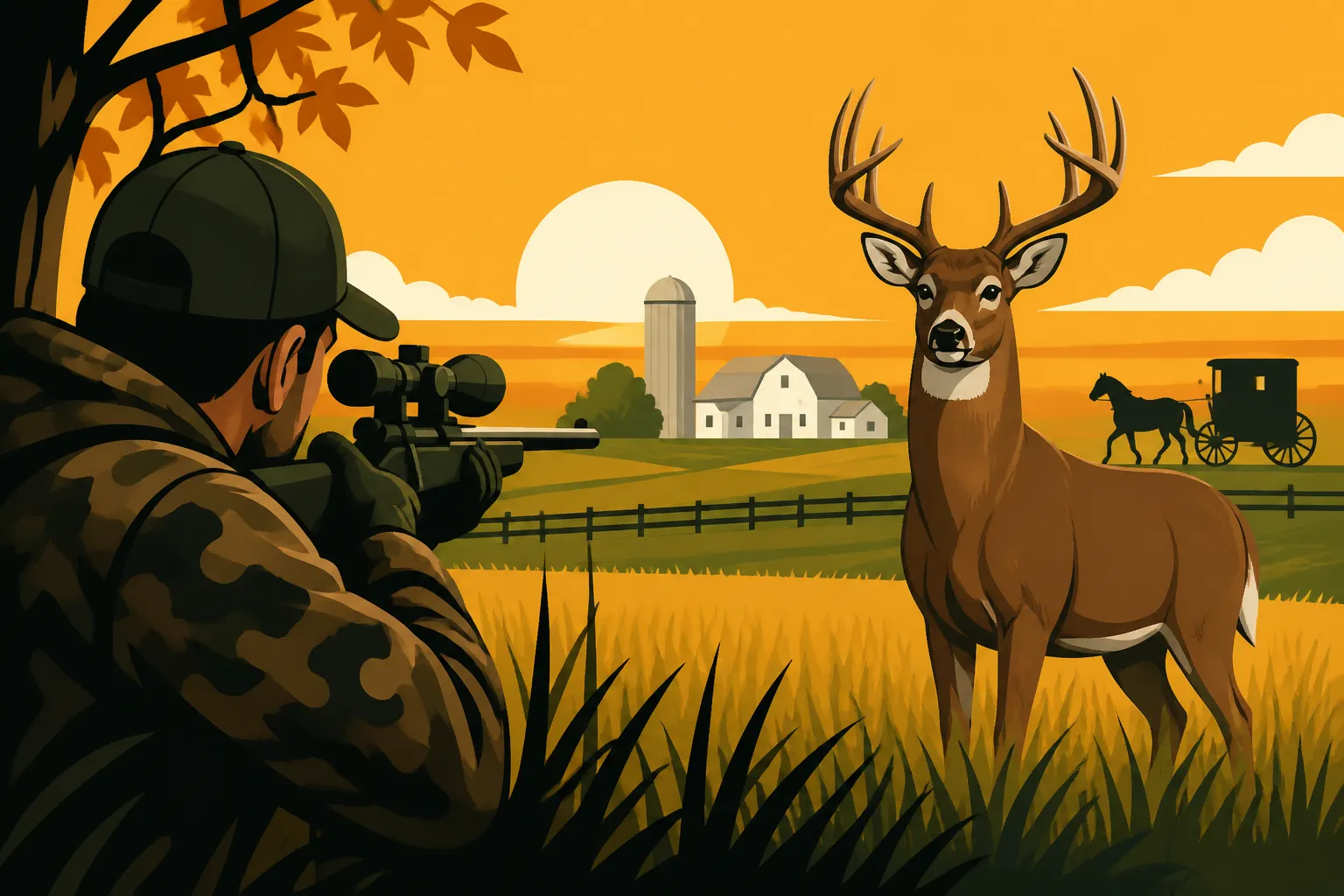
Another defining characteristic of Amish country is the constant, yet generally predictable, human presence. Horse-drawn buggies clip-clop down country roads, children play in yards, and farmers are often in their fields working with horses or traditional equipment. This means deer are often more accustomed to human sounds and sights than deer in remote wilderness areas.
Deer in these environments often learn to differentiate between non-threatening human activity (like a buggy passing by or someone working in a distant field) and direct hunting pressure. They might tolerate closer proximity to homes or farm buildings than deer in other regions, as long as they don't feel directly pursued. However, this acclimation also means they can be incredibly wary of anything out of the ordinary, like a hunter walking through their usual travel path or a sudden, loud noise. It's a fine line to walk. You might even observe deer feeding casually in a pasture with cows or horses, demonstrating a level of tolerance rarely seen elsewhere. This insight into their behavior requires a nuanced hunting approach that respects their sensitivity to unusual disturbances while leveraging their tolerance for routine human activity.
Effective Hunting Tactics for Ohio's Amish Farmland
Success in Ohio’s Amish country demands a thoughtful and often stealthy approach. You’ll need to adapt your scouting, stand placement, and movement strategies to blend with this unique environment.
Strategic Scouting and Entry/Exit Routes
Scouting in Amish country is about precision and stealth. You can’t just crash through the woods, leaving a scent trail and disturbing the landscape. With smaller cover patches, every move you make is amplified. Before you even set foot on the property, once permission is secured, advanced mapping platforms like GoHunt become invaluable. You can leverage tools like GoHunt to analyze aerial imagery, identifying those narrow fencerows, small woodlots, creek bends, and field edges that act as key deer habitat. Look for natural pinch points where deer are funneled into a predictable path.
When on the ground, focus on low-impact scouting. Walk field edges, observe from a distance, and use binoculars to spot deer movement patterns without disturbing the area. Pay close attention to subtle signs like tracks in mud along creek banks, rub lines on saplings at the edge of woodlots, and fresh droppings in feeding areas. Your entry and exit routes are paramount. You need to approach your stand site quietly, ideally before first light or well before dusk, using natural cover to conceal your movement. If you're hunting along a field edge, consider entry points that allow you to walk along a ditch line, through a standing crop, or a hedgerow, minimizing your visibility and noise. Remember, the goal is to get into position without alerting the deer or, equally important, the residents.
Still-Hunting, Ground Blinds, and Treestand Placement
Given the fragmented cover and often unpredictable movement patterns, a blend of tactics tends to work best. Still-hunting can be incredibly effective when done slowly and carefully along a promising fencerow or a small woodlot island. This involves moving a few steps, pausing, observing, and listening for extended periods. It allows you to cover ground while reacting to deer signs as you encounter them.
Ground blinds are another fantastic option, especially during gun seasons when you might be sitting for longer periods in colder weather. They offer excellent concealment and help contain your scent. Position your blind in a strategic location near a major travel corridor or a field edge, making sure it’s brushed in naturally. You want it to look like a part of the landscape, not an alien invasion. For advice on effective blind setup, consider reading Using a Ground Blind on Ohio Public Land, as many of the principles apply to private land too.
When it comes to treestand placement, precision is key. You're often looking for that singular, mature tree along a fence line, at the corner of a woodlot, or overlooking a small funnel between two fields. Unlike vast forests where you might have multiple tree options, in Amish country, your choices can be limited. The stand needs to offer a clear shot at expected travel paths, provide good concealment, and be accessible via a discreet entry route. Consider prevailing winds and sun direction. While GoHunt provides excellent property boundary overlays, always double-check local regulations and property lines, especially when hanging a stand near a neighbor’s property.
| Feature / Tactic | Typical Woodland Hunting | Amish Farmland Hunting |
|---|---|---|
| Primary Cover | Vast forests, large timber blocks, deep hollows | Small woodlots, fencerows, creek bottoms, standing crops |
| Food Sources | Acorns, natural browse, small food plots | Row crops (corn, beans, wheat, hay), pastures |
| Land Access | Public land, commercial leases, formal permission | Often informal, relationship-based, trade-based permission |
| Deer Acclimation | Highly wary of human scent/sound, pressure | Accustomed to low-level human activity; wary of unusual threats |
| Ideal Stand Placement | Funnels between bedding/feeding areas, ridge saddles | Field edges, pinch points in hedgerows, specific woodlot corners |
| Scouting Emphasis | Reading terrain, large areas, game trails | Identifying linear cover, crop usage, discreet observation |
Respectful Engagement and Ethical Considerations
Hunting on private land, especially within an Amish community, is a privilege, not a right. Your behavior directly impacts not only your future access but potentially the access of other hunters as well.
Building and Maintaining Trust with Landowners
Gaining permission to hunt on Amish land often comes down to personal connection and trust. Once you've secured that initial handshake, maintaining that trust is paramount. Be absolutely clear about your intentions: how often you plan to hunt, what species you’re after, and your commitment to safety. Respect their property as if it were your own, and then some. This means no littering, no driving off established paths, and being mindful of their farming operations.
Following through on any promises you make, whether it’s helping with a chore or offering to share some venison, goes a long way. The Amish value community and reciprocal relationships. Don't overstay your welcome, and never bring unannounced guests. If you harvest a deer, offer to help the landowner with any tasks, or simply take the time to chat and thank them sincerely. A relationship built on respect and mutual understanding can provide you with a fantastic hunting opportunity for years to come.
Navigating Local Customs and Safety
When hunting in Amish communities, you’re operating within a unique cultural context. Be mindful of their peaceful, often quiet lifestyle. Avoid excessive noise, especially near homes or during times of worship. Be extra cautious with vehicle traffic, as horse-drawn buggies share the roads and livestock may be near.
Safety is always the top priority. Know Ohio’s Ohio Firearms Discharge Setback Rules to ensure you are at a safe distance from dwellings and other structures. Always wear your Ohio Blaze Orange Requirements for visibility, not just for deer season, but especially in areas where others may be working or walking. If you wound a deer and it runs onto an adjacent property, you must seek permission from that landowner before attempting retrieval. This can be a tough conversation, but it's an ethical and legal necessity. Your actions reflect not just on you, but on all hunters. Being a good ambassador for hunting is especially important in these close-knit communities.
Disclaimer
Please note: Hunting regulations, license requirements, and season dates can change. Always consult the latest Ohio Department of Natural Resources (ODNR) hunting and trapping regulations before heading afield. This guide is for informational purposes only and does not supersede official state regulations.