Opening Weekend Tactics for Ohio Gun Season
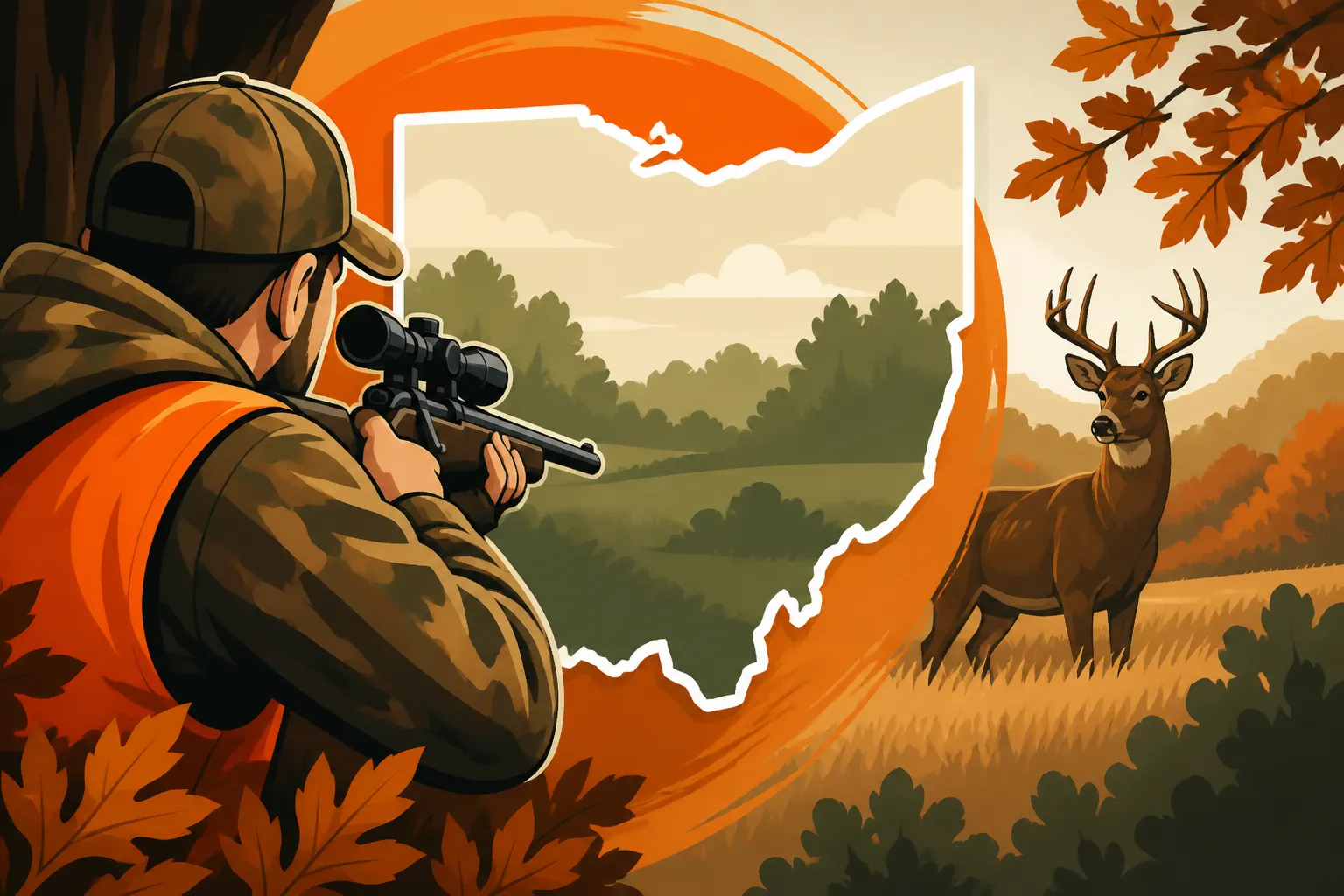
Ohio's deer gun season opener is an event many hunters eagerly anticipate, but let's be honest, it often brings a unique blend of excitement and intense frustration. The woods, which felt so peaceful during archery season, suddenly buzz with human activity, making deer unpredictable and success feel like a lottery. This guide aims to cut through the chaos, offering realistic, battle-tested tactics to help you navigate the pressure cooker of opening weekend and put venison in the freezer.
Understanding Opening Weekend Dynamics
The first weekend of gun season in Ohio is truly in a league of its own. It’s a time when more hunters flood the woods than any other period, creating conditions that are both challenging and, if you know how to leverage them, potentially very rewarding. Expect the unexpected, and prepare for a different kind of hunt than you might experience during the archery or muzzleloader seasons.
The Ohio Gun Opener Rush and Hunter Pressure
The moment that sunrise crests on opening day, Ohio's forests, woodlots, and farmland edges come alive with activity. You'll hear more shots than any other day of the season, and you'll undoubtedly encounter other hunters, especially on public land. This high hunter density isn't just a minor inconvenience; it fundamentally alters deer behavior. Deer that were once comfortable feeding in open fields at dusk might now be tucked deep into heavy cover, moving only under the cloak of darkness or when pushed. The sheer volume of people driving roads, walking trails, and climbing into stands creates a constant disturbance.
It's crucial to understand that many hunters will gravitate towards easily accessible areas. Think parking lots, well-worn trails, and the edges of fields. This creates a "pressure wave" that pushes deer out of these common spots and into places where they feel safer. Your job, if you want to be successful, is to anticipate these movements and position yourself accordingly. Remember, while it might feel like everyone is out there, there are still pockets of overlooked terrain, especially on larger tracts of public land. This intense pressure is a core element of hunting the second gun weekend in December as well, albeit often with colder temperatures.
Deer Behavior Under Intense Pressure
Deer are incredibly adaptable creatures, and they learn quickly. Within hours of opening day, they adjust their patterns dramatically. Their primary goal becomes survival, and that means avoiding human contact. You'll often see deer transition from their typical feeding and bedding areas to much thicker cover, often in places you might consider impenetrable. These sanctuary areas could be dense briar thickets, steep ravines, swampy bottoms, or even small, overlooked islands of cover near suburban areas.
Furthermore, deer movement becomes far more nocturnal. While some deer will certainly move during daylight, especially if pushed, their natural inclination will be to wait until legal shooting hours close. Pay close attention to subtle shifts: a buck that was using a visible trail a week ago might now be skirting that trail 50 yards deep in the woods, using heavier cover. They'll utilize every ditch, creek bank, and fencerow as a natural travel corridor, staying low and out of sight. Understanding how deer react to this intense human presence is key to making a successful plan for opening day. Consider how different this movement is compared to hunting the Ohio rut in early November, when bucks are often less cautious.
Weather's Impact on Opening Day Success
Just like any other hunting day, weather plays a massive role in opening weekend success. Cold, crisp mornings with light winds can often lead to excellent deer movement, as deer are up and active, needing to feed to maintain body temperature. A fresh dusting of snow can be a game-changer, not only for tracking but also for quieting the woods and making deer feel more secure. However, heavy rains, high winds, or sudden temperature drops can shut down movement or push it to different times of the day.
If opening day is warm and rainy, expect deer to move less and hold tight in cover. If it's bitterly cold, they might move more during mid-day to feed, but will still prioritize heavy thermal cover. Always check the forecast meticulously leading up to the weekend. A significant weather front can dramatically shift deer patterns, influencing everything from where they bed to when they feed. Knowing this can help you adjust your strategy, whether it means staying in your stand longer during a cold snap or still-hunting through thickets during a warm drizzle.
Scouting and Pre-Season Preparation for High-Pressure Hunts
Success on opening weekend isn't just about showing up; it's heavily dependent on the groundwork you lay before the season even begins. Pre-season scouting, especially on public land, is paramount to understanding how deer might react to the impending hunter pressure. Don't underestimate the value of a solid plan.
Locating Sanctuary Areas and Escape Routes
Before the orange army descends, your primary mission should be to identify areas where deer will flee when pressure hits. These are often the nastiest, thickest, and most difficult-to-access places on a property. Look for deep ravines, steep hillsides, dense cedar thickets, large swamps, or even overlooked islands of heavy cover surrounded by more open timber. These are the places deer will retreat to when the shooting starts and hunters begin moving.
Once you’ve identified these potential sanctuaries, your next step is to pinpoint the escape routes leading to and from them. Deer won't just magically appear in these spots; they'll use predictable travel corridors, often along terrain features that offer concealment. Think creek beds, fencerows, ridge lines that provide cover, or even dense brush lines between open fields. Pay attention to how the topography naturally funnels deer away from high-traffic areas and towards these safe havens. Using detailed mapping apps, like onX Hunt, or even comprehensive hunting platforms that integrate mapping like GoHunt, can be invaluable here. These tools allow you to study contour lines, vegetation types, and access points from your couch, helping you visualize potential escape routes and sanctuary spots long before you ever step foot in the woods. This type of detailed preparation is essential for anyone Scouting Ohio Public Land Before Season.
Identifying Key Funnels and Pinch Points
Deer, especially pressured deer, love efficiency and concealment when they move. This makes funnels and pinch points incredibly valuable spots for opening weekend. A funnel is any geographical feature that naturally constricts deer movement into a narrower path. This could be a strip of woods between two open fields, a saddle on a ridge, a narrow neck of timber connecting two larger woodlots, or even a deep creek crossing. Deer will often utilize these paths to move between bedding and feeding areas, or when displaced by hunting pressure.
Pinch points are similar but often refer to even tighter areas where deer are forced into a very specific travel lane. Imagine a steep bluff on one side and a thick swamp on the other, leaving only a small dry strip for deer to walk. These are high-odds spots because deer have to pass through them. On opening weekend, these funnels become even more critical. When hunters push deer from one area, these funnels act as natural highways for deer trying to escape to another. Positioning yourself silently near one of these features, downwind and out of sight, can pay huge dividends.
Leveraging Digital Tools for Public Land Scouting
In today's hunting world, digital scouting tools are almost as important as your binoculars. For opening weekend in Ohio, they are indispensable. Start with the Ohio Department of Natural Resources' (ODNR) HuntFish app, which provides property boundaries for wildlife areas and state forests, along with aerial imagery. Supplement this with commercial apps like onX Hunt or even general-purpose mapping software. These platforms allow you to overlay private and public land boundaries, view topographic maps, and examine satellite imagery in incredible detail.
Use these tools to identify potential access points that might be less obvious or require a longer walk, thereby reducing hunter competition. Look for changes in elevation, different timber types (hardwoods versus pines, for example), water sources, and especially dense cover. Drop pins on potential stand sites, funnels, and escape routes. You can even use features to measure distances to property lines to ensure legal and safe shots. While not specifically designed for Ohio, more comprehensive hunting platforms like GoHunt can provide a similar level of detailed mapping and planning insights that western big game hunters rely on, which can be adapted for dissecting any landscape. This virtual scouting allows you to narrow down your physical scouting efforts and arrive on opening day with a precise, well-researched plan, maximizing your time in the woods.
Stand Placement and Strategy for Opening Day
Once you've done your homework, it's time to think about where you'll actually be when opening day arrives. Stand placement, whether in a tree or on the ground, requires careful consideration of deer movement, hunter pressure, and wind direction. The wrong spot can mean a long, uneventful day, while the right one can put you in the perfect position for a shot.
Elevated Stands for Visibility and Safety
Treestands remain a go-to tactic for Ohio deer hunters, and for good reason. Getting up into a tree significantly enhances your visibility, allowing you to spot deer moving through thicker cover or over longer distances. It also helps to get your scent above the primary deer-traveling zone, reducing the chances of being winded, although wind direction should always be your top priority. On opening weekend, an elevated stand can also provide a crucial safety advantage, positioning you out of the direct line of sight of other hunters who might be walking or still-hunting.
When selecting an elevated stand location for opening day, think escape routes and transition areas. Instead of focusing solely on traditional feeding areas that might be crawling with hunters, aim for spots along the pathways deer will use after they've been bumped. This could be a hard-to-reach bench on a steep ridge that funnels deer, a small cluster of oaks deep within a thicket, or a strategic point overlooking a dense swamp edge. Ensure your approach and exit routes to the stand are as quiet and scent-free as possible, especially in the pre-dawn darkness. A sturdy, quiet climbing stick setup or a carefully hung fixed-position stand can be excellent choices for accessing these out-of-the-way spots. Remember to always use a safety harness and lifeline when using any elevated stand.
Ground Blind Tactics for Concealment
For some situations, especially where suitable trees are scarce or you prefer more mobility, a ground blind can be an incredibly effective tool on opening weekend. The key advantage of a ground blind is the excellent concealment it offers. A well-brushed-in blind virtually disappears into the landscape, allowing for subtle movements, which is a huge benefit when deer are on high alert. This can be particularly useful in open country, near field edges, or in dense thickets where visibility is already limited.
When deploying a ground blind for opening weekend, prioritize brushing it in days or even weeks beforehand, allowing deer to get accustomed to its presence. Position it along those escape routes, pinch points, or near heavy cover where deer will be seeking refuge. Pay meticulous attention to prevailing wind directions and ensure your shooting lanes are clear but don't over-trim, as that will compromise your concealment. Consider a blind from brands like Primos or Ameristep, known for their durable and easily concealable designs. Setting up a blind effectively can make all the difference, as discussed in Using a Ground Blind on Ohio Public Land.
Adapting to Morning vs. Afternoon Movement
Deer movement on opening weekend often follows a pattern dictated by the initial hunting pressure. The first hour or two after legal shooting light can be frantic, with deer moving from their nocturnal feeding areas back to bedding cover, potentially being bumped by early-bird hunters. This is often when the most shots are fired. However, many hunters abandon their stands by mid-morning, heading for breakfast or to warm up. This mid-day lull in human activity can sometimes coincide with deer making short, careful movements to re-position or find new bedding.
The afternoon, especially the last two hours of daylight, can be another prime time. As deer settle into their sanctuary areas throughout the day, the continuous movement of other hunters might push them out of these spots, or they might cautiously begin to move towards evening feeding areas. Your strategy should adapt to these shifts. A deep-woods stand near a bedding area might be best for an all-day sit, catching deer moving throughout the day. A stand overlooking a hidden food source or a natural escape route might be better for the afternoon push. Be prepared to stay in your stand longer than you normally would, as those mid-day movements, while subtle, can be the most productive on highly pressured ground.
Still-Hunting and Drives in Crowded Conditions
While stand hunting is popular, active hunting strategies like still-hunting and organized drives can be incredibly effective on opening weekend, especially in areas with high hunter pressure. These methods rely on understanding deer movement under duress and coordinating with other hunters for maximum safety and success.
The Art of Quiet Still-Hunting
Still-hunting is perhaps the most challenging, yet rewarding, method for opening weekend, particularly on public land where other hunters are constantly on the move. It's not about crashing through the woods; it's about moving incredibly slowly, taking one or two steps, then pausing for several minutes to observe and listen. You're effectively hunting like a predator, using your eyes and ears more than your feet. The goal is to move through known deer bedding areas or transition zones, hoping to catch a deer unawares that has been bumped by other hunters or is slowly trying to sneak to a new hideout.
Focus on moving into the wind or with a slight crosswind, scanning every shadow, every downed log, and every thicket for parts of a deer. Use the terrain to your advantage, slipping along creek bottoms, behind ridge lines, or through dense cover. This method works exceptionally well in areas like the Appalachian Ohio Hardwoods, where varied terrain creates natural advantages for a stealthy hunter. The key is extreme patience and keen observation. If you hear a distant shot or notice an increase in foot traffic, anticipate which way deer might be pushed and adjust your slow crawl accordingly. Always be mindful of other hunters' positions and wear plenty of blaze orange, as detailed in Ohio's Blaze Orange Requirements, to ensure you're visible at all times.
Organizing Effective Deer Drives on Public Land
Deer drives can be highly productive on opening weekend, especially on public land where deer are already being pushed. However, they require careful planning, coordination, and an unwavering commitment to safety. The idea is simple: one or more "drivers" walk through a specific block of cover, pushing deer towards "standers" who are positioned along escape routes or funnels. This strategy can be incredibly effective for dislodging deer from thick bedding areas they've retreated to.
For a successful drive, start with good communication. Everyone involved needs to understand the plan, their role, and the boundaries of the drive. Safety is paramount: always know where every member of your group is positioned. Drivers should walk slowly and deliberately, pausing often, to keep deer moving steadily rather than busting them out wildly. Standers should be positioned downwind, in elevated positions if possible, and focused on potential escape routes. Small drives with "Deer Drives With Three or Four Hunters" can often be more effective and safer than large, chaotic ones. Before you organize a drive, familiarize yourself with Ohio Deer Season Structure Explained and ensure you are within all regulations.
Safety First During Group Hunts
Whether you're still-hunting or participating in a deer drive, safety should always be your absolute priority, especially on a crowded opening weekend. The woods will be full of other hunters, and visibility can be limited. Always wear sufficient blaze orange or blaze pink (Ohio law permits both). The Ohio Department of Natural Resources (ODNR) mandates wearing hunter orange during certain firearm seasons, and it's simply good practice to wear it when gun hunting, regardless of specific regulations.
Before any group hunt, discuss your plan thoroughly. Clearly define shooting lanes and zones of fire. Never shoot at sound or movement; positively identify your target and know what's beyond it. Carry a fully charged cell phone for emergencies and consider two-way radios for communication in areas with poor cell service. Being aware of your surroundings, constantly scanning for other hunters, and having a clear understanding of your group's positions are non-negotiable. It's better to let a deer walk than to take a risky shot that could endanger yourself or others. Ensure you are familiar with Ohio Legal Firearms for Deer Hunting to avoid any issues.
| Tactic | Pros | Cons | Best for… |
|---|---|---|---|
| Still-Hunting | Actively seeks out pressured deer; highly engaging; adaptable. | Requires extreme patience and stealth; physically demanding; low shot opportunities. | Hunting thick cover, small woodlots, or when deer are highly pressured and holding tight. |
| Stand Hunting | Reduces scent dispersal; excellent visibility; less physically taxing. | Requires long periods of stillness; can miss out on deer pushed by others; scent control is critical. | Overlooking funnels, escape routes, or hidden food sources; all-day sits in key areas. |
| Deer Drives | Effective at moving deer out of thick cover; good for group hunting. | Requires careful coordination and communication; safety is paramount; can be chaotic if not planned well. | Dislodging deer from dense bedding areas; larger tracts of public or private land. |
Post-Shot Considerations and Recovery in a Bustling Environment
You've made a good shot, now what? Recovering your deer cleanly and efficiently is the final, crucial step. On opening weekend, this process comes with its own set of challenges, from potential encounters with other hunters to varying environmental conditions.
Tracking a Deer in Fresh Ohio Snow
If you're lucky enough to have fresh snow on opening weekend, it can be a double-edged sword. While tracking a deer in fresh Ohio snow provides an undeniable advantage by clearly revealing direction and intensity of movement, it also means your tracks are easily visible to other hunters. This can lead to competition for a downed animal or simply confusion if multiple hunters are tracking in the same area.
Upon making a shot, observe the deer's reaction closely and mark the last spot you saw it. Wait at least 30-60 minutes for a gut shot, or 15-30 minutes for a suspected lung/heart shot, before taking up the trail. This allows the deer to lie down and stiffen up. When tracking, focus on small details: blood color, bubbles in the blood (indicating a lung hit), hair, and broken twigs. Move slowly and deliberately, always looking ahead for the deer. If you lose the trail, grid search the area in expanding circles. If other hunters approach, politely explain you are tracking a wounded animal and offer details, but firmly assert your claim to the deer. Knowing how to efficiently go about Tracking a Deer in Fresh Ohio Snow is a skill every hunter should possess.
Blood Trailing After Dark in Ohio
Sometimes, despite your best efforts, you might find yourself needing to blood trail after dark in Ohio. This situation is never ideal, but it happens. Before embarking on a night trail, consider if the shot was marginal. If you suspect a gut shot, it's often better to back out and wait until morning, allowing the deer more time to expire and stiffen up. A wounded deer pushed at night can travel miles. If you decide to trail at night, gather all necessary equipment: powerful flashlights (including a headlamp), a friend to help, and a small marker like flagging tape (remove when done).
Blood can be incredibly difficult to see at night, even with a good light. Move very slowly, sweeping your light back and forth. Look for shine on leaves, dark spots on the ground, or any disturbance. If you find blood, mark it and then search for the next sign from that spot. Never get ahead of the last confirmed blood sign. Be mindful of property lines; if the trail leads onto private land, you'll need to obtain permission from the landowner before proceeding. Familiarize yourself with Ohio's laws regarding retrieving game from private land. This can be a tense situation, but staying calm and methodical is key to a successful recovery. For more specific guidance, refer to Blood Trailing After Dark in Ohio.
Handling Venison Quickly and Properly
Once your deer is down and recovered, the clock starts ticking, especially if opening weekend brings warmer temperatures. Proper field dressing and venison care are crucial to ensure you get the best quality meat. Immediately after recovery, field dress the deer to begin the cooling process. Remove the entrails as quickly as possible. If the weather is mild, consider gutting the deer completely and removing the hide to allow the carcass to cool faster.
Transport the deer efficiently. If you're hunting in rugged terrain, a deer sled or a game cart can be invaluable for getting the animal out. For hunters on their own or in very steep country, knowing how to field dress and quarter a deer in the field for transport in a pack is a useful skill. Once back at camp or home, if possible, hang the deer in a cool, dry place to age (temperatures consistently below 40°F are ideal). If temperatures are warm, get the deer to a processor quickly or begin butchering and chilling the meat yourself. Always check your deer through the Ohio checking system promptly, as outlined in Ohio Deer Checking and Reporting Rules. Good meat care is a sign of respect for the animal and ensures delicious meals for your table. For further details on this process, see Field Dressing a Deer in Cold Weather.
Disclaimer
Please note that hunting regulations, seasons, and licensing requirements can change. Always consult the most current Ohio Department of Natural Resources (ODNR) hunting regulations before heading afield. This guide is for informational purposes only and does not supersede official state regulations.