Tracking a Deer in Fresh Ohio Snow
There's nothing quite like the rush of an Ohio deer hunt in fresh snow, the landscape transformed into a pristine canvas. But that elation can quickly turn to gut-wrenching despair when you make a good shot, only for the tell-tale blood trail to seemingly vanish into thin air. Many hunters find themselves utterly frustrated, convinced the snow should make tracking easier, not harder. This guide is here to equip you with the knowledge and proven strategies to confidently track and recover a wounded deer in various Ohio snow conditions, turning what feels like a lost cause into a successful recovery.
The Deceptive Simplicity of Snow Tracking
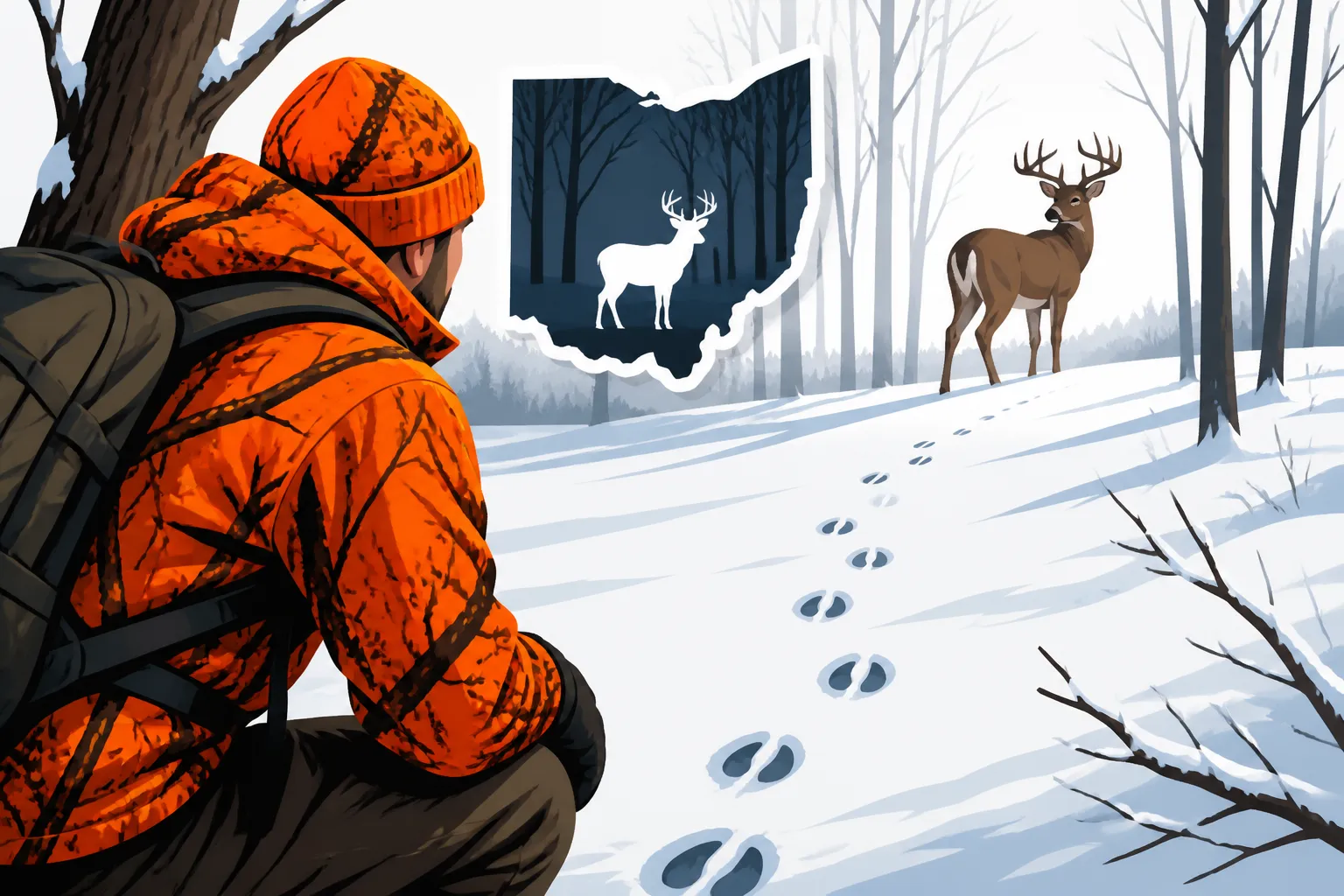
When that first blanket of snow falls across Ohio, it paints a beautiful picture, doesn't it? For hunters, it often brings a renewed sense of optimism, a feeling that tracking will be a breeze. After all, every step, every disturbance, should be visible. However, anyone who's spent time on a blood trail in the white stuff knows it's far from simple. The very thing that promises clarity can sometimes obscure the most crucial evidence.
When a Bright Blood Trail Suddenly Goes Dark
You hit the deer, you heard the thud or saw the reaction, and you knew it was good. You wait, give the deer some time, and then step onto what you expect to be a clear, obvious blood trail. Maybe it starts strong, a bright red against the white snow, giving you confidence. Then, suddenly, it's gone. Poof. Just like that. The heart sinks, doesn't it? This vanishing act is a common frustration for many hunters. Snow, especially fresh, fluffy powder, can act like a sponge, quickly absorbing blood, particularly if the wound isn't gushing or if the deer is traveling through deeper drifts.
Often, a deer that is hit high, like a high lung or even a muscle shot, might not bleed externally as heavily as a deer hit lower in the chest. In deep snow, a deer's legs can sweep through, creating mini-trenches that obscure smaller drops. You're left staring at a series of tracks, wondering where your red roadmap disappeared to. It’s in these moments that the initial excitement of a good shot rapidly gives way to genuine bewilderment and a growing sense of panic, demanding a systematic and patient approach to finding your game.
Navigating Different Snow Conditions
Ohio's winters are rarely consistent. One day you might have a light, fresh snowfall; the next, it's crusty and loud underfoot, or even worse, melting and refreezing, creating a whole new set of tracking challenges. Each type of snow presents its own unique difficulties, making a one-size-fits-all tracking approach ineffective. Understanding these nuances is crucial for success.
Fresh, light snow is often what hunters dream of. It shows every impression perfectly – the shape of the hoof, the drag of a leg, even disturbed flakes from a branch. However, as we discussed, it also absorbs blood quickly. If the blood flow is minimal, it might just leave a pinkish stain that’s easily missed or melts away within hours, especially if the ground beneath is warmer. You really have to slow down and look for those subtle pinkish hues or even just a wet spot where the blood has saturated the snow.
On the flip side, crusted snow, or snow that has melted and refrozen, is a whole different beast. It's noisy, making it difficult to stalk silently, and the tracks themselves can be less distinct, often just broken edges rather than clear impressions. Blood might bead up on the surface or be absorbed into the icy crust, becoming almost invisible. The key here is to look for distinct breaks in the crust, disturbed areas, or even small flecks of ice that have been kicked up. A deer's hooves can shatter crusted snow in a very specific pattern, and paying attention to these fragmented clues can keep you on the right path.
Deciphering the Story in the Snow
While blood is often the most sought-after sign, seasoned trackers know that the snow itself, along with other disturbances, tells a much richer story. It’s like reading a book where the deer is the main character, and every disturbance is a word on the page. Learning to interpret these subtle cues is paramount when the blood trail becomes sparse or vanishes altogether.
Reading Tracks for Clues Beyond Blood
A deer track in the snow is never just a simple indentation. It's a complex signature that can reveal a tremendous amount about the animal's health, its pace, and even its intentions. When you’re tracking a wounded animal, these subtle differences become magnified and are incredibly important to recognize. Don't just look for a hoof print; look at the entire impression.
Start by observing the depth of the tracks. A healthy deer, especially if running, will often leave deep, evenly spaced tracks, but a wounded deer might show inconsistencies. Look for splayed hooves, where the two halves of the hoof are spread wider than normal, indicating weakness or instability in the deer's gait. This is a huge indicator of injury, as a healthy deer typically keeps its hooves together unless it’s making a sharp turn or running at top speed on slick ground.
Beyond the hoof prints, always be on the lookout for drag marks. This is where the snow truly becomes your ally. A leg dragging, a belly scraping, or even the tips of the hooves "knuckling" the snow will leave a tell-tale line between steps. These drag marks are almost always indicative of an injured animal. Pay attention to the spacing between tracks, too. A wounded deer might take shorter, more labored steps, or its stride might be uneven. A healthy deer generally maintains a consistent stride, while an injured one might falter or favor one side, creating an asymmetric pattern in the snow.
Expanding Your Search for Non-Blood Sign
When the red disappears, your eyes need to adjust and broaden their focus. There's a myriad of other signs a wounded deer leaves behind, especially when pushing through cover. Think like a detective, examining every inch of the snow and surrounding vegetation. This often means getting down on your hands and knees, really inspecting the ground.
Look for disturbed snow, beyond just the tracks. Did the deer brush against a low-hanging branch, knocking snow off? Are there areas where a larger section of snow is pushed aside, indicating a struggle or a hard turn? Hair can be a golden clue. If you find small tufts of hair, especially around the entry point or along the trail, examine it carefully. Is it body hair (longer, coarse) or inner hide hair (finer, often with a grayish base)? The color can also indicate where the deer was hit. White belly hair means a low hit; dark back hair means a high hit.
Urine or feces can also offer clues. While not always indicative of injury, if you find urine that is tinged with blood, or feces that are loose or unusually colored, it could point to a gut shot. Overturned leaves, bent-over grass, or broken twigs that aren't otherwise disturbed by natural forces are all subtle indicators that an animal has recently passed through. Sometimes, particularly with a gut-shot deer, you might even catch a faint musky odor as you slowly move along the trail. Don't underestimate any of these small details; cumulatively, they paint a clear picture.
Leveraging Mapping Apps and Technology
In today's hunting world, technology can be a powerful ally in tracking, especially when the trail is faint or complicated. Apps and GPS units aren't just for finding your stand; they can be invaluable tools when you're Blood Trailing After Dark in Ohio or anytime the sun goes down and you need to mark a spot.
Mapping applications like GoHunt or OnX Hunt allow you to drop pins at your last known blood or sign. This is huge. Instead of relying on a memory or physically marking trees, you can digitally record every significant piece of evidence. This creates a virtual breadcrumb trail that allows you to confidently backtrack if you lose the trail again, or to show others exactly where you've been. You can also track your own path as you search, helping you conduct a systematic Deer Drives With Three or Four Hunters or solo grid search without unknowingly doubling back or missing sections.
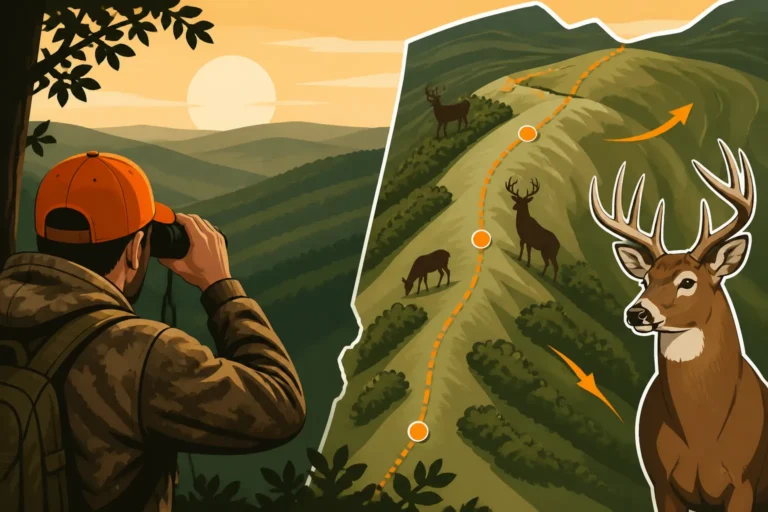
A dedicated GPS unit or even your smartphone with a reliable mapping app can also help you visualize the terrain a wounded deer might favor. A deer, when wounded, often seeks the path of least resistance initially, but then will typically gravitate towards the thickest cover available, or perhaps downhill towards a water source. By looking at the topo lines on your app, you can anticipate these movements and focus your search efforts more efficiently. For an in-depth look at how these tools compare, check out our guide on GPS Units Versus Phone Apps.
Strategic Approaches to the Track
Tracking a wounded deer in snow is as much about strategy and mindset as it is about reading sign. Panic is your enemy, and a methodical, thoughtful approach will yield far better results than a hurried, haphazard one. The goal is to move deliberately, thinking several steps ahead of the deer while carefully analyzing every single clue it leaves behind.
The Importance of a Slow and Methodical Pace
This is arguably the most critical piece of advice for tracking any deer, but especially in snow. Your pace directly impacts your ability to see subtle signs. If you rush, you'll inevitably miss crucial clues, whether it's a fleck of hair, a splayed hoof print, or the faintest pink stain in the snow. Think of it as a chess match against the deer; every move you make must be calculated.
When you're tracking, the "one track at a time" philosophy is golden. Identify one track, confirm it's the deer you're after, then carefully scan for the next. Don't look too far ahead. This forces your eyes to scrutinize every detail in the immediate vicinity. If you have the luxury of multiple trackers, organize yourselves. One person can focus solely on the tracks, another on scanning the sides for blood splashes or disturbed vegetation, and a third can act as an anchor, staying at the last confirmed sign. This coordinated effort significantly increases your chances of success. A slow pace also prevents you from pushing a potentially still-alive deer further, giving it time to bed down and expire.
Anticipating a Wounded Deer's Behavior
Deer are creatures of habit and instinct, and a wounded deer's behavior is often predictable. Understanding these patterns can guide your search even when physical signs are scarce. This often means thinking about the deer's immediate reactions and its natural tendencies when injured.
A deer that feels pressured will almost always seek the thickest available cover. If you’re hunting in agricultural areas, this might mean a dense fencerow, a small woodlot island, or a patch of standing corn or beans. In Appalachian Ohio, they'll often head for deep ravines, brushy clear-cuts, or dense laurel thickets. Topography also plays a huge role; a wounded deer will often try to go downhill, especially if mortally wounded, as it requires less energy. Look for natural funnels, creek bottoms, or heavy brush lines. If you're near water, they might head to a creek or pond, either to escape or to bed near a perceived safe haven. For more on late-season tactics, consider Hunting a Creek Bottom for Late-Season Deer.
Different shot placements lead to different behaviors. A deer hit through the lungs might bolt hard initially, then slow down, often bedding within a few hundred yards. A gut-shot deer, however, will usually travel slowly, often stopping to bed down quickly, then moving again. They might hunch up, walk stiffly, and will often seek very dense cover. Knowing these tendencies helps you predict where to concentrate your search efforts, saving precious time and energy.
Implementing Effective Grid and Line Searches
Sometimes, despite your best efforts, the trail simply vanishes, leaving you standing in the snow wondering what to do next. This is where systematic search patterns become invaluable. Don't just wander aimlessly; apply a structured approach.
When you lose the trail, first, mark your last known sign. Use a ribbon, a piece of toilet paper, or drop a pin on your GoHunt app. This is your anchor point. From there, expand your search in a circular pattern around the last sign, starting tight and gradually widening. Get on your hands and knees and scrutinize every detail. If the circular search doesn't yield results, consider a grid search. Define a manageable area, perhaps 50-100 yards wide, and have your team (if you have one) walk parallel lines through it. Each person focuses on their lane, looking for any sign – tracks, blood, hair, disturbed snow.
Alternatively, a line search is effective if you have multiple people. Spread out in a straight line, perhaps 10-20 yards apart, and walk forward in unison, keeping visual contact with the person next to you. This method is particularly useful in open timber or across fields where visibility is good. If you're hunting solo on public land, this kind of systematic search is still important, just done on a smaller scale and with more backtracking. Remember, the goal is to cover ground thoroughly without missing anything.
The Critical Role of Time and Patience
Tracking a deer in snow is not a race; it's a test of endurance and resolve. The decision of when to continue tracking and when to back out and wait is often the most difficult, and yet the most important, a hunter makes. Rushing a marginally hit deer can push it further, making recovery much harder, while waiting can allow the deer to expire quietly.
Knowing When to Back Out and Wait
This is the agonizing part, isn't it? You want to recover your animal now. But if you suspect a gut shot, a liver hit, or any shot that isn't clearly a lung or heart shot, backing out is often the best strategy. A deer hit in the gut needs time – often 6-12 hours, sometimes more depending on conditions. Pushing it will only make it run further, making the track longer and potentially pushing it onto neighboring private property where you might not have access.
In cold Ohio winter conditions, spoilage isn't as immediate a concern as it would be during Bowhunting Ohio's Long Archery Season in warmer months. The cold acts as a natural refrigerator, giving you more leeway to let the deer expire. Leave the area quietly, without creating further disturbance. Go home, warm up, and give that deer the time it needs. Returning well after dark or first thing in the morning often leads to finding the deer bedded down and expired, usually within a few hundred yards of where you backed out. When the light fades, knowing how to conduct Blood Trailing After Dark in Ohio becomes a critical skill, so plan accordingly for a nighttime return if necessary.
Preparing for a Long Recovery
If you're embarking on a serious tracking effort, especially in snowy, cold conditions, you need to be prepared for the long haul. This isn't just about the deer; it's about your own safety and comfort. Dressing appropriately is paramount. Layering is key, with good base layers and an outer shell that can withstand precipitation. Make sure you have Insulated Boots for All-Day Sits to keep your feet warm and dry, as cold feet can quickly end a track.
Beyond clothing, a proper pack is essential. You'll need water and high-energy snacks to keep your own fuel levels up. A bright headlamp with extra batteries is non-negotiable, even if you start tracking during daylight. Ohio's winter days are short, and Headlamps for Walking Out After Dark are vital. Carry a roll of bright flagging tape or toilet paper to mark blood or tracks, and a basic First Aid Kits for Remote Wayne Forest Ground is always a good idea, especially if you're navigating rough terrain. A solid Packs for a Day on Public Land will help you carry all these essentials comfortably. If you recover the deer, especially a large buck, having a deer sled or a Sleds and Drags for Hill Country can make the extraction much easier, particularly over snow-covered ground or through ravines.
Remember, the mental game is just as important. It’s easy to get discouraged when the trail goes cold, but persistence pays off. Every time you find a fresh sign, it's a victory. Take breaks, regroup, and keep your focus on the task at hand. The reward of recovering your deer is worth every bit of effort.
Characteristics of Tracks and Sign for Wounded vs. Healthy Deer in Snow
| Trait | Healthy Deer (Running/Unpressured) | Wounded Deer (Any Shot Placement) |
|---|---|---|
| Track Depth | Consistent, deeper if running fast. | Inconsistent, one side deeper than the other, or unusually deep/shallow. |
| Hoof Splay | Minimal, hooves together unless making sharp turns. | Often splayed wider, especially on the injured side, due to instability. |
| Stride Length | Consistent, even spacing between tracks. | Inconsistent, shorter steps, or uneven spacing as they favor a leg. |
| Drag Marks | Absent, or only slight scuffs from running. | Frequent, visible lines from knuckles, legs, or belly scraping snow. |
| Blood Sign | Absent (unless rubbed against sharp object). | Present (can be sparse or profuse, depending on wound). |
| Other Sign | Minimal disturbance beyond tracks. | Broken twigs, overturned leaves, hair, disturbed snow, sometimes gut pile/vomit. |
| Body Posture | Tracks generally follow a straight or natural path. | May show signs of hunching, stiffness, or aiming for dense cover. |
| Location | Often follows established trails, open areas, feeding grounds. | Gravitates towards thickest cover, downhill, or water. |
Disclaimer
The information provided in this article is for general guidance and informational purposes only. Hunting regulations and best practices can change, and it is the hunter's responsibility to know and follow all applicable local, state, and federal laws. Always prioritize safety, ethical hunting practices, and responsible game recovery.