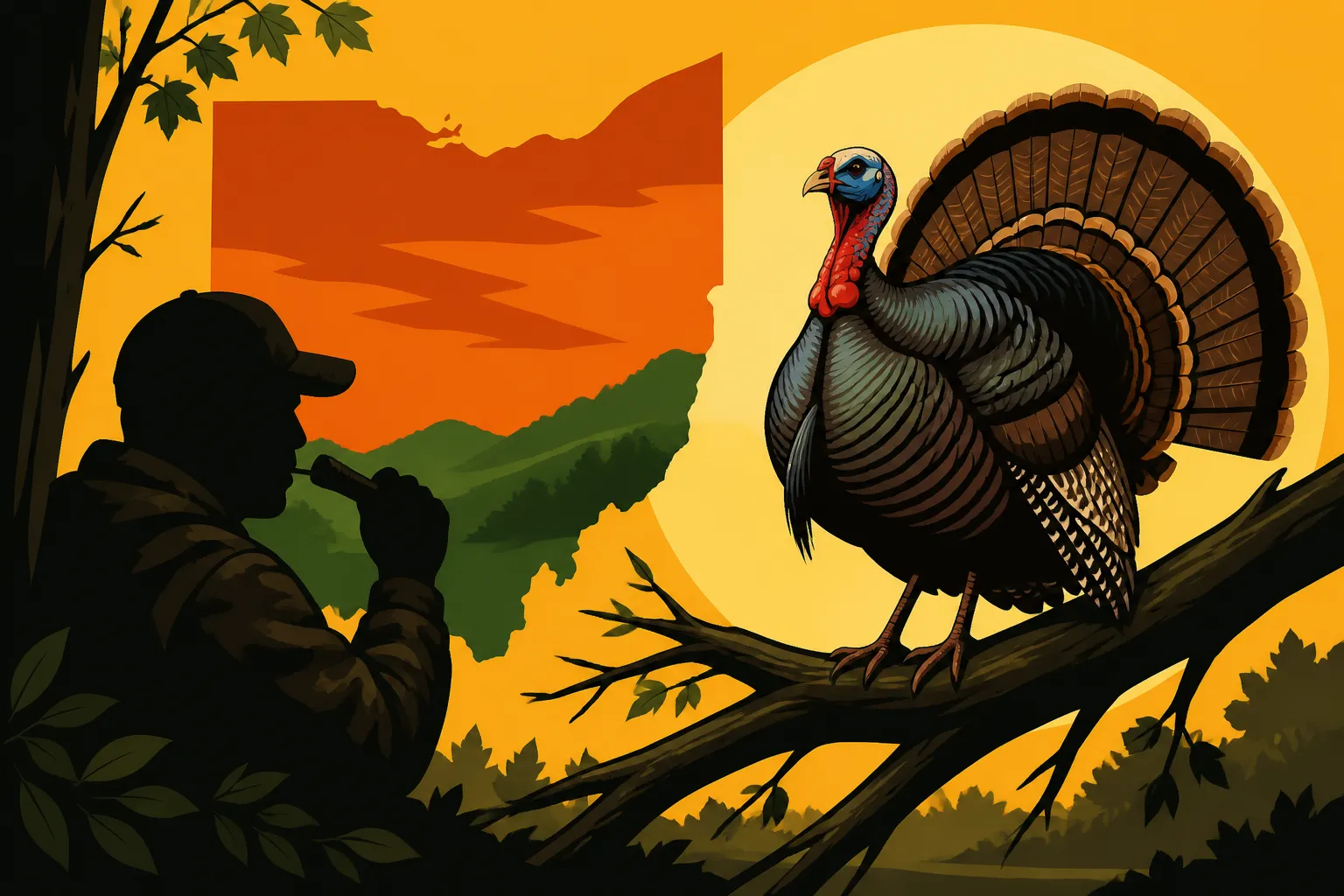
Calling an Ohio Gobbler Off the Roost
There's nothing quite like the anticipation of a spring morning in the Ohio woods, listening for that first thundering gobble from the roost. But let's be honest, getting a vocal gobbler to commit and fly down right into your setup is one of turkey hunting's toughest tests. They seem so eager up in the tree, but once their feet hit the ground, they can get lockjaw or worse, strut off in the opposite direction, leaving you scratching your head. This guide is all about tackling that exact frustration, giving you the playbook to consistently call Ohio gobblers off the roost and into shooting range.
The Unique Challenge of Roosted Gobblers in Ohio
Calling a turkey off the roost isn't just about making noise; it's about understanding the psychology of an Ohio gobbler as he wakes up. They’re creatures of habit, yes, but also highly influenced by their surroundings, other birds, and, let’s face it, past negative experiences with hunters.
Why Toms Can Be Stubborn on the Limb
Imagine you’re a big, strutting tom turkey. You’ve spent the night safely perched high in an oak or sycamore, surveying your domain. From this vantage point, you feel like the king of the world. You’re safe from ground predators, and you can see everything that’s happening around you. This sense of security is precisely why they can be so stubborn. They have no immediate need to come down until they feel absolutely ready, or until a compelling reason, like a hen, presents itself directly below.
In different parts of Ohio, this stubbornness can manifest uniquely. In the rugged, rolling hills of Appalachian Ohio, a gobbler might roost on a high ridge overlooking a hollow, making him feel particularly dominant. He might gobble his head off, but he expects hens to come to him in the valley below. Conversely, a bird in the flatter, more open farmland of Northwest Ohio might roost in a small woodlot, feeling vulnerable once on the ground, and thus be more hesitant to commit until he sees exactly what he's dealing with. They've learned that safety is in elevation until they know the coast is clear.
Understanding Their Morning Routine and Vulnerabilities
A gobbler’s morning is a predictable sequence of events, and knowing this timeline is crucial. As the first hint of grey appears in the eastern sky, they’ll start to stir. You'll hear soft clucks, maybe a tree yelp, and then, that unmistakable first gobble. He's essentially taking attendance, checking for other turkeys. This initial period, often referred to as "Where Ohio Gobblers Roost," is when he’s most vulnerable to a convincing call.
He’ll gobble sporadically, perhaps more frequently as the sky brightens. He's waiting for hens to respond, to confirm that it's safe and worth flying down. When hens start to call back and gather beneath his tree, he'll feel that primal urge to descend and join them. If you can replicate that hen calling effectively, you can convince him your "flock" is the one he needs to join. The moment he pitches off the limb is the critical transition point. He’s leaving his safe haven and looking to connect. This is also when he's most likely to beeline to whatever hen sounds he hears.
Stealth, Positioning, and Your Pre-Dawn Playbook
Before you even think about making a sound, your success hinges on getting into the right spot without being detected. Turkeys have incredible eyesight and hearing, especially in the low light of dawn.
Getting Into Position Undetected and Safely
This is where many hunts are won or lost before a single call is made. You need to identify potential roost trees the evening before, or at least have a strong idea of where birds are spending the night. Then, under the cover of darkness, you need to execute a flawless, silent approach. Every broken twig, every rustle of leaves, every cough could blow your hunt. I've had many a morning ruined by stepping on a dry branch too close to a roost tree, only to hear the tell-tale "ka-thump" of a turkey pitching down prematurely and heading for the hills.
Use the terrain to your advantage. Walk along the lowest points, creek beds, or in the shadows of thick timber to mask your approach. It's often helpful to use a mapping application like GoHunt on your phone to pinpoint your exact location and navigate in the dark without getting lost or making unnecessary noise. Mark potential roosting areas and plan your entry and exit routes meticulously. Remember, you're trying to sneak past animals with eyes that can pick out a tic at 50 yards and ears that can hear a mouse whisper. Don't be afraid to take an extra 10-15 minutes to go the long, quiet way around rather than busting through heavy cover.
Choosing the Perfect Roost-Side Setup
Once you're close enough—and I'm talking within 75-150 yards, ideally—you need to find your spot. This isn't just about comfort; it's about concealment, a clear shooting lane, and strategically positioning yourself so the gobbler approaches from a direction that gives you an advantage. Look for a large tree, a thick brush pile, or even a small rise in the ground that offers good back cover. You want to break up your outline completely. When thinking about "Setting Up Against a Big Oak," remember the oak provides more than just cover; its trunk can help funnel the bird.
Consider the sun's position. You want the sun at your back, if possible, to put the gobbler at a disadvantage when he flies down and looks your way. Also, think about the natural path a gobbler might take once he hits the ground. If there's a logging road, a field edge, or a slight ridge leading to your position, he's more likely to follow that path. Try to set up where you have an open area for him to strut into, but still have enough cover around you to remain hidden. If you're hunting in heavy timber, ensure you have a few clear lanes, even if they're only 20-30 yards long, to give you a shot opportunity. Don't set up so close that he can pick you out as soon as he stretches his neck on the limb.
The Critical Role of Locator Calls Before Dawn
Before you even think about soft hen calls, locator calls are your best friends in the pre-dawn darkness. These aren’t meant to sound like a hen, but rather to mimic other common woodland creatures that might make a gobbler shock-gobble. An owl hoot, a crow caw, or even a coyote howl can often get a roosted gobbler to sound off, giving away his exact location without him associating the sound with a hen or a potential danger. This is a tactic I often use when "Roost Hunting Ohio Gobblers."
The key with locator calls is judicious use. Don't overdo it. A few hoots or caws every 10-15 minutes, starting well before legal shooting light, is usually enough. Listen intently for a response. Once he gobbles, you know precisely where he is, and you can confirm your setup location. If he doesn’t respond, try moving slightly to another vantage point and try again. Sometimes, a gobbler will only respond to certain locator calls, or only gobble a few times before getting quiet again. It’s all about gathering intelligence without alerting your target. Remember, the goal is just to locate him, not to start a conversation yet. This is a crucial step for using "Locator Calls for Ohio Gobblers" effectively.
Mastering the Art of Calling a Gobbler Off the Roost
Once you're set up and you know where the bird is, the real game begins: convincing him to leave his comfortable perch for you.
The Opening Act: Soft Tree Yelps and Purrs
When the first hint of legal shooting light arrives, or shortly after he's let out a few initial gobbles on his own, it's time to introduce your hen. But resist the urge to hammer him with loud, aggressive calls. Think subtle. Think "just waking up." Start with some very soft, sleepy tree yelps and gentle purrs. These should sound like a hen quietly stirring on her own roost, maybe stretching her wings, not yet fully awake. You can use a mouth call, or a friction call like a slate or glass call for this.
The goal here is to pique his interest, not alarm him. He’s listening for the real deal. A subtle "cluck… cluck… yelp, yelp, yelp" with a sleepy cadence, mimicking a hen getting ready to fly down, is often all it takes to get him to gobble back directly at you. Wait for his response. If he gobbles, acknowledge it with another soft series of calls, but don't overdo it. You're creating an illusion that you're a desirable hen just out of sight, and you’re about to fly down. This delicate dance is much more effective than immediately launching into aggressive cuts and yelps. For different sounds, you can explore the nuances of "Box Calls Versus Mouth Calls" to see what works best in specific scenarios.
Increasing Intensity and Reading the Gobbler's Mood
As the morning progresses and light fills the woods, if your initial soft calls aren't drawing him closer or getting a strong response, it’s time to gradually increase your calling intensity. He might need a bit more convincing. Start adding some volume and a little more urgency to your yelps. Throw in a few soft clucks and purrs in between yelps to make it sound natural, like a hen moving around. Don't be afraid to mix in some soft cuts – short, sharp, excited yelps – but always listen to his response.
Is he gobbling more frequently? Is he sounding closer? If he’s double or triple gobbling, he’s definitely interested. Keep him engaged but don't call so much that he expects you to come to him. Remember, you’re the hen. Hens want to be courted. You're trying to sound like a hen who's ready to meet up, but not desperate. Vary your calls; switch between a mouth call and a friction call like a slate or glass call. Different tones can sometimes trigger a stronger response. Sometimes, a softer, raspier hen on a "Slate and Glass Calls in Wet Weather" might be just the ticket. If you're unsure which calls to carry, remember "Turkey Calls Worth Carrying in Ohio" often include a variety for different scenarios.
Dealing with the "Hung-Up" Tom and Fly-Down Calls
The classic frustration: the gobbler gobbles his head off, pitches down, and you hear him hit the ground, but then… silence. Or worse, he gobbles once or twice from the ground and then starts walking away, staying just out of sight. This is the "hung-up" gobbler, and it happens to everyone.
Patience is your absolute best friend here. If he hits the ground and gets quiet, resist the urge to immediately call aggressively. He's probably looking for you, and if he doesn't see anything, he might get suspicious. Wait five, even ten minutes. Then, try some very soft clucks and purrs, perhaps mimicking a hen scratching in the leaves. A common and highly effective tactic is the "fly-down cackle." Once he's on the ground, or even while he's still on the limb, if he's being particularly stubborn, mimic the sound of a hen flying down from a tree by slapping your cap against your thigh or flapping your hand against your pant leg, immediately followed by a loud, excited cackle. This creates the illusion that a hen has just landed and is eager to meet up. Many times, this is the final push a gobbler needs to commit.
If he still hangs up, sometimes a subtle change in location, even just a few yards, can make him think the "hen" has moved slightly, drawing him in. If he flies down and then heads the wrong way, this might be the time to consider "Run-and-Gun Turkey Tactics on Public Land" or at least reposition to get ahead of him if you know his travel path.
Decoy Strategies for Roosted Birds
While not always necessary for roost calling, decoys can be incredibly effective, especially on pressured birds or when hunting in open areas where visual confirmation is key. The sight of a hen (or multiple hens) and maybe even a jake or submissive tom can provide the visual confirmation a wary gobbler needs to commit once he pitches off the limb.
Placement is critical. You want the decoy to be highly visible from the roost tree, but also positioned so that the gobbler will approach it, ideally presenting a shot opportunity as he closes the distance. Often, placing your decoy 15-20 yards in front of your position, slightly off to one side, works well. This allows the gobbler to focus on the decoy, giving you time to shoulder your shotgun as he struts into range. When considering "Turkey Decoys That Work on Pressured Birds" or "Decoy Placement for Pressured Birds," remember that realism and posture matter. A submissive hen or jake decoy can sometimes draw in a dominant tom more aggressively. Just be aware of other hunters and always prioritize safety when using decoys.
Post-Roost Adjustments: When the Plan Changes
Sometimes, even with the best planning and calling, a gobbler doesn't do what you expect. That's turkey hunting, right? The ability to adapt on the fly is what separates successful hunters from those who go home empty-handed.
What to Do When He Hits the Ground and Doesn't Come
This is perhaps the most common frustration: he gobbles, he flies down, and then… he just starts walking in the other direction, often to meet up with real hens that you didn't even know were in the area. Don't panic. First, give him some time. Sometimes, a gobbler will hit the ground, gather his wits, and then remember the "hen" he was just talking to. He might circle around or come back. If he's already gathered a real harem of hens, your job just got much harder. Real hens are much more convincing than your best calls, and he'll naturally gravitate to them.
If he's committed to walking away, don't chase blindly. Use your mapping app, like GoHunt, to observe the terrain and see if there's a natural funnel or pinch point he might head towards. Perhaps a creek bottom, a field edge, or a saddle on a ridge. You might be able to circle ahead of him quietly, set up again, and try to cut him off. This requires knowledge of the land and a quick, stealthy move. It's often better to back out and try him again later in the morning or evening, or even the next day, rather than educating him on your exact location. Remember, birds are still active throughout the day in Ohio's "Ohio Spring Turkey Zones and Dates."
Adapting to Different Scenarios: From Solo Toms to Flocks
Not every roosted gobbler is a lone wolf. You might encounter multiple gobblers roosted together, or a gobbler already with a small group of hens on the limb. Each scenario calls for a slightly different approach.
- Multiple Gobblers: If you hear several toms gobbling from the same vicinity, this can be both a blessing and a curse. More birds mean more targets, but they also mean more eyes and ears. Focus your calling on the most responsive bird, but be prepared for one of his buddies to come in. The competition among them can sometimes make them more aggressive and eager to come to a hen call.
- Gobbler with Hens: This is the toughest scenario. If he's already with hens, he has little incentive to leave them for your calls. Your best bet here is to try and call the actual hens to you. If you can get the hens to come your way, the gobbler will often follow. Use aggressive, confident hen calls – cackles, cutting, and excited yelps – to challenge the real hens. You might get lucky and pull them in. If not, patience is paramount. Wait until the hens lead him away, then try to reposition and call to him again later in the morning after he's bred them and potentially separated from the group. Understanding "Ohio Turkey Population Trends" can sometimes give you insight into how many birds you might encounter.
The key is to remain flexible. Don't be afraid to change your strategy if what you're doing isn't working. Sometimes, simply letting the woods get quiet for 30 minutes, then trying a completely different calling sequence from a slightly different spot, can turn a quiet morning into a successful one.
Here's a quick comparison of popular turkey call types for roost calling:
| Call Type | Pros | Cons | Best For |
|---|---|---|---|
| Mouth Call | Hands-free, versatile, wide range of sounds, compact. | Takes practice, can be hard to adjust volume quickly, can get spit-logged. | Soft tree yelps, purrs, clucks, aggressive cutting. |
| Slate Call | Realistic soft purrs and clucks, good volume control, easy to use. | Requires two hands, not as versatile for loud cutting, can get wet. | Subtle early morning calls, purrs and soft yelps from the ground. |
| Box Call | Loud, raspy yelps and cuts, good for locating, easy to operate. | Bulky, can spook birds if used too aggressively up close, less subtle. | Locating distant birds, aggressive cutting to draw attention. |
| Pill Bottle/Tube Call | Very realistic, great volume, good for fly-down cackles. | Requires practice, less subtle, not as versatile for general calling. | Loud, realistic fly-down cackles and yelps. |
Disclaimer
Please ensure you are familiar with and adhere to all Ohio Department of Natural Resources (ODNR) hunting regulations, including season dates, bag limits, and legal hunting hours, before heading into the field. Safety should always be your top priority.