Hunting a Clear-Cut Regrowth Edge
Hunting Ohio's clear-cut regrowth edges can feel like trying to find a ghost in a briar patch. These areas, with their seemingly impenetrable thickets, often intimidate hunters and make us wonder if it's even worth the effort to push through. But let me tell you, when you crack the code on these spots, you unlock some of the most productive and overlooked whitetail habitat in the state. This guide is all about helping you understand why deer love these places, how to find the sweet spots, and the proven tactics to turn frustrating tangles into successful hunts.
Understanding Clear-Cut Regrowth Edges as Deer Habitat
Clear-cuts are a contentious topic for some, but from a deer hunting perspective, they are absolute game-changers, especially here in Ohio where habitat can sometimes be fragmented. They create incredible diversity that deer simply can't resist.
What Defines a Clear-Cut Edge in Ohio?
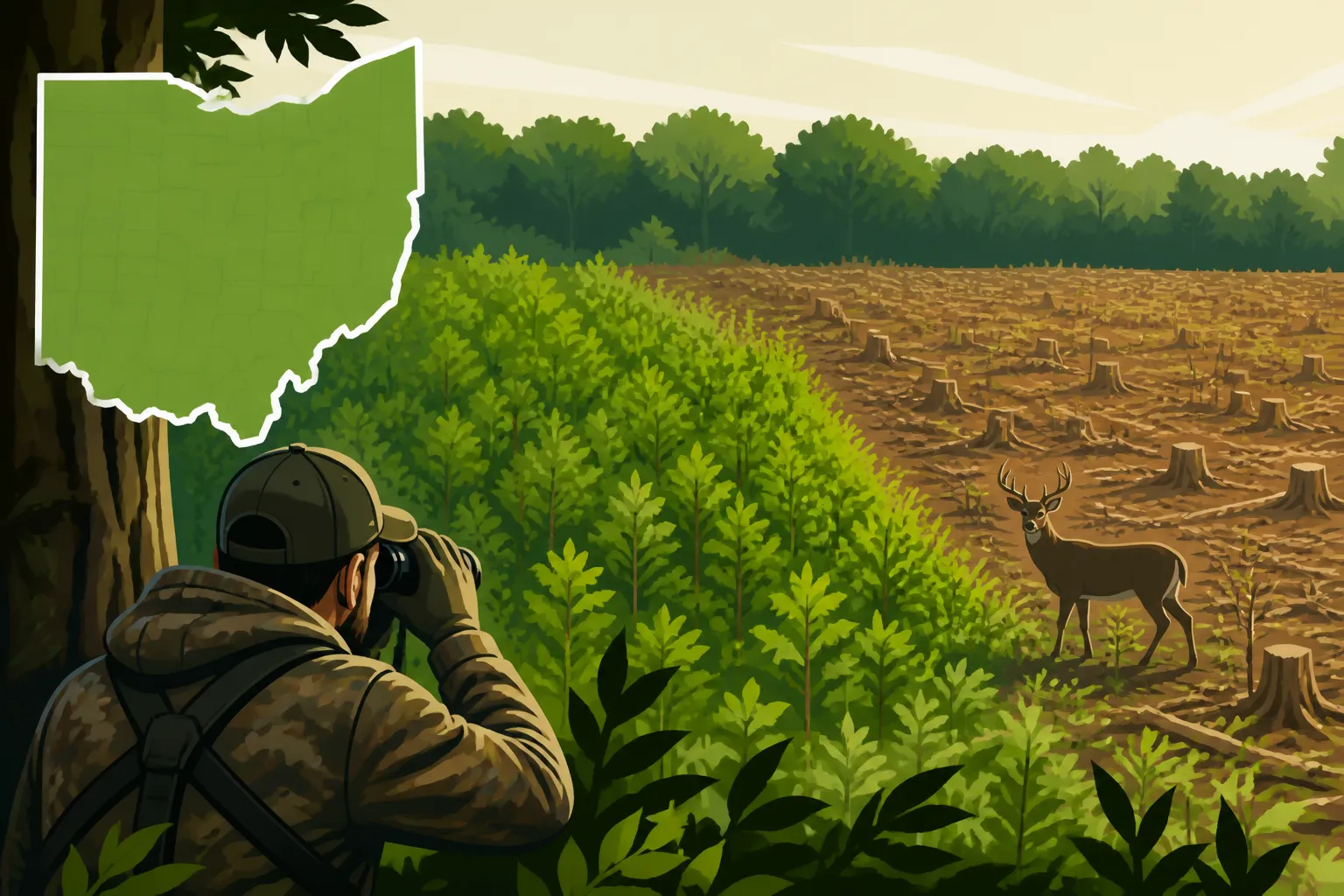
A clear-cut isn't just a patch of timber that got mowed down. It's an area where most or all of the trees were harvested, opening up the forest floor to sunlight. This sudden influx of light triggers an explosion of new growth – everything from young saplings and brush to forbs, grasses, and berry bushes. The "edge" is that critical transition zone where the dense, young regeneration meets the mature, standing timber.
Think about it like this: on one side, you have the open canopy of the clear-cut, teeming with sun-loving pioneer plants. On the other, the shaded, more open understory of the mature woods. This isn't just a visual boundary; it's a profound ecological shift. Over time, that young growth can become so thick you can barely walk through it, forming an almost impenetrable wall of cover. In Ohio, you'll find these primarily in our timber-producing regions, often in state forests like Zaleski or Tar Hollow, or on private timber tracts throughout Appalachia.
Why Deer Gravitate Towards These Edges
Deer, especially mature bucks, are masters of efficiency and security. Clear-cut edges offer both in spades.
First, let's talk about food. The young, regenerating plants within a clear-cut are a smorgasbord of highly nutritious browse. Unlike the sparse understory of a mature, closed-canopy forest, a clear-cut provides an abundance of tender shoots, leaves, and stems that are easily digestible and packed with nutrients. This makes them prime feeding grounds, particularly during the early and late seasons when other food sources might be scarce or less palatable. You'll find deer nibbling on young oak, maple, and even pine regeneration, along with a host of other forbs.
Beyond the buffet, clear-cuts offer unparalleled security. That dense, thorny, interwoven regrowth creates fantastic bedding areas where deer can feel safe from predators, including us hunters. They can lie down in the thick stuff, virtually invisible, yet still have multiple escape routes and the ability to hear and smell danger approaching from any direction. The edge itself acts as a natural travel corridor. Deer will often skirt the perimeter, using the mature timber for concealment while still being able to duck into the thicket for immediate escape. These edges also provide crucial thermal regulation. In winter, the dense evergreens and brush can offer a break from harsh winds and deep snow, helping deer conserve energy. In hotter weather, they can find shaded pockets within the new growth or along the transition into the mature woods.
Scouting and Locating Productive Clear-Cut Edges
Finding the right clear-cut isn't about stumbling into any old logging operation. It's about careful reconnaissance, both from above and on the ground.
Interpreting Aerial Maps and Topography
Before you even step foot in the woods, your smartphone or computer can be your best friend. Modern mapping tools, like the ones from GoHunt or the Ohio HuntFish app, are invaluable for this type of scouting. I spend hours digitally scouting areas like Wayne National Forest or Shawnee State Forest, looking for tell-tale signs.
What you're looking for are areas that show distinct changes in canopy cover. On an aerial map, a clear-cut will appear as a lighter green or even brownish patch contrasting sharply with the dark green of mature timber. Pay close attention to the shape of these clear-cuts. Irregular shapes often create more edge habitat and funnel points than perfectly square ones. Look for fingers of timber extending into the clear-cut, or pockets of thicket pushing into the mature woods – these are natural ambush sites.
Also, consider the surrounding topography. Deer often prefer bedding on higher ground within or near clear-cuts, giving them an advantage for spotting danger. Look for clear-cuts on slopes or ridge tops that offer good thermal advantages. Are there natural funnels leading into or out of the clear-cut, perhaps a saddle or a narrow timber strip? Proximity to water sources, even small ephemeral creeks, can also be a significant draw. Don't forget to cross-reference with other mapping layers to identify public vs. private boundaries. If you're hunting Southeast Ohio, reading aerial photos for Southeast Ohio deer can give you an incredible head start on identifying potential hotspots before you lace up your boots.
Boots-on-the-Ground Reconnaissance
Once you've identified potential clear-cuts on your map, it's time for some serious legwork. This is where you'll validate your digital scouting and uncover the nuances that only physical presence can reveal. Remember, a clear-cut can look great on a map, but if there's no deer sign, it's just a pretty picture.
Start by walking the perimeter of the clear-cut, focusing on the actual edge where it meets the standing timber. This is where you'll often find heavily used deer trails, like tiny highways, leading into and out of the thicket. Look for rubs and scrapes, especially during the pre-rut and rut, as bucks will often cruise these edges scent-checking for does. You're trying to find sign in big Appalachian timber or anywhere else in Ohio where these cuts occur.
Don't be afraid to venture a little way into the clear-cut itself, especially on cold, windy days when deer might be seeking refuge. Look for flattened beds in the densest cover. These beds will tell you not only that deer are using the area but how they're using it – which way they're facing, what their escape routes are, and where they feel most secure. Identifying pinch points and funnels created by the clear-cut's shape or internal timber strips is also crucial. These are natural bottlenecks where deer movement is concentrated, offering prime ambush opportunities. This boots-on-the-ground effort is an essential part of scouting Ohio public land before season and truly understanding how deer are utilizing these habitats.
Strategic Hunting Tactics for Ohio's Clear-Cut Edges
Hunting clear-cuts requires a different mindset and set of tactics than hunting open timber or agricultural fields. It's about patience, precision, and understanding deer behavior within this unique environment.
Early Season and Rut Tactics on the Edge
During the early archery season, deer are still primarily focused on food, and the succulent browse in clear-cuts can be a major draw. Look for clear-cuts that have a mix of preferred browse species. Often, deer will feed just inside the dense cover, taking a few bites before ducking back deeper into the security of the thicket. Your best bet is to set up an ambush just downwind of a well-used trail leading into a known feeding area within the clear-cut.
As the pre-rut and rut approach, clear-cuts become even more exciting. Bucks will actively cruise these edges, scent-checking for does that might be feeding or bedding in the thick cover. These edges act as natural travel corridors and congregation points. Look for dominant scrapes and rub lines along the edge, indicating regular buck activity. This is prime time to capitalize on the deer's drive to breed. When hunting the rut in early November in an area with clear-cuts, consider more aggressive tactics. Bucks often respond well to rattling and grunting in Ohio in these thick cover environments, as they expect another buck to be nearby. Set up where you can see a decent stretch of the edge, with a clear shooting lane into the clear-cut.
Late Season Opportunities and Stand Placement
Don't abandon clear-cuts once the leaves fall and temperatures drop. The late season can be incredibly productive, especially if the clear-cut offers good thermal cover. Dense stands of regenerating evergreens, or even thick deciduous brush that still holds snow well, can be a magnet for deer trying to escape harsh winter winds and cold. Deer will gravitate to areas that offer warmth and protection. South-facing slopes with clear-cuts are particularly appealing during these colder months, as they soak up the sun's warmth.
Finding residual browse that remains palatable is also key. While many plants die back, some younger woody stems or specific evergreens might still offer sustenance. Concentrate your scouting on these areas. When it comes to stand placement, think about access and exit routes. During the late season, deer are often even more sensitive to pressure. You need a way to get into your stand undetected and, crucially, to get out after dark without spooking every deer in the county. For effective late-season food sources for Ohio whitetails, these clear-cut edges are often overlooked gems. This is where understanding hanging a stand on an Appalachian ridge becomes critical – you're often dealing with steep terrain and tricky wind currents. Always consider wind and thermals on an Appalachian ridge when picking your exact spot, as these factors can change rapidly in broken topography.
Stand Types and Entry/Exit Strategies
Choosing the right stand type is crucial for hunting clear-cut edges.
- Treestands: For mature timber sections bordering the clear-cut, a hang-on stand or a climbing stand can be ideal. They offer elevation, which helps with scent control and visibility over the thick new growth. Focus on trees that offer a good vantage point into the clear-cut, especially near trails or funnels. In many parts of Ohio, particularly on public land like the Wayne National Forest, portable treestands and climbing sticks are your best friend. For more on this, check out our guide on treestand setups in Appalachian Ohio hardwoods.
- Ground Blinds: If you're hunting deeper within the clear-cut or if there are no suitable trees, a ground blind can be incredibly effective. Brushing it in well is paramount for concealment. Ground blinds also provide excellent cover from the elements, which can be a huge advantage during cold or wet late-season hunts. They allow for more flexibility if deer movement changes.
Regardless of your stand choice, minimizing disturbance is non-negotiable. Plan your entry and exit routes meticulously. Use natural terrain features, creek beds, or existing logging roads to your advantage, making sure you can get in and out silently and without leaving a scent trail that alerts deer to your presence. Hunt the wind, always. It's better to stay home than to blow out a great clear-cut spot by hunting the wrong wind.
Essential Gear and Considerations for Clear-Cut Hunting
Hunting clear-cuts isn't for the faint of heart or the poorly equipped. The dense cover and often rugged terrain demand specific gear and preparation.
Navigating Dense Cover and Maintaining Stealth
First and foremost, your clothing needs to be tough. Briars, thorns, and sharp branches are everywhere in a clear-cut. Durable brush pants or chaps are highly recommended to prevent shredded outerwear and scratched legs. Layers are always key in Ohio's fluctuating weather, but especially so when you might be still-hunting slowly through thickets or sitting for hours on a stand. Look for materials that are quiet, so you don't sound like a crashing rhinoceros as you move. A good, sturdy pair of boots with excellent ankle support is also a must, as the ground can be uneven, full of stumps, and often muddy.
When it comes to your hunting pack, think minimalist but essential. You'll be navigating tight spaces. A compact day pack with just your necessities – water, snacks, knife, rangefinder, extra layers, and a first-aid kit – will serve you well. For a deeper dive into appropriate cold-weather attire, our article on clothing for an Ohio late season is a valuable resource. And if you're venturing into expansive public lands, knowing what to carry in your packs for a day on Wayne National Forest will make your hunt much more comfortable and safer.
Legalities and Safety in Ohio Clear-Cuts
Before you head out, always double-check the current Ohio hunting regulations. This includes understanding the specific dates for different seasons, which you can find detailed in our comprehensive guide on Ohio deer season structure explained. Always be aware of blaze orange requirements, especially during the gun seasons. Even during archery season, if you're on public land, wearing a small amount of orange can make you more visible to other hunters, which is always a good idea in popular areas.
One of the most critical aspects of hunting clear-cuts, especially on the periphery, is knowing property lines. Clear-cuts can often span multiple land ownerships, or public land clear-cuts might butt right up against private tracts. Using a reliable mapping app that shows property boundaries is non-negotiable. Always know where you stand, literally, to avoid trespassing. Finally, remember that you might not be the only hunter in a clear-cut. Be mindful of others, announce your presence if you see someone, and always practice safe firearm handling. Hunting these dense areas demands an extra layer of caution.
| Season | Clear-Cut Advantage | Primary Deer Behavior Focus | Ideal Stand Placement | Key Considerations |
|---|---|---|---|---|
| Early Archery | Abundant Browse, Security | Feeding, bedding, low movement | Downwind of trails entering cut, near browse | Quiet approach, scent control, close shots |
| Pre-Rut/Rut | Travel Corridors, Doe Hotspot | Cruising, seeking does, sparring | Funnels, pinch points along edge, rub lines | Calling (rattling/grunting), visibility, wind shifts |
| Late Season | Thermal Cover, Residual Food | Seeking warmth, conserving energy | Sunny slopes, dense evergreens, south-facing | Warm layers, minimal movement, late-day activity |
Clear-cut regrowth edges are truly incredible habitat. They offer everything a deer needs: food, cover, and security. While they might look like a messy, impenetrable jungle, with the right scouting, strategy, and gear, you can turn these challenging areas into your most consistent and rewarding hunting spots in Ohio. So, don't shy away from the thick stuff; embrace it, and you just might find that monster buck hiding right under your nose.
Disclaimer
Please remember that hunting regulations and conditions can change rapidly. Always consult the official Ohio Department of Natural Resources (ODNR) website or the current Ohio Hunting and Trapping Regulations Digest for the most up-to-date and accurate information before planning any hunt. Safety should always be your top priority in the field.