Ohio’s Two-Weekend Gun Deer Season
Navigating Ohio's gun deer season can feel a bit like a puzzle, especially with its unique two-weekend structure that can throw off even experienced hunters. You’re left wondering when to take vacation days, how to strategize for both weekends, and what gear will truly perform when the pressure is on. This comprehensive guide will break down everything you need to know about Ohio's distinct gun deer season, offering detailed insights, tactical advice, and crucial preparation tips to help you punch your tags confidently and safely.
Understanding Ohio's Unique Gun Deer Season Structure
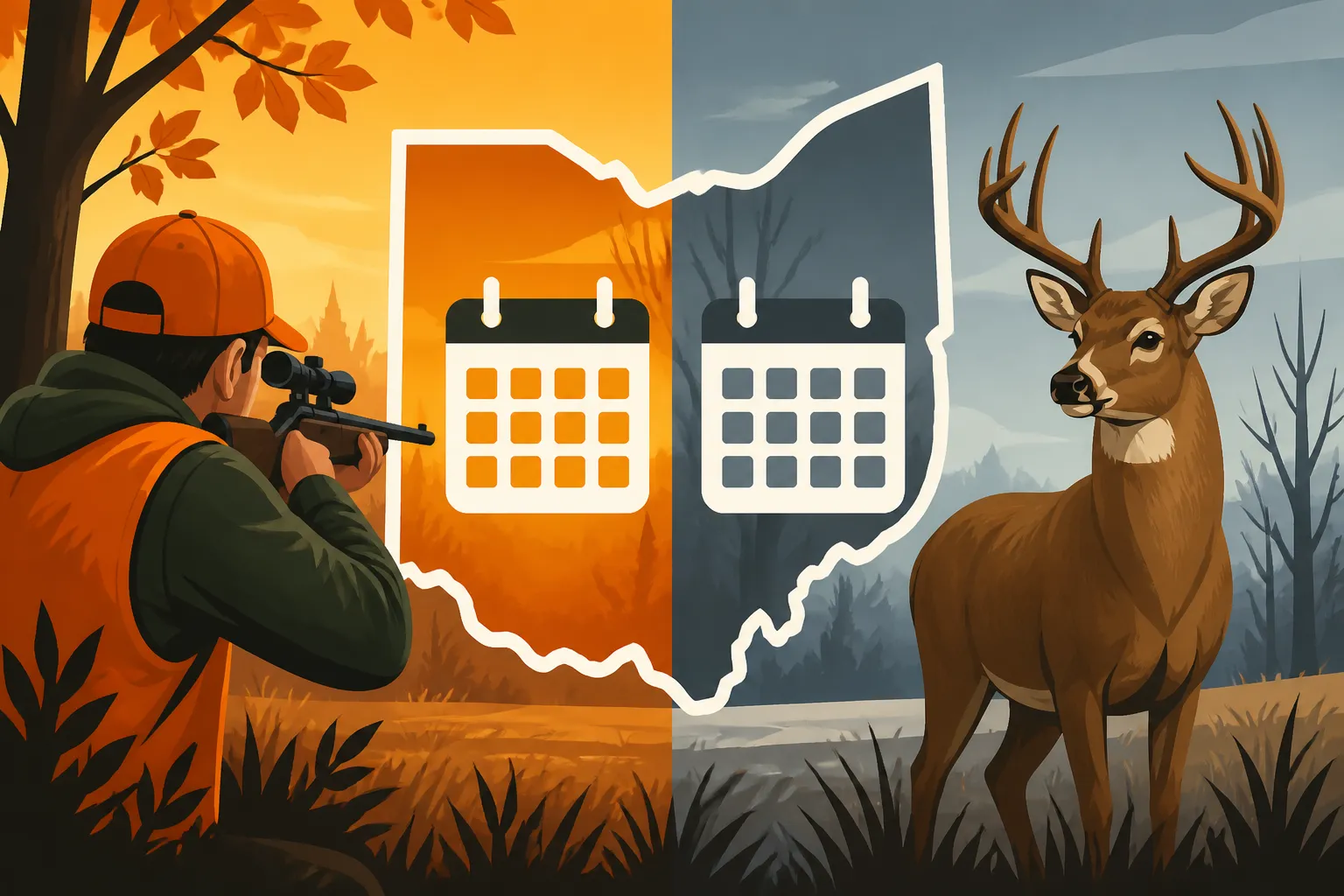
Ohio's gun deer season is probably one of the most distinctive in the Midwest, a design that often raises eyebrows from hunters accustomed to a single, continuous firearms season. Instead of one long stretch, we've got two distinct opportunities, separated by a brief interlude. This isn't just a random scheduling quirk; it's a strategic approach by the Ohio Department of Natural Resources (ODNR) to manage hunter pressure, deer harvest, and the overall hunting experience. It presents both challenges and unique opportunities for those willing to adapt.
The Logic Behind Two Separate Weekends
The rationale behind Ohio's two-weekend gun season system stems from a blend of deer management goals, hunter safety considerations, and an effort to spread out the hunting opportunity. Imagine if all those enthusiastic gun hunters were crammed into one continuous week-long season! The sheer volume of orange vests in the woods would be overwhelming, not only for the deer but also for fellow hunters. By splitting the season, the ODNR aims to achieve a few key objectives:
First, it helps manage hunter pressure. The first weekend, typically the Monday after Thanksgiving, sees an immense surge of hunters. It’s a holiday week for many, making it a prime time to hit the woods. By having a defined end to this initial push, deer get a short reprieve, and the woods quiet down for a bit. This break allows deer to settle back into their routines, making them potentially more predictable when the second weekend rolls around. It also allows public lands to "rest" from the heavy foot traffic, giving hunters a slightly different experience later in the year.
Second, it allows for better harvest distribution. The first weekend usually accounts for the lion's share of the gun season harvest. It's often when deer are still moving a lot from the rut and haven't experienced sustained hunting pressure. The second weekend, often in mid-December, targets deer that might be regrouping, focusing on late-season food sources, and dealing with colder weather. This helps ensure that harvest goals are met without over-pressuring the herd in a single, concentrated period.
Finally, the structure offers flexibility for hunters. Not everyone can take off a full week from work. The two-weekend approach allows hunters to choose which window best fits their schedule, or ideally, hunt both if they have the time. It acknowledges the realities of modern life and tries to maximize participation while maintaining management objectives. It’s a system unique to Ohio, and understanding its roots helps you make the most of it.
Key Dates and Zones for Gun Hunters
Ohio's gun deer season typically kicks off on the Monday after Thanksgiving, running for about seven days. This is the first gun weekend, though it technically includes a full week of hunting. The second gun weekend usually takes place in mid-December, lasting for two days, often a Saturday and Sunday. These dates are crucial for planning your hunting trips and vacation days, so always double-check the current year's ODNR regulations well in advance. These dates are generally statewide, meaning they apply across all Ohio counties for regular firearms hunting.
However, it's vital to remember that Ohio also has an "Early Gun Season in the DSA" (Disease Surveillance Area). While this is technically a gun season, it operates under specific rules and dates, usually a couple of weekends before the statewide gun opener, and is restricted to counties within the CWD Surveillance Area. It's a separate beast designed for disease management, so don't confuse it with the primary statewide gun weekends we're discussing here. For a detailed breakdown of all the specific season dates, you can find excellent information in a resource like Ohio Deer Season Structure Explained.
The impact of these dates on hunter attendance is significant. The opening days of the first gun season often feel like a small army has descended upon the woods. Parking lots on public lands fill up fast, and you'll encounter more hunters than at any other point in the deer season. This creates a different hunting dynamic, as deer are constantly on the move, pushed by human activity. By the second gun weekend, the crowds have thinned considerably. The weather is often colder, and many hunters have already filled their tags or shifted their focus. This quieter atmosphere can be a blessing for those seeking a more solitary experience, but it also means deer have become warier and more patterned. Understanding these trends is key to strategizing for each segment of the season.
Gear Up: Firearms and Ammunition for Ohio's Gun Season
When it comes to Ohio's gun deer season, selecting the right firearm and ammunition is paramount. The state has specific regulations that dictate what you can and cannot use, and these rules have shaped the types of guns most popular with local hunters. Gone are the days of only shotguns; modern advancements and regulatory changes have opened up new, effective options. Your choice will significantly impact your effective range, accuracy, and overall confidence in the field.
Straight-Wall Cartridges: The Modern Standard
For years, Ohio was known as a "shotgun-only" state for deer hunting, a regulation born from safety concerns in densely populated areas. However, with advancements in ammunition technology and a better understanding of ballistic performance, Ohio modernized its regulations to permit what are known as "straight-wall cartridges." This change has been a game-changer for many hunters, offering increased accuracy and effective range compared to traditional shotgun slugs, while still maintaining a reasonable safety profile often associated with these types of firearms in populated areas.
A straight-wall cartridge is exactly what it sounds like: a cartridge whose casing walls are relatively straight, lacking the tapered or bottle-necked design of many common rifle cartridges (like a .30-06 or .270). These cartridges are often fired from modified lever-action rifles, bolt-action rifles, or even single-shot platforms. They offer impressive performance for deer-sized game within typical Ohio hunting ranges, which are generally under 200 yards in most timber or agricultural settings.
Popular calibers like the .450 Bushmaster, .350 Legend, and .44 Magnum (when used in a rifle) have become incredibly popular. The .450 Bushmaster, for example, delivers significant energy and knockdown power, making it a formidable choice for larger bucks. The .350 Legend offers a flatter trajectory and less recoil, appealing to a wider range of hunters, including youth and those sensitive to recoil. Even traditional handgun calibers like the .44 Magnum or .357 Magnum, when chambered in a rifle, provide excellent accuracy and sufficient power for deer at closer ranges. Many hunters prefer these over shotguns for their improved precision. For a deeper dive into the specifics of these firearms, you can read more in our guide on Straight-Wall Rifles for Ohio Deer. When choosing, consider recoil tolerance, ammunition cost and availability, and your intended hunting range.
Shotgun Slugs: The Tried and True Option
While straight-wall rifles have taken the spotlight, the trusty shotgun loaded with slugs remains a perfectly viable and highly effective option for Ohio deer hunters. Many veteran hunters still swear by their slug guns, and for good reason: in thick cover, where shots are typically under 100 yards, a well-placed slug is devastatingly effective. For decades, it was the only game in town, and it continues to be a reliable choice.
The key to maximizing a shotgun's performance for deer hunting lies in the barrel and ammunition. Modern rifled slug barrels are designed to impart spin on the slug, dramatically increasing accuracy compared to a traditional smoothbore barrel. When paired with sabot slugs – which are smaller, aerodynamic projectiles encased in a plastic sabot that peels away after leaving the barrel – these setups can achieve respectable accuracy out to 150 yards or even slightly beyond with practice. Brands like Federal, Hornady, and Winchester offer excellent sabot slug options.
If you're using a smoothbore barrel, you'll need to stick with rifled slugs (also called Foster slugs or Brenneke slugs). These slugs have exterior fins that help stabilize them in flight, though their effective range is usually limited to about 75-100 yards. They are incredibly powerful at close quarters and perform well in dense brush. The main limitation of shotguns compared to straight-wall rifles is typically their practical effective range and sometimes their recoil, which can be significant with heavier slugs. To learn more about selecting the right slug for your setup, check out our article on Shotgun Slug Guns for Ohio Deer.
Optics and Accessories for Gun Season
Regardless of whether you choose a straight-wall rifle or a shotgun, your optics and accessories are critical for success in Ohio's gun season. The dense timber, rolling hills, and often low-light conditions demand quality gear that won't let you down.
A good rifle scope is perhaps the most important accessory. For typical Ohio hunting, where shots are often under 150 yards, a scope with a magnification range like 3-9×40 or 2-7×32 is usually ideal. Prioritize clarity, light gathering capabilities (especially for those dawn and dusk moments), and robust construction that can withstand the elements. Ensure your scope is properly mounted and zeroed for your chosen ammunition. A solid zero at 100 yards is a great starting point for most straight-wall cartridges, allowing for minimal holdover within typical hunting ranges. For shotguns, 50 or 75-yard zeroing is more common.
Beyond the scope, binoculars are indispensable for scanning treelines, identifying deer movement, and picking apart thick cover without constantly raising your rifle. A compact 8×42 or 10×42 pair from brands like Vortex, Leupold, or Maven will serve you well. A rangefinder is also a smart addition, allowing you to accurately judge distances, especially important for slugs or if you're hunting in varied terrain where distances can be deceiving. Don't leave home without a good pair of gloves, a headlamp, and a comfortable sling for carrying your firearm. When it comes to researching the latest gear or planning your hunts, tools like GoHunt can provide valuable insights into what other hunters are using and where game populations are strong. They offer resources that can help you dial in your setup for Ohio's unique challenges.
Tactics for the First Gun Weekend: High Pressure, High Reward
The first weekend of Ohio's gun deer season is an electrifying, albeit challenging, time to be in the woods. It kicks off with a bang, literally, and is characterized by a significant influx of hunters. This high-pressure environment drastically alters deer behavior, creating a unique set of circumstances that successful hunters must understand and leverage. It's often the most productive period in terms of overall harvest, but it demands smart strategy and a focus on safety.
Navigating Opening Weekend Crowds
If you've ever hunted Ohio on the Monday after Thanksgiving, you know exactly what I'm talking about. It’s like a sea of blaze orange has washed over the landscape. Public hunting lands, from the sprawling acres of Wayne National Forest Hunting to the deep woods of Shawnee State Forest Hunting, see their parking lots overflowing, and trailheads buzzing with activity. This immediate surge in human presence is the biggest factor influencing deer behavior during this period. Deer that were leisurely browsing just days before are now on high alert, constantly being pushed and prodded by hunters.
The key to navigating these crowds isn't to avoid other hunters entirely – that's often impossible – but to understand how their presence influences deer. Deer will seek refuge in the thickest, nastiest cover they can find, or they'll be pushed into less accessible areas that other hunters deem too difficult. This is where your pre-season scouting pays off. Look for those overlooked pockets: a steep ravine that's a grunt to get into, a small island of thick cover surrounded by open timber, or even the far reaches of a property line that hunters might shy away from.
One effective strategy is to walk deeper. Most hunters don't venture more than a quarter to a half-mile from their vehicle. If you're willing to put in the effort to hike a mile or more into public land, especially rugged terrain like in Appalachian Ohio, you significantly increase your chances of finding less-pressured deer. Consider areas with dense multiflora rose, honeysuckle, or blowdowns; these areas are tough for humans to navigate but offer fantastic security for deer. Safety is also paramount. Always know your target and what's beyond it. Wear your blaze orange proudly and make sure you're visible to others. For a deeper dive into how to tackle this initial rush, you can gain valuable insights from Opening Weekend Tactics for Ohio Gun Season.
Driving Deer and Stand Placement
Deer drives are a time-honored tradition during Ohio's gun season, and they are particularly effective during the first weekend when deer are already on the move due to widespread hunter activity. A well-executed deer drive can be incredibly productive, pushing deer out of thick bedding areas and past waiting standers. It requires teamwork, communication, and a clear understanding of the terrain.
Planning is crucial. You'll need a group of hunters – typically 3-6 is a good number, but it can vary. Assign roles: drivers who walk through cover to push deer, and standers who position themselves along escape routes or funnels where deer are likely to flee. Safety is non-negotiable; everyone needs to know where others are positioned, and shot lanes should be clearly defined and safe. Focus drives on specific thickets, woodlots, or brushy creek bottoms where deer are likely to be holed up. A good drive on public land, such as in the expansive Wayne National Forest, can quickly turn a slow morning into an exciting one.
For individual hunters or small groups not conducting a full drive, strategic stand placement is key. Deer, when pressured, will often use established escape routes or cover to evade hunters. These might be subtle funnels, saddles on ridges, creek bottoms, or the edges of dense thermal cover. Pay attention to wind direction, as deer will almost always try to use the wind to their advantage, circling downwind of perceived threats. Think about where deer will go once they've been bumped. Are there logging roads they'll cross? A thick briar patch they'll try to sneak through? Position your stand or ground blind accordingly. If you're hunting with a few friends, consider setting up a mini-drive where one or two hunters quietly still-hunt through a thicket while others post on the downwind side. More details on coordinated tactics can be found in Deer Drives on Ohio Public Land.
The Importance of Blaze Orange
In Ohio, wearing blaze orange isn't just a suggestion; it's the law during gun deer season, and for very good reason: safety. Any person hunting deer, or coyote during the deer gun season, must conspicuously wear a vest, coat, jacket, or coverall that is all solid hunter orange or camouflage hunter orange. This applies to both private and public lands. The rule exists to ensure maximum visibility for hunters, drastically reducing the risk of accidental shootings.
The requirement is clear: you need to be seen. This means not just a small patch, but a substantial amount of visible orange from all directions. Think about how deer perceive color – they see in shades of blue and yellow, essentially colorblind to red and orange. So, while bright orange stands out vividly to human eyes, deer generally don't perceive it as a threat. This allows you to remain highly visible to fellow hunters while still being effectively camouflaged to your quarry.
Many companies, including those like Sitka Gear and First Lite, now offer excellent blaze orange or blaze pink (also an approved color in Ohio) options that are both highly visible and designed with hunting functionality in mind, often incorporating quiet fabrics and scent control. Don't skimp on this critical piece of safety gear. Beyond just a vest, consider an orange hat as well, especially if you're still-hunting or moving through cover. Always prioritize safety over stealth when it comes to being seen by other hunters. For a complete rundown of specific requirements and legal definitions, refer to Ohio Blaze Orange Requirements.
Strategies for the Second Gun Weekend: Cooler Weather, Different Deer Behavior
After the hustle and bustle of the first gun season, the woods tend to settle down for a week or two. Then, mid-December rolls around, bringing with it the second gun weekend. This period presents a stark contrast to the opener. Temperatures are usually colder, snow might be on the ground, and deer have adapted to the increased pressure. Success during this second window often hinges on adapting your tactics to these changed conditions and understanding the subtle shifts in deer behavior.
Adapting to Late Season Conditions
The mid-December timing of Ohio's second gun weekend means you'll likely be dealing with colder, harsher weather. Gone are the sometimes-mild temperatures of late November; now you can expect crisp, freezing air, and often, snow cover. This dramatic change in weather has a profound impact on deer. They become much more focused on conservation of energy and finding dependable food sources. Their movements become more deliberate, and they often travel shorter distances between bedding and feeding areas.
Compounding this is the cumulative effect of hunting pressure from the first gun season and the archery season that precedes and overlaps it. Deer have been bumped, chased, and shot at for weeks, sometimes months. This makes them incredibly wary, especially older deer. They'll be using thicker cover, moving primarily during low-light hours, and reacting much more cautiously to any perceived threat.
Your strategy needs to shift accordingly. Forget about aggressively pursuing deer in open woods. Instead, think about setting up ambush points in or near known thermal cover or reliable food sources. Patience becomes your greatest asset. You might not see as many deer as on opening day, but the deer you do see are often moving with a purpose, and a well-placed stand can intercept them. Understanding these late-season dynamics is crucial for success during this quieter, often more rewarding, hunting period. You can find more detailed advice for this specific window in our guide Hunting the Second Gun Weekend in December.
Targeting Late-Season Food and Cover
When the weather turns truly cold, deer's priorities become crystal clear: food, and cover that provides warmth and security. Successfully hunting the second gun weekend means becoming a master at identifying these critical late-season resources.
Late-season food sources are paramount. After farmers have harvested most of their fields, standing crops become gold mines. Unharvested corn, soybeans, or even winter wheat fields can draw deer in from miles around. Browse, such as greenbriar, honeysuckle, and new growth in clear-cuts, also becomes more important as other food diminishes. Don't overlook mast crops either; if there are still acorns on the ground, deer will hit them hard, especially white oak acorns which are less bitter and favored. Focus your scouting efforts on identifying these remaining food sources. Look for fresh tracks, droppings, and browse lines around them.
Thermal cover is equally important. When temperatures drop and the wind bites, deer will seek out dense cover that provides insulation from the elements. This often includes thick conifer stands (pines, cedars), dense briar patches, regenerating clear-cuts, or deep, south-facing slopes that catch the most sunlight. These areas offer both warmth and security from predators and hunters. Deer will often bed on these sun-drenched slopes during the day, moving out to feed in the evenings and mornings.
Using tools like GoHunt can give you a significant advantage in identifying these critical areas. Their detailed topographic maps and satellite imagery allow you to pinpoint dense conifer stands, unharvested fields, and south-facing slopes from the comfort of your home. You can mark potential bedding areas and travel corridors, then confirm them with quick scouting trips. Combining these digital resources with boots-on-the-ground confirmation will dramatically increase your chances of intercepting a deer focused on surviving the cold.
Patience and Persistence
The second gun weekend is a test of patience. The frantic pace of the first weekend is long gone. Deer are now much more selective in their movements, often sticking to thicker cover and moving cautiously, usually during the low-light hours of dawn and dusk. You're less likely to see deer casually walking through open timber in the middle of the day, unless they've been pushed.
This means you need to adjust your mindset. Longer sits become more important. Instead of bouncing from spot to spot, find a prime location – perhaps overlooking a secluded food plot or a thick bedding area, or along a known travel corridor connecting the two – and commit to it. Bundle up with good Clothing for an Ohio Late Season because sitting for hours in cold temperatures is essential. Wear multiple layers, including a good base layer, insulating mid-layers, and a waterproof/windproof outer shell. Hand and foot warmers can make a huge difference in comfort and staying on stand longer.
Embrace the quiet. The woods are often still and serene during this period, offering a different, more contemplative hunting experience. While it might seem counterintuitive to sit for extended periods when deer sightings are fewer, your best chance of encountering a wary, late-season buck or doe is to be in a high-percentage location when they finally decide to move. A sudden burst of activity is more likely to be met with a frozen hunter than an alert one. For strategies to make those long, cold sits more productive, check out Cold-Weather Sitting Strategy in Ohio. The deer that move during this time are often doing so out of necessity, not curiosity, making them predictable if you’re in the right place at the right time.
Essential Preparations and Regulations
Successfully navigating Ohio's gun deer season isn't just about knowing where to hunt or what gear to use; it's also about understanding and adhering to the state's regulations. From licensing requirements to disease management protocols and proper post-harvest procedures, being prepared and compliant ensures a legal, ethical, and safe hunting experience for everyone. Ignoring these details can quickly turn a successful hunt into a frustrating, or even unlawful, situation.
Licensing and Permits
Before you even step foot in the woods with a firearm, you need to ensure you're properly licensed and permitted for deer hunting in Ohio. This is non-negotiable and the foundation of all legal hunting.
Every hunter, regardless of residency, needs a valid Ohio hunting license. These can be purchased online through the Ohio Department of Natural Resources (ODNR) "Wild Ohio" portal, at authorized license vendors (like sporting goods stores or bait shops), or by phone. For residents, costs are typically lower, while non-residents will pay a higher fee. Youth and senior discounts are often available, so always check the current year's pricing.
In addition to a general hunting license, you'll need specific deer permits. Ohio offers a general deer permit, which typically allows you to harvest one antlered deer and an unlimited number of antlerless deer statewide (though specific county bag limits may apply and can change). The beauty of Ohio's system is its flexibility; you can often purchase additional deer management permits, particularly for antlerless deer, in many counties, allowing you to fill your freezer and contribute to herd management goals. However, always verify the specific rules for the county you plan to hunt, as regulations can vary. You can typically carry your proof of license and permits on your phone, but it's wise to have a physical copy or a screenshot as a backup, especially in areas with spotty cell service. For a detailed breakdown of all the costs and options, our guide on Ohio Hunting Licenses and What They Cost is an invaluable resource.
Chronic Wasting Disease (CWD) Considerations
Chronic Wasting Disease (CWD) is a serious, fatal neurological disease affecting deer, elk, and moose. It's a significant concern for wildlife managers across North America, and unfortunately, Ohio has detected cases within its deer herd. As a result, the ODNR has established a Disease Surveillance Area (DSA) in specific counties where CWD has been found. As a responsible hunter, you need to be aware of the DSA and any associated regulations, especially during gun season.
Currently, the primary CWD footprint in Ohio is centered around Wyandot County, but other adjacent counties may also be included in the DSA. During mandatory CWD testing windows, which often coincide with the opening days of both the early gun season (if applicable) and the statewide gun season, hunters harvesting a deer within these DSA counties are required to submit their deer head for testing. This helps the ODNR monitor the disease's prevalence and spread. Sampling stations and self-serve kiosks are typically set up during these periods.
Furthermore, there are carcass movement restrictions when transporting deer harvested within the DSA. Generally, you cannot move a whole deer carcass out of the DSA counties. You can, however, transport deboned meat, antlers (without brain tissue), hides, and cleaned skull plates. This is designed to prevent the unintentional spread of CWD to other areas. Always check the latest ODNR regulations for the exact boundaries of the DSA and any mandatory testing or movement restrictions, as these can change annually. Staying informed about Ohio's Chronic Wasting Disease Surveillance Area is vital for ethical and legal hunting.
Post-Harvest Procedures and Meat Care
Congratulations, you've harvested a deer! Now the real work begins. Proper post-harvest procedures are not only legal requirements but also crucial for ensuring you get the best possible venison from your animal.
First and foremost, check in your deer. Ohio law requires all harvested deer to be checked in by 11:59 PM on the day of kill, or if harvested on the last day of a specific hunting season, by 11:59 PM on that day. This can be done online through the ODNR's "Wild Ohio" website or mobile app, or by calling a toll-free number. You'll need to provide details like the county of kill, sex of the deer, and the type of antler (antlered or antlerless). This reporting is vital for the ODNR to collect harvest data and manage the deer population effectively. Make sure your deer tag is securely attached to the deer immediately after harvest and before transporting.
Next is meat care. The quality of your venison largely depends on how quickly and effectively you field dress and cool the animal. Field dressing involves removing the internal organs to allow the carcass to cool down rapidly. In warm early-season conditions, this is critical to prevent spoilage. Even in colder weather, proper field dressing helps. If temperatures are above freezing, consider using game bags and getting the deer to a cooler or professional processor as quickly as possible. For longer-term storage, chilling the carcass for several days (if temperatures allow and you have proper facilities) before butchering can improve meat tenderness. For those hunting in remote areas or large public lands, having a game cart or deer sled can be invaluable for transporting your harvest back to your vehicle, especially in rugged terrain like the Appalachian foothills.
Making the Most of Public Lands During Gun Season
Hunting public land in Ohio during gun season presents a unique set of challenges and rewards. With limited private land access for many hunters, public areas become highly sought after. Success isn't just about finding deer; it's about finding deer where other hunters aren't, or at least understanding how deer react to pressure on these shared resources. It demands more effort, more research, and often, a willingness to go where others won't.
Researching and Scouting Beforehand
The single most important factor for success on Ohio public land, especially during gun season, is pre-season research and scouting. You simply cannot show up on opening morning and expect to stumble into a prime spot. The areas that receive heavy pressure are typically those closest to parking lots and easily accessible trails. The deer in these areas become incredibly wary, often moving only at night or retreating to the thickest, most inaccessible cover.
Start your research online using tools like the ODNR's "HuntFish Ohio" interactive map, Google Earth, or private mapping apps like onX Hunt. These resources allow you to identify large tracts of public land like Wayne National Forest, Shawnee State Forest, or the numerous Ohio Wildlife Areas. Look for topographical features that might create natural funnels or barriers, such as steep ravines, creek bottoms, ridge lines, or dense clear-cuts. Pinpoint potential bedding areas (thick cover, south-facing slopes for warmth) and feeding areas (old logging clearings, bordering agricultural fields). Identify pinch points where deer are likely to travel between these areas.
Once you have a few promising spots identified digitally, it's time for boots-on-the-ground scouting. Do this before the season opens to avoid spooking deer and to confirm what you saw on the map. Look for fresh deer sign: tracks, droppings, rubs, and scrapes. Pay attention to how deer are using the terrain. Where are the thickest security covers? What are the primary travel corridors? How far do you have to walk to get away from other hunters? Remember, during gun season, deer will be pushed into those hard-to-reach spots. So, if a spot looks nasty and difficult to access, it might be exactly where the deer are hiding. For more detailed tips on how to effectively prepare, refer to our guide on Scouting Ohio Public Land Before Season.
Specific Public Land Strategies
Once you’ve done your homework, specific strategies can help you capitalize on Ohio’s diverse public hunting grounds.
For large tracts of forest land like Wayne National Forest or Shawnee State Forest, think big picture. These areas are characterized by extensive timber, deep ravines, and long ridge lines. Deer often move along these ridges, especially through saddles (dips in the ridge line) which act as natural funnels. They’ll also utilize benches (flat areas along a slope) for bedding and travel. Don't be afraid to put in the miles; the deeper you go, the less pressure you'll encounter. Hunting adjacent to private agricultural fields can also be effective, as deer often bed on public land and move onto private land to feed at night. Focus on hunting these transition zones at dawn and dusk.
For smaller public wildlife areas, the strategy shifts slightly. These areas are often a mix of timber, brush, and sometimes agricultural fields. They can receive intense pressure due to their accessibility. Here, focus on finding overlooked pockets of dense cover. This might be a small briar thicket in the middle of a larger timber block, a drainage ditch choked with brush, or an overgrown fencerow. Deer will use these small, secure areas as sanctuaries. Hunting the edges of these thickets, or positioning yourself to intercept deer moving into or out of them, can be highly effective. Consider using a well-brushed-in ground blind to remain concealed.
Regardless of the type of public land, remember that deer will be reacting to pressure. Be prepared for deer to be moving at unusual times or through unexpected areas as they try to evade other hunters. Sometimes, sitting patiently near a known bedding area in the middle of the day can be productive, as deer might be bumped from another hunter and try to move into your sanctuary. Always respect other hunters and know your boundaries. For a full rundown of your options, consult our comprehensive guide on Public Hunting Land in Ohio.
Common Challenges and How to Overcome Them
Hunting Ohio's gun deer season, especially on public land, comes with its own set of challenges. It's rarely a walk in the park, and expecting obstacles allows you to prepare for them effectively. From dealing with other hunters to unpredictable weather and difficult tracking scenarios, being ready for these common hurdles can make the difference between a frustrating trip and a successful one.
Hunter Pressure and Finding Solitude
The most significant challenge during Ohio's gun deer season, particularly the first weekend, is undoubtedly hunter pressure. It's a fact of life on public lands, and it can feel overwhelming at times. Crowded parking lots, orange vests everywhere, and the constant sound of distant gunshots can make it seem impossible to find a deer, let alone a mature one.
The key to overcoming this isn't to get angry or frustrated, but to strategize. As discussed, walking deeper is your best friend. Most hunters won't venture more than half a mile from their vehicle. If you're willing to go a mile, two miles, or even further into rugged terrain, you'll find significantly less pressure. The deeper you go into Wayne National Forest Hunting or Shawnee State Forest Hunting, the more likely you are to find solitude and undisturbed deer.
Another strategy is to hunt mid-week. While the opening Monday is crazy, Tuesdays, Wednesdays, and Thursdays often see a dramatic drop in hunter numbers, even on the first gun season. If you have the flexibility, these days can be incredibly productive as deer begin to settle down from the initial shock. Focus on areas that are hard to access, even if they're not miles away. Think about hunting thick, nasty clear-cuts, steep ravines, or swampy bottoms that most hunters avoid because they're simply too difficult to navigate. You might also find luck on Hunting Small Private Tracts in Ohio where other hunters may overlook them. Remember that deer use these spots as sanctuaries, and by being willing to push into them, you might find the deer that everyone else is walking past. For more ideas on how to approach this, our article on Hunting Pressure on Ohio Public Land offers valuable insights.
Weather Variability and Adaptation
Ohio weather during November and December is notoriously unpredictable. One day it can be mild and rainy, the next a frigid blizzard, and the day after that, sunny and calm. This variability not only affects hunter comfort but also significantly impacts deer movement and behavior.
Rain and wet snow can make for miserable hunting conditions, but deer often move during light rain or after a fresh snow. The moisture can dampen sound, allowing deer to move more quietly, and the fresh snow provides excellent tracking opportunities. However, heavy downpours or blizzards will usually put deer in their beds, seeking the thickest cover available. As a hunter, you must be prepared for anything. Invest in high-quality waterproof and windproof outer layers from brands like Sitka Gear, KUIU, or even budget-friendly options that perform. Layering is crucial: a moisture-wicking base layer, an insulating mid-layer (fleece, down, or synthetic), and that protective outer shell.
Cold temperatures make deer focus on calorie conservation and thermal cover. When it's bitter cold, deer will move less, and when they do, they'll often head straight to dense conifer stands or south-facing slopes to soak up the sun. For you, this means bringing hand warmers, insulated boots, and a warm hat. Being able to sit comfortably for extended periods in cold weather is a huge advantage. If a warm front moves through in December, it might spark a bit more deer activity, but typically, very cold weather encourages deer to stick to thick cover and only move when absolutely necessary to feed. Adapt your clothing and your hunting location to the forecast.
Tracking and Recovery
There's no worse feeling than making a good shot but losing the blood trail. Tracking and recovering a deer in Ohio's diverse terrain can be a significant challenge, especially in dense woods, thick briar patches, or after a fresh snowfall.
The first rule of tracking is patience. After taking a shot, resist the urge to immediately run after the deer. Give the animal at least 30 minutes, and sometimes several hours (especially for gut shots or if you suspect a non-fatal hit), to lie down and stiffen up. This greatly increases your chances of finding a deer that has expired and not just run further. Mark your shot location clearly, and then the location of the first blood.
When you do start tracking, move slowly and deliberately. Look for blood, tracks, disturbed leaves, or broken branches. Focus on the next sign, not the whole trail. Sometimes, blood might be sparse, requiring you to get down on your hands and knees. If you lose the trail, circle widely ahead to try and pick it back up. In dense cover, deer often follow paths of least resistance, like old logging roads, creek beds, or established game trails. If snow is on the ground, it can be a blessing, providing an easy-to-follow trail, but fresh snow can also quickly cover existing tracks and blood.
Don't be afraid to call for help. If you're struggling to find the deer, reach out to hunting buddies or consider hiring a tracking dog (where legal). A fresh set of eyes can make all the difference. Knowing when to quit for the night and return in the morning is also critical, especially if the weather is warm, to avoid spoiling the meat. Always carry a good headlamp and extra batteries for tracking in low light or after dark. You can find more comprehensive advice on navigating these difficult situations in our article Blood Trailing After Dark in Ohio.
Comparing Ohio's Gun Deer Weekends
To help you visualize the differences and plan your hunts, here's a quick comparison of the characteristics of Ohio's two gun deer weekends:
| Feature | First Gun Weekend (Late Nov/Early Dec) | Second Gun Weekend (Mid-Dec) |
|---|---|---|
| Timing | Starts Monday after Thanksgiving; 7 days total | Mid-December; 2 days (Sat/Sun) |
| Hunter Pressure | Very High (especially first 2-3 days) | Moderate to Low |
| Weather | Variable; can be mild, rainy, or cold | Colder, higher chance of snow and freezing temps |
| Deer Movement | High (rut-induced movement, hunter pressure) | Moderate (focused on food/cover, less daytime) |
| Primary Tactics | Deer drives, ambushing escape routes, capitalizing on bumped deer | Long sits, targeting late-season food/thermal cover |
| Typical Harvest | Accounts for majority of gun season harvest | Lower harvest, but can yield quality deer |
| Deer Behavior | Wary but reactive to pressure, often moving quickly | Very wary, focused on survival, subtle movements |
Disclaimer
The information provided in this article is for general guidance and informational purposes only. Hunting regulations, season dates, and specific rules are subject to change. Always consult the most current Ohio Department of Natural Resources (ODNR) hunting regulations and local laws before participating in any hunting activity. Hunter safety should always be your top priority.