Calling Crows Over a Winter Feed Site
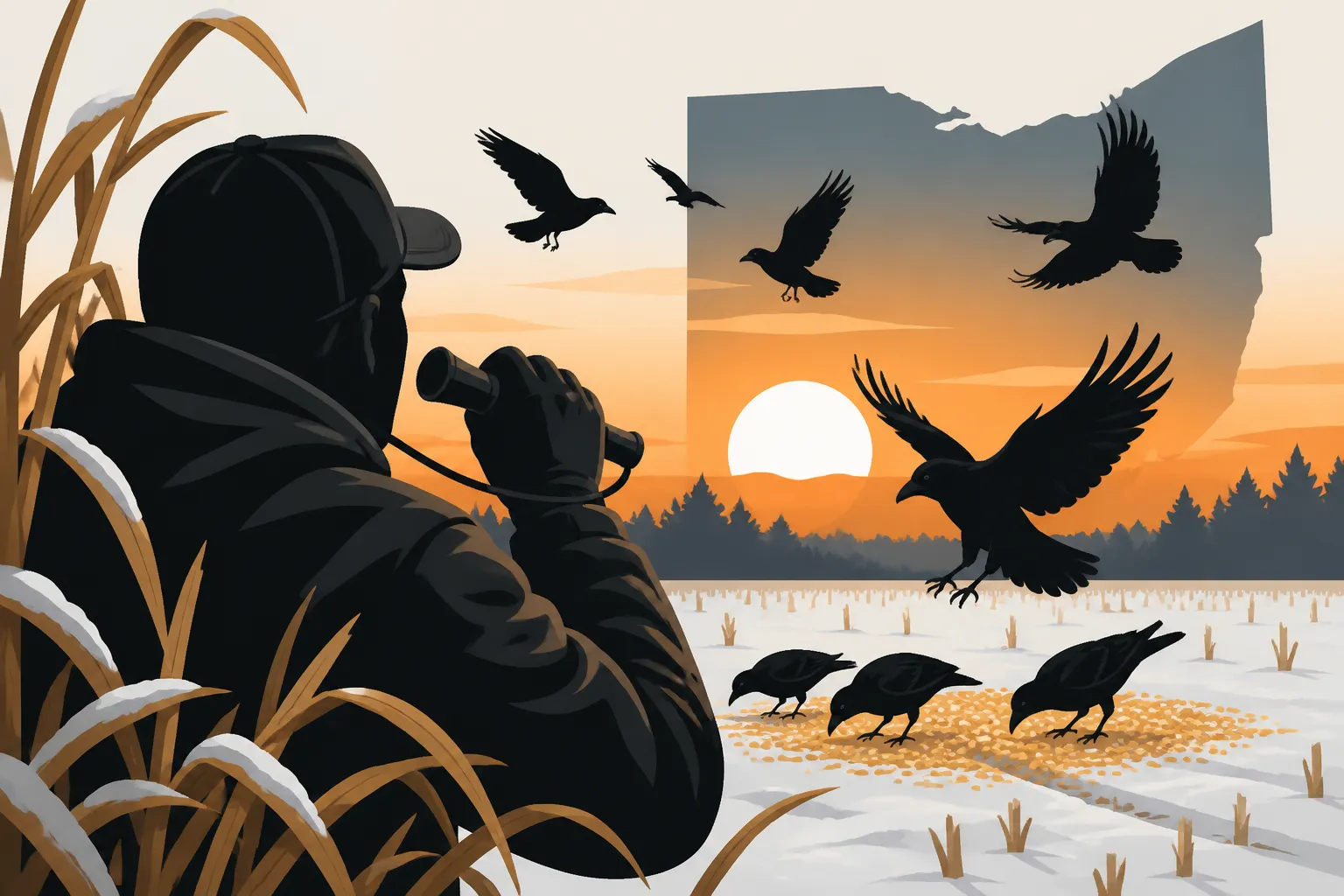
Winter in Ohio can feel like a long stretch of quiet woods and frozen fields, and for many hunters, the off-season lull can be a real drag. But if you’re looking for a challenging hunt that requires skill, stealth, and a sharp ear, turning your attention to crows over a winter feed site can be incredibly rewarding. These intelligent birds are abundant in Ohio, but they're notoriously difficult to fool, especially when they're congregated around reliable food sources. This guide will help you understand their patterns, select the right gear, and master the calling techniques needed to bring them in, offering a thrilling way to stay sharp when other seasons are closed.
Understanding Winter Crow Behavior Around Feed Sites
Crows are fascinating creatures, and their behavior changes significantly once the leaves fall and winter truly sets in. Gone are the days of scattered family groups; winter often means massive roosts and coordinated feeding patterns. To successfully call crows over a winter feed site, you first need to become a student of their cold-weather habits.
Why Winter Changes the Game: Food Scarcity and Large Roosts
As winter tightens its grip on Ohio, natural food sources become scarce. Berries are gone, insects are dormant, and many small rodents are hunkered down. This forces crows to consolidate their feeding efforts, often relying heavily on agricultural areas. They'll flock to places where food is readily available and exposed, like recently harvested corn or soybean fields, cattle feedlots, or even uncovered grain silos. These "winter feed sites" become vital hubs, drawing in crows from miles around. You'll notice a massive increase in flock size compared to the breeding season.
It’s not uncommon for thousands of crows to gather in enormous winter roosts, often in dense pine groves or thick hardwoods, offering them shelter from the wind and predators. From these roosts, they'll launch out each morning to these dependable feed sites, sometimes traveling significant distances. Understanding these travel corridors and the predictability of their feeding patterns is your first step. It's a bit like trying to pattern deer during the late-season rut lull when they're solely focused on food; crows are no different. They're driven by survival, and those feed sites are their lifeline.
Their Keen Senses and Intelligence: Sight, Hearing, and Learning
Crows aren't just numerous; they're incredibly intelligent and possess exceptionally sharp senses, making them one of Ohio's most challenging game birds. Their eyesight is legendary; they can spot a hunter from an incredible distance, even slight movements or unnatural shapes stand out to them. This is why concealment is absolutely paramount. They also have excellent hearing, capable of distinguishing between natural sounds and a poorly executed call.
What truly sets crows apart is their ability to learn and adapt. If you spook a flock from a specific field, they'll remember it. They communicate warnings to each other, and an experience with a hunter can make an entire local population "call shy" or incredibly wary of certain locations for weeks, even months. This collective memory means you often only get one good shot at a location before you need to move on or significantly change your tactics. This intelligent behavior is why many hunters consider crow hunting to be such a thinking man's game, demanding patience and precision, not unlike Coyote Calling in Ohio Winter. They're constantly evaluating their surroundings, looking for any sign of danger.
Identifying Prime Winter Feed Sites in Ohio
Finding a reliable winter feed site is the cornerstone of successful crow hunting. In Ohio, this almost always means focusing on agricultural landscapes, especially across the flat farmlands of Northwest Ohio or the wider valleys in the central and eastern parts of the state.
- Harvested Grain Fields: Look for fields that were recently harvested for corn, soybeans, or wheat. Crows will spend hours gleaning leftover grains. Pay attention to fields that have not been tilled under, as the exposed stubble offers easy access to any remaining seeds. These are often the same fields that attract late-season deer, making them a dual-purpose scouting location if you're also interested in Hunting Northwest Ohio Farmland Deer.
- Livestock Operations: Farms with cattle feedlots, chicken houses, or pig farms are magnets for crows. Spilled feed, animal carcasses, and other refuse provide a consistent food source. Always ensure you have explicit permission from the landowner before hunting near any active farm operation. Landowner relations are key in Ohio, and often the farmers themselves are happy to have some crow pressure taken off their crops or feed.
- Landfill and Waste Transfer Stations: While often off-limits to hunting, the areas surrounding landfills and waste transfer stations can draw massive numbers of crows. They capitalize on discarded food waste. If you find a private parcel adjacent to such a site, it could be a goldmine, but always check local ordinances and, again, secure permission.
- River Bottoms and Wooded Edges: Sometimes, especially in milder winters, crows will supplement their diets with nuts or fruits found in riparian corridors or the edges of woodlots. These are less predictable as primary feed sites but can act as secondary feeding areas or staging grounds near larger agricultural fields.
When scouting for these sites, don't just look for crows; look for their sign. Droppings, feather piles, and even the "caw-caw" of their activity will point you in the right direction. Utilizing mapping apps like GoHunt can be invaluable here. You can identify potential agricultural fields, wooded edges, and even check property lines to understand ownership before you even step foot in the field, making your scouting efforts much more efficient.
Essential Gear and Setup for Winter Crow Hunting
Just like any other hunting pursuit, having the right gear and setting up effectively can make or break your crow hunt. These birds demand a thoughtful approach, and your equipment needs to be up to the task of fooling their sharp senses.
Choosing the Right Calls: Electronic Versus Mouth Calls
Calling crows effectively is an art form, and you have two primary tool categories: electronic calls and mouth calls. Many successful crow hunters use a combination of both.
- Electronic Calls: These devices allow you to play a variety of realistic crow sounds at adjustable volumes. They are incredibly effective for their consistency and ability to project sound over long distances, especially across large, open winter fields. High-quality electronic callers, often from brands like FoxPro or Convergent Hunting Solutions, come pre-loaded with a range of calls: distress calls, assembly calls, fighting calls, and even "all clear" calls. The main advantage is that you can set the call away from your blind, drawing the crows' attention to a different spot, which is a significant advantage when battling their keen eyesight. When using an electronic call, you want to be able to control the volume remotely and have a good selection of sounds.
- Mouth Calls: These include various types, such as open-reed, diaphragm, and hand-operated plunger calls. They require more skill and practice to master but offer incredible versatility and realism once you do. The nuances you can achieve with a mouth call – varying tone, volume, and rhythm – can sometimes be more convincing to wary crows than a repetitive electronic track. Many hunters use mouth calls for the initial "locating" caws or for subtle, close-in communication once crows are in sight. The downside is that they require you to move your hands and mouth, which can potentially spook birds if not done carefully from within a blind. They're also less effective at broadcasting across vast distances compared to an electronic call.
For optimal success, consider carrying both. Use an electronic call to grab distant attention and bring flocks closer, then switch to mouth calls for more nuanced, "conversational" calling as they approach, adjusting to their reactions.
| Call Type | Pros | Cons | Best Use Case |
|---|---|---|---|
| Electronic | High volume, wide sound variety, hands-free | Less nuanced, can sound repetitive, requires batteries | Long-range attraction, initial setup, high volume |
| Mouth Call | Highly realistic, nuanced, no batteries | Requires practice, less volume, requires hand/mouth movement | Close-range convincing, reacting to specific crow calls |
Shotgun and Ammunition Selection for Crows
Crows are not heavily armored birds, but they are incredibly tough and fast flyers. Your shotgun and ammunition choice need to reflect the type of shots you'll be taking: often fast-moving targets at varying ranges.
- Shotgun Gauge: A 12-gauge shotgun is the most popular choice due to its versatility and payload options, but a 20-gauge can also be effective, especially for younger hunters or those sensitive to recoil. Given that you're hunting over feed sites, shots can sometimes be close, but often crows will circle outside of typical shotgun range before committing. You need a gun that can reach out a bit.
- Choke: A modified or improved modified choke is usually ideal. It provides a good balance between pattern density and spread. Full chokes can be too tight for fast-flying birds, especially if they dart into your spread closer than expected.
- Ammunition: For crows, lead shot is generally permissible, and a good choice would be 1 1/8 oz or 1 1/4 oz loads of #6 or #7 1/2 lead shot. These smaller shot sizes offer a high pellet count, which increases your chances of hitting a fast-moving target. The goal is a clean, ethical kill, so choose a load that patterns well in your particular shotgun. Remember, crows aren't large, but they're resilient, so a dense pattern is critical. You might consider trying different brands of ammunition to see which performs best out of your firearm, similar to patterning for Ohio's Shotgun-Only Fall Turkey Season.
Concealment is King: Blinds, Natural Cover, and Camouflage
Crows have phenomenal eyesight, and they will absolutely bust you if you're not perfectly hidden. This is the single most critical aspect of your setup.
- Ground Blinds: A pop-up ground blind is often the best solution for hunting over open feed sites. Choose a blind that blends in with the surrounding environment – cornfield patterns, drab browns, or dark greens are excellent. Set it up well in advance if possible, giving the crows time to get used to its presence, even if it's just a day or two before the hunt. Make sure there are no gaps where your silhouette can be seen, and bring a comfortable chair that keeps you low and out of sight. A blind designed for waterfowl, like those used for Layout Blind Hunting a Cut Cornfield, can be very effective here.
- Natural Cover: If a ground blind isn't feasible, utilize natural cover to its fullest. This means setting up against thick hedgerows, dense brush piles, the edge of a woodlot, or even behind large hay bales. Ensure the sun isn't at your back, silhouetting you. Break up your outline with branches, grass, or any other natural debris. The key is to blend in completely with your surroundings.
- Camouflage and Face Cover: Wear full camouflage that matches the winter landscape. Darker patterns, browns, and grays tend to work well. Crucially, cover all exposed skin. This means a face mask, gloves, and often a hat with a brim to shade your eyes. A crow can spot a glint off an eyeglasses lens or the pale skin of a human face from hundreds of yards away. This attention to detail is just as important as when hunting a wary spring gobbler.
When selecting your setup location, remember to consider your approach and exit paths. Crows are often most vulnerable to hunters who can sneak in unnoticed and leave without disrupting their feeding patterns too much, which helps preserve the spot for future hunts. Using a mapping application like GoHunt can help you scout the best approach routes that offer maximum concealment.
Effective Calling Strategies Over Winter Feed Sites
Once you’ve got your gear and your hide perfected, it's time to talk turkey (or rather, crow!). Calling these intelligent birds requires more than just making noise; it demands understanding their language and reacting to their responses.
Timing Your Hunt: Mornings, Evenings, and Weather Considerations
The timing of your crow hunt can significantly impact your success. Crows are creatures of habit, especially in winter.
- Morning Hunts: The period shortly after sunrise is often prime. Crows leave their communal roosts to head directly to their feed sites. This movement creates an excellent opportunity to intercept them. Set up before first light, allowing time for quiet entry and settling into your blind. As the sun rises, begin with softer, inquisitive calls, ramping up to more aggressive assembly or distress calls as you spot distant flocks.
- Evening Hunts: As the day draws to a close, crows will often return to feed one last time before heading back to their roosts. This can be another productive period, especially if you can get between their feeding grounds and their roost. Be mindful of legal shooting hours; in Ohio, these birds fall under general hunting hours unless specific local ordinances apply.
- Weather Conditions: Overcast, foggy, or slightly windy days can be your best friends. These conditions limit the crows' visibility and hearing, making them less wary and more susceptible to calling. Heavy winds can make it difficult for crows to pinpoint your calls and fly directly, but a moderate breeze can help carry your sound further. Avoid bright, clear, calm days if possible, as their excellent eyesight will be at its peak, and any unnatural sound will travel far and true. A fresh blanket of snow can also be beneficial, as it often makes leftover grains easier for crows to spot, thus concentrating them even more.
Decoding Crow Vocalizations: Distress, Fight, and Assembly Calls
To effectively call crows, you need to speak their language. There are several key types of calls you'll use:
- Distress Calls: These imitate a crow in trouble, often being attacked by a predator like a hawk or owl. This is one of the most effective calls because it triggers a strong mobbing instinct in other crows. They'll come in aggressively, trying to drive off the perceived threat. Use a series of frantic, raspy caws mixed with shorter, sharper squawks. An electronic call can be great for this, playing a convincing distress sequence.
- Assembly Calls (Come Here Calls): These are the classic "caw, caw, caw" that crows use to gather their flock. They’re less frantic than distress calls and are excellent for initially attracting distant crows or for getting the attention of a flock passing by. Start with a few loud, drawn-out caws, then shorten them and increase the frequency as birds respond.
- Fight Calls: Similar to distress calls, these mimic two or more crows fighting over food or territory. The sounds are often aggressive, loud, and varied. This can pique the interest of nearby crows, drawing them in to investigate the commotion.
- Young Crow Calls: These can sometimes work to draw in older, protective crows. They are higher-pitched and more plaintive.
- "All Clear" Calls: While less common for active hunting, knowing what a relaxed crow sounds like can help you identify if you've spooked birds or if they're simply wary. This might be a soft, even caw.
The key is to listen to the crows' responses and adjust your calling accordingly. If they're coming in hard, keep up the distress or fight calls. If they're circling warily, try softer assembly calls or even mix in a few distress calls to tip them over the edge. Don't be afraid to experiment, and remember that sometimes less is more. Over-calling can make them suspicious. Think of it like calling a mature gobbler during Run-and-Gun Turkey Tactics on Public Land; you're trying to convince them to come to you, not just make noise.
Setting Up for Success: Decoys, Wind, and Approach
Beyond calling, your setup greatly influences whether crows will commit to your feed site.
- Decoy Spreads: Crows are highly visual, and decoys can be incredibly effective. Full-body crow decoys, or even silhouettes, placed in your feed site can make the area look safe and inviting.
- Distress Setup: If using distress calls, place a few crow decoys on the ground, some upright, and one or two lying on their side as if injured or dead. You can also add a predator decoy (like a fake owl or hawk) near the "distressed" crow decoys to enhance the realism of the scene. This really sells the distress scenario.
- Feeding Setup: For assembly calls, spread a dozen or more crow decoys out in a natural-looking feeding pattern on the ground, as if they are actively pecking at the grain. The more decoys, the more convincing the scene.
- Motion Decoys: A motorized flapping crow decoy can add tremendous realism, especially on calm days. The movement catches their eye from a distance and makes the scene much more dynamic.
- Playing the Wind: Just like waterfowl or deer, crows use the wind to their advantage. They prefer to land and take off into the wind. Position your blind so that approaching crows are flying into the wind as they come into your shooting lane. This slows them down and gives you better shots. It also makes them more likely to land directly in front of your setup.
- Concealed Approach and Exit: Your entry and exit to the hunting location are just as critical as your blind. Plan a route that keeps you hidden, using ditch lines, hedgerows, or the cover of darkness. Don't drive directly to your blind across an open field in broad daylight; this will instantly alert any crows in the area to your presence. Park your vehicle out of sight, and walk in, carrying your gear quietly. After the hunt, whether successful or not, exit just as stealthily. This minimizes the pressure you put on the area, increasing your chances for future hunts. Using tools like GoHunt to pre-plan your routes can save you a lot of grief and prevent you from spoiling a good spot.
Post-Hunt Considerations and Ethical Practices
Hunting crows, like any other species, comes with responsibilities. Ethical behavior, respect for the land, and proper post-hunt procedures are crucial for maintaining the sport and good landowner relations.
Retrieval and Ethical Harvesting
Once the shot is taken, and if successful, ensure a swift and ethical retrieval of any downed birds. Crows are not typically eaten, but they deserve the same respect as any other game animal.
- Confirm the Kill: Always verify that a crow is deceased before leaving your position. Crows are tough, and a wounded bird can fly a considerable distance before falling, making retrieval difficult.
- Quick Retrieval: Immediately retrieve any downed birds. Leaving them on the ground can spook other crows that might be circling or contemplating coming in. It also ensures the area remains clean and tidy, which is important, especially when hunting on private property where you've secured permission.
- A Clean Kill: Aim for the largest part of the body to ensure a clean kill. While headshots are ideal for many birds, the rapid movement of crows often makes a body shot more practical. Focus on getting a dense pattern on the bird.
Dealing with Leftovers: Field Hygiene and Carcass Disposal
Since crows aren't usually consumed, responsible disposal of carcasses is a key part of ethical crow hunting.
- Private Land: If hunting on private land, discuss carcass disposal with the landowner beforehand. They might have a preferred method, such as a designated compost pile, or allow you to bury them. Whatever the agreement, adhere to it strictly. Keeping the field clean is a sign of respect and helps ensure you're welcome back.
- Public Land: On Ohio public hunting land, regulations regarding carcass disposal can vary. Generally, scattering carcasses away from trails and parking areas, deep in dense cover, is acceptable where they can naturally decompose. Avoid creating piles that might draw unwanted attention or scavengers near public access points. Always check specific wildlife area rules on the Ohio Department of Natural Resources (ODNR) website or the Ohio HuntFish App.
- Minimizing Scent: If you've shot several crows, consider wearing gloves when handling them to minimize human scent transfer to the carcasses, especially if you plan to reuse the area. Some hunters even place a few downed crows as additional decoys, but this is a personal preference and might not be effective if the birds are heavily damaged.
Respecting Landowners and Fellow Hunters
Good sportsmanship and respect are paramount in all forms of Ohio hunting.
- Landowner Relations: When hunting on private land, always secure explicit permission before you hunt. A simple "no trespassing" sign should be respected. Leave the property cleaner than you found it. Offer to share any other game you harvest (like deer or turkey, if they hunt) as a thank you, or simply offer to help with some chores. Maintaining good relationships is vital, especially for access to prime agricultural feed sites. Many farmers will be grateful for you reducing crow pressure on their crops or livestock feed.
- Public Land Etiquette: If hunting on public land, be mindful of other users. This includes other hunters, hikers, and birdwatchers. Choose your setup location wisely, well away from established trails or recreational areas. Be aware of Ohio Public Land Hunting Hours and other regulations. Leave no trace, pack out all your trash, including spent shells.
- Safety First: Always observe safe gun handling practices. Be aware of your surroundings, your shooting lanes, and what's beyond your target. Crows often fly low over fields, so ensure you have a safe backdrop. Wear appropriate blaze orange or blaze pink if required by Ohio law for specific seasons or areas, even if not explicitly required for crows. It's a matter of safety and being seen, especially if other hunters are in the vicinity, as might be the case when hunting during Ohio Small Game and Upland Bird Seasons.
By applying these strategies and respecting the animals and the land, calling crows over a winter feed site can become a highly engaging and enjoyable part of your Ohio hunting calendar, keeping your skills sharp and your spirits high during the colder months.
Disclaimer
Please remember that hunting regulations can change. Always consult the latest Ohio Department of Natural Resources (ODNR) hunting regulations guide before heading afield to ensure you are in compliance with all current laws and season dates.