Coyote Calling in Ohio Winter
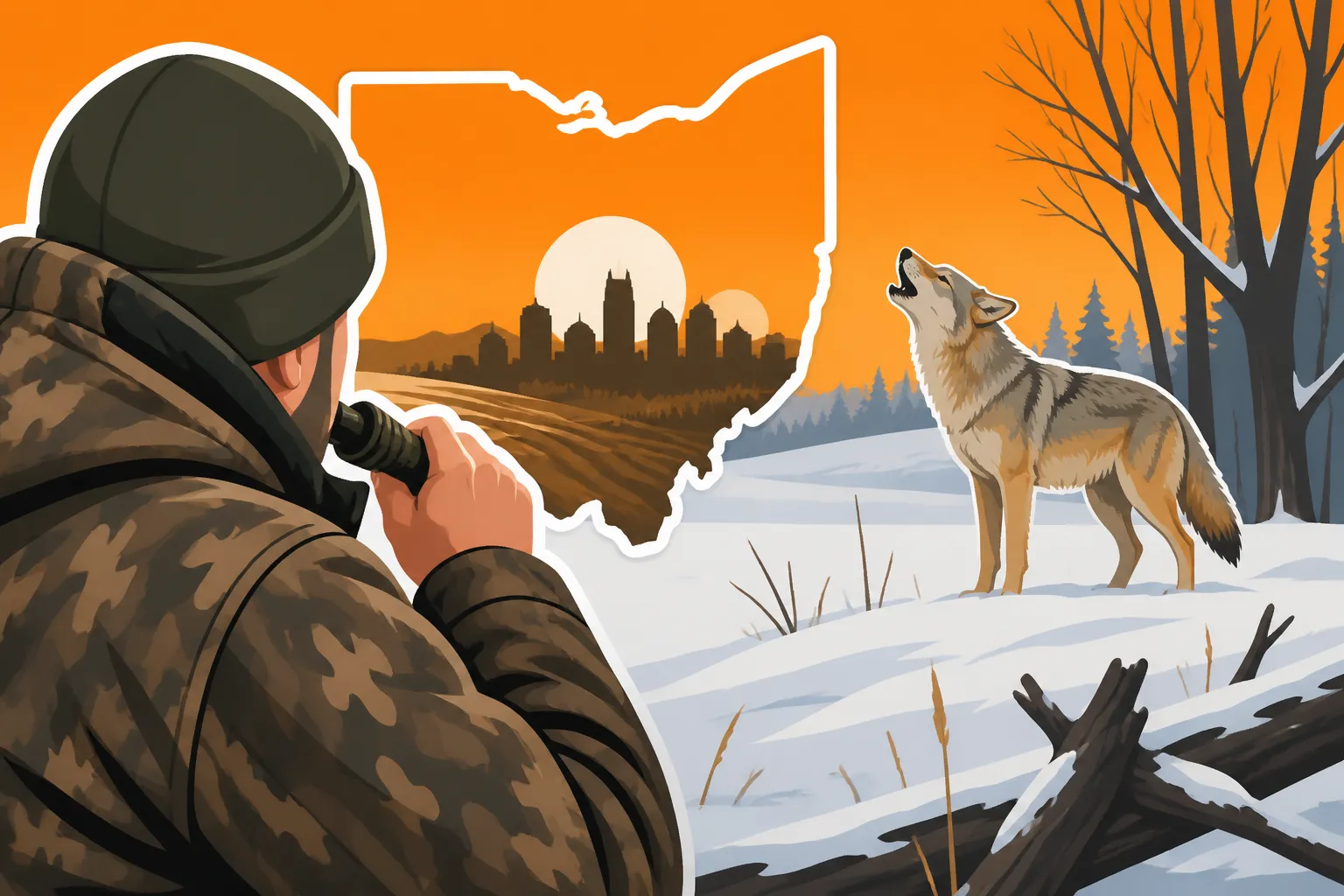
The biting cold of an Ohio winter can feel like it shuts down the woods, making many hunters hang up their gear until spring turkey season. But for those of us who love the challenge, winter actually opens up a fantastic opportunity to chase one of the smartest and most elusive predators around: the coyote. If you’ve been frustrated by these wily canines always being one step ahead, this comprehensive guide will equip you with the knowledge, gear, and tactics to successfully call coyotes in Ohio’s coldest months.
Understanding Ohio Coyotes in Winter
Winter truly changes the game when it comes to coyote hunting. Their behaviors shift dramatically, and understanding these changes is your first step toward success.
Winter Behavior and Habits
As the temperatures plummet and snow blankets the landscape, coyotes become far more focused on survival. Their primary drivers are finding food and, as winter progresses, finding mates. Food sources like rodents and rabbits are harder to come by, and deer, their secondary prey, are often healthier and less vulnerable than they might be in late fall. This scarcity makes coyotes more responsive to distress calls, as they're always on the lookout for an easy meal. Furthermore, winter is prime breeding season, typically from late January through March. During this period, territoriality spikes. Male coyotes will respond aggressively to challenge howls, viewing an intruder as a threat to their breeding opportunities. Packs are often more cohesive, and their vocalizations, like group howls and barks, become more frequent. Understanding this seasonal shift from purely hunger-driven responses to a mix of hunger and territorial aggression is key to selecting the right calls and strategies. They’re constantly moving, sometimes covering vast distances overnight, especially when snow makes tracking easier.
Prime Winter Habitat in Ohio
Ohio's diverse landscape offers varying coyote habitats, but some areas become hotspots in winter. Farm country, particularly in Northwest Ohio, with its patchwork of woodlots, fencerows, and unharvested crop fields, provides ideal cover and travel corridors. Coyotes will den in dense brush or secluded timber stands, venturing out to hunt field edges or follow creek bottoms. These riparian corridors offer both cover and access to water, even if frozen. In the rolling hills of Southeast Ohio, coyotes utilize the thick Appalachian hardwoods, navigating ridges and draws. They'll often bed on sunny slopes or in thick conifer stands for thermal cover. Public lands like Wayne National Forest or Shawnee State Forest can hold strong coyote populations, but they often require more effort to access and scout. Recognizing these prime locations—the subtle transitions between thickets and open ground, the winding path of a frozen creek, or a secluded logging road—is paramount. If you're hunting in areas similar to those described in "Hunting Northwest Ohio Farmland Deer", you're likely in prime coyote territory.
The Impact of Snow and Cold
Snow, while adding to the challenge of winter hunting, can also be your greatest ally. Fresh snow allows you to easily identify coyote tracks, helping you locate travel routes, recent kills, and even pinpoint bedding areas. A light dusting of snow or a frozen crust can also muffle your footsteps, allowing for quieter approaches to a stand location. However, cold weather also means extreme discomfort for the hunter. Wind chill can cut through inadequate clothing, forcing you off stand prematurely. Moreover, wind carries scent, and coyotes have an incredible sense of smell. You must always hunt with the wind in your favor, ensuring your scent is blowing away from where you expect a coyote to approach. Extremely cold temperatures can also make mouth calls freeze up or become difficult to operate, and electronic call batteries drain faster. Visibility, too, is altered; open fields become stark white canvases, making coyotes easier to spot from a distance, but they also offer less cover for a close approach. It's a double-edged sword that requires careful planning and a robust gear setup.
Essential Gear for Winter Coyote Calling
To withstand Ohio's winter conditions and be successful, you need the right gear. It's not just about staying warm; it's about being effective.
Layering and Cold Weather Clothing
Ohio winters can be brutal, oscillating between damp, bone-chilling cold and crisp, dry freezes. The key to staying comfortable and on stand longer is a proper layering system. Start with a moisture-wicking base layer – think merino wool or high-quality synthetics – to draw sweat away from your skin. Next, add an insulating mid-layer, such as fleece or a puffy down jacket, to trap warmth. Finally, your outer layer needs to be waterproof and windproof to protect against the elements. A quiet fabric is essential, as the crunch of brush against noisy material can give away your position. Don't forget insulated headwear, gloves (or mittens with finger access), and warm, waterproof boots. Your hands and feet are often the first to get cold, ending a hunt prematurely. Investing in quality gear here, specifically designed for extreme cold, pays dividends. For more detailed advice on dressing for the season, check out "Clothing for an Ohio Late Season" and "Wool Versus Synthetics in Wet Cold".
Firearms and Ammunition
When it comes to putting down a coyote, shot placement and reliable knockdown power are crucial. Many hunters opt for flat-shooting centerfire rifles like the .223 Remington, .22-250, or .204 Ruger, especially in open country where longer shots are possible. These calibers offer excellent velocity and minimal bullet drop. However, Ohio’s specific regulations for certain areas, particularly regarding straight-wall cartridges, mean that options like the .350 Legend or .450 Bushmaster are also popular, particularly if you also use these firearms for deer hunting. For close-range encounters in thick cover or for running shots, a shotgun loaded with buckshot (e.g., #4 buck or BB shot) can be highly effective. The choice often comes down to your hunting environment and personal preference. Always make sure your firearm is sighted in for the range you expect to shoot, and choose a bullet designed for varmints or small game, typically a rapidly expanding projectile to ensure humane kills and minimize ricochets. Refer to "Ohio Legal Firearms for Deer Hunting" for the most up-to-date regulations on firearms in Ohio.
Optics and Ancillary Equipment
Clear vision is critical for spotting coyotes that often sneak in silently. A good pair of binoculars, perhaps 8×42 or 10×42, will help you scan distant field edges, dense tree lines, and open ridges for subtle movement. A rangefinder is also a valuable tool, allowing you to accurately gauge distances and make precise shots, especially in varied terrain or when snow creates optical illusions. For those long waits on stand, a comfortable seat or cushion is a must; nobody wants a cold, wet backside. Shooting sticks or a bipod can provide a stable rest, dramatically improving accuracy, particularly if you’re using a rifle and expecting longer shots in frigid conditions where your body might be shaking from the cold. A good headlamp or flashlight is also essential for safe entry and exit from your hunting area in the dark, and a quality hunting app like GoHunt can be invaluable for mapping your stand locations, marking tracks, and understanding wind direction in real-time. GoHunt's mapping tools can show you property lines and topographical features, helping you plan your approach and escape routes.
Mastering Coyote Calling Techniques for Winter
Calling coyotes is as much an art as it is a science. Winter conditions require specific adaptations to your calling strategy.
Types of Calls and When to Use Them
The core of coyote calling revolves around two main types: distress calls and vocalizations. Distress calls mimic an injured animal, like a rabbit, fawn, or bird, and appeal directly to a coyote's predatory instinct. In winter, with natural food sources scarce, these calls can be incredibly effective. Electronic calls, like those from FoxPro or Primos, offer a wide variety of sounds, perfect for gauging a coyote's preference and adapting on the fly. Mouth calls, such as open-reed or closed-reed calls, require more practice but allow for nuanced vocalizations and are often preferred by seasoned callers for their realism.
Coyote vocalizations include howls, barks, and yips. Challenge howls are particularly potent during the breeding season (late January to March), as they tap into a dominant male's territorial instincts. A lone howl can also be used as a locator call to get a coyote to respond and reveal its position. Pup distress calls, mimicking a lost or injured pup, can sometimes draw in protective adults, especially later in the winter. Experimentation is key; start with softer, subtler calls and gradually increase volume and intensity. Pay attention to how the coyotes in your area respond, and don't be afraid to switch up your calls if nothing is working. GoHunt's community forums often have discussions about which calls are working best in different Ohio regions.
Stand Setup and Concealment
Your stand setup is just as important as your calling. Coyotes have exceptional eyesight and a keen sense of smell, making concealment paramount. Always approach your stand silently, paying close attention to wind direction. You want the wind to be blowing your scent away from where you expect the coyotes to approach. Pick a spot that offers good visibility, allowing you to scan 180-270 degrees, but also provides ample cover to break up your silhouette. This could be a dense stand of pines, a thick fencerow, or even a strategically placed ground blind. Elevated positions, like a treestand, can offer an advantage, getting your scent above the coyote’s nose and providing a wider field of view. However, in winter, a ground blind can offer superior protection from the elements, allowing you to sit longer. Make sure to brush in your blind well, breaking up its outline. You can learn more about effective ground blind use in "Using a Ground Blind on Ohio Public Land". Patience is also a virtue; often, the coyotes will circle downwind before committing, so be prepared for them to approach from unexpected angles.
Calling Sequences and Duration
There's no single perfect calling sequence, but a general framework works well. Start with 30 seconds to a minute of soft, enticing calls, then pause for several minutes to listen and scan. This initial quiet phase can draw in a close-by coyote that might be wary of aggressive calling. If nothing responds, gradually increase the volume and intensity of your calls, mixing distress sounds with subtle barks or yips. A typical sequence might involve a minute of rabbit distress, followed by a few minutes of silence, then perhaps a series of pup whines, and another long pause.
The duration of your stand is also critical. Many hunters leave too early, often missing coyotes that take longer to commit. While some coyotes charge in quickly, others might take 15-20 minutes, or even up to 45 minutes, especially if they are coming from a distance or are more wary. In winter, with fewer leaves on the trees and often clearer visibility, coyotes can hang up at longer distances, trying to locate the source of the sound without exposing themselves. Be patient, scan constantly, and be ready when they finally commit. Don't be afraid to stay on stand for 30-45 minutes, even an hour, especially in areas with known coyote activity.
Advanced Winter Coyote Strategies
Once you've got the basics down, you can start incorporating more advanced tactics to increase your success rates.
Reading Sign and Scouting
Successful coyote calling begins long before you set foot in the field with your call. Winter, especially after a fresh snowfall, provides an excellent opportunity for scouting. Look for tracks along field edges, fencerows, frozen creek beds, and logging roads. Newer tracks are sharply defined, while older tracks appear rounded and melted. Pay attention to the direction of travel and patterns in the tracks – do they indicate a single coyote, a pair, or a full pack? Scat can also provide clues about their diet and recent activity. Look for areas with high rodent populations, rabbit tracks, or deer activity, as these are likely coyote hunting grounds. Identifying key travel corridors between bedding and feeding areas is paramount. Often, a saddle on a ridge or a narrow bottleneck between two woodlots can funnel coyotes right into your calling zone. Utilizing tools like GoHunt's detailed aerial and topographic maps can help you identify these natural funnels and pinch points from the comfort of your home. You can even mark potential stand locations and access routes on the GoHunt app. For more general scouting tips, consider reading "Scouting Ohio Public Land Before Season".
Decoy Use and Attractants
Sometimes, the auditory stimulation of a call isn't enough to coax a wary coyote into range. That's where visual aids and scents come in. A motion decoy, such as a Fawn Fanatic or a similar rabbit-ear flapper, can be incredibly effective. The erratic movement mimics an injured animal and draws the coyote's attention away from you, focusing it on the decoy instead. This allows you to raise your gun or bow for a shot undetected. Place your decoy 20-50 yards out from your position, ideally slightly upwind or crosswind, so the coyote sees it as it approaches your setup.
Scent attractants can also play a role, especially on calm days. A few drops of a genuine coyote urine or gland lure on a bush near your decoy can add an extra layer of realism. Be cautious with human-made scents, as coyotes are incredibly sensitive. Remember, the goal of a decoy and attractants is to fully commit the coyote, drawing its attention away from your hidden position, buying you precious seconds for a clean shot.
Night Hunting Considerations
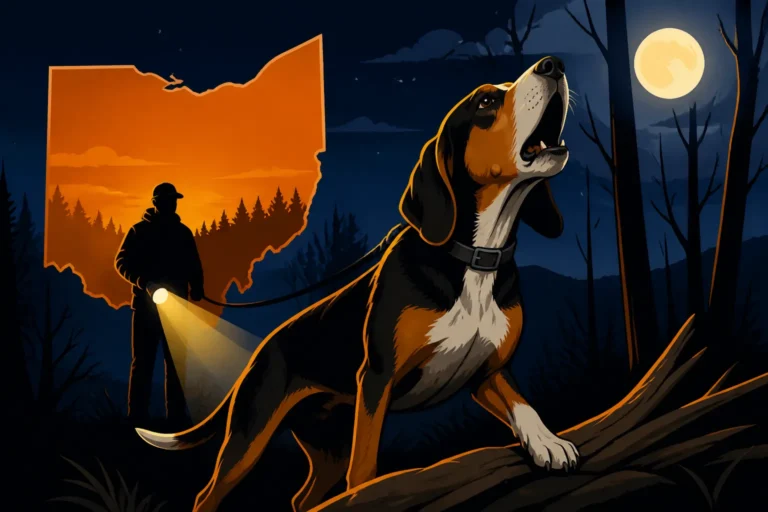
While many hunters focus on daytime calling, night hunting for coyotes is legal in Ohio, and it can be incredibly effective, especially for pressured coyotes that have learned to avoid daytime callers. The rules for night hunting vary, so always check the latest "Night Hunting Rules for Ohio Coyotes" from the Ohio Department of Natural Resources (ODNR). Generally, artificial lights are permitted, and many hunters use powerful red or green lights, or even thermal and night vision optics, to spot coyotes in the dark.
Night hunting requires a different set of skills and safety precautions. You'll need to know your shooting lanes implicitly, be aware of your backdrop, and be absolutely certain of your target before taking a shot. Coyotes are often more active at night, and the cover of darkness makes them bolder. Distress calls can be especially potent under the moonlight. However, sound carries differently at night, and without the visual cues of daylight, it can be harder to judge distance and direction of an incoming coyote. Consider hunting with a partner for added safety and to help scan different sectors.
Overcoming Common Winter Calling Challenges
Winter coyote hunting isn't without its frustrations. Knowing how to adapt to common challenges will keep you in the game.
Dealing with Wind and Weather
Ohio winter weather is notoriously fickle. High winds are a bane to coyote callers, as they make it incredibly difficult for your calls to carry, and they can also whip your scent across a wide area. On windy days, focus on hunting areas with natural windbreaks, such as dense cedar thickets, deep ravines, or the leeward side of a ridge. Shorten your calling sequences and increase the volume, knowing that your sound isn't traveling as far. On particularly blustery days, sometimes it's best to switch tactics or wait for more favorable conditions.
Rain and wet snow can also present challenges, not only for your comfort but also for your gear. Mouth calls can freeze, and electronic calls can malfunction if exposed to too much moisture. Ensure your electronic calls are waterproof or kept in protective bags. Dress in waterproof outer layers to stay dry and comfortable; wet clothes will quickly lead to hypothermia. Even though it's tough, remember that coyotes still need to eat, even in foul weather, so persistence can pay off.
Handling Educated Coyotes
Ohio coyotes are smart, and they learn quickly. Areas with high hunting pressure often have "educated" coyotes that have heard every call in the book and seen every trick. If you're encountering coyotes that hang up at long distances, circle downwind, or simply won't commit, it's time to change your approach.
- Vary Your Calls: Stop using the same old rabbit distress. Experiment with less common sounds like rodent squeaks, bird distress, or even fawn bleats (early winter).
- Silence is Golden: Sometimes, less is more. Try a longer period of silence between calls, making the coyote work harder to locate the source.
- Change Locations: Don't hit the same stand repeatedly. Move to fresh ground, especially in areas where you've seen new sign.
- Hunt the Wind Precisely: For educated coyotes, even a slight shift in wind can send them packing. Be extra vigilant about scent control.
- Try Night Hunting: As mentioned earlier, pressured coyotes often become more active at night.
- Utilize GoHunt's Data: Check GoHunt's mapping tools for areas that might receive less pressure or offer unique terrain features where coyotes might feel more secure. User reports can sometimes offer insights into local coyote behavior.
Safety and Ethical Considerations
Hunting coyotes, like any hunting, demands strict adherence to safety and ethics. Always treat your firearm as if it's loaded, keep the muzzle pointed in a safe direction, and be absolutely sure of your target and what lies beyond it before taking a shot. Know the "Ohio Coyote Hunting Season Rules" and adhere to them.
Wear appropriate blaze orange or blaze pink clothing, especially if hunting during overlaps with deer seasons, as outlined in "Ohio Blaze Orange Requirements". Even if not legally required for coyote hunting specifically, it's a good safety practice, particularly on public lands. Respect private property; always obtain explicit permission before hunting on someone else's land, even if you're just retrieving a downed animal. If you're utilizing public hunting grounds, be mindful of other hunters, as covered in "Public Hunting Land in Ohio". Ethical hunting also means striving for a clean, humane kill. Practice your shooting regularly so you're confident in your abilities when a coyote comes calling. After harvesting, remember that coyotes are a valuable part of the ecosystem, and their pelts can be utilized or donated.
| Call Type | Best Use in Winter | Pros | Cons |
|---|---|---|---|
| Rabbit Distress | Early winter, general hunger call | Highly effective, universally recognized prey sound | Can be overused in pressured areas, coyotes may be wary |
| Fawn Distress | Early winter, when fawns are still vulnerable | Unique sound, less common, can surprise coyotes | Less effective later in winter as fawns grow |
| Mouse/Rodent Squeaks | Close range, subtle, for wary coyotes | Very realistic, good for drawing in hung-up coyotes | Short range, requires quiet conditions, coyotes may not commit |
| Coyote Howls (Locator) | Anytime to locate coyotes and gauge activity | Reveals coyote presence, good for initial scouting | Can alert coyotes to your presence if overdone |
| Coyote Howls (Challenge) | Breeding season (Jan-Mar), for territorial males | Taps into aggression, can bring in dominant males quickly | Less effective outside breeding season, can scare off females |
| Pup Distress | Later winter, for protective adults or pack members | Can draw in entire packs, taps into parental instincts | Less universally effective, requires specific timing |
| Electronic Calls | Versatility, volume, hands-free operation | Wide range of sounds, consistent quality, easy to use | Requires batteries, can be expensive, less "personal" feel |
| Mouth Calls | Realism, nuance, no batteries needed | Highly realistic, quiet adjustments, lightweight | Requires practice, can freeze in extreme cold, limited sound set |
Disclaimer
Always check the latest hunting regulations and season dates published by the Ohio Department of Natural Resources (ODNR) before heading into the field. Regulations can change, and it is the hunter's responsibility to know and follow all applicable laws.