Running Hounds for Ohio Raccoon
There's nothing quite like the symphony of a hound working a cold trail under a crisp Ohio night sky, only to erupt into that triumphant "treed!" bark. For many, raccoon hunting with hounds isn't just a pastime; it's a deep-rooted tradition that connects them to the land, their dogs, and generations of hunters. This guide will walk you through everything you need to know to get started or refine your technique, from understanding the subtle nuances of hound work to navigating Ohio's specific regulations and ensuring a safe, successful hunt.
Understanding Ohio Raccoon Hunting with Hounds
Raccoon hunting with hounds is a quintessential American tradition, especially strong here in Ohio. It's a sport that demands patience, a deep understanding of canine behavior, and a love for the outdoors after dark. It's not just about the harvest; it's about the chase, the bond with your dogs, and the unique challenges of the nocturnal wilderness.
The Enduring Tradition of Ohio Coonhunting
For generations, the baying of hounds across Ohio's woodlands and farmland has signaled the start of a coon hunt. This isn't a silent, solitary pursuit; it's an immersive experience that often involves a small group of hunters, friends, or family. The camaraderie, the shared anticipation as the dogs work, and the proud moment when a coon is finally located up a tree are all part of the timeless appeal. It's a direct link to a simpler time when hunting was a necessity, but also a deeply cherished social event.
In many rural Ohio communities, coonhunting is more than just a hobby; it's a way of life. Kids grow up listening to the stories, learning to identify the different barks, and dreaming of the day they'll have their own hound. This tradition thrives because it offers a unique blend of challenge, skill, and an unforgettable connection to nature. It teaches responsibility, animal husbandry, and respect for the game and the land.
Why Raccoons are a Prime Target for Houndsmen
Raccoons are incredibly intelligent, resilient, and abundant throughout Ohio, making them an ideal game species for houndsmen. Their nocturnal habits mean hunters are out when most other activities cease, offering a different kind of wilderness experience. Raccoons are excellent climbers and can be incredibly wily, often leading dogs on intricate chases through diverse terrain, from creek bottoms and thick fencerows to mature hardwoods.
Their widespread presence, particularly in areas near agricultural land and water sources, means that finding huntable populations isn't usually an issue across much of the state. Ohio's diverse landscape, from the rolling hills of Appalachia to the flat farmlands of the northwest, provides ample habitat. For a more detailed look at where these masked bandits thrive, check out our guide on Raccoon Density Near Ohio Farmland. Their fur also holds value, historically and currently, adding another dimension to the hunt for some.
The Thrill of the Chase and the Tree
The real magic of coonhunting lies in the process: the casting of the dogs, the initial strike on a trail, the frantic chase, and the ultimate "tree." Each stage is filled with anticipation and excitement. When your hounds hit a track, their barks change – a distinct, urgent "chop" that tells you they're on to something. Then comes the chase, a symphony of bays, chops, and howls echoing through the night as the dogs work to keep the coon's scent.
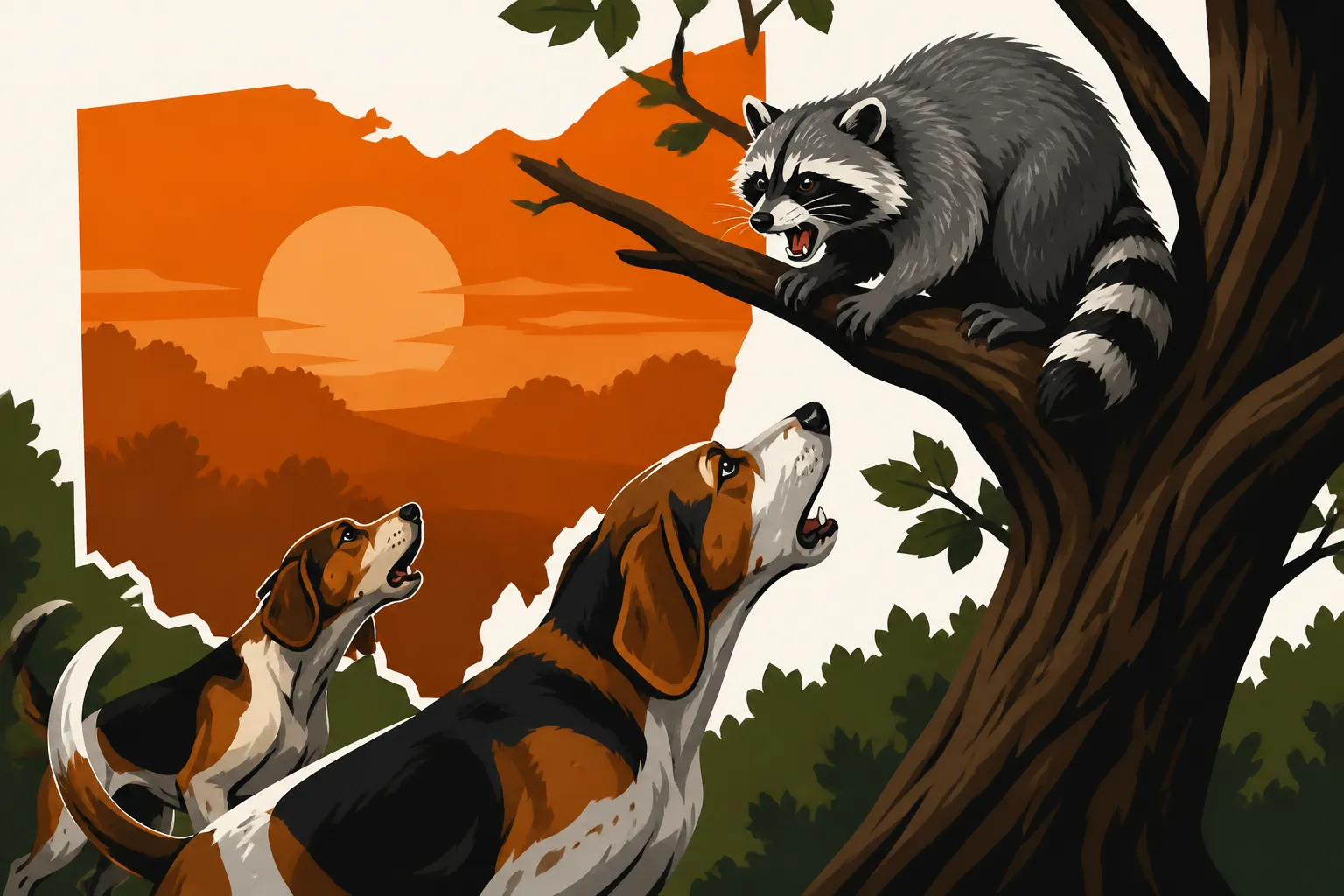
Finally, the moment arrives when the dogs switch from trailing to "treeing." Their barks become more consistent, often a rapid, excited chop-chop-chop, signaling that the raccoon has taken refuge in a tree. This is when the hunters move in, guided by the sound, to locate the treed animal. There’s a profound sense of accomplishment in reaching your dogs after a hard race, seeing them proudly baying at the base of a towering oak, knowing they’ve successfully done what they were bred for.
Essential Gear for a Successful Coon Hunt
Coonhunting isn't just about the dogs; it's also about having the right gear to support them and ensure your own safety and efficiency in the dark. Being prepared makes all the difference when you're miles into the woods at 2 AM.
Lighting the Way: Headlamps and Handhelds
Hunting after dark requires reliable illumination, and in Ohio's often rugged terrain, you'll want both hands free. A powerful headlamp is absolutely critical for navigating through thick brush, climbing over fallen logs, and ensuring you don't trip in a ravine. Look for a headlamp with multiple brightness settings and a long battery life. Many dedicated coonhunting headlamps offer a bright, focused beam for spotting raccoons high in trees, along with a softer, wider beam for general walking.
In addition to your headlamp, a powerful handheld spotlight is indispensable for "shining" trees to locate the raccoon once your dogs have treed it. These spotlights often boast incredible lumen outputs and long throw distances, allowing you to cut through the darkness and pick out the raccoon's eyes reflecting back from the canopy. Brands like Bright Eyes or Cyclops offer models specifically designed for the rigors of night hunting. For more insights on specific lighting options, check out our guide on Headlamps Built for Night Raccoon Hunts. Always carry spare batteries or a portable power bank, because a dead light in the middle of a dark woods is no fun for anyone.
Tracking Technology: GPS and Radio Collars
Gone are the days when losing a hound meant a frantic search for hours or even days. Modern tracking technology has revolutionized coonhunting, making it safer for your dogs and less stressful for you. GPS collars, like those from Garmin Alpha or GoHunt's tracking features, are now standard equipment for serious houndsmen. These systems allow you to see your dog's location on a handheld receiver or even on your smartphone in real-time, displaying their path, speed, and whether they're on the move or "treed."
Many GPS collars also incorporate traditional radio tracking, providing a backup in areas with poor satellite reception. This combination offers unparalleled peace of mind, especially when your dogs are running a hot track through vast tracts of public land or across multiple private parcels. Being able to pinpoint your dog's exact location, even when they're out of earshot, is invaluable for safe retrieval and ensuring you don't accidentally trespass. If you're looking to dive deeper into how these technologies assist, explore Treeing a Raccoon With a GPS Collar.
Hound Care and Protection in the Field
Your hounds are your partners, and their well-being is paramount. Protecting them from the elements, hazards, and fatigue is crucial. During cold Ohio nights, especially later in the season, dogs can get chilled, so consider warm blankets for the dog box during transport and even insulated vests for the hunt itself, depending on the breed and conditions. Look for vests that offer protection against briars and cuts without restricting movement.
Carry a first-aid kit specifically for dogs, including wound cleaning supplies, vet wrap, and pain relief. Your dogs will inevitably encounter thorns, sharp sticks, or other minor injuries in the dark. Water is also critical, especially on long chases. Ensure you have a portable water bowl and plenty of fresh water for your dogs, even in cold weather, as they expend a lot of energy. A well-cared-for hound is a happy and effective hound.
Training Your Coonhound for Ohio Conditions
A well-trained coonhound isn't just born; it's made through consistent effort, exposure, and understanding. Ohio's diverse terrain and weather present unique challenges that your dog needs to be prepared for.
Starting Young: Puppy Foundations and Early Exposure
The journey to a great coonhound begins in puppyhood. Early exposure to the outdoors, different types of terrain, and the scents of wild animals is vital. Start by introducing your pup to raccoon scent through hides or caged coons in a controlled environment. The goal isn't to make them instantly aggressive, but to pique their natural curiosity and prey drive. Positive reinforcement is key – praise and reward them when they show interest.
As they grow, introduce them to short walks in the woods, especially at night. Let them explore, sniff, and build confidence in the dark. Focus on basic obedience commands like "come" and "stay" in increasingly distracting environments. A well-mannered dog on a leash translates to a more controllable dog in the field, which is essential when you're navigating complex areas or encountering other hunters. Patience during these early stages will pay huge dividends down the line.
Advanced Training: Scent Work and Treeing Instincts
Once your hound has a good foundation, it’s time to refine their scenting and treeing abilities. This often involves "trailing" captive-raised coons or using raccoon drags to lay scent trails in varied cover. You want your dog to develop the ability to stick to a coon's track, even when it’s faint or crosses other animal scents. Work them in different conditions – wet ground, dry ground, windy nights – to build their resilience.
Teaching a dog to "tree" involves consistent exposure to treed raccoons and reinforcing the correct behavior. When they bark at the base of a tree where a coon is present, reward them enthusiastically. Some dogs are natural "tree dogs," while others need more encouragement to stay at the tree and continually bark until you arrive. Consistency and repetition, combined with real-world experience, will hone their instincts and make them reliable tree dogs. This advanced training is where you see your dog's true potential emerge.
Conditioning for Long Ohio Nights
Coonhunting in Ohio means covering a lot of ground, often through demanding terrain, in all sorts of weather. Your hounds need to be in peak physical condition to perform effectively and safely. Regular exercise is paramount – whether it's long walks, runs, or swimming, which is excellent for building stamina without excessive joint impact. Building muscle and endurance will help them navigate steep ravines, muddy creek banks, and dense briar patches without getting exhausted or injured.
Just as important as physical conditioning is mental toughness. Expose your dogs to different environments, sounds, and other dogs to build their confidence and focus. A dog that spooks easily or gets distracted by other noises won't perform consistently. Regular trips to various hunting spots before the season opens, even just for walks, can help them acclimate to new smells and landscapes. Remember, a tired or stressed dog is more prone to mistakes and injury.
Tactics and Strategies for Running Hounds
Success in coonhunting isn't just about having good dogs; it's about knowing how to work with them, understanding the environment, and employing smart tactics. The dynamic interaction between hunter and hound is what makes this sport so engaging.
Reading the Land: Scouting for Raccoon Hotspots
Before you ever turn your dogs loose, a successful coon hunt begins with smart scouting. Raccoons are creatures of habit, often frequenting areas with easy access to food, water, and denning sites. In Ohio, this often means focusing on creek bottoms, river corridors, marshy areas, and woodlots adjacent to agricultural fields. Look for signs like tracks in mud, overturned rocks, and scat, especially near cornfields, soybean fields, and mast-producing hardwoods like oaks and hickory. Our article on Squirrel Hunting Ohio Hickory Groves might offer some crossover tips on identifying valuable nut-producing trees.
Use mapping tools like GoHunt or the Ohio HuntFish App to identify potential hotspots, property lines, and access points. Pay attention to changes in elevation, natural funnels, and areas with dense cover that raccoons might use for bedding or escape routes. Even in winter, you can often "read the snow" to find fresh tracks and determine travel patterns, much like you would for deer. Scouting during the daylight hours gives you a massive advantage when you're trying to navigate the same terrain in the dead of night.
Casting Your Hounds: Unleashing the Pack
"Casting" your hounds refers to the act of turning them loose in an area where you suspect raccoons are present. This isn't just randomly letting them go; it's a strategic decision based on your scouting and current conditions. On a calm night, you might cast them near a known travel corridor or a field edge where raccoons are likely feeding. If it's windy, you might start them downwind to allow their powerful noses to pick up scent more easily.
Observe your dogs closely as they begin to work. Are they moving with purpose, noses to the ground? Or are they just milling around? A good houndsman can often tell if their dogs are "cold-trailing" a track (working a faint, older scent) or if they've "struck" a hot, fresh one. Different dogs in a pack might have different strengths – some excel at starting a track, others at staying on it, and still others at the final treeing. Understanding your pack's dynamics helps you decide when and where to cast them for the best results.
Interpreting the Bay: Understanding Your Dog's Language
One of the most rewarding aspects of coonhunting is learning to "read" your dog's vocalizations. Each hound, and each stage of the hunt, has a distinct sound. The initial "strike" bark is usually excited and intermittent, signaling they've hit a trail. As they commit to the chase, their baying becomes more continuous and rhythmic, indicating they're actively trailing the raccoon. Some dogs have a deep, drawn-out bawl, while others have a faster, choppier chop.
When the raccoon goes up a tree, the dog's bark changes again. This is the "treed" bark – often a faster, more urgent, and concentrated series of barks, sometimes accompanied by scratching at the tree trunk. Learning these nuances allows you to understand what's happening without seeing your dogs. It tells you whether they're on a hot track, whether they're confused, or if they've successfully treed a coon. This communication is the heart of the hound-hunter relationship, and it takes time and experience to truly master.
Navigating Ohio Regulations and Land Access
Successful coonhunting in Ohio isn't just about knowing your dogs and the woods; it's also crucial to understand and adhere to the state's hunting regulations and land access laws. Ignorance of the law is never an excuse, and a single mistake can ruin a hunt or worse.
Key Ohio Raccoon Hunting Regulations
Ohio has specific seasons and rules for raccoon hunting that houndsmen must follow. The most critical piece of information is always the current year's hunting regulations booklet, available from the Ohio Department of Natural Resources (ODNR). Generally, raccoon season runs from early November through late January, with extended trapping seasons for furbearers. Always confirm the exact Ohio Raccoon and Fox Season Dates before heading out.
Key regulations typically include legal hunting hours (often specific hours during the night), bag limits (though raccoon limits are usually generous), and requirements for carrying a valid Ohio hunting license. You’ll also need to be aware of any specific firearm restrictions if you plan to dispatch the raccoon with a gun, though many coonhunters use .22 caliber rimfire rifles or pistols for this purpose. Always ensure your method is legal and safe.
Securing Permission for Private Land Access
A vast amount of prime raccoon habitat in Ohio is on private land. This means securing permission from landowners is often essential for a productive hunt. Never assume you have permission, even if you’ve hunted there before. Always ask well in advance of the season, and ideally, get written permission to avoid any misunderstandings. Be respectful, offer to share some of your harvest, and always leave the property in better condition than you found it. Our guide on Hunting Small Private Tracts in Ohio offers more advice on how to approach landowners.
Building a good relationship with landowners is a long-term investment. They are entrusting you with their property, and demonstrating respect for their land, fences, and livestock is paramount. Leave gates as you found them, avoid damaging crops, and if you accidentally cross onto adjacent properties without permission, apologize and explain immediately. A good reputation as a courteous hunter can open many doors.
Utilizing Ohio Public Lands for Coonhunting
Ohio offers a good amount of public hunting land, including state forests and wildlife areas, where raccoon hunting is permitted. However, these areas come with their own set of rules and often see higher pressure. It's vital to research specific wildlife areas or state forests you plan to hunt, as regulations can vary. For example, some areas may have restrictions on vehicle access, camping, or even the use of certain types of firearms.
The Ohio Department of Natural Resources (ODNR) provides excellent mapping resources, including their HuntFish Ohio map tool, which details public land boundaries and specific regulations for each site. Be aware of Ohio Public Land Hunting Hours – while coonhunting is primarily at night, there may be specific restrictions on when you can be on the property. Always be respectful of other users, whether they are hikers, campers, or other hunters. Scouting Ohio Public Land Before Season is always a wise move to understand the terrain and potential pressure.
Night Hunting Specifics and Challenges
Coonhunting is almost exclusively a nocturnal pursuit, and hunting under the cloak of darkness presents a unique set of demands and challenges that require careful consideration.
The Unique Demands of Hunting After Dark
Hunting at night transforms the familiar landscape into a completely different world. Your senses, especially hearing, become heightened as your eyes adjust to the low light. The sounds of the woods take on new meaning, from the rustle of leaves that might be a squirrel or a raccoon, to the distant howl of a coyote, which can be useful when Coyote Calling in Ohio Winter. Navigating in the dark requires a much slower, more deliberate pace, and familiarity with the terrain is critical. Even with powerful headlamps, shadows play tricks, and uneven ground can easily lead to a stumble or fall.
One of the biggest demands is simply staying oriented. Without clear landmarks, it's easy to become disoriented, especially when following dogs on a long chase. A reliable GPS unit, like those integrated into GoHunt apps, or a dedicated device, is not just a convenience; it's a safety essential. Mark your vehicle, important turns, and any potential hazards on your GPS. The solitude of night hunting can be incredibly peaceful, but it also means you're often far from immediate help if an emergency arises.
Dealing with Environmental Challenges
Ohio's weather can be notoriously unpredictable, and hunting at night often amplifies its effects. Cold temperatures are a given during prime coonhunting season, necessitating warm, layered clothing. Even on clear nights, the temperature can drop significantly after dark. Wet conditions, whether from rain, snow, or simply damp ground, can make trails slick and increase the risk of hypothermia if you're not properly dressed. Consider waterproof outer layers and insulated, waterproof boots.
Mud, thick briars, and icy patches are common hazards, especially in creek bottoms and low-lying areas. Footing can be treacherous, so sturdy boots with good ankle support are a must. Your dogs will also face these challenges, so ensure their paws are conditioned or protected. The quiet of the night also means sounds carry further, so be mindful of how your voice or equipment noise might affect other wildlife or nearby residents.
Safety Considerations for Night Hunters
Safety is paramount when hunting after dark. Always let someone know where you're going, your planned route, and when you expect to return. This "float plan" is crucial for any remote outdoor activity. Carry a fully charged cell phone (though don't rely on it for navigation or communication in areas with poor service), a first-aid kit for both humans and dogs, and emergency supplies like extra water, snacks, and a space blanket.
When carrying firearms, extreme caution is necessary. Identifying your target clearly in the beam of a spotlight, especially when it's high in a tree, requires discipline and practice. Always be sure of your backdrop and what's beyond your target. Make sure your companions are aware of your position, and consider wearing a bit of blaze orange or reflective material on your pack or hat, even though it's not always legally required at night, it can help prevent accidental encounters with other hunters. Finally, avoid hunting alone whenever possible, especially in unfamiliar or rugged terrain.
Conclusion
Raccoon hunting with hounds in Ohio is a deeply rewarding endeavor, steeped in tradition and offering a unique way to experience the state's wild places after dark. From the careful training of your dedicated hounds and the strategic scouting of prime habitat using tools like GoHunt, to mastering the nuances of night navigation and understanding the symphony of the chase, every aspect of the hunt contributes to an unforgettable experience. Remember to prioritize safety, respect the land and its owners, and always stay informed about Ohio's specific regulations. May your nights be filled with the exciting bay of a hound on a hot track and the thrill of the treed coon.
Disclaimer
Please note that hunting regulations, seasons, and licensing requirements can change frequently. Always consult the current Ohio Department of Natural Resources (ODNR) hunting regulations booklet or website before engaging in any hunting activity. This guide is for informational purposes only and should not be considered a substitute for official state regulations or proper hunter education.