Treestand Setups in Appalachian Ohio Hardwoods
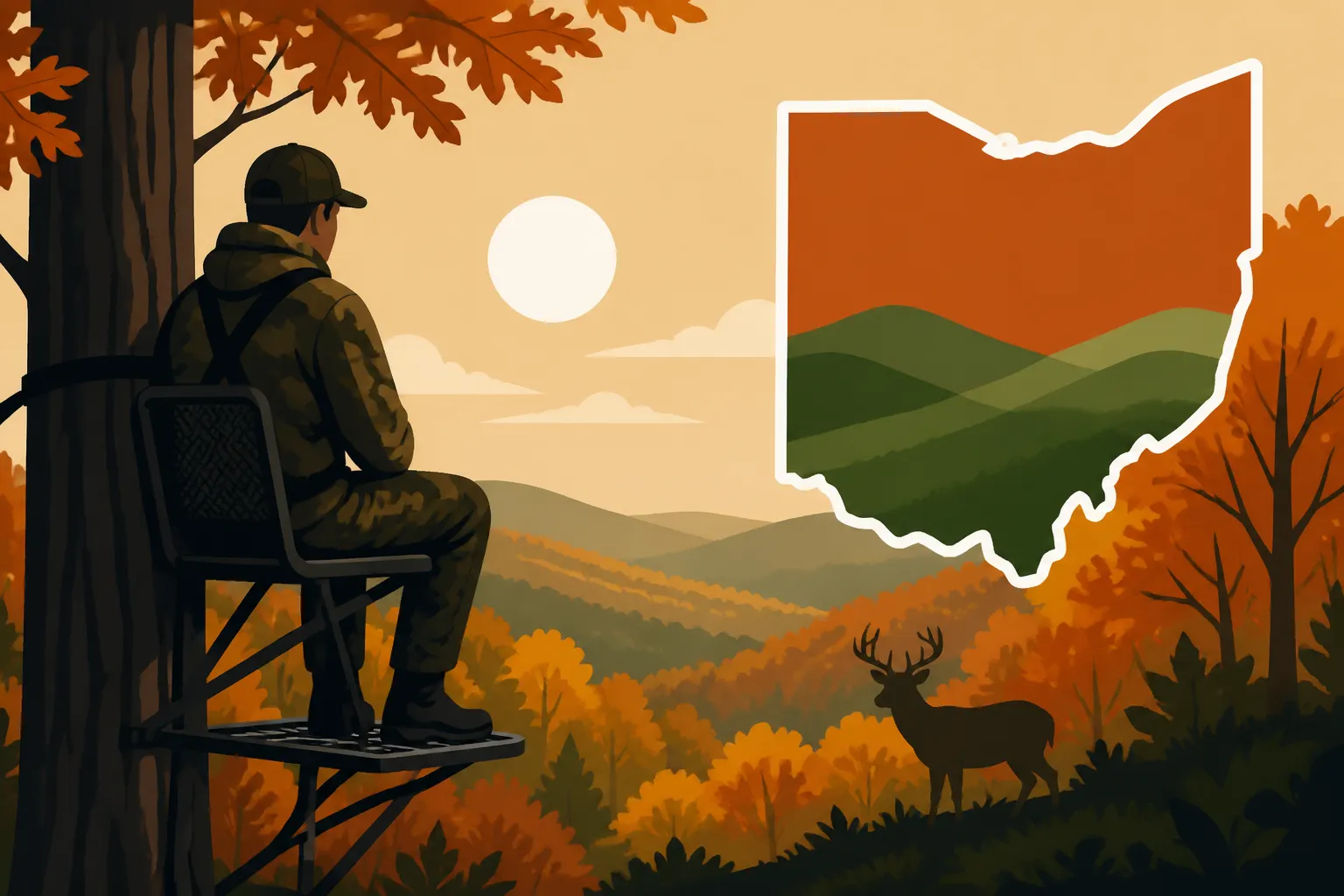
Hunting the rolling hills and steep hollows of Appalachian Ohio is a challenge like no other, especially when you're trying to figure out where to hang a treestand for deer. The dense timber, unforgiving terrain, and often unpredictable deer movement can make finding that perfect, strategic setup feel impossible. This guide is here to cut through that frustration, offering practical, in-depth advice on how to scout, select, and safely deploy treestands in Ohio's rugged Appalachian region, helping you turn those challenging woods into your next successful hunting spot.
Understanding the Appalachian Landscape for Treestand Placement
Appalachian Ohio's hunting grounds are a world away from the flat farmlands of the state's northwest. Here, the land tells a different story, one of steep ridges, deep ravines, and mixed hardwood forests. To effectively set a treestand, you first have to become intimately familiar with these unique characteristics and how they dictate deer behavior.
Decoding Topography and Terrain Features
The bedrock of successful hunting in Appalachian Ohio truly lies in understanding the topography. Those steep inclines and declines aren't just pretty scenery; they're highways, bottlenecks, and bedding areas for deer. When you're glassing a ridge or looking at a topo map, you're not just seeing elevations; you're seeing potential travel corridors and pinch points. Deer, being creatures of efficiency, will almost always take the path of least resistance. This means paying close attention to saddles, benches, and draws. Saddles, those dips in a ridge line, are classic crossing points. Deer traveling from one ridge system to another, or from a bedding area to a food source, will often utilize these natural funnels. Benches, those subtle flat spots that break up a steep hillside, are often overlooked but can be goldmines. Deer will travel along them, especially when moving between different elevation levels, offering hunters a distinct advantage for a setup.
Ravines and hollows, while daunting to navigate, often contain creeks or natural springs, providing essential water sources. Deer will frequently travel along the edges of these, especially on the less steep, downwind side. Understanding these micro-topographical features is crucial. It’s not enough to just know there’s a hill; you need to know how the hill shapes deer movement. This is where tools like the GoHunt mapping platform can really shine, allowing you to layer topography maps with satellite imagery to pinpoint these subtle yet critical features without even setting foot in the woods yet. If you're looking for more general information, check out our piece on Hunting Southeast Ohio Appalachian Foothills.
Identifying Key Timber Types and Cover
The Appalachian hardwoods are a mosaic of different tree species, each playing a role in the deer's world. Oak ridges, laden with white oaks and red oaks, are prime food sources in the fall, drawing deer in like magnets. A stand overlooking a white oak flat that's dropping acorns can be deadly. Conversely, dense stands of pines, thick brush, or regenerating clear-cuts provide crucial bedding and security cover. Deer will bed in these thickets, especially during daylight hours, preferring areas that offer thermal cover and a visual advantage.
When you're scouting for a treestand, you need to consider both food and cover. A common mistake is setting up solely on a food source without understanding the deer's approach and exit routes from their bedding areas. Look for transition zones – the edges where thick cover meets more open timber, or where a food source begins. These are often high-traffic areas where deer feel comfortable pausing before entering a more exposed feeding zone or bedding down for the day. For more on finding these critical spots, our guide on Finding Sign in Big Appalachian Timber can provide extra insights. The goal is to position your stand where you intercept deer moving naturally between these essential elements of their habitat, rather than waiting for them at a static location.
Scouting for the Perfect Treestand Location
Effective treestand placement isn't just about finding a good tree; it's about meticulous scouting that paints a complete picture of deer movement. This is where you transform from a casual observer to a deer detective, piecing together clues to predict future behavior.
Reading Deer Sign and Travel Patterns
The woods whisper secrets if you know how to listen, or rather, how to look. Fresh deer sign – tracks, rubs, scrapes, and droppings – are your primary intelligence. Tracks tell you where deer are walking, the frequency, and even the size of the animals. Fresh rubs on saplings indicate a buck has been in the area, asserting his presence. Scrapes, particularly those with an overhanging licking branch, are communication hubs for deer, especially during the pre-rut and rut. Finding a well-used scrape line along a logging road or ridge top can be an absolute game-changer for stand placement.
But it's not enough to just find sign; you need to interpret it. Are the tracks heading to a specific food source? Do the rubs indicate a travel corridor between two bedding areas? Is a scrape line active consistently? You're looking for patterns, not just isolated incidents. Imagine you've found a cluster of fresh sign leading up a gentle slope on a ridge. This could be a prime opportunity to hang a stand that intercepts deer moving from a lower feeding area to higher bedding grounds. Always consider the season you'll be hunting. Early season bucks might be patterned to specific food sources, while the rut brings unpredictable cruising behavior. Our article on Reading a Ridge for Southeast Ohio Deer dives deeper into these patterns.
Utilizing Wind and Thermals to Your Advantage
In the undulating terrain of Appalachian Ohio, understanding wind and thermals isn't just important; it's absolutely critical. A miscalculation here can blow your hunt before it even begins. Wind carries your scent, and deer are masters at using it to detect predators. Always, always try to position your stand so that your scent cone blows away from where you expect deer to approach or travel. This often means being downwind of a trail or bedding area.
Thermals, the localized air currents influenced by temperature changes, add another layer of complexity. In the mornings, as the sun warms the earth, air typically rises, carrying scent uphill. In the evenings, as the air cools, it sinks, carrying scent downhill. This means a stand location that's perfect in the morning might be a disaster in the evening, or vice-versa. For instance, if you're hunting an evening setup near a bottomland food source, you want your stand high enough that the sinking thermals carry your scent over the approaching deer. Conversely, for a morning hunt, you might want to be lower down, letting the rising thermals lift your scent. This dynamic dance of wind and thermals is especially pronounced in the steep hollows and ridges, so a deep understanding, potentially enhanced by real-time weather apps, is paramount. You can find a more extensive explanation in our guide on Wind and Thermals on an Appalachian Ridge.
Types of Treestands and Appalachian Suitability
Choosing the right treestand for Appalachian Ohio isn't a one-size-fits-all decision. The terrain, the type of tree you're setting up in, and your personal hunting style all play a significant role. Each type has its pros and cons, especially when faced with rough bark and steep climbs.
Hang-On Stands and Climbing Sticks
Hang-on stands are arguably the most versatile option for Appalachian Ohio's diverse timber. They consist of a platform and a seat that you 'hang' on a tree using straps or chains, and then ascend using separate climbing sticks or sections of a ladder.
Pros for Appalachian Hunting:
- Adaptability: Hang-ons can be set in virtually any tree that's sturdy enough, regardless of trunk straightness or branch structure. This is a huge advantage in old-growth Appalachian hardwoods where perfectly straight trees are rare. You can pick a tree with the best cover, not just the best trunk.
- Portability: Many models are lightweight and compact, making them ideal for long walks into remote public land, such as those found in Wayne National Forest. This allows you to reach those untouched areas where deer pressure is lower.
- Permanent or Semi-Permanent: You can leave them up for the season (with proper precautions and public land regulations adherence) or pack them in and out for mobile hunting.
- Quiet: Once installed, they tend to be very quiet.
Cons for Appalachian Hunting:
- Setup Time: Installing a hang-on stand, especially with multiple climbing sticks, can be time-consuming and noisy. This makes quick, mobile "run-and-gun" setups more challenging.
- Effort: Requires more physical effort and skill to install safely, especially on steep ground or large trees with rough bark. You'll definitely want sturdy Climbing Sticks for Rough Bark.
- Cost: Quality hang-ons and sticks can be a significant investment.
Many seasoned hunters in the Appalachian region favor brands like Lone Wolf or XOP for their hang-on stands, known for their lightweight aluminum construction and ease of attachment. Paired with modular climbing sticks from manufacturers like Hawk or Muddy, they offer an excellent balance of stability and portability, essential when you're hiking deep into rugged terrain to Find Ground Others Walk Past.
Ladder Stands and Their Limited Use
Ladder stands are comfortable, spacious, and generally very stable. They consist of a seat, platform, and an attached ladder that leans against the tree.
Pros for Appalachian Hunting:
- Comfort and Stability: Often the most comfortable option for long sits, with large platforms and padded seats.
- Easy Access: The ladder provides easy and relatively safe access once installed.
- Good for Children/Beginners: The stability and ease of access make them suitable for introducing new hunters.
Cons for Appalachian Hunting:
- Weight and Bulk: Ladder stands are notoriously heavy and cumbersome. This is their biggest drawback in Appalachian Ohio, where hiking in even a few hundred yards on steep, uneven ground can be exhausting.
- Limited Placement: They require a relatively straight tree with clear access to the ground, which can be hard to find in dense, gnarly hardwoods.
- Visibility: Their size can make them more visible to deer, especially if brush isn't used effectively for concealment.
- Mobility: Not practical for mobile hunting. Once it's up, it's usually staying there for the season.
Given their weight and the specific tree requirements, ladder stands are generally less suitable for the backcountry of Appalachian Ohio. They might be considered for private land plots with easier access or for strategically placed, season-long stands that don't require frequent repositioning. However, for serious still-hunting or deep-woods exploration, most hunters opt for more portable alternatives.
Climbing Stands and Appalachian Challenges
Climbing stands, as the name suggests, allow you to "climb" the tree as you go, consisting of two sections (a seat and a platform) that you alternately push up the tree.
Pros for Appalachian Hunting:
- Portability: Generally lighter than ladder stands and can be packed in and out relatively easily for mobile hunting.
- Quick Setup: Once you find the right tree, they can be surprisingly fast to set up and ascend.
Cons for Appalachian Hunting:
- Tree Dependent: This is their critical flaw in Appalachian Ohio. Climbing stands require a very straight, limb-free tree with consistent diameter from base to hunting height. These trees are exceptionally hard to find in the mature, often crooked and branchy hardwoods common in the region.
- Noisy: The climbing action can be quite noisy, potentially spooking deer in the area, especially if you're attempting a mid-morning move.
- Safety Risk: Can be more precarious to use than hang-ons, especially if the tree bark is slick from rain or ice, or if you encounter branches during your ascent.
While popular in pine forests or younger, straighter timber common in other regions, climbing stands often prove frustrating and ineffective in much of Appalachian Ohio's classic hardwood forest. If you are determined to use one, extensive scouting for suitable trees is absolutely essential, and even then, your options will be limited.
| Treestand Type | Portability for Appalachian Terrain | Tree Requirements | Ideal Use Case in Appalachian Ohio | Primary Drawback in Appalachian Ohio |
|---|---|---|---|---|
| Hang-On | Excellent | Any sturdy, healthy tree with good cover | Mobile hunting, remote public land, challenging timber, long-term setups | Requires climbing sticks, more setup time |
| Ladder Stand | Poor | Straight, clear trunk with easy ground access | Private land with easy access, season-long static spots where comfort is key | Heavy, bulky, very limited placement options |
| Climbing Stand | Good | Very straight, limb-free trunk, consistent diameter | Limited to specific, rare trees; usually not optimal for varied hardwoods | Extremely tree-dependent, noisy ascent, safety concerns |
Safety First: Essential Gear and Practices
Hunting from a treestand, especially in the rugged terrain of Appalachian Ohio, inherently carries risks. Prioritizing safety isn't just a recommendation; it's a non-negotiable requirement. Ignoring proper safety protocols can lead to serious injury or worse, quickly turning a memorable hunt into a tragic accident.
Full-Body Harness and Lifelines
Every time you leave the ground, you need to be wearing a full-body harness. This isn't optional; it's the most crucial piece of safety equipment you own. A harness is designed to secure you to the tree, preventing a fall to the ground. Far too many accidents occur when hunters are ascending or descending their stand, or when they momentarily lose their footing on the platform.
Crucially, the harness must be attached to a lifeline from the moment your feet leave the ground until they touch back down. A lifeline is a rope or strap that extends from the base of the tree all the way to your stand, with a Prusik knot or similar device that allows you to remain connected to the tree at all times. This means you're protected during the entire process of climbing up, sitting in your stand, and climbing back down. Don't cheap out on this or skip it "just this once." A quality Safety Harnesses and Lifelines system from brands like Hunter Safety System or Muddy can literally save your life. Before each season, inspect your harness and lifeline for any wear, tear, or damage from UV exposure or rodents. Store them properly, away from direct sunlight and moisture, to ensure their longevity and reliability.
Inspection and Maintenance of Equipment
Your treestand, climbing sticks, and harness are tools that are exposed to the elements, constant stress, and wear and tear. Regular and thorough inspection and maintenance are paramount. Before each use, and certainly before the season starts, conduct a comprehensive check of all your equipment.
What to Look For:
- Straps and Ratchets: Check for fraying, cuts, sun damage, or signs of rodent chewing. Ensure ratchets function smoothly and securely. Replace any suspect straps immediately.
- Cables and Chains: Inspect for rust, kinks, fraying, or broken links. These are critical load-bearing components.
- Welds and Bolts: Look for cracks, bends, or loose bolts on the stand frame. Tighten any loose hardware.
- Platform and Steps: Ensure there are no cracks, bends, or excessive wear on the standing surface or steps.
- Harness: Check webbing, buckles, and stitching for damage. Ensure the leg straps are not twisted and that all components are in good working order.
If you leave stands up for the entire season, especially through harsh Ohio weather, these inspections become even more critical. Temperature fluctuations, rain, snow, and ice can all degrade materials over time. Never take a chance on damaged equipment. It's far better to replace a component or an entire stand than to risk a fall. Manufacturers often recommend replacing straps and cables every few years, even if they look fine. Follow these guidelines to ensure your gear remains reliable throughout Ohio's Deer Season Structure Explained and beyond.
Executing the Setup: Placement and Access
Once you've done your scouting, chosen your stand type, and double-checked your safety gear, it's time for the actual setup. This phase requires precision, stealth, and a keen eye for maximizing concealment and minimizing disturbance.
Optimal Tree Selection and Stand Height
The right tree is more than just a place to hang your stand; it's a strategic partner in your hunt. When selecting a tree, look for one that offers natural concealment. Branches, thick bark, or surrounding cover can help break up your silhouette. Think about the angle of the sun at different times of the day, as glaring sunlight can cast shadows that make you stand out or hinder your vision. Also, ensure the tree is healthy and solid – no dead limbs overhead, no signs of rot or insect damage that could compromise its integrity.
Stand height is often debated, but in Appalachian Ohio, higher is generally better, within reason. The rolling terrain often means deer are looking uphill. Being higher gives you a better vantage point over dips and rises, increases your scent dissipation, and allows your shot angle to project down and into the ground, reducing the risk of a pass-through shot that sails off into the distance. Aim for at least 20 feet, or even higher if the tree and your comfort level allow, particularly if you're hunting an open ridge top. However, don't sacrifice shot opportunities or concealment for excessive height. A well-placed 15-foot stand with great cover is often more effective than a exposed 30-foot stand. When you're ready to hang it, remember our piece on Hanging a Stand on an Appalachian Ridge for some solid tips.
Stealthy Entry and Exit Routes
The best treestand in the world is useless if you spook deer on your way in or out. Creating and strictly adhering to silent entry and exit routes is crucial, especially in high-pressure areas or near bedding zones. Your goal is to move like a ghost, leaving no trace of your presence for the deer to detect.
Key considerations for stealthy routes:
- Wind and Thermals: Always approach and depart with the wind in your favor, blowing your scent away from the areas you expect deer to be. This ties back directly to your understanding of Wind and Thermals on an Appalachian Ridge.
- Cover: Utilize natural features like creek beds, ravines, logging roads, or thick brush to shield your movement and muffle sound.
- Timing: Get to your stand well before daylight and stay until well after dark. This minimizes the chance of bumping deer as they move to and from their nighttime feeding areas.
- Footwear: Choose quiet footwear that provides good traction on steep, leaf-covered ground.
- Gear Management: Keep rattling gear and unnecessary items inside your pack to prevent accidental noise.
- Multiple Routes: Have a primary and secondary route planned for different wind conditions or if a certain area is disturbed.
The concept of "hunting pressure" is very real in Ohio, especially on public land. Deer learn quickly where hunters are active. By using quiet, concealed routes, you reduce the chances of alerting deer to your presence, helping to keep your hunting area productive. Many hunters even take the time to clear quiet walking paths to their stands, clipping small branches and kicking away noisy leaves to ensure a silent approach. Thinking through your entry and exit is as important as the stand placement itself. It makes a massive difference in your success, particularly when considering Hunting Pressure on Ohio Public Land.
Adapting to Conditions and Season
Appalachian Ohio hunting isn't static; it's a dynamic dance with the seasons, the weather, and the ever-changing habits of white-tailed deer. A truly effective hunter is one who can adapt their treestand strategy to these variables.
Seasonal Shifts in Deer Behavior
Deer behavior changes dramatically throughout the hunting season, and your treestand strategy needs to reflect these shifts.
- Early Archery (September – October): Deer are still primarily focused on food, often utilizing consistent patterns to acorn flats, soybean fields, or destination food plots. Focus your stands near these reliable food sources, paying close attention to evening feeding patterns. This is a great time to be near water sources too, as temperatures can still be warm.
- Pre-Rut and Rut (Late October – Mid-November): This is when things get exciting! Bucks become more active, cruising for does. Their movements become less predictable, often following ridge lines, saddles, and creek bottoms that serve as travel corridors. Shift your focus from food sources to these travel routes and pinch points. A stand overlooking a well-used saddle or a thick bedding area can be dynamite. Our article on Hunting the Rut in Early November goes into more detail.
- Late Season (December – January): After the rut, deer are exhausted and once again prioritize food and cover, trying to put on weight for winter. Focus your efforts on remaining food sources like standing corn, winter wheat, persistent acorns, or browse in sheltered areas. Thermal cover becomes critical, so look for thick pine groves or dense regenerating timber where deer can escape the cold and wind. Deer movement might be concentrated in mid-day hours as they soak up what little warmth the sun provides.
Having multiple stand locations pre-scouted and potentially pre-hung allows you to quickly pivot strategies as the season progresses and deer behavior changes. Don't be afraid to pull a stand from an unproductive spot and move it to a hotter area if the sign dictates.
Managing Weather and Wind Changes
Ohio weather, particularly in the Appalachian region, can be notoriously fickle. A beautiful, calm morning can quickly turn into a blustery, rainy afternoon. These changes directly impact deer movement and, critically, your scent control.
- Wind Direction: As mentioned earlier, wind is king. Always check the forecasted wind direction for your planned hunt. If the wind isn't right for your primary stand, have an alternative stand prepped for a different wind, or be prepared to relocate. Never hunt a stand with a disadvantageous wind. That's a sure way to blow out the area.
- Precipitation: Rain and snow can dampen scent, but also make climbing stands slippery and uncomfortable. Consider using a ground blind during heavy precipitation if your stand isn't covered. After a significant rain or snow, deer often become very active, making it an excellent time to hunt. A fresh layer of snow also provides invaluable visual tracking opportunities, revealing fresh deer sign that was previously hidden.
- Temperature: Cold fronts often spur deer activity, especially in the late season when they need to feed more to maintain body temperature. Extremely warm weather can make deer movement largely nocturnal. Dress in layers to adapt to changing temperatures, and bring hand warmers for those frigid Ohio mornings. Our guide on Cold-Weather Sitting Strategy in Ohio can help you prepare for the chill.
Being prepared for the unexpected is part of the Appalachian hunting experience. A hunter who can adapt their treestand setup and hunting approach to the whims of Mother Nature and the deer's evolving patterns will ultimately be more successful and safer in the challenging, yet rewarding, Ohio hardwoods.
Disclaimer
Please note: Hunting regulations, license requirements, and season dates are subject to change. Always consult the latest Ohio Department of Natural Resources (ODNR) hunting regulations before planning any hunt. Safety should always be your top priority when using treestands; never compromise on essential safety gear or practices.