Flushing Grouse in Southeast Ohio Hollows
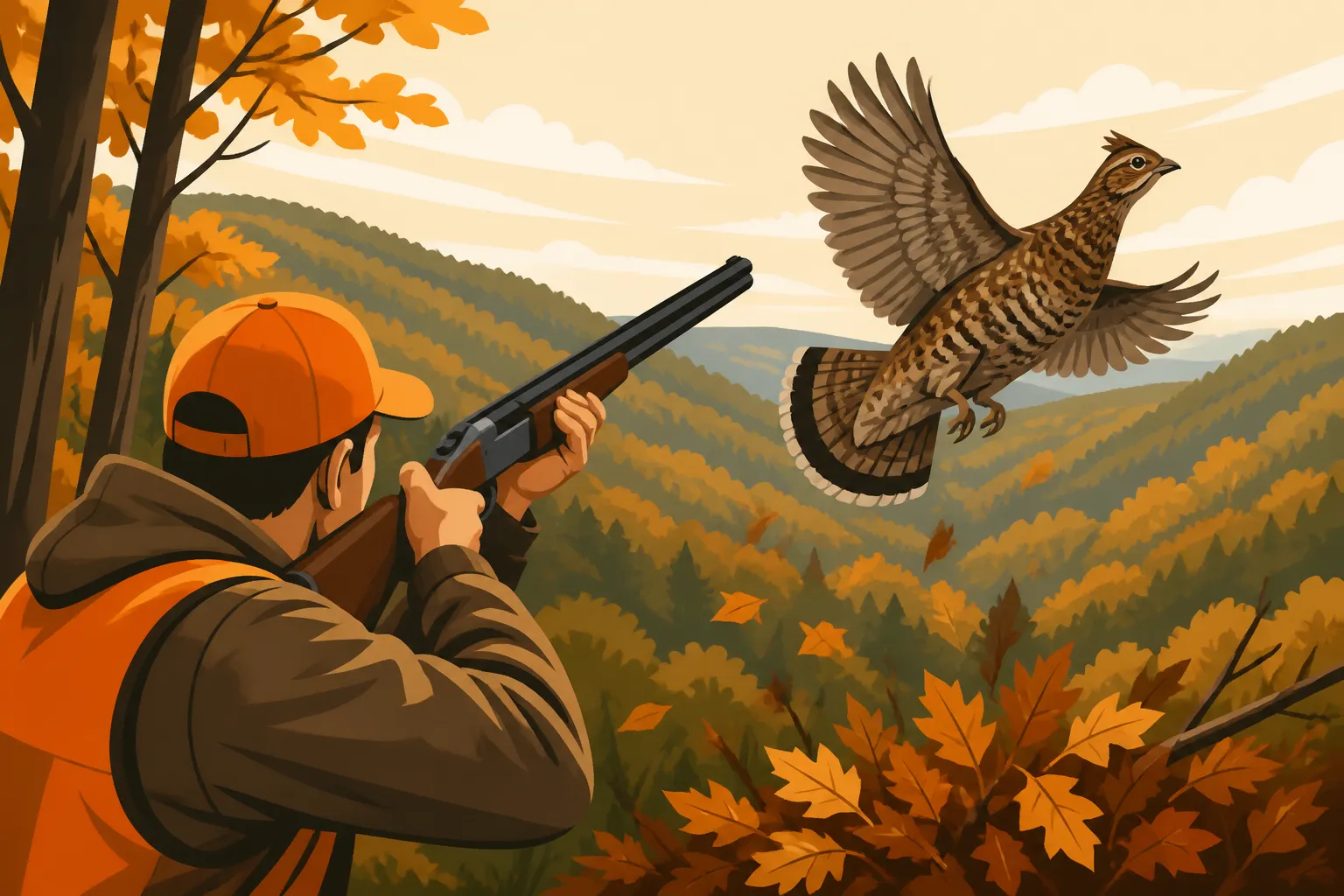
Hunting ruffed grouse in Ohio today often feels like searching for a ghost. If you've spent frustrating hours pushing through thickets in southeast Ohio, hearing nothing but the rustle of leaves underfoot and seeing no tell-tale thunder of wings, you're not alone. This guide is dedicated to helping you understand the unique challenges and discover the remaining pockets where these magnificent birds still thrive, offering actionable strategies to increase your chances of flushing a grouse from the steep, wild hollows of Ohio.
Understanding Ohio's Ruffed Grouse Challenge
Let's be real, the ruffed grouse population in Ohio isn't what it once was. Many of us remember a time when flushing a handful of birds during a day's hunt wasn't just a dream, but a common occurrence. Those days, sadly, are largely behind us, and it's a frustration deeply felt by anyone who cherishes this challenging bird. The decline of the ruffed grouse in Ohio isn't just anecdotal; it's a stark reality that impacts every hunter who seeks them.
The Decline and Current Status
Back in the day, especially from the 1960s through the 1980s, Ohio had a thriving grouse population, particularly across the eastern and southeastern parts of the state. Those were the glory days, fueled by specific forest management practices and an abundance of young forest habitat. Fast forward to today, and the picture is vastly different. The species is now considered endangered in Ohio, with drastically reduced numbers and range. It’s tough to accept, especially if you grew up hearing stories, or even experiencing, those bustling grouse woods. It’s hard not to feel a pang of nostalgia, and a bit of despair, when you consider how rare a flush has become.
The primary culprit in this heartbreaking decline is habitat loss and maturation. As forests grow older, they lose the dense, shrubby understory that grouse depend on for food and protection from predators. Without active forest management—like timber harvests that create early successional habitats—the ideal grouse cover slowly disappears. This is why when you check on the current state of grouse, you'll find that Ohio Ruffed Grouse Numbers Today paint a pretty grim picture compared to past decades. It's a tough pill to swallow, but acknowledging this reality is the first step in understanding how to even begin looking for them today.
Why Southeast Ohio Still Holds Hope and Grouse
Despite the statewide decline, southeast Ohio remains the last bastion for ruffed grouse. This region, characterized by its Appalachian foothills, rugged topography, and historical logging practices, still offers fragmented pockets of suitable habitat. It's not a secret; if you're going to find a grouse in Ohio, this is where you need to be. The unique blend of steep hollows, ridge tops, and a history of forest disturbances create the specific conditions grouse need.
What makes these areas different? It's largely the timber stand age and the regeneration that follows logging. While much of Ohio's forest has matured into older growth, southeast Ohio still sees some active forestry, whether commercial timbering or land management for other purposes. These activities, when done with an eye toward habitat, can create the 5-20 year old brushy growth that grouse adore. Without this, the birds simply can't find the dense cover they need for nesting, brooding, and protection from hawks, owls, and coyotes. We're talking about specific areas where the landscape hasn't entirely been smoothed over by time and a lack of disturbance. It’s not easy to find these spots, but they do exist.
Identifying Prime Grouse Habitat in Hollows
So, you’re in southeast Ohio, hopeful but realistic. The next step is knowing exactly what to look for. Not all "hollows" are created equal when it comes to holding grouse. These birds are incredibly particular about their environment, needing a very specific mix of food, cover, and water. It's a puzzle, and you need to know what pieces fit together.
Key Cover Types in Southeast Ohio
Grouse in Ohio aren't going to be holding in wide-open, mature timber. They need thick, nasty, almost impenetrable cover. When you're Grouse Hunting Southeast Ohio Hills, you're specifically looking for areas that most people would consider a pain to walk through. Think young clear-cuts, often between 5 and 20 years old, where dense saplings, brambles, and multiflora rose create a literal wall of vegetation. These are the places where sunlight hits the forest floor, spurring vigorous regrowth that provides both food and security.
Look for areas with dense stands of greenbriar, sumac, and young aspen, if you can find it. Rhododendron thickets, particularly those clinging to steep hillsides or along creek bottoms, are also prime real estate. These evergreen thickets offer year-round thermal cover and protection. Don't overlook old logging roads or skid trails that have grown over with brush – these can act as natural travel corridors and edge habitats. The key is "edge": where dense cover meets slightly more open woods, or where different age classes of timber converge. These transition zones often hold birds. The more challenging it is to move through, the more likely you are to jump a bird.
Reading the Landscape for Grouse Sign
Finding actual "sign" from grouse is tough, given their elusive nature and low numbers. Unlike deer, which leave abundant tracks and droppings, grouse are masters of disappearing. However, there are subtle clues if you know what to look for. One of the most iconic signs is a drumming log. During spring, male grouse stand on elevated logs, often moss-covered and partially decayed, and beat their wings to attract mates. While you're likely hunting in the fall or winter, finding these logs can indicate historic or current use of an area. Look for a log with a cleared spot on top, sometimes with a few droppings.
Beyond drumming logs, keep an eye out for dusting areas—small, shallow depressions in soft soil or dust where grouse have ruffled their feathers to remove parasites. These will be few and far between, but a definite sign. You might also stumble upon droppings, which are usually small, dark pellets, often found in concentrated piles under roost trees or near drumming logs. Pay attention to food sources, too: wild grapes, greenbriar berries, dogwood berries, and the buds of aspen, birch, or cherry trees. If you're seeing a lot of these, you're in good potential grouse country. Utilizing mapping tools, like those found on GoHunt, can help you identify recent timber cuts or areas of dense, young growth by examining aerial photography, giving you a serious leg up on where to start your boots-on-the-ground scouting. It’s all about putting those pieces together, often by examining satellite imagery for areas that look almost too thick to walk. You can even adapt strategies used for finding deer by Reading Aerial Photos for Southeast Ohio Deer to identify potential grouse cover.
Effective Flushing Tactics for Southeast Ohio Grouse
Okay, you've identified some promising habitat. Now, how do you actually get one of these elusive birds to take flight? Flushing grouse in dense Ohio cover is an art form, a blend of strategy, patience, and a bit of luck. It's not about casually strolling through the woods; it's about systematically working the cover in a way that forces the birds to make a move.
Walking Patterns and Speed
The key to flushing grouse is consistency and thoroughness. You can't just wander aimlessly. Think about how a grouse uses the cover. They'll often sit tight until you're almost on top of them, then explode from the thicket. Your goal is to apply pressure to force that flush within shotgun range. A good strategy is to work parallel to contour lines, slowly and deliberately. If you’re in a hollow, work one side, then cross the bottom (often a creek bed or drain) and work up the other side. Don't be afraid to zig-zag through the densest cover. The harder it is for you to walk, the more likely a grouse is holding there.
Vary your speed. Sometimes a slow, methodical pace is best, allowing you to scrutinize every tangle. Other times, a slightly quicker pace, punctuated by sudden stops, can unnerve a bird into flushing. The sudden stop often triggers a nervous bird. When you hit a particularly dense thicket or a rhododendron patch, slow down to a crawl, even pause for 10-15 seconds before pushing through. That slight hesitation can make a hidden bird think you've passed, only to flush as you move again. Remember, these birds are masters of concealment, and you need to make them think they've been spotted to get them to fly. This isn't like Run-and-Gun Turkey Tactics on Public Land where you're trying to cover ground quickly; it's more about precise, methodical movement.
Using Dogs Versus Still-Hunting
This is where the debate often comes in: do you go it alone, or do you rely on a four-legged partner? Both methods have their merits and their very real challenges, especially with Ohio's low grouse numbers.
Hunting with a Dog: A well-trained flushing dog, like a Springer Spaniel or a high-energy Labrador, can dramatically increase your chances. They cover more ground, penetrate thick cover that you'd struggle with, and their scenting ability often pinpoints birds you would walk past. The dog's erratic movements and constant scenting pressure are often what finally convinces a grouse to flush. For many, the joy of watching a dog work is half the fun. However, finding a dog specifically trained for grouse, especially in Ohio where the birds are so sparse, can be a challenge. You need a dog with immense stamina, a strong nose, and a disciplined flush. A dog that ranges too far in dense cover can flush birds out of range or even across property lines.
Still-Hunting: If you don't have a dog, or prefer the solitude, still-hunting is your only option. This requires even more patience and attention to detail. You're essentially playing the role of the dog yourself, systematically pushing cover. Focus on moving quietly, pausing frequently to listen for subtle sounds—the rustle of leaves, a nervous twig snap. Without a dog's nose, you must rely on your eyes and ears to predict where a bird might be holding. It’s significantly harder, and the flushes will be far less frequent, but the satisfaction of a self-found grouse is immense. This approach often means you're going to Find Ground Others Walk Past simply because it's too tough for them to bother with without a dog.
| Hunting Method | Pros | Cons | Ideal Scenario |
|---|---|---|---|
| With a Dog | Covers more ground, flushes more birds, retrieves downed birds, enhances the experience. | Requires a well-trained dog (can be hard to find for grouse), dog can flush birds out of range, added logistics. | Dense, expansive cover where birds are known to exist; faster hunting pace desired. |
| Still-Hunting | Solitary experience, forces hunter to learn habitat deeply, quieter approach for wary birds. | Extremely low flush rates, difficult to penetrate thickest cover, challenging to find downed birds. | Smaller, isolated coverts; hunter prefers slow, methodical approach; very pressured areas. |
Shotgun and Ammunition Choices
When a grouse flushes, it's usually explosive, loud, and fleeting. You'll have precious little time to react, shoulder your gun, and get off a shot. This dictates your gear choices.
Shotgun: A fast-handling, open-choked shotgun is paramount. A 20-gauge or even a 28-gauge is often preferred over a 12-gauge due to their lighter weight and quicker swing in tight cover. An over/under or side-by-side with short barrels (26-28 inches) and improved cylinder or skeet chokes are excellent choices. Pump-action or semi-auto shotguns also work well, but the key is quick maneuverability. You're taking snap shots, not long-range passes. For similar reasons as flushing rabbits in thick cover, your Choke Choice for Fast Rabbit Flushes advice applies here – open patterns are your friend.
Ammunition: Stick with lighter loads and smaller shot sizes. #7.5 or #8 shot is ideal. You're shooting at a relatively small bird at very close range, typically under 25 yards. The goal is a dense pattern that maximizes your chances of hitting the bird without over-penetrating and ruining meat. Quality game loads with good velocity are fine; super-magnum loads are overkill and will only contribute to more recoil and potential misses on those quick, close-range flushes.
Navigating Public Lands for Grouse Hunting
The reality for most Ohio grouse hunters is that they'll be hunting public land. Finding quality habitat on these public tracts is the biggest hurdle. These areas are often vast and can see a fair amount of pressure for other game species, but with diligent scouting, you can find those overlooked pockets.
Best Public Land Areas
When you think of public hunting land in Ohio, certain names come to mind for deer and turkey, and many of these also hold the last vestiges of grouse. The Wayne National Forest, encompassing nearly a quarter-million acres across southeastern Ohio, is probably your best bet. Its three units—Athens, Ironton, and Marietta—offer vast tracts of rugged, Appalachian terrain. Within Wayne National Forest Hunting, look for areas that have had recent timber cuts, usually within the last 5 to 20 years. These will be brutal to walk but often hold the best habitat.
Similarly, Shawnee State Forest in Scioto County, often called Ohio's "Little Smokies," also offers challenging terrain and pockets of grouse cover. While known for deer, its remoteness means some areas receive less pressure. Shawnee State Forest Hunting requires good physical conditioning and a willingness to explore deep into the forest. Other state forests like Zaleski State Forest in Vinton and Athens counties, and Tar Hollow State Forest also harbor some potential. Zaleski State Forest Hunting is particularly known for its rugged hills and a history of timber management that sometimes creates good grouse cover. These areas are not for the faint of heart, but neither is grouse hunting itself. For a more general overview of hunting in the region, consult a guide on Hunting Southeast Ohio Appalachian Foothills.
Avoiding Crowds and Finding Unpressured Birds
Public land in Ohio can get crowded, especially during deer season. To find grouse, you need to think like a grouse—avoid people and seek out the thickest, nastiest cover that most hunters bypass.
Go Deep and Steep: The further you get from main roads, parking areas, and established trails, the better your chances. Most hunters don't want to walk more than a mile or two, especially in rugged terrain. Go beyond that. Look for hollows and ridges that require a serious hike or climb. This is where a detailed mapping application, like the one offered by GoHunt, truly shines. You can use it to identify remote access points, analyze topographic features, and pinpoint areas of dense cover that aren't easily accessible. The ability to identify old logging roads or faint game trails that lead into otherwise impenetrable areas is invaluable.
Scout Off-Season: Don't wait until opening day. Scouting Ohio Public Land Before Season is crucial. Walk the areas you intend to hunt. Look for those clear-cuts, thickets, and rhododendron patches. Note the presence of any drumming logs or preferred food sources. The more you know about an area before you go in with a gun, the more efficient and successful your hunt will be. Even when hunting for grouse, applying scouting techniques from other species can be very helpful.
Hunt Mid-Week/Bad Weather: If possible, hunt on weekdays when fewer people are out. A light rain or a chilly, dreary day can also deter other hunters, leaving you with more solitude. Grouse don't mind a little drizzle; they're already hidden in thick cover. The less human disturbance, the more likely the birds will stick to their routines. Ultimately, it’s about identifying those hidden gems, the spots where Habitat Loss Behind Ohio's Grouse Decline might be less pronounced, and where the birds feel safe because hunters rarely venture there.
Disclaimer
Hunting is an inherently dangerous activity. Always prioritize safety, understand and adhere to all Ohio hunting regulations, and respect private property. The information provided in this guide is for informational purposes only and does not supersede official hunting regulations or safety guidelines. Be sure to check the latest Ohio Department of Natural Resources (ODNR) regulations before heading afield, as seasons, bag limits, and rules can change.