Rabbit Hunting Thick Ohio Fencerows
If you've spent any time chasing cottontails in Ohio, you know the frustration of watching a rabbit vanish into a seemingly impenetrable tangle of briars and honeysuckle along a fencerow. These thick, thorny linear habitats are magnets for rabbits, offering both food and unparalleled escape cover, but they can be incredibly challenging to hunt effectively. This comprehensive guide is here to help you unravel the mysteries of rabbit hunting in Ohio's densest fencerows, equipping you with the tactics, gear, and mindset you need to turn those frustrating flushes into successful retrieves.
Understanding Ohio's Fencerow Habitat and Rabbit Behavior
Hunting rabbits in Ohio's fencerows isn't just about walking and kicking brush; it's about understanding the unique ecosystem these linear strips of cover provide. A fencerow isn't just a boundary; it's a vital lifeline for small game, a fortress against predators, and a diner all rolled into one. Knowing how rabbits interact with this specific environment is the first step toward consistent success.
The Anatomy of a Productive Fencerow
A truly productive Ohio fencerow is a masterpiece of chaos. It's not just a single line of trees; it's a dense, multi-layered tapestry of vegetation that offers maximum security for cottontails. Imagine a mix of multi-flora rose, a thorny invasive that creates impenetrable walls, entwined with native briars, honeysuckle thickets, and perhaps even some wild grapevines. You might also find old osage orange trees, their thorny branches growing horizontally, creating low-lying shelters. Interspersed within this living barrier will be deadfall – fallen limbs, old fence posts, or discarded farm implements – all adding to the complexity and providing additional nooks and crannies for rabbits to hide.
These aren't just random plants; they're the architectural elements of a rabbit's home. The dense, low-growing cover provides immediate refuge from aerial predators like hawks and owls, as well as ground-based threats like foxes and coyotes. The thorny nature of many of these plants deters larger predators from entering. Moreover, fencerows often border agricultural fields, like corn or soybean plots, which provide abundant food sources. During the day, rabbits can bed down deep within the fencerow, secure from prying eyes. At night, they can easily slip out into the fields to forage, using the fencerow as a safe travel corridor between bedding and feeding areas. In Ohio's diverse landscape, from the rolling hills of the Appalachian foothills to the flat farmlands of the northwest, these fencerows are critical connectors, often linking small woodlots or swamps that might otherwise be isolated.
How Rabbits Use Fencerows for Survival
Rabbits are masters of camouflage and stillness, relying heavily on the protection of thick cover. Within a fencerow, they have a tiered defense system. Their primary tactic is to hold incredibly tight, banking on their natural coloration and the density of the vegetation to make them invisible. You can walk right past a rabbit, sometimes within mere feet, and never know it's there until it explodes from its hiding spot. This is especially true on cold or windy days when rabbits prefer to hunker down deep in the densest part of the cover.
When pressured, a rabbit's behavior can be somewhat predictable, which is what we aim to exploit as hunters. Typically, they'll burst out of the cover and often run along the length of the fencerow, staying within its protective embrace for as long as possible before either darting across an open field to another patch of cover or diving into a known escape hole or brush pile. Understanding these escape routes is crucial. If you notice a particular stretch of fencerow always seems to hold rabbits, observing their escape patterns can inform your strategy for subsequent hunts. For instance, if they always sprint to a certain patch of standing corn, you might position a blocker there on your next outing. Weather also plays a significant role; a fresh blanket of snow, for example, not only pushes rabbits deeper into cover for warmth but also reveals their recent travel patterns and feeding areas, giving you invaluable clues about where to focus your efforts. This is similar to how a deer hunter might use tracking, and understanding how to apply these observations can be just as valuable as Reading Ohio Snow for Fresh Deer Movement.
Essential Gear and Tactics for Fencerow Rabbits
Chasing rabbits in Ohio's fencerows isn't a glamour sport; it's gritty, close-quarters work that demands the right equipment and a savvy approach. You'll be crashing through briars, wading through mud, and taking fast shots, so your gear needs to be rugged, and your tactics need to be precise.
Shotguns, Loads, and Chokes for Close-Quarters Hunting
For rabbit hunting in thick fencerows, your shotgun setup is paramount. You're typically dealing with quick, close-range shots, often within 10 to 25 yards, sometimes even closer. This means you need a shotgun that's easy to maneuver in tight spaces and can deliver a dense pattern without blowing the rabbit to smithereens.
Many hunters favor a 20-gauge or even a 16-gauge for rabbit hunting. A 20-gauge offers a lighter carry for long days of walking and enough hitting power for cottontails without excessive recoil. The 12-gauge is certainly effective, but its added weight can be a drawback when you're crashing through dense brush. When it comes to ammunition, #6 or #7.5 shot is generally ideal. These smaller shot sizes create a denser pattern, increasing your chances of connecting with a fast-moving rabbit without over-penetrating and ruining too much meat. Forget about magnum loads; standard field loads are more than sufficient.
Choke selection is critical for these close-range encounters. An improved cylinder or modified choke is usually the sweet spot. These chokes open up the pattern quickly, giving you a wider spread for those snap shots, which is exactly what you need when a rabbit busts out unexpectedly. A full choke, while great for distant waterfowl, will result in too tight a pattern for fencerow rabbits, leading to missed shots or ruined meat. If you're wondering more about this, checking out detailed advice on Shotgun Choke Choice for Fast Rabbit Flushes can refine your understanding. As for barrel length, a shorter barrel, typically 24-26 inches, is often preferred as it's much easier to swing and navigate through tangled cover without getting snagged. You can learn more about finding the right fit in guides like Barrel Length for Walking Fencerows.
The Role of Dogs in Fencerow Rabbit Hunting
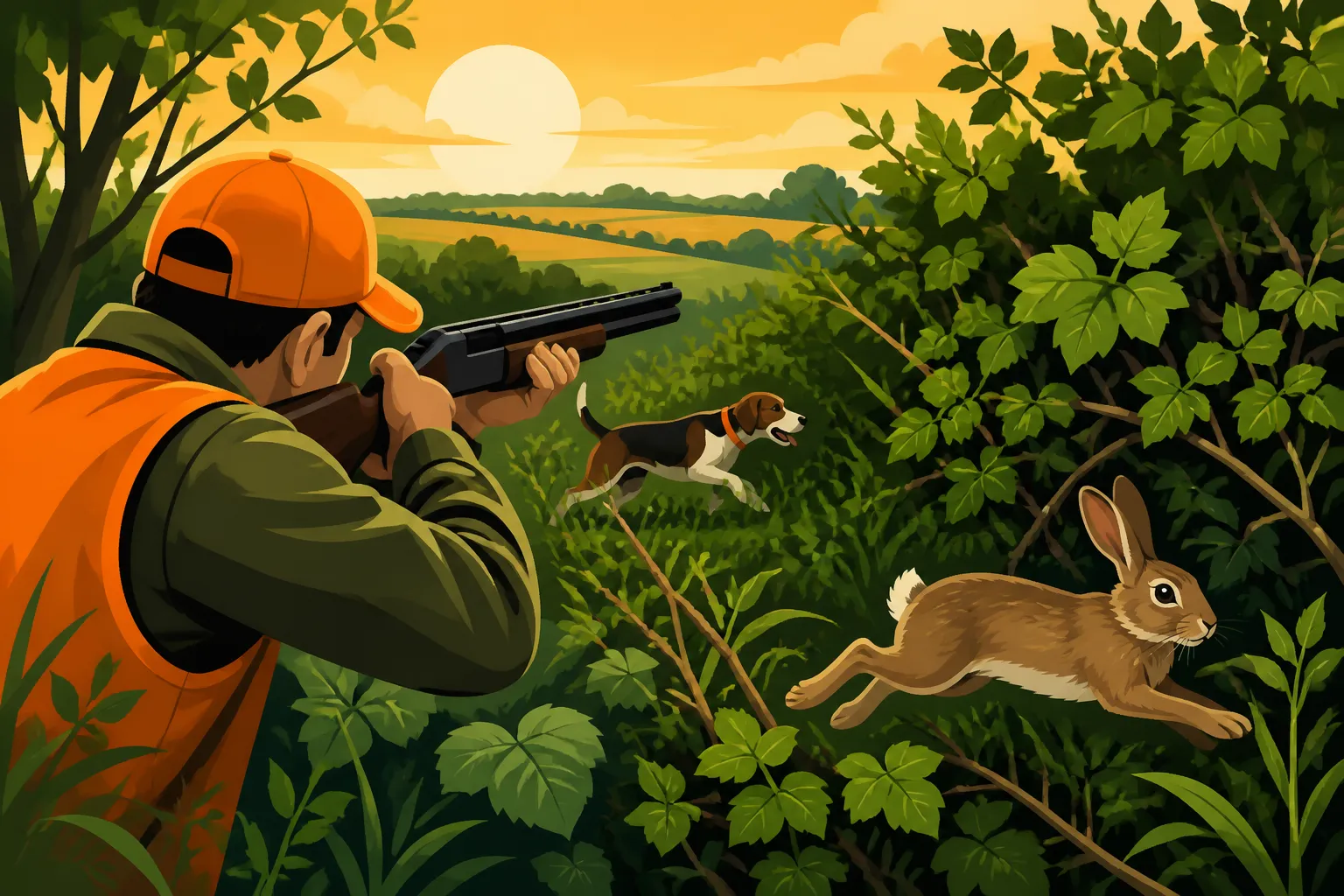
While it's absolutely possible to hunt fencerow rabbits without a dog, bringing a good canine companion significantly tips the odds in your favor. Beagles are, without a doubt, the kings of rabbit hunting. Their incredible noses and relentless drive to trail scent are perfectly suited for unraveling a rabbit's zig-zagging escape through dense cover. A beagle's baying alerts you to a hot trail, allowing you to anticipate where the rabbit might emerge. When Running Beagles on Ohio Cottontails, their melodious chorus echoing through the brush is an experience in itself.
Beyond beagles, other breeds can be effective. Flushing dogs, such as Labrador Retrievers or various Spaniel breeds, might not trail with the same vocal enthusiasm as a beagle, but their job is just as important: to systematically work the thick cover and push rabbits out. They excel at rooting out rabbits that are holding exceptionally tight, giving you the jump on them. Regardless of the breed, a well-trained dog with good recall is essential for safety and efficiency, especially in areas bordering roads or private property.
Proper care for your hunting dog in these environments is also crucial. Thick fencerows are notorious for thorns, briars, and sharp sticks. Protecting your dog's paws with Bird Dog Boots and Cut Pads can prevent injuries and keep them hunting longer. Additionally, a reliable E-Collar Use on Public Ground can be invaluable for ensuring your dog stays within range and responds to commands, especially when they're hot on a trail or approaching a boundary.
Strategic Walking and Flushing Techniques
Hunting thick fencerows requires a deliberate and often patient approach. You can't just stroll through and expect rabbits to jump out politely. The key is to be methodical and to understand how to make rabbits nervous enough to flush.
Start by adopting a slow, stop-and-go pace. Rabbits often let you pass them by if you maintain a steady, predictable rhythm. By stopping every few steps, you often startle them into thinking they've been spotted, triggering a flush. Don't be afraid to kick at brush piles, stomp on thick tangles of briars, or even use a stick to beat the cover. These actions mimic a predator moving through their hiding spots and will often send a reluctant rabbit airborne. If possible, try to work into the wind. This allows your dogs to pick up scent more easily and can also help you detect the subtle sounds of a rabbit moving before it’s in full flight.
When working a long fencerow, consider a zig-zag pattern. This involves walking along one side of the fencerow for a stretch, then crossing over to work the other side, ensuring you cover all potential hiding spots. Pay particular attention to junctures where the fencerow widens, forms a dense pocket, or connects to another patch of cover. These are prime areas where rabbits feel most secure. Remember, the goal isn't just to walk; it's to systematically disturb every potential hiding spot, forcing the rabbits to make a move. This level of meticulous engagement is what transforms a casual stroll into a successful hunting endeavor.
Working Fencerows Effectively: Solo vs. Group Hunts
The decision to hunt fencerows alone or with a group can significantly impact your tactics and success. Both approaches have their distinct advantages and challenges, and understanding them will help you plan your day in Ohio's rabbit country.
Solo Hunter Strategies for Stealth and Success
Hunting rabbits solo in thick fencerows is a test of patience, observation, and self-reliance. Without the benefit of drivers or blockers, you become both the flusher and the shooter, which means your approach needs to be calculated and precise. The biggest advantage of hunting alone is stealth. You can move at your own pace, stop as often as you like, and meticulously work every bit of cover without coordinating with others. This can be particularly effective in smaller, less extensive fencerows or when you're hunting public land where you might encounter other hunters.
Your primary strategy as a solo hunter should be systematic coverage. Instead of trying to push rabbits out from one end to the other, focus on thoroughly working sections. This might involve walking one side of the fencerow, then doubling back and working the other side, or even walking parallel to the fencerow in the adjoining field, constantly scanning for rabbits that might try to sneak out. Identify natural funnels or breaks in the cover – spots where the fencerow narrows, crosses a ditch, or has a small opening. These are common escape routes, and positioning yourself to intercept a rabbit emerging from such a spot can be highly effective. A good dog is almost essential for consistent solo success, as they can track and push rabbits that you might otherwise miss.
Always ensure you have permission to hunt the land. For Hunting Small Private Tracts in Ohio, a cordial conversation with the landowner can open up prime fencerows. If you're on public land, doing some Scouting Ohio Public Land Before Season with mapping tools can help you identify promising fencerows and understand their layout, which is invaluable for a solo hunter.
Group Hunting: Drivers, Blockers, and Safety
For many, rabbit hunting is a social activity, and hunting fencerows with a group is not only more effective but also a lot of fun. The classic group setup involves "drivers" who walk through the fencerow, actively flushing rabbits, and "blockers" who are strategically positioned at either end or along the sides to intercept rabbits as they try to escape. This method drastically increases your chances of success, as rabbits are less likely to slip away undetected.
An ideal group might consist of two or three drivers pushing through the densest parts of the fencerow, with one or two blockers stationed quietly downwind or at the most likely escape points. Communication is absolutely key here. Using simple hand signals or even two-way radios can help drivers inform blockers of incoming rabbits or adjust their pace. Safety, however, is paramount. Everyone in the group must wear Ohio Blaze Orange Requirements for visibility. Before starting a drive, clearly define shooting lanes and ensure everyone knows where other hunters are positioned. Only shoot at rabbits running away from blockers or safely within your designated zone. Never shoot in the direction of other hunters or towards areas where people might be.
To illustrate the differences, here's a quick comparison:
| Feature | Solo Hunter | Group Hunt |
|---|---|---|
| Effectiveness | Lower success rate, higher challenge | Higher success rate, especially in long, dense fencerows |
| Stealth | High, can move at own pace | Lower, more movement and noise |
| Safety | Less risk of friendly fire, higher risk of getting lost | Higher risk of friendly fire, but group support for other issues |
| Dog Benefit | Almost essential for consistent success | Augments flushing and retrieving, but not strictly necessary |
| Efficiency | Slow, meticulous coverage of small areas | Faster, more comprehensive coverage of longer fencerows |
| Enjoyment | Personal challenge, quiet reflection | Social interaction, shared experience |
While solo hunting offers a rewarding personal challenge, a well-coordinated group hunt is often the most productive and safest way to tackle extensive, rabbit-rich fencerows.
Overcoming Challenges and Maximizing Success
Even with the right gear and a solid plan, hunting rabbits in thick fencerows presents unique challenges. Rabbits are notoriously wily, and the dense cover they inhabit is designed to protect them. To truly excel, you need to be observant, adaptable, and respectful of the environment and the game.
Reading Sign and Adapting to Conditions
The most successful rabbit hunters are keen observers, constantly looking for clues that indicate rabbit presence and activity. Fresh rabbit droppings, often found along game trails within the fencerow or at its edges, are a clear indicator of recent activity. Look for clipped vegetation, especially during winter months, where rabbits have nipped off tender shoots. In colder weather, particularly after a fresh snowfall, tracks in the snow or mud are like a roadmap, showing you exactly where rabbits are traveling, feeding, and bedding down. Just like Reading Ohio Snow for Fresh Deer Movement can reveal deer patterns, subtle rabbit tracks can tell a story.
Beyond finding sign, you need to adapt your tactics to the prevailing conditions. On bitterly cold days, rabbits will hunker down in the densest, most protected cover, making them harder to flush but more likely to hold tight once you find them. Focus your efforts on south-facing slopes or thick, sunny pockets within the fencerow where they might be trying to catch some warmth. On warm, overcast days, they might be more active and spread out. Wind can also be a factor; rabbits prefer to bed on the downwind side of cover, making it harder for predators (and hunters) to approach undetected. Hunters using mapping apps like GoHunt can mark areas of concentrated sign and successful flushes, enabling them to return to productive spots in various conditions, building a valuable historical database of their hunting grounds. The ability to overlay topography and identify prime thermal cover can give you a significant edge.
Post-Harvest Considerations and Ethical Practices
Once you've successfully harvested a rabbit, the job isn't quite done. Ethical hunting extends beyond the shot. Ensure a quick, humane dispatch if the rabbit isn't already expired. Carrying a small, sharp knife or a blunt instrument can aid in this. Field dressing should be done as quickly as possible, especially on warmer days, to ensure the meat stays fresh. Many hunters will simply gut the rabbit in the field, then put it in a game bag to cool.
Always remember that obtaining permission to hunt is fundamental. If you're on private land, double-check that you have explicit permission. Always close gates, respect property boundaries, and leave no trace of your presence behind. The GoHunt app's robust mapping features can also help hunters identify property lines, ensuring they remain on land where they have legal access, a crucial aspect of ethical hunting. Hunters often use these tools to research potential hunting areas and understand land ownership before even stepping foot in the field.
Before heading out, make sure you're up-to-date on all Ohio Small Game and Upland Bird Seasons and specific regulations, including the Ohio Rabbit Season Opening Day. Being a responsible hunter means knowing and following the rules, ensuring the continuation of hunting traditions for generations to come. Clean your gear, thank the landowner if applicable, and cherish the wild game you've harvested.
Disclaimer
Please note that hunting regulations, seasons, and licensing requirements can change. Always consult the most current Ohio Department of Natural Resources (ODNR) regulations and guidelines before planning any hunting trip. This guide is for informational purposes only and does not supersede official legal requirements.