Bird Dog Boots and Cut Pads
There's nothing quite like watching a well-trained bird dog work a field or a thick fencerow, nose to the ground, tail wagging with purpose. These dogs are truly our partners in the field, and their enthusiasm is contagious. But any experienced upland or small game hunter in Ohio knows that our canine companions push through some seriously rough stuff – frozen clods of dirt, thorny multiflora rose, sharp stubble from cut crops, and hidden rocks. Their paws, while naturally tough, are constantly exposed to abrasions, cuts, and punctures that can end a hunt in an instant or, worse, lead to debilitating infections. This guide is dedicated to helping you understand the myriad dangers Ohio's hunting grounds pose to your bird dog's feet and how to proactively protect them with the right gear and care.
The Unseen Dangers to Your Bird Dog's Paws in Ohio
Ohio's diverse landscapes offer fantastic hunting opportunities, from the expansive farmlands of the northwest to the rugged, timbered hills of the southeast. Each region, however, presents its own unique set of challenges for a bird dog's paws. We ask a lot of our dogs, expecting them to cover miles, often at a full run, through terrain that would shred our own bare feet. Understanding these hazards is the first step in providing the best protection for your four-legged hunting buddy.
From Frozen Ground to Thorny Underbrush: Ohio's Diverse Terrain
Think about a typical late-season pheasant hunt in northwest Ohio. One minute your setter is gracefully gliding through waist-high switchgrass, the next it's busting through a dense thicket of blackberry brambles along a ditch line. These briars are a nightmare for exposed skin, and they can easily lodge thorns deep into a paw pad or between toes. Early in the season, you might contend with dry, cracked earth or abrasive crop stubble that acts like sandpaper on tender pads. As winter approaches, the ground freezes solid, creating sharp, unforgiving surfaces that can cause severe splits and cracks, especially when combined with a layer of icy snow. Even seemingly benign areas, like freshly cut cornfields, can hide incredibly sharp stalks that act like tiny daggers. Navigating these varied conditions, whether you're focused on Pheasant Hunting Ohio Farm Country or working through brushy areas for Rabbit Hunting Thick Ohio Fencerows, means constant exposure to potential injury.
It's not just the sharp bits. The constant friction of running on hard or rough ground, especially when wet, can lead to painful blisters or excessive wear on the pads, making them tender and prone to further damage. Imagine walking miles in ill-fitting shoes – that's what your dog experiences if their paws aren't conditioned or protected. The mud, which is a near-constant companion during much of Ohio's hunting season, can soften paw pads, making them more susceptible to injury. This softening effect, combined with abrasive grit, sets the stage for nicks and cuts. Even a seemingly small cut can become a major issue when exposed to dirt and bacteria, turning a minor inconvenience into a serious infection.
The Toll of Long Hunting Days and Wet Conditions
Hunting in Ohio often means long, demanding days. We're talking hours upon hours of continuous activity, covering significant distances, often in less-than-ideal weather. A dog's endurance is remarkable, but their paws are constantly bearing the brunt of that effort. Imagine a full day of chasing pheasants across a sprawling public hunting area like Killdeer Plains Wildlife Area, or flushing rabbits from dense cover. The cumulative impact of repeated pounding on varied surfaces, particularly as fatigue sets in, increases the risk of injury. A tired dog might not pick its feet up as high, leading to more scrapes and bumps.
Wet conditions amplify these problems exponentially. A cold, rainy November day or a snowy January outing might not bother a thick-coated Labrador, but that moisture softens their paw pads. Soft pads are far more vulnerable to cuts, abrasions, and punctures from sharp objects hidden beneath snow or within wet leaves. Freezing temperatures then add another layer of risk, as wet pads can freeze, leading to frostbite or painful ice buildup between toes. Even during Ohio's Shotgun-Only Fall Turkey Season, when dogs might be moving through damp woods, persistent moisture and hidden hazards can be an issue. Proper paw care in these conditions is not just about comfort; it's about preventing serious health issues for your dedicated hunting partner.
Recognizing Early Signs of Paw Distress
Our dogs are stoic creatures; they often try to push through pain because their drive to hunt is so strong. This makes it critical for us, as their owners and hunting partners, to be vigilant in watching for even subtle signs of paw distress. One of the most common early indicators is excessive licking or chewing at their paws, often during a break or after a hunt. This self-grooming can be a sign they're trying to alleviate discomfort or clean a wound. Limping, favoring a paw, or a change in gait are obvious red flags. A dog might also become hesitant to put weight on a particular foot or show resistance when you try to examine their paws.
Physically inspecting their paws regularly is non-negotiable, especially during and after a hunt. Look for visible cuts, scrapes, punctures, or torn pads. Check between the toes for foreign objects like burrs, thorns, or small pieces of debris that might be embedded. Swelling, redness, tenderness to the touch, or unusual heat are all indicators of inflammation or infection. Sometimes, the issue isn't a cut but simply excessive wear and tear, making the pads raw and sensitive. A dog might even yelp or flinch when they step on a rough surface if their pads are compromised. Catching these signs early, before they escalate into a serious injury, can save you a trip to the vet and keep your dog in the field longer.
Navigating the World of Bird Dog Boots: Types and Features
When you start looking into dog boots, it can feel a bit overwhelming with all the options out there. It’s not just about slapping something on their feet; it’s about choosing the right tools for the job, just like you pick specific Turkey Shotguns and Chokes for spring gobblers. The right boots can make all the difference between a successful, comfortable hunt and one cut short by a tender paw.
Material Matters: Durability, Breathability, and Water Resistance
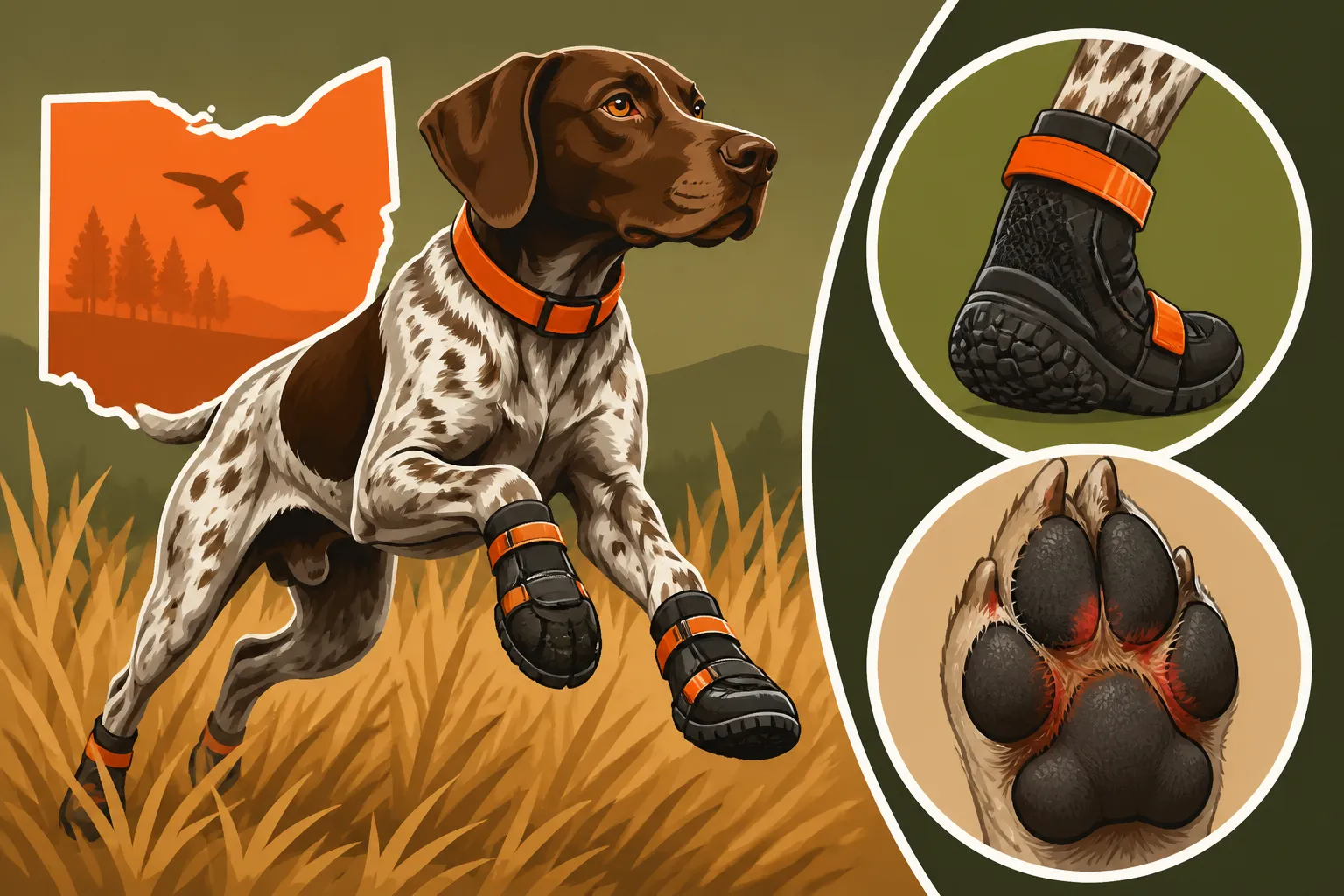
The materials used in dog boots are paramount, as they dictate the boot's performance in various Ohio hunting conditions. For rugged protection against sharp stubble, briars, and frozen ground, you'll often find boots made with durable Cordura nylon or tough synthetic leather uppers. These materials offer excellent abrasion resistance, shielding your dog's paws from direct impact. The soles are equally important, ranging from thick, lugged rubber that provides traction and puncture resistance on rocky terrain to thinner, more flexible soles for better ground feel. Some brands use proprietary blends designed to mimic the flexibility and resilience of a dog's natural paw.
Breathability is another critical factor. While you want protection, you don't want your dog's paws to overheat, especially on warmer early-season hunts, or to trap moisture, which can lead to skin irritation. Look for boots with breathable mesh panels or materials that allow air circulation. On the flip side, for wet and cold conditions, water resistance or even full waterproofing becomes essential. Many boots achieve this with treated fabrics or waterproof membranes, similar to what you'd find in your own Boots for Ohio Mud and Snow. However, remember that "water-resistant" means it will shed some moisture, while "waterproof" implies a much higher level of protection, often through sealed seams and specific construction methods. It's a balance: maximum durability often comes with a trade-off in flexibility and breathability, so consider the primary conditions you'll be hunting in.
Design and Fastening: Keeping Boots On the Trail
One of the biggest frustrations for hunters is dog boots that constantly fall off. A boot that won't stay put is worse than no boot at all, often ending up lost in the mud or tangled in brush. Effective design and a reliable fastening system are crucial. Many boots utilize hook-and-loop (Velcro) straps, often with multiple points of adjustment, to secure them around the ankle and lower leg. Some designs incorporate elastic bands or drawstrings at the top to cinch them snugly, preventing debris from entering and improving retention. Boots with a longer shaft can offer more support and a larger surface area for fastening, making them less likely to slip down.
Consider the dog's anatomy as well. Boots designed with an ergonomic shape that contours to a dog's natural paw and ankle can provide a more secure and comfortable fit. Reflective elements are a nice touch for visibility during low-light conditions, especially if your dog ranges widely or you're walking back to the truck after dark. Ultimately, the best fastening system is one that allows for a snug, secure fit without cutting off circulation, and one that your dog can't easily shake or chew off during an intense chase. When you're in the field, you want your focus to be on the hunt, not constantly re-securing dog boots.
Specialty Boots for Extreme Ohio Weather
While general-purpose boots handle most situations, Ohio's weather can throw some truly extreme conditions our way, calling for more specialized protection. For the bitter cold of a late-season hunt, especially when dealing with frozen ground or crusted snow, insulated boots are a game-changer. These boots often feature fleece linings or other thermal materials to keep paws warm and prevent frostbite. They also provide an extra barrier against ice balls forming between the toes, which can be incredibly painful and difficult to remove in the field. This is similar to how you'd consider specific Cold-Weather Sitting Strategy in Ohio for yourself, your dog needs its own specialized gear.
On the other end of the spectrum, if you find yourself hunting particularly rocky or abrasive terrain, boots with extra-thick, reinforced soles are invaluable. These are designed to withstand constant grinding and impact, protecting against sharp rocks, broken glass, or even hard gravel roads. While less common in Ohio, if you're hunting in areas known for specific thorny vegetation or dense, woody debris, some boots offer enhanced upper protection, extending higher up the leg to shield against scrapes and punctures. Remember, just like you wouldn't wear summer hiking boots for a January deer hunt, don't expect a lightweight warm-weather boot to stand up to the rigors of an Ohio deep freeze or a field full of razor-sharp corn stubble.
| Boot Type | Primary Use Case | Key Features | Pros | Cons |
|---|---|---|---|---|
| All-Purpose | General upland/small game, varied conditions | Durable synthetic upper, rubber sole, Velcro straps | Versatile, good starting point, balanced protection | May lack extreme weather features, moderate durability |
| Heavy-Duty/Rugged | Abrasive terrain, thick brush, rocky areas | Reinforced ballistic nylon/Cordura, thick multi-layered sole | Maximum puncture/abrasion resistance, high durability | Less flexible, potentially less breathable, heavier |
| Cold Weather/Insulated | Freezing temps, snow, ice | Fleece lining, waterproof, thick insulated sole | Excellent warmth, prevents ice balling, frostbite protection | Less breathable for warmer days, bulkier |
| Waterproof | Wet fields, marshy areas, rain | Waterproof membrane, sealed seams, grippy sole | Keeps paws dry, good for muddy/boggy conditions | Can be less breathable, may retain heat in warmer temps |
Choosing, Fitting, and Training with Dog Boots
Getting the right boots is only half the battle. Proper fit and getting your dog accustomed to wearing them are equally critical. A poorly fitting boot can cause as many problems as it solves, leading to chafing, discomfort, or simply falling off. And a dog that isn't used to boots will spend more time trying to shake them off than actually hunting.
Measuring for the Perfect Fit: A Crucial First Step
Just like buying your own hunting boots, accurate measurement is key. Don't guess your dog's paw size; it's a common mistake that leads to frustration. To get the most accurate measurement, have your dog stand on a piece of paper, placing full weight on one paw. Trace the outline of the paw, including the toenails. Then, measure the widest point of the paw and the length from the back of the largest pad to the tip of the longest toenail. Compare these measurements to the sizing chart provided by the boot manufacturer. It's often helpful to measure both front and back paws, as they can sometimes differ in size. If your dog falls between sizes, it's generally better to go up a size rather than down, as a slightly loose boot can sometimes be tightened with straps, but a too-small boot will be uncomfortable and could restrict circulation.
Remember that different brands may have slightly different sizing, so always check the specific chart for the boots you're considering. A good fit means the boot is snug enough not to twist or slip, but loose enough that it doesn't pinch or restrict the natural spread of the paw. The length should allow for free movement of the toes and provide full coverage of the pads. Some hunters even find success using a brand like GoHunt's mapping tools to identify terrain types they'll be hunting, then matching boot durability to those conditions, which can help inform sizing decisions if different boot types run differently.
Introducing Boots to Your Hunting Partner
Most dogs aren't thrilled about wearing boots the first time. It feels alien and can interfere with their natural gait. Patience and positive reinforcement are your best friends here. Start by introducing the boots indoors, in short sessions. Put one boot on and immediately reward your dog with a high-value treat and praise. Let them wear it for a minute, then take it off. Gradually increase the number of boots and the duration they wear them. Don't be surprised if they walk funny, high-step, or try to shake them off – this is normal. Distract them with play or short walks around the house.
Once they're comfortable indoors, move to short outdoor walks on familiar terrain. Gradually increase the time and distance. The goal is for them to associate the boots with positive experiences and eventually ignore them. Never force the boots on or punish your dog for trying to remove them. If you're planning a trip during Ohio's Two-Weekend Gun Deer Season where your dog might encounter different terrain, start this training well in advance of the hunting season, not the day before. By the time hunting season rolls around, your dog should be comfortable enough to focus on the hunt, not their footwear.
Field Maintenance and Post-Hunt Paw Care
Even with the best boots, diligent paw care is crucial. Before each hunt, quickly inspect your dog's paws and boots. Ensure the boots are clean, free of debris, and that the straps are in good condition. During the hunt, take periodic breaks to check the boots for slippage or damage, and quickly inspect paws for any signs of rubbing, chafing, or objects lodged between toes that might have made their way in. A quick adjustment can prevent a serious issue.
After the hunt, the real work begins. Remove the boots and thoroughly clean both the boots and your dog's paws. Wash the boots according to the manufacturer's instructions, ensuring they are completely dry before storing them to prevent mildew or material degradation. For your dog's paws, a warm water rinse will remove dirt and debris. Inspect each paw meticulously for any cuts, punctures, burrs, or signs of irritation. Trim nails regularly, and keep the hair between paw pads trimmed to prevent matting and the accumulation of debris, which can lead to discomfort and potential infections. Applying a paw balm or conditioner can help keep pads supple and prevent cracking, especially in dry or cold weather. This routine not only helps prevent future injuries but also strengthens your bond with your hunting companion.
Beyond Boots: Proactive Paw Care and Injury Management
While boots are an excellent line of defense, they aren't a magic bullet. A holistic approach to paw health, including conditioning and knowing how to respond to injuries, is essential for any Ohio bird hunter.
Conditioning Paws for the Season Ahead
Just like you wouldn't run a marathon without training, your dog shouldn't jump into intense hunting without proper paw conditioning. Begin weeks or even months before the season opens. Gradually increase the duration and intensity of walks on varied surfaces that mimic hunting conditions – gravel paths, grassy fields, and even some light brush. This helps toughen paw pads naturally, building calluses that offer better protection. Short bursts of activity on harder surfaces can encourage the pads to become more resilient. Think of it as preparing your dog for the long days of Rabbit and Upland Bird Hunting in Ohio.
Diet also plays a role. A high-quality dog food provides the necessary nutrients for strong, healthy skin and paws. Some supplements, like Omega-3 fatty acids, can also contribute to overall skin and coat health, which indirectly benefits paw integrity. During this conditioning phase, continue regular paw inspections and trim nails. You're building a foundation of resilience, making their paws naturally more robust and less susceptible to the minor irritations that can quickly turn into bigger problems in the field. This preparation is as important as scouting new spots with your Scouting With the Ohio HuntFish App.
Essential First Aid for Cut Pads and Abrasions
Despite your best efforts, injuries can still happen. Being prepared with a basic first aid kit for your dog is crucial. For minor cuts and abrasions, your kit should include antiseptic wipes or spray (like Vetericyn or dilute Betadine), sterile gauze pads, self-adhesive wrap (like VetWrap), and a pair of blunt-tipped scissors. If you find a small cut, clean it thoroughly with antiseptic. If it's bleeding, apply direct pressure with gauze. Once clean, apply an antibiotic ointment if appropriate, and then loosely wrap the paw with gauze and secure it with VetWrap, making sure it's not too tight to cut off circulation. This will protect the wound from dirt and further irritation.
For embedded thorns or burrs, use tweezers to carefully remove them. If a paw pad is torn or deeply cut, a temporary wrap will protect it until you can get to a vet. Remember, a field dressing is just that – a temporary measure. Always assess the severity of the wound. A small superficial scrape might heal on its own with proper cleaning, but anything deep, actively bleeding, or showing signs of infection requires professional attention. Always err on the side of caution when it comes to your hunting partner's health.
When to Seek Professional Veterinary Care
Knowing when a paw injury goes beyond basic first aid is vital. If a cut is deep, wide open, or bleeding profusely and you can't stop it with direct pressure, it's an emergency that requires immediate veterinary attention. Puncture wounds, especially from sharp objects like broken glass or rusty metal, can be deceptively deep and introduce bacteria, leading to serious infections. Swelling, persistent limping that doesn't improve after rest, or signs of infection such as pus, fever, or a foul odor from the wound are all reasons to see a vet promptly.
A veterinarian can properly clean, stitch if necessary, and prescribe antibiotics or pain medication. They can also check for more serious underlying issues like tendon damage or bone fractures that might not be immediately obvious. Never hesitate to call your vet if you're unsure about the severity of an injury. Your dog's well-being is paramount, and a quick response to an injury ensures they'll be back on the trail, nose to the ground and tail wagging, chasing pheasants and rabbits across Ohio's beautiful hunting grounds for many seasons to come.
Disclaimer
This article is for general informational purposes only and does not constitute professional advice. Laws, prices and regulations vary by location and change over time. Consult a qualified professional for guidance on your specific situation.