Box Calls Versus Mouth Calls
Every spring, as the Ohio woods burst to life, turkey hunters across the state grapple with a familiar dilemma: which call to reach for when that wary gobbler is just out of sight? The choice between a reliable box call and a nuanced mouth call can feel monumental, each offering its own set of advantages and challenges in luring a tom into range. This guide will dive deep into the mechanics, pros, and cons of both, helping you understand when and why to use each to maximize your success in the Ohio turkey woods.
The Classic Reliability of Box Calls
For many turkey hunters, the box call is where it all began. It's often the first call we learn, providing immediate gratification with its ease of use and loud, resonant sounds. There’s something incredibly satisfying about the distinct yelps and cuts produced by a well-used box call, echoing through the timber.
Understanding How Box Calls Work
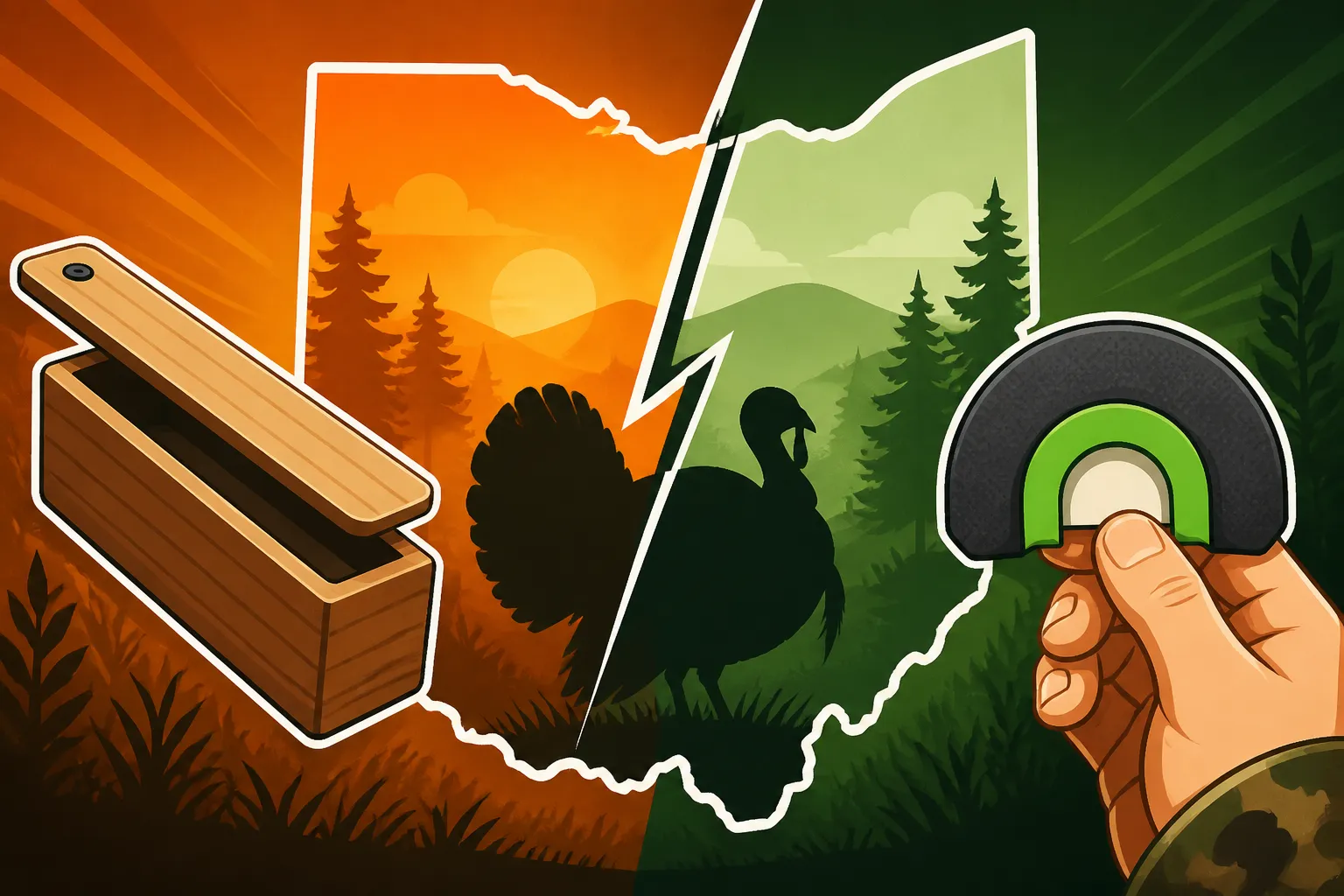
A box call is deceptively simple in its design, typically consisting of a wooden box with an open side, and a lid that pivots on a screw. The magic happens when you drag the lid across the top edges of the box, known as the "lips." The friction creates vibrations that produce the turkey sounds. Different woods, box shapes, and lid tensions can dramatically alter the tone and pitch, giving each call a unique voice.
The technique is straightforward: holding the box in one hand, you use the other to drag the lid across the lips. For yelps, you’ll typically make a short, choppy stroke. For clucks, a quick, light tap. To make cuts, you apply more pressure and a faster stroke. The beauty of the box call lies in its consistent sound production, even for beginners, making it a fantastic entry point into the world of turkey calling. It’s a call that reliably gets loud and carries sound a long way, crucial for locating distant birds or calling across open fields.
Many veteran hunters still swear by their trusted box calls for their sheer volume and the ability to project sound through thick spring foliage or over windy ridge tops. It's an audible beacon that tells a distant gobbler, "Here I am!" The distinct, resonant tones produced by the wood can mimic a hen's voice with surprising realism, especially when you master the various strokes and pressures.
Pros and Cons of Using a Box Call in Ohio
Like any piece of gear, box calls have their strengths and weaknesses, especially when you consider the diverse terrain of Ohio. Knowing these can help you decide when to deploy your box call effectively.
Pros:
- Ease of Use: This is arguably the biggest advantage. Most hunters can pick up a box call and make realistic turkey sounds with just a few minutes of practice. The learning curve is significantly shorter than for mouth calls, making it ideal for new hunters or those who don't have hours to dedicate to perfecting a diaphragm.
- Volume and Range: Box calls excel at projecting sound over long distances. Whether you're trying to locate a gobbler across a deep hollow in Wayne National Forest Hunting or call to a distant bird in a flat farm field in Hunting Northwest Ohio Farmland Deer, a box call's loud yelps can reach out and grab a tom's attention. This high volume is invaluable on windy days or when you need to cover a lot of ground quickly during a run-and-gun hunt.
- Realistic Yelp and Cut Sounds: When operated correctly, a quality box call can produce incredibly realistic hen yelps, clucks, and cuts. The wooden resonance adds a depth and richness to the sound that can be very enticing to a gobbler, mimicking the natural vocalizations of a hen looking for a mate. Many champion callers still use box calls in competitions for their authentic sound.
- Durability (Generally): While not indestructible, most wooden box calls are fairly robust and can withstand a good deal of abuse in the field. They don't typically wear out as quickly as mouth calls, though they do require some maintenance.
Cons:
- Movement Required: To operate a box call, you need to use both hands and make distinct movements. This can be a significant disadvantage when a gobbler is close and might spot your motion. Imagine a wary tom strutting into your setup, and you need to make one last soft purr – a box call makes that very difficult without potentially spooking him.
- Less Versatile Sound Range: While great for yelps and cuts, box calls struggle with softer, more intricate sounds like purrs and soft clucks, which are often crucial for sealing the deal with a close-range bird. They also can't produce the full range of sounds a mouth call can, like gobbling or kee-keem runs, though these are less frequently used in general hen calling.
- Susceptibility to Weather: Moisture is the enemy of a box call. Rain, heavy dew, or even high humidity can dampen the friction surfaces, making the call squeak, stick, or simply not produce sound effectively. Carrying them in wet conditions requires careful protection. They also need chalk or sandpaper to maintain friction, which adds to the field maintenance.
- Bulk and Noise: Box calls are larger than mouth calls and can sometimes make accidental noise if jostled in a vest or pack, especially if the lid isn't secured. This can be problematic when stealth is paramount, such as when Calling an Ohio Gobbler Off the Roost in the pre-dawn darkness.
Tips for Mastering Your Box Call
Even though box calls are easy to learn, there's always room for improvement. Here are a few tips to help you get the most out of your box call in the Ohio turkey woods:
First, always keep your call’s surfaces conditioned. Most box calls come with a piece of chalk or a small sanding pad. Regularly chalk the underside of the lid and lightly scuff the lips of the box to maintain optimal friction. This prevents the call from sticking or making an unnatural, screechy sound. A clean, properly chalked surface ensures consistent, clear tones. Keep these conditioning tools in a small, waterproof bag in your vest.
Second, practice varying your pressure and speed. Don't just make one type of yelp. Experiment with how hard you press the lid and how quickly you drag it. A hard, fast stroke can produce aggressive cuts, while a lighter, slower stroke creates softer yelps. Understanding how to vary these elements allows you to mimic different hen moods, from an excited hen seeking a tom to a contented hen softly clucking. These nuances can make a big difference when trying to fool a seasoned gobbler.
Finally, work on your rhythm. Turkeys don't yelp like a metronome. Listen to recordings of real turkeys and try to replicate their cadence. Vary the length of your yelp series and the pauses between them. A typical yelp sequence might be 5-7 notes, but sometimes a short, sharp two-note yelp is all it takes to get a response. Practice in front of a mirror to ensure minimal body movement. The more realistic your rhythm and tone, the better your chances of bringing a tom into range.
The Versatility and Nuance of Mouth Calls
Mouth calls, also known as diaphragm calls, are the choice of many seasoned turkey hunters due to their hands-free operation and incredible versatility. While they have a steeper learning curve, mastering a mouth call can transform your turkey hunting experience, allowing for seamless calling even as a gobbler closes the distance.
Deciphering Diaphragm Calls
A mouth call consists of a small frame, usually plastic, over which one or more thin latex reeds are stretched. This frame is placed in the roof of your mouth, and you create sound by forcing air over the reeds with your tongue while applying pressure. The tension on the reeds, the number of reeds, and how they are cut all contribute to the unique sounds a particular mouth call can produce.
The basic principle involves positioning the call correctly in your mouth, with the open end facing out. You then use your tongue to create varying air pressure and control the vibration of the reeds. This takes significant practice to develop the muscle memory needed to create consistent, realistic sounds. Hunters learn to manipulate the air and tongue position to create yelps, clucks, purrs, cuts, and even gobbler vocalizations. The hands-free nature means you can maintain your shotgun or bow position, ready for a shot, while still calling to a bird that might be just around the corner.
Many different cuts and reed combinations exist, each designed for specific sounds. A single-reed call might be great for soft purrs and clucks, while a triple-reed call with a bat-wing or ghost cut might be excellent for loud, raspy yelps and aggressive cuts. Experimentation is key to finding calls that fit your mouth shape and produce the sounds you want.
Advantages and Challenges of Mouth Calls in the Woods
Mouth calls offer unique benefits that can be game-changers in certain hunting scenarios, but they also come with their own set of hurdles.
Advantages:
- Hands-Free Operation: This is the primary reason many hunters gravitate towards mouth calls. You can keep your gun shouldered or bow drawn, ready for the shot, while still making soft calls or cutting aggressively. When a gobbler is within twenty yards, any movement can spell disaster, so the ability to call without using your hands is invaluable. This is especially critical when Hunting the Ohio Rut in Early November for deer, and certainly for close-quarters turkey action.
- Broad Range of Sounds: A skilled mouth caller can produce almost every turkey vocalization imaginable: loud yelps, soft clucks, delicate purrs, aggressive cuts, excited kee-keems, and even gobbler growls and gobbles. This versatility allows you to adapt to any situation and mimic the subtle nuances of turkey communication.
- Stealth and Portability: Mouth calls are incredibly small and can be carried in a tiny pouch in your vest or even in your pocket. They make no accidental noise when jostled, and their compact size means you can carry several different calls with varying tones without adding bulk. Their small size is perfect for silent maneuvers when Run-and-Gun Turkey Tactics on Public Land are in order.
- Weather Resistant: Unlike box calls, mouth calls are largely unaffected by rain or humidity. Since they are used internally, the elements don't interfere with their function, making them reliable in any spring weather Ohio throws at you.
Challenges:
- Steep Learning Curve: This is the biggest drawback. Learning to make consistent, realistic sounds with a mouth call takes considerable practice and patience. Many beginners get frustrated trying to get a clear sound, often producing squeaks or squawks instead of yelps. It requires developing specific tongue and breath control that doesn't come naturally to everyone.
- Hygiene and Durability: Mouth calls are prone to wearing out over time as the latex reeds stretch or tear. They also require cleaning after each use to prevent bacteria buildup, as they are constantly in your mouth. Proper storage in a breathable case is also important to extend their lifespan.
- Fatigue: Prolonged calling with a mouth call can lead to tongue and jaw fatigue, especially for beginners. This can impact the quality of your calling during a long morning hunt.
- Finding the Right Fit: Different mouth calls fit different mouths better. What works for one hunter might be uncomfortable or difficult to operate for another. Finding the right call that fits your palate and produces the desired sound often involves trying several different brands and cuts.
Getting Started with Mouth Calls
If you're committed to learning mouth calls, here's how to get started on the right foot:
First, choose a simple, single-reed call designed for beginners. Avoid complex multi-reed calls with aggressive cuts until you've mastered the basics. A simpler call will be easier to get a clean sound from, building your confidence. Place the call firmly against the roof of your mouth, with the open end facing forward and the curved edge against your palate. Start by just blowing air over it with your tongue, experimenting with different pressures. It might squeak at first, and that's completely normal.
Second, practice in short, consistent sessions. Don't try to master it in one go. Spend 10-15 minutes a day practicing in a quiet environment, focusing on one sound at a time, like a simple cluck or a basic yelp. Use a mirror to observe your tongue position and air flow. There are countless online tutorials and videos that can show you proper form. Consistency is more important than duration when it comes to building muscle memory in your tongue and diaphragm.
Third, listen intently to real turkeys. The goal isn't just to make noise, but to mimic the actual vocalizations of a hen. Recordings of wild turkeys are your best teacher. Pay attention to the cadence, pitch, and inflection of their yelps and clucks. Try to replicate those sounds precisely. Remember, just like learning a musical instrument, it takes time, dedication, and a good ear to truly become proficient with a mouth call. Don't get discouraged by initial failures; every expert caller started exactly where you are.
When to Choose Which Call: Real-World Scenarios
The most effective turkey hunters often carry a variety of calls and know when to use each one. It's not about "which is better," but "which is better right now."
Situations Where a Box Call Shines
There are specific scenarios where a box call truly excels, leveraging its strengths to your advantage in the diverse landscapes of Ohio.
One of the best times to reach for your box call is when you're trying to locate a bird at long range, especially first thing in the morning when Roost Hunting Ohio Gobblers. Its loud, far-reaching yelps can cut through damp morning air or carry across large agricultural fields in Ohio's farm country. If you're setting up on a ridge overlooking a vast valley, a box call is often your best bet for eliciting a shock gobble from a distant tom. Similarly, if you're doing some aggressive Scouting Ohio Public Land Before Season and want to confirm if any birds are in a new area, a box call can get quick answers.
Another prime use is when you're moving and covering ground. If you're on a Run-and-Gun Turkey Tactics on Public Land hunt, trying to strike a bird in a new patch of timber, a box call allows you to quickly make a series of loud yelps, listen for a response, and then move on. It's fast, effective, and requires less focus on intricate calling, allowing you to pay more attention to your surroundings.
Finally, for beginners or less experienced callers, a box call is a fantastic confidence booster. It's much easier to make consistent, realistic sounds, which can encourage new hunters and lead to early success. You don't want to fumble with a mouth call and produce a jarring screech when that big tom finally decides to talk back. The reliability of a box call helps build a foundation of calling experience before tackling the complexities of diaphragm calls.
Optimal Times for a Mouth Call
While box calls have their place, mouth calls truly come into their own when stealth and versatility are paramount, particularly when a gobbler is closing the distance.
The absolute best time to use a mouth call is when a gobbler is within sight or very close. Any hand movement to operate a box or slate call could easily spook a wary tom, but with a mouth call, you can maintain your gun position, perfectly still, and deliver soft clucks or purrs to entice him those last few yards. This is crucial for sealing the deal, especially on heavily pressured public land birds. It allows you to focus solely on the shot opportunity, not on fumbling with a call.
Mouth calls are also ideal for producing a wider array of subtle, nuanced sounds that can be deadly effective. Think about those soft tree yelps right before a gobbler flies down from the roost, or the gentle clucks and purrs a contented hen makes while feeding. These soft sounds are very difficult, if not impossible, to replicate realistically with a box call, but a skilled mouth caller can make them effortlessly, often pulling in birds that have hung up just out of range. If you find birds are When Ohio Gobblers Go Quiet in Late May, these softer sounds might be the only thing that works.
Furthermore, if you're hunting in very close quarters or dense cover, such as thick briar patches or young pine plantations, a mouth call is advantageous. You don't need a lot of space to operate it, and its hands-free nature allows you to stay tucked into tight cover without exposing yourself. This stealth is also beneficial when you're trying to sneak into position on Turkey Tactics for Farmland Field Edges, where cover might be minimal and visibility high.
Carrying Both for Maximum Flexibility
The truth is, the most successful turkey hunters don't choose one over the other; they carry both and use them interchangeably. Think of your calls as tools in a toolbox: you wouldn't use a hammer for every job, and you shouldn't use just one type of turkey call for every scenario.
A common strategy is to start with a loud box or pot call to locate distant birds, getting their attention with far-reaching yelps. Once a bird responds and you begin to work your way closer, you can then switch to a mouth call as the gobbler approaches your setup. This allows you to maintain continuous calling while keeping your hands free and minimizing movement as the moment of truth draws near. This combination leverages the strengths of both calls: the volume of the box call for initial attraction and the hands-free stealth and subtlety of the mouth call for the close-in work.
Having both also provides a crucial backup. What if your box call gets wet in a sudden downpour? Or your favorite mouth call tears a reed? Having alternatives ensures you're never left without a voice in the woods. Many hunters will even carry several mouth calls with different reed configurations to produce varied tones, giving them the ability to sound like multiple hens, which can sometimes be the ticket to bringing in a hung-up gobbler. Remember to practice with all your calls year-round to be proficient no matter which one you grab.
Beyond the Basics: Call Maintenance and Practice
Owning a call is one thing; making it sing when it counts is another. Proper maintenance and consistent practice are non-negotiable for success in the turkey woods.
Keeping Your Calls in Top Shape
Just like your shotgun needs cleaning or your bow needs tuning, your calls need regular care to perform optimally. Neglecting them can lead to squeaky box calls, dead-sounding slate calls, or torn mouth call reeds right when you need them most.
For box calls, the primary concern is the friction surfaces. Always keep a piece of chalk and fine-grit sandpaper with your call. Before each hunt, and periodically during a long day, lightly sand the striking surface of the box lips and re-chalk the underside of the lid. This removes any moisture, oil, or debris that can hinder friction and cause the call to stick or produce a "gobble" sound instead of a yelp. Store box calls in a protective pouch or compartment to prevent accidental strikes or getting wet. Some hunters even make or buy specialized wooden boxes to protect their treasured calls.
Mouth calls require a different kind of care. After each use, rinse your mouth calls with clean water to remove saliva and bacteria. Allow them to air dry completely before storing them in a breathable case. Avoid sealing them in airtight containers, which can promote mold and shorten the life of the latex reeds. If a reed tears or stretches excessively, it's time to replace the call. Regularly inspect your calls for any damage. A torn reed will result in a poor sound, and you don't want to find that out when a gobbler is answering your call.
It's also a good idea to rotate your calls. Don't just use one call until it dies. By rotating through a few favorites, you distribute the wear and tear, ensuring all your calls are in good working order when you need them. This also helps you maintain proficiency with various tones and types of calls.
The Importance of Year-Round Practice
You wouldn't expect to hit a bullseye without shooting practice, and the same goes for calling turkeys. Consistent, year-round practice is the key to becoming a proficient caller. Don't just pull out your calls a week before Ohio Spring Turkey Zones and Dates open.
During the off-season, listen to recordings of wild turkeys. Immerse yourself in their vocalizations. Try to identify the subtle differences between an excited yelp, a lost call, and a contented purr. Then, pick up your calls and try to replicate those sounds. Focus on cadence, pitch, and realism. Record yourself calling and play it back, critically evaluating your sounds. It can be surprising how different your calling sounds to your own ears versus a recording.
Practice making a variety of sounds with each of your calls. Don't get stuck just making one type of yelp. Experiment with loud cutting, soft clucks, and the full range of emotions a hen might convey. Learn to transition smoothly between different calls, such as going from a loud box call yelp to a soft mouth call cluck. This ability to "speak turkey" fluently will make you a much more effective hunter when the season arrives. Remember, turkeys hear these sounds all day long, so your calls need to be as natural as possible to truly fool them.
Integrating Calls with Scouting Tools
Modern turkey hunting isn't just about calling; it's about strategy, and scouting plays a huge role. Integrating your calling practice and call selection with advanced scouting tools can give you a significant edge in the Ohio turkey woods.
Platforms like GoHunt provide invaluable mapping and satellite imagery, allowing you to scout terrain, identify potential roosting areas, feeding locations, and travel corridors from the comfort of your home. Before you even step foot in the woods, you can use these tools to mark potential setups. If you're looking at a large, open agricultural field, you know a loud box call or pot call will be your primary locator. Conversely, if you're eyeing a dense patch of timber where you anticipate close encounters, a mouth call will be your go-to for those crucial final moments. Scouting With the Ohio HuntFish App is another great way to leverage technology for this purpose.
By understanding the lay of the land through tools like GoHunt, you can anticipate calling scenarios and practice the specific types of calls and volumes you'll need. For instance, if you identify a particularly steep ravine where sound might get swallowed up, you know you'll need to practice projecting loud yelps with your box call. If you pinpoint a small, isolated woodlot where turkeys might be extremely wary, you'll want to hone your soft clucks and purrs with your mouth call. This combination of digital scouting and dedicated calling practice makes you a more adaptable and ultimately, a more successful turkey hunter. Decoy Placement for Pressured Birds can also be planned out using these maps, understanding where a tom is likely to approach from and how to set up your spread and calling strategy.
Here's a quick comparison of the two call types:
| Feature | Box Call | Mouth (Diaphragm) Call |
|---|---|---|
| Ease of Use | Beginner-friendly, quick to learn | Steep learning curve, requires practice |
| Volume | High, excellent for long-range | Variable, from loud to very soft |
| Stealth | Requires hand movement, can be noisy | Hands-free, no movement required |
| Sound Range | Great for yelps, cuts; limited purrs | Full range (yelps, clucks, purrs, gobbles) |
| Portability | Larger, bulkier | Small, highly portable |
| Weather Impact | Affected by moisture (needs chalk/sand) | Generally unaffected by weather |
| Durability | Fairly robust, long-lasting with care | Reeds can wear out/tear, requires cleaning |
| Typical Use | Locating, aggressive calling, open areas | Close-range, subtle calling, stealthy setups |
Ultimately, both box calls and mouth calls are potent tools in the turkey hunter's arsenal. While one might be easier to learn and louder, the other offers unparalleled stealth and versatility for those critical close-range encounters. By understanding their individual strengths and weaknesses, practicing consistently, and integrating them with smart scouting, you'll be well-equipped to "speak turkey" effectively and bring home that Ohio gobbler this spring. Knowing how to use them effectively will serve you well in Ohio's Two-Weekend Gun Deer Season if you're out looking for shed antlers, or just enjoying the woods in the off season.
Disclaimer
This article is for general informational purposes only and does not constitute professional advice. Laws, prices and regulations vary by location and change over time. Consult a qualified professional for guidance on your specific situation.