Turkey Tactics for Farmland Field Edges
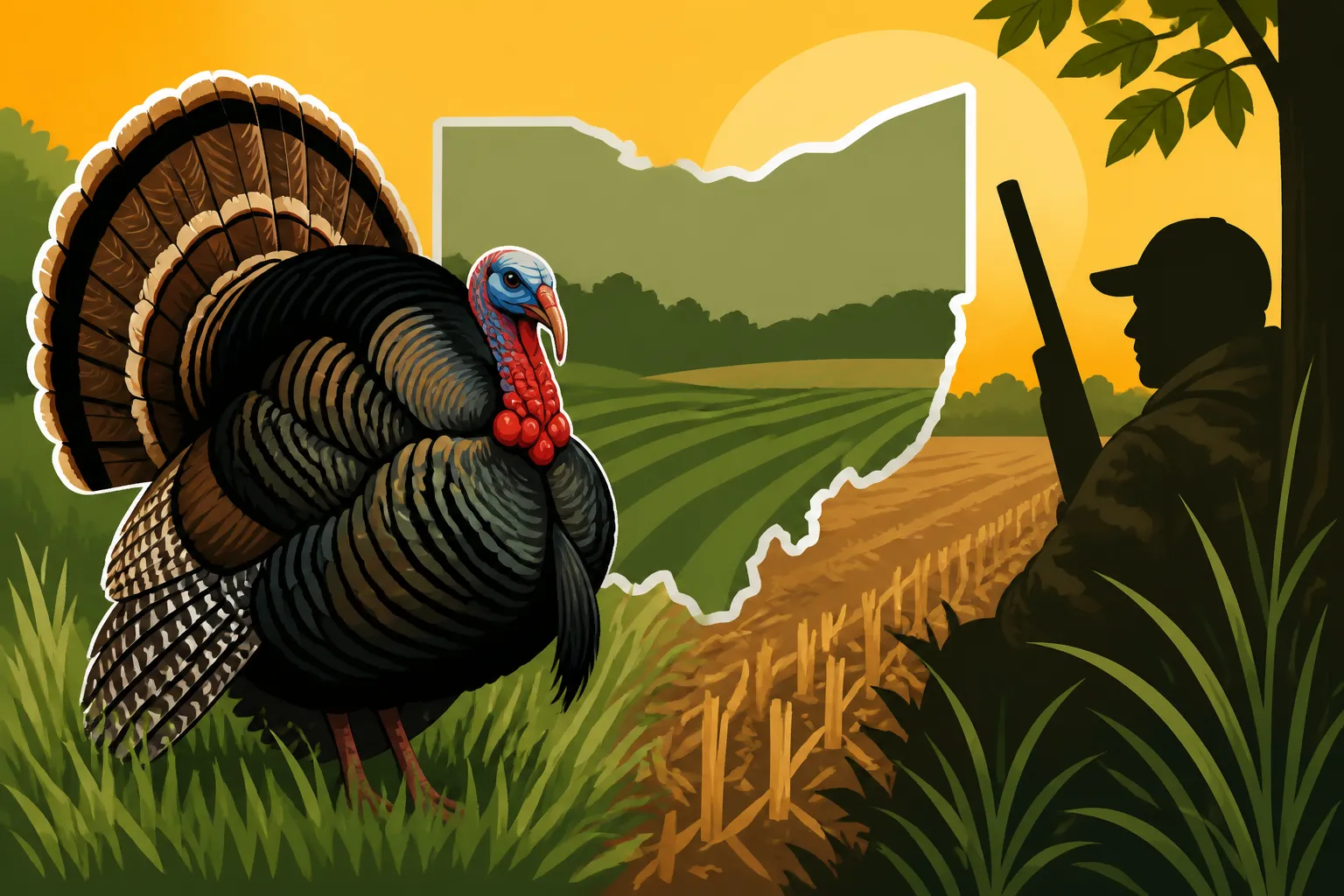
Hunting wild turkeys on the edges of Ohio's vast farmlands can be one of the most rewarding, yet frustrating, pursuits for any spring hunter. These birds are notorious for being visible from a mile away and just as prone to hanging up out of range, especially when they can see every single movement in open country. This guide aims to equip you with the specific tactics and mindset needed to close the distance on those wary gobblers strutting just beyond your reach along Ohio's field edges.
Understanding Farmland Turkey Behavior
The first step to consistently tagging turkeys on agricultural ground is understanding why they do what they do in these environments. It's a completely different ballgame than hunting birds in dense timber.
The Allure of Field Edges for Turkeys
For a wild turkey, a field edge isn't just a boundary; it's a buffet and a bachelor pad all rolled into one. These transitional zones offer a perfect blend of resources that turkeys crave. In the spring, newly sprouted greens in crop fields provide easy foraging for insects, seeds, and tender plant growth. Farmers often leave small strips of cover, brush piles, or hedgerows along these edges, providing crucial bugging areas, dusting bowls, and places for hens to nest.
But perhaps most importantly, open fields are nature's ultimate strutting stage. A gobbler loves nothing more than to display himself to the maximum number of potential mates. From a field edge, he can show off his vibrant colors and booming gobble to hens that might be feeding deep in the field or tucked away in the adjacent woods. It also gives him a clear view of any approaching predators, a natural advantage that makes them feel secure, albeit vulnerable if you don't play your cards right. It's why you often see them parading along the length of a field in the early morning sun, especially during the peak of the spring breeding season. This visibility, while appealing for strutting, is also what makes them so challenging to approach. They've evolved to detect threats at long distances in these open settings.
Why Farmland Gobblers are Wary
Ohio's farmland gobblers often carry a heavy burden of hunting pressure. Unlike birds deep in the remote sections of Wayne National Forest, these turkeys are often exposed to human activity year-round, from farming operations to casual observers. This constant exposure, combined with the intense hunting pressure during the short spring season, makes them incredibly keen and cautious.
They've learned that unusual shapes, sounds, or movements can mean danger. A gobbler strutting at 100 yards in an open field isn't necessarily "hung up" because he's shy; he's often simply unwilling to leave the safety of the wide-open view for what he perceives as a potential ambush point in the woods. They know the exact range at which they feel safe, and they'll often stay just outside of shotgun range, gobbling their heads off, daring you to make a move. This wariness is compounded by the fact that they can easily see any approach. Unlike thick timber where you might use topography or dense undergrowth for cover, field edges offer little forgiveness for a careless stalk. You're hunting smart, old birds who have been educated by previous seasons and by their natural inclination to stay safe in wide-open spaces.
Scouting and Setting Up for Success
Success on farmland field edges begins long before you ever pull the trigger. It's a game of observation, meticulous planning, and strategic concealment.
Pre-Season Reconnaissance
This is where your homework truly pays off. Before the season even opens, take the time to drive or walk the perimeter of the fields you intend to hunt. Look for common entry and exit points where turkeys move between roosting areas in the woods and feeding areas in the fields. A good set of binoculars, maybe even a spotting scope, is invaluable for observing these birds from a distance without disturbing them. You're trying to establish patterns: where do they typically fly down? What time do they hit the field? Which hens are they with? Where do they usually strut? Many hunters find digital mapping tools like those offered by GoHunt incredibly useful for marking potential roost sites, strut zones, and natural funnels that could bring a bird into range. This is also a good time to check for fresh tracks, droppings, and dusting bowls along the field edges and in any adjacent woodlots.
Pay close attention to subtle topographical features. A slight dip in the terrain, a small rise, or a drainage ditch might offer just enough cover for a strategic setup. Don't just focus on the field itself; examine the transition zone and the first 50-100 yards into the woods. Often, the best ambush spots are not directly on the edge, but slightly back in the timber, overlooking the field. Understanding Scouting Ohio Public Land Before Season can help you refine your approach, even if you're on private land, by teaching you to look for key turkey sign.
Strategic Decoy Placement
Decoys can be your best friend or your worst enemy on field edges. The key is realism and thoughtful placement. Since turkeys have such excellent eyesight in open terrain, cheap, unrealistic decoys can spook them faster than anything. Invest in quality, lifelike decoys. A jake and a couple of hen decoys are often a great starting point. The jake decoy can really tick off a dominant gobbler, making him commit to a confrontation.
Placement is critical. You want your decoys to be highly visible to approaching birds but also positioned so that a gobbler coming to investigate will offer a clean shot. Often, placing them 15-20 yards from your hidden position is ideal, giving you some room for error if the bird hangs up just short of the spread. Set your jake decoy facing you, so that an incoming gobbler will likely circle and face it, presenting his fan directly away from you for a perfect shot opportunity. If you're using a single hen, position her where she can be seen from the likely approach routes. Avoid placing decoys too far into the field, as this can cause a gobbler to hang up even further out. Remember, your goal is to draw the bird into range, not just to the decoys. For more detailed advice, check out the article on Decoy Placement for Pressured Birds.
Concealment is Key
This cannot be overstated: you must be concealed. In wide-open farmland, turkeys can pick out the slightest movement. Your setup needs to be airtight. A good quality pop-up ground blind is often the most effective tool, especially if you can get it brushed in naturally a few days before your hunt. This allows the birds to get accustomed to its presence. Place it slightly back from the actual field edge, perhaps 5-10 yards into the woods or against a fencerow that offers good cover. This provides a natural backdrop and keeps your silhouette broken up.
If a ground blind isn't an option, natural cover is paramount. Think thick brush, overgrown fencerows, or the base of a large tree with good branching structure. The article on Setting Up Against a Big Oak offers great advice for finding and utilizing natural cover. Always ensure you have a clear shooting lane, but never sacrifice concealment for it. A gobbler will often spot an un-concealed hunter long before he commits to the call. Wear good camouflage that blends with the local vegetation, and make sure your face and hands are covered. The smallest flash of skin or a misplaced piece of gear can send a wary gobbler scurrying.
Calling Strategies for Field Edge Birds
Calling on a field edge requires a nuanced approach. You're dealing with birds that can see a lot and are often more educated than their timber-dwelling cousins.
Soft Calls and Patience
On farmland, especially early in the morning when birds are still on the roost or have just flown down, less is often more. Start with very soft, subtle calls. A few soft tree yelps before fly-down, followed by some quiet clucks and purrs once they're on the ground, can be incredibly effective. Imagine you're a shy hen, just waking up and going about her business. Loud, aggressive calling can sometimes put these wary birds on edge, especially if they've heard it all before.
Patience is also critical. A gobbler might hear your soft calls and take his sweet time moseying your way. He might strut for twenty minutes, gobbling occasionally, slowly closing the distance. Resist the urge to call too frequently or too loudly. Let him work. The idea is to pique his curiosity and make him believe there's a real hen that's just out of sight, but not desperate. The timing of your calls and your ability to maintain silence are key. Too much calling can sometimes give away your exact location, especially if he's actively looking for the source of the sound. This requires a deep understanding of Turkey Calls Worth Carrying in Ohio and how to use them subtly.
Aggressive Calling for Hung-Up Toms
While soft calling is often the starting point, there are times when a more aggressive approach is needed, especially for those notorious "hung-up" gobblers. If you've been calling softly, and a gobbler is consistently staying out at 100-150 yards, strutting and gobbling but refusing to commit, it might be time to change tactics. Try a series of sharp, excited yelps and cutts. This can sometimes sound like a dominant hen that's agitated, or even like two hens fighting, which can ignite a gobbler's competitive instincts.
Another effective aggressive tactic is a "fly-down cackle." This call mimics a hen flying down from her roost, often accompanied by wing beats (you can slap your hat against your leg or the ground to simulate this). If you hear a gobbler on the roost near a field edge, waiting until he flies down, then hitting him with an excited fly-down cackle followed by some aggressive yelps can sometimes convince him to come looking. It's about triggering an emotional response when logic and caution have taken over. Just be ready, because if it works, he might come in fast and hot.
Knowing When to Be Silent
Perhaps the most challenging, yet crucial, aspect of calling for field edge turkeys is knowing when not to call. Many hunters, myself included, have overcalled birds right out of the timber. Once a gobbler commits and starts moving in your direction, especially if he's gobbling consistently, it's often best to stop calling entirely. Let him come. He knows where you are, and every subsequent call you make could potentially give away your exact position, especially if he's circling or trying to pinpoint you.
Silence can also be your friend when dealing with satellite gobblers or "jakes" that might be trailing the main tom. If you call too much, you risk drawing these subordinate birds away from the dominant gobbler, or worse, making the dominant bird shy away. Trust your setup and your decoys. If the bird is heading your way, let him finish the deal. Use the time he's moving to ensure your gun is up, your safety is off, and you're ready for the shot. Sometimes, that long, uncomfortable silence is exactly what it takes to seal the deal on a wary Ohio gobbler.
Adapting to Conditions and Pressure
Farmland turkey hunting is rarely static. You need to be able to read the situation and adapt on the fly.
Dealing with Hunting Pressure
Ohio's prime spring turkey season often means you're not the only one in the woods. Hunting pressure, especially on public lands or easily accessible private land, can make birds extremely wary. When birds are pressured, they become tighter-lipped, less willing to venture far from heavy cover, and more prone to hanging up out of range. If you notice other hunters in the area, or if the birds are being unusually quiet or cagey, it's time to adjust.
One tactic is to seek out less obvious access points. While everyone else might be walking the main logging roads or field perimeters, try to find hidden corners, deep draws, or thick fencerows that offer some seclusion. Don't be afraid to walk a little further to get away from the crowds. This might mean getting up even earlier or using a Run-and-Gun Turkey Tactics on Public Land approach, moving quietly and listening for distant gobblers. Sometimes, the most productive spots are the ones that are a pain to get to. Also, consider hunting later in the morning. Many hunters pack up around 9 or 10 AM, leaving the woods quieter for those persistent enough to stay. Turkeys that have been bumped early might resettle and become more responsive later in the day.
Wind and Weather Considerations
Weather plays a huge role in turkey behavior and your ability to hunt them effectively. High winds are particularly challenging on field edges. It makes it incredibly difficult to hear distant gobblers, and turkeys themselves become more cautious because their hearing is compromised. In windy conditions, focus on calling louder and more frequently, and try to set up in sheltered areas where the sound will carry better, or where the birds might seek refuge. On really blustery days, birds tend to stay closer to thicker cover.
Rain can also impact your hunt. Light drizzle might not bother them too much, but heavy downpours will send them seeking shelter, and they'll be far less vocal. On rainy days, look for birds in mature timber or under dense canopy. However, the day after a heavy rain can be fantastic, as turkeys are often eager to get out, dry off, and resume their activities. Cold fronts can make birds quieter and less active, while warm fronts often spur increased gobbling and strutting. Always check the forecast and plan your hunt accordingly.
Post-Roost Tactics
The magic hour of fly-down is often short-lived on field edges. Once the birds hit the ground, they might head directly into the field to feed, sometimes with hens, and become notoriously difficult to call away. If a gobbler flies down and immediately heads the opposite direction with his hens, don't despair. You have a few options.
One is to quickly and quietly reposition. If you can move parallel to their line of travel, staying concealed along a fencerow or in a ditch, you might be able to get ahead of them and set up. This requires intimate knowledge of the terrain, and often, a little luck. Another tactic is to be patient. If the gobbler is with hens, he might follow them into the field for an hour or two, but eventually, those hens will go off to nest. When they do, the gobbler can become lonely and more susceptible to your calls. In this scenario, it's often best to wait them out, giving very subtle, infrequent calls until he's alone. For more insight on how Ohio's Spring Turkey Zones and Dates vary, which might influence bird behavior and pressure, it's worth a look. Ultimately, hunting the edges of Ohio's farmlands can be incredibly rewarding, but it demands patience, strategic thinking, and a willingness to adapt to these highly visible, often pressured birds.
Essential Gear for Field Edge Turkey Hunting
Having the right gear can make or break your hunt when you're targeting those wary farmland gobblers. It's about being comfortable, concealed, and ready for whatever the birds throw at you.
Shotguns and Ammunition
For field edge turkeys, a reliable shotgun with a tight choke is paramount. You're often dealing with birds that might hang up at the outer limits of shotgun range, so having a setup that can consistently put a dense pattern of pellets on a turkey's head and neck at 40-50 yards is crucial. Most hunters opt for 12-gauge or 20-gauge shotguns, often with a full or extra-full choke.
When it comes to ammunition, modern tungsten-based loads like those from Federal Premium or Winchester have revolutionized turkey hunting. These heavy, dense pellets maintain more energy and create tighter patterns at longer ranges than traditional lead shot. While they come at a higher price point, the confidence and extended effective range they offer can be invaluable, especially for those highly visible farmland birds. Patterning your shotgun with your chosen choke and ammunition before the season is absolutely non-negotiable. Don't assume; test it to know your effective range.
Calls and Optics
As discussed, a diverse array of calls is beneficial. A good mouth call (or diaphragm call) is essential because it allows for hands-free calling, which is vital when a gobbler is coming in close and you need to remain motionless. Carry a slate or glass call for versatile sounds, and a box call for louder, more aggressive yelps or when you need to reach out to a distant bird. Practice with all of them, becoming proficient in soft purrs, excited cutting, and the standard yelp.
Optics are often overlooked in turkey hunting but are incredibly useful for field edges. A good pair of 8×42 or 10×42 binoculars will help you spot distant birds, identify whether they're gobblers or hens, and observe their behavior without spooking them. This is especially true when you're doing your pre-season scouting or trying to locate birds that have flown down far into a large field. Being able to glass a bird at 300 yards helps you plan your next move without revealing your presence.
Concealment and Comfort
Beyond your ground blind, your personal camouflage and comfort are vital. Invest in good quality camo clothing that breaks up your silhouette and matches the local foliage. Think about layers, as Ohio spring mornings can be chilly but warm up quickly. A good pair of waterproof boots is also essential, given the often-damp conditions of field edges and low-lying farm ground.
Don't forget a comfortable seat cushion or a turkey vest with a built-in kickstand seat. You might be sitting motionless for long periods, and discomfort can lead to fidgeting, which can blow your hunt. Gloves and a face mask are non-negotiable to hide exposed skin. Turkeys have fantastic eyesight, and even a patch of bare skin can give you away. Small details, like covering the shiny parts of your gun or avoiding metal-on-metal sounds, can make a significant difference.
| Gear Item | Purpose | Key Features for Farmland Turkeys |
|---|---|---|
| Shotgun | Delivering lethal pattern at range | 12 or 20 gauge, full/extra-full choke, reliable action |
| Ammunition | Effective long-range pellets | Tungsten-based loads (e.g., Federal TSS), patterned for your gun |
| Mouth Call | Hands-free calling | Versatile tones, allows immediate readiness for shot |
| Slate/Glass Call | Versatile sounds, good for soft or aggressive calls | Easy to use, wide range of vocalizations |
| Box Call | Loud, far-reaching calls for locating and exciting birds | Resonant sound, good for windy conditions |
| Binoculars | Scouting and distant bird identification | 8×42 or 10×42, good low-light performance |
| Ground Blind | Maximum concealment in open areas | Portable, easy to set up, brushed-in appearance (if possible) |
| Camo Clothing | Breaking up silhouette, blending in | Layered for comfort, pattern matching local vegetation |
| Face Mask/Gloves | Hiding exposed skin | Full coverage, comfortable and breathable |
| Comfortable Seat | Preventing fidgeting during long waits | Turkey vest with kickstand, portable cushion |
Disclaimer
Hunting is an inherently dangerous activity. Always prioritize safety, adhere to all Ohio Department of Natural Resources (ODNR) regulations, and ensure you have the necessary licenses and permits. Consult the most current ODNR hunting digests for season dates, bag limits, and specific rules, including those for the Ohio Spring Turkey Bag Limit. This guide is for informational purposes only and does not substitute for hands-on experience or professional instruction. Be a responsible and ethical hunter.