Recovering a Deer From a Steep Ravine
There's nothing quite like the rush of finally dropping that big Ohio buck, but that elation can quickly turn to dread when you realize your prize has tumbled into a steep, nasty ravine. Recovering a deer from such challenging terrain isn't just tough; it can be downright dangerous if you're not prepared. This guide will walk you through the safest and most effective strategies for getting your deer out of those deep, unforgiving hollows, ensuring both your safety and the quality of your hard-earned venison.
Initial Assessment and Prioritizing Safety
The moment you see your deer drop or hear it crash into a steep, dark ravine, that initial surge of adrenaline is real. But before you even think about scrambling down there, you absolutely must prioritize safety. It's a mistake many of us have made, letting excitement override common sense, only to find ourselves in a precarious spot. Those steep ravines, especially common in places like Ohio's Appalachian foothills in the Wayne National Forest or the rugged Shawnee State Forest, can be treacherous.
First things first: confirm the deer is expired. Use your binoculars to scan the area where you last saw the deer. Look for any movement, a lifted head, or a twitching tail. If it's still moving, you might need to make a follow-up shot from a safe, stable position. Never descend into a ravine with an injured, potentially dangerous animal. Once you're certain it's down for good, take a deep breath and survey the scene. What initially looks like a direct path down could be a sheer drop, loose shale, or a tangle of briars. A quick look around can save you a lot of grief—or worse, a serious injury. Think about the potential for falls, twisted ankles, or even sliding down slick, wet leaves into an unseen hole. This isn't just about the deer; it's about making sure you make it home safely too.
Assessing the terrain from above is crucial. Are there large, stable trees you can use for handholds? Is the ground composed of loose rocks, wet clay, or thick underbrush? Water can also be a major hazard; many ravines in Ohio have small creeks or seeps that make everything incredibly slick. If it's getting dark, or if you're alone, these factors become even more critical. There's no shame in calling for help. In fact, it's often the smartest move. Having a partner, or even a small team, can make a world of difference when navigating steep, unstable ground and moving heavy game. Remember, a deer can weigh well over 150 pounds, and trying to haul that kind of weight up a vertical incline by yourself is a recipe for exhaustion and potential injury. If you're alone and facing a truly impossible recovery, it's worth considering coming back with help, even if it means risking some meat loss (which we’ll address later).
Before you make any descent, make sure you have essential safety gear. A good headlamp is non-negotiable, even if you think you'll be out before dark. Things always take longer than expected, especially in difficult terrain. Carry a fully charged cell phone (though service can be spotty in deep ravines). A basic First Aid Kits for Remote Wayne Forest Ground is also a must-have for dealing with cuts, scrapes, or sprains. Consider a sturdy rope, even if you don't plan to use it for rappelling—it can be invaluable for securing yourself or the deer. This methodical approach will not only keep you safer but also help you think clearly about the next steps.
Planning Your Extraction Route
Once the deer is confirmed down and you've assessed the immediate safety concerns, the real brain-work begins: planning the extraction route. This is where a little bit of foresight and modern technology can truly save your hide. Simply bull-rushing down the steepest path is rarely the best option, and often leads to more problems than solutions. We've all been there, standing at the edge of a ravine, looking down at our deer thinking, "How on earth did it get there?"
The first step is to carefully scout the ravine's contours. Look for natural ramps, benches, or less steep sections. Deer, being creatures of efficiency, often use the path of least resistance. If there's a game trail leading down or around, it's usually there for a reason and might be your best bet. These subtle terrain features might not be obvious from above, so taking your time to walk the rim of the ravine, observing from multiple angles, is incredibly important. You’re essentially reading the landscape to find the easiest "exit ramp" for your prize. This also ties into how you approach Scouting Ohio Public Land Before Season, as pre-season recon can help you identify these tricky spots before you ever pull the trigger.
This is also where digital mapping tools like GoHunt really shine. Before you even head out, you can study topographic maps and satellite imagery right from your phone or computer. Zoom in on the ravine. Look for contour lines that spread out, indicating a gentler slope, rather than those tightly packed lines that scream "cliff face!" GoHunt's satellite view can help you spot potential obstacles like dense stands of blowdowns, thick briar patches, or water features that might create choke points in your recovery. Being able to visualize the terrain in 3D or with a clear topo overlay can give you a massive advantage in determining the most viable path to get the deer out, especially if you're dealing with the intricate ridges and hollows you'd find when Reading a Ridge for Southeast Ohio Deer.
Consider the obstacles you might encounter. Is there a creek at the bottom that might require a crossing? Are there significant fallen trees that will need to be climbed over or navigated around? Thick, thorny undergrowth, common in disturbed areas or neglected woodlots, can turn a simple drag into a bloody ordeal. Having a sharp machete or a sturdy pair of loppers in your pack can be incredibly useful for clearing a path, but even better is avoiding those areas entirely if possible. If you determine the task is too large for one person, don't hesitate to call friends or family for help. A team of two or three people can drastically reduce the physical strain and improve safety. Communicate clearly about the deer's location, the chosen route, and any hazards. There’s no point in being a hero when an extra set of hands makes the job safer and easier.
Essential Tools and Techniques for Steep Terrain Recovery
Okay, you’ve confirmed the deer is down, you’ve assessed the dangers, and you’ve got a rough plan for your route out. Now it's time to talk about the tools and techniques that will actually get your deer out of that nasty ravine. Dragging a deer, especially uphill on challenging terrain, is one of the most physically demanding parts of hunting. Having the right gear and knowing how to use it effectively can turn a nightmare into a manageable challenge.
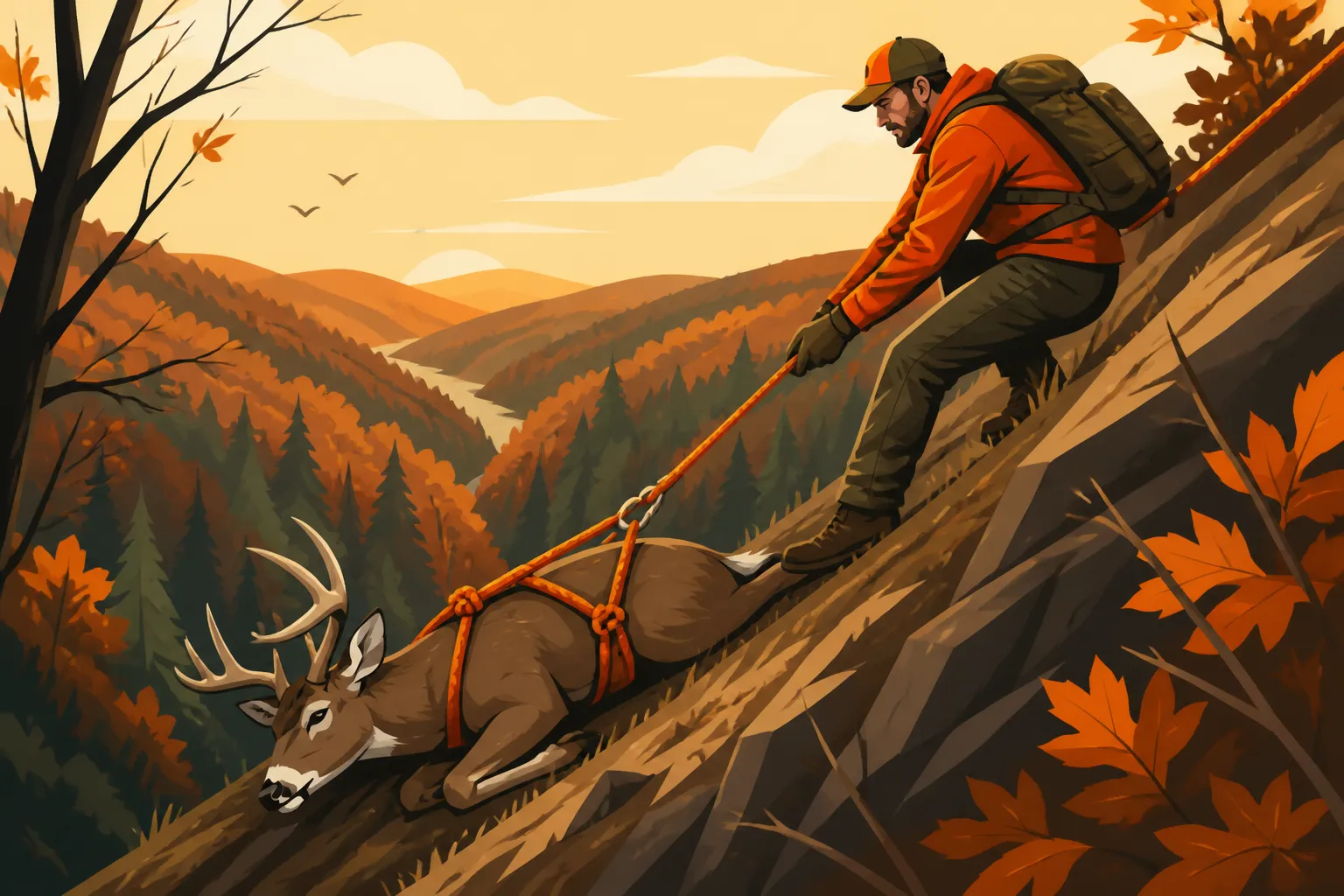
First, let's talk about dragging aids. A simple rope is probably the most versatile and essential piece of equipment. A heavy-duty drag rope, ideally 20-30 feet long and made of a durable material that's easy to grip even when wet or muddy, can be a game-changer. You can tie it around the deer's antlers or head, or create a loop around the neck for a more secure pull. For steep ascents, a rope allows multiple people to pull simultaneously, distributing the load. If you're alone, you can use the rope to control the deer's descent or ascent in short, manageable sections, effectively using it as a brake. For slightly less steep, but still challenging terrain, a dedicated deer sled or drag might be useful. Brands like Sleds and Drags for Hill Country offer excellent options. These heavy-duty plastic sleds protect the hide and make it easier to slide the deer over obstacles, reducing friction significantly compared to dragging directly on the ground. However, they are less effective on extremely steep or rocky terrain where they might hang up or flip.
When it comes to the actual dragging technique, think smarter, not harder. If you have a downhill path, use gravity to your advantage, but with control. Secure a rope to the deer and have someone at the back to act as a "brake," or wrap the rope around a tree to slowly lower the deer. For uphill climbs, which are far more common when dealing with ravines, it’s all about leverage and short, powerful pulls. If you have multiple people, line up in front of the deer, staggering yourselves slightly, and pull together on the count. This allows you to combine your strength. Take frequent breaks. Exhaustion can lead to mistakes and injuries. Consider using a backpack with a sturdy frame, like some of the Packs for a Day on Wayne National Forest that are designed to carry heavy loads, if you plan to quarter the animal.
Another invaluable technique, especially on treacherous slopes, is to use a safety line. If you’re trying to prevent the deer from sliding uncontrollably down a hill, you can secure it to a sturdy tree with a secondary rope before you start pulling. This provides a safety net if your primary pulling effort gives way. If you're fortunate enough to find a gentler slope, a deer cart can be a godsend. These wheeled carts are fantastic for long, relatively flat stretches or gradual inclines. However, they are absolutely useless on truly steep, rocky, or heavily timbered ravines. Knowing when to use which tool, and when to just rely on brute force and smart dragging, is key. And don't forget good footwear! Boots with excellent ankle support and aggressive tread are non-negotiable when dealing with Boots for Ohio Mud and Snow on ravine slopes.
Field Dressing and Carcass Care in Challenging Environments
Once you’ve wrestled your deer out of the immediate danger zone of the ravine, the next critical step is proper field dressing and carcass care. This part is just as important as the recovery itself, as it directly impacts the quality of your venison. In challenging environments, you might need to adapt your usual field dressing routine.
The first decision is whether to field dress the deer where it lies or try to move it whole. If you’re deep in a ravine, perhaps miles from your vehicle, and facing an impossible drag, field dressing (gutting) on the spot to lighten the load is usually the best option. This immediately removes a significant amount of weight, making the drag substantially easier. It also starts the cooling process, which is vital for meat preservation, especially if it’s a warmer Ohio day. After gutting, if you can, prop the deer open to allow air circulation. If you can’t get it to a more favorable spot, this initial step is paramount. For those exceptionally difficult recoveries, or if you’re concerned about potential CWD testing in areas like Ohio's Chronic Wasting Disease Surveillance Area (DSA), some hunters even opt for the gutless method. This involves skinning and quartering the deer right where it drops, removing the meat in manageable sections. While more time-consuming, it dramatically reduces the weight and bulk you need to transport, allowing you to carry the meat out in game bags, often in multiple trips, rather than dragging a whole carcass. This is a common tactic for Recovering a Deer From a Steep Ravine in truly remote or rugged areas.
Once the deer is field dressed, whether gutted or quartered, cooling the meat as quickly as possible is your top priority. Bacteria begin to multiply rapidly as soon as the animal expires, and warm temperatures accelerate this process, leading to spoilage and a "gamey" taste. If you're hunting in the early archery season when Ohio temperatures can still be quite warm, this is especially critical. Get the deer out of direct sunlight and into a shaded, breezy spot if possible. Using game bags, like those mentioned in Coolers and Game Bags for Early Archery, is highly recommended. These breathable cloth bags protect the meat from dirt, insects, and scavengers while allowing it to cool down naturally. If you’re processing the deer into quarters, place each quarter in a separate game bag, and then transport them in a sturdy pack designed for hauling heavy loads.
Finally, once you get the deer back to your vehicle or camp, don't let up on the meat care. Get it into a cooler with ice, or ideally, directly to a meat processor or a controlled-temperature hanging space. The goal is to drop the internal temperature of the meat below 40°F (4°C) as quickly as possible. This is also important if you plan on Field Dressing a Deer in Cold Weather, as proper care ensures the quality of the venison even when the elements aren't working against you. A well-cared-for deer, even one recovered from the deepest ravine, will provide delicious, high-quality venison for your table. Neglect it, and all that hard work in the ravine goes to waste.
Essential Gear for Ravine Deer Recovery
Recovering a deer from a steep ravine requires a specific set of gear to ensure both safety and efficiency. Here’s a quick overview of items you should consider having in your pack when venturing into rugged Ohio terrain:
| Item | Purpose | Notes |
|---|---|---|
| Heavy-Duty Rope | Dragging, securing, safety lines | 20-30 feet, strong material, easy to grip |
| Headlamp | Illumination for low-light conditions or after dark | Essential, even if you plan to be out before dark |
| First Aid Kit | Treating cuts, scrapes, sprains, emergencies | A compact kit designed for outdoor use |
| Good Footwear | Traction and ankle support on steep, slick terrain | Waterproof, aggressive tread, high ankle support |
| Navigation Tool | GPS device or phone app (GoHunt, onX) with topo maps | Crucial for planning routes and avoiding getting lost |
| Game Bags | Protecting and cooling meat if quartering or gutting | Breathable, durable, prevents contamination |
| Sharp Knife/Saw | Field dressing, clearing small obstacles | Gut hook can be useful for field dressing |
| Gloves | Protecting hands from briars, sharp objects, and cold | Cut-resistant for handling deer, warm for cold weather |
| Water & Snacks | Maintaining energy and hydration | Recovery can be physically demanding and take hours |
| Whistle | Signaling for help if cell service is unavailable | Small, simple, can be heard over long distances |
Disclaimer
Hunting is an inherently dangerous activity. The information provided in this guide is for informational purposes only and should not replace proper training, experience, or professional guidance. Always prioritize safety, adhere to all local hunting regulations, and be aware of your physical limitations and the conditions of the terrain. When in doubt, seek assistance from experienced individuals or emergency services.