Hunting Deer After a January Thaw
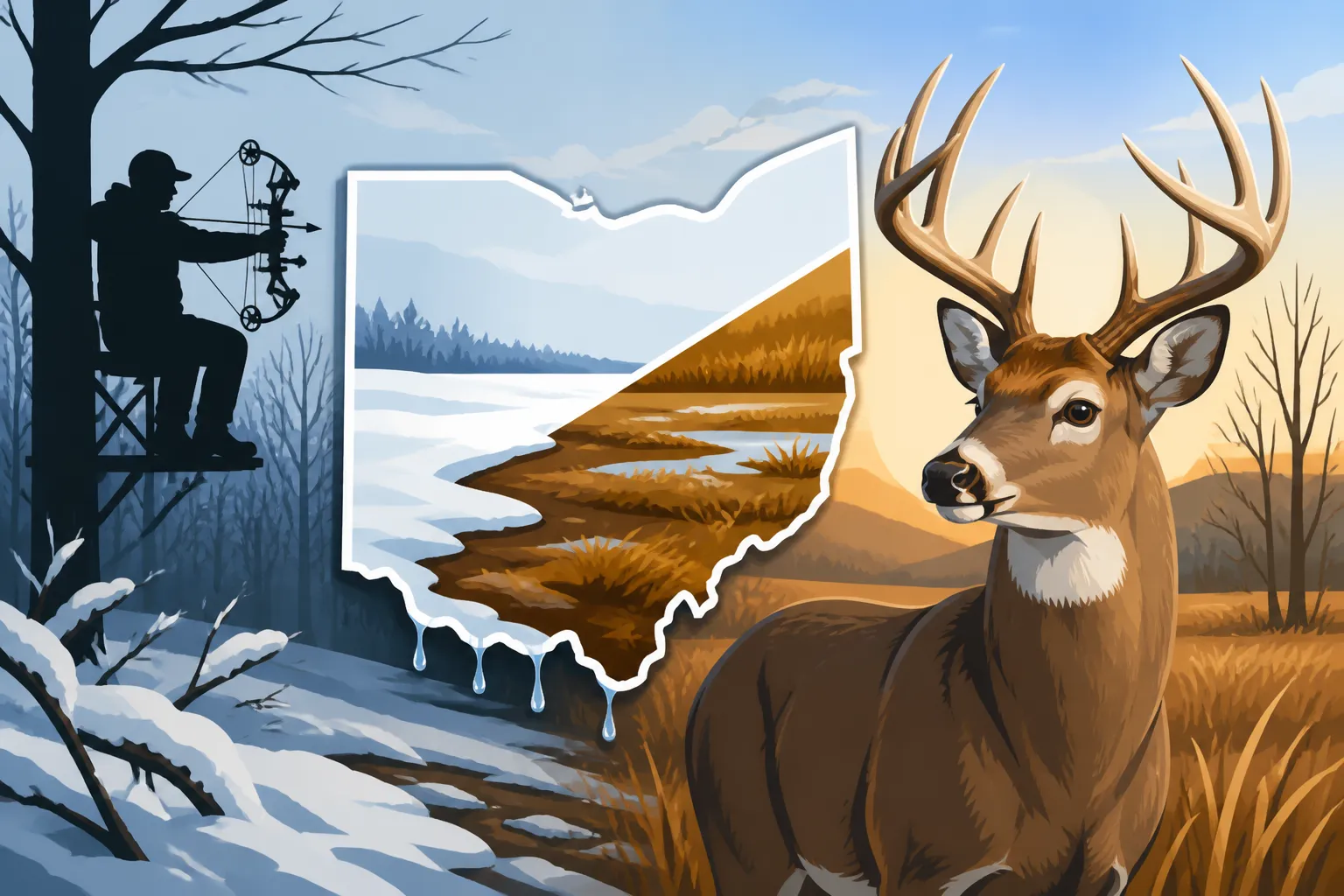
There’s nothing quite like the mental whiplash of hunting Ohio deer in January. One week you’re bundled head-to-toe, hoping for fresh snow to track a big buck, and the next, a warm front rolls in, melts everything, and leaves you staring at mud and bare ground. This sudden January thaw can completely flip deer behavior on its head, leaving many hunters frustrated and wondering where all the deer went. But don't throw in the towel just yet! This guide is here to walk you through exactly how to adapt your strategy, understand the whitetails' shifts, and even turn these challenging post-thaw conditions into a late-season advantage.
Understanding Deer Behavior After an Ohio January Thaw
When that mid-winter warm-up hits Ohio, it’s not just a change in temperature; it's a complete environmental shift that impacts deer on multiple levels. The immediate feeling of relief from the bitter cold often means a reevaluation of everything you thought you knew about where deer should be.
The Immediate Impact on Movement and Activity
A sudden spike in temperature after a prolonged cold spell can be a double-edged sword for deer movement. Initially, you might see an increase in activity as deer respond to the comfort of warmer air. They might be more willing to move in daylight, shaking off the lethargy of deep winter. However, this burst of activity is often short-lived, especially if the warmth persists for several days. After the initial surge, deer often settle into a more nocturnal pattern, similar to early season behavior. The increased comfort means less urgency to move during colder daylight hours, and the lingering threat of human presence often pushes them back under the cloak of darkness.
Think about it from a deer's perspective: when it's brutally cold, every calorie counts, and movement is often tied directly to food and thermal cover. But with a thaw, that intense pressure lessens. They're not expending as much energy to stay warm, so they can afford to be a bit lazier. This often means midday lulls can be even more pronounced than during the deep freeze. You might find your best opportunities are right at first light or the last hour of daylight, when they're transitioning to and from bedding areas.
Shifting Food Preferences in Milder Conditions
The frozen ground and snow cover of true winter force deer to rely on specific, often hard-to-reach, food sources like leftover standing crops or browse. A January thaw, however, can literally unearth new opportunities for them. Acorns that were buried under snow and ice might suddenly become accessible, creating new, temporary feeding hotspots. If there's enough moisture, you might even see the beginning of green browse starting to push through in sheltered areas, offering a fresh, albeit small, nutritional boost.
This doesn't mean they'll abandon traditional late-season food sources like brassicas or standing beans overnight. But it does mean their focus can broaden. If you've been relying solely on one food plot or a particular section of standing corn, you might need to expand your search. Creek bottoms, south-facing slopes, and areas with dense cedar or honeysuckle thickets can be prime locations for newly exposed or emerging browse. Pay close attention to subtle changes. A patch of winter wheat that was buried now might be grazed heavily, or a brushy hedgerow that seemed devoid of activity suddenly shows fresh sign. For more insights on what keeps deer moving in the cold, check out our guide on Late-Season Food Sources for Ohio Whitetails.
Bedding Adjustments and Thermal Cover
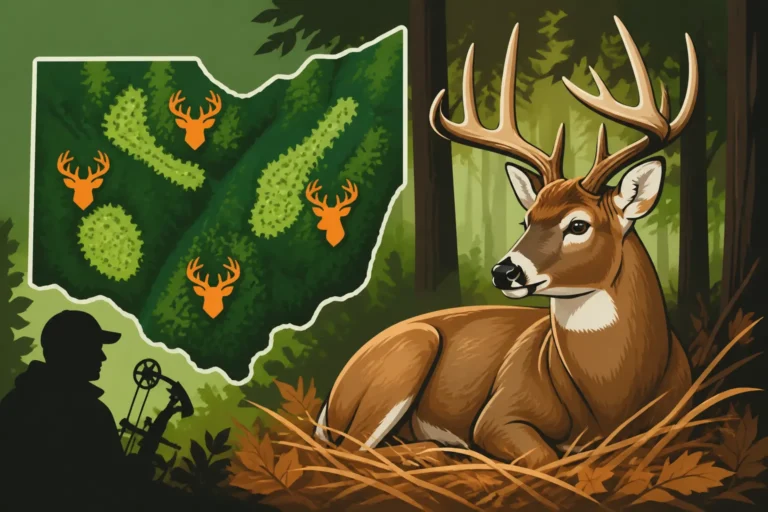
Just like our desire for comfort changes with the weather, so does a deer's need for specific bedding locations. In bitter cold, deer prioritize thermal cover – dense conifer thickets, thick stands of honeysuckle, or deep ravines that offer protection from wind and direct cold. With a thaw, this necessity lessens. They might move out of the absolute densest cover and into slightly more open areas where they can catch some sun. South-facing slopes, often overlooked in the deep cold because of wind exposure, become prime real estate during a thaw. They offer warmth from the sun, and melting snow can reveal additional browse.
However, "milder" doesn't mean warm. January nights can still drop below freezing, even after a daytime thaw. So, while they might shift, they won't abandon the principles of cover and security. They'll still seek areas that offer good visibility and a quick escape route. Look for bedding areas that allow them to soak up the sun's rays during the day while still being close to newly accessible food sources. Dense clear-cuts or thick pockets of briars and young timber on a sunny slope can become attractive. Understanding these nuances is key to staying on top of their movements as the weather rollercoaster continues.
Effective Scouting and Locating Deer Post-Thaw
After a thaw, the landscape can look completely different, and your old scouting assumptions might be out the window. This is where diligent, on-the-ground scouting, combined with modern tools, becomes absolutely invaluable.
Interpreting Sign in Soft and Wet Ground
One of the biggest advantages of a thaw, despite the mud, is that it can make fresh deer sign incredibly obvious. Those frozen tracks you couldn't tell the age of suddenly become crisp, well-defined impressions in the soft earth. Fresh droppings will stand out against the damp ground, indicating recent activity. However, you need to be careful with interpretation. Melting snow and rain can make older tracks look newer, and water can wash away or distort scent, making it harder for dogs (if you're tracking a downed deer) or even your own nose to follow.
Focus on distinguishing truly fresh sign from older, saturated tracks. Look for sharp edges on hoof prints, minimal water accumulation in the bottom, and clear dewclaw marks if the ground is soft enough. Fresh rubs and scrapes, though less common in late January, will also appear vibrant against wet bark. Check out our guide on Reading Ohio Snow for Fresh Deer Movement to understand the basics, then apply those principles to the wet ground, knowing that moisture can speed up the "aging" process of sign. Use the absence of fresh sign as much as its presence. If your go-to spot is barren of fresh tracks after a thaw, it’s a clear signal to move on.
Utilizing Mapping Tools and Aerial Imagery
Modern mapping applications are absolute game-changers, especially when conditions are in flux. Tools like GoHunt can help you quickly identify potential bedding areas on south-facing slopes, pinpoint new-found food sources like exposed oak flats, or even find hidden travel corridors that open up when snow melts. Before you even set foot in the woods, spend some time studying aerial photos. Look for areas where dense cover transitions into more open, sunny spots. Identify small pockets of timber or brush next to agricultural fields that might now offer accessible browse.
Using GoHunt, you can layer topographical maps with aerial imagery to see how slopes and terrain features might influence deer movement and bedding choices after a thaw. Mark potential new hot spots, identify access routes that might be less muddy, and plot out your scouting path. This digital reconnaissance can save you countless hours of tromping through mud, allowing you to focus your efforts on the most promising areas. It's also great for understanding property lines, which is crucial when Scouting Ohio Public Land Before Season. The ability to quickly adapt your plan using such resources is a major asset in these volatile conditions.
Focusing on Key Transition Zones and Cover
Deer, even with a thaw, are creatures of habit and efficiency. They'll still gravitate towards areas that offer the best combination of food, water, and cover. After a thaw, these areas might simply shift slightly. Instead of deep, cold-weather thermal cover, they might favor transition zones between newly accessible food and slightly less dense but still secure bedding. Look for pinch points, saddles, and creek bottoms that connect these areas.
A prime example is a south-facing ridge with a thick clear-cut at its crest, bordering a field edge or an oak flat. The clear-cut provides excellent bedding and thermal protection from any remaining cold winds, the south-facing aspect offers warmth, and the proximity to food is irresistible. Focus your scouting efforts on these edges and transition points. Deer are often lazy; they will take the path of least resistance. A thawed creek bottom, while muddy, might offer easier travel than scrambling over a frozen ridge. Similarly, the edge of a standing corn field that was previously inaccessible due to deep snow might now be a major travel route. For excellent strategies on pinpointing these areas, consider tactics like Reading a Ridge for Southeast Ohio Deer and Hunting a Funnel Between Two Woodlots.
Adapting Your Hunting Strategy for Post-Thaw Success
Once you've done your scouting homework and understand how deer are reacting to the thaw, it's time to adjust your hunting strategy. What worked during the deep freeze likely won't be as effective now.
Rethinking Stand and Ground Blind Placement
With deer potentially shifting bedding and feeding patterns, your old stand locations might be out of sync. If deer are moving less in the midday, moving your stand closer to bedding areas for those critical first and last hours of light might be beneficial. Alternatively, if newly exposed food sources are attracting deer, a strategic setup overlooking that area is essential. Consider using a ground blind, especially if you're not entirely sure of the exact travel routes or if the thaw has made scent control a bigger challenge. A well-brushed-in ground blind offers flexibility and a greater ability to move and adapt to new information. For tips on effective deployment, read Using a Ground Blind on Ohio Public Land.
When placing stands or blinds, think about the wind, which can be even more unpredictable during a thaw. Warmer air can create thermals that rise and fall differently than in cold, stable air. Always hunt with the wind in your favor, and if you’re unsure, choose a setup that gives you multiple wind options or allows for a quick exit if the wind shifts. Pay attention to how sun exposure might influence deer comfort and movement during the day. A stand overlooking a sunny, sheltered feeding area might be more productive than one tucked deep in a cold, shaded ravine.
The Nuances of Still-Hunting in Milder Weather
A January thaw, with its often wet and soft ground, can create perfect conditions for still-hunting or even stalking, especially in open timber. The damp leaves and mud muffle your footsteps, allowing you to move through the woods with incredible stealth. This can be a huge advantage when deer are scattered or moving unpredictably. Instead of waiting for them to come to you, you can actively go to them. This method requires immense patience and keen observation. Take a few steps, then stop and glass thoroughly. Look for subtle movements, horizontal lines that don't belong, or flicking ears.
The key to successful still-hunting after a thaw is to move slowly and deliberately. Use binoculars constantly to pick apart cover ahead of you. Focus on areas where you expect deer to be bedding or browsing, like dense clear-cuts or thickets bordering newly accessible food. Keep the wind in your face or quartering. If the ground is muddy, you might even be able to track a deer for a short distance before bumping it, allowing you to then set up an ambush. Combine this with insights from Still-Hunting Shawnee State Forest Ridges to fine-tune your approach, even outside of that specific region.
Maximizing Your Sit Time with Patience
Even with all the adjustments, January hunting can be tough, and a thaw can make deer movement feel even more sporadic. Patience is your most important virtue. While deer might be more active at dawn and dusk, those midday hours, especially if the weather swings back to colder, can still be productive. Deer often move surprisingly little after a big feed in the morning, only to get up and stretch their legs or grab another bite before settling back in.
This is where a comfortable, long sit comes into play. If you've been focused on Cold-Weather Sitting Strategy in Ohio, you know the importance of comfort. Even with warmer temps, you still need to be prepared. Bring plenty of snacks, water, and a good book or podcast for those slower periods. The deer that moves at 11:30 AM is the one you're hoping for. Don't pack it in early because it "feels" too warm or too slow. The hunter who stays on stand, quietly observing, often sees the most deer. Sometimes, simply out-waiting other hunters who leave early can put you in a prime position.
Essential Gear and Preparation for Fluctuating January Weather
Ohio weather in January is notoriously fickle, and a thaw often means dramatic temperature swings, rain, and mud. Being prepared with the right gear isn't just about comfort; it's about staying safe and effective.
Layering for Unpredictable Temperature Swings
A January thaw rarely means consistently warm weather. You might start your morning in freezing temperatures, experience a 40-degree swing by midday, and then watch the mercury plummet again as the sun sets. This is where a strategic layering system becomes crucial. Start with a moisture-wicking base layer, followed by an insulating mid-layer (fleece or lightweight synthetic puff jacket), and top it with a waterproof/windproof outer shell. As the day warms, you can shed layers; as it cools, you can put them back on. Avoid cotton at all costs, as it retains moisture and will make you cold once it gets wet.
Focus on materials that perform well when wet, like synthetic insulations or wool. Your feet are particularly vulnerable to the cold and wet. Choose high-quality, waterproof boots with good insulation. Even if the ground is soft, you might still encounter standing water or melting snow. Having a spare pair of dry socks in your pack can be a hunt-saver. Our guide on Insulated Boots for All-Day Sits offers some excellent suggestions that can keep your feet warm and dry through these conditions.
Keeping Your Equipment Dry and Ready
The dampness that comes with a thaw can wreak havoc on your gear. Your optics can fog up, your rifle can get wet and muddy, and anything electronic can short-circuit. Invest in quality waterproof covers for your optics, and consider a small, dry bag for your phone, keys, and any other electronics. If you're using a muzzleloader, keeping powder dry is paramount, a topic explored in Keeping a Muzzleloader Dry in Wet Snow.
It's also a good idea to bring a small towel or microfiber cloth to wipe down your rifle or bow throughout the day. Mud can get into mechanisms and optics, potentially causing misfires or obscuring your view. A waterproof pack cover is non-negotiable, and if you plan to sit on the ground, a small, waterproof cushion can prevent you from getting soaked. After your hunt, make sure to thoroughly clean and dry all your equipment to prevent rust and mildew. A little effort goes a long way in extending the life of your gear. If a full-blown rainstorm hits with the thaw, be sure you have appropriate Rain Gear for an Ohio Downpour.
Scent Control in Warmer, Wetter Conditions
Warmer temperatures and increased humidity mean scent travels further and lingers longer. Deer are already hyper-sensitive to human scent, and these conditions amplify its presence. Your scent control regimen needs to be meticulous. Shower with scent-free soap, use scent-free detergent on your hunting clothes, and store them in airtight bags or containers. Sprays can help, but they are no substitute for cleanliness.
Pay close attention to wind direction, as discussed earlier. Even a slight thermal shift can carry your scent in unexpected directions. Consider using natural cover scents that blend with the environment, but don't rely on them entirely. The best defense against a deer's nose is to stay downwind. With the softer ground, you might also be leaving a stronger scent trail as you walk in, so consider your entry and exit routes carefully. Use GoHunt to identify approaches that minimize your impact on the core hunting area and keep you clear of known bedding zones. When every variable is magnified, consistent and thorough scent control can be the difference between a successful hunt and an empty handed walk back to the truck.
Disclaimer
Please remember that hunting regulations and conditions can change rapidly. Always consult the official Ohio Department of Natural Resources (ODNR) hunting regulations for the most current and accurate information before heading into the field. This guide provides general advice and is not a substitute for official legal requirements or experienced professional guidance. Stay safe and ethical in all your hunting pursuits.