Using a Ground Blind on Ohio Public Land
Anyone who's spent time chasing deer on Ohio's public lands knows the struggle: finding a good, unpressured spot, setting up quietly, and staying concealed enough to fool a wary whitetail. It's tough when you can't just hang a permanent stand or trim shooting lanes wherever you please. This guide is all about navigating those challenges and showing you how a ground blind can become your secret weapon for successful hunts on Ohio public land, offering a blend of concealment, comfort, and adaptability that other methods sometimes lack.
The Appeal and Challenges of Ground Blinds on Ohio Public Land
Hunting public land in Ohio is a unique beast. You're dealing with varying terrain, from the rugged, steep hills of Appalachia to the flat, agricultural landscapes of the northwest, all while sharing space with other hunters. This can lead to significant Hunting Pressure on Ohio Public Land, making traditional setups like fixed treestands less effective or even impossible due to regulations. That's where a ground blind really shines, but it's not without its own set of hurdles.
Why Ground Blinds Make Sense for Public Ground
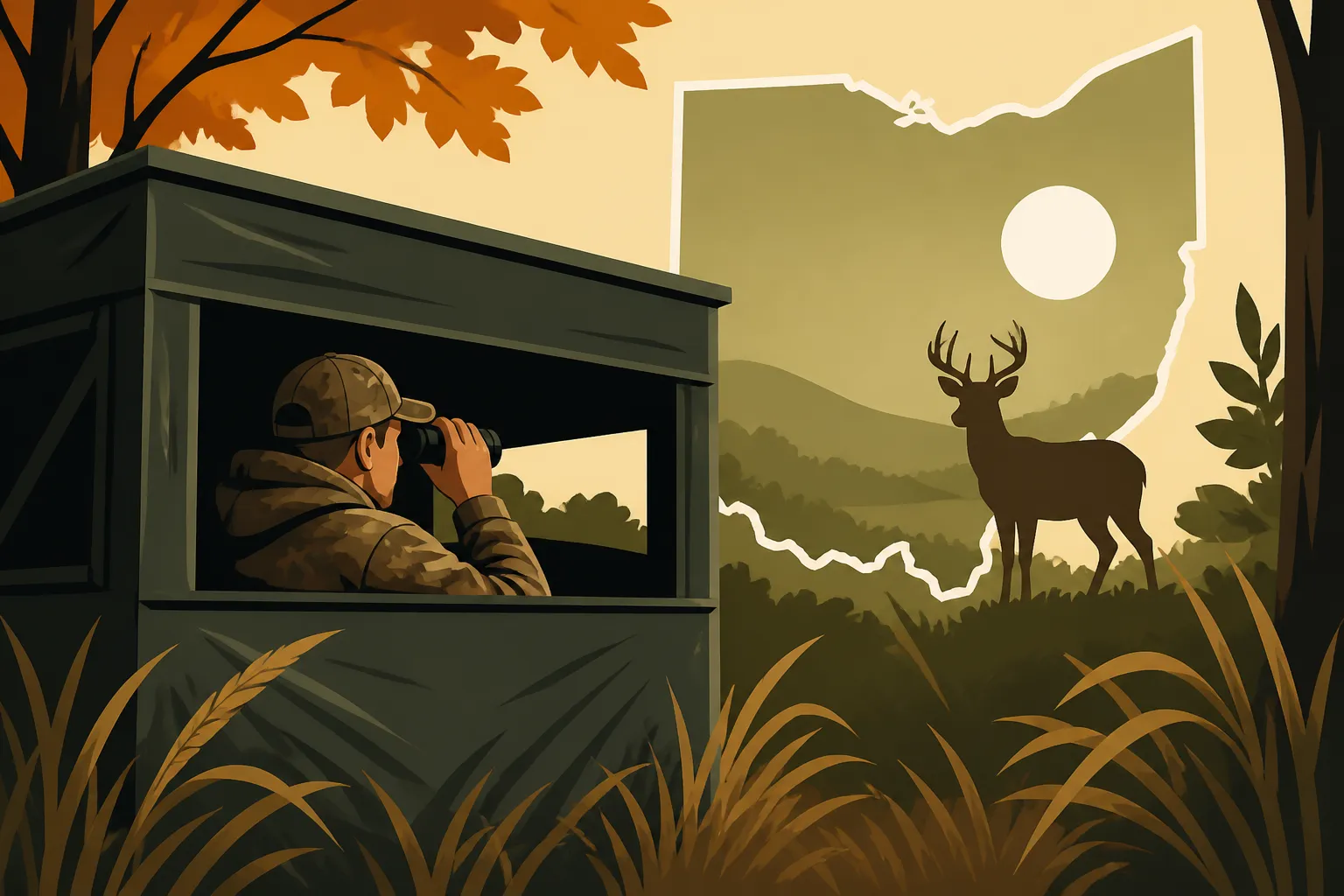
Let's be honest, hunting from the ground in Ohio's thick woods can feel a bit exposed. But a good ground blind changes the game entirely. Its primary advantage is concealment. You're enclosed in a dark space, making it incredibly difficult for deer to pick out your silhouette or subtle movements. This is a massive boon when you're hunting educated public land bucks that have seen it all. You can scratch that itch, shift your weight, or even grab a snack without sending every deer within 100 yards into high alert.
Beyond visual concealment, many modern blinds offer a degree of scent control. While they aren't airtight, the enclosed space can help contain some of your scent, especially when combined with careful wind awareness and good scent-elimination practices. This is crucial on public ground where deer are often more attuned to human odor. Furthermore, ground blinds offer comfort, shielding you from biting winds, rain, or even light snow, which can extend your sit significantly, particularly during the brutal late season or during a drizzly Muzzleloader Deer Hunting in Ohio hunt. The ability to stay comfortable means you stay alert and focused longer, increasing your chances of success. They also provide excellent mobility compared to permanent structures; you can move them daily if needed to adapt to changing deer patterns or wind directions.
Overcoming Public Land Specific Hurdles
While ground blinds offer many benefits, public land introduces some specific challenges. First and foremost are the regulations. Ohio's Division of Wildlife has clear rules about temporary structures on public lands, which we'll dive into later. Suffice it to say, you can't just set one up and leave it indefinitely in most places. This leads to the problem of theft or damage. A ground blind, especially a quality one, is an investment. Leaving it unsecured on public land, even for a short period, can be risky. You'd be surprised what disappears or gets vandalized.
Then there are the setup challenges. Unlike a fixed stand, a ground blind needs to be transported, set up, and often "brushed in" (more on that in a bit) before each hunt or for a short period. This can add time and effort, especially if you're hiking deep into a remote area. Lastly, you're still contending with hunting pressure. Even if your blind offers perfect concealment, other hunters' movements, sounds, or scents can affect deer activity in your area. You need to be extra strategic in your placement to avoid popular trails and common hunting spots. Always assume other hunters are out there, especially during peak seasons like Ohio's Two-Weekend Gun Deer Season.
Strategic Placement and Concealment for Ohio Terrain
The success of your ground blind hunt hinges almost entirely on where and how you set it up. It's not enough to just pop it up in a likely-looking spot; you need to think like a deer and anticipate human activity. Ohio's varied landscapes, from the rolling forested hills of the Wayne National Forest to the agricultural mosaics of northwest Ohio, demand different approaches to blind placement.
Reading the Landscape for Blind Locations
Before you even think about hauling your blind, you need to scout, scout, scout. Use tools like the ODNR's Using the Ohio HuntFish App and reputable mapping platforms like GoHunt to analyze aerial photos. Look for natural funnels where deer movement is constricted. This could be a narrow strip of timber between two open fields, a saddle on a ridge line, or a crossing point on a creek. These are prime locations where you can expect deer to pass within range. For instance, in southeast Ohio's Appalachian foothills, look for ridge saddles, benches, or deep hollows that serve as travel corridors. Reading Aerial Photos for Southeast Ohio Deer can give you an edge here, helping you identify subtle terrain features that influence deer movement.
Field edges are another classic ground blind spot, especially in areas like Hunting Northwest Ohio Farmland Deer where woodlots meet vast agricultural fields. Deer will often stage in the timber before entering fields to feed, or use the edge as a travel route. Position your blind so you have a good view of the transition zone, ideally with the wind in your favor. Thick cover, such as brushy regrowth from a timber cut, briar patches, or dense stands of young pines, can also be excellent. Deer love to bed in these areas, and a well-placed blind can give you an advantage during midday movements. Always consider the sun's position – you don't want to be staring into the rising or setting sun. A great strategy is to scout well in advance, even during the off-season, to identify rub lines, scrape lines, and well-used trails. This pre-season work, detailed in guides like Scouting Ohio Public Land Before Season, is invaluable.
Brushing In Your Blind for Maximum Effectiveness
Once you've identified a promising spot, the work of making your blind disappear truly begins. Simply popping up a blind, even if it's a camouflaged pattern, can stick out like a sore thumb to deer. The key is to "brush it in" using natural vegetation from the immediate area. Think of your blind as a skeleton and the natural cover as its skin. Start by breaking up the hard, unnatural outline of the blind. This means piling branches, logs, and tall grasses around the base and sides. Don't be shy; the more it blends, the better.
Pay particular attention to the corners and top edges where the synthetic material is most visible. Use bungee cords or zip ties to attach leafy branches or evergreen boughs directly to the blind's frame. Make sure your shooting windows are clear, but consider leaving small gaps for minimal visibility and maximum concealment. If you're near a fencerow or a natural edge, you might even be able to integrate the blind directly into the existing cover, as discussed in Brushing In a Blind on a Field Edge. Remember, deer key in on contrasts and straight lines. Your goal is to eliminate those and make your blind look like just another clump of brush or downed timber.
Finally, think about scent. While brushing in helps visually, it also means you'll be handling a lot of natural material. Wear gloves and try to minimize direct contact with your blind and the surrounding vegetation to keep human odor to a minimum. A well-brushed blind, even one that's been in place for a few days, will look more natural and emit less alarming scent than one hastily thrown up on the morning of your hunt.
Rules, Regulations, and Ethical Considerations
Hunting on Ohio public land comes with a clear set of responsibilities and rules, especially when it comes to temporary structures like ground blinds. Ignoring these can lead to fines, loss of hunting privileges, or even negatively impact public access for everyone. It's not just about legality; it's about being a respectful and responsible hunter.
Ohio ODNR Regulations for Ground Blinds
The Ohio Department of Natural Resources (ODNR) has specific rules regarding ground blinds on public hunting areas. Generally, ground blinds on Ohio Wildlife Areas and State Forests are considered temporary structures. This means they cannot be left unattended for extended periods. The rules often state that blinds must be removed within a specific timeframe, usually 24 hours after the close of the hunting day or season, or sometimes only allowed during actual hunting hours. It's crucial to check the specific regulations for the public land you intend to hunt, as rules can vary slightly between Wildlife Areas, State Forests, and National Forests. The ODNR website or the official hunting regulations digest is your go-to source. Our guide on Ground Blind Rules on Ohio Wildlife Areas delves into this in more detail, providing clarity on what's permitted.
Many public lands require blinds to be clearly labeled with the hunter's name and address or an ODNR customer ID number. This helps ODNR staff identify the owner and ensures compliance. Abandoned blinds create litter and can pose hazards to wildlife and other users, so enforcement of these rules is taken seriously. Failure to remove a blind, or leaving it unlabelled, can result in the blind being confiscated and potential fines. Always assume your blind will be inspected, and make sure it meets all legal requirements. It’s also worth noting that no trees or natural vegetation can be cut or damaged to set up or brush in a blind. You must use only deadfall or existing loose vegetation.
Minimizing Your Impact and Respecting Fellow Hunters
Beyond the letter of the law, there are ethical considerations when using a ground blind on public land. The core principle is leave no trace. When you pack out your blind, ensure you take all trash, spent shells, and any flagging tape you used to mark your trail. The area should look exactly as you found it. This respect for the land ensures it remains pristine for others, wildlife, and future generations of hunters.
Another crucial aspect is respecting other hunters. Public land is for everyone. If you arrive at a spot you've scouted and find another hunter already set up, whether in a treestand or another blind, quietly move on. It’s frustrating, but it’s part of public land hunting. Try to avoid setting up so close to another hunter that you interfere with their hunt or put them at risk. Maintain a safe distance and be aware of sight lines and potential shot angles.
Communicating effectively, if necessary, and being mindful of sound can also go a long way. The Goal of using a ground blind is to minimize your presence, not create a new disturbance. This means quiet entry and exit, especially if you're hunting popular areas. A little courtesy goes a long way in ensuring a positive experience for all who enjoy Ohio's wild places. Checking mapping resources like those found on GoHunt can sometimes give you an indication of high-traffic areas, helping you choose more secluded spots.
Maximizing Your Ground Blind Success in Ohio's Diverse Seasons
Ohio's hunting seasons offer a wide range of conditions, from the crisp, often warm days of early archery to the frigid, sometimes snowy grip of late-season gun and muzzleloader hunts. Your ground blind's effectiveness can vary dramatically depending on the time of year, and adapting your tactics is key to consistent success.
Early Season Archery to Late-Season Gun Hunting
During Ohio's Bowhunting Ohio's Long Archery Season, which kicks off in September, ground blinds are fantastic for hunting over early-season food sources like acorn flats or alfalfa fields. In September and early October, deer are still often in summer patterns, focused on food and water. A blind tucked into the edge of a standing cornfield or a woodlot bordering a soybean field can be deadly. The lush foliage of early fall also makes brushing in your blind incredibly easy and effective. You can often conceal it so well that it virtually disappears into the background.
As the season progresses into late October and especially during Hunting the Rut in Early November, deer patterns shift dramatically. Bucks are on the move, chasing does. Ground blinds can be strategically placed along pinch points, ridge-top saddles, or creek bottoms that act as natural travel corridors. During the peak rut, mobility can be key, and a light, easily deployable ground blind allows you to move with the action. If you've been doing your homework using GoHunt to track deer movement patterns or local forum insights, you can often predict where bucks will be cruising.
When the gun seasons roll around, including the critical Hunting the Second Gun Weekend in December, and especially during the Muzzleloader Deer Hunting in Ohio in January, ground blinds become a haven of warmth and concealment against the often harsh Ohio weather. Late-season hunting often revolves around Late-Season Food Sources for Ohio Whitetails. Position your blind near standing corn, cut bean fields with leftover waste grain, or even untouched mast crops if you've had a good acorn year. The stark winter landscape can make concealment challenging, so thorough brushing in is even more vital. A ground blind allows you to sit for longer stretches in comfort, which is often what it takes to catch a late-season deer browsing during daylight hours.
Comfort and Gear for Extended Stays
One of the biggest advantages of a ground blind is the potential for comfort, which translates directly to more time in the woods. Unlike a treestand, you can bring a comfortable chair or stool. There are specific hunting chairs designed for blinds that are quiet and allow for easy maneuvering to shoot. Forget those tiny, uncomfortable fold-up stools; invest in something you can truly sit in for hours.
When the temperatures drop in late fall and winter, portable propane heaters are a game-changer. Brands like Mr. Heater offer safe, portable units that can take the edge off the bitter cold, keeping your hands and feet warm enough to stay focused. Just ensure proper ventilation, as carbon monoxide is a silent killer. Scent control is still paramount, even in a blind. Use activated carbon clothing or ozone generators to minimize your human odor, and always play the wind.
Finally, think about silent gear access. A blind allows you to bring more gear, but you need to be able to access it quietly. Organize your backpack so essential items like calls, binoculars, and snacks are within easy reach without rustling or fumbling. Consider a small, soft-sided cooler for food and drinks to avoid noisy zippers or hard plastic. Even something as simple as a quiet thermos for hot coffee or soup can make a world of difference on a long, cold Ohio morning. GoHunt's gear reviews can often provide insights into durable, quiet hunting accessories that complement a ground blind setup.
| Feature | Ground Blind (Public Land) | Treestand (Public Land) |
|---|---|---|
| Concealment | Excellent; full body, movement forgiving, dark interior. | Good; elevated position breaks silhouette, but movement visible. |
| Scent Control | Decent; enclosed space helps contain scent with proper wind. | Excellent; height takes scent above deer's nose in ideal conditions. |
| Comfort | Excellent; shielded from elements, comfortable chair, heater possible. | Variable; exposed to elements, less comfortable seating. |
| Mobility | Good; can be moved daily, but requires setup/teardown. | Excellent; saddle or climber offers ultimate mobility. |
| Setup Time | Moderate; pop-up, brush-in. | Quick for climber/saddle; fixed stands require more time. |
| View/Visibility | Limited to windows, but good horizontal view. | Excellent; wide vantage point, can see over brush. |
| Safety | Very safe; feet on the ground. | Requires harness, risk of fall. |
| Public Land Rules | Often strict on temporary limits, labeling. | Often strict on temporary limits, tree damage, labeling. |
| Theft Risk | Moderate if left unattended. | Moderate if left unattended. |
Disclaimer
The information provided in this guide is for general informational purposes only and does not constitute legal advice. Hunting regulations, seasons, and rules are subject to change by the Ohio Department of Natural Resources (ODNR) and other governing bodies. It is the responsibility of every hunter to consult the most current Ohio hunting regulations and obtain all necessary licenses and permits before engaging in any hunting activities. Always prioritize safety and ethical hunting practices.