Deer Sleds for Hill Country Snow
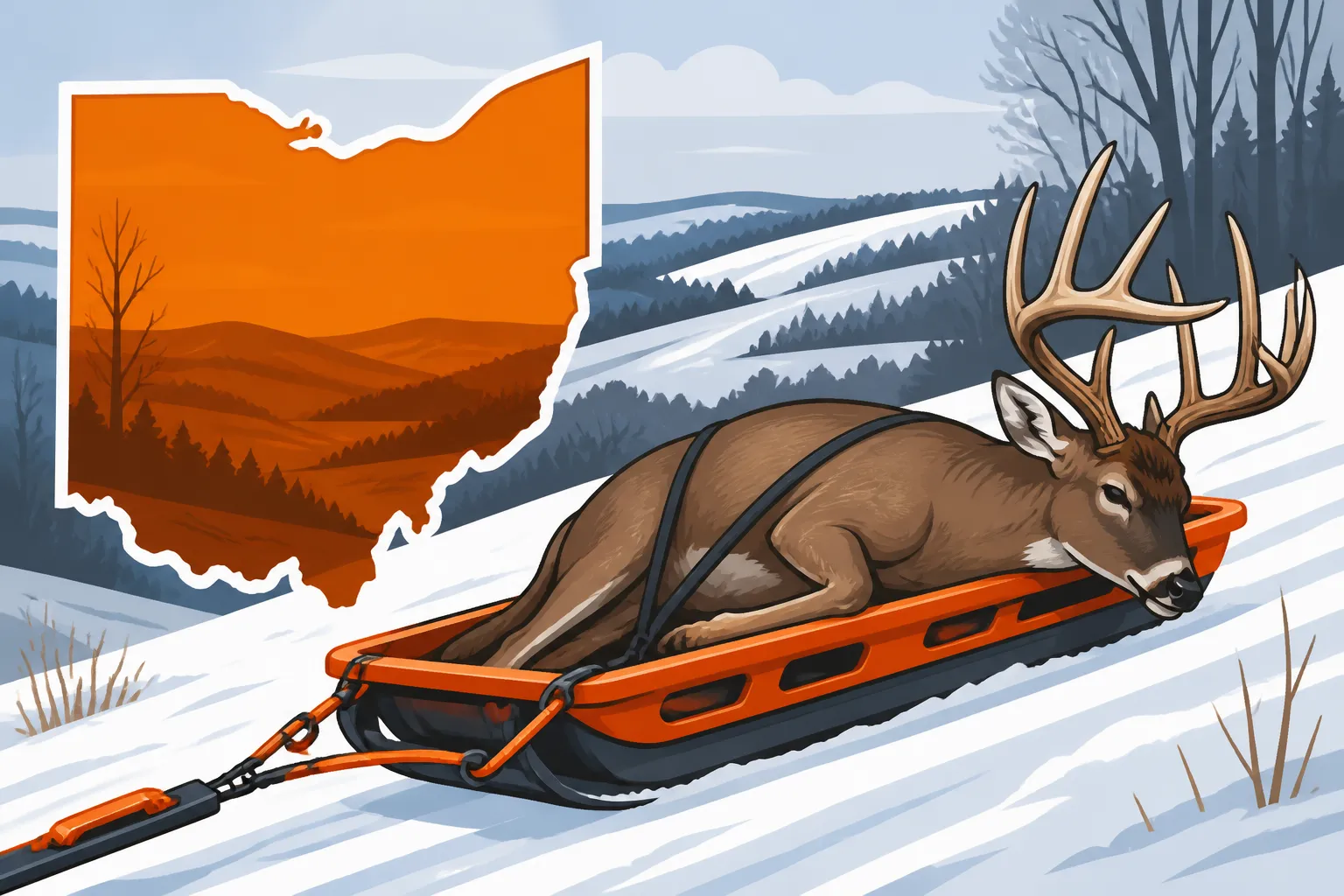
Dragging a deer out of Ohio's woods, especially after a successful hunt in the hill country or during a late-season snowfall, can be one of the most physically demanding parts of the entire experience. The combination of steep terrain, thick underbrush, and the sheer dead weight of a whitetail can turn a moment of triumph into an exhausting, sweat-soaked ordeal. This guide is all about making that arduous journey a little easier by exploring the benefits and effective use of deer sleds when winter blankets the Buckeye State.
The Challenge of Deer Recovery in Ohio's Winter Hills
Anyone who's ever tagged a deer in the steep ravines and ridges of Appalachian Ohio knows the real work often begins after the shot. Now, add a layer of snow and ice to that equation, and you've got a whole new level of challenge. It’s not just about getting the deer out; it’s about doing it safely, efficiently, and without completely wearing yourself out or damaging your valuable gear.
Why Snow Creates Unique Problems
Snow can be a double-edged sword for hunters. On one hand, a fresh dusting is incredible for tracking. You can often follow a blood trail or even just fresh deer sign with relative ease, leading you right to your prize. But once you've found your deer, that same snow becomes a monumental obstacle. Imagine trying to pull a 150-pound buck up a 30-degree incline through six inches of wet, heavy snow. The friction is immense, the footing is treacherous, and every step feels like you're fighting gravity with an anchor tied to your waist.
In areas like the Wayne National Forest or the rugged Shawnee State Forest, the ground is rarely flat. You’ll encounter fallen logs, rock outcroppings, and deep drainage ditches, all of which get covered and obscured by snow. A traditional drag rope can snag on anything and everything, constantly jerking you off balance and making forward progress a frustrating start-and-stop affair. Plus, if the snow isn’t deep enough to offer good flotation, or if it’s crusted over, you might find yourself breaking through with every step, sinking deep and losing valuable momentum. It's a far cry from pulling a deer across a frozen, smooth field edge in Northwest Ohio.
The Strain on Your Body and Gear
The physical toll of dragging a deer through snowy, hilly terrain is no joke. It's a full-body workout that can leave you sore for days, or worse, lead to strains, sprains, or even falls. When you're constantly struggling to pull a heavy animal, your back, shoulders, and knees take the brunt of the abuse. The exhaustion can set in quickly, especially if you're alone or your hunting partners aren't equipped to help effectively. This isn't just about being tired; it can compromise your judgment and safety, particularly if you're navigating unfamiliar terrain in fading light. Many hunters have faced the daunting task of Dragging a Deer Off a Steep Ridge, and it's a memory that often comes with grimaces.
Beyond your body, your gear also suffers. A deer dragged directly on the ground will pick up mud, snow, twigs, and leaves, not to mention getting scraped up. This can make the field dressing process messier and potentially contaminate the meat if not handled carefully. Your hunting clothing, especially the knees and elbows, can take a beating, and your boots might get packed with snow and ice, leading to cold, wet feet. Even your rifle or bow can get caked with debris if you're not careful. Investing in smart recovery tools is just as important as your hunting Packs for a Day on Wayne National Forest or Insulated Boots for All-Day Sits for those long, cold days.
Introducing the Deer Sled: Your Winter Recovery Workhorse
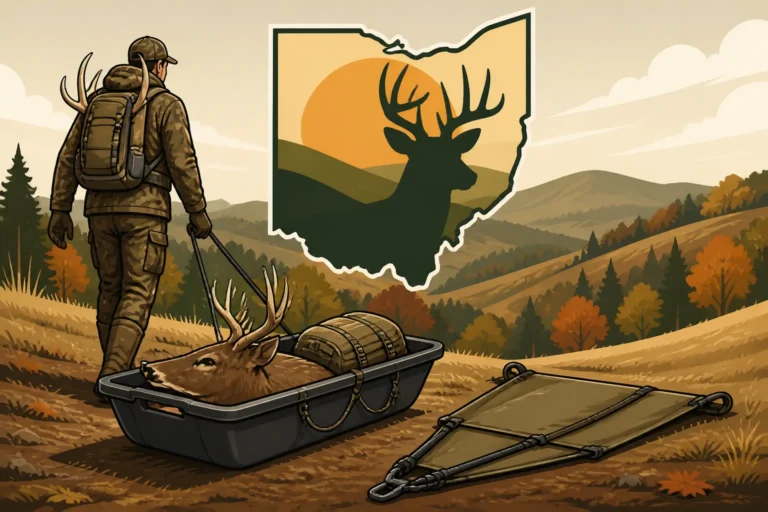
This is where a good deer sled really shines. It's not just a piece of plastic; it's a tool designed to drastically reduce friction, protect your harvest, and make the brutal task of extraction significantly easier on your body. Think of it as a low-tech, high-efficiency solution for a very common hunting problem.
What Makes a Good Deer Sled for Ohio Conditions
When you're looking for a deer sled that can stand up to Ohio's varied winter landscape, there are a few key features you'll want to prioritize:
- Durable Materials: Most quality deer sleds are made from heavy-duty, high-density polyethylene (HDPE) or similar rugged plastics. This material is not only incredibly tough but also flexible, allowing it to bend and slide over obstacles without cracking in freezing temperatures. You don't want a flimsy sled that will shatter the first time it hits a hidden rock or frozen stump.
- Smooth Bottom, High Sides: The smoother the bottom of the sled, the less friction it will generate against snow, ice, or even wet ground. High sides are crucial for keeping the deer contained, especially if you're traversing uneven terrain or side-hilling. They prevent legs from flopping out and snagging on brush, which can instantly stop your progress.
- Attachment Points: Look for reinforced grommets or pre-drilled holes around the perimeter of the sled. These are essential for attaching your drag rope or harness, and for securing the deer to the sled itself. Good attachment points mean you can distribute the pulling force evenly and prevent the sled from twisting or flipping.
- Size Considerations: For an average Ohio whitetail, a sled roughly 5 to 6 feet long and 2 to 3 feet wide is usually a good bet. This size provides enough room for a buck or doe without being so unwieldy that it's difficult to maneuver through tight timber or dense cover. Consider the largest deer you expect to harvest and buy a sled that can comfortably accommodate it.
Types of Deer Sleds and Their Advantages
Not all deer sleds are created equal, and understanding the different types can help you choose the best one for your typical hunting scenarios in Ohio.
| Sled Type | Description | Key Advantages | Best For |
|---|---|---|---|
| Basic Flat Sled | A simple, rectangular or tapered sheet of durable plastic, often with pre-drilled holes for a rope. Very lightweight and flexible. | Most affordable, easiest to carry in a pack, glides well over smooth snow. | Short drags, relatively flat or gentle slopes, compact storage. |
| Contoured/Rigid Sled | Features molded sides, a slightly more rigid structure, and sometimes an upturned nose. Offers better containment and durability. | Keeps deer more secure, better for rough terrain, less likely to snag, can be pulled by more than one person. | Longer drags, varied terrain, situations where keeping the deer clean is paramount. |
| Sled with Harness | May be a basic or contoured sled that comes with, or is easily adaptable to, a padded shoulder or waist harness. | Distributes weight, reduces fatigue, frees hands, allows for more controlled pulls. | Steep hills, solo hunting, very long drags, maximizing personal comfort. |
| Game Cart/Sled Hybrid | A more robust option, often with a rigid frame and wheels, but designed to also function as a sled by removing wheels or flipping to a skid base. | Versatile for different conditions (wheeled on dry ground, sled on snow), often has higher capacity. | Hunters with diverse terrain/seasonal needs, large animals, hauling extra gear. |
For many Ohio hunters tackling snowy hills, a contoured or rigid sled, perhaps combined with an aftermarket harness, strikes the best balance of performance and practicality. These types handle the rough and tumble of frozen ravines and dense thickets better than a simple sheet of plastic, providing the much-needed stability when you're Tracking a Deer in Fresh Ohio Snow through challenging cover.
Maximizing Efficiency: Using Your Deer Sled Effectively in Snowy Terrain
A deer sled is only as good as how you use it. Proper preparation and technique can turn a grueling extraction into a manageable task, even in the most challenging winter conditions.
Preparing Your Deer for the Sled
Before you even think about pulling, take a few minutes to prepare your deer. If you've just made a recovery on a cold January morning, you'll want to get to work quickly. Field Dressing a Deer in Cold Weather is often the first step, as it lightens the load and begins the cooling process for the meat. Once field dressed, you have a couple of options for the sled:
- Securing the Deer: Lay the deer flat on its back or side in the sled. Position it so its head is at the front (the pulling end) of the sled. Use additional ropes or bungee cords through the sled's attachment points to secure the deer's legs and body. This is crucial for preventing the deer from shifting, which can cause the sled to become unbalanced or snag. Imagine a leg flopping out and getting caught on a tree stump — instant stop and frustration!
- Preventing Snags: If the deer's antlers are particularly wide or sharp, consider securing them tightly to the deer's body or covering the tips with some tape or old rags to prevent them from catching on brush as you navigate tight spaces. This is especially important when you’re pushing through thick briar patches or tight saplings that are common in areas like Zaleski State Forest or Tar Hollow State Forest.
Navigating Uphill, Downhill, and Across Slopes
This is where technique truly matters. Ohio's hill country isn't forgiving, and each type of slope requires a slightly different approach:
- Uphill: This is generally the toughest. For steep uphill pulls, distribute the weight evenly and use short, steady pulls rather than long, jerky ones. If possible, angle the sled slightly to the side to "switchback" up the slope, much like you would hike a trail. This reduces the direct grade you're pulling against. Teamwork is invaluable here; one person can pull from the front with a harness, while another pushes or guides from the rear. Dig your feet in, use trees for leverage if safe, and take frequent, short breaks.
- Downhill: Surprisingly, downhill pulls can also be tricky. The sled can gain momentum quickly, potentially overpowering you and dragging you down the hill. For steep descents, position yourself behind the sled, controlling its descent with ropes wrapped around your waist or over your shoulders. This allows you to act as a brake. Guide the sled slowly, making sure you maintain control. If it's a gentle slope, you can still pull from the front, but stay alert to prevent it from outrunning you.
- Across Slopes (Side-hilling): This requires caution. The sled will naturally want to slide downhill. Keep your body on the uphill side of the sled and use a shorter rope to maintain close control. If the slope is too steep or icy, you might need to zig-zag across it, descending gradually rather than attempting a direct side-hill traverse. Using a mapping tool like GoHunt beforehand to identify less severe contours or old logging roads can save you a lot of effort here. Knowing the terrain before you even get out there is half the battle!
The Importance of a Good Harness System
While a simple rope is better than nothing, a dedicated harness system for your deer sled is a game-changer, especially for solo hunters or those tackling serious hills. Here's why:
- Weight Distribution: Pulling with just your hands and arms focuses all the strain on your upper body and lower back. A well-designed harness (either a shoulder harness or a padded waist belt) distributes the pulling force across your core and stronger leg muscles. This significantly reduces fatigue and minimizes the risk of back injury.
- Hands-Free Operation: With a harness, your hands are free to maintain balance, push off trees, carry your rifle or bow, or operate a flashlight if Blood Trailing After Dark in Ohio. This can be a huge safety advantage, particularly on tricky terrain or in low light.
- Improved Control: A harness allows for a more controlled, steady pull. You can use your entire body weight, leaning into the pull, rather than just relying on arm strength. This makes it easier to keep the sled tracking straight and to negotiate obstacles. Many hunters underestimate the strain of recovery until they’re trying to move a deer during Muzzleloader Tactics in January Cold, when cold muscles are already protesting.
You can often buy a standalone sled harness that attaches to most standard deer sleds, or look for sleds that come with one. It's a small investment that can make a monumental difference in your post-harvest experience, particularly when you're facing the kind of steep, snowy ground found throughout much of southeastern Ohio.
Beyond the Snow: Other Uses for Your Deer Sled in Ohio
While deer sleds are undeniably fantastic for snowy deer recovery, their utility isn't limited to just winter whitetail hunts. These versatile pieces of gear can be a valuable addition to your arsenal throughout the entire hunting and scouting season in Ohio.
Hauling Gear to and From Your Stand
Think about those long walks into your favorite public land spots, perhaps deep in the woods of Brush Creek State Forest or up a ridge in the Athens Unit of the Wayne National Forest. You might be carrying a heavy treestand, multiple climbing sticks, a large ground blind, buckets of bait (where legal), or even a bag of mineral supplements for a camera site. Trying to backpack all that in one trip can be exhausting and cumbersome.
A deer sled, even on dry ground (especially if it's muddy, wet, or has a lot of leaf litter), can make these trips significantly easier. You can load it up with your gear, secure everything with bungee cords, and pull it behind you. The smooth bottom will glide over many natural obstacles better than trying to wrestle a treestand through the brush on your back. This is particularly useful for those early season scouting trips or when you’re setting up new stands before When Ohio's Archery Season Opens. A good scouting regimen, perhaps planned out with detailed satellite imagery from a tool like GoHunt, can help you identify routes where a sled might be useful even without snow.
Consider these scenarios:
- Pre-season stand placement: Hauling in a big lock-on stand, a full set of climbing sticks, and all your tools.
- Ground blind deployment: Moving a bulky pop-up blind and its accessories to a field edge for Hunting a Standing Soybean Field.
- Firewood for camp: If you're setting up a primitive camp during deer season, a sled can easily transport firewood from a downed tree without splintering your hands or overloading your pack.
- Retrieving other game: While primarily for deer, a sled can also be handy for recovering a large wild turkey after a successful Spring Turkey Hunting in Ohio hunt, or even multiple smaller game animals like coyotes or a pile of pheasants during Pheasant Hunting Ohio Farm Country.
Protecting Your Harvest in Warmer Weather
Even when there's no snow on the ground, a deer sled offers benefits for meat care and cleanliness. Imagine a warm October archery day when you've just taken down a buck, and the ground is covered in wet leaves, mud, or thick briars. Laying your freshly field-dressed deer directly on that surface can lead to:
- Contamination: Mud, leaves, ticks, and other debris can easily adhere to the carcass, making it harder to clean thoroughly later and potentially impacting meat quality.
- Heat Retention: Laying a deer directly on warm ground can hinder the cooling process, which is critical for good venison.
By placing your deer in a sled, you create a barrier between the carcass and the ground. This keeps the deer cleaner, reduces the amount of natural debris it picks up, and slightly elevates it, allowing a little more airflow underneath to aid in cooling. While not a substitute for a cooler, it's an important step in maintaining the quality of your harvest, especially if you have a long drag ahead. This attention to detail contributes to better venison, making all that hard work worthwhile when you're Butchering a Deer at Camp later. Even in a situation where you're just moving a deer from a field edge to your truck, a sled can simplify the process and ensure a cleaner transport.
No matter the season, a deer sled is an underappreciated piece of gear that can save your back, protect your harvest, and generally make the logistical challenges of hunting in Ohio's diverse landscapes a little less daunting.
Disclaimer
This article is for general informational purposes only and does not constitute professional advice. Laws, prices and regulations vary by location and change over time. Consult a qualified professional for guidance on your specific situation.