Shotguns for Ohio Squirrel and Rabbit
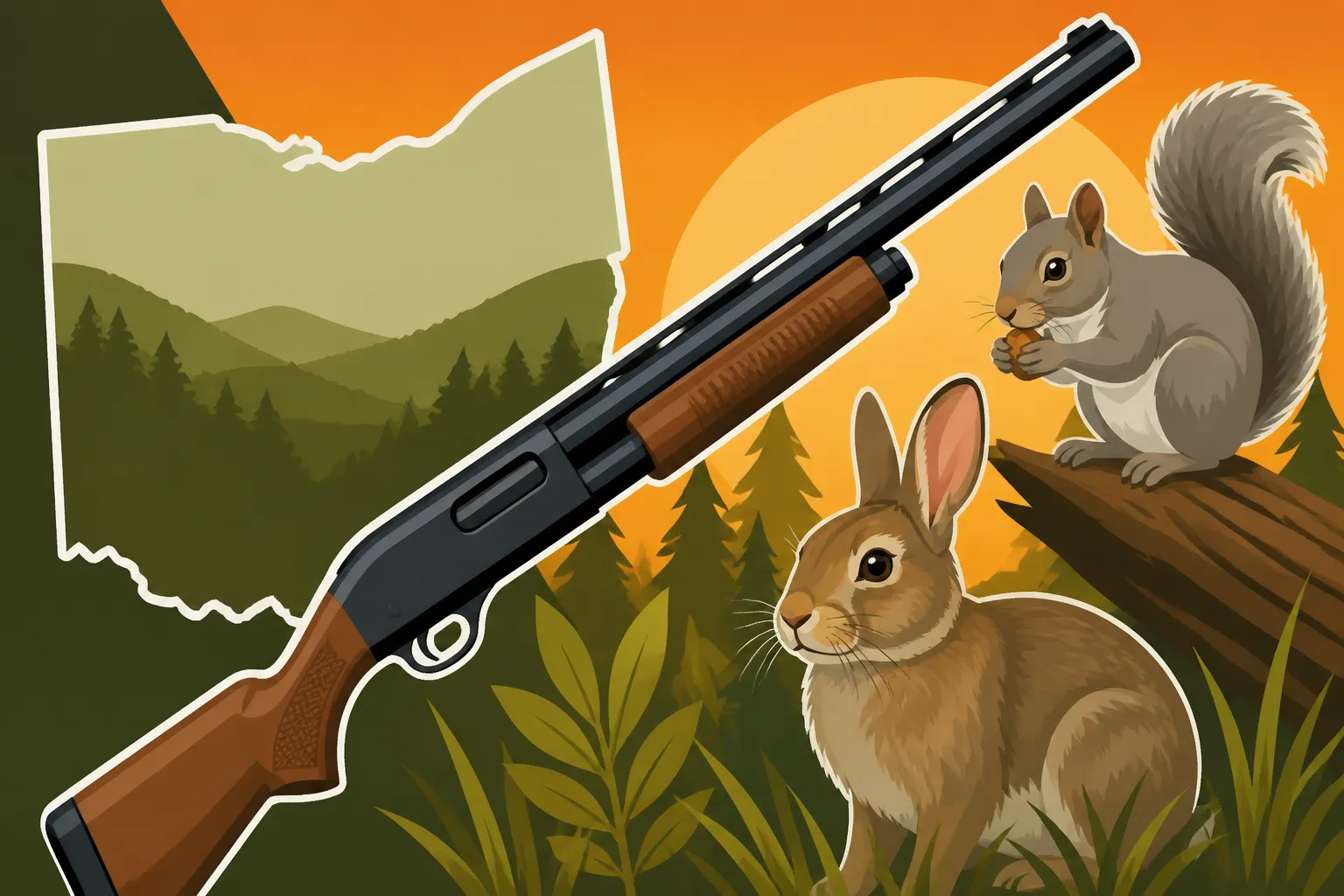
There’s nothing quite like the crack of a .22 or the familiar thud of a shotgun in the crisp Ohio woods, especially when you’re out chasing squirrels and rabbits. But if you’ve ever found yourself staring at a wall of shotguns, wondering which one is truly the best fit for Ohio's unique blend of farmland fencerows and deep hardwood forests, you're not alone. Choosing the right scattergun for quick-moving small game can feel overwhelming, but this guide is here to break down everything you need to know, from gauge to choke, so you can head into the field with confidence.
Understanding Ohio Small Game Hunting
Ohio offers a fantastic opportunity for hunters to get out and enjoy the woods and fields, even outside of deer season. Small game hunting, particularly for squirrels and rabbits, is a deeply rooted tradition here, providing both a challenge and delicious table fare. It's a great way to introduce new hunters to the sport or for seasoned veterans to spend time in nature.
The Thrill of Squirrel Hunting in Ohio's Woods
Picture this: it’s an early autumn morning in an Ohio oak stand, the leaves are just starting to turn, and the air is cool and crisp. You hear the tell-tale bark of a squirrel, then a rustle in the canopy above. Squirrel hunting is often about patience, keen observation, and quick reflexes. You might be still-hunting, slowly slipping through the woods, or sitting quietly by a den tree, waiting for movement. Ohio's abundant oak, hickory, and beech groves provide ideal habitat for both gray and fox squirrels. The challenge comes in picking them out from the dappled light and thick foliage, and then making a clean shot before they vanish. It’s a game of hide-and-seek that hones your shooting skills and connects you deeply with the forest. For many, it's where their hunting journey truly begins, offering plenty of action without the often-intense pressure of deer season. When the leaves are on, those squirrels can be tough to spot, making a shotgun the perfect tool for getting enough pellets on target through the brush. You can learn more about Squirrel Hunting Ohio Hardwoods.
Chasing Cottontails in Ohio's Fencerows and Brush
Rabbit hunting in Ohio is a whole different beast, or should I say, bunny. While squirrel hunting often involves slow, deliberate movements, rabbit hunting is typically a fast-paced affair, especially if you're hunting with dogs. Imagine a snowy winter morning, walking along a thick fencerow or through a briar patch, your beagle's excited barks indicating a hot trail. Suddenly, a cottontail bursts from cover, zigging and zagging through the underbrush. This requires a shotgun that's quick to shoulder and delivers a wide, effective pattern at close range. Ohio's agricultural landscape, with its hedgerows, brushy creek bottoms, and abandoned farmsteads, provides excellent habitat for cottontails. It’s an active hunt that can involve a lot of walking, flushing game from heavy cover. Success often hinges on being ready for a sudden eruption of fur and making a decisive shot. The sheer adrenaline of a flushing rabbit makes it incredibly exciting, and the comradery of a rabbit hunt with friends or family, perhaps with a well-trained dog, creates memories that last a lifetime. Check out Rabbit Hunting Ohio Fencerows for more tactical advice.
Legalities and Season Dates for Small Game
Before you even think about which shotgun to bring, it’s absolutely crucial to understand Ohio’s hunting regulations. Ignorance of the law is never an excuse, and staying legal ensures you're doing your part to keep our hunting heritage strong. Ohio generally has generous seasons for small game, often extending from early fall well into winter. Squirrel season usually kicks off in late summer or early fall, offering a great way to shake off the rust before deer season. Rabbit season typically follows shortly after, running through the colder months. Always make sure you have the proper licenses and permits. You'll need an Ohio hunting license, and while there aren't specific permits solely for squirrels and rabbits like there are for deer or turkey, understanding the general license requirements is key. The Ohio Department of Natural Resources (ODNR) publishes a comprehensive hunting and trapping digest each year, which is your go-to source for exact season dates, bag limits, and any special regulations for specific wildlife areas. Always double-check this digest before heading out, as dates and rules can change. You can also explore Ohio Small Game and Upland Bird Seasons for a broader overview and Ohio Resident Hunting License Options to ensure you're squared away with your permits.
Gauge Matters: Choosing Your Shotgun Caliber
When it comes to shotguns, the gauge is perhaps the most fundamental decision you’ll make. It dictates everything from the amount of shot you can send downrange to the recoil you’ll experience. For small game in Ohio, hunters typically gravitate towards a few popular gauges, each with its own set of advantages and considerations.
The Versatility of the 12 Gauge for Small Game
The 12 gauge is by far the most popular shotgun gauge in America, and for good reason. Its immense versatility makes it a solid choice for just about any shotgun hunting scenario, including squirrels and rabbits. While some might argue it's "overkill" for such small game, the ability to throw a substantial payload of shot means you get a dense pattern, which can be a real advantage when a squirrel is darting through branches or a rabbit explodes from thick cover. You have a wider margin for error, and the larger payload can help penetrate light brush more effectively than smaller gauges.
However, there's a trade-off. A 12 gauge generally delivers more recoil than its smaller counterparts, which can be less pleasant for new hunters or during extended shooting sessions. Modern ammunition, particularly lighter game loads, has certainly helped mitigate this, but it's still something to consider. The sheer variety of 12-gauge ammunition available is unmatched, offering everything from light target loads to heavy magnum waterfowl loads. This means you can easily find the perfect squirrel or rabbit load without much hassle, and your 12 gauge can pull double duty for nearly every other hunting season in Ohio.
The Nimble 20 Gauge for Agile Hunters
If the 12 gauge is the workhorse, the 20 gauge is the nimble athlete. It’s an incredibly popular choice for small game, especially among hunters who prioritize lighter weight, reduced recoil, and quick handling. A 20 gauge shotgun is typically lighter and more compact than a 12 gauge, making it a joy to carry through the woods for hours on end, whether you’re still-hunting squirrels or busting brush for rabbits. The reduced recoil also means it’s more comfortable to shoot, allowing for quicker follow-up shots if needed and making it an excellent option for younger hunters or those sensitive to recoil.
Don't let the smaller size fool you, though; a 20 gauge, when paired with the right choke and ammunition, is more than capable of cleanly taking squirrels and rabbits. Its shot payload is certainly less than a 12 gauge, but it's still substantial enough to create a lethal pattern at typical small game ranges. The key is to be a bit more precise with your aiming and perhaps restrict your shots to slightly closer distances. Many seasoned small game hunters swear by the 20 gauge, finding its balance of power and portability to be perfectly suited for the fast-paced, close-quarters nature of Ohio small game.
The Classic .410 Bore for Close Encounters
The .410 bore is often seen as the smallest of the common shotgun gauges, and it truly shines in specific scenarios for small game. It’s incredibly light, has minimal recoil, and offers a unique challenge that some hunters relish. For very close-range shots, especially on squirrels in tight timber or rabbits bursting from under your feet, the .410 can be effective. It typically throws a much smaller payload of shot compared to the 12 or 20 gauge, meaning its effective range is significantly shorter, and its pattern is much thinner.
This makes the .410 a fantastic choice for teaching new hunters or for those who truly want to test their shooting skills. The challenge of connecting with a smaller pattern at close range can be very rewarding. However, it’s not for everyone, nor is it the most forgiving gauge. You need to be extremely disciplined with your shot distances and placement. For the experienced hunter seeking a nostalgic experience or the patient mentor introducing a beginner, the .410 offers a charming, classic approach to small game hunting. Just be aware of its limitations and practice extensively to understand its effective range.
Youth Hunters and Smaller Gauges
Introducing youth hunters to the field is one of the most rewarding aspects of the sport, and choosing the right shotgun is paramount to their success and enjoyment. This is where smaller gauges, particularly the 20 gauge and even the .410, truly shine. A young hunter’s first experience with a shotgun should be positive, not a jarring ordeal due to excessive recoil or a gun that’s too heavy to shoulder comfortably.
The 20 gauge is often considered the ideal starting point for youth hunters. Its reduced recoil compared to a 12 gauge, combined with a lighter overall firearm, allows them to manage the gun more effectively, focus on their shooting fundamentals, and avoid developing a flinch. Many manufacturers offer youth models in 20 gauge, featuring shorter stocks and lighter designs to better fit smaller frames. While the .410 presents a steeper learning curve due to its smaller pattern, it's also an option for very young or recoil-sensitive shooters, provided they are taught proper shot placement and range estimation. The goal is to make their early hunting experiences fun and build confidence, which a properly fitted and appropriately gauged shotgun will certainly do.
Here's a quick comparison of the common gauges for small game:
| Gauge | Pros | Cons | Ideal For |
|---|---|---|---|
| 12 Gauge | Most versatile, dense patterns, wide ammo availability. | More recoil, often heavier. | All-around small game, experienced hunters. |
| 20 Gauge | Lighter, less recoil, good patterns, easy to carry. | Slightly less shot than 12ga, less common ammo. | Youth hunters, those sensitive to recoil, fast-paced hunting. |
| .410 Bore | Very light, minimal recoil, unique challenge. | Smallest shot payload, very tight pattern, short effective range. | Beginners (with close supervision), expert shots, nostalgic hunting. |
Shotgun Action Types for Small Game
Beyond the gauge, the way your shotgun operates—its action type—will greatly influence your experience in the field. Each action has its own feel, its own rhythm, and its own set of advantages and disadvantages for hunting Ohio squirrels and rabbits.
Pump-Action Reliability and Affordability
The pump-action shotgun is a beloved classic for many reasons, not least of which are its rugged reliability and generally affordable price point. This is the shotgun many of us grew up with, the one that makes that satisfying "shuck-shuck" sound as you cycle a fresh round into the chamber. For small game hunting in Ohio, a pump-action is an excellent choice. They are known for their robust construction, capable of handling tough field conditions, whether you're slogging through muddy creek bottoms or navigating dense briar patches.
The manual operation of a pump-action means fewer moving parts compared to a semi-automatic, which often translates to greater dependability in adverse weather or when a gun gets a bit dirty. While not as fast for follow-up shots as a semi-auto, a practiced hunter can cycle a pump-action surprisingly quickly. Their typically lower cost also makes them accessible, leaving more room in your budget for ammunition or other essential gear. The pump-action truly embodies a practical, no-nonsense approach to small game hunting.
Semi-Automatic Speed and Reduced Recoil
For hunters who prioritize speed and reduced recoil, the semi-automatic shotgun is a fantastic option. These firearms use the energy from a fired shell to automatically eject the spent casing and load a new one from the magazine, often allowing for extremely fast follow-up shots. When a rabbit bursts from cover and jukes around a tree, or a squirrel gives you a fleeting second shot opportunity, that quick second trigger pull can make all the difference.
Another significant advantage of semi-automatics is their ability to absorb some of the recoil, making them much more comfortable to shoot than a comparable pump-action or break-action. This can be a huge benefit for extended hunts, or for hunters who are sensitive to recoil. While generally more expensive and potentially a bit more complex to clean than a pump, modern semi-autos are incredibly reliable. Their speed and comfort can lead to more effective and enjoyable days in the field, especially for hunters who prefer to get multiple shots off quickly at fast-moving targets. They might weigh a little more, but for some, the benefits outweigh the extra heft.
Over/Under and Side-by-Side: Traditional Choices
For those who appreciate craftsmanship, tradition, and a certain elegance in their firearms, the over/under (O/U) and side-by-side (SxS) break-action shotguns are timeless choices. These guns typically feature two barrels, allowing for two immediate shots without needing to cycle an action. This can be particularly useful for small game where you might encounter a pair of rabbits, or miss with your first shot on a squirrel. The ability to load two different choke and shot combinations (e.g., a more open choke in the first barrel for close shots and a tighter choke in the second for longer shots) adds a layer of versatility.
Both O/U and SxS shotguns are known for their excellent balance and intuitive pointing characteristics, often feeling like an extension of the shooter's arm. They are generally lighter than semi-automatics and often pumps, making them easy to carry all day. While they require manual reloading after two shots, the break-open action is simple and reliable. They tend to be on the higher end of the price spectrum, but for many, the aesthetic appeal, classic feel, and sheer joy of carrying a finely crafted double gun into the Ohio woods make them well worth the investment.
Single-Shot Simplicity for Beginners
The single-shot shotgun often gets overlooked in today's world of multi-round firearms, but for what it lacks in capacity, it more than makes up for in simplicity, affordability, and the valuable lessons it teaches. For a true beginner, or a young hunter just starting out, a single-shot can be an invaluable tool. It forces them to focus on making that first shot count, emphasizing patience, accuracy, and proper gun handling over the ability to spray multiple rounds.
These guns are incredibly lightweight and easy to manage, making them perfect for smaller frames or those who want the absolute minimum to carry. They are also typically the most affordable option on the market, which is great for new hunters who aren't ready to commit to a more expensive firearm. While you only get one shot before needing to manually reload, for methodical squirrel hunters who take their time, or for a rabbit hunter who knows their shot will be close, it's often all you need. The single-shot shotgun strips away complexity, allowing the hunter to truly connect with the fundamentals of the sport.
Barrels, Chokes, and Ammunition Selection
Once you've settled on a gauge and action type, the next layer of customization comes with your barrel, choke, and ammunition. These three elements work together to determine how effectively your shotgun patterns its shot and how successful you’ll be in the field.
Barrel Length for Maneuverability and Patterning
The length of your shotgun barrel plays a significant role in how the gun handles and, to a lesser extent, how it patterns. For small game hunting, where shots are often taken at close to medium ranges and in relatively dense cover, maneuverability is key.
Shorter barrels, typically in the 22-inch to 26-inch range, are generally preferred for squirrel and rabbit hunting. They make the gun lighter and much easier to swing and point quickly in tight spaces, like thick woods or heavy brush. Imagine trying to pivot quickly for a flushing rabbit in a dense fencerow with a long 30-inch barrel – it can be cumbersome. While historically longer barrels were thought to improve patterning and velocity, modern ammunition and choke technology have largely negated this. A well-designed 24-inch barrel with the right choke will pattern just as effectively as a 28-inch barrel for small game. The crucial factor is finding a length that feels balanced and allows you to react instinctively to fast-moving targets.
Choke Tubes: Customizing Your Shot Pattern
Choke tubes are one of the most brilliant innovations in shotgunning, allowing you to control the spread of your shot pattern. For small game, this customization is incredibly valuable. Chokes essentially constrict the barrel at the muzzle, forcing the shot column into a tighter group as it leaves the barrel. The more constriction, the tighter the pattern and the longer its effective range.
Common choke designations, from most open to tightest, are: Cylinder (Cyl), Skeet (SK), Improved Cylinder (IC), Modified (Mod), Improved Modified (IM), and Full (F). For squirrel and rabbit hunting, you'll generally want more open chokes due to the close ranges involved. An Improved Cylinder or Modified choke is a fantastic starting point for most small game scenarios. It provides a broad enough pattern to hit moving targets easily but still retains enough density for clean kills. For very close-quarters hunting, like jumping rabbits in thick brush, a Skeet or Cylinder choke might be ideal. Conversely, if you anticipate longer shots on high-treed squirrels, a Modified or even an Improved Modified might be beneficial. Experimenting with different chokes and ammunition loads at the shooting range will show you exactly how your shotgun patterns, which is invaluable information for the field. You can read more about Turkey Chokes and Patterning for a deeper dive into how chokes work.
Shot Size and Load for Squirrel and Rabbit
Choosing the right shot size and load is just as important as selecting the right gauge and choke. The goal is to deliver enough pellets with sufficient energy to cleanly dispatch your quarry without excessive damage to the meat. For squirrels and rabbits, you're generally looking at smaller shot sizes.
- Squirrels: For bushy-tails, common choices range from #4 to #6 lead shot. Larger shot like #4 or #5 can be good for longer shots on higher squirrels, providing more energy per pellet. #6 shot, being smaller, offers more pellets per shell, creating a denser pattern, which is great for closer shots or when squirrels are partially obscured by leaves. Many hunters find #5 shot to be a perfect all-around compromise for squirrel.
- Rabbits: Cottontails are typically hunted at closer ranges than squirrels, and they are not as tough-skinned. #6 or #7.5 lead shot are excellent choices. The higher pellet count of #7.5 shot creates a very dense pattern at close range, which is ideal for quick, flushing rabbits. Some hunters prefer #6 for a bit more knockdown power, especially if they anticipate slightly longer shots or denser brush penetration.
When selecting loads, lighter game loads or target loads (often 1 to 1 1/8 ounces for 12 gauge, or 7/8 to 1 ounce for 20 gauge) are usually more than sufficient. Avoid heavy magnum loads, as they are unnecessary for small game, produce excessive recoil, and can damage meat. Non-toxic shot is not required for small game on most Ohio public lands unless you're hunting within specific waterfowl areas where it's mandated, so lead shot is generally fine.
Features That Enhance Your Ohio Small Game Hunt
A shotgun is more than just a barrel and a stock; certain features can significantly enhance your hunting experience, making it more comfortable, efficient, and ultimately, more successful.
Sights and Optics for Fast Target Acquisition
For most traditional small game hunting with a shotgun, the standard bead sight found on the end of the barrel is perfectly adequate. Shotguns are designed to be pointed rather than aimed precisely, and the wide shot pattern does the work. However, some hunters find that certain enhancements can improve their aiming, especially in specific scenarios.
- Fiber Optic Sights: Replacing the traditional metal bead with a bright fiber optic sight can make the front sight much more visible, especially in low light conditions common in dense timber or early morning hunts. This can help with faster target acquisition, drawing your eye quickly to the end of the barrel.
- Red Dot Sights: While less common for small game, a red dot sight can be a game-changer for some, particularly if you're struggling with traditional sights or have certain vision impairments. Red dots allow for incredibly fast target acquisition with both eyes open, and they excel in low light. They are often mounted on a rail system and can be zeroed for specific distances, ensuring precise shot placement. While a red dot might seem like overkill for a rabbit, for a squirrel hunter trying to pick a head shot through branches, it can offer a distinct advantage.
Ultimately, the best "sight" for a shotgun is practice. Learning to instinctively point your shotgun where you want the shot to go is paramount, but these additions can certainly help refine your accuracy.
Stock Materials and Fit for Comfort
The stock of your shotgun—the part you hold and shoulder—is critical for comfortable and accurate shooting. Stock materials and proper fit contribute significantly to how the gun feels and performs in your hands.
- Wood Stocks: Classic and beautiful, wood stocks (often walnut or birch) offer a traditional feel and aesthetic. They can be slightly heavier than synthetic options, but many hunters appreciate the natural warmth and recoil-absorbing properties of wood. However, wood can be susceptible to scratches, dings, and swelling/shrinking with extreme changes in moisture, which is something to consider for hard-use hunting in Ohio's often-wet conditions.
- Synthetic Stocks: Made from durable polymer composites, synthetic stocks are generally lighter, more weather-resistant, and require less maintenance than wood. They are virtually impervious to moisture, making them ideal for rainy days or trudging through snowy fields. While they might lack the classic appeal of wood, their ruggedness and practicality make them a favorite for many active small game hunters.
- Fit: Regardless of material, the fit of the stock is paramount. A stock that is too long or too short, or has an incorrect comb height, will make the gun uncomfortable to shoot, affect your natural pointing, and increase perceived recoil. Many shotguns come with spacers or adjustable combs, allowing you to customize the length of pull and comb height for a perfect fit. Youth models, as mentioned earlier, specifically address this by offering shorter stocks. A shotgun that fits you well will point more naturally and result in more consistent shooting.
Sling and Swivels for Long Walks
Small game hunting, especially for rabbits or when still-hunting squirrels across large tracts of land, often involves a lot of walking. Carrying a shotgun continuously can quickly become tiresome, which is where a good sling and sling swivels become indispensable.
A quality sling allows you to carry your shotgun comfortably over your shoulder, distributing the weight and freeing up your hands for things like opening gates, navigating tricky terrain, or carrying harvested game. Look for a sling that is wide, padded, and made from a durable, non-slip material. Neoprene slings are popular as they offer good grip and some cushioning. The sling should be adjustable so you can find the perfect length for carrying, whether you prefer it snug against your back or ready to quickly swing into action. Ensure your shotgun is equipped with sturdy sling swivels, which are the attachment points on the stock and forend. Investing in a good sling is a small detail that makes a huge difference in comfort and endurance during a long day afield.
Maintenance and Care for Your Small Game Shotgun
Your shotgun is an investment, and like any tool, it needs proper care to perform reliably year after year. Ohio's varied weather, from crisp fall mornings to damp, snowy winter days, means your shotgun will face some challenges. Knowing how to maintain it properly is essential.
Post-Hunt Cleaning and Storage
After every hunt, especially if your shotgun has been exposed to moisture, dirt, or even just the residues from firing, a basic cleaning is in order. This doesn't need to be an hour-long deep scrub every time, but a quick routine will prevent rust and ensure smooth operation.
- Barrel Cleaning: Run a bore snake or cleaning rod with a patch soaked in bore solvent through the barrel a few times. This removes powder residue and any plastic fouling from the shot cup. Follow up with a dry patch or two until clean.
- Action and Exterior: Use a soft brush and gun solvent to clean around the action, removing any grit, grime, or carbon buildup. Wipe down all exterior metal surfaces with a lightly oiled cloth or a silicone cloth. This creates a protective barrier against moisture and rust.
- Wipe Down: Before storing, give the entire gun a final wipe-down with a clean, dry cloth.
- Storage: Store your shotgun in a clean, dry environment, preferably in a gun safe or cabinet. Avoid storing it in a soft gun case for extended periods, as these can trap moisture and promote rust. A dehumidifier in your safe is also a wise investment, especially in Ohio's humid summers. A well-maintained shotgun will be ready when you are, year after year.
Dealing with Wet Weather and Field Care
Ohio weather is famously unpredictable. One minute it's sunny, the next you're caught in a drizzle or a sudden snow flurry. Knowing how to protect your shotgun in the field can save you a lot of headache later.
- Moisture Protection: If it starts to rain or snow, try to keep your shotgun under cover as much as possible – tucked under your arm, under a coat, or in a waterproof gun sock if you're stationary. If the gun gets wet, wipe it down thoroughly with a dry cloth as soon as you have a chance, even if it's just a quick field wipe.
- Snow and Ice: If hunting in snow, pay special attention to the barrel. Snow can accumulate and even pack into the muzzle, creating a dangerous obstruction if fired. Always check your barrel to ensure it's clear before shooting. Ice can also form in the action, potentially impeding function.
- Mud and Debris: If your shotgun accidentally takes a tumble in the mud, carefully clear any debris from the action and barrel immediately. A small cleaning kit with a bore snake and some patches can be invaluable for quick field repairs.
- Post-Hunt Deep Clean: After a particularly wet or dirty hunt, don't just do a basic wipe down. Plan for a more thorough cleaning that evening or the next day. Disassemble the gun as per the manufacturer's instructions, clean all components, dry them completely, and apply a light coat of gun oil before reassembling. This proactive approach will keep your shotgun cycling smoothly and prevent rust from creeping into hidden corners. Having a synthetic stock, as mentioned earlier, can significantly reduce your worries about water damage to your stock.
Scouting and Strategy with Your Chosen Shotgun
Having the right shotgun is only half the battle. Knowing where to take it and how to use it effectively in Ohio's diverse landscapes is equally important. Integrating your gear with a smart hunting plan will lead to more successful days afield.
Finding Prime Squirrel Habitat
Ohio's hardwood forests are a squirrel hunter's paradise, but not all woods are created equal. To find prime squirrel habitat, you need to think like a squirrel: food and shelter.
- Mast-Producing Trees: Focus on areas with a high concentration of mast-producing trees like oaks (especially white oaks), hickory, and beech. These trees provide the primary food source for squirrels. Look for signs like chewed-up acorn or nut shells, which indicate recent feeding activity. Early in the season, you might find squirrels in standing corn fields bordering woods, or even feasting on mulberries or other soft mast.
- Mature Timber with Den Trees: Squirrels need safe places to live. Look for mature timber with plenty of den trees – trees with natural cavities or old woodpecker holes. These provide shelter from predators and the elements. Areas where these food and shelter elements overlap are your hotspots.
- Edges and Ridgelines: Squirrels often travel along the edges of woodlots, fencerows, or along oak-covered ridgelines. These areas provide both cover and access to food sources. Using mapping tools can be incredibly helpful here. A platform like GoHunt, while often associated with western big game, can still provide detailed topo maps and aerial imagery that help you identify different tree types, dense cover, and potential travel corridors on Ohio public lands or private parcels you have permission to hunt. Identifying these features before you even step foot in the woods can save you hours of aimless wandering. You can get more specific insights from Squirrel Hunting Ohio Oak Ridges or Squirrel Hunting Ohio Hickory Groves.
Locating Rabbit Hotspots
Rabbit hunting is all about finding heavy cover. Cottontails thrive in areas that offer dense protection from predators and the elements, along with nearby food sources.
- Fencerows and Hedgerows: These are classic rabbit haunts in Ohio's farm country. Look for old, overgrown fencerows with thick briars, multiflora rose, honeysuckle, and brushy growth. Rabbits love to hide in these linear strips of cover that often run between fields, offering them a safe travel corridor.
- Brush Piles and Downed Timber: Any area with an abundance of brush piles, fallen trees, or logging debris will likely hold rabbits. These provide immediate overhead cover and a tangle of branches to dive into.
- Creek Bottoms and Swamps: Overgrown creek bottoms, particularly those with dense woody vegetation and briar patches, are often productive. Low-lying swampy areas with thick cattails or willows can also be excellent, especially in winter.
- Field Edges and Abandoned Farmsteads: The edges where fields meet woods, or the brushy corners of an old, abandoned farmstead with dilapidated buildings and overgrown landscaping, are often magnets for rabbits. They can quickly dart into the dense cover from nearby feeding areas. Again, a good mapping tool can help you identify these specific types of cover, distinguishing between open fields and thick brush. You'll definitely want to carry your shotgun at the ready when navigating these areas. Read more about Rabbit Hunting Thick Ohio Fencerows.
Integrating Gear with Your Hunting Plan
Successfully hunting small game with your chosen shotgun isn't just about the firearm itself; it's about how all your gear, and your planning, come together. Your shotgun should complement your hunting style and the terrain you're tackling.
For example, if you plan to still-hunt squirrels in the deep woods of Shawnee State Forest, a lighter 20 gauge pump-action with a 24-inch barrel and an Improved Cylinder choke might be ideal. It's easy to carry quietly, quick to shoulder, and offers enough pattern for typical timber shots. You might use a mapping application like GoHunt beforehand to identify promising ridges with mature oak stands and plan your quiet approach routes. This foresight allows you to position yourself effectively, maximizing the effectiveness of your shotgun.
On the other hand, if you're joining a group for a rabbit drive in a briar-choked fencerow in Northwest Ohio, a 12 gauge semi-automatic with a Modified choke might be your best friend. The semi-auto’s faster follow-up shots and reduced recoil will be appreciated during the flurry of action, and the 12 gauge's denser pattern can push through light cover. Your gear choices are strategic; they are an extension of your plan. Consider how the shotgun feels and balances with a full game vest, and whether its length and weight will be a hindrance or an asset in the specific environment you'll be hunting. This thoughtful integration turns a simple tool into a highly effective hunting system, preparing you for success on Ohio's small game.
Disclaimer
This article is for general informational purposes only and does not constitute professional advice. Laws, prices and regulations vary by location and change over time. Consult a qualified professional for guidance on your specific situation.