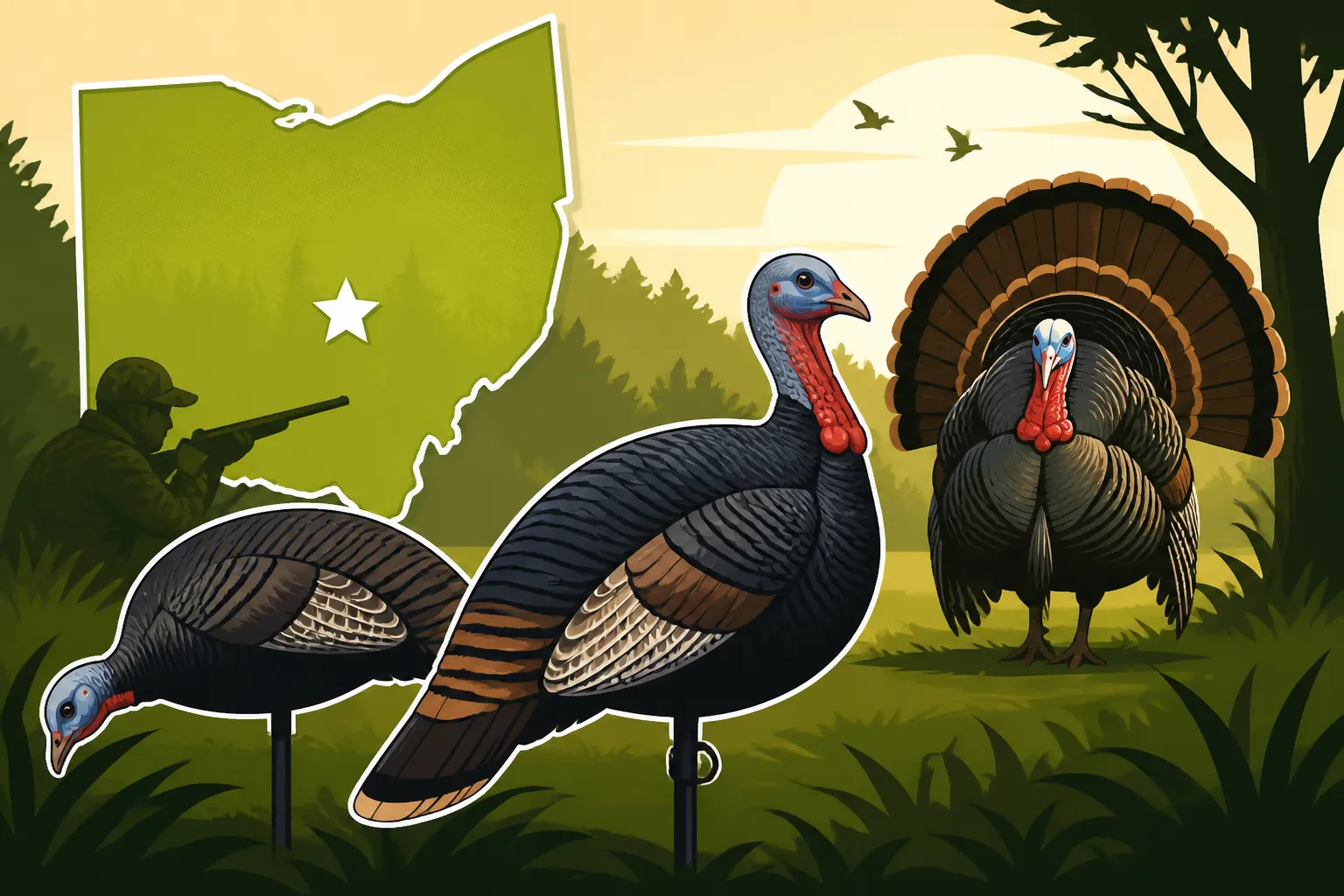
Turkey Decoys That Work on Pressured Birds
Hunting Ohio turkeys can be incredibly rewarding, but anyone who has spent enough time chasing gobblers knows the frustration of dealing with pressured birds. These aren't your naive birds of spring chicken lore; they're educated, wary, and often seem to have an uncanny ability to spot a decoy spread from a mile away and immediately veer off course. This guide is all about equipping you with the knowledge and tactics to select and deploy turkey decoys that actually work on those difficult, pressured birds, turning those close calls into successful harvests.
Understanding Pressured Turkeys and Decoy Aversion
When you're dealing with turkeys in areas that see a lot of hunting activity – whether it's public land that gets hit hard every season or even private ground where hunters are frequently out and about – those birds learn quickly. They've seen it all, or at least enough of it to make them incredibly cautious. A gobbler that might confidently strut into a full decoy spread on opening day in a low-pressure zone will often hang up hundreds of yards out, or simply melt back into the timber, when he’s been called at, spooked, or seen too many fake birds.
Why Traditional Decoys Fail Wary Birds
Many standard decoy setups, while effective in ideal conditions, can actively deter a pressured gobbler. Think about it: a full-strut tom decoy, while visually appealing to a hunter, might look like an immediate challenge to a dominant gobbler who's already been in a few fights and is now looking for easy pickings, not another confrontation. If he's already been shot at, or seen other birds get shot near similar-looking decoys, he’s going to be hyper-vigilant. Similarly, a spread of multiple hens might seem too good to be true, triggering an alarm in a bird that knows what a bustling spring woods usually looks like. They start to associate specific shapes and sizes with danger, or simply with things that aren't quite right.
This aversion is often rooted in experience. A bird that has watched its brethren fall to hunters over a particular type of decoy spread might develop an instinctual avoidance of that scenario. They might approach cautiously, scope out the situation, and if anything feels off – a decoy that looks too stiff, too bright, or simply out of place – they’ll bail. This is especially true as the season progresses and more hunters have been in the woods. You might find success with bold setups early, but by mid-May, especially during When Ohio Gobblers Go Quiet in Late May, you'll need a much more subtle approach.
Reading the Signs of Pressured Turkeys
How do you know you're dealing with pressured birds? It's usually pretty clear. They might gobble robustly on the roost but go silent once on the ground. They'll often hang up far out, just out of range, inspecting your setup with extreme scrutiny. Sometimes, they'll even approach from an unexpected direction, trying to circle your setup and get a better vantage point from behind or to the side. They might come in silent, without a single gobble, just appearing like a ghost.
You might hear them gobble in the distance, answer a few calls, and then nothing. You wait, you call again, and still nothing. If they're not committing, or if they seem to approach and then vanish, you're likely dealing with a bird that has been hunted before. This often happens on public lands like Wayne National Forest or even smaller state wildlife areas that get a lot of foot traffic. Learning to Read Aerial Photos for Southeast Ohio Deer can sometimes help identify areas with less pressure, even within popular hunting grounds. Understanding these behaviors is the first step in adapting your decoy strategy, because what worked last week, or in a different county, might not cut it here.
Types of Decoys for Pressured Birds
When turkeys are educated and wary, the typical "bigger is better" approach with decoys often backfires. Instead, you need to think about realism, subtlety, and conveying a sense of security rather than a challenge. The goal isn't to shock them into coming, but to quietly convince them it's safe and desirable to approach.
Realistic Hen Decoys
For pressured birds, a single, highly realistic hen decoy is often your best bet. Forget the cheap, shiny plastic hens that look like they're made for a child's toy chest. You want a decoy with subtle feather detail, realistic posture, and a matte finish that doesn't reflect sunlight in an unnatural way. A feeder hen or a submissive breeding hen posture usually works best. These convey a sense of calm and natural behavior.
A feeding hen tells a gobbler, "Everything is safe here; I'm relaxed and happy." A submissive hen signals she's ready to breed, but not in an aggressive or challenging way. This is particularly effective because it appeals directly to a gobbler's primary instinct – to breed – without triggering his territorial aggression or caution. A single hen avoids the "too good to be true" trap that a flock of hens might set off in a wary gobbler's mind. Some hunters will even "rough up" their decoys a bit – dulling any shine with fine sandpaper or mud, or even trimming off overly stiff tails – to make them look more natural and less like a brand-new piece of plastic.
Modest Jake Decoys
If you decide to incorporate a jake, avoid the aggressive, full-strut jakes. A quarter-strut or half-strut jake, perhaps with a smaller beard, is much more effective. The key here is to represent a young, non-threatening male. A gobbler will often approach a smaller, less dominant jake with the intent of pushing him around and asserting dominance, especially if there's a hen nearby. This taps into their territorial instinct in a way that doesn't feel like a direct threat.
Some hunters even prefer a jake decoy with no strut at all, just standing or feeding, conveying youth and inexperience. The more submissive the posture, the better. You're trying to create a scenario where the gobbler feels confident and in control, not like he's walking into an ambush or a fight with a rival. Remember, these birds have likely faced aggressive jakes that turned out to be decoys before. A modest jake, paired with a relaxed hen, can be a potent combination, particularly when combined with soft, contented calls that reinforce the calm scene.
Fan Decoys and Fanning
Fanning, which involves using a real or artificial turkey fan to simulate a strutting gobbler, has gained popularity. While incredibly effective in specific scenarios, it's a high-risk, high-reward tactic, especially with pressured birds. It relies on the gobbler's aggressive instinct to challenge a perceived intruder. The key to fanning with pressured birds is extreme caution and understanding the terrain. You absolutely must be certain of your target and what's behind it. You're creating a visual that can draw a gobbler in very quickly, so your setup needs to be perfect for a shot.
A safer, less aggressive use of a fan might be to attach it to the back of a jake or gobbler decoy, making it appear as if the decoy is simply strutting. This adds realism without requiring the hunter to actively "fan" and potentially reveal their position or make unnecessary movements. For truly wary birds, actively fanning might be too much, drawing them in too fast or causing them to hang up if they perceive the movement as unnatural. Consider the context: on private land with little pressure, fanning might be a blast. On a busy public wildlife area, it might just get you busted or spook an entire flock. Using tools like GoHunt can sometimes help identify areas where specific tactics might be more or less effective, based on anecdotal hunter reports or observed pressure levels.
Effective Decoy Setups for Ohio's Wary Gobblers
Even with the right decoys, how you place them is critical, especially when targeting birds that have learned to be cautious. Your setup needs to reinforce the illusion of safety and natural behavior, drawing the gobbler into range without raising any red flags. This often means breaking away from the classic "fan of decoys" approach.
The Single Hen Setup
This is arguably the most effective and safest setup for pressured birds in Ohio. It's minimalist, natural, and non-threatening. Place one realistic hen decoy in a relaxed, feeding, or breeding posture. Position her about 15-20 yards from your calling position, facing slightly away from you, as if she's just walking by or foraging. This creates a natural approach path for the gobbler, often causing him to walk directly past your position to get to the hen.
The beauty of the single hen is its simplicity. It doesn't look like an ambush. It merely presents a potential breeding opportunity that seems safe and readily available. You can pair this with soft clucks and purrs to reinforce the contented, unpressured atmosphere. This works exceptionally well in open timber or field edges, where a gobbler has a clear line of sight but is still close enough to feel comfortable. Whether you're hunting Still-Hunting Shawnee State Forest Ridges or on private ground, this setup is versatile.
The Jake and Hen Combo (Submissive)
If you want to add a bit more temptation, a submissive jake and hen combo can work, but again, subtlety is key. Place a relaxed, feeding hen and a small, non-strutting jake decoy together, about 10-15 yards from your position. Position the jake slightly behind or beside the hen, as if he's merely tagging along. The gobbler's instinct will be to run off the younger male and claim the hen.
Crucially, position the jake so that the approaching gobbler will likely confront him from an angle that exposes the gobbler to your shooting lane. You want the gobbler focused on the jake, not on you. This setup creates a compelling visual drama that appeals to the dominant male's instincts without being overtly aggressive. Again, realism is paramount. If the decoys look too stiff or fake, a wary gobbler will pick up on it quickly.
Decoy Positioning and Angles
The angle at which your decoy faces the approaching gobbler can make a huge difference. Generally, you want your decoys facing slightly away from where you expect the gobbler to approach. This encourages the gobbler to come past the decoy, presenting a broadside or slightly quartering-away shot. If the decoy faces directly towards the gobbler, he might stop head-on, giving you a less ideal shot.
Consider your blind or cover. If you're Using a Ground Blind on Ohio Public Land, set your decoys within 15-20 yards of the blind. This distance gives the gobbler enough space to approach without feeling too close to your hiding spot, but also ensures he's well within effective shotgun range. Always factor in the sun's position. Avoid placing decoys where they will cast harsh shadows that might look unnatural, or worse, have the sun glaring off them, making them look artificial.
Here's a quick comparison of decoy types and their effectiveness for pressured birds:
| Decoy Type | Recommended for Pressured Birds | Best Use Case | Pros | Cons |
|---|---|---|---|---|
| Single Feeding Hen | Yes (Highly Recommended) | Open fields, wood edges, subtle setups | Non-threatening, natural, draws gobbler past | May not excite extremely dominant birds as much as others |
| Single Breeding Hen | Yes | Openings, paired with soft calls | Appeals to breeding instinct, subtle | Can sometimes be too static if not posed well |
| Modest Jake (Quarter/Half Strut) | Yes (Paired with Hen) | Creates dominance challenge, often successful | Provokes protective/dominant response in gobblers | A full-strut jake can scare very wary birds |
| Full Strut Gobbler | No (Generally) | Very low-pressure areas, early season | Highly aggressive, can draw in dominant gobblers | Can instantly spook pressured or subdominant birds |
| Multiple Hens | No (Generally) | Low-pressure areas, large field setups | Appears as a 'flock', can look very natural | Can appear 'too good to be true' for wary birds, looks unnatural if not posed well |
| Fanning Fan | Yes (with extreme caution) | Drawing in aggressive birds quickly, last resort | Incredibly effective on the right bird | High risk, requires perfect execution, ethical concerns |
Always be aware of Hunting Pressure on Ohio Public Land. If you know an area sees heavy traffic, scale back your decoy aggression significantly.
Concealment and Calling
Your concealment is just as important as your decoy setup. Pressured turkeys are constantly scanning, and they're looking for anything that looks out of place. Use natural cover, a good ground blind, or a well-brushed-in blind to become invisible. Don't fidget. Don't move unless absolutely necessary, and only when the bird's head is behind an obstruction or facing away.
Your calling strategy should match your decoy spread. If you're using a single feeding hen, gentle clucks and purrs are often all you need. If you're using a jake and hen, some excited yelps and cutts might be appropriate to convey the interaction, but always be ready to soften your calls if the bird acts wary. Turkey Calls Worth Carrying in Ohio should always include versatile options. Don't overcall. Let the visual of the decoys do most of the work once the bird is in sight. Sometimes, a well-placed Locator Calls for Ohio Gobblers can help pinpoint a bird, but then switching to subtle hen sounds can be the key to bringing him in.
When to Use Decoys (and When Not To)
Decoys aren't a magic bullet for every turkey hunting situation, especially with pressured birds. Knowing when to deploy them and when to leave them in the bag is a critical skill that comes with experience and careful observation of the birds you're pursuing.
Decoying in Early Season vs. Late Season
Early in Ohio's spring turkey season, especially on less pressured ground or during Hunting Ohio's South Zone Spring Opener, gobblers might be more inclined to respond aggressively to a full-strut tom or a jake and hen spread. Their hormones are high, and they haven't been educated by hunters yet. It's a time when you can often get away with more.
However, as the season progresses into May, and particularly as you approach When Ohio Gobblers Go Quiet in Late May, gobblers become significantly warier. Hens are often bred and nesting, meaning gobblers are ranging more widely and are less interested in responding to every call. This is when the minimalist, single-hen approach truly shines for pressured birds. A subtle setup that suggests safety and a lone, available hen is much more likely to pull in a quiet, cruising gobbler than an aggressive display.
Decoying on Public Land vs. Private Land
Public hunting land, by its nature, tends to hold more pressured birds. Areas like Zaleski State Forest or Killdeer Plains Wildlife Area see a lot of hunters throughout the season. Here, less is almost always more. A single, realistic hen or a submissive jake/hen combo, carefully placed for a quick shot, is your best bet. You'll also need to scout thoroughly before the season to Scouting Ohio Public Land Before Season and identify pockets that might hold less pressured birds. Using mapping tools to find remote fingers or deep hollows can be crucial.
On private land, the decision depends entirely on how much hunting pressure that specific property receives. If it's a heavily hunted farm, treat the birds like public land birds. If it's a pristine piece of ground that rarely sees hunters, you might be able to get away with more aggressive decoy spreads. Always adjust your strategy based on the specific birds and their perceived education level, rather than just the land ownership type.
Situations Where Decoys Might Be Detrimental
There are definitely times when decoys, even subtle ones, can do more harm than good:
- Run-and-Gun Tactics: If you're employing a fast-paced Run-and-Gun Turkey Tactics on Public Land, moving frequently and trying to strike a gobbler, setting up and packing up decoys can be cumbersome and time-consuming. In these situations, your calling and concealment might be more effective.
- Thick Cover: In extremely thick cover, where visibility is limited, decoys might not be seen until a gobbler is too close, potentially spotting you before seeing the decoy. You also run the risk of a gobbler hanging up just out of sight, unable to fully commit to what he can't clearly see. In these scenarios, focusing on Setting Up Against a Big Oak or other natural cover, and letting your calls draw them close, might be better.
- Birds Hanging Up Consistently: If you find that every gobbler you encounter is hanging up 100 yards out, no matter your decoy setup, it might be time to remove the decoys entirely. Sometimes, the mere presence of any static shape is enough to trigger their alarm. A gobbler that hears a lone hen calling in the timber might be more inclined to investigate if there's no visual to scrutinize at a distance.
- Safety Concerns: Fanning, while exciting, carries inherent safety risks, especially on public land. Mistaking a fanning hunter for a real bird is a serious concern. If you choose to fan, ensure you are in an isolated area, are absolutely certain of your background, and are wearing blaze orange when moving between setups.
Ultimately, using decoys for pressured birds comes down to finesse, realism, and knowing your audience. Don't be afraid to experiment, but always start with a subtle approach, and be ready to adapt based on how the birds are responding. Sometimes, the best decoy for a pressured bird is no decoy at all, relying instead on expert calling and impenetrable concealment to draw them into range.
Disclaimer
This article is for general informational purposes only and does not constitute professional advice. Laws, prices and regulations vary by location and change over time. Consult a qualified professional for guidance on your specific situation.