Hunting Ohio’s South Zone Spring Opener
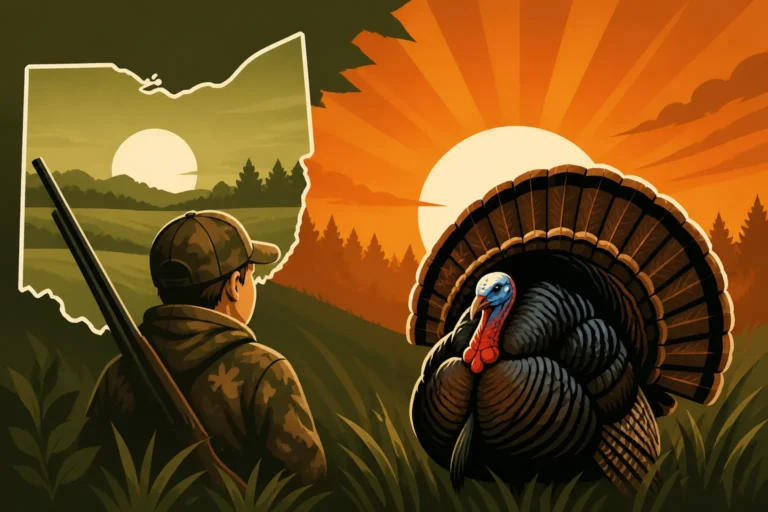
That first hint of green on the forest floor, the sound of gobbling cutting through the frosty morning air – there's nothing quite like the start of Ohio's spring turkey season. But let's be honest, that initial excitement can quickly turn into frustration when those gobblers go quiet or hang up just out of range. This guide is all about equipping you with the tactics and knowledge to navigate the challenges of hunting Ohio's South Zone spring opener and punching your tag.
Understanding Ohio's South Zone Spring Opener
Hunting the Ohio spring turkey season can be an incredibly rewarding experience, but success often hinges on a deep understanding of the specific regulations and the unique behavior of birds in your chosen zone. The South Zone, with its earlier opening, presents its own set of opportunities and challenges that seasoned hunters have learned to anticipate.
Key Dates and Regulations
The Ohio Department of Natural Resources (ODNR) sets specific dates for each spring turkey zone, and for us South Zone hunters, it means we get a jump on the season. Typically, the South Zone opener for wild turkeys starts a week earlier than the Northeast Zone, usually in late April. This earlier start can be a blessing and a curse. On one hand, you're out there when many birds are still eager to breed, perhaps less pressured than they will be later in the season. On the other hand, the weather can be a bit more unpredictable, swinging from crisp mornings to unseasonably warm afternoons, which impacts turkey behavior significantly. You'll need to keep a close eye on the official Ohio Spring Turkey Zones and Dates announcement each year to confirm exact dates, as they can shift slightly. Remember, the bag limit is usually one bearded turkey during the entire spring season for Ohio hunters, regardless of how many zones you hunt. This Ohio Spring Turkey Bag Limit is strictly enforced, so always check your bird at an official checking station or online immediately after harvest.
When it comes to legal hunting hours, Ohio's rules are pretty standard. Shooting hours typically run from one-half hour before sunrise until noon during the entire spring season. This noon cutoff is a critical regulation that shapes all your tactics. You need to maximize your efforts in that early morning window, as any afternoon scouting or calling is purely for reconnaissance or enjoying the woods. Always carry your valid hunting license and turkey permit, and make sure your firearm complies with Ohio's legal firearms for deer hunting, which extend to turkey.
Why the South Zone is Unique
The South Zone encompasses a significant portion of Ohio, generally covering the central and southern counties. This region is characterized by a mix of agricultural land, river bottomlands, and the beginnings of the Appalachian foothills. This diverse landscape directly influences turkey populations and their behavior. In the more agricultural counties, turkeys might roost in woodlots adjacent to large crop fields, feeding on waste grain or early green-ups. In the hiller, more timbered areas further south and east, turkeys are often found in mature hardwood stands, preferring oak ridges and secluded hollows.
The earlier opening date means you might encounter birds that are still in the early stages of their breeding cycle. Hens might not be nesting yet, and gobblers are often still very eager to gather a harem. This can make them more responsive to calling. However, it also means that the foliage might not be fully out, offering less cover for you to sneak around. This lack of full concealment, especially in areas with significant hunting pressure, demands extra caution and careful approach. The relatively high Ohio Turkey Population Estimate, particularly in these southern counties, means there's a good chance of encountering birds, but it also means other hunters will be out there too. Understanding the local terrain, whether it's the rolling hills of southeastern Ohio or the flatter farm country further west, is crucial for adapting your strategy.
Pre-Season Scouting and Preparation
Success on the South Zone spring opener isn't just about showing up; it's about putting in the work long before the season even begins. Pre-season scouting is your secret weapon, allowing you to understand the lay of the land, pinpoint turkey activity, and identify key locations that will give you an edge on opening morning.
Locating Roost Sites
Finding where gobblers like to spend the night is arguably the most critical piece of pre-season scouting. Turkeys are creatures of habit, often returning to the same general areas, or even the same trees, to roost. Look for tall, mature trees with large horizontal limbs that offer good visibility and a clear flight path in and out. Oaks, sycamores, and large pines are common choices. You're trying to identify these potential roosts without disturbing the birds. This usually means taking evening drives or walks through likely areas a week or two before the season, listening for fly-up cackles and wing beats just before dark, or listening for gobbling at first light.
On public lands, this can be a bit more challenging due to potential Hunting Pressure on Ohio Public Land. However, using tools like the GoHunt app or other mapping software to analyze aerial photos can highlight promising areas—steep ridge lines with mature timber, creek bottoms with old-growth trees, or isolated woodlots in agricultural landscapes. Mark these potential spots on your map. Once you've got a few ideas, a quiet morning or evening reconnaissance mission during the week leading up to the opener can confirm if birds are using those specific trees. Listen intently for those pre-dawn gobbles. Knowing a reliable roost site gives you a huge advantage, allowing you to plan your silent approach and set up well before first light, exactly where you want to be when he wakes up. This information is key to successful Roost Hunting Ohio Gobblers.
Identifying Travel Corridors and Feeding Areas
Once a gobbler flies down from the roost, he's got a few things on his mind: finding food and finding hens. Identifying his likely travel corridors and feeding areas can tell you where he's headed next. Look for subtle signs on the ground: tracks, droppings, and scratch marks where turkeys have been foraging for insects, seeds, and acorns. In the South Zone, early spring greens can be a big draw, so focus on open fields, food plots, and forest edges where new growth is emerging. Creek bottoms and south-facing slopes often green up earlier and can be hotbeds of activity.
Turkeys will typically follow paths of least resistance, such as old logging roads, ridgetops, or distinct deer trails. These become their travel corridors between roosting areas, feeding grounds, and strut zones. Using your GoHunt app, you can mark these observations on your maps. Pay close attention to terrain features like saddles, points, and benches on hillsides, as these can act as natural funnels that turkeys often use. Identifying a strut zone – a relatively open area where gobblers display for hens – is another golden nugget of scouting information. These are often flat spots on ridges or open areas within a timber block. If you can find these key locations and understand how they connect, you can predict a gobbler's movements and position yourself accordingly. Remember, the goal is to observe and learn without alerting the birds to your presence.
Essential Gear and Setup for the Opener
Having the right gear is non-negotiable for a successful spring turkey hunt, especially when you're dealing with the variable conditions of Ohio's South Zone opener. From your shotgun setup to your calling arsenal and concealment options, every piece plays a crucial role in luring in that wary gobbler.
Shotguns, Chokes, and Ammunition
Your shotgun is your primary tool, and dialing it in before the season starts is paramount. While many gauges are legal, 12-gauge and 20-gauge shotguns are the most popular choices for turkey hunting in Ohio, offering a good balance of power and maneuverability. The key isn't just the gun itself, but how it patterns. Different choke tubes and ammunition combinations can dramatically change your pattern density and effective range. For turkeys, a tight pattern is essential, as you're aiming for the head and neck. Extra-full or turkey-specific chokes are almost universally recommended. Brands like Federal, Winchester, and Remington offer dedicated turkey loads that deliver superior knockdown power and pattern density. You should thoroughly pattern your shotgun with your chosen choke and ammunition at various distances (20, 30, 40 yards) to know your maximum ethical range. This practice ensures you're confident in your shot when a gobbler finally steps into range. Understanding your Turkey Shotguns and Chokes is not just about equipment; it’s about responsible hunting.
Beyond the barrel, consider adding a red dot sight or a low-power scope. These optics can make a significant difference in target acquisition, especially in low light or when a gobbler is partially obscured. They help you pinpoint that small vital zone on a turkey's head, reducing the chance of a missed shot or, worse, a wounded bird. A comfortable sling is also important for those long walks through the woods to get to your setup location before daylight.
Decoys and Blinds for South Zone Turkeys
Decoys are a hotly debated topic among turkey hunters, but in the right situations, they can be incredibly effective, especially on the opener when gobblers are still eager. For the South Zone, a simple hen or jake decoy setup is often all you need. A lone hen can be very enticing to a gobbler looking for companionship. Adding a jake decoy can trigger a territorial response in mature gobblers, drawing them in for a fight. However, be mindful of hunting pressure; too many decoys or highly visible setups can sometimes spook wary birds on public land. Position your decoys where a gobbler has a clear line of sight, ideally 20-30 yards from your position, so that when he approaches, he's well within your effective shooting range.
Concealment is paramount. A good ground blind or natural cover is essential. While pop-up ground blinds offer excellent concealment and comfort, they can be cumbersome to carry deep into the woods. Many hunters opt for natural blinds, breaking up their silhouette against a large tree or dense brush. Regardless of your choice, ensure you blend into your surroundings completely. Wear full camouflage, including a head net and gloves. Turkeys have incredible eyesight and can pick up on the slightest movement. Using your GoHunt app or other mapping tools to identify key setup spots with natural cover during your scouting trips can save you valuable time and effort on opening morning. Remember to set up with your back to a large tree or object to prevent any turkeys from circling behind you and spotting your outline.
Effective Calling Strategies for Pressured Birds
Calling is an art form in turkey hunting, and mastering it, especially for the South Zone opener, can make all the difference. While gobblers might be eager early in the season, they can also become "call shy" quickly if they've had negative experiences with hunters. The key is to be versatile and read the bird.
Soft Calls and Subtle Techniques
On the Ohio South Zone opener, especially on public land or areas with some hunting pressure, gobblers can be wary. Loud, aggressive calling might work initially, but often, a more subtle approach is best. Start with soft tree yelps and clucks from your box call or slate call while the gobbler is still on the roost. These calls mimic a hen waking up and stretching, simply announcing her presence. You're not trying to get him to come flying in immediately; you're just letting him know you're there. Once he flies down, switch to more realistic and softer calls: a few soft yelps, a purr, or light clucks. The goal is to sound like a contented hen, making him curious enough to come investigate without alarming him.
Many hunters make the mistake of over-calling. If a gobbler is answering, but not coming in, try going silent for a while. Sometimes, a lack of immediate response from the "hen" (you) can make him nervous and prompt him to come closer to find her. The sound of a lone hen can often be more alluring than a flurry of excited calling, especially to a gobbler that's heard it all before. Mastering various Turkey Calls Worth Carrying in Ohio, from diaphragms to slate calls and box calls, allows you to adapt to whatever the birds are telling you. Remember, less is often more, and sounding authentic trumps sounding flashy every time.
Aggressive Calling When Needed
While soft calling is often the go-to, there are certainly times when a more aggressive approach is warranted. This usually comes into play when a gobbler is "hung up"—gobbling his head off but refusing to come closer, perhaps 100-150 yards out. In these situations, he's expecting the hen to come to him. This is where you might need to try to pique his interest or even challenge him. Hard cutting, loud yelps, and excited cackles can sometimes break him free from his reluctance.
Another scenario for aggressive calling is when you're trying to locate a gobbler or cover a lot of ground quickly, using Run-and-Gun Turkey Tactics on Public Land. If you're moving through a large timber block and haven't heard a gobble, a series of loud, enthusiastic yelps might provoke a shock gobble, revealing his location. Just be ready to move quickly and quietly to set up once you get a response. Sometimes, if a gobbler is with real hens, mimicking excited hen calls can make him think another hen is trying to steal his ladies, forcing him to come investigate. Knowing when to switch from subtle to aggressive, and vice versa, is a crucial skill developed through experience and carefully reading the turkey's reactions. The "GoHunt" platform offers resources that sometimes detail regional calling preferences, which can be useful when planning your strategy.
Morning Tactics: Roost to Mid-Morning
The pre-dawn hours and early morning are prime time for spring turkey hunting, especially on the South Zone opener. This is when gobblers are most vocal and most likely to move. Your strategy during this window will dictate much of your day's success.
Setting Up Before Daylight
Getting to your chosen spot well before first light is absolutely critical. This means navigating the woods in the dark, often with a headlamp on its lowest setting, to avoid disturbing any turkeys already in their roost trees. Your goal is to be within 100-150 yards of a known roost, or in a prime travel corridor you identified during scouting. Choose a setup location that offers good concealment (a large tree, thick brush, or your ground blind) and clear shooting lanes in the direction you expect the gobbler to approach. Think about the sun's position: if possible, set up so the sun is behind you, making it harder for the turkey to see you.
Once you're settled, stay completely still and listen. The sounds of the woods waking up, the rustle of leaves, and eventually, the first tree yelps and then the thunderous gobble of a tom on the roost. This is the moment you've been waiting for. A few soft, subtle tree yelps from you can be just enough to confirm your presence without spooking him. Avoid over-calling before he flies down. Let him gobble naturally, and focus on pinpointing his exact location and the direction he's facing. This quiet preparation is fundamental to successfully Calling an Ohio Gobbler Off the Roost.
Adapting to Silent Gobblers
Not every gobbler is going to be a loudmouth, especially on opening day when they might have already encountered some pressure. Sometimes, a tom will gobble once or twice on the roost, fly down, and then go completely silent. This is where patience and persistence become your best friends. Don't assume he's gone just because he's not gobbling. He might be silently making his way to your calls, or he might have pitched down with real hens.
If a gobbler goes silent after flying down, hold your position for at least an hour, making soft calls periodically. He might be slowly working his way towards you. If nothing happens, consider a slight change in tactics. Sometimes a soft "assembly" call, mimicking a lost hen, can draw him in. If you're confident he's still in the area but completely shut down, a strategic move might be in order. Carefully and quietly reposition yourself 50-100 yards in a new direction, trying to get into a better vantage point or closer to a likely strut zone. Remember, your movements must be absolutely silent and concealed. This kind of slow, deliberate chess match is often what it takes to tag a tough gobbler that's not playing by the book. You can't just be a good caller; you need to be a skilled woodsperson.
Midday and Afternoon Approaches
While the early morning is undeniably prime time, the season doesn't end at noon. Ohio's noon closing time for spring turkey means you'll be wrapping up your actual hunting activities, but the period between fly-down and that noon deadline is where adaptability is key. Plus, how you spend your afternoon can impact the next morning's hunt.
Run-and-Gun Tactics
If your morning setup didn't produce a gobbler, or if you're trying to locate a bird in a new area, the "run-and-gun" approach can be incredibly effective during the late morning. This involves covering ground, stopping frequently to call, and listening for a response. It's particularly useful on large tracts of public land, such as those within the Wayne National Forest Hunting or other Ohio Wildlife Areas, where birds can be spread out. Move from ridge to ridge, or along field edges, making a series of loud, attention-grabbing calls like yelps and cuts. Use locator calls, such as an owl hooter or crow call, to try and shock a gobble out of a tom without revealing your position as a hunter.
Once you get a response, the real work begins. Quickly and quietly move in the direction of the gobble, trying to get within 100-150 yards without being seen or heard. Set up quickly against a large tree, ensuring you have a clear shot, and then begin to call softly. The goal is to close the distance and entice the gobbler to come the last few yards. This aggressive approach demands mobility and quick thinking, but it can turn a slow morning into an exciting encounter. You can learn more specific strategies for Run-and-Gun Turkey Tactics on Public Land if this approach interests you.
Dealing with Hung-Up Toms
One of the most common frustrations in spring turkey hunting is the "hung-up" gobbler. He's gobbling consistently, perhaps even strutting, but he just won't commit to coming closer than 75-100 yards. He's heard your calls, he knows you're there, but he's waiting for you to come to him. This often happens if he's with real hens, if he's seen too many decoys, or if he's just plain wary from hunting pressure.
When faced with a hung-up tom, patience is your first line of defense. Sometimes, going silent for 15-20 minutes will make him nervous enough to take those last few steps. If that doesn't work, consider a subtle repositioning. If you can, circle around to a new angle, trying to put a rise or some thick cover between you and him. This might make him think the hen (you) is moving away, often prompting him to come check. Another tactic is to use soft, contented purrs and clucks, mimicking a hen that's losing interest or even feeding away. This can sometimes reverse his stubbornness. Sometimes, using a jake or even a tom decoy placed strategically can challenge him to close the distance. Remember, the goal is to make him believe it's his idea to come to you, not yours to chase him. The GoHunt platform's user forums often have excellent discussions on how seasoned hunters tackle these difficult situations.
Public Land Considerations and Hunter Etiquette
Hunting Ohio's public lands, especially on the South Zone spring opener, means you're often sharing the woods with other hunters. Being aware of others, understanding common choke points, and practicing good etiquette are crucial for a safe and enjoyable experience for everyone.
Navigating Crowded Areas
Public land in Ohio can experience significant hunter density, particularly on opening day of the South Zone. Areas like Zaleski State Forest Hunting or portions of the Wayne National Forest often see a steady stream of vehicles long before daylight. To avoid direct conflicts and maintain safety, it's wise to scout thoroughly and identify lesser-known access points or areas that require a longer walk. The further you are willing to hike from common parking areas, the better your chances of finding unpressured birds and avoiding other hunters.
Arrive at your spot extra early to ensure you get the location you want. If you hear another hunter setting up nearby, or if a gobbler you're working starts moving towards another hunter's calls, it's often best to back off quietly and find another area. The last thing anyone wants is a confrontation in the woods or, worse, an accidental shooting. Communication, even if it's just a subtle wave or a quiet "good luck" if you cross paths, can go a long way. Always be aware of your surroundings, and never assume that a gobble you hear is necessarily a turkey. Knowing the Ohio Legal Shooting Hours and carrying proof of your license will help you navigate any encounters, whether with wildlife officers or fellow hunters.
Respecting Other Hunters
Respect is the cornerstone of responsible hunting, especially on public land. This means not "sky-busting" (shooting at a gobbler that's clearly headed toward another hunter), not crowding someone else's setup, and not calling aggressively to steal a bird another hunter is working. If you arrive at a parking area and see multiple vehicles, it's a good indication that the immediate area will be crowded. Consider driving to another section or walking significantly further in to find a less-pressured spot.
If you encounter another hunter in the woods, a simple nod or a quiet greeting is sufficient. Let them know you're in the area, but don't disrupt their hunt. If you happen to walk up on someone's setup, apologize and quietly back away. And never, under any circumstances, approach another hunter's calls thinking it's a turkey. Always identify your target positively before aiming and shooting. This ensures safety and maintains the integrity of the hunting community. Being a good steward of public lands also extends to packing out all your trash, respecting marked boundaries, and leaving the area cleaner than you found it.
Comparing Morning vs. Midday Turkey Tactics
Here's a quick look at how your approach might shift from the prime early hours to the later morning during Ohio's South Zone opener.
| Tactic/Aspect | Early Morning (Pre-dawn to ~8 AM) | Mid-Morning (8 AM to Noon) |
|---|---|---|
| Gobbler Location | Roosted birds, often vocal. | Fly-down areas, strut zones, travel corridors. |
| Calling Intensity | Soft tree yelps, clucks, subtle. | More varied, can be aggressive if hung-up, locator calls. |
| Movement | Minimal, silent approach to set up near roost. | More movement, "run-and-gun" to locate. |
| Pressure Impact | Less impact initially, but can make birds wary after fly-down. | Can be significant, birds may be call-shy or with hens. |
| Decoy Strategy | Placed before light for visibility. | Can be effective, but consider smaller, mobile options. |
| Key Mindset | Patience, listening, stealth. | Adaptability, persistence, covering ground. |
Disclaimer
Always consult the official Ohio Department of Natural Resources (ODNR) hunting regulations for the most current and accurate information regarding seasons, bag limits, and legal requirements before heading into the field. Regulations can change, and it is every hunter's responsibility to know and follow the law.