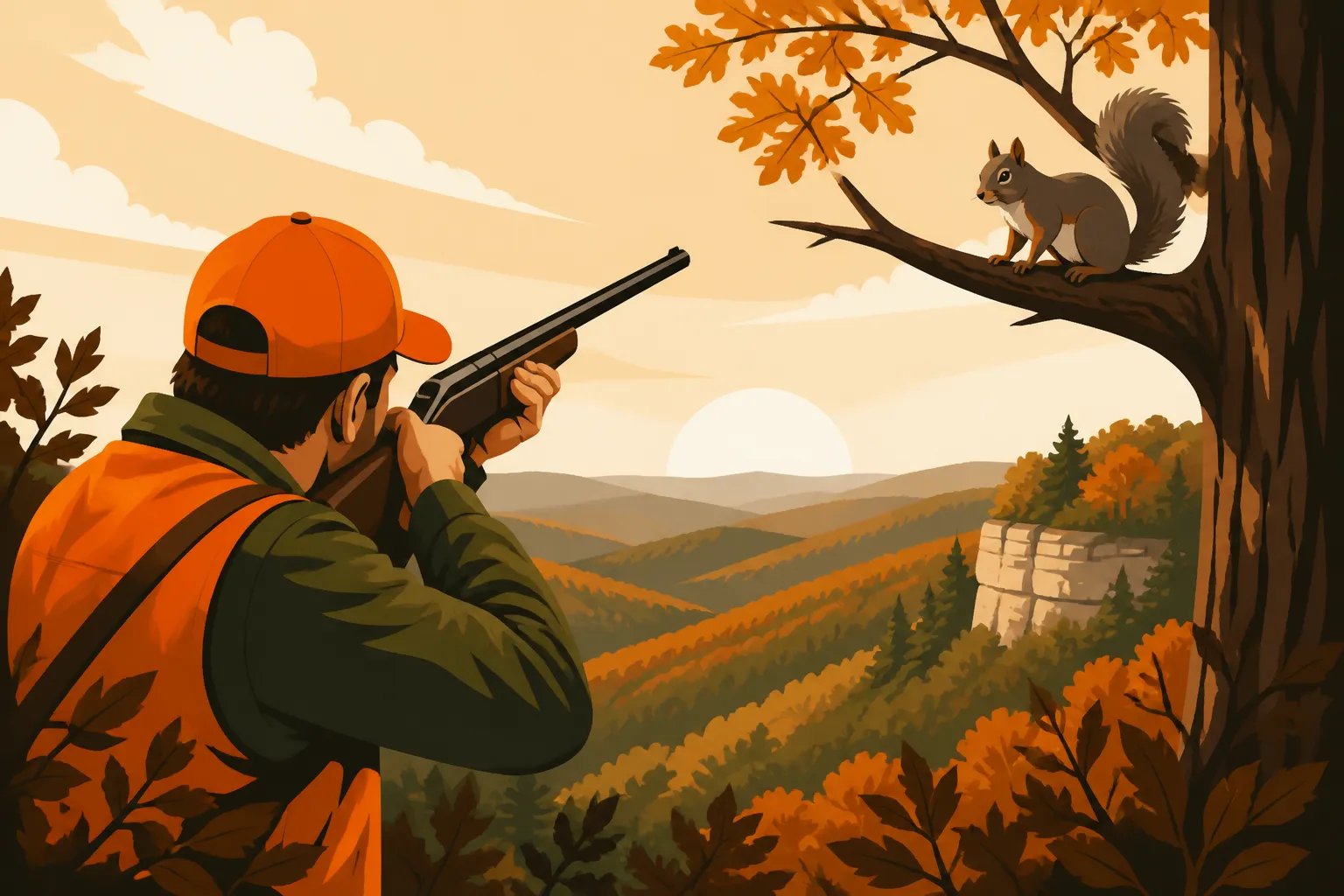
Squirrel Hunting a Shawnee Forest Ridge
Squirrel hunting in Ohio’s vast Shawnee State Forest isn't like heading to a flat woodlot behind the barn. This isn't just a walk in the park; it's an endeavor that demands respect for the rugged terrain and a solid understanding of squirrel behavior in such an expansive, wild setting. This guide will walk you through everything you need to know to successfully hunt squirrels on those challenging, yet rewarding, Shawnee ridges.
Unraveling the Shawnee State Forest Squirrel Habitat
Hunting squirrels in Shawnee means diving into some of Ohio's most beautiful, yet demanding, public land. The rolling hills and deep ravines of this region provide a completely different hunting experience than the flat farmlands of northern Ohio. Understanding this unique environment is the first step to success.
The Rugged Terrain and Timber Types
Shawnee State Forest, often affectionately called "Ohio's Little Smokies," spans over 60,000 acres in Scioto and Adams counties. This isn't flat ground; we're talking about steep ridges, deep hollows, and dense timber. Navigating these slopes can be a real workout, and the sheer scale of the forest can feel overwhelming if you're not prepared. But it's precisely this wild character that makes it so appealing to hunters looking for a challenge.
The timber types here are primarily mature hardwoods, dominated by various species of oak, hickory, and beech. These trees aren't just scenery; they're the lifeblood of the squirrel population. You'll also find stands of maple, poplar, and even some scattered pine or hemlock, especially in the deeper ravines or along certain slopes. Identifying these tree types is crucial because they directly dictate where squirrels will be feeding and nesting. It’s a good idea to refresh your tree identification skills before you head out, especially if you're not used to hunting big Appalachian timber. You can learn more about hunting strategies in such environments by checking out our piece on Hunting Southeast Ohio Appalachian Foothills.
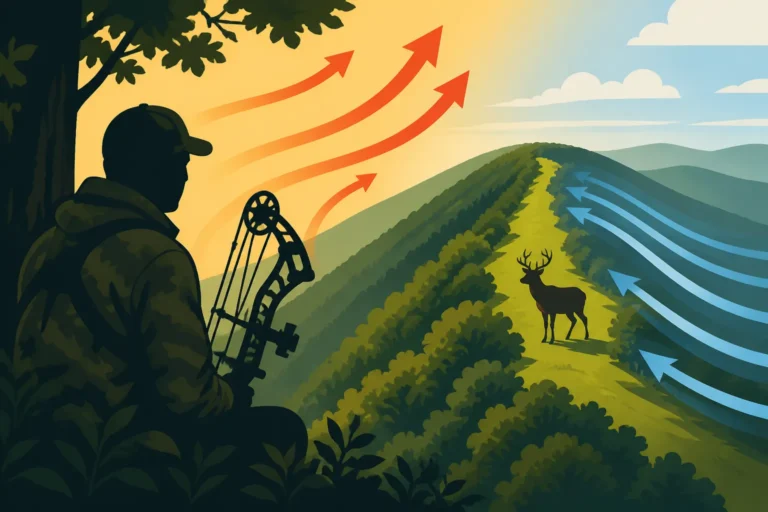
Understanding the topography is vital. Squirrels don't just randomly roam; they move along ridge lines, across saddles, and up and down hollows, often following the easiest path or the most abundant food source. The way the ridges funnel wind and create thermal currents can also impact squirrel activity, so paying attention to how the land lays is just as important as reading the trees.
Key Food Sources on Appalachian Ridges
For squirrels, especially the abundant gray squirrels and the larger, more scattered fox squirrels you'll find in Shawnee, food is everything. And in a hardwood forest, acorns and hickory nuts are the undisputed kings. Different oak species drop their acorns at different times, so knowing which trees are producing can give you a significant advantage. For example, white oaks often drop earlier, while red oaks might hold their acorns longer into the fall.
Hickory trees, with their tough-shelled but nutrient-rich nuts, are also prime squirrel magnets. You'll often find squirrels working feverishly to get to these nuts, leaving tell-tale cuttings behind. Beech nuts, when available, are another highly prized food source, though beech trees tend to be less common than oaks and hickories in many parts of Shawnee. Pay close attention to these mast crops. A year with a heavy mast crop means well-fed squirrels spread throughout the woods; a poor mast year will concentrate them around the few producing trees, making them easier to locate but also potentially more pressured.
Besides nuts, squirrels will also feast on wild berries, fungi, and even buds and twigs during leaner times, particularly late in the season. But for most of the prime hunting season, your focus should be on finding those areas where acorns and hickory nuts are dropping. Our guide on Reading Cuttings Under an Oak offers fantastic insights into deciphering these crucial signs.
Understanding Squirrel Movement Patterns
Squirrels aren't just sitting targets; they're constantly on the move, especially during prime feeding times in the early morning and late afternoon. Their daily routine is largely driven by food availability, weather, and safety. After leaving their nests or dens, they’ll quickly head to feeding areas, often using the canopy to travel undetected. On the ground, they’ll stick to fallen logs, thick underbrush, or the base of large trees for cover.
When you're hunting a Shawnee ridge, think about how these patterns might be influenced by the elevation changes. Squirrels will often traverse the sides of ridges, or move directly up and down them, often connecting different feeding areas. They'll use mature trees as observation points and escape routes, always looking for predators – including you! A good strategy is to observe how they use the terrain and trees to their advantage and then try to anticipate their next move.
Wind also plays a huge role. On windy days, squirrels often stay closer to the ground or seek shelter in dense thickets, making them harder to spot and hear. They also tend to be less active overall. On calm, crisp mornings, however, you’ll hear them chattering and barking from a good distance, making it much easier to pinpoint their location. This keen understanding of their movements and habits is vital for success, especially in such a vast and challenging landscape.
Strategic Scouting and Pre-Hunt Preparation
Showing up to Shawnee without a plan is a recipe for a tough day. The sheer size of the forest demands thoughtful preparation. You wouldn't go deer hunting without scouting, and squirrel hunting here deserves the same respect.
Utilizing Maps and Aerial Imagery for Ridge Selection
Before you ever set foot in the woods, spend some serious time with maps. Online mapping tools like those from GoHunt or even the Ohio HuntFish app are invaluable for hunting in an area like Shawnee. They allow you to virtually scout vast tracts of land from the comfort of your home. Look for prominent ridge lines that run for a good distance, as these often have mature timber and consistent food sources. Also, identify saddles – those low points on a ridge connecting two higher points – as these are natural travel corridors for all wildlife, including squirrels.
Pay attention to areas with a high density of oak and hickory trees, which are typically indicated by distinct canopy textures on aerial photos. Look for varying terrain features: south-facing slopes often warm up faster in the morning, which can make them more appealing to squirrels after a cold night. North-facing slopes, conversely, might hold moisture longer and have different vegetation. Identify potential access points, parking areas, and, most importantly, plan multiple routes in and out to account for different wind directions or unexpected obstacles. Having a good satellite map on your phone, downloaded for offline use, is critical, especially since cell service can be spotty in the deep hollows of Shawnee. Our article on Scouting With the Ohio HuntFish App has more tips on maximizing these tools.
Consider the contour lines on a topographic map. Tightly packed lines mean steep ground, while spread-out lines indicate gentler slopes. This helps you understand the physical challenge ahead and plan your movements accordingly. You're not just looking for squirrels; you're looking for terrain that favors both squirrels and your hunting style.
Identifying Fresh Sign and Active Feeding Areas
Once you're on the ground, your map work transitions into "boots-on-the-ground" scouting. The primary sign you're looking for are cuttings – the discarded husks and shell fragments from nuts that squirrels have been eating. Fresh cuttings will still have a bit of moisture, a brighter color, and perhaps even some soft, un-dried nut meat inside. Old cuttings will be brittle, dry, and bleached out. Finding a tree with a fresh pile of cuttings underneath is like striking gold; it means squirrels are actively feeding there.
Beyond cuttings, look for squirrel tracks in soft earth or mud, especially near water sources or along well-worn game trails. Listen for their chattering and barking, which often indicates their presence long before you see them. You might also spot their nests, called dreys, high up in tree branches, though these are more indicators of general squirrel presence rather than active feeding.
Another excellent scouting technique is to simply sit quietly for a while in a promising area. The woods will often come alive after a few minutes of stillness. You might hear squirrels scampering through the leaves, or the subtle thump of an acorn hitting the ground. This kind of patient observation helps you pinpoint exactly where the action is, which is crucial when targeting wary Shawnee squirrels. Our guide on Finding Sign in Big Appalachian Timber provides valuable insights for this type of scouting.
Planning Your Approach and Exit Routes
This is where the rubber meets the road, especially in rugged terrain. Your approach needs to be stealthy, taking advantage of terrain features to mask your movement. If possible, approach from a downwind direction to prevent squirrels from scenting you, though scent is less critical for squirrels than it is for deer. More importantly, try to keep the sun at your back during morning hunts to avoid silhouetting yourself and to minimize glare in your eyes.
Think about the contours of the ridge. Can you move just below the crest, using the slight rise as cover, slowly peeking over to scan for movement? Or is there a hollow you can skirt that will bring you into a prime feeding area undetected? The goal is to move slowly and deliberately, taking a few steps, then pausing to scan and listen.
Your exit plan is just as important. If you're successful, you'll be carrying game, and the walk back to the vehicle can be even more taxing. Know your landmarks, have your GPS or GoHunt app ready, and don't hesitate to mark your stand location or kill site on your device. Always tell someone where you're going and when you expect to be back, especially when hunting alone in a remote area like Shawnee. Fatigue, combined with unfamiliar terrain, can lead to dangerous situations, so plan your routes with safety and efficiency in mind.
Proven Tactics for Hunting Shawnee Ridges
Once you've done your homework and made it into the woods, it's time to put those plans into action. Hunting squirrels on these big ridges requires a blend of patience, stealth, and adaptability.
The Art of Still-Hunting and Patience
Still-hunting is arguably the most effective method for squirrels in the vast, timbered landscape of Shawnee State Forest. It involves moving incredibly slowly, taking a few steps, then stopping for several minutes to observe and listen. This "stop-and-go" rhythm allows you to pick up on subtle movements and sounds that you’d undoubtedly miss if you were just tramping through the woods. Think of it like a slow, deliberate dance with the forest.
When you stop, choose a spot with good visibility and ideally some cover to break up your outline. Scan the trees from bottom to top, looking for any twitch of a tail, a subtle movement on a branch, or the tell-tale silhouette of a squirrel against the sky. Often, you’ll hear the rustle of leaves or the clack of a nut shell before you see the animal. Let your ears guide your eyes. Squirrels often remain motionless for a period after being disturbed, so patience is key. Give them time to resume their activity, and they might just give away their position.
The best time for still-hunting is usually early morning, as squirrels are most active in their initial search for food after leaving their nests. A light drizzle or damp ground can actually be your friend, as it quiets your footsteps, allowing for even stealthier movement. However, heavy rain usually sends squirrels to their dens. This method is incredibly rewarding because it forces you to slow down and truly immerse yourself in the natural rhythm of the forest.
Setting Up for Ambush Opportunities
While still-hunting is excellent for covering ground, sometimes the best tactic is to find a prime feeding area and set up for an ambush. This works particularly well if you've done your scouting and located a specific cluster of producing oak or hickory trees with fresh cuttings. Find a comfortable spot with a clear line of sight, ideally against a large tree trunk to break up your outline, or within a patch of thick brush.
Once you’re set, become part of the furniture. Don’t fidget. Don’t make unnecessary noise. Just watch and wait. Often, squirrels will appear as if from nowhere, especially after you've been still for 15-30 minutes. The key here is to remain absolutely motionless, even if you spot a squirrel at a distance. Let it get closer, or at least become comfortable with your presence, before slowly raising your firearm for a shot.
This tactic is especially effective during midday lulls or when you've already covered a lot of ground and want to capitalize on a known hot spot. You might consider using a small stool or even just a thick cushion to make your sit more comfortable, as you could be there for a while. Remember to keep checking your surroundings, not just directly in front of you, as squirrels have a habit of appearing from unexpected directions.
Adapting to Weather and Time of Day
Squirrel hunting success often hinges on your ability to adapt. Ohio weather can be notoriously fickle, and Shawnee’s elevation only adds to the variability. On bright, sunny, calm mornings, squirrels will be out in force, but they can also be more wary. On cold, crisp days, they might delay their activity until the sun has warmed the woods a bit. Knowing Ohio Squirrel Season Opening Day rules is just the start; understanding daily conditions is where true hunters excel.
If it's windy, focus your efforts in hollows or on the lee side of ridges, where squirrels will seek shelter from the gusts. Their heightened senses in the wind make them even harder to sneak up on. After a light rain, the damp leaves can make for incredibly quiet walking, which is a huge advantage for still-hunting. However, a heavy downpour usually means squirrels will be holed up in their dens, waiting for the weather to break.
Time of day is also critical. The first two to three hours after sunrise and the last two to three hours before sunset are generally the most productive feeding times. During the middle of the day, activity often slows, but it's not unheard of to find squirrels moving, especially if it's cool or if a prime food source is present. If activity drops, don't be afraid to take a break, move to a different ridge, or switch from still-hunting to an ambush tactic. Flexibility is your friend in Shawnee.
Essential Gear for Success on Steep Ground
Hunting these ridges isn't just about skill; it's also about having the right tools for the job. Your gear needs to be durable, reliable, and suited for the challenging environment of Shawnee State Forest.
Firearms, Ammunition, and Optics
For squirrel hunting in Ohio, a .22 caliber rifle is the classic choice. Its light recoil, accuracy, and quiet report make it ideal for headshots, which preserve more meat. Semi-automatic models like a Ruger 10/22 or a Marlin 795 are popular for quick follow-up shots, but a bolt-action or lever-action .22 offers excellent precision. Shotguns, typically in .410 or 20-gauge with small shot (like 6s or 7.5s), are also effective, especially for fast-moving squirrels in dense cover, though they can do more damage to the meat. You can learn more about general choices in our guide on Best Shotgun Gauge for Ohio Squirrel.
Regardless of your firearm choice, ensure it's sighted in properly. A clear, low-power scope (e.g., 2-7x or 3-9x) on a .22 rifle is a huge asset, especially when trying to pick out a squirrel high in a tree or nestled against a dark branch. For shotguns, a modified or improved cylinder choke is usually a good all-around choice. Carry enough ammunition, but don't overpack; a box of 50 .22 rounds or a handful of shotgun shells is usually more than sufficient for a day's hunt.
Beyond the firearm itself, consider a good pair of binoculars. An 8x or 10x magnification can make a huge difference in spotting squirrels that are otherwise invisible to the naked eye, especially in the thick canopy or on distant ridge lines. They save you a lot of unnecessary walking and allow you to thoroughly scan potential feeding areas before moving in. Investing in decent Optics for Appalachian Ohio Ridges is always a good idea, as it benefits all your hunting pursuits in the region.
| Gear Item | Purpose | Key Considerations |
|---|---|---|
| .22 Rifle | Precise shooting, meat preservation | Bolt-action for accuracy, semi-auto for follow-ups |
| Shotgun | Fast-moving targets, denser cover | 20ga or .410, small shot (6s/7.5s), Modified choke |
| Scope (2-7x/3-9x) | Enhanced visibility, accurate aiming | Low-light performance, crisp reticle |
| Binoculars (8x/10x) | Spotting distant or camouflaged squirrels | Lightweight, fog-proof |
| Ammunition | Reliable performance | Match to firearm, carry enough for the day |
| Sling | Hands-free carrying | Comfortable, durable, suitable for rugged terrain |
Clothing, Footwear, and Safety Gear
Hunting in Shawnee means preparing for varied conditions and demanding terrain. Layering your clothing is paramount. Start with a moisture-wicking base layer, add an insulating mid-layer (fleece or wool works great), and top it with a quiet, durable outer layer that protects against brush and weather. Wool is excellent because it's quiet, retains warmth even when wet, and breathes well. Avoid noisy materials like nylon or stiff cotton that can give away your position.
Your footwear is arguably the most important item for squirrel hunting on Shawnee ridges. You need comfortable, supportive, and waterproof hiking boots with good ankle support and aggressive tread. The steep, often leaf-covered slopes can be slick, and a twisted ankle far from the trailhead is a serious problem. Invest in good quality boots; your feet will thank you. For more on this, check out our guide on Boots for Ohio Mud and Snow.
Safety should never be an afterthought. Always carry a small first-aid kit, a whistle (for emergencies), and a headlamp for navigating in low light, especially if you find yourself out later than planned. Blaze orange is not required for squirrel hunting in Ohio, but wearing a vest or hat in blaze orange can increase your visibility to other hunters, especially on crowded public lands, which is never a bad idea.
Navigation and Game Care Equipment
In the sprawling Shawnee State Forest, reliable navigation is non-negotiable. A dedicated GPS unit or a fully charged smartphone with a mapping app like GoHunt (and downloaded offline maps) is essential. Know how to use it to mark your vehicle, your route, and any promising spots. Getting turned around in the vastness of Shawnee can be disorienting and dangerous. A compass and paper map are excellent backups, and knowing how to use them can literally be a lifesaver if your electronics fail.
For game care, a sharp knife for field dressing is a must. While squirrels are small, gutting them quickly helps cool the meat, especially on warmer early season days. Carry a few game bags or a sturdy plastic bag to keep your squirrels clean and separated from your other gear. A small pack is useful for carrying water, snacks, extra ammunition, your knife, and any squirrels you harvest. Consider a pack that is comfortable for long walks and doesn't snag on brush. Our guide on Packs for a Day on Wayne National Forest offers practical advice that easily transfers to Shawnee.
Don't forget water! Climbing those ridges is strenuous work, and staying hydrated is crucial. A water bottle or a hydration bladder in your pack is a wise addition. And, of course, a small snack for energy can keep your focus sharp throughout the day.
Post-Hunt Practices and Ethical Considerations
Your responsibilities don't end when you pull the trigger. Ethical hunting extends to proper game care, respecting the land, and adhering to regulations.
Field Dressing and Transporting Your Harvest
Once you've made a successful shot, the next step is proper game care. Field dressing squirrels immediately helps cool the meat and prevents spoilage, especially if it's a warm day. While there are several methods for skinning and gutting a squirrel, doing the initial gutting in the field is quick and relatively clean. You can simply make a small incision and remove the entrails, then place the squirrel in a game bag or plastic bag. Many hunters prefer to skin them whole later at home, but getting the guts out right away is beneficial.
Transporting your squirrels out of Shawnee means keeping them cool, particularly if you're hiking a long distance or if the temperatures are still mild. On colder days, hanging them in a cool, shady spot at camp or in the back of your vehicle can suffice for a short period. However, on warmer early season hunts, having a small cooler with ice in your vehicle is a smart move. This ensures the meat remains in prime condition until you can properly process it at home. Proper handling is key to enjoying delicious wild game. For larger game, we have advice on Field Dressing a Deer in Cold Weather, and the principles of cooling meat apply to small game too.
Remember to count your harvest and ensure you stay within Ohio's daily bag limits for squirrels, which is six per day. Respect the resource by only taking what you will use.
Respecting the Resource and Other Users
Hunting on public land like Shawnee State Forest comes with the responsibility of being a good steward of the land and a respectful participant in the outdoor community. Pack out everything you pack in, including spent shell casings, snack wrappers, and any other trash. Leave the forest cleaner than you found it.
Be mindful of other forest users. Shawnee is popular not just with hunters, but also hikers, mountain bikers, and horseback riders. While squirrel hunting seasons typically don't overlap as heavily with peak recreation seasons as deer season might, you should still be aware of your surroundings. Maintain a safe distance from trails and developed areas, and always identify your target and what's beyond it before taking a shot.
Participate in conservation. Every hunting license and permit you purchase contributes directly to wildlife management and habitat restoration efforts in Ohio. These funds help maintain the health of the very forests you enjoy hunting. By following regulations, practicing ethical hunting, and respecting the land, you ensure that Shawnee State Forest remains a pristine and productive hunting ground for generations to come.
Disclaimer
Hunting is an inherently risky activity. Always prioritize safety, understand and follow all Ohio hunting regulations, and be aware of your physical limits and the challenging terrain. The information provided in this guide is for informational purposes only and should not replace proper hunter education or professional guidance.