Two-Way Radios on a Deer Drive
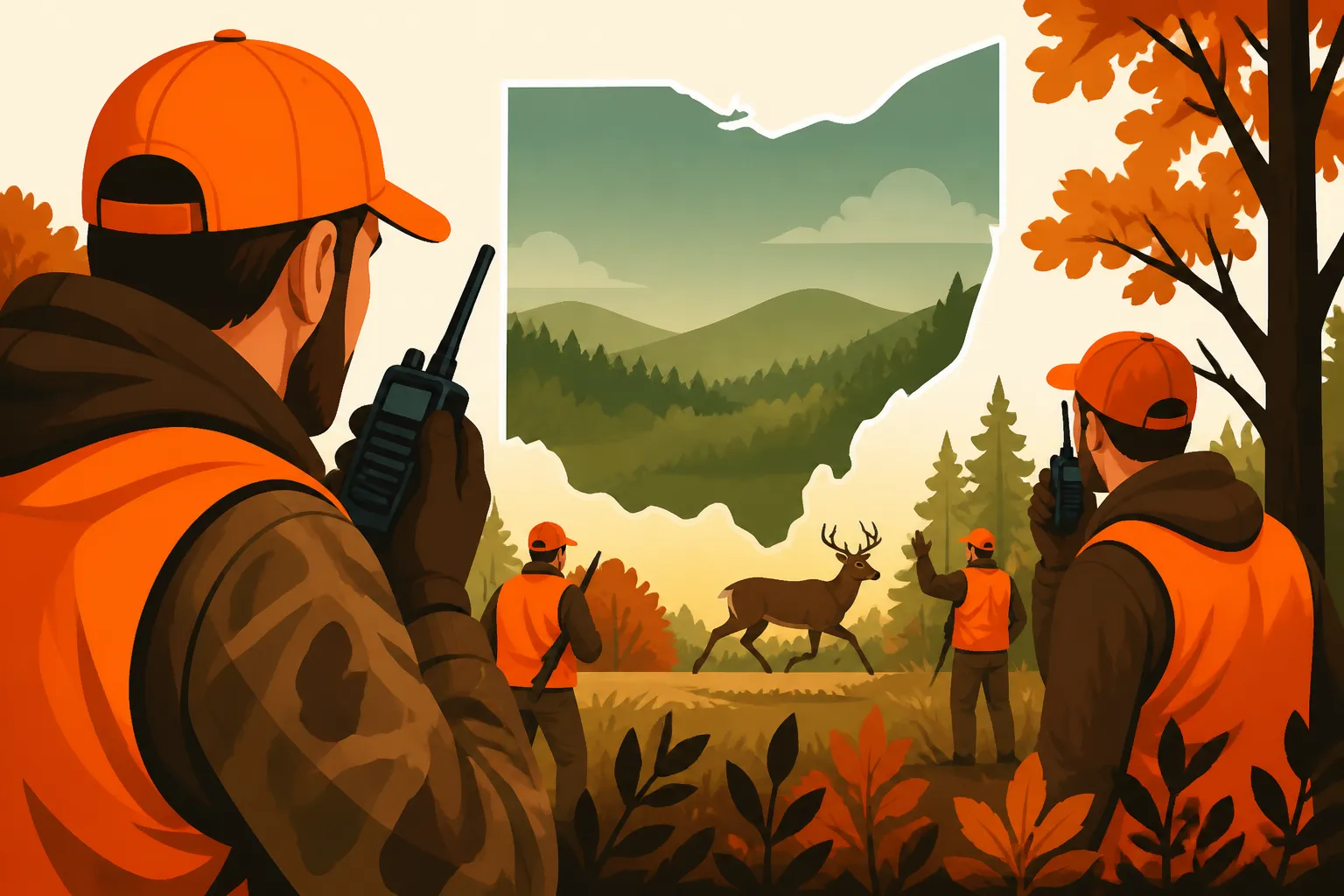
There’s nothing quite like the adrenaline rush of an Ohio deer drive, coordinating with a few trusted buddies to move deer out of thick cover. But let's be honest, it can quickly turn into a frustrating mess, or worse, a dangerous situation, when communication breaks down. This guide is all about tackling that common problem head-on, showing you how two-way radios can transform your deer drives from chaotic guesswork into a highly effective, safe, and organized hunting strategy.
The Communication Conundrum on an Ohio Deer Drive
We’ve all been there: standing on a chilly ridge in Wayne National Forest, straining to hear the distant yells of your hunting partners, wondering if that rustle in the leaves is a deer or just your buddy busting brush. It’s a classic challenge in Ohio hunting, especially when you're working a patch of timber or a thick fencerow. Without clear communication, a deer drive can quickly go sideways, leaving everyone frustrated and, more importantly, potentially compromising safety.
The Perils of Poor Communication
Imagine this scenario: you've planned a simple drive through a small woodlot bordering a cut cornfield in northwest Ohio. Your standers are in position, and the pushers start their methodical walk. Suddenly, a big buck breaks out, but the stander on the far end never got the memo that the pushers were hitting a dense patch of briars and slowing down. The buck slips past them because the timing was off. It's infuriating, isn't it? That lost opportunity often stems from the simple fact that yelling and hand signals just don't cut it when you've got wind, distance, and dense cover working against you. This is why having reliable, clear communication tools is absolutely non-negotiable for effective deer drives. It can make the difference between success and watching a tag go unfilled.
Another common pitfall is misinterpreting signals. A wave might mean "I see a deer" to one person, but "I'm stopping" to another. Or maybe you're trying to communicate where a deer is headed, but the message gets garbled, and your standers are looking in the wrong direction. These small miscommunications add up, creating gaps in your drive and allowing deer to escape unnoticed. For hunters who spend time in challenging terrain, like the Reading a Ridge for Southeast Ohio Deer, these issues are compounded by topography.
Safety First: Maintaining Situational Awareness
Beyond the frustration of missed deer, safety is the absolute paramount concern on any deer drive. When you have multiple hunters moving through varied terrain, often with limited visibility, knowing where everyone is and what they're doing is critical. Without a reliable way to communicate, you're relying on assumptions, and assumptions can be dangerous. A pusher might accidentally move too close to a stander, or someone might wander off course into an area where another hunter is positioned.
Consider a drive on heavily pressured public land where other hunters might be present. You need to be able to quickly and clearly communicate about unexpected situations, like another hunting party entering your drive area or someone needing assistance. Radios allow for constant updates, ensuring everyone knows the developing situation. This kind of real-time situational awareness is a cornerstone of safe hunting practices, helping prevent accidents and ensuring everyone goes home safely. Using two-way radios dramatically reduces the risk of someone being in an unsafe zone or a shot being taken without full awareness of where all hunters, and even non-hunters, might be located.
Choosing the Right Two-Way Radio for Ohio Hunting
When you decide to integrate two-way radios into your deer drive strategy, it’s not as simple as just grabbing the cheapest pair you can find. There are different types of radios, each with its own characteristics, and certain features are far more important for hunting applications than others. Making the right choice here can significantly impact the success and safety of your future hunts.
Understanding FRS, GMRS, and CB Radios
In the world of two-way radios, you'll primarily encounter Family Radio Service (FRS) and General Mobile Radio Service (GMRS) devices for personal use, with Citizens Band (CB) radios also having a niche, though less common, use for hunters.
- FRS Radios: These are typically the most common and inexpensive radios you'll see. They operate on low power (usually 0.5 watts) and do not require a license to operate. Their range is often limited to a mile or two in ideal, open conditions, but that can drop significantly in dense woods, hilly terrain, or around large structures – essentially, most of Ohio's diverse hunting landscape. They're great for very short-range communication, perhaps between two hunters within sight of each other or in very small, open woodlots.
- GMRS Radios: GMRS radios offer more power (up to 5 watts for handhelds) and, consequently, greater range and clarity. To operate a GMRS radio, you need a license from the Federal Communications Commission (FCC). This license covers your entire immediate family, so one license can equip your whole hunting party. While there's a small fee involved, the extended range and improved performance often make it a worthwhile investment for serious deer drives, especially when coordinating Deer Drives With Three or Four Hunters across larger tracts of land or through varied topography like you'd find in Still-Hunting Shawnee State Forest Ridges. Many modern handheld radios are "hybrid" FRS/GMRS units, meaning they can operate on both sets of frequencies, with GMRS channels offering higher power when licensed.
- CB Radios: Less common for direct hunting communication due to their larger size and antenna requirements, CB radios are generally used for vehicle-to-vehicle communication or over longer distances from a stationary point. They can be useful if you're coordinating a large drive where vehicles are involved or if your hunting camp has a base station, but for handheld, in-the-woods use, FRS and GMRS are generally preferred. They also have a different set of regulations and power limits.
For most deer drives in Ohio, GMRS radios are going to be your best bet due to their balance of power, range, and portability. Just remember to get that FCC license!
Key Features for a Hunting Radio
Beyond the FRS/GMRS distinction, several features are crucial for a reliable hunting radio:
- Range and Power Output: As discussed, higher wattage generally means better range. Look for GMRS radios that offer maximum legal power output for handheld devices. However, temper your expectations: stated "up to X miles" ranges are usually in perfect, line-of-sight conditions. In real Ohio woods, cut those numbers dramatically. Focus on consistent performance in your actual hunting environment.
- Battery Life: You don’t want your radio dying midway through a drive. Look for radios with long-lasting rechargeable batteries or the option to use standard AA/AAA batteries as a backup. Many radios offer a battery-save feature, which can be useful, but always start with a full charge and consider carrying spares.
- Durability and Weather Resistance: Hunting conditions are rarely pristine. Your radios will get dropped, rained on, and covered in mud. Look for radios with an IP (Ingress Protection) rating that indicates resistance to dust and water. A rugged build quality will ensure your investment lasts more than one season.
- Privacy Codes/Channels: While not truly "private," these codes help filter out chatter from other radio users on the same frequency, making your communication clearer. They are essential when Hunting Pressure on Ohio Public Land where other groups might be using similar radios.
- Voice Activated Transmission (VOX): This feature allows you to transmit by simply speaking, without pressing a button. It can be handy when you need both hands free, but be aware it can sometimes pick up background noise or breathing, leading to accidental transmissions. Test it thoroughly before relying on it in the field.
- Hands-Free Operation: A good headset or earpiece with a remote microphone can be a game-changer. It keeps the radio on your pack or belt, allowing you to quietly communicate without fumbling for the unit. This is especially useful for standers who need to remain still and focused.
- Vibration Alert: In situations where silence is golden, a vibration alert for incoming transmissions can be invaluable, letting you know someone is trying to reach you without a loud beep giving away your position.
When comparing models, think about the specific challenges of your hunting area. If you're often hunting in heavy rain, prioritize waterproofing. If you're doing long, multi-hour drives, battery life is key. Tools like the GoHunt app can even help you visualize terrain features that might impact radio range before you even step foot in the woods.
Best Practices for Using Radios on a Deer Drive
Having the right gear is only half the battle; knowing how to use it effectively and safely during a deer drive is just as crucial. Poor radio discipline can lead to confusion, missed opportunities, and even dangerous situations. Implementing a clear protocol before you hit the timber is key to success.
Assigning Roles and Channels
Before anyone steps out of the truck, gather your hunting party and assign specific roles for the drive. Who are the "pushers" and who are the "standers"? How many of each? Once roles are clear, establish a primary communication channel and a backup channel. Most FRS/GMRS radios have many channels and privacy codes; pick one that is clear and agree on it. For example, "Channel 5, code 10" ensures everyone is on the same frequency and filters out most external chatter.
It’s also wise to assign call signs. Instead of "Hey, Bob," which can be confusing if multiple people have similar names or if you're talking over others, use something like "Pusher One to Stander Three" or "East Flank to West Stand." This adds clarity and professionalism to your communication. Briefly review the plan – the start point, the end point, and the general direction of the drive. This preemptive planning ensures everyone is literally on the same page before the first foot hits the forest floor.
Clear and Concise Communication Protocol
Once the drive begins, communication should be as clear and concise as possible. This isn't the time for casual conversation. Every transmission should have a purpose.
Here's a basic protocol to follow:
- Identify Yourself and Your Recipient: Always start by saying who you are and who you're calling. "Stander Two to Push Leader, come in."
- State Your Message Clearly: Keep it short and to the point. Avoid jargon or long sentences. "Deer, heading north, crossed the creek."
- Confirm Receipt: The recipient should acknowledge the message. "Push Leader to Stander Two, roger that, deer heading north." This ensures the message was heard and understood.
- Use Agreed-Upon Terms: Establish simple, universal terms. "Contact" might mean a deer has been seen. "Moving" means pushers are advancing. "Hold" means pushers are stopping. "Shot taken" is critical for safety.
- Maintain Radio Silence When Not Transmitting: This keeps the channel open for important messages and conserves battery life.
A good example of this in action would be during a drive through a particularly thick section of woods. Pusher One might say, "Pusher One to Push Leader, I'm encountering heavy brush, slowing down." The Push Leader would respond, "Push Leader to Pusher One, roger that, hold position until East Flank catches up." This prevents the line from getting out of sync and leaving gaps. Remember, the goal is to transmit essential information quickly and accurately, especially when you're focusing on complex tactics like Deer Drives on Ohio Public Land or working to Fill an Antlerless Permit Late in Ohio.
Radio Etiquette and Troubleshooting in the Field
Even with the best radios and a solid plan, real-world hunting conditions can throw a wrench into your communication. Understanding proper radio etiquette and knowing how to troubleshoot common issues in the field will keep your drive running smoothly and prevent potential headaches.
Minimizing Interference and Static
Ohio's diverse landscapes, from the rolling Appalachian foothills to the flat farmlands, present unique challenges for radio communication. Hills, dense timber, and even weather can cause interference and static. Here's how to minimize it:
- Line of Sight: Radios work best with a clear line of sight. While not always possible in the woods, try to communicate when you're on a higher elevation or in a relatively open area. If you're consistently getting static, try moving a few yards to see if a change in position helps. Sometimes just moving out from behind a large oak or a rock formation can clear up a signal.
- Power Levels: Ensure your radios are set to the highest legal power output for your GMRS license. Lower power settings might conserve battery but drastically reduce range and clarity.
- Antenna Position: For handhelds, point the antenna upwards. Avoid covering the antenna with your hand or body as this can attenuate the signal.
- Avoid Obstructions: Don't transmit when the radio is deep inside your pack or under heavy layers of clothing. Keep it accessible and clear for optimal performance.
- Weather Conditions: Rain and heavy fog can sometimes affect radio signals. While you can't control the weather, be aware that communication might be more challenging in adverse conditions, and transmissions might need to be repeated more often.
- Channel Selection: If you encounter persistent interference on your chosen channel, switch to your pre-arranged backup channel. Sometimes other groups or electronic devices might be using the same frequency, causing congestion. A reliable tool like the Scouting With the Ohio HuntFish App can help identify potential terrain challenges that might affect radio performance before you even get to your hunting spot.
Battery Life and Field Maintenance
Radios are only useful if they're powered up. Managing battery life and performing basic field maintenance is crucial for extended hunts.
- Start Fully Charged: This sounds obvious, but it's often overlooked. Always ensure all radios are fully charged before heading out for a drive.
- Carry Spares: For longer days or multi-day hunts, carry extra charged battery packs or fresh alkaline batteries if your radio supports them. There's nothing worse than a dead radio in the middle of a critical moment.
- Battery Save Mode: Utilize your radio's battery save feature if it has one. This typically cycles the receiver on and off to conserve power when no signal is detected, though it might introduce a slight delay in receiving transmissions.
- Cold Weather Impact: Batteries drain faster in cold weather. Keep your radios tucked close to your body or in an inner pocket when not in active use to keep them warm. This is especially true for Muzzleloader Tactics in January Cold or during the late gun season.
- Keep Them Dry and Clean: While many radios are water-resistant, completely submerging them or exposing them to excessive dirt can cause problems. Wipe off mud and moisture regularly, and store them in a dry place after the hunt. A small, waterproof pouch can offer extra protection.
- Check Connections: Ensure headsets, microphones, and antennas are securely connected before and during the drive. Loose connections can lead to intermittent communication.
By being mindful of these details, you ensure your communication line stays open, making for more organized, safer, and ultimately more successful deer drives in the Ohio woods. Whether you're coordinating a small group or a larger effort, clear communication through two-way radios is a game-changer.
| Radio Type | License Required | Max Power (Handheld) | Typical Range (Ideal) | Pros | Cons |
|---|---|---|---|---|---|
| FRS | No | 0.5 Watts | 1-2 Miles | Inexpensive, no license, easy to use | Very limited range in heavy cover, prone to interference |
| GMRS | Yes (FCC) | 5 Watts | 3-5 Miles | Better range & clarity, one license covers family | Requires FCC license (small fee), typically more expensive |
| CB | No | 4 Watts | 5-20 Miles (mobile) | Longer range in open areas, good for vehicle convo | Bulky, less practical for handheld hunting, fewer channels |
Disclaimer
This article is for general informational purposes only and does not constitute professional advice. Laws, prices and regulations vary by location and change over time. Consult a qualified professional for guidance on your specific situation.