Ohio Ruffed Grouse Numbers Today
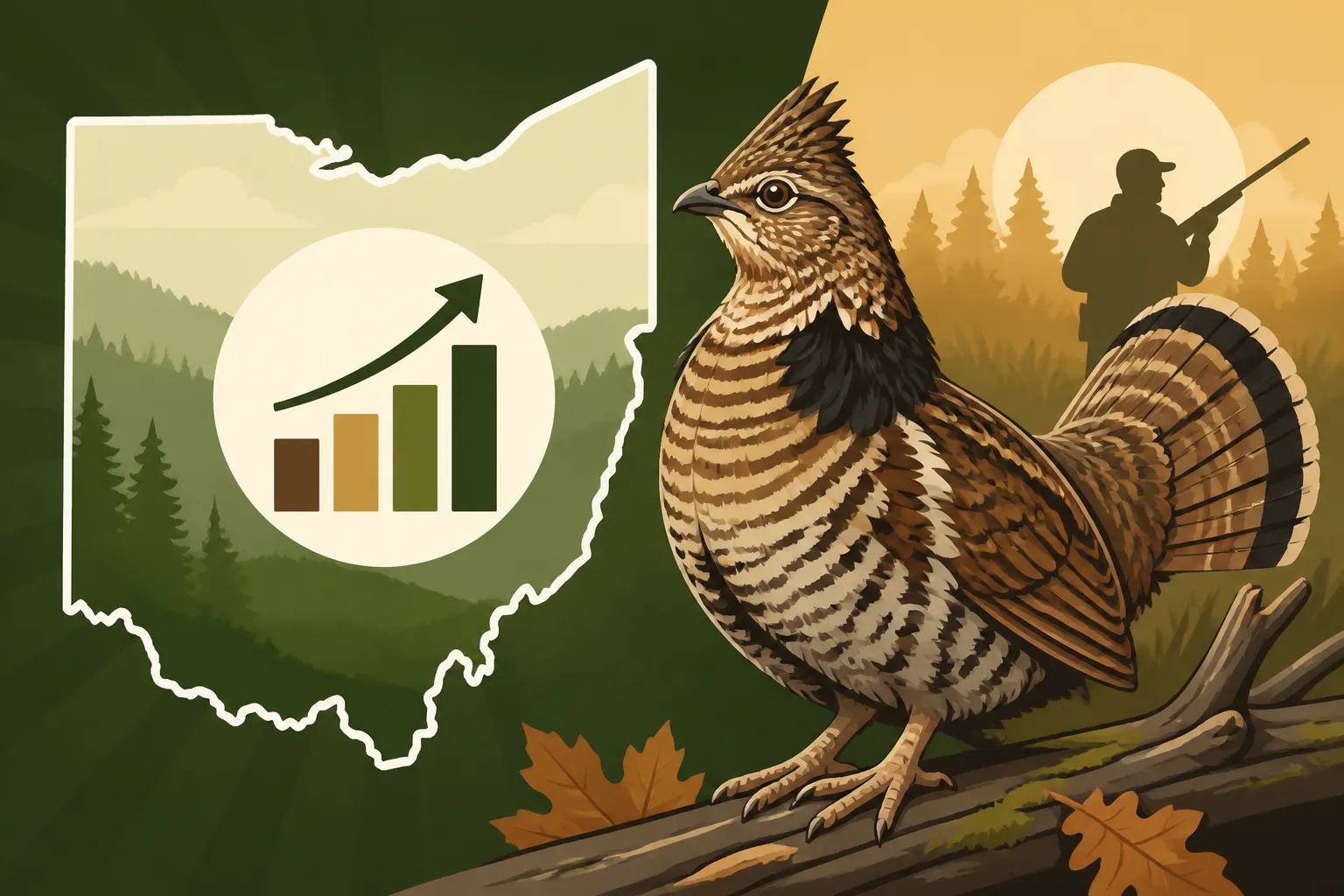
It’s a tough truth to face for many of us who grew up chasing birds through the Ohio woods, but the ruffed grouse, once a proud symbol of our wild forests, is now a rarity. For hunters who remember the explosive flushes and the thrilling chase, it's heartbreaking to see how far their numbers have fallen. This guide aims to paint a clear, realistic picture of Ohio's ruffed grouse population today, exploring why we're seeing fewer birds and what that means for anyone hoping to hear that iconic drumming.
The Haunting Silence: Ohio Ruffed Grouse Numbers Today
For many years, the ruffed grouse was a common inhabitant of Ohio's woodlands, particularly in the rugged, unglaciated Appalachian foothills of the eastern and southern parts of the state. Generations of hunters fondly recall the days when a walk through dense thickets or along old logging roads almost guaranteed a heart-stopping flush. You'd move through the woods with your shotgun at the ready, listening for that tell-tale rustle or the drumming of a male trying to attract a mate. Today, however, those memories feel more like wistful tales from a bygone era. The silence in many of our traditional grouse coverts is often deafening, broken only by the chirping of songbirds or the distant caw of a crow.
The reality is stark: Ohio's ruffed grouse population has experienced a significant, sustained decline over several decades, bringing numbers to historic lows. It's not just a subtle dip; it’s a drastic reduction that has fundamentally changed the experience of Ruffed Grouse in Decline Across Ohio. When you talk to wildlife biologists or look at the data from drumming surveys and hunter harvest reports, the story is consistent across the board. The birds are simply not where they used to be, and in many areas, they are gone entirely. This isn't just anecdotal evidence from disheartened hunters; it's a measurable decline that underscores a deep ecological shift in our state. The frustration among hunters, young and old, is palpable as they walk mile after mile through what used to be prime habitat, only to return to their trucks with an empty vest and an even emptier feeling.
We are seeing numbers that reflect a species pushed to the very brink of extirpation in much of its former range here in Ohio. While occasional birds might still be encountered in very specific, isolated pockets, the widespread, huntable populations that defined grouse hunting in our state are largely a thing of the past. It's a tough pill to swallow, especially when you consider how integral grouse once were to the hunting heritage of Appalachian Ohio. For those of us who grew up with it, it feels like losing an old friend.
Why Our Grouse Numbers Have Fallen So Drastically
Understanding why the ruffed grouse population in Ohio has plummeted is crucial, though it offers little comfort to those who miss the birds. It’s not a single factor but a complex interplay of environmental changes, disease, and habitat loss that has created a perfect storm against this once-thriving upland bird. The reasons are well-documented, yet the solutions are incredibly challenging to implement on the scale needed. For anyone who has walked through a silent woods hoping for a flush, it’s clear that something fundamental has changed, and it wasn't for the better. This deep dive into the causes behind Why Ohio Grouse Numbers Fell So Far reveals a heartbreaking truth about our changing landscapes.
The Impact of Maturing Forests and Habitat Loss
The primary culprit in the decline of ruffed grouse in Ohio, and indeed across much of their range, is the loss of early successional forest habitat. Grouse are not birds of mature, open timber. They thrive in young forests, dense thickets, and clear-cuts with a heavy understory that provides both food and crucial protection from predators. Think of areas that have been logged within the last 5-20 years, or areas recovering from wildfires (though those are less common in Ohio), or even old abandoned farm fields that are slowly reverting to forest. These places are characterized by dense saplings, brambles, and shrubs, forming an almost impenetrable canopy close to the ground. This "messy" habitat provides escape cover, nesting sites, and a bounty of buds, berries, and insects for grouse to feed on.
Here in Ohio, much of our timber has matured significantly over the last 50-70 years. While mature forests are beautiful and support other species, they lack the dense understory and diverse food sources that grouse need. As logging practices have changed, and as our state's forests have aged without widespread, consistent timber management designed to create these younger stages, grouse have simply run out of places to live and breed successfully. It's a slow, insidious form of habitat loss, not always visible as a bulldozer, but just as devastating. Even on vast tracts like Wayne National Forest Hunting or Shawnee State Forest Hunting, you often find continuous blocks of older growth with minimal clear-cuts or regenerative logging, which translates directly to minimal grouse.
Disease and Predation Pressures
Beyond habitat, disease has played an increasingly significant role in the grouse's struggle. West Nile Virus (WNV) has been identified as a major contributor to population declines in many areas, including Ohio. While WNV can affect many bird species, grouse seem particularly susceptible, with studies showing high mortality rates when birds are exposed to the virus. Mosquitoes, which transmit WNV, are widespread in Ohio, making it a constant threat to grouse populations, especially during warmer months. This disease acts as a silent killer, further exacerbating the challenges faced by an already stressed population.
Predation is another ongoing pressure. While predation is a natural part of any ecosystem, a weakened or concentrated grouse population becomes even more vulnerable. Raptors like hawks and owls, and mammalian predators such as coyotes, foxes, and raccoons, are all highly efficient hunters. When grouse numbers are low and their protective habitat is sparse, each individual bird becomes more critical, and each loss to a predator has a larger impact on the overall population. The lack of dense, escape cover makes young grouse and nesting hens easy targets, preventing successful recruitment into the population. This constant pressure, combined with diminishing habitat, makes it incredibly difficult for grouse numbers to rebound.
Where the Pockets of Hope (and Grouse) Still Exist
Despite the grim reality, not all hope is lost for Ohio's ruffed grouse. While widespread populations are gone, there are still very specific, often isolated, pockets where these resilient birds cling to existence. These areas aren't found by chance; they are typically remnants of ideal habitat, often managed specifically to provide the dense, young forest conditions that grouse require. For the dedicated upland hunter, finding these spots requires diligent scouting, an understanding of prime grouse habitat, and often, a willingness to walk through some incredibly thick cover. It's about looking beyond the general landscape and pinpointing the exact conditions where grouse can thrive, even if only in small numbers.
Concentrating on Managed Public Lands
Some of the best chances for encountering ruffed grouse in Ohio today lie within certain public lands that actively manage for early successional habitat. These aren't vast, continuous tracts, but rather specific sections where timber harvests or other forestry practices have created the necessary dense regrowth. Places like portions of Zaleski State Forest Hunting or Tar Hollow State Forest Hunting in southeastern Ohio, where active logging has taken place, might offer these fleeting opportunities. These areas are characterized by clear-cuts that are 5-15 years old, creating a tangle of saplings, briars, and low-growing vegetation. This is where you need to focus your efforts.
It's crucial to understand that even on these managed lands, grouse are not abundant. You might walk for hours through excellent-looking habitat before you get a single flush, or perhaps none at all. The key is persistence and a keen eye for subtle signs like droppings or dusting bowls. Using mapping tools like those from GoHunt can be incredibly helpful for identifying potential logging cuts, forest stand ages, or areas with specific types of dense cover. By overlaying timber management plans with topographical maps, you can narrow down your search and maximize your chances. These areas are not easy hunting, but they represent the last bastions for Ohio's grouse.
Remote, Untouched Private Ground
While harder to access, some of the most consistent, albeit small, populations of ruffed grouse can sometimes be found on private lands that have remained unmanaged for decades or have unique characteristics. This might include older family farms with neglected woodlots and overgrown pastures, or properties where selective logging created pockets of dense cover years ago and have been left undisturbed since. These are often small, isolated patches of habitat surrounded by mature forest or agriculture, creating "islands" where grouse can persist. Gaining permission on such ground is often a matter of knocking on doors and building relationships within the community.
However, even on private land, the trend mirrors public land: without active management, these pockets will eventually revert to mature timber, and the grouse will move on or die out. For hunters, it's a constant search for these ephemeral havens. Knowing what Which Ohio Counties Still Hold Grouse helps narrow your focus, typically to the southeastern quarter of the state where the unglaciated terrain lends itself to more diverse forest structures. Remember, a single bird flushed can be the highlight of a season, so temper your expectations and celebrate every encounter.
What This Means for Ohio Grouse Hunters
The drastically reduced numbers of ruffed grouse in Ohio present a unique set of challenges and considerations for hunters. The days of simply heading into any old woodlot and expecting to flush birds are long gone. Today, grouse hunting in Ohio is less about filling a vest and more about the experience, the challenge, and the connection to a vanishing legacy. It’s a hunt steeped in nostalgia and a deep appreciation for every single interaction with this elusive bird.
| Aspect | Past Grouse Hunting in Ohio | Present Grouse Hunting in Ohio |
|---|---|---|
| Population Status | Widespread and relatively common | Extremely low, scattered, and localized |
| Habitat Focus | Broad areas of young and mixed-age forests | Very specific, actively managed early-successional habitat |
| Hunter Effort | Moderate, often productive in general grouse coverts | High, requiring extensive scouting and willingness to walk thick cover |
| Harvest Expectation | Realistic possibility of harvesting multiple birds | A single flush or harvest is a significant achievement |
| Experience | Common upland pursuit, often part of general small game | Niche, dedicated pursuit, more about the challenge than the bag |
| Scouting Methods | General knowledge of forest types, local tips | Detailed mapping, timber harvest records, GoHunt overlays, on-the-ground recon |
The Value of Scouting and Habitat Knowledge
For the modern Ohio grouse hunter, advanced scouting and an intimate knowledge of habitat are absolutely non-negotiable. You can't just hope for the best; you have to meticulously research and identify areas that offer the specific conditions grouse need. This means poring over maps, looking for recent timber cuts, and understanding forest succession. Tools like GoHunt or other detailed mapping applications become invaluable for identifying these very specific niches. You're looking for dense, regenerating areas, often on state forests or Ohio Wildlife Areas where active forestry has occurred. Pay attention to clear-cuts that are roughly 5 to 15 years old, as this provides the optimal mix of cover and food sources.
When you're out in the field, look for signs of grouse, such as droppings, dusting areas, or disturbed leaf litter. Learn to recognize key food sources like the buds of aspen, birch, or cherry, and the presence of berries like hawthorn or greenbrier. Your approach needs to be more like a deer hunter's, focusing on specific small patches of ideal cover rather than simply walking large expanses of woods. It’s a rewarding challenge, but one that demands a different kind of dedication than it did a few decades ago. You’ll spend more time looking and walking than actually shooting, but every flush becomes a treasured memory.
Lowered Expectations and Conservation Focus
Perhaps the most significant change for Ohio grouse hunters is the need to adjust expectations. The idea of bagging a limit of grouse in Ohio is, for most, a fantasy. A successful grouse hunt today often means simply hearing a flush, seeing a bird, or perhaps, with a lot of luck and effort, bagging a single bird after hours of walking. It’s about celebrating the encounter, not the quantity. This shift in mindset is crucial for avoiding disappointment and appreciating the truly wild nature of these remaining birds.
Furthermore, the focus for anyone passionate about grouse should lean heavily towards conservation. Supporting organizations that advocate for and implement early successional habitat management is vital. Understanding the habitat needs of Ohio's Squirrel and Rabbit Populations often overlaps with grouse, so efforts to help one can sometimes benefit the other. Participate in habitat improvement projects if you have the opportunity, or simply be an advocate for responsible forest management. The future of Ohio's ruffed grouse, if there is to be one that allows for even limited hunting, depends entirely on our collective efforts to restore and maintain the specific habitats they require. We must learn from Habitat Loss Behind Ohio's Grouse Decline and actively work to reverse the trend.
Disclaimer
This article is for general informational purposes only and does not constitute professional advice. Laws, prices and regulations vary by location and change over time. Consult a qualified professional for guidance on your specific situation.