Mange in Ohio Coyotes and Foxes
Spotting an animal, whether it's a sleek coyote or a wary fox, struggling with severe hair loss and crusty skin can be a really disheartening experience for any hunter or outdoors enthusiast in Ohio. It leaves you wondering what's happening to our wildlife, if it's contagious, and what, if anything, you should do. This guide aims to demystify mange in Ohio's coyote and fox populations, explaining what it is, how it affects these animals, and what role you play in monitoring wildlife health.
What Exactly is Mange, and Why Does it Matter to Hunters?
Mange is one of those words that immediately conjures up an unpleasant image, and for good reason. It's a parasitic skin disease that can severely impact wild animals, particularly canids like coyotes and foxes, right here in Ohio. Understanding what it is and why it's prevalent can help us better appreciate the challenges our local wildlife face and how it might even affect our hunting experiences.
Sarcoptic Mange Explained: The Scourge of Tiny Mites
When we talk about mange in coyotes and foxes, we're almost always referring to sarcoptic mange, also known as scabies. This isn't just a simple skin rash; it's caused by a microscopic mite, Sarcoptes scabiei, that burrows into the animal's skin. Imagine tiny insects tunneling just under your skin, causing intense itching, irritation, and inflammation – that's what these poor animals go through.
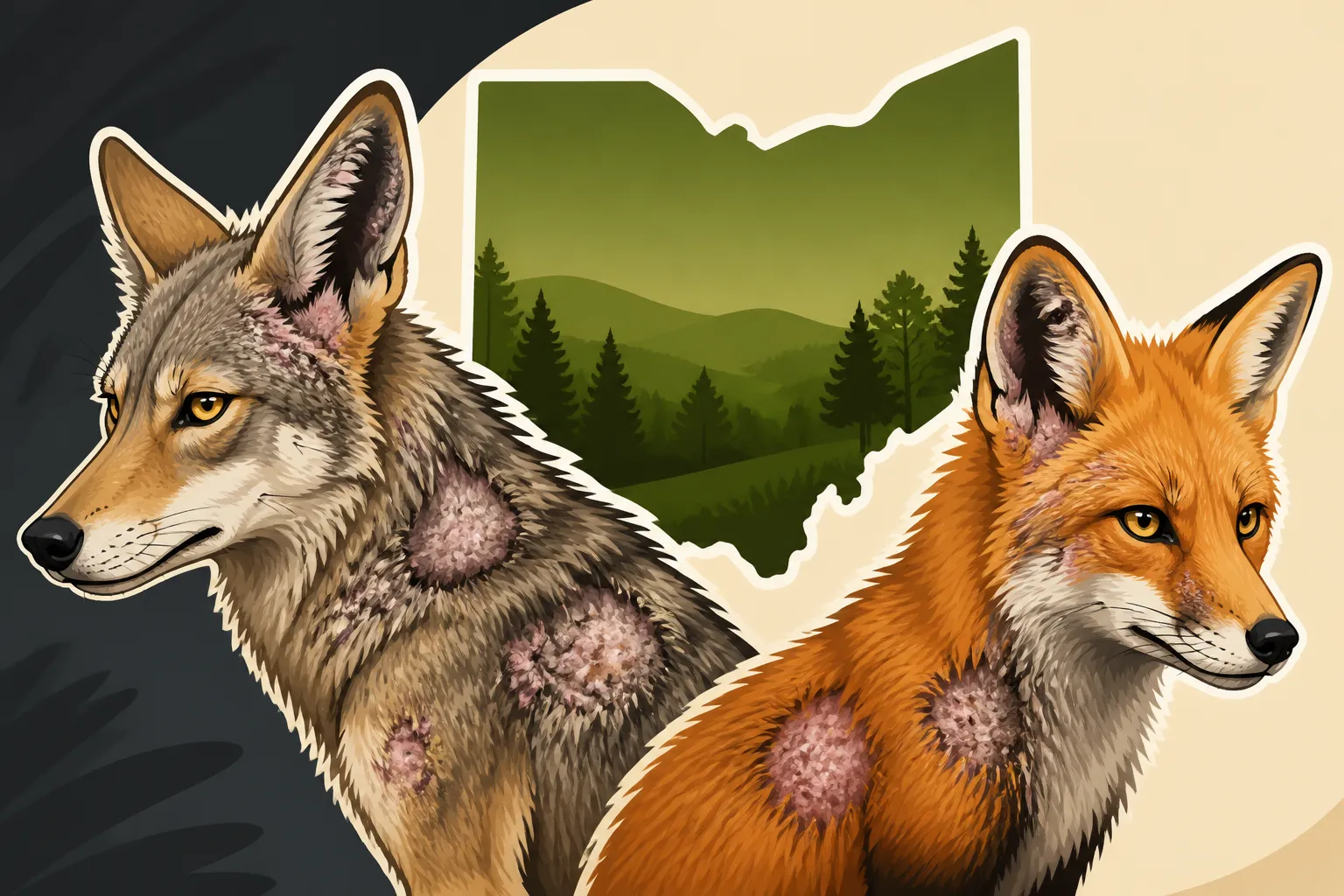
The symptoms are pretty unmistakable once the disease takes hold. Initially, you might notice small patches of hair loss, often around the face, ears, and elbows. But as the mites multiply and spread, the hair loss becomes extensive, covering large areas of the body. The skin thickens, becomes crusty, wrinkled, and often bleeds from the constant scratching. This can lead to secondary bacterial infections, making the animal even sicker. They can become lethargic, emaciated, and incredibly vulnerable to the elements, especially during our harsh Ohio winters. It’s a truly miserable existence for them, and often, what you're seeing is an animal suffering greatly.
The Cycle of Infection: A Constant Threat in the Wild
Mange doesn't just appear out of nowhere; it spreads through direct contact between animals or by indirect contact with contaminated environments. Think about a coyote den where multiple generations might live, or a well-used game trail that both foxes and coyotes frequent. A mite-infested animal rubbing against a tree or bedding down leaves behind mites that can then crawl onto the next animal that uses that same spot. This is especially common when animals are congregating, like during breeding season or around a food source.
A healthy, robust animal might be able to fight off a mild infestation, but if their immune system is compromised by poor nutrition, stress, or other diseases, they are far more susceptible to a severe case. The cycle continues as infected animals spread the mites, and while it's a natural part of wildlife population dynamics, it's certainly not a pretty one. For hunters, encountering a mangy animal can sometimes be deceiving. A sick animal might appear during daylight hours when a healthy one wouldn't, or act less wary, making it seem like an easy target. However, it's a sign of a struggling individual, not necessarily a healthy population trend. Knowing your local population's health trends is something you can often find information on through resources like the Ohio HuntFish App, which includes various reports and data.
How Mange Impacts Ohio's Coyote and Fox Populations
Mange isn't just a sad sight; it has tangible impacts on our wild canid populations. While it rarely wipes out an entire species, its presence is a significant factor in the health and dynamics of local coyote and fox numbers across Ohio.
Population Dynamics: Natural Control, Painful Reality
Can mange really thin out predator numbers? Absolutely. While coyotes and foxes are incredibly resilient, severe mange cases can lead to death, particularly in pups, older animals, or those already weakened by malnutrition or other ailments. An animal struggling with advanced mange can't hunt effectively, regulate its body temperature, or evade threats as well as a healthy one. This increased vulnerability means they're more likely to succumb to starvation, exposure, or secondary infections.
Consider a harsh Ohio winter. A mangy coyote with minimal fur coverage won't be able to stay warm, burning precious calories just to survive. This makes hunting and finding food even harder. While it's a natural form of population control, it's a slow, agonizing process. You might see fewer healthy-looking animals in an area heavily impacted by mange for a time, though these populations usually rebound. When you're scouting with a tool like GoHunt, and you're trying to assess predator density, seeing numerous mangy animals could indicate a locally stressed population, which might influence deer fawn survival, as predators play a role in Ohio Predator Impact on Fawn Recruitment.
Ecological Role and Spread: A Complex Web
Coyotes and foxes play crucial ecological roles as predators in Ohio's ecosystem. They help keep rodent and small mammal populations in check, and in some areas, can even influence deer numbers. Mange, while unpleasant, serves as a natural mechanism that can prevent overpopulation of these predators. However, a widespread outbreak can temporarily reduce their effectiveness in these roles.
The disease spreads quite efficiently among social animals, which both coyotes and foxes are to varying degrees. Dens, communal resting spots, and shared hunting grounds become hotbeds for mite transmission. For an idea of how prevalent these animals are, you can look into resources detailing Ohio Coyote Range and Density and Ohio Red Fox Versus Gray Fox Range. The presence of mange is a good reminder that wildlife health is a complex, interconnected system, and what affects one species can ripple through the local environment. The Ohio Department of Natural Resources (ODNR) monitors these trends closely, especially when you Reporting a Sick Animal in Ohio.
The Human Element: Concerns and Clarifications
It's natural to worry when you see a sick animal, especially about the potential for disease spread to pets or even humans. Here's the good news: while sarcoptic mange is highly contagious among canids, direct human infection (scabies) from wild animals is rare and usually resolves itself without specific treatment, as the mites that affect animals generally don't thrive on humans. However, it's always wise to practice good hygiene and avoid direct contact with sick wildlife.
For your hunting dogs, the risk is higher. If your dog comes into contact with a mangy coyote or fox, or spends time in an area where an infected animal has been, they could pick up the mites. Symptoms in dogs are similar: intense itching, hair loss, and skin irritation. If you suspect your dog has mange, consult your veterinarian immediately. It’s a treatable condition in domestic animals. This concern underscores why proper care and awareness when out in the field is paramount. Even when using a tool like GoHunt to plan your hunts, always be observant of animal health.
| Characteristic | Healthy Coyote/Fox | Mangy Coyote/Fox (Moderate-Severe) |
|---|---|---|
| Coat Appearance | Thick, glossy, full fur | Patchy, sparse, or absent fur; often matted |
| Skin Condition | Smooth, pliable, healthy pink/grey | Thickened, crusty, wrinkled, scaly, often red or bleeding |
| Body Condition | Well-muscled, alert, agile | Emaciated, bony, lethargic, slow-moving |
| Behavior | Wary, avoids human contact, active at dusk/dawn | Less wary, may appear during daylight, seeks warmth/shelter |
| Energy Level | High, constantly moving, hunting | Low, struggles to move, spends more time resting |
| Visible Scars/Wounds | Minimal | Often present from scratching and secondary infections |
What Hunters Can (and Cannot) Do About Mange
As hunters, we're often the first line of observation for wildlife health. When you encounter a mangy animal, it brings up a lot of questions about responsibility, ethics, and practical actions.
Ethical Considerations: Mercy or Monitoring?
The question of whether to harvest a mangy animal is a common one. Ethically, if you encounter an animal clearly suffering from severe mange – emaciated, barely moving, and heavily encrusted with skin lesions – harvesting it can be seen as a humane act to end its suffering. This is especially true for species like coyotes, which have year-round hunting seasons in Ohio, as covered by Ohio Coyote Hunting Season Rules. However, it's important to approach this with careful consideration. If the animal's condition is mild, it might recover on its own.
Most importantly, if you do decide to take a mangy animal, you need to exercise extreme caution in handling the carcass. This is not for consumption, and proper disposal is key. Always use gloves and follow guidelines similar to those you'd use for any animal with an unknown disease. Our commitment to responsible hunting extends to managing wildlife health, and sometimes, that means making tough choices in the field.
Reporting Sightings and Carcasses: Your Role in Wildlife Monitoring
One of the most valuable things a hunter can do is report sightings of severely mangy coyotes or foxes to the Ohio Department of Natural Resources (ODNR). These reports contribute vital data to their wildlife disease monitoring programs, helping them track prevalence, identify potential hotspots, and understand broader population health trends. The ODNR depends on public input to paint a comprehensive picture of what's happening in the field.
You can typically find contact information for reporting sick animals on the ODNR's website. Using tools like the Ohio HuntFish App can also be a quick way to locate contact information or even report sightings directly if the app has such a feature. Providing details like location, date, species, and a description of the animal's condition is incredibly helpful. This is part of being a responsible steward of Ohio's wildlife, contributing to the bigger picture of Ohio Wildlife Disease Monitoring.
Safe Handling and Processing: Protecting Yourself and Others
Let's be clear: the meat of a mangy animal is generally not recommended for consumption. While mange itself primarily affects the skin and doesn't typically contaminate muscle tissue, secondary infections, overall poor health, and the unknown nature of other potential diseases make it a significant risk. Prioritize safety over attempting to salvage meat.
If you handle a mangy carcass:
- Wear Gloves: Always use disposable gloves. Rubber or latex gloves are ideal.
- Avoid Direct Contact: Try to minimize skin contact with the animal's fur and skin, especially around the affected areas.
- Dispose Properly: The best practice is to bury the carcass deeply or double-bag it and dispose of it in a secure landfill, away from other animals. Do not leave it exposed where other scavengers could access it.
- Clean and Sanitize Gear: Thoroughly clean and disinfect any knives, tools, clothing, or vehicle surfaces that came into contact with the animal. Hot, soapy water followed by a bleach solution (1 part bleach to 9 parts water) can be effective. This is similar to the precautions one might take when Handling Venison From a DSA County Safely or any time you're dealing with game processing.
- Wash Hands Thoroughly: After handling, wash your hands meticulously with soap and water, even if you wore gloves.
These precautions aren't just for your health; they also help prevent the spread of mites to your hunting gear, vehicle, or pets, maintaining good practices that are part of Ohio Hunter Education Requirements.
Misconceptions and Broader Wildlife Health in Ohio
Mange is a serious condition, but it's important to understand it within the wider context of wildlife health. There are often misunderstandings about mange, and recognizing its place among other challenges helps us appreciate the resilience of Ohio's wild populations.
Mange vs. Other Skin Conditions: Not All Hair Loss is Mange
It's easy to see an animal with hair loss and immediately assume mange, but not every case of a patchy coat is due to this parasitic mite. Other factors can lead to hair loss or poor coat condition in wild animals. For example, some animals might have hair loss from injuries, fungal infections, or even nutritional deficiencies. While these are less common or often secondary to mange, it's a good reminder that wildlife health can be complex.
For instance, a coyote that got into a fight might have patches of fur torn out. Or, in extremely rare cases, a genetic condition could cause unusual fur growth. However, the tell-tale signs of sarcoptic mange—the thickened, crusty skin, intense itching, and visible signs of suffering—are usually pretty distinct. When in doubt, a report to the ODNR can help their experts discern the cause.
The Bigger Picture of Wildlife Health: A Dynamic Landscape
Mange is just one piece of the intricate puzzle of wildlife health in Ohio. Our state's wildlife populations constantly face a variety of natural diseases, environmental stressors, and challenges. Think about Chronic Wasting Disease in Ohio Deer or EHD (Epizootic Hemorrhagic Disease) die-offs in deer; these are significant concerns that the ODNR actively monitors. Just like humans, wild animals are susceptible to pathogens, parasites, and environmental impacts that affect their well-being.
The ODNR's work in Ohio Wildlife Disease Monitoring is crucial. They collect data from hunter reports, road-killed animals, and other sources to understand disease prevalence and distribution. This information helps them make informed management decisions, ensuring that our hunting seasons and bag limits are sustainable and account for overall herd or population health. Mange, in this context, is one of many factors that contribute to the natural ebb and flow of animal populations. Knowing how many coyotes Ohio has is part of managing these populations effectively.
Long-Term Outlook for Ohio Predators: Resilient Despite Challenges
Despite the challenges posed by diseases like mange, Ohio's coyote and fox populations are incredibly resilient. Coyotes, in particular, have adapted remarkably well to human-dominated landscapes and are found in every county in Ohio. Their ability to reproduce quickly and adapt their diets and behaviors helps them bounce back from localized impacts, including disease outbreaks. For more information on their presence and impact, you can refer to How Many Coyotes Ohio Has.
Fox populations, while perhaps not as widespread in urban areas as coyotes, also demonstrate significant tenacity. Predator management in Ohio seeks to balance these populations with other wildlife, like deer, and address human-wildlife conflicts. While mange is a visible and concerning aspect of wildlife health, it rarely poses a threat to the long-term viability of healthy coyote and fox populations in the state. Hunters, through their observations and reports, play a critical role in helping the ODNR maintain this balance and keep an eye on the health of our wild neighbors. Using tools like GoHunt to stay informed about regional trends and population data can help you understand the bigger picture of predator health and its impact on other game species in your hunting areas.
Disclaimer
This article is for general informational purposes only and does not constitute professional advice. Laws, prices and regulations vary by location and change over time. Consult a qualified professional for guidance on your specific situation.