Ohio Predator Impact on Fawn Recruitment
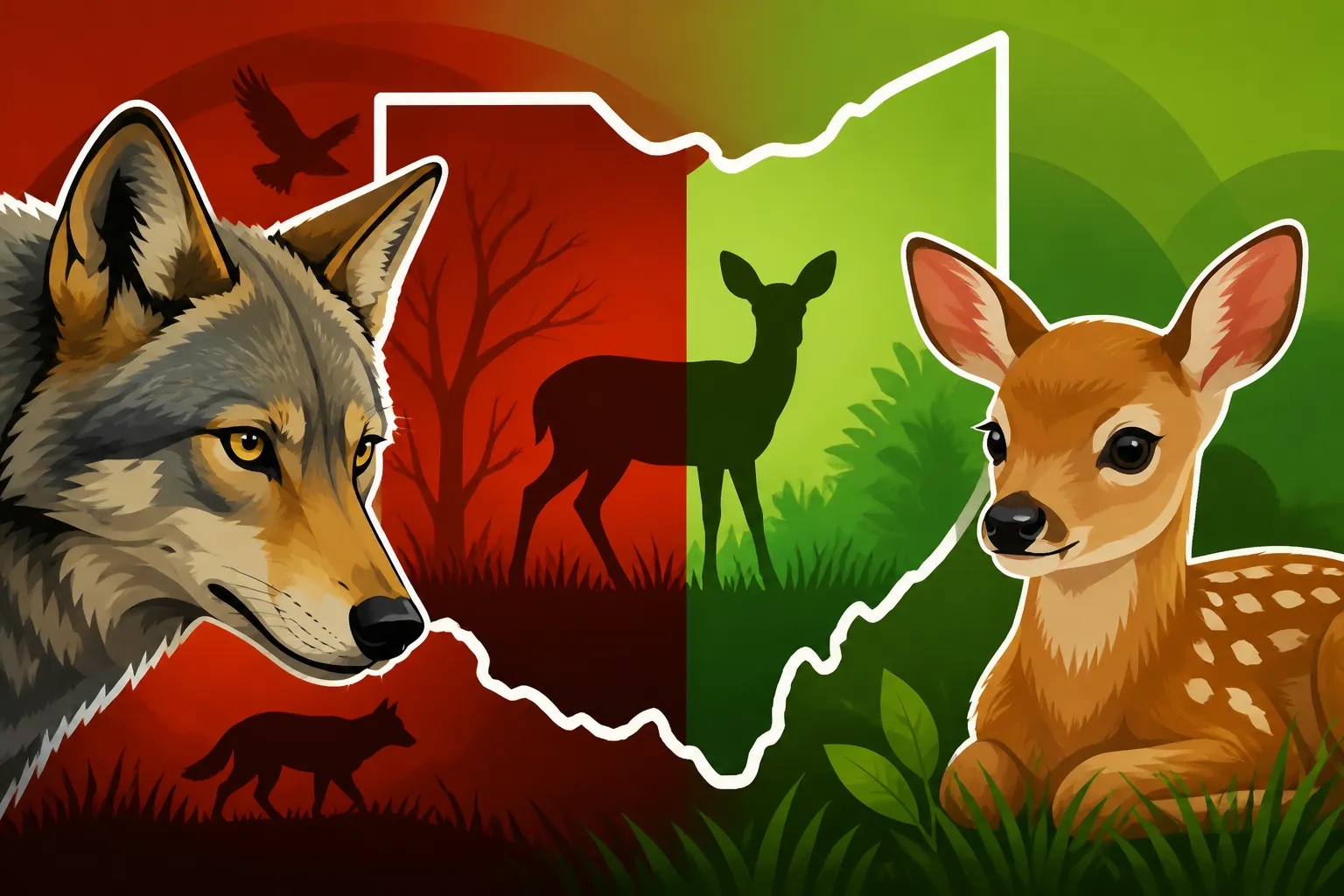
It's frustrating when you spend hours scouting or sitting in a stand, and you just aren't seeing the number of fawns you'd expect, even in areas with good doe populations. Many hunters immediately think "coyotes!" or "bobcats!" and wonder if predators are just decimating the young deer before they even have a chance to grow. This guide will take a deeper dive into the complex reality of how predators truly impact fawn recruitment in Ohio, helping you understand the full picture beyond simple observations.
Understanding Fawn Recruitment in Ohio
When we talk about "fawn recruitment," we're not just counting how many fawns are born in the spring. That initial birth pulse is almost always robust, with Ohio's healthy doe population typically dropping multiple fawns each year. Instead, recruitment refers to the number of fawns that survive to the hunting season and are actually added to the adult deer population. It's the metric that ultimately dictates the health and growth potential of our deer herd.
Several factors intertwine to influence this survival rate, and it's rarely a single, isolated issue. Think of it like a puzzle where predators are just one piece, albeit an important one. Habitat quality, doe nutrition during gestation, severe weather events during or shortly after fawning, and disease outbreaks can all play significant roles in how many fawns make it to their first birthday. A weak, poorly nourished fawn born into an area with scant cover during a cold, wet spring is naturally more vulnerable, no matter how many predators are around. Understanding these dynamics is key to truly grasping the Ohio Fawn Survival Rates and how they contribute to the overall herd.
Ohio's Primary Fawn Predators
Ohio is home to a variety of opportunistic predators, and while many species might occasionally take a fawn, a few stand out as having the most consistent impact on young deer. It's important to differentiate between opportunistic feeding and sustained population control when we discuss these animals.
Coyotes: The Most Widespread Threat
There's no doubt that coyotes are present across every single county in Ohio, from the rolling hills of Appalachia to the sprawling farmlands of the northwest. These incredibly adaptable canids are opportunistic hunters, meaning they'll take whatever is easiest to catch. And in late spring and early summer, nothing is much easier than a newborn fawn. Fawns are born with a camouflage coat and a strong instinct to lie still, which is a great defense against predators that hunt by sight. However, it makes them incredibly vulnerable to predators that hunt by scent, like coyotes. A coyote simply sniffing its way through a field edge or a thicket can easily locate a bedded fawn. You'll often hear hunters talk about Coyote Calling in Ohio Winter as a way to manage their numbers, and while it's a great sport, its population-level impact on deer is often debated.
Coyotes will often target fawning areas, especially those near dense cover where does prefer to drop their young. They are efficient hunters, and while they might not be the sole reason for a low fawn count, their consistent presence and adaptable hunting strategies mean they are always a factor. The Ohio Coyote Range and Density shows just how ubiquitous they are, making them the most common predator encountered by fawns.
Bobcats: A Growing Presence in the Southeast
While not as widespread as coyotes, bobcats have made an incredible comeback in Ohio, particularly in the rugged, forested terrain of the southeastern counties. These stealthy, efficient hunters are also capable of taking down fawns. Unlike coyotes, bobcats are ambush predators, relying on their keen eyesight and silent approach to surprise their prey. A fawn lying still in a thicket or underbrush is perfect prey for a stalking bobcat.
The impact of bobcats on fawn recruitment is likely localized, concentrated in the areas where their populations are densest, such as the Shawnee State Forest region or parts of the Wayne National Forest. We're fortunate to see Ohio's Recovering Bobcat Population, and they're a vital part of our ecosystem, but their predatory nature is undeniable. It's Why Ohio Bobcats Have No Open Season is often discussed, balancing recovery with potential impact.
Other Potential Predators: Black Bears and Domestic Dogs
Ohio's black bear population is slowly but steadily increasing, with sightings becoming more common, especially in the eastern part of the state. While black bears are omnivores and primarily feed on plants, berries, insects, and carrion, a hungry bear will absolutely take a fawn if the opportunity arises. However, their impact on fawn recruitment is generally considered minimal when compared to coyotes, largely due to their much lower population density and different primary diet. You can learn more about Ohio's Recovering Black Bear Sightings if you're curious about their presence.
Perhaps a more insidious, though localized, threat comes from uncontrolled domestic dogs. Feral or free-roaming dogs can pack up and chase deer, including fawns, causing stress, injury, and sometimes death. This is often a problem closer to human habitation or in rural areas where pets are not properly contained. Their impact, while serious in specific locales, doesn't typically affect the overall state deer population recruitment as broadly as coyotes.
The Reality of Predator Impact on Deer Recruitment
It's natural to feel concerned when you see fewer fawns and more predators. However, the science of wildlife management often reveals a more nuanced picture than our immediate observations might suggest. The relationship between predators and prey is complex and involves many interconnected variables.
Compensatory vs. Additive Mortality: A Crucial Distinction
One of the most important concepts to understand is the difference between compensatory and additive mortality.
- Compensatory mortality means that predators are primarily removing fawns that would have died anyway from other causes, such as disease, starvation, birth defects, or abandonment. In a healthy, robust deer population with good habitat, some level of fawn loss is natural and doesn't necessarily reduce the overall number of deer that survive to adulthood. The population "compensates" for these losses.
- Additive mortality, on the other hand, occurs when predators kill fawns that would have otherwise survived, directly reducing the overall deer population beyond what natural factors would account for.
Most scientific studies on deer populations, including those in regions similar to Ohio, suggest that predator impact on fawn recruitment leans heavily towards compensatory mortality, especially in areas with healthy deer herds and good habitat. It's often the weakest fawns, or those born in subpar conditions, that fall victim first. In essence, predators might be "culling the herd" by removing the least fit, which can, paradoxically, lead to a stronger overall population. However, in specific situations—like extremely high predator densities combined with poor fawning cover or a drastically reduced deer population—predation can become additive and genuinely hinder deer recovery or growth.
The Role of Habitat and Deer Density
Habitat quality is a paramount factor in fawn recruitment, often outweighing the direct impact of predators alone. Does need dense, secure cover to give birth and hide their fawns during the critical first few weeks of life. Areas rich in thick briar patches, regenerating timber cuts, tall native grasses, or dense shrubbery provide fawns with excellent concealment from predators. When this critical fawning cover is lacking, fawns are exposed and become much easier targets, leading to higher predation rates.
Think about it: if a doe has to drop her fawns in a wide-open hayfield with no nearby escape cover, those fawns have a much harder time surviving than those born in a tangled clear-cut. Reading Aerial Photos for Southeast Ohio Deer can help you identify these crucial areas. Furthermore, the overall Deer Density by Ohio Region also plays a role. In areas with abundant deer, even if predators take some fawns, there are simply so many fawns being born that the population can easily absorb those losses without a noticeable decline in recruitment.
Here's a simplified look at the factors:
| Factor | Impact on Fawn Recruitment (Generally) | How it Relates to Predation |
|---|---|---|
| Good Habitat | Increases survival due to concealment and nutrition. | Provides fawns with cover, reducing predator success. |
| Poor Habitat | Decreases survival due to exposure and lack of forage. | Fawns are more exposed, increasing vulnerability to predators. |
| Doe Nutrition | Well-nourished does produce healthier, more vigorous fawns. | Healthy fawns are more resilient and harder for predators to catch. |
| Severe Weather | Cold, wet springs can directly kill fawns or weaken them. | Weakened fawns are easier prey for predators. |
| Disease | Can cause direct mortality in fawns. | Diseased or sickly fawns are highly susceptible to predation. |
| High Deer Density | More fawns are born, potentially offsetting some losses. | Even with predation, overall recruitment might remain stable. |
| Low Deer Density | Fewer fawns born means each loss is proportionally more impactful. | Predation can have a more pronounced additive effect. |
Practical Steps for Hunters to Support Fawn Recruitment
While you might not be able to eliminate every predator, focusing on habitat and understanding the broader picture can make a real difference in supporting healthy fawn recruitment in your hunting area.
Focus on Habitat Improvement
For private landowners, creating and maintaining excellent fawning cover is hands-down the most effective way to boost fawn survival. This means encouraging dense, brushy growth, establishing native warm-season grasses, or allowing some clear-cuts to regenerate into thick young forests. These areas provide both concealment and crucial forage for does and fawns. Even on public land, recognizing areas with good fawning cover and advocating for management that promotes it is valuable. Projects like those found in Habitat Work on Ohio Wildlife Areas are designed to do exactly this.
When you're scouting, look for those dense thickets and areas of early successional growth. These aren't just great bedding areas for mature bucks; they're vital nurseries for the next generation of deer. Hunting a Clear-Cut Regrowth Edge can be incredibly effective not just for mature deer, but also for knowing where young deer might be getting their start.
Understanding Predator Management
Hunting coyotes, foxes, and even bobcats (where legal and seasons permit, though remember bobcats are protected in Ohio) can be an enjoyable pursuit and might locally reduce predator pressure. For those who enjoy predator hunting, it can definitely feel like you're doing your part. However, it's important to have realistic expectations. Broad, landscape-level predator control is incredibly difficult and often cost-prohibitive. Coyotes are prolific breeders and quickly fill population voids.
Many wildlife agencies now focus on a "whole ecosystem" approach, understanding that removing one species can sometimes have unintended consequences or simply be a temporary fix. Instead of solely blaming predators, smart hunters and land managers look at the entire picture: how healthy is the doe herd? Is there enough food? Is there ample cover? Are deer dying from other causes like EHD or vehicle collisions? These factors often have a much larger impact on recruitment than predator numbers alone.
Ultimately, while the sight of a coyote can certainly stir up protective feelings for our deer, the real story of fawn recruitment in Ohio is a complex tapestry woven with threads of habitat, nutrition, weather, and a natural balance of predators and prey. By focusing on robust habitat and understanding these ecological dynamics, we can best support a thriving deer herd for years to come.
Disclaimer
This article is for general informational purposes only and does not constitute professional advice. Laws, prices and regulations vary by location and change over time. Consult a qualified professional for guidance on your specific situation.