Ohio Buck-to-Doe Ratio by Region
It can be incredibly frustrating to spend hours in the treestand, patiently waiting, only to see a parade of does and fawns, with nary a buck in sight. Or perhaps you’ve noticed that your hunting experiences differ vastly depending on which part of Ohio you’re in. This guide will help you unravel the mystery behind those observations by breaking down Ohio's buck-to-doe ratio by region, exploring why these differences exist, and showing you how this crucial information can transform your hunting strategy.
Understanding the Buck-to-Doe Ratio and its Importance
When we talk about hunting, especially deer hunting, there’s a lot of focus on big antlers, tracking big bucks, and the rush of the rut. But behind all of that excitement lies a fundamental biological principle: the buck-to-doe ratio. This ratio is often overlooked by casual hunters, but understanding it is absolutely critical for anyone serious about herd health and consistent hunting success. It’s more than just a number; it’s a window into the health, behavior, and potential of the deer herd in any given area.
What Exactly is the Buck-to-Doe Ratio?
At its simplest, the buck-to-doe ratio is the number of antlered bucks relative to the number of does in a specific deer population. You'll often hear it expressed as "1:2" or "1:3," meaning one buck for every two or three does. Now, it's important to clarify that this isn't usually about every buck or every doe, but often focuses on mature animals capable of breeding. While the total Ohio Deer Population Estimate includes all age classes, the buck-to-doe ratio specifically zeroes in on the breeding dynamics.
If you’ve ever sat in your stand and felt like you were in a doe factory, you were likely experiencing a highly skewed ratio, perhaps 1:5 or even higher. Conversely, if you've hunted areas where you consistently see a good mix of buck and doe activity, you're probably in a region with a much more balanced ratio, closer to 1:1.5 or 1:2. This number isn't just arbitrary; it's a direct reflection of hunting pressure, habitat, and management practices, and it profoundly impacts everything from rut intensity to fawn survival.
Why a Balanced Ratio Benefits Deer and Hunters
So, why does a balanced buck-to-doe ratio matter? Imagine a deer herd where there are ten does for every one mature buck. When the rut hits, that single buck is suddenly responsible for breeding an overwhelming number of females. This prolonged breeding effort can exhaust the buck, potentially leaving some does unbred or bred later in the season. For hunters, this often means a less defined, drawn-out rut, making it harder to predict when and where bucks will be actively chasing. The rut becomes more of a trickle than a flood, making Hunting the Rut in Early November a trickier proposition.
On the other hand, a more balanced ratio—say, one buck for every two or three does—creates a far healthier and more intense rut. Multiple mature bucks are competing for fewer does, leading to increased daylight activity, more aggressive buck behavior (think more scraping, rubbing, and fighting), and a much tighter breeding window. This intense competition means bucks are actively seeking out does, responding better to calls like Rattling and Grunting in Ohio, and generally making themselves more visible during shooting hours. For the deer themselves, it means more does are bred efficiently, leading to earlier fawns with higher survival rates, and a healthier overall herd. It's a win-win for everyone involved, fostering a more sustainable and exciting hunting environment.
Ohio's Regional Buck-to-Doe Ratios Explained
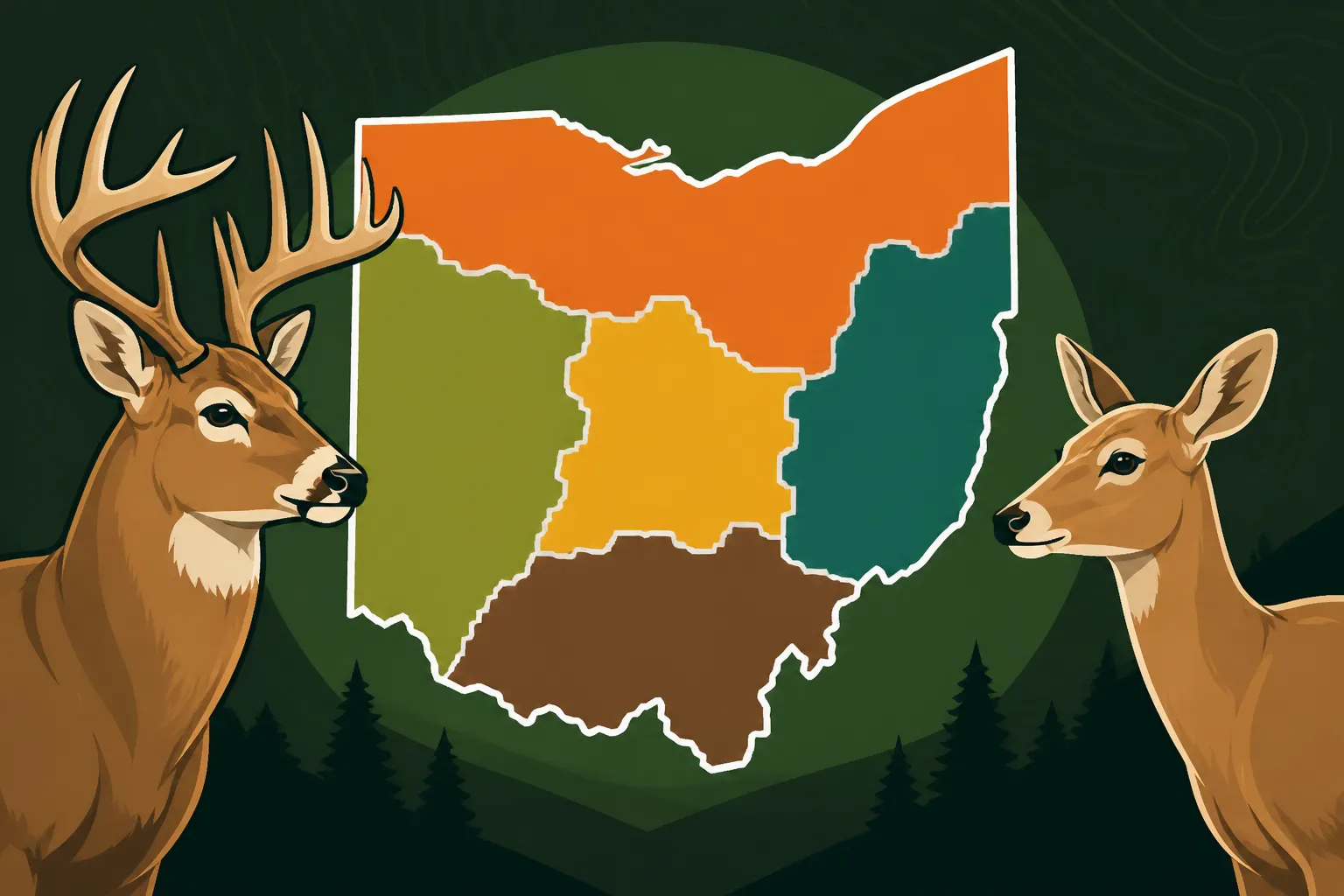
Ohio is a diverse state, from the flat farmlands of the northwest to the rugged Appalachian foothills of the southeast. It’s no surprise that deer populations, and consequently, buck-to-doe ratios, reflect this variety. Understanding these regional differences is key to setting realistic expectations and tailoring your hunting strategy. What works in one part of the state might be completely ineffective in another, precisely because of these varying herd compositions.
Northern and Western Farmland Regions
In Ohio's northern and western agricultural belts, where vast expanses of corn, soybeans, and wheat dominate the landscape, you often find some of the highest deer densities in the state. However, the buck-to-doe ratio in these areas tends to be more skewed, often falling in the 1:3 to 1:5 range. This isn't necessarily a bad thing, but it has specific implications. Farmers, quite understandably, want fewer deer eating their crops, leading to more liberal antlerless harvest opportunities. Programs like Ohio Deer Management Permits are often readily available and encouraged in these regions, which helps keep doe populations in check.
Hunters in these regions, like those Hunting Northwest Ohio Farmland Deer, will often encounter abundant does. The challenges here are often less about finding deer and more about finding mature bucks among the large doe groups. The rut might seem less intense because a few bucks have many does to breed, spreading out the breeding activity. However, if you can locate the prime food sources and cover, especially along fencerows and small woodlots, you can still find great hunting. You might notice bucks following does for longer periods, or cruising solo more often, making them a bit more unpredictable during the peak rut. You might even use a resource like GoHunt to cross-reference harvest data with satellite imagery, looking for those hidden pockets of cover in otherwise open country that might hold a mature buck.
Central and Eastern Agricultural Transition Zones
Moving into central and eastern Ohio, where agriculture still plays a significant role but with more rolling hills, larger woodlots, and smaller fields, the buck-to-doe ratios often become a bit more balanced. You might find ratios closer to 1:2 or 1:3. These areas represent a blend of the agricultural abundance with increasing amounts of timber, offering a diverse habitat that can support a robust deer herd.
Counties in these transition zones often benefit from good nutrition from agricultural crops, combined with better cover and less widespread intensive management focused solely on antlerless harvest. Hunters often report seeing a good mix of deer, and the rut can be more pronounced than in the purely agricultural regions. Deer here tend to utilize both fields and woods, moving between them for food and cover. This means hunters need to be adaptable, considering both field edge setups and timber hunting strategies. Understanding these dynamics helps hunters target areas where bucks are more likely to be actively searching for does, transitioning from their bedding to feeding areas.
Appalachian Foothills and Large Timber Regions
When you venture into Ohio’s southeastern corner, the landscape changes dramatically, becoming much more rugged, heavily forested, and less agricultural. Areas like Wayne National Forest Hunting and Shawnee State Forest Hunting are prime examples. Here, you’ll typically find the most balanced buck-to-doe ratios in the state, often hovering around 1:1.5 to 1:2. This is largely due to several factors: the challenging terrain naturally limits hunter access and pressure, doe harvest tends to be lower (as antlerless permits might not be unlimited everywhere, and it’s simply harder to recover deer in steep country), and the habitat fosters an older age structure for bucks.
This more balanced ratio translates directly into a truly intense and exciting rut. With more competition among bucks for fewer does, the breeding activity is concentrated, aggressive, and often happens during daylight hours. This is why many hunters consider these regions the best for chasing mature bucks, as evidenced by trends like Why Southeast Ohio Grows Older Bucks. The focus here isn't necessarily on sheer deer numbers, which can be lower than in farmland areas, but on the quality and age structure of the buck population. Hunting these areas requires different tactics, often involving still-hunting ridges, understanding Wind and Thermals on an Appalachian Ridge, and being prepared for long drags. Knowing that the buck-to-doe ratio here favors a strong rut can heavily influence your hunting schedule, encouraging you to prioritize those peak rut days.
Urban and Suburban Woodlots
A unique, though often overlooked, category is the urban and suburban woodlot. In areas surrounding cities like Columbus or Cincinnati, where development has fragmented the landscape into small pockets of woods amidst subdivisions and businesses, deer thrive. However, these areas often have extremely skewed buck-to-doe ratios, sometimes as high as 1:10 or more. Hunting pressure is often restricted to archery-only or highly controlled hunts, and doe harvest can be very difficult to manage effectively.
This leads to a situation where does reproduce unchecked, creating an overpopulation that can be a nuisance for homeowners and a headache for hunters. Finding a buck in these areas can be like finding a needle in a haystack, as they have so many does to choose from that their movements become less predictable and less tied to intense rutting activity. Hunting here often involves strict regulations and requires extreme stealth and patience, often with special permits. It's a prime example of how human settlement patterns can drastically alter deer demographics.
Factors Influencing Ohio's Deer Ratios
The buck-to-doe ratio isn’t a static number; it’s a dynamic outcome of many interconnected factors. From how we manage our deer herds to the natural challenges they face, everything plays a role in shaping the male-to-female balance in a given area. Understanding these influences can give you a deeper appreciation for herd management and help you predict where and why certain ratios exist.
Hunting Pressure and Harvest Strategies
Without a doubt, human hunting pressure is one of the most significant factors influencing Ohio's buck-to-doe ratios. In areas where hunters are allowed, and encouraged, to take a high number of does—often through liberal Ohio Deer Management Permits or specific antlerless-only seasons—the doe population is kept in check. This proactive management, often implemented in agricultural areas to mitigate crop damage, can help balance the ratio. If hunters consistently harvest multiple does per year, it naturally brings the numbers closer to bucks.
Conversely, in areas where hunting access is limited, or where hunters preferentially pass on does to focus solely on antlered bucks, the doe population can expand rapidly. For example, if many hunters practice quality deer management on private lands, letting younger bucks walk while harvesting does, they can locally improve the buck-to-doe ratio over several years. However, on heavily pressured public land where any legal buck is often taken, it can be harder for bucks to reach older age classes, potentially skewing the ratio toward does even if antlerless harvest is present. The cumulative effect of thousands of hunting decisions, statewide and localized, shapes these numbers over time.
Habitat Quality and Food Availability
The quality and type of habitat directly influence how many deer an area can support, and indirectly, the buck-to-doe ratio. Ohio's prime agricultural land, with its abundant caloric crops, can sustain a very high deer density. Does that have access to excellent nutrition tend to be more fertile, have twins or even triplets, and successfully raise more fawns. This high reproductive rate, without corresponding doe harvest, naturally leads to a higher proportion of does in the herd. Late-Season Food Sources for Ohio Whitetails are critical for does to survive winter and produce healthy fawns in the spring.
In contrast, heavily forested regions, while providing excellent cover, might offer less consistent high-quality food. Deer densities might be lower, and does might be less prolific, leading to a more naturally balanced ratio. When food is scarce or less nutritious, does might only have single fawns, or fawns might have lower survival rates, which keeps the doe population from exploding. The presence of diverse habitat – a mix of woods, fields, and water – can provide a buffer, allowing deer to adapt to changing conditions and influencing their overall health and reproductive success. Using tools like GoHunt, hunters can often overlay habitat maps with harvest data to see how food sources and cover relate to local deer populations, even if direct buck-to-doe ratios aren't always available to the public.
Predation and Disease
Nature also plays a significant role in balancing the scales. Predator populations, particularly Coyotes and Predators in Ohio, can influence fawn survival. While coyotes rarely take healthy adult deer, they are opportunistic predators of fawns. If fawn recruitment is consistently low due to predation, it can indirectly affect the future buck-to-doe ratio by reducing the overall pool of young deer entering the population.
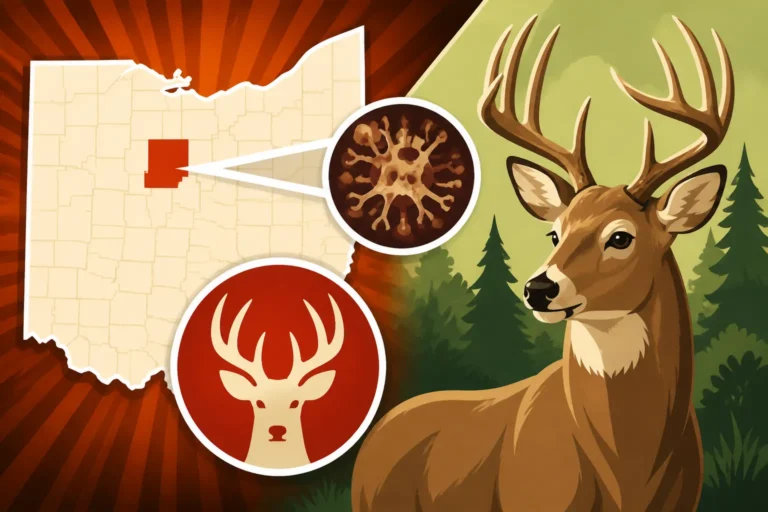
Diseases like Epizootic Hemorrhagic Disease (EHD) can cause rapid, localized die-offs, and sometimes, does are more susceptible or visible during these events. A severe EHD outbreak can dramatically and suddenly skew a local buck-to-doe ratio. More gradually, Ohio's Chronic Wasting Disease Surveillance Area and the management strategies within it can affect harvest goals. While CWD itself might not directly alter the buck-to-doe ratio in the short term, the mandated increased harvest efforts in affected areas could lead to more does being taken, thus impacting the ratio over time. These natural factors are often beyond human control but are vital components of the dynamic equilibrium that defines a deer herd.
How Hunters Can Use This Information for Hunting Success
Understanding Ohio's buck-to-doe ratios isn't just an academic exercise; it's a powerful tool that can dramatically improve your hunting success. Knowing what to expect from the deer herd in your specific hunting area allows you to fine-tune your strategies, making your time in the woods more productive and enjoyable. Don't let your efforts be left to chance; use this knowledge to become a more informed and effective hunter.
Adjusting Your Rut Hunting Strategy
The peak of the rut is often considered the holy grail for deer hunters, but its intensity and timing can vary wildly based on the buck-to-doe ratio. If you're hunting in an area with a balanced ratio, particularly in the Appalachian foothills, the rut tends to be shorter, more intense, and more predictable. Bucks will be aggressively seeking does, fighting over them, and responding well to Rattling and Grunting in Ohio. This makes early to mid-November a prime time to be in your stand, focusing on travel corridors, pinch points, and traditional rut funnels. You can expect to see more daylight buck movement and a more concentrated period of breeding activity.
However, if you're hunting in a region with a highly skewed ratio, like many of the northern farmlands, the rut can be a more drawn-out affair. With fewer bucks to breed many does, the breeding activity spreads out over a longer period. Bucks might not need to compete as intensely, leading to less aggressive behavior and potentially less daylight movement. In these areas, you might find that bucks are still chasing does well into the late season. Your strategy should shift from focusing on a short, intense rut window to understanding that bucks might be cruising at any time, often shadowing doe groups. Patience and adapting your calling tactics to be less aggressive might pay off more. Many serious hunters use data from sources like GoHunt to analyze historical harvest peaks, which can often correlate with rut activity, helping them pinpoint optimal hunting windows.
Planning Your Harvest Goals
Knowing the buck-to-doe ratio also helps you set appropriate harvest goals. If you're hunting in an area with a very high doe population and a skewed buck-to-doe ratio, taking antlerless deer isn't just legal; it's often a vital part of herd management. By harvesting does, you help reduce the overall deer density, which can improve the health of the remaining deer, reduce crop damage, and eventually help balance the buck-to-doe ratio, leading to a more intense rut in future seasons. Filling an Antlerless Permit Late in Ohio can be a great way to contribute to herd health and fill your freezer.
Conversely, if you're hunting in a more balanced region where the buck-to-doe ratio is healthier, you might focus more on selective buck harvest. In these areas, passing on younger bucks to allow them to mature can further improve the age structure of the herd. Of course, personal preference always plays a role, but understanding the herd dynamics allows you to make more informed decisions about which tags to fill. It’s about being a responsible hunter and contributing to the overall health and sustainability of Ohio's deer herd, whether you're chasing a trophy buck or simply providing venison for your family. Ultimately, successful hunting isn't just about bagging a deer, but understanding the intricate ecosystem you're a part of.
Here's a quick overview of how buck-to-doe ratios might look and what they mean for you:
| Ohio Region (General) | Typical Buck-to-Doe Ratio (Approx.) | Implications for Hunters |
|---|---|---|
| Northern Farmland | 1:3 to 1:5 | More does, prolonged rut, focus on crop fields and cover edges |
| Central/Eastern Farmland | 1:2 to 1:4 | Moderate does, good rut activity, diverse habitat, versatile tactics |
| Appalachian Foothills | 1:1.5 to 1:2.5 | More balanced, intense rut, older bucks, challenging terrain, cover-focused hunting |
| Urban/Suburban Woodlots | 1:5+ | Very high does, limited buck sightings, specialized and regulated hunting opportunities |
Disclaimer
This article is for general informational purposes only and does not constitute professional advice. Laws, prices and regulations vary by location and change over time. Consult a qualified professional for guidance on your specific situation.