Why Southeast Ohio Grows Older Bucks
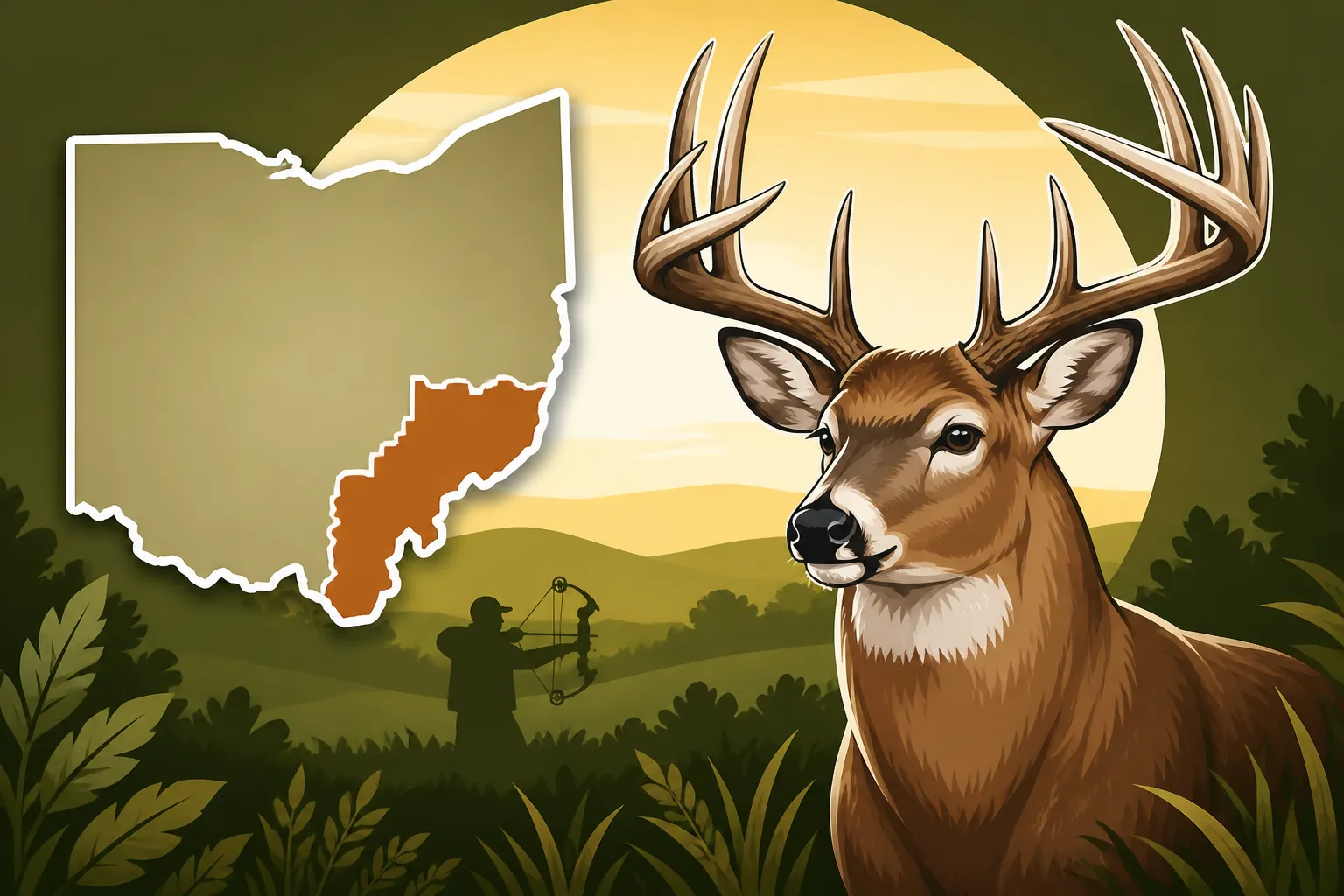
It’s a common frustration among hunters, isn’t it? You spend countless hours scouting, hanging stands, and enduring the elements, only to consistently encounter young bucks that haven't quite reached their full potential. Many parts of Ohio, particularly the flatter, agricultural regions, can feel like an endless parade of yearlings. But there’s a distinct difference when you head south and east into the Appalachian foothills. This guide will dive deep into the unique confluence of factors that makes Southeast Ohio a true haven for growing and holding mature whitetail bucks.
The Lay of the Land: Rugged Terrain and Habitat That Hides Them
Southeast Ohio is a world away from the manicured crop fields of the western and northern parts of the state. This region is defined by its dramatic topography and sprawling forests, which play a crucial role in creating the perfect environment for older bucks to thrive and elude hunters.
Appalachian Foothills and Dense Cover
The terrain in Southeast Ohio is rugged, challenging, and unforgiving in places. We're talking steep ridges, deep ravines, and endless hollows that twist and turn. This isn't flat ground where you can glass a field for miles. Instead, it's a broken landscape covered in dense timber, thick brush, and often impenetrable clear-cuts that offer incredible sanctuary for deer. A buck can simply melt into the landscape, using elevation changes and thick cover to his advantage, making him incredibly difficult to pattern or even spot.
This kind of habitat acts as a natural defense mechanism. The steep hills and deep cuts limit vehicular access and make it physically demanding for hunters to penetrate far into public or even larger private parcels. Bucks instinctively learn to use these features, bedding on secluded benches high on a ridge where they can see, smell, and hear potential threats approaching from below, or slipping into dense thickets along the steepest slopes. This constant challenge for hunters naturally reduces the frequency of encounters with mature deer, allowing them more years to survive and grow. If you've ever tried Hunting Southeast Ohio Appalachian Foothills, you know exactly what I mean about the climb!
Diverse Forest Ecosystems and Food Sources
Beyond the topography, the actual makeup of the forests in Southeast Ohio is a major contributor to buck health and longevity. This region boasts a diverse mix of hardwood species, predominantly oaks, hickories, and beeches, interspersed with pines and cedars. This rich blend provides a consistent and varied food source throughout the year. Acorns, especially from white oaks, are a critical fall food source, packing a punch of fat and carbohydrates that helps deer put on weight for the lean winter months. Hickory nuts and beech nuts also add to this natural bounty.
Furthermore, the timber management practices, including selective logging and natural regeneration, create a mosaic of different successional stages. This means you'll find everything from mature timber stands offering mast, to dense young clear-cuts providing excellent browse and cover, to more open areas with forbs and grasses. This varied menu ensures that deer have access to high-quality nutrition year-round, which is absolutely essential for sustained antler growth and overall body health. A well-fed buck is a buck that can better withstand the rigors of the rut and the stresses of winter, increasing his chances of surviving to another year and adding more inches to his rack.
Hunter Behavior and Pressure Dynamics
It's not just the deer and the land; the way hunters approach the woods in Southeast Ohio also plays a significant role in allowing bucks to age gracefully. The very nature of the hunting experience here shapes deer behavior and survival rates.
Public Land Challenges and Distribution
Ohio has a good amount of public hunting land, and a substantial portion of it is concentrated in the southeastern region, including the vast expanses of Wayne National Forest and Shawnee State Forest. While public land often implies heavy pressure, the sheer size and ruggedness of these areas work to the advantage of mature deer. Unlike smaller, more accessible public parcels in other parts of the state, the deep woods and steep terrain here naturally disperse hunters. Most hunters tend to stick closer to access points, roads, or easily navigable trails.
This means that truly remote areas, often just a half-mile or mile off a main trail, see significantly less human disturbance. Older bucks, being smarter and more wary, quickly learn where these pressure zones are and where the safe havens lie. They'll often retreat to the deepest hollows or the steepest, thickest ridge sides during peak hunting times, emerging only when things calm down. This inherent low-pressure environment in hard-to-reach pockets, even on public ground, is a key factor in why these deer get to live longer. Hunters need to adapt their strategies for these areas, learning how to effectively hunt places like Shawnee State Forest Hunting or the more remote blocks of Wayne National Forest Hunting.
Private Land Dynamics and Management Philosophies
Beyond public lands, the patchwork of private land ownership in Southeast Ohio also contributes to older buck populations. While there are certainly smaller parcels and traditional hunting clubs, there are also many large, undeveloped tracts, often owned by timber companies, private landowners who rarely hunt, or those who practice quality deer management (QDM). These large tracts can serve as critical refuges. Landowners who embrace QDM principles specifically choose to pass on younger bucks, giving them time to mature and reach their full potential.
Even on smaller private holdings, the culture can sometimes differ from the "if it's brown, it's down" mentality found in some other regions. Many local hunters, especially those with family land, often have a more patient approach, understanding that letting a young buck walk this year might mean a true trophy next season. This collective approach, whether intentional QDM or simply a tradition of patience, reduces the overall pressure on adolescent bucks, providing more opportunities for them to age. This is a stark contrast to areas where every legal buck is harvested, often leading to a perpetually young buck population.
Ohio's Deer Management Philosophy and Regulations
The Ohio Department of Natural Resources (ODNR) plays a vital role in shaping deer populations statewide, and their approach, particularly concerning antlerless harvest and season structure, has a profound impact on how many bucks reach maturity in areas like Southeast Ohio.
Liberal Antlerless Harvest and Its Impact
Ohio's deer management strategy, especially in regions with robust deer populations, often leans towards a liberal antlerless harvest. This means hunters are encouraged, and sometimes given extra incentives, to take does. The core principle behind this is simple: a healthy deer herd needs a balanced buck-to-doe ratio. When doe numbers are too high, bucks spend an excessive amount of energy during the rut chasing and breeding numerous females. This can leave them depleted, stressed, and more susceptible to disease or winter mortality.
By allowing hunters to remove a good number of does through initiatives like Ohio Deer Management Permits, the ODNR helps to bring the buck-to-doe ratio closer to a more natural equilibrium. This allows individual bucks to exert less energy during the breeding season, leading to better physical condition, increased survival rates through winter, and ultimately, more energy directed towards antler development in subsequent years. A buck that is not constantly stressed by an imbalanced herd is a buck that has a much better chance of adding another year to his life and inches to his rack. This strategic management is a quiet hero in the story of older bucks in Southeast Ohio.
Long Archery Season and Its Role
Ohio boasts one of the longest archery seasons in the country, often stretching from late September well into February. This extensive season might seem counterintuitive for growing older bucks, as it provides more hunting opportunities. However, it also plays a unique, subtle role. While more opportunities mean more deer are taken overall, archery hunting, by its very nature, is a more intimate and typically less disruptive form of hunting compared to firearms seasons. Archers generally move slower, focus on specific stands, and have a smaller "footprint" in the woods.
Mature bucks, especially those that have survived a few seasons, quickly learn to adapt to this long, consistent pressure. They become incredibly adept at avoiding detection, recognizing stand locations, and altering their movements to primarily occur at night or in the thickest cover during daylight. This extended period of subtle pressure forces them to become ultra-wary, effectively "training" them to be more elusive. When combined with hunters who might choose to pass younger bucks, the long season allows for selective harvest while reinforcing the survival instincts of the most cunning deer. This leads to a population of increasingly intelligent and hard-to-kill older bucks, which is part of the allure of Bowhunting Ohio's Long Archery Season.
Deer Genetics and Adaptation to the Environment
Beyond habitat and human influence, the very biology of the deer in Southeast Ohio contributes to the prevalence of older bucks. These animals are, in a sense, molded by their environment and the pressures they face.
Natural Selection for Survival
The rugged landscape and consistent, albeit often dispersed, hunting pressure in Southeast Ohio create a powerful force of natural selection. Bucks that are less wary, less intelligent, or more predictable simply don't survive to old age. Over generations, this favors deer with a stronger inclination towards evasive behavior, those that are adept at using the terrain for cover, and those with a keener sense of danger. These are the bucks that quickly adapt to hunter presence, changing their patterns, becoming more nocturnal, and seeking out the thickest, most inaccessible sanctuaries.
This continuous filtering process ensures that the bucks reaching older age classes are truly the "best of the best" in terms of survival skills. They are the ones that learn to avoid roads, recognize human scent and sounds, and understand when and where it's safe to move. This inherent wariness is often passed down, contributing to a regional population that is naturally harder to hunt and thus more likely to achieve advanced age. The deer here aren't just surviving; they're thriving by being smart.
Health and Nutrition for Antler Growth
While genetics provide the blueprint, nutrition is the fuel for antler growth. The diverse and plentiful forage available in Southeast Ohio contributes significantly to the health and vitality of the deer herd, directly impacting a buck's ability to grow impressive antlers year after year. As mentioned, a balanced diet from varied forest ecosystems means deer are receiving the necessary proteins, minerals, and energy to support both body maintenance and robust antler development.
A buck's antlers are, in essence, a reflection of his overall health and nutritional status. In an environment where food is readily available and varied, and where the stress of an unbalanced herd is mitigated, bucks can dedicate more of their physiological resources to growing larger racks. When coupled with the opportunity to simply age, this results in larger-bodied, heavy-antlered bucks that we associate with maturity. This combination of strong genetics for survival and consistent, high-quality nutrition means that when a buck does reach 4, 5, or even 6+ years old, he's likely to be a magnificent specimen. Understanding Ohio Buck Age Structure helps hunters appreciate this journey.
Scouting and Technology: Finding Those Elusive Older Bucks
Even with ideal conditions for growing older bucks, they don't just walk up to your stand. Southeast Ohio's terrain means that finding these elusive deer often requires a strategic approach, blending traditional woodsmanship with modern technology.
Leveraging Aerial Imagery and Mapping Tools
In the complex topography of Southeast Ohio, simply walking in blindly isn't usually productive. Mature bucks often gravitate to overlooked pockets, secluded benches, and hidden draws that can be nearly impossible to spot from the ground. This is where modern mapping applications become indispensable. Platforms like GoHunt, along with other top-tier options, allow hunters to meticulously scout from their computer or phone, identifying potential travel corridors, bedding areas, and overlooked sanctuaries long before setting foot in the woods.
With tools like GoHunt, you can analyze topo maps to pinpoint subtle terrain features: those barely perceptible saddles between ridges, the steepest, thickest north-facing slopes ideal for bedding, or benches that offer bucks a strategic advantage to observe their surroundings. You can mark potential access routes that minimize disturbance, identify remote water sources, and predict how deer might use thick cover to evade pressure. This detailed digital reconnaissance is crucial for Reading Aerial Photos for Southeast Ohio Deer and developing a sound hunting plan that focuses on the areas older bucks are most likely to inhabit.
Interpreting Sign and Understanding Deer Movement
Once you've identified potential areas on a map, ground-truthing becomes paramount. Older bucks leave distinct signs that differ from their younger counterparts. Look for larger rubs with significant bark damage on trees, often indicating a buck that has returned to an area year after year. Track size can also be an indicator; mature bucks generally have larger, deeper tracks. However, the true key lies in understanding why a buck is leaving that sign in a particular location and how he moves through the landscape.
In hill country, understanding wind and thermals is not just important, it's absolutely critical. A mature buck will almost always position himself to have the wind or thermal currents working in his favor, alerting him to anything approaching from downwind or downhill. This means during morning hunts, deer might move up to bed on sun-drenched slopes, using rising thermals to detect threats. In the evening, as thermals fall, they might move into lower draws. Deciphering these complex patterns, often revealed through subtle sign and observed movement, is the final puzzle piece to encountering an older buck. It takes patience and dedication to truly grasp Wind and Thermals on an Appalachian Ridge and how deer exploit them.
Comparative Look at Ohio Deer Hunting Regions
To further illustrate why Southeast Ohio stands out for growing older bucks, let's compare some key characteristics across different regions of the state.
| Feature | Southeast Ohio (Appalachian Foothills) | Northwest Ohio (Farm Country) | Central Ohio (Suburban/Farm Transition) |
|---|---|---|---|
| Terrain | Rugged, steep hills, deep ravines | Flat, open agricultural fields | Gently rolling, mix of woods and development |
| Primary Cover | Vast, dense hardwoods, clear-cuts, thickets | Woodlots, fencerows, standing crops | Fragmented woodlots, suburban green spaces |
| Public Land | Large, contiguous blocks (e.g., Wayne, Shawnee) | Scattered, smaller wildlife areas | Very limited, often high pressure |
| Hunting Pressure | Dispersed due to terrain, less consistent deep woods penetration | Concentrated on woodlots and field edges | High, often restricted to archery or special hunts |
| Food Sources | Diverse mast (oak, hickory), varied browse | Abundant row crops (corn, soybeans), limited browse | Mix of suburban forage and small woodlot mast |
| Buck Survival | High due to cover, low pressure in remote areas, smart deer | Moderate; high harvest rates on visible bucks | Low; high pressure, limited cover, CWD concerns |
| Average Buck Age | Higher, good potential for 4.5+ year olds | Lower, mostly yearling and 2.5 year olds | Very low, most bucks harvested early |
This table clearly shows the unique advantages of Southeast Ohio in fostering an environment where bucks can simply live longer. While other regions offer different hunting experiences, for those focused on challenging themselves against a truly mature whitetail, the southeastern hills present an unmatched opportunity within the Buckeye State. Don't forget to check the Scouting With the Ohio HuntFish App on your next adventure, no matter where you hunt!
Conclusion: The Patience and Persistence Required
Ultimately, the combination of expansive, challenging terrain, diverse and abundant habitat, a strategic statewide deer management approach, and the inherent adaptability of whitetails themselves, all converge to make Southeast Ohio a unique and exceptional place for growing older bucks. It's not a place for the faint of heart or those seeking easy hunts. The success stories here are often born from sweat, persistence, and a deep understanding of the land and the animals that call it home.
These are the deer that have earned their stripes, surviving multiple seasons of pressure and adapting to the nuances of their environment. Hunting them requires a different mindset, an appreciation for the journey, and a willingness to embrace the physical and mental challenges that come with pursuing truly mature whitetails in their rugged domain. If you're ready for that challenge, Southeast Ohio is waiting.
Disclaimer
The information provided in this guide is for general informational purposes only and does not constitute legal advice or guarantee hunting success. Hunting regulations, seasons, and licensing requirements in Ohio are subject to change. Always consult the most current Ohio Department of Natural Resources (ODNR) official regulations and publications before engaging in any hunting activities. Hunters are responsible for understanding and adhering to all applicable federal, state, and local laws. Always prioritize safety and ethical hunting practices.