Donating Venison in Ohio
As an Ohio hunter, there's a unique satisfaction that comes from bringing home a deer, knowing you've provided healthy, organic meat for your family. But what happens when your freezer is packed, or you simply want to extend that generosity beyond your own table? Many hunters feel a deep desire to give back to their community, and donating venison is an incredible way to do just that, offering a nutritious protein source to those facing food insecurity. This guide will walk you through everything you need to know about legally and effectively donating venison in the Buckeye State, ensuring your hard-earned harvest benefits fellow Ohioans.
The Heart Behind the Hunt: Why Donating Venison Matters in Ohio
There's more to hunting than just filling a tag or bagging a trophy. For many of us, it's about connecting with nature, understanding our role in wildlife management, and ultimately, providing for ourselves and our loved ones. When we harvest a deer, we're not just taking an animal; we're embracing a primal responsibility to utilize that resource wisely. Donating venison takes this principle a step further, transforming a personal harvest into a communal gift.
Addressing Food Insecurity Locally
Ohio, like many states, has communities where hunger is a very real, everyday struggle. Food banks and pantries work tirelessly to provide meals, but access to high-quality, lean protein can often be a challenge. That's where hunters step in. Venison is an excellent source of protein, naturally low in fat, and free from many of the additives found in conventionally raised meats. By donating venison, you're directly contributing to a healthier, more robust food supply for families and individuals who might otherwise go without. Imagine the impact of a hunter's freezer, overflowing after a successful season, being able to provide dozens of healthy meals to hungry children and adults in their local area. It's a tangible, impactful way to make a difference right where you live.
Consider the children in your own county who might not get enough to eat, or the elderly neighbor who struggles to afford groceries. Your donated venison isn't just a piece of meat; it's a hot meal, a moment of comfort, and a sign that their community cares. It really closes the loop on responsible hunting, turning a personal pursuit into a broad act of charity.
Honoring the Harvest and Giving Back
For a lot of us, there's a strong ethical component to hunting. We respect the animal, the land, and the opportunity we've been given. Donating venison is a powerful way to honor that connection and express gratitude for the resource. It’s an extension of that core hunting ethic that teaches us not to waste. When you take a deer, there's a commitment to use as much of that animal as possible. If your own freezer is full, or if you simply choose to hunt with the intention of donating from the start, you're fulfilling that commitment in a profound way.
It’s also an incredible way to represent the hunting community in a positive light. Oftentimes, hunters face misconceptions or criticisms from those outside our circles. Acts of generosity like venison donation demonstrate the deep conservation ethics and community spirit that are truly at the heart of hunting. It shows that we aren't just out there for sport; we're active participants in the health of our wildlife populations and compassionate members of our communities. It helps build bridges and foster understanding, proving that hunters are vital contributors to society.
Navigating Ohio's Venison Donation Programs
Donating venison isn't quite as simple as just dropping off a carcass at your local food bank. There are important rules and systems in place to ensure food safety and proper distribution. Ohio has established programs and guidelines that make the process straightforward once you know the ropes. Understanding these systems is key to making sure your donation is accepted and processed correctly.
Understanding Approved Processors
The cornerstone of venison donation in Ohio lies with approved meat processors. You can't just process a deer in your garage and hand it over to a charity. For public health reasons, all donated venison must be processed by a state-inspected and approved facility. These processors adhere to strict sanitary guidelines, ensuring the meat is safe for consumption. They handle everything from skinning and butchering to grinding and packaging, transforming your whole deer into usable ground venison or other cuts that food banks can distribute.
It's crucial to identify a participating processor before you head out hunting if donation is your goal. Many processors work directly with donation programs, often at a reduced cost or even free to the hunter, with the program covering the processing fees. This means your donation truly is a gift, with no out-of-pocket expense for you beyond your hunting license and tags. A quick search on the Ohio Department of Natural Resources (ODNR) website, or checking with local chapters of organizations like Farmers and Hunters Feeding the Hungry, can usually point you to participating butchers in your area. They'll know the specific requirements and can guide you through their drop-off procedures. Ohio Deer Management Permits can often be filled for donation purposes, making it an excellent way to manage local deer populations while helping people.
Key Organizations Facilitating Donations
While individual processors do the actual butchering, several key organizations in Ohio act as the backbone for venison donation efforts. These groups coordinate between hunters, processors, and food banks, making the whole system work.
One of the most prominent is Farmers and Hunters Feeding the Hungry (FHFH). This national organization has a strong presence in Ohio, with local chapters that actively solicit deer donations, partner with approved processors, and distribute the venison to local food pantries. They often cover the processing costs, removing a significant barrier for many hunters. Connecting with your local FHFH chapter is often the easiest and most effective way to donate your venison. They can tell you exactly which processors participate in their program in your county and what their current needs are.
Other regional food banks and smaller, community-based programs might also accept venison donations, but they almost always require the meat to come from an approved processor. It's rare for a food bank to accept an unprocessed deer carcass. Always call ahead and confirm their specific requirements. Knowing which organization is active in your hunting area is just as important as knowing where the deer are. You can use resources like the Ohio HuntFish App to help plan your outing, especially if you're trying to target areas where deer populations might need to be managed, providing more opportunities for donation.
The Role of ODNR Check-In and CWD Considerations
Even when donating, all legally harvested deer in Ohio must be checked in with the ODNR. This is a non-negotiable step for every hunter. Whether you do it online, by phone, or at a designated check station, this process helps the ODNR gather vital data on deer populations and harvest numbers. You'll receive a confirmation number, which you'll need to provide to your processor. This ensures accountability and helps track where deer are being harvested. Checking an Ohio Deer Online is a quick and easy process.
A critical consideration, especially in recent years, is Chronic Wasting Disease (CWD). Ohio has designated a Ohio's Chronic Wasting Disease Surveillance Area (DSA) in certain counties. If you harvest a deer within the DSA, there are mandatory CWD testing requirements during specific periods. While a CWD-positive deer cannot be donated, it's crucial to follow all testing protocols. Even outside the mandatory testing windows, some processors or donation programs may have specific guidelines for deer harvested in or near the DSA to ensure maximum safety. Always ask your chosen processor or donation program about their CWD policies, especially if you're hunting in a county that borders or is within the DSA. Handling Venison From a DSA County Safely is paramount, whether for personal consumption or donation.
Preparing Your Harvest for Donation
The journey of venison from the field to a family's plate begins with you, the hunter. The quality of the meat for donation relies heavily on how well you handle the animal immediately after the shot. Just as you would for your own table, proper field care is essential to ensure the venison is safe, palatable, and acceptable for donation.
Field Dressing and Initial Care
The moment you recover your deer, the clock starts ticking on proper meat care. The faster you field dress the animal, the better. This process removes internal organs, which are the primary source of bacteria that can spoil meat. Get those guts out as quickly and cleanly as possible. Take care to avoid rupturing the intestines or stomach, as their contents can contaminate the meat.
Once field dressed, focus on cooling the carcass rapidly. This is especially important during Ohio's warmer early archery season. Prop the cavity open with a stick or spreader to allow air circulation. If possible, rinse the cavity with clean water (potable water, not just ditch water) and then dry it thoroughly with paper towels or a clean cloth. The goal is to remove any residual blood or debris and promote cooling. If you’re hunting during warmer days, getting the deer to a processor or on ice within a few hours is ideal. For those hunting in colder weather, the natural chill can help, but still aim to get the deer hung and cooling. For specific tips on managing your harvest in cold temperatures, check out Field Dressing a Deer in Cold Weather.
Transporting the deer also requires care. Keep the carcass clean. Avoid dragging it through mud or dirt if you can. If you're putting it in the back of a truck, lay down a tarp. The less contamination the meat experiences in the field, the better its quality will be for processing and donation. Using a mapping tool like GoHunt might help you plan extraction routes that minimize rough handling of the carcass.
Working with a Participating Butcher
Once you've field dressed and cooled your deer, the next step is getting it to a participating, approved butcher. Call the processor before you head over, especially if it's late in the day or during a busy opening weekend. Confirm their hours, drop-off procedures, and any specific requirements they might have. Some processors prefer you to skin the deer beforehand, while others prefer to do it themselves. Always ask!
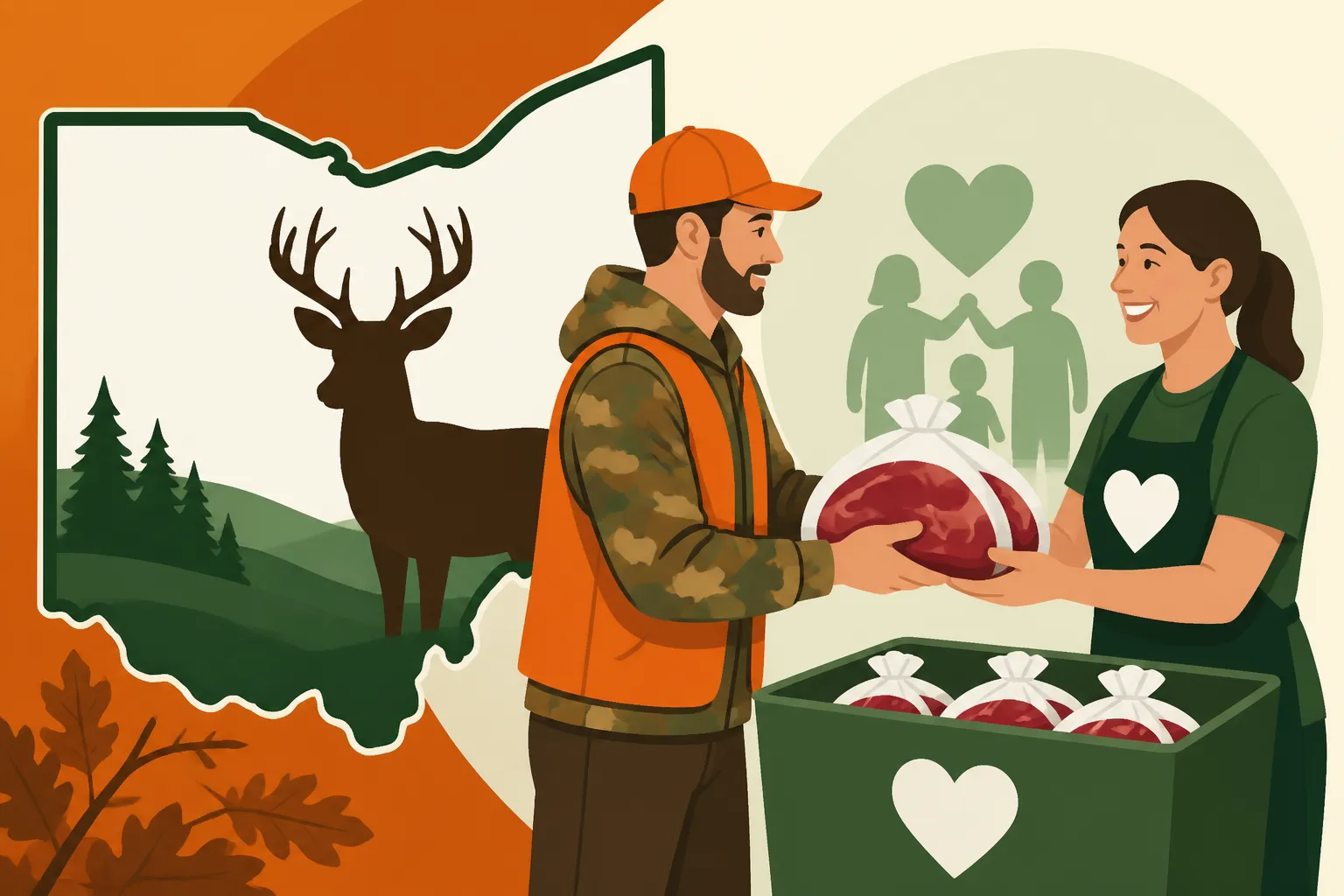
When you arrive, you'll typically need to provide your ODNR deer check-in confirmation number. This is crucial for their records and for the donation program's compliance. Clearly state that you intend to donate the venison to the program they participate in. They will then take over the processing, turning your whole deer into ground venison or other cuts suitable for distribution to food banks. Remember that the processing usually needs to be paid for, but as mentioned, many donation programs like FHFH cover these costs directly, so you wouldn't incur a fee. It's always a good idea to confirm this detail with the processor when you drop off the deer. They'll also be able to explain how the venison is then transferred to the appropriate food relief organizations.
What NOT to Do When Donating Venison
There are a few hard rules and common pitfalls to avoid when planning to donate your venison:
- Do NOT process the deer yourself for donation. As mentioned, for public health reasons, only state-inspected and approved processors can handle donated venison. Home-processed meat cannot be accepted by official donation programs or food banks.
- Do NOT donate meat from a sick or injured animal. If you suspect the deer was ill (e.g., emaciated, unusual lumps, strange behavior) or if the meat is significantly damaged by your shot, it's best not to donate it. While minor bruising can be trimmed, extensive damage or any signs of disease make the meat unsuitable for human consumption, especially when destined for vulnerable populations.
- Do NOT wait too long to get the deer to a processor. Spoilage is a real concern, particularly in warm weather. If a deer sits for too long without proper cooling, the meat can begin to break down, rendering it unusable. Always prioritize getting the field-dressed deer cooled and to the processor as quickly as possible.
- Do NOT forget to check in your deer. This is a legal requirement in Ohio, whether you keep the meat or donate it. Without a valid check-in number, an approved processor cannot accept your deer for donation.
- Do NOT expect specific cuts. While some processors might offer choices for personal consumption, donated venison is almost universally processed into ground venison. This is because ground meat is versatile, easy for food banks to distribute, and simple for recipients to prepare.
To recap, here's a quick look at the dos and don'ts:
| What to Do | What NOT to Do |
|---|---|
| Field dress immediately | Process the deer yourself for donation |
| Cool carcass rapidly | Donate meat from a sick or visibly damaged animal |
| Call processor before drop-off | Wait too long to get the deer to a processor |
| Provide ODNR check-in number | Forget to check in your deer |
| Clarify who pays processing fees | Expect specific cuts for donated venison |
| Follow all CWD guidelines | Attempt to donate spoiled or contaminated meat |
Common Questions and Tips for Ohio Venison Donors
Making venison donation a regular part of your hunting season is a truly rewarding experience. Once you've gone through the process a couple of times, it becomes second nature. However, new donors often have questions about the practicalities, costs, and benefits. Let's tackle some of those.
Costs Involved and Tax Implications
This is a big one for many hunters. While the act of donation is charitable, you might wonder if you'll incur costs. The good news is that most established venison donation programs, particularly those affiliated with Farmers and Hunters Feeding the Hungry, strive to cover the processing fees themselves. This means that as a hunter, your primary "cost" is your time, effort, and the deer itself. These programs raise funds through grants, donations, and fundraisers specifically to pay participating butchers. So, when you drop off your deer and tell them it's for donation, there's a very good chance you won't pay a dime for the processing. Always confirm this with your specific processor or donation program ahead of time.
Regarding tax implications, donating venison is a charitable act, and some hunters inquire about deducting the fair market value of the meat. In general, the IRS allows deductions for cash donations or property donations to qualified charities. However, the rules for donating game meat are complex because you cannot deduct the value of something you've harvested yourself if you haven't incurred a direct cost to produce it. You typically can't deduct the "value" of the deer itself, but you might be able to deduct the processing fees if you paid them directly to the processor and they were not reimbursed by a program. It's always best to consult with a tax professional regarding your specific situation and any potential deductions related to charitable contributions. Keep good records of any payments made and receipts received.
Finding Participating Locations Near You
Knowing where to take your deer is paramount. The best resource for finding participating processors is usually the website of organizations like Farmers and Hunters Feeding the Hungry (FHFH) or your state's ODNR website. These sites often have searchable databases or lists of approved butchers by county. A phone call to your local ODNR district office can also yield results, as they often work closely with these programs.
Another effective method is good old-fashioned networking. Talk to other hunters in your area. They often know which local butchers participate and might even have personal recommendations based on their experiences. Check bulletin boards at local sporting goods stores or gun shops; these places are hubs for hunter information.
Remember, the list of participating processors can change from year to year, so it’s a good habit to double-check before each season starts. For example, if you're planning a hunt on Wayne National Forest Hunting or one of Ohio's many Ohio Wildlife Areas, you'll want to know which processor is closest and participating in a donation program. Using a mapping tool like GoHunt can also help you identify areas with good deer populations, increasing your chances of a successful harvest for donation.
Making it a Regular Part of Your Hunting Season
Once you've donated venison, you'll likely feel a deep sense of satisfaction. Many hunters find that it quickly becomes an integral part of their hunting routine. Here are a few tips for making it a regular practice:
- Plan Ahead: Before opening day, identify the participating processor closest to your hunting grounds. Keep their contact information handy. If you plan to utilize Ohio Deer Management Permits to harvest additional deer for donation, have a clear strategy.
- Communicate Early: Let your hunting buddies know your intentions. If you're hunting with a group, you might even coordinate efforts to collectively donate one or more deer.
- Prioritize Meat Care: Treat every deer you intend to donate with the utmost care in the field. This ensures the highest quality product for those in need.
- Spread the Word: Share your experience with other hunters. Encourage them to consider donating their excess venison. The more hunters who participate, the more impact these programs can have.
- Stay Informed: Keep an eye on ODNR updates, especially regarding CWD rules and specific county requirements, which can affect donation eligibility.
By integrating venison donation into your hunting season, you're not just providing food; you're embodying the spirit of conservation and community that defines responsible hunting in Ohio. It's a powerful way to turn your passion into purpose, ensuring that the bounty of our deer herd benefits everyone.
Disclaimer
This article is for general informational purposes only and does not constitute professional advice. Laws, prices and regulations vary by location and change over time. Consult a qualified professional for guidance on your specific situation.