Ohio Wildlife Rehabilitation for Injured Game
Finding an injured wild animal can tug at your heartstrings, making you want to rush in and help. But knowing the right, legal, and truly effective way to assist an injured deer, a struggling bird, or a distressed rabbit in Ohio is crucial, and often misunderstood. This guide will walk you through the essential steps, from initial observations and safety precautions to connecting with licensed wildlife rehabilitators and understanding the complex journey of an animal back to the wild.
Finding Injured Wildlife: Your First Steps and Safety
It's a common scenario: you're out scouting a new woodlot in Athens County, or driving a backroad near Killdeer Plains Wildlife Area, and you spot a deer struggling on the roadside, or a bird with a clearly broken wing. Your immediate instinct might be to intervene, to pick up the animal and try to bring it home. However, for both your safety and the animal's best chance at survival, there's a protocol to follow. Rushing in can often do more harm than good, and it's essential to understand the legal and ethical boundaries.
Prioritizing Your Safety and the Animal's Well-being
First and foremost, your safety comes before anything else. An injured wild animal, no matter how small or seemingly helpless, can be unpredictable, scared, and in pain. They possess natural defenses that can inflict serious injury. A seemingly docile fawn might lash out with sharp hooves if you try to approach it, and even a small bird can peck aggressively. Larger animals, like an injured deer, can pose a significant threat, especially if they are disoriented or in distress.
Beyond physical injury, there's also the risk of disease transmission. Wild animals can carry parasites, bacteria, and viruses that can be harmful to humans or domestic pets. Rabies, distemper, and other zoonotic diseases are a real concern with mammals, particularly foxes, raccoons, bats, and skunks. It's not about being afraid, but about being smart and cautious. Always observe from a safe distance, and never handle a wild animal with bare hands. If you absolutely must move an animal (for instance, if it's in the middle of a busy road and you're trying to prevent further harm to it or drivers), use thick gloves, a blanket, or a shovel to avoid direct contact.
Legalities of Interaction and Initial Assessment
Many people don't realize that it's actually illegal for an unlicensed individual to possess or rehabilitate wild animals in Ohio. This isn't because the state wants to prevent good samaritans from helping, but because wild animals require specialized care, diet, and handling to have any chance of returning to the wild. Improper care, even with the best intentions, often leads to the animal's death or makes it unreleasable, meaning it can never truly be wild again. Wildlife rehabilitators are specially trained and permitted by the state, usually through the Ohio Department of Natural Resources (ODNR), to undertake this challenging work. Trying to "rescue" an animal and keep it at home can actually land you in legal trouble, facing Ohio Wildlife Violation Penalties.
When you encounter an injured animal, take a moment to assess the situation without getting too close. Is the animal truly injured, or is it merely stunned, resting, or a young animal whose parent is nearby? Fawns, for example, are often left alone for hours by their mothers while she forages, appearing "abandoned" when they are perfectly fine. Baby birds that have just fledged might be on the ground learning to fly, with their parents still tending to them. Look for obvious signs of injury: a broken limb, visible blood, heavy labored breathing, or if the animal is clearly disoriented and unable to move. If the animal seems minimally impacted, observing from a distance for a period might be the best first step. Sometimes, nature takes its course, and what seems like an injury is part of the natural cycle. For instances involving vehicle collisions, especially with larger animals, you might also be dealing with a situation that requires specific reporting protocols, as outlined in articles like Ohio Deer Vehicle Collisions.
Connecting with Ohio's Wildlife Rehabilitation Network
Once you've determined that an animal is truly injured and requires intervention, the next critical step is to find a licensed wildlife rehabilitator. This is where the real help begins, and it's important to understand the network that exists in Ohio to care for these animals.
The Role of Licensed Rehabilitators in Ohio
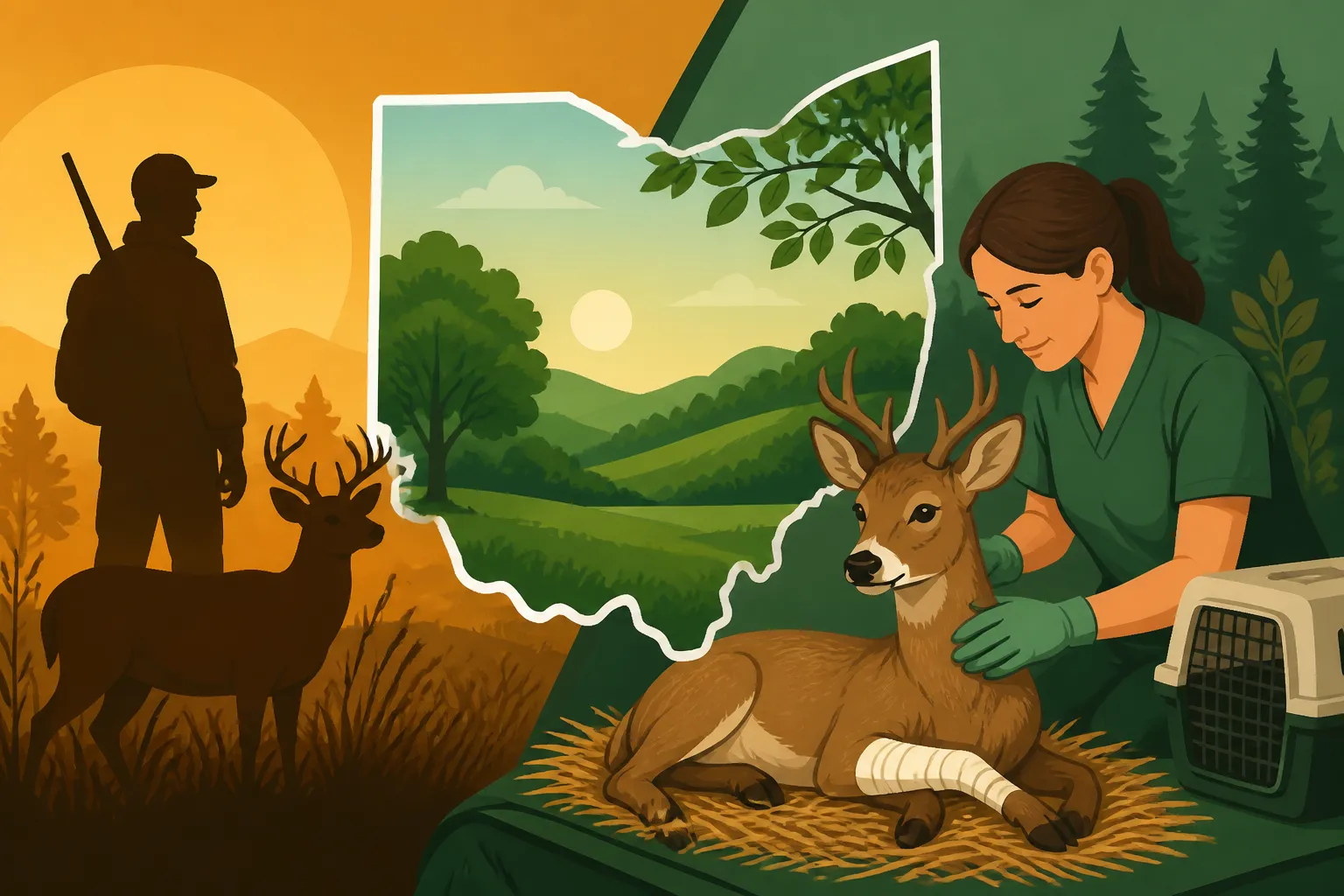
Licensed wildlife rehabilitators are truly unsung heroes. These individuals, often volunteers or working for non-profit organizations, dedicate countless hours and resources to the arduous task of nursing wild animals back to health. They are permitted by the Ohio Department of Natural Resources (ODNR), which means they've met stringent requirements for knowledge, facility standards, and ethical practices. They understand the specific dietary needs of different species, the correct medical treatments, and perhaps most importantly, how to minimize human imprinting so the animal retains its natural fear of people, which is crucial for a successful release.
Ohio's network of rehabilitators isn't a one-size-fits-all system. Some rehabilitators specialize in specific types of animals, such as raptors (hawks, owls, eagles), migratory birds, small mammals (rabbits, squirrels, opossums), or larger game like deer. They often have dedicated facilities for these species, designed to provide the right environment for recovery without allowing them to become accustomed to humans. For instance, a rehabilitator specializing in raptors will have large flight cages, while a deer rehabilitator will have quiet, spacious enclosures away from human disturbance. Their expertise is invaluable for issues like those detailed in Reporting a Sick Animal in Ohio or understanding broader trends discussed in Ohio Wildlife Disease Monitoring.
How to Find a Reputable Rehabilitator
Finding the right rehabilitator can sometimes feel like a treasure hunt, especially if you're in a rural area or it's outside of normal business hours. Your first and best resource is often the Ohio Department of Natural Resources (ODNR) website. They typically maintain a list of licensed rehabilitators, often searchable by county or by animal type. Many local animal shelters or humane societies, while not rehabilitators themselves, will have contact information for licensed individuals or organizations in their area, as they frequently receive calls about injured wildlife.
Here's a quick guide to finding help:
| Scenario | Initial Action | Who to Contact | Important Notes |
|---|---|---|---|
| Injured small mammal | Observe from distance, confirm injury | Licensed Wildlife Rehabilitator (search ODNR list) | Use a box with air holes and soft bedding if instructed to transport. |
| Injured bird (not raptor) | Observe from distance, confirm injury | Licensed Wildlife Rehabilitator (specializing in birds) | Wear gloves. Avoid direct contact if possible. |
| Injured raptor (hawk/owl) | Do NOT approach without proper training/gear | Licensed Raptor Rehabilitator / ODNR | These birds have powerful talons and beaks. Require specialized handling. |
| Injured deer/large mammal | Keep significant distance, do not approach | ODNR or local law enforcement (non-emergency) | Never attempt to move a large, injured animal yourself. They are dangerous. |
| Orphaned Fawn | Observe for hours (4-6+). Mother may be foraging. | If truly orphaned, call Rehabilitator or ODNR | Often mothers leave fawns; intervention can do more harm. See Ohio Fawn Survival Rates and Ohio Predator Impact on Fawn Recruitment. |
| Suspected Rabies Carrier | Do NOT approach. Call local health department/ODNR | Local Health Dept / ODNR | Skunks, bats, foxes, raccoons are high-risk. |
When you call, be prepared to describe the animal, the type of injury you observe, and your exact location. Remember that these rehabilitators are often volunteers and may have limited capacity or be far away. Patience and willingness to follow their instructions are key. Services like GoHunt, while primarily focused on hunting, can also be a community hub where experienced outdoors people might share resources or general advice on contacting local wildlife authorities in tricky situations. Just remember that specific contacts need to come from official sources like ODNR. You'll find that navigating wildlife emergencies is part of being a responsible outdoor enthusiast, akin to understanding broader regulations such as those covered in Ohio Hunter Education Requirements.
What Happens at a Wildlife Rehabilitation Center
Once you've successfully connected with a licensed rehabilitator and the animal is in their care, a meticulous and often lengthy process begins. It's far more involved than simply patching up a wound. The goal is always to return the animal to its natural habitat, which means ensuring it's not only healthy but also wild enough to survive on its own.
Assessment, Treatment, and Care
The first step at a rehabilitation center is a thorough assessment. Just like a trip to the emergency room, the animal undergoes an intake process where its species, age, weight, and a detailed description of its injuries are recorded. This is followed by a comprehensive examination, which might include X-rays to check for broken bones, blood tests to identify internal issues or diseases, and a physical assessment of any external wounds.
Based on this diagnosis, a treatment plan is developed. This could involve surgery to repair a fracture, medication to combat infection, pain management, or specialized wound care. For young or orphaned animals, meticulous feeding schedules with species-appropriate formulas are crucial. Rehabilitators spend an incredible amount of time replicating natural diets and environments to give the animal the best chance. Think about a baby squirrel that needs specific nuts and tree cover, or a young duckling that needs water access and particular aquatic plants. Every detail matters. This level of dedication is why individuals and organizations like GoHunt support ethical wildlife practices and often share stories of successful rehabilitations within their communities.
The Difficult Decisions: Euthanasia and Release Criteria
While the primary goal is always successful release, it's a harsh reality that not every animal can be saved, or even made healthy enough to survive in the wild again. Rehabilitators often face agonizing decisions regarding euthanasia. This is not taken lightly; it's a compassionate choice made when an animal's injuries are too severe, or its chances of recovering the necessary skills for wild survival are nonexistent. For example, a bird with a wing injury that prevents full flight will simply starve or be predated quickly upon release. An animal that has become too habituated to humans, or imprinted, also often cannot be released, as it lacks the essential fear response needed to avoid danger.
The criteria for release are rigorous. An animal must be:
- Fully recovered: No lingering physical ailments or weakness.
- Able to forage/hunt independently: It must prove it can find food, water, and shelter on its own.
- Exhibit natural behaviors: This includes proper predator avoidance, foraging instincts, and social behaviors for colonial species.
- Fearful of humans: Any animal that approaches people for food or comfort is considered unreleasable, as it's a danger to itself and potentially humans.
For deer, specifically, there's the added layer of concerns like Chronic Wasting Disease (CWD). While not always directly related to injury, the presence of CWD in certain areas, such as those covered by the Ohio Special CWD Reporting Line, means extra precautions and testing might be involved, further complicating the rehabilitation and release process for deer in those regions. This ensures that a released animal doesn't pose a risk to the wild population.
Common Misconceptions and Ethical Considerations
The desire to help an injured animal is a noble one, but it's important to separate good intentions from effective and legal actions. There are many misunderstandings about how to interact with wildlife, and these can sometimes lead to unintended negative consequences.
Why You Can't "Rescue" and Raise a Wild Animal Yourself
It's tempting to think you can simply take an injured or orphaned animal home, nurse it back to health with pet food, and then set it free. However, this rarely works out well for the animal. Wild animals have extremely specific nutritional needs that a domestic diet simply cannot meet, leading to severe developmental issues, bone deformities, or organ failure. Beyond diet, they require specialized habitats, temperature regulation, and a complete lack of human interaction to retain their wild instincts.
The biggest danger of "home rehabilitation" is habituation. When a wild animal, especially a young one, becomes accustomed to humans, it loses its natural fear. A deer that approaches people for food, a fox that wanders into a backyard looking for handouts, or a squirrel that jumps on shoulders is a deer, fox, or squirrel that is doomed. It can't survive in the wild, and it might even become a nuisance or danger, leading to it being put down. Furthermore, as we touched on earlier, it's illegal. Wildlife is legally protected, and possessing it without a permit is a violation. This is why resources like Game You Cannot Hunt in Ohio also implicitly underline that taking wildlife into your home is not permissible, even for non-game species.
When Intervention is (and Isn't) Necessary
Not every baby animal or lone creature you encounter needs human intervention. In fact, most don't. Nature has intricate ways of ensuring survival, and often, what appears to be a problem is just a normal part of a wild animal's life cycle.
- "Orphaned" Fawns: This is perhaps the most common misconception. A doe will purposefully leave her fawn hidden for hours, sometimes even a full day, while she goes off to feed and minimize drawing predator attention to her vulnerable offspring. Unless you see clear signs of injury, a dead mother nearby, or the fawn crying incessantly for an extended period (many hours), leave it alone. The mother is almost certainly nearby and will return. Understanding how doe and fawn dynamics work, including Ohio Fawn Survival Rates, is crucial here.
- Fledgling Birds: Young birds learning to fly often spend a few days on the ground, hopping and flapping. Their parents are typically close by, feeding them and encouraging them. If the bird has feathers and can hop, it's likely a fledgling. Gently place it back in a nearby bush or tree if it's in immediate danger (e.g., from a cat), but generally, leave it be.
- Rabbits in Nests: Rabbit mothers only visit their nests a couple of times a day to feed their young, often at dawn and dusk, to avoid attracting predators. If you find a nest of baby bunnies, resist the urge to "check on them" frequently. If they are warm, plump, and covered, they are fine.
The rule of thumb is: observe first, then act. If an animal truly appears to be in distress, injured, or in a dangerous situation it cannot escape (like a bird trapped indoors), then contacting a licensed rehabilitator or the ODNR is the correct course of action. This thoughtful approach extends to all aspects of responsible outdoor recreation, from proper hunting techniques taught in Ohio Hunter Education Requirements to understanding the nuances of how species like deer interact with their environment.
Ultimately, helping injured game in Ohio isn't about rushing in, but about making informed, responsible decisions that prioritize the animal's true welfare and its ability to return to a wild life.
Disclaimer
This article is for general informational purposes only and does not constitute professional advice. Laws, prices and regulations vary by location and change over time. Consult a qualified professional for guidance on your specific situation.