Red Fox and Gray Fox in Ohio
It's easy to get confused when you spot a fox in Ohio, wondering if it's the sleek red or the elusive gray. Many hunters and wildlife enthusiasts struggle with proper identification, often mistaking one for the other or underestimating the distinct behaviors and habitats that define these two fascinating canids. This guide aims to clear up those common misconceptions, offering a deep dive into the lives of red and gray foxes across the Buckeye State, from their preferred hunting grounds to their unique survival strategies, and how to tell them apart when you're out in the field.
Ohio's Two Fox Species: An Overview
Ohio is home to two native fox species, the red fox and the gray fox. While both are undeniably beautiful and intriguing creatures, they possess distinct characteristics, behaviors, and preferences that set them apart. Understanding these differences is key to appreciating their role in Ohio's ecosystem and for any hunter or trapper looking to ethically pursue them.
The Red Fox: Adaptable and Widespread
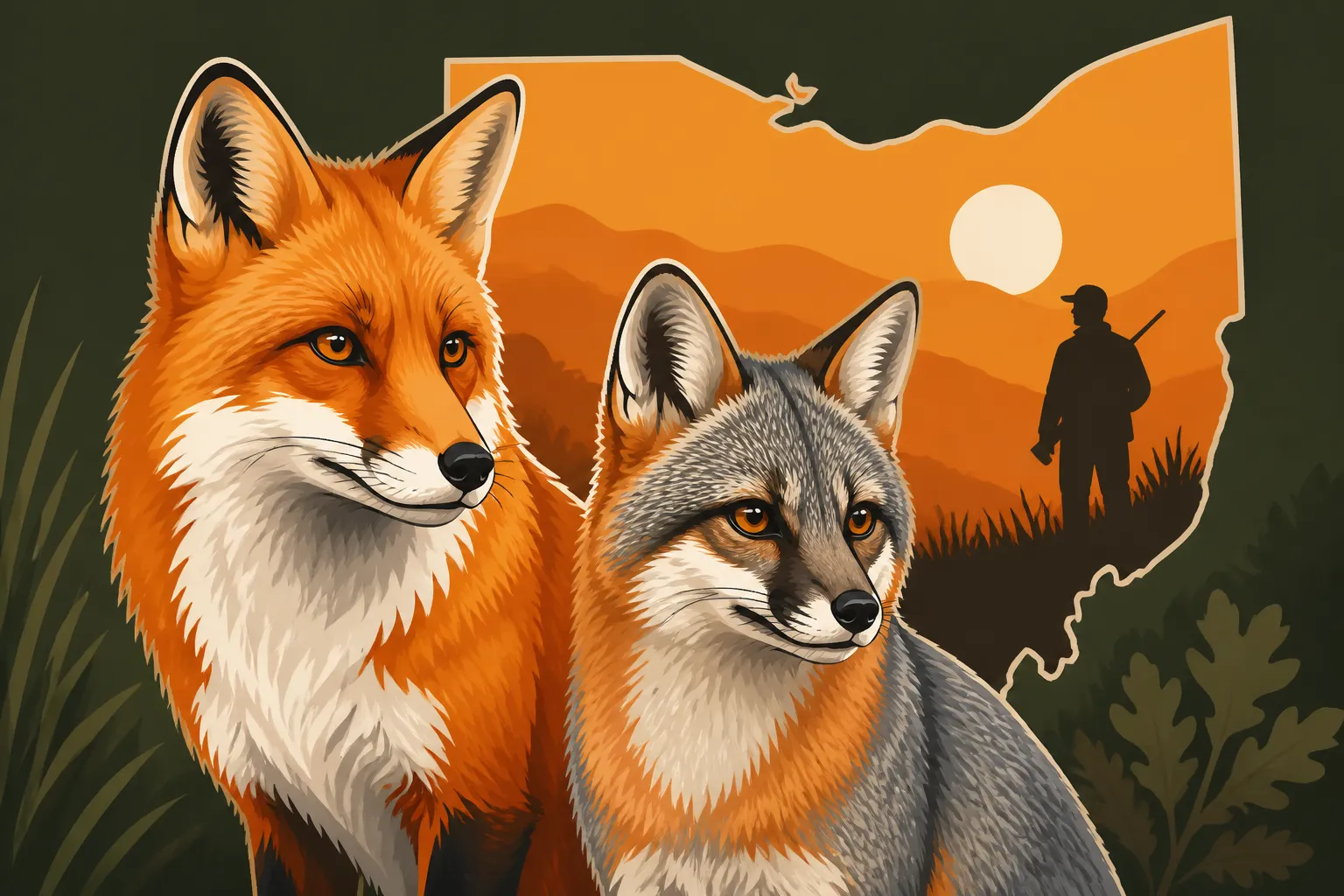
The red fox, Vulpes vulpes, is arguably the more iconic and recognizable of the two species, known for its stunning reddish-orange fur, white belly, black "stockings" on its legs, and that unmistakable white-tipped tail. These foxes are incredibly adaptable, a trait that has allowed them to thrive in a wide array of environments, from deep wilderness areas to agricultural landscapes, and even suburban fringes. You're just as likely to see a red fox trotting along a fencerow in northwest Ohio farmland as you are catching one darting through a woodlot in the Appalachian foothills. Their widespread success often comes down to their opportunistic nature and their ability to quickly learn and exploit new food sources and cover.
Red foxes are generally larger than their gray counterparts, with a more slender build and longer legs, which are perfectly suited for running across open terrain. They are often associated with cunning and intelligence in folklore, and these traits certainly play a role in their survival. They are excellent hunters, primarily preying on small mammals like mice, voles, and rabbits, but they won't pass up an opportunity for birds, insects, or even fruits and berries when available. Their keen senses of hearing and smell are vital tools for locating prey, especially during their nocturnal hunts.
The Gray Fox: The Tree-Climbing Enigma
The gray fox, Urocyon cinereoargenteus, is a true marvel of Ohio's wildlife and a fascinating contrast to the red fox. While its fur is a grizzled salt-and-pepper gray, it often has patches of reddish-brown or buff on its neck, sides, and legs, and a distinctive black stripe running down the top of its tail. Unlike the red fox's white-tipped tail, the gray fox's tail is tipped in black. What truly sets the gray fox apart, however, is its incredible ability to climb trees. This isn't just an occasional feat; gray foxes are remarkably agile climbers, using their semi-retractable claws and strong limbs to ascend trees with surprising ease, often resting on branches or even caching food high above the ground.
This arboreal skill is a unique adaptation among North American canids and offers the gray fox several advantages. It provides an escape route from larger predators like coyotes or domestic dogs, allows access to arboreal prey like birds' nests or squirrels, and offers a safe place to den or rest. Gray foxes tend to be smaller and stockier than red foxes, with shorter legs and a more robust build, which aids in their climbing prowess. Their presence often indicates older, denser forest habitats, particularly in the more rugged, timbered regions of Ohio.
Habitat Preferences and Distribution Across Ohio
While both fox species inhabit Ohio, their distribution is far from uniform. Each species has carved out its niche, favoring different types of landscapes and cover, which influences where you're most likely to encounter them. Understanding these habitat preferences is crucial for effective scouting and management efforts.
Where Red Foxes Roam: Fields, Forests, and Suburbia
Red foxes are the generalists of the Ohio fox world. They thrive in mosaic landscapes that offer a mix of open fields, woodlands, brushy cover, and even human-modified environments. This means you can find them almost anywhere in Ohio, from the sprawling farmlands of the northwest to the suburban parks and green spaces surrounding major cities. They particularly favor areas where agricultural fields meet woodlots, fencerows, or creek bottoms, as these transitional zones provide ample hunting opportunities and convenient escape routes.
In agricultural areas, red foxes capitalize on rodent populations that flourish in crop fields, and they often use hedgerows and thickets along field edges for cover and travel corridors. In more forested regions, they might stick to the edges of clearings or along logging roads rather than diving deep into dense timber. Their adaptability even extends to human presence; red foxes have become quite accustomed to living near people, frequently raiding garbage bins, preying on backyard rodents, or denning under sheds in suburban neighborhoods. This close proximity to humans sometimes leads to conflicts, but it also highlights their incredible resilience and ability to adjust to changing environments. Scouting these varied landscapes, especially near edges and transition zones, is a good starting point if you're looking for signs of red foxes. A tool like GoHunt can be invaluable for identifying these prime habitat types on public or private land.
Gray Fox Strongholds: Dense Woods and Appalachian Foothills
In stark contrast to the red fox, the gray fox is much more of a specialist, strongly preferring dense, unbroken woodlands and rugged, brushy terrain. You'll find their populations are highest in the heavily timbered regions of eastern and southeastern Ohio, particularly within the Appalachian foothills. Areas like Wayne National Forest or Shawnee State Forest, with their mature hardwoods, rocky outcroppings, and thick undergrowth, provide ideal habitat for gray foxes. They are less tolerant of wide-open spaces and tend to avoid expansive agricultural fields, instead sticking to the sanctuary of deep woods where their climbing ability gives them an edge.
These foxes are incredibly tied to the forest. They'll often den in hollow logs, rock crevices, or abandoned burrows within the woods, and their tree-climbing skill allows them to exploit vertical cover that other predators cannot. This preference for mature forest habitats also makes them a bit more challenging to spot compared to the red fox, which is more frequently seen crossing open ground. If you're hunting or scouting in thick, remote woods in southeastern Ohio, especially areas with diverse understory and plenty of natural dens, you're in prime gray fox territory. They're masters of blending into the shadows of the forest floor, making them elusive game. Learning to identify tracks and scat in these areas can be a key part of Scouting Ohio Public Land Before Season.
Key Differences: Identification, Behavior, and Diet
Distinguishing between red and gray foxes is about more than just a quick glance at their fur color. There are subtle anatomical clues, behavioral patterns, and dietary tendencies that, once understood, make identification much more reliable. These differences also highlight the distinct evolutionary paths and survival strategies of each species.
Telling Them Apart: Beyond Just Color
While the names red and gray fox give a strong hint, relying solely on overall color can sometimes be misleading. Some red foxes can have quite a bit of gray or even black on their coats, particularly in winter or if they have a "cross fox" or "silver fox" color phase, which are simply melanistic variations of the red fox species. Conversely, gray foxes often have rusty-red patches on their neck, ears, and flanks. So, what are the definitive indicators?
The most reliable visual cues are the tail and legs. A red fox will always have a white tip on its tail, regardless of its overall body color. Its legs will be distinctly black, like "stockings." Their build is also more slender and graceful. A gray fox, on the other hand, will have a black stripe running down the top of its tail, ending in a black tip. Its legs will be more of a reddish-brown or buff color, not solid black. Gray foxes also have a shorter, stockier build and a somewhat more rounded head. Their smaller size, typically weighing between 7-15 pounds compared to the red fox's 8-15 pounds, with some individuals pushing 20, is also a good indicator, though hard to judge in the field without a direct comparison.
Another subtle cue is the facial structure. Red foxes tend to have more pointed muzzles and ears that appear relatively larger and more erect. Gray foxes often have a slightly broader muzzle and ears that might appear a bit more rounded in proportion to their head. These details become clearer with practice and good optics, which are essential when observing wildlife from a distance in varied conditions. Investing in quality binoculars can significantly aid in discerning these fine points, especially during low-light conditions often preferred by both fox species.
| Feature | Red Fox (Vulpes vulpes) | Gray Fox (Urocyon cinereoargenteus) |
|---|---|---|
| Primary Color | Reddish-orange, can vary to brown, silver, or black | Grizzled gray, with reddish/buff on sides/neck/legs |
| Tail Tip | ALWAYS white | ALWAYS black |
| Tail Stripe | No prominent black stripe | Distinct black stripe along top of tail |
| Leg Color | Black "stockings" | Reddish-brown or buff |
| Build | Slender, longer legs, graceful | Stockier, shorter legs, more robust |
| Size (Avg.) | Larger, typically 8-15 lbs | Smaller, typically 7-15 lbs |
| Tree Climbing | Cannot climb trees | Excellent tree climber (semi-retractable claws) |
| Habitat Pref. | Open fields, mixed woodlands, suburban fringes, fencerows | Dense woodlands, brushy hills, Appalachian forests |
| Muzzle Shape | More pointed, narrower | Slightly broader, less pointed |
Behavioral Quirks: Ground Dwellers vs. Arboreal Hunters
The behavioral differences between red and gray foxes are as distinct as their physical appearances, largely stemming from their differing adaptations and preferred habitats. Red foxes are quintessential ground-dwelling predators. They are known for their characteristic mousing pounce, leaping high into the air and driving down onto unsuspecting rodents hidden beneath snow or grass. Their long legs and keen eyesight make them efficient hunters in open or semi-open terrain. They are often active during dawn, dusk, and night, but it's not uncommon to see them during the day, especially in less disturbed areas or when food is scarce. When startled, a red fox will typically bolt across the ground, seeking cover in the nearest thicket or burrow. Their dens are usually dug in the ground, often expanded from old badger or groundhog burrows, providing a safe haven for rearing pups.
Gray foxes, on the other hand, incorporate their arboreal skills into much of their behavior. While they hunt on the ground like other canids, they are masters of vertical escape. If pursued by a coyote or dog, a gray fox will quickly scale a nearby tree, sometimes ascending 20 feet or more, leaving its ground-bound predator frustrated below. This behavior is incredibly unique and makes them a challenging quarry for hunters unfamiliar with their habits. They also utilize trees for resting, sunning themselves on branches, or even caching food items out of reach of ground predators. Their dens can be found in hollow logs, rock crevices, or tree cavities, further emphasizing their reliance on woody structure. They tend to be more strictly nocturnal or crepuscular than red foxes, though individual activity patterns can vary. This ability to climb often allows them to inhabit areas with higher predator pressure from coyotes, as they have a ready escape route. Understanding these unique behavioral traits is critical when pursuing these animals, as tactics for Coyote and Predator Hunting in Ohio might need to be adjusted significantly for gray foxes.
What's on the Menu: Adapting to Available Prey
Both fox species are omnivores and opportunists, meaning their diet can vary widely based on what's available seasonally and geographically. However, there are some general trends that reflect their habitat preferences and hunting styles.
Red foxes have a very broad diet, primarily consisting of small mammals like voles, mice, rabbits, and groundhogs. They are highly efficient rodent predators and play a significant role in controlling these populations. Birds, eggs, insects, and carrion also feature prominently in their diet. In late summer and fall, they will readily consume fruits and berries, such as blackberries, wild grapes, and apples. Their adaptable nature extends to human environments, where they might opportunistically scavenge from garbage or prey on domestic poultry if given the chance. This wide-ranging diet contributes to their success in diverse Ohio landscapes.
Gray foxes also consume a variety of foods, but their diet often has a stronger emphasis on arboreal and brush-dwelling prey, reflecting their woodland habitat. While they still eat plenty of rodents and rabbits, they are more likely to pursue squirrels, chipmunks, and even birds and their eggs found in trees. Insects, wild fruits, and berries are also important, particularly in the warmer months. Because they often share their deep woods habitat with other furbearers, there can be overlap in their food sources. Their diet also changes with the seasons; in lean times, they are less picky, and their ability to climb can open up food sources inaccessible to red foxes or coyotes.
Population Trends and Conservation Status
The story of fox populations in Ohio is one of ebb and flow, heavily influenced by habitat changes, disease, and interactions with other predators, particularly the coyote. Both red and gray foxes have faced their share of challenges, but their responses to these pressures have been quite different.
The Decline of the Gray Fox and Competing Pressures
Historically, the gray fox was likely the more common fox species in Ohio, particularly across the forested landscape that once dominated the state. However, over the past century, gray fox populations have generally shown a decline in many parts of Ohio, particularly in areas undergoing significant habitat fragmentation or development. While still present, especially in the state's southeastern woodlands, their numbers are not what they once were.
Several factors contribute to this decline. Habitat loss and fragmentation are major culprits; as dense, mature forests are cleared or broken up by agriculture and development, the gray fox loses its preferred cover and climbing opportunities. Perhaps an even greater pressure, however, comes from increased competition and predation from coyotes. As coyote populations have expanded across Ohio, filling a niche once occupied by wolves, they have become a dominant predator. Coyotes are larger, more aggressive, and often view foxes as competition for food resources or as direct prey. Since gray foxes primarily operate on the ground, despite their climbing ability, they are vulnerable to coyote encounters. While a gray fox can escape a coyote by climbing a tree, this still represents a significant stressor and limits their movements and foraging opportunities. This interspecific competition is a critical factor influencing gray fox numbers, particularly in marginal habitats where good tree cover is sparse. Learning more about Ohio Coyote Range and Density can help you understand the pressures on gray fox populations.
Red Fox Resilience and Adaptation
In contrast to the gray fox, red fox populations in Ohio have generally remained stable or even increased in many areas, particularly over the last few decades. Their remarkable adaptability to diverse landscapes, including those heavily altered by humans, has been their greatest asset. As agricultural land expanded and suburban areas grew, red foxes found new niches to exploit. The mosaic of fields, fencerows, and small woodlots created ideal hunting grounds and cover.
However, red foxes are not immune to pressures. They also face competition and predation from coyotes. While red foxes are known for their cunning, coyotes are larger and often dominate shared territories. Some studies suggest that in areas with high coyote densities, red foxes might alter their behavior, becoming more nocturnal or utilizing different parts of their home range to avoid direct conflict. Disease, particularly sarcoptic mange, can also impact localized fox populations, though they tend to rebound fairly well. Ohio's robust red fox population is a testament to their incredible resilience and their ability to thrive in a continually changing environment. They are a common sight across much of the state, indicating a healthy and widespread presence. Hunters and trappers often report encountering red foxes frequently, making them a more accessible furbearer for those interested in pursuing them in Ohio.
Hunting and Trapping Foxes in Ohio
For those interested in hunting or trapping foxes in Ohio, both red and gray foxes offer unique challenges and rewards. It's an opportunity to engage with nature, test your skills, and potentially contribute to furbearer management. However, understanding the regulations and species-specific tactics is paramount for a successful and ethical experience.
Seasons and Regulations for Ohio Furbearers
Before heading out, it's absolutely crucial to be familiar with Ohio's hunting and trapping regulations for furbearers. The Ohio Department of Natural Resources (ODNR) sets specific seasons, bag limits, and methods of take for various species, including foxes. Typically, fox hunting and trapping seasons run concurrently with other furbearers, often starting in the fall and extending through winter. These are species whose fur is often sought after, and winter coats are generally at their prime.
It's important to differentiate between hunting and trapping regulations. Hunting usually involves pursuing foxes with firearms or archery equipment, often requiring specific legal shooting hours (which are generally sunrise to sunset for hunting, but vary for night hunting specific predators like coyotes). Trapping, on the other hand, involves setting snares or foothold traps, and these methods have their own set of rules regarding trap types, placement, and checking frequency. A valid Ohio hunting license is required for hunting, and a separate Ohio trapping license is needed for trapping. Additionally, specific certifications like the Ohio Hunter Education course are mandatory for most hunters born after a certain date. Always consult the current Ohio hunting and trapping digests, often available through the ODNR website or local sporting goods stores, for the most up-to-date and precise information on Ohio Trapping and Furbearer Seasons and Ohio Raccoon and Fox Season Dates. You'll also want to check on Ohio Trapping License Requirements and what those entail.
Tactics for Pursuing Red Foxes
Hunting red foxes often revolves around their preference for open or semi-open terrain and their keen senses. Early morning and late evening are prime times, as red foxes are most active during these crepuscular periods.
- Calling: Predator calls, particularly distress calls of rabbits or mice, are highly effective for drawing in red foxes. Electronic callers can be very successful, allowing you to project sounds over a wide area and attract foxes from a distance. Hand calls require more skill but can also be deadly. Set up with the wind in your favor, as foxes will almost always circle downwind to scent-check the source of the call.
- Stand Hunting: In areas where red foxes are known to travel, such as along field edges, fencerows, or pinch points between woodlots, setting up a ground blind or elevated stand can be productive. This allows you to observe a wider area and intercept a fox moving naturally through its territory.
- Spot and Stalk: In very open country, spotting a red fox from a distance and then carefully stalking within range can be an exciting challenge. This requires patience, good optics, and an understanding of terrain to conceal your approach.
- Trapping: For trappers, red foxes are often caught using foothold traps set along travel corridors, near known den sites (outside of breeding season), or at 'scent posts' where a strong lure is used to attract them. The key is to be meticulous with trap placement and scent control, as red foxes are intelligent and wary.
When calling, remember that red foxes are curious but cautious. A typical calling sequence might involve a few minutes of distress calls, followed by a period of silence, then repeating the sequence. Always be ready for a quick shot, as they can appear suddenly and disappear just as fast.
Unique Challenges of Hunting Gray Foxes
Hunting gray foxes presents a different set of challenges due to their dense cover preference and their arboreal habits. They are generally harder to call in and more challenging to spot than red foxes.
- Calling in Dense Cover: While predator calls can work, the effectiveness is often reduced in thick timber because the sound doesn't carry as far, and visibility is limited. Gray foxes might come to a call, but they tend to be stealthier and approach from within the heavy cover. Focusing on shorter-range calls and more frequent, subtle sequences might be more effective.
- Still-Hunting and Tracking: In their preferred deep woods habitat, still-hunting slowly and quietly through the woods, especially after a fresh snow, can be productive. Look for tracks along logging roads, creek bottoms, or game trails. Their tracks might show indications of climbing if they've ascended a leaning tree. Learning to read the snow for fresh movement is a valuable skill in Ohio's winter months.
- Hunting with Hounds: This is a traditional and highly effective method for pursuing gray foxes, especially given their tree-climbing tendency. Dogs trained to track foxes will often "tree" a gray fox, holding it at bay in a tree until the hunter arrives. This method requires specialized dogs and knowledge of Running Hounds for Ohio Raccoon and other furbearers.
- Trapping in Wooded Areas: Trapping gray foxes involves setting traps in their preferred dense woodland habitats. Traps might be set along trails or at the base of prominent trees, utilizing a more "dirt hole" or "cubby" set, often with specific lures that appeal to their more varied diet. Again, scent control and trap placement are critical, especially in areas with other furbearers or non-target species.
The gray fox's ability to climb is both its greatest defense and its biggest weakness to a skilled hunter or trapper. If you hear a distant bark or see signs of a chase ending at a tree, don't be surprised to find a gray fox perched on a limb, looking down at the world from its unique vantage point. Regardless of which fox you're pursuing, always prioritize ethical hunting practices, quick and humane dispatch, and proper care of the animal.
Disclaimer
This article is for general informational purposes only and does not constitute professional advice. Laws, prices and regulations vary by location and change over time. Consult a qualified professional for guidance on your specific situation.