Ohio Turkey Roost Tree Preferences
It's a familiar scenario for any Ohio turkey hunter: you wake up before the sun, make the chilly trek to your planned setup spot, and then… nothing. Silence. You know birds are around, you've heard them gobble on prior evenings, but this morning, they flew down a hundred yards out of range, or perhaps they simply weren't where you expected them to be. Understanding where and why wild turkeys choose their roost trees in Ohio can make all the difference between a silent morning and a gobbling confrontation. This guide will help you decode their evening habits, giving you a serious edge when that first light breaks.
The Basics of Why Turkeys Roost Where They Do
Wild turkeys aren't just picking any old tree to settle into for the night. Their choice is driven by a deep-seated instinct for survival, a blend of seeking security, comfort, and efficiency. It’s a calculated decision every evening, even if it seems haphazard to us from the ground.
Safety in Numbers and Height
Imagine being a wild turkey, fairly large but still vulnerable to a myriad of nocturnal predators. The ground is crawling with everything from raccoons and opossums to coyotes and even bobcats in some parts of Ohio. Flying up into a tall tree offers a crucial layer of defense.
Turkeys seek out the highest, strongest limbs they can find, giving them a commanding view of their surroundings. This elevation provides a critical advantage against predators that might patrol below. When several birds roost together, it's an added safety measure – more eyes and ears to detect danger. If a coyote wanders too close or a great horned owl lands nearby, the collective alarm calls can alert the entire flock, giving them a chance to bail out to another tree or simply hold tight. They feel inherently safer high above the forest floor, watching the world unfold beneath them.
Comfort and Protection from Elements
While safety is paramount, comfort and protection from the elements also play a significant role in a turkey's roost choice. Nobody, not even a wild turkey, wants to spend a cold, rainy, or windy night exposed.
On blustery nights, turkeys will often seek out trees that offer some natural windbreak, perhaps in a more sheltered hollow or on the leeward side of a ridge. Dense pines or cedars can offer crucial thermal cover, trapping some warmth and providing a shield from driving rain or heavy snow. In milder weather, they might be less picky, opting for open hardwoods that allow for easier flight and a wider field of view. The ability to fluff their feathers and hunker down on a sturdy limb helps them conserve body heat and stay relatively dry. Their choices are a constant balance between being safe and being as comfortable as possible through the long hours of darkness.
Proximity to Food and Water
Turkeys are early risers, and like many of us, they want their breakfast readily available. Their evening roost choice is often influenced by how close it puts them to their morning food sources and water.
Think about it: after flying down from a high limb at first light, they're typically hungry and thirsty. If they can fly down right into a field where they've been feeding on waste grain, or into a patch of timber loaded with fresh acorns, they've just saved valuable energy and minimized their exposure to predators on the ground. You'll often find roost trees situated near agricultural fields, along creek bottoms, or adjacent to mature timber stands that are producing a good mast crop. They're essentially setting themselves up for an efficient start to the day. This is particularly noticeable when scouting, as fresh droppings under potential roost trees can sometimes contain bits of corn or acorns, hinting at their preferred morning meal.
Common Roost Tree Species and Locations in Ohio
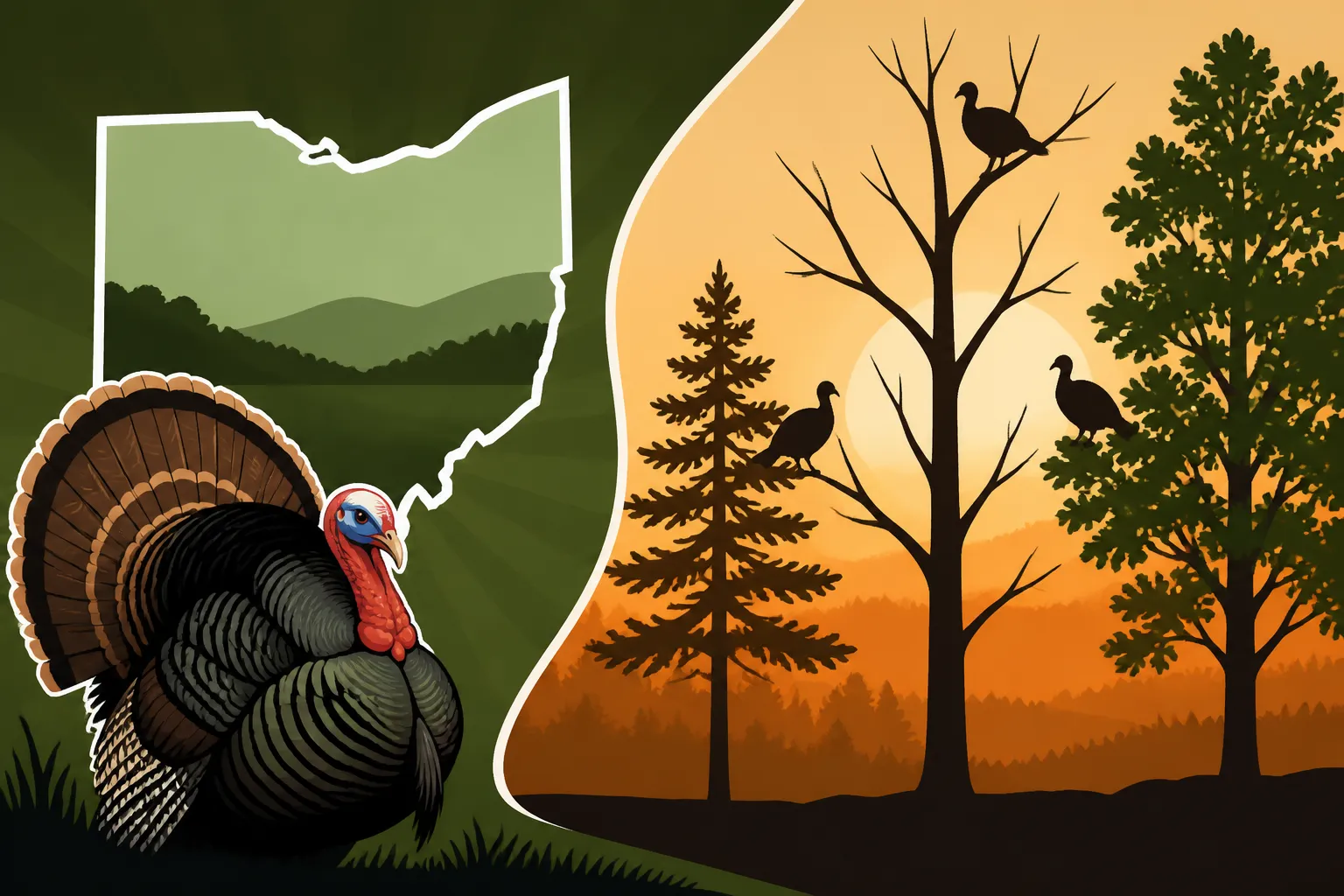
Ohio's diverse landscape, from the Appalachian foothills to the flat farmlands of the northwest, offers a variety of trees that turkeys favor for roosting. Knowing which species they gravitate toward, and where those trees tend to grow, can significantly narrow down your scouting efforts.
Mature Hardwoods: Oaks, Maples, and Sycamores
When you picture a classic turkey roost, you're often thinking of a large, mature hardwood tree. Oaks, particularly the white oak and red oak varieties common across Ohio, are prime candidates. They grow tall, have strong horizontal limbs perfect for perching, and their somewhat open canopy allows turkeys to fly in and out without too much obstruction. Maples and sycamores, especially those with sturdy, open branching structures, are also frequently used.
You'll find these majestic trees on Hunting Ohio Oak Ridges, along creek and river bottoms, and in mature woodlots bordering agricultural fields. Turkeys love to pick a dominant tree on a ridge point that offers a clear flight path in and out, or a towering sycamore that overhangs a winding stream. These spots provide excellent visibility and a sense of security. The birds will fly from a nearby feeding area, perhaps a cut cornfield or a rich acorn flat, straight into the chosen hardwood as dusk settles.
Pines and Conifers for Winter and Protection
While hardwoods are king for much of the year, don't overlook evergreens, particularly when the weather turns nasty or in areas where mature hardwoods are less prevalent. Pines, cedars, and other conifers offer dense cover that can be invaluable.
In the colder months, especially during late season or a cold snap in spring, these trees provide vital thermal protection. The thick needles act as a natural blanket, shielding turkeys from biting winds and heavy precipitation. They also offer excellent visual concealment, which can be a double-edged sword for hunters but a definite advantage for the birds. You might find turkeys using rows of planted pines in old logging areas, or dense cedar thickets along field edges in wildlife areas like Killdeer Plains. While not always the first choice, they become highly attractive when turkeys need to hunker down against harsh Ohio weather.
Overhanging Trees Near Water Sources
There's something about water that draws turkeys, and not just for drinking. Large trees that overhang rivers, creeks, or even sizable ponds are classic roosting locations, especially in areas with significant water features.
Towering sycamores, cottonwoods, and even some large maples that lean out over the water provide a natural barrier from ground predators. A coyote or bobcat is much less likely to attempt swimming a creek to get to a roosted bird. This makes these trees a high-security option. I've often seen birds roosted along the Muskingum River or the larger tributaries leading into the Ohio River. When Hunting Ohio River Backwaters, always look for those massive, sprawling trees on the bank. The turkeys can fly directly from a sandbar or field edge into these trees, feeling incredibly secure with the water below them.
| Roost Tree Type | Common Ohio Species | Typical Location | Key Advantage |
|---|---|---|---|
| Mature Hardwood | White Oak, Red Oak, Maple, Sycamore | Ridge points, creek bottoms, woodlot edges | Height, strong limbs, open canopy |
| Conifer/Evergreen | Pine, Cedar, Spruce | Planted rows, dense thickets, sheltered hollows | Thermal cover, visual concealment |
| Water's Edge | Sycamore, Cottonwood, Willow | Riverbanks, creek bends, pond edges | Water barrier, predator defense |
How to Scout and Identify Active Roosts
Finding an active roost isn't always about stumbling upon it; it's often a deliberate act of scouting, combining auditory cues, visual signs, and map reading. Knowing how to pinpoint where turkeys are flying up for the night is one of the most effective ways to plan a successful morning hunt.
Listening for Roost Calls and Fly-Downs
The most obvious way to locate a roost is simply to listen. Turkeys are vocal animals, especially around their roosting times. In the evening, as dusk approaches, listen for excited gobblers and yelps as they prepare to fly up into their trees. Then, you'll hear the distinctive whomp-whomp-whomp of their wings as they launch themselves off the ground and settle onto a limb. They'll often continue to gobble or cluck for a few minutes after getting settled, as if confirming their spot.
In the morning, the ritual reverses. Just before first light, start listening for "tree yelps" – soft, contented calls from the hens still on the limb. Then, as the light strengthens, the gobblers will often let loose with booming gobblers right from the roost. The ultimate sign, however, is the audible sound of turkeys flying down, those same loud wingbeats as they descend to the ground. This tells you exactly where they want to start their day. When Roost Hunting Ohio Gobblers, approaching stealthily in the dark to listen from a distance is crucial, without getting so close you risk spooking them. Using a tool like GoHunt's mapping features can help you identify potential listening points where you can hear a wide area without being too intrusive.
Looking for Physical Sign
Turkeys leave behind calling cards that can confirm an active roost, even if you don't hear them. Once you've identified a likely area, it's time to get on the ground and look for physical evidence.
The most common sign is droppings. Turkey droppings are typically oblong or "J" shaped for gobblers, and more globular or spiral for hens. When you find a concentration of these droppings under a tree, especially if they're fresh and piled up, it's a strong indicator of an active roost. Look for feathers, too. Turkeys will often preen themselves before settling in for the night, and you'll find primary and secondary flight feathers on the ground. You might also spot scratch marks on the tree trunk from where they flew up, or even bits of bark rubbed off by their feet. Scouting Ohio Public Land Before Season is an excellent time to find these signs before the foliage gets too thick. A cluster of a dozen droppings under a massive oak is a far more reliable indicator than just a single feather.
Using Topography and Aerial Maps to Pinpoint Likely Spots
Sometimes, you can't be on the ground during prime roosting times, or you're scouting new public land. That's where map reconnaissance comes in. Turkeys are predictable in their choice of roosting habitat, and topography often plays a key role.
Look for high points on ridges, especially those with clear, older timber. Creek bends with large trees overhanging the water are also excellent candidates. Isolated clumps of tall trees in otherwise open areas, or even small woodlots surrounded by fields, can act as magnets for turkeys. Using an aerial map, you can zoom in and identify these features. Reading Aerial Photos for Southeast Ohio Deer offers valuable insights into understanding terrain, and the same principles apply to turkeys. A mapping application like GoHunt can be incredibly useful here, allowing you to layer topography with satellite imagery to identify specific large trees or clusters of trees on prominent features. This digital scouting can save you countless hours of walking in the woods.
Adapt Your Strategy to Turkey Behavior and Weather
Turkeys are creatures of habit, but they're not robots. Their roosting behavior can shift based on factors like hunting pressure, weather patterns, and even food availability. Understanding these nuances and adapting your approach is key to consistently being in the right place at the right time.
Roost Changes Due to Pressure and Weather
Imagine a turkey that has been hunted hard for a few weeks. It's heard calls, seen hunters, and knows the drill. These pressured birds are incredibly sensitive and might start changing their roosting locations to evade detection. They might fly up earlier, be quieter on the limb, or move to less obvious trees in thicker cover. On public land, especially during opening week, turkeys that were roosting predictably can suddenly vanish from a spot after a few encounters.
Weather also plays a huge role. On mild, calm evenings, turkeys might spread out, roosting in smaller groups or even individually. But if a strong cold front is moving in, or heavy rain is expected, they'll often consolidate into more sheltered areas, perhaps in dense pine thickets or in the deep hollows. Wind can be a major disruptor; turkeys will avoid exposed ridge tops on blustery nights and seek out more protected roosts on the leeward side of hills or in timber that blocks the wind. This means your scouting on a calm evening might not hold true for a stormy morning. This is particularly noticeable When Ohio Gobblers Go Quiet in Late May after weeks of hunting pressure and fluctuating weather.
Setting Up for a Morning Roost Hunt
Once you've identified an active roost, the morning setup is critical. The goal is to get into position before the turkeys fly down, positioning yourself for a shot when they hit the ground or just as they're descending.
First, identify the likely fly-down paths. Turkeys prefer to fly downhill if possible, and usually into an open area. So, if they're roosted on a ridge, look for a clearing, field edge, or old logging road below. You need to approach in complete darkness, using a headlamp on its lowest red-light setting, and be as quiet as possible. Position yourself within easy calling range, typically 75-100 yards from the roost, and make sure you have a clear shot lane. You don't want to be directly under them, as they'll spot you instantly when they look down. Set up against a wide tree or in a ground blind for concealment. The moment that first gobble rings out from the roost, you should already be settled, camouflaged, and ready. The excitement of Calling an Ohio Gobbler Off the Roost is unmatched, but it requires a perfect setup.
Decoy Placement Near Roosts
Decoys can be a powerful tool, but their placement near a roost requires careful thought. If used incorrectly, they can spook birds just as easily as they attract them.
When setting up for a morning roost hunt, consider placing a hen or jake decoy (or both) 20-30 yards from your position, directly in the most probable fly-down zone. This gives the birds something realistic to focus on when they hit the ground, drawing their attention away from your hiding spot. However, avoid setting decoys too close to the actual roost tree itself. Turkeys don't typically see other birds waiting directly under their roost tree before fly-down, and it can look unnatural and alarm them, causing them to pitch out in another direction.
Decoys are most effective when the birds are already on the ground, or when they're descending and can see them from above. For pressured birds, a single, realistic hen decoy is often more effective than a large spread. You're trying to create a subtle, enticing scene, not a party. Always think about the angle of the rising sun; if the sun will be behind your decoys, it can make them harder for the birds to see clearly and create an unnatural silhouette. Understanding Decoy Placement for Pressured Birds is essential, especially when hunting close to an established roost where turkeys might be wary.
Disclaimer
This article is for general informational purposes only and does not constitute professional advice. Laws, prices and regulations vary by location and change over time. Consult a qualified professional for guidance on your specific situation.