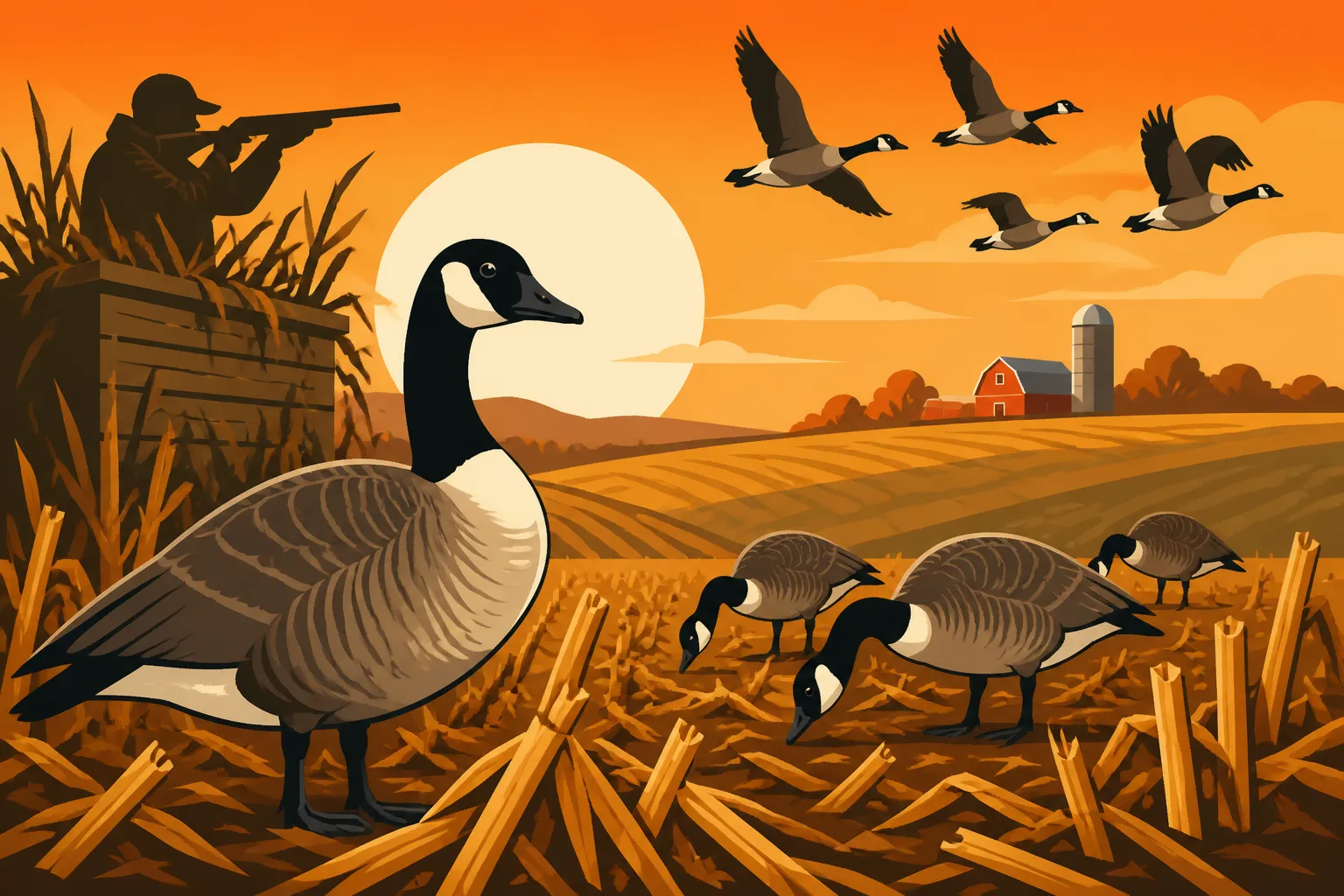
Canada Geese on Ohio Farmland
For many Ohio farmers, the sight of a thousand Canada geese descending on a freshly planted field of winter wheat or a stubble field full of dropped corn isn't a beautiful wildlife spectacle; it's a financial nightmare. The prolific nature of these birds, particularly our resident flocks, means they've become an integral, often challenging, part of the agricultural landscape. This guide will help you understand why these geese love Ohio farmland so much, how to ethically and effectively hunt them, and how to navigate the specific challenges and opportunities this unique hunting scenario presents.
The Rise of Resident Canada Geese on Ohio Farmland
It's easy to look at the vast numbers of Canada geese today and assume they've always been this abundant, especially around our fertile farmlands. But the truth is, the story of the Canada goose in Ohio, particularly the resident populations that now thrive in agricultural areas, is a remarkable conservation success story that has led to some interesting new challenges for both farmers and hunters.
From Migrants to Year-Round Residents
For decades, the Canada goose was primarily known as a migratory bird, passing through Ohio on its way to breeding grounds further north or wintering grounds further south. You’d see huge V-formations high in the sky, hear their distant honking, and know that the seasons were changing. However, starting in the mid-20th century, conservation efforts, habitat creation, and reduced hunting pressure in certain areas led to a remarkable comeback. Many geese, particularly those from what are now called "resident" populations, stopped migrating altogether. They found everything they needed right here in Ohio: abundant food, safe nesting sites, and relatively mild winters. These resident birds, unlike their migratory cousins who still honor ancient flyways, have adapted to stay year-round, making Ohio's agricultural landscape their permanent home.
This shift means that instead of just seeing geese for a few weeks in spring and fall, we now see them throughout the year. They nest in suburban ponds, graze on golf courses, and, most notably, exploit the rich bounty of Ohio's farmlands. This constant presence has changed how both farmers and hunters interact with the species, turning what was once a seasonal visitor into a permanent fixture of the Ohio landscape.
Why Farmland is a Goose Haven
Ohio's farmland is, quite simply, a five-star resort for Canada geese. Think about it: what does a goose need? Food, water, and safety. Farmland offers all three in spades, often in perfect combination. The vast, open fields of corn, soybeans, and wheat provide an almost endless buffet of high-energy grains. After harvest, waste grain left on the ground is a goldmine, allowing geese to fatten up quickly and easily with minimal effort. In the spring, tender young shoots of winter wheat or newly sprouted corn offer vital greens.
Beyond food, agricultural areas often feature numerous ponds, drainage ditches, and small creeks that provide accessible water for drinking, bathing, and roosting. These water sources, combined with the wide-open nature of many fields, give geese excellent sightlines to detect predators. A large, flat corn stubble field next to a small pond or river is essentially a fortress where geese can feed heartily and then retreat to water for safety. This combination of abundant food, accessible water, and expansive, predator-free environments makes Ohio's farmland incredibly attractive, drawing in massive flocks that can number in the thousands.
Impacts on Agriculture
While a few geese might be charming, large, concentrated flocks can be an absolute headache for farmers, leading to very real economic frustrations. The primary concern is crop damage. Geese aren't just eating waste grain; they're pulling up newly sprouted corn and soybeans, especially in vulnerable early spring. They'll graze on winter wheat, stunting its growth or completely destroying patches. A field that’s just had its spring planting can quickly become a torn-up mess where young plants are either eaten or trampled.
Beyond direct consumption, there's significant contamination. Large flocks leave behind an incredible amount of droppings. This waste can contaminate crops, making them unmarketable or requiring additional cleaning. It can also spread diseases to livestock, although this is less common with geese than some other species. The constant presence and activity of geese can compact soil, damage field tiles, and create ruts, all of which add to a farmer's workload and expenses. Many farmers spend countless hours and resources trying to deter geese, using everything from noisemakers and scarecrows to expensive propane cannons, often with limited success. This is why a good relationship with landowners is so important; you're often helping them manage a persistent problem.
Understanding Goose Behavior in Agricultural Settings
To be a successful goose hunter on Ohio farmland, you need to think like a goose. Their behavior, much like ours, is largely driven by basic needs: food, safety, and rest. Understanding these patterns is the key to predicting their movements and setting up effective ambushes.
Feeding Patterns and Preferred Crops
Geese are creatures of habit, especially when it comes to food. They typically leave their roosting areas (often large bodies of water like reservoirs, wide rivers, or even large ponds) at first light, heading directly to their preferred feeding fields. In Ohio, these fields will vary depending on the time of year and agricultural cycles. In late summer and early fall, after the corn and soybean harvests, waste grain in stubble fields is a massive draw. Geese will spend hours grazing, picking up every kernel or bean they can find. If you're scouting, look for fields where geese are regularly feeding, leaving behind their tell-tale droppings and often visible "green-ups" where their activity has fertilized the ground.
As winter approaches, or if fields become picked clean, they might shift to winter wheat or alfalfa fields for greens. Understanding this seasonal shift is crucial. A field that was hot in October might be barren in December, while another field that held no interest in fall suddenly becomes a prime feeding spot for late-season food sources for Ohio whitetails (even if it's geese we're talking about!). Their feeding is often methodical; they'll land at one end of a field and slowly graze their way across it, sometimes taking hours. This presents an opportunity for hunters to intercept them.
Roosting and Loafing Areas
When geese aren't actively feeding, they need a safe place to rest and digest. These are their roosting and loafing areas. Roosts are typically large, open bodies of water where they feel secure from ground predators, as they can see for long distances and quickly take flight. Think large reservoirs, wide stretches of rivers, or big ponds on private land. They'll fly to these spots at dusk and stay overnight. Locating these roosts is vital because it tells you their general flight path to the feeding fields.
Loafing areas are typically mid-day spots where they'll take a break from feeding, especially if they've eaten their fill or if hunting pressure becomes too high. These can be smaller ponds, unharvested standing water in fields, or even just open grassy areas where they can stand around, preen, and keep a watchful eye. Sometimes, especially during the middle of the day, a flock might simply sit down in the middle of a large field away from the active feeding zone, using the open space for security. Understanding these different areas helps you anticipate their movements throughout the day, whether you're trying Early Goose Season Tactics in Ohio or hunting later in the year.
Social Structure and Flock Dynamics
Canada geese are highly social birds, and their flock dynamics play a huge role in how they behave and how you should hunt them. They communicate constantly, with a range of calls that signify everything from contentment to alarm. When a flock is feeding, there's often a general murmur of contented honks and clucks. When they're approaching a field, particularly if they're trying to decide if it's safe, you'll hear more urgent, questioning calls.
Their hierarchical structure means that when one bird becomes wary, it can quickly alert the entire flock. They also tend to approach fields in predictable patterns, often circling several times at altitude, looking for anything out of place before committing to land. This is where observation pays off. Watch how different flocks approach a field. Do they always land on the downwind side? Do they favor a certain corner? Do they send in "scouts" first? Mimicking these patterns with your decoys and calls can be incredibly effective. Remember, the goal is to make your spread look like a safe, contented flock that other geese want to join.
Scouting and Strategy for Hunting Farmland Geese
Hunting Canada geese on Ohio farmland is much more than just throwing out a few decoys and hoping for the best. It's a strategic game of observation, patience, and meticulous setup. The more homework you do before you ever pull out a shotgun, the higher your chances of success.
Identifying Key Feeding Fields
This is arguably the most critical step in goose hunting: finding where the birds want to be. You can have the best decoys and the most expensive calls, but if you're not where the geese are, you're just enjoying a nice walk. Scouting involves driving rural roads, often at dawn and dusk, looking for concentrations of birds. Pay attention to fields with fresh goose droppings, muddy tracks, or obvious signs of grazing. Sometimes you'll even see where they've plucked up corn or soybeans.
A good scouting tool, like the features offered by GoHunt or similar mapping apps, can be invaluable for marking potential fields, noting roosting areas, and even tracking landowner information. What looks good on a map might not be what the geese are using in reality, so boots-on-the-ground (or eyes-on-the-field) observation is non-negotiable. Look for patterns: do they use the same field day after day? Do they shift between a few preferred spots? This information helps you pick the right field on the right day. Always secure permission from the landowner before you scout or hunt. Nothing ruins a hunt faster than trespassing, and respecting private property is a cornerstone of responsible hunting in Ohio.
Decoy Spreads for Different Scenarios
Decoys are your visual invitation to passing geese. The size and type of spread will depend on the field, the number of geese you're trying to attract, and even the time of year. For early season resident geese on small fields, a spread of two dozen full-body or shell decoys might be plenty. However, when hunting larger fields during peak migration or later in the season when birds are wary, you might need a much larger spread, sometimes 50, 100, or even more decoys, to create the illusion of a massive, safe feeding flock.
When setting up, think about a "landing zone." This is the open space you leave in your spread where you want the geese to commit to land. Keep your blinds concealed along the edge of this zone, downwind of where you expect the birds to approach. Use a mix of feeder and sentry poses to make the spread look natural. Motion decoys, such as wind socks or flags, can add crucial realism, especially on calm days when static decoys look lifeless. Don't be afraid to experiment with your layout; sometimes a tight cluster works best, other times a more scattered look. The key is to make it look like a relaxed, feeding flock. For more on this, check out specific guides on layout blind hunting Ohio farm fields.
Blind Placement and Concealment
Your blind is your hiding spot, and good concealment is paramount. Geese have incredible eyesight, and they've evolved to spot anything out of place in their open, agricultural environments. The most common choice for field hunting is a layout blind, which allows you to lie down flat on your back, blending into the stubble. These blinds should be brushed in meticulously with natural vegetation from the field itself – corn stalks, soybean stubble, even dirt. Don't just throw a few handfuls on; make it look like part of the field.
If hunting from a natural feature like a fencerow or a ditch, ensure you're completely covered. Wear camouflage that matches the field you're in. Even a small patch of bright clothing or exposed skin can be enough to flare a wary flock. Positioning your blind downwind of your decoy spread is ideal, as geese almost always land into the wind, bringing them directly over or in front of your hidden position. Think about sun angle, too; if possible, position yourself so the sun is at your back, making it harder for incoming geese to see into your blind.
Wind and Weather Considerations
Wind and weather are huge factors that dictate how geese will move and where they'll decide to land. Geese always take off and land into the wind. This is a non-negotiable rule of goose hunting. Knowing the wind direction is critical for deciding where to place your decoys and blinds. If the wind shifts, be prepared to adjust your setup, even if it means moving your entire spread. A strong wind can also make geese fly lower, faster, and sometimes shy away from certain areas.
Overcast days or foggy conditions can make geese less wary, as their vision is reduced. However, they might also fly lower and harder to spot. On bright, sunny days, their eyesight is even more acute, demanding perfect concealment. Rain or snow can impact their flight patterns, sometimes pushing them down to feed more aggressively before or after a storm. Paying attention to the forecast, and how conditions change throughout the day, will give you a significant advantage in predicting goose behavior and optimizing your setup.
Essential Gear and Tactics for Success
Beyond scouting and strategy, having the right gear and knowing how to use it effectively will significantly impact your success rate when hunting Canada geese on Ohio farmland.
Shotguns and Ammunition
When it comes to shotguns for geese, a 12-gauge is the standard, though a 20-gauge can be effective at closer ranges with the right loads. An autoloader or pump-action shotgun, capable of holding three shells (one in the chamber, two in the magazine, as per federal regulations for migratory birds), is generally preferred. You'll want a choke tube that delivers a tight pattern at distance, such as a modified or improved modified, as geese are tough birds and often present longer shots.
A critical reminder for waterfowl hunting in Ohio: you must use non-toxic shot. This means steel, bismuth, or tungsten-based loads, as lead shot is prohibited for all migratory bird hunting. Shot size typically ranges from BB to #2, with BB being a popular choice for large Canada geese. It’s crucial to pattern your shotgun with your chosen non-toxic loads before the season to understand its effective range and pattern density. This way, you know your limitations and can make clean, ethical shots. Don't be afraid to spend a little extra on quality loads; they make a difference.
Calling Techniques for Farmland Geese
Goose calling is an art, but it's one that anyone can learn with practice. The goal isn't just to make noise, but to imitate the sounds of a contented flock, assuring incoming birds that your spread is safe. You'll want to master a few key calls:
- The Honk: The classic "honk" is primarily made by drakes and serves as a locator or contact call. Use it when geese are distant to get their attention.
- The Cluck: A shorter, sharper sound, the cluck is often used when geese are feeding or are close to landing. It's a reassuring sound.
- The Moan/Groan: A longer, drawn-out call, often made by feeding birds. It indicates contentment and can be very effective in close-range situations.
- The Greeting Call: This is a series of short honks, often descending in pitch, used to "talk" to incoming birds, inviting them to land.
- The Comeback Call: If a flock starts to turn away, a louder, more urgent series of honks and clucks can sometimes convince them to give your spread another look.
Using a short-reed goose call is common, but there are also flute calls. Practice is key. Listen to real geese, watch instructional videos, and don't be afraid to experiment. The most effective calling often involves a combination of calls, varying volume and intensity to match the situation. Remember, sometimes less is more; over-calling can spook wary birds. If you're looking for advanced techniques, you might explore resources like GoHunt's guides on calling specific to regions or situations.
The Importance of a Good Retriever
A reliable retrieving dog is not just a luxury when hunting geese; it's often a necessity, and a true partner in the field. Canada geese, especially larger ones, can be incredibly tough birds, and even a well-placed shot might not kill them instantly. A wounded goose can run a long distance or even make it to water, where it can be nearly impossible for a human to recover, especially in cold temperatures. This leads to wasted game and an unethical hunt.
A well-trained retriever, usually a Labrador or Chesapeake Bay Retriever, can quickly locate and bring back downed birds from thick cover, muddy fields, or cold water. They can track a running goose, and their thick coats protect them from the elements that would quickly make a human hunter uncomfortable or even unsafe. Plus, watching a good dog work is one of the true joys of waterfowl hunting. Investing time in training your dog, or hunting with someone who has a good retriever, makes a world of difference in your success and ethical recovery rate.
Navigating Regulations and Ethical Hunting
Hunting Canada geese on Ohio farmland comes with a set of specific regulations and ethical considerations that every hunter must understand and respect. These rules are in place for conservation, safety, and to ensure positive relationships between hunters and landowners.
Ohio's Waterfowl Zones and Seasons
Ohio is divided into different waterfowl zones, and these zones dictate the specific hunting seasons and bag limits for various species, including Canada geese. It’s absolutely crucial to know which zone you are hunting in and to consult the current Ohio hunting regulations. These regulations can change year to year, so don't rely on memory. For example, Ohio's new waterfowl zone map might have shifted boundaries or season dates recently.
Generally, you'll find early goose seasons designed to target resident populations before the main migratory push, followed by regular seasons that align with the broader duck and goose migrations. These seasons are designed to manage populations effectively, allowing hunters to harvest abundant birds while ensuring the overall health of the species. Always check the official Ohio Department of Natural Resources (ODNR) website or the current hunting digest for the precise dates and zone maps before planning your hunt.
Bag Limits and Possession Limits
Understanding bag limits and possession limits is non-negotiable. The daily bag limit specifies how many Canada geese you can harvest in a single day. The possession limit, which is typically higher (often three times the daily bag limit), refers to the total number of migratory birds you can have in your possession, including those at your home, in your vehicle, or at a processing facility.
These limits are designed to prevent over-harvesting and ensure fair chase. You cannot exceed the daily bag limit even if you go on multiple hunts in one day. If you hunt for several days, you can accumulate up to the possession limit, but never exceed the daily bag limit on any single outing. Always count your birds carefully. Failure to adhere to these limits can result in significant fines and loss of hunting privileges. To stay fully informed, refer to the Ohio duck and goose bag limits in the most current regulations.
Respecting Landowners and Farmers
Hunting Canada geese on farmland almost always means hunting on private property. This brings us to perhaps the most important ethical consideration: respect for landowners and farmers. They are allowing you onto their property, often to help manage a problem species, and they deserve the utmost courtesy and respect.
Always secure explicit permission before entering any private land, even for scouting. A simple knock on the door, a polite conversation, and an offer to share some of your harvest can go a long way. Make sure you understand the boundaries of where you're allowed to hunt and stick to them strictly. Ask about any specific rules they might have, such as avoiding certain fields, parking in a particular spot, or leaving gates as you found them.
When hunting, leave no trace. Pick up all your spent shell casings, empty food wrappers, and anything else you brought with you. Ensure you don't damage fences, crops, or equipment. Drive slowly and carefully on farm lanes. Remember, your behavior reflects not just on you, but on all hunters. A bad experience with one hunter can lead to an entire farm being closed off to others. Building a good relationship with a farmer can secure you hunting access for years to come, making your goose hunting opportunities in Ohio's rich agricultural landscape much more consistent and enjoyable.
Ohio Waterfowl Hunting Scenarios and Strategies
| Scenario | Time of Year | Typical Location | Decoy Spread Size | Blind Type | Calling Strategy | Key Considerations |
|---|---|---|---|---|---|---|
| Early Season Resident Geese | Early Sept – Mid-Oct | Smaller cut grain fields, pastures, ponds | 1-2 dozen (shells/full-bodies) | Natural cover, layout blind | Gentle clucks, moans, occasional honks | Focus on small family groups, less wary birds. Access can be easier. |
| Mid-Season Migrants | Late Oct – Nov | Large cut corn/soybean fields | 3-6 dozen (full-bodies, silos) | Layout blinds well-brushed | Mix of greeting calls, clucks, some aggressive honks | Birds are warier, larger flocks, need more realism. Wind is crucial. |
| Late Season Wary Birds | Dec – Jan | Picked-over corn, winter wheat, open water | 6+ dozen (full-bodies, wind socks) | Layout blinds, heavy brushing, pit blind | Soft clucks, moans, minimal loud calling, focus on realism | Very wary birds, often require big spreads and perfect concealment. Cold weather demands robust gear. |
| Field Loafing Geese | Any time mid-day | Open sections of large fields, nearby water | Small group (6-12 sleepers/resters) | Layout blind near field edge | Minimal, contented clucks, soft moans | Target birds not actively feeding, often less committed to landing. Patience is key. |
Disclaimer
This article is for general informational purposes only and does not constitute professional advice. Laws, prices and regulations vary by location and change over time. Consult a qualified professional for guidance on your specific situation.