Ohio Mourning Dove Migration Timing
For many Ohio hunters, the opening day of dove season isn't just another date on the calendar; it's a cherished tradition, a farewell to summer, and the unofficial kickoff to fall hunting. But understanding the ever-shifting patterns of Ohio mourning dove migration can feel like trying to nail jelly to a wall. One year, the fields are teeming with birds well into September, and the next, a sudden cold snap seems to push every last one south by Labor Day. This guide is here to unravel those mysteries, helping you anticipate their movements and maximize your time in the field.
The Dual Nature of Ohio Doves: Residents and Migrants
It's easy to think of mourning doves solely as migratory birds, always on the move, but that's only part of the story here in Ohio. We actually have a robust resident population that breeds and lives here year-round. These local birds form the backbone of our early season hunting opportunities. When the season opens, many of the birds you see will be these homebodies, along with their late-hatched young, still feasting on abundant summer seeds.
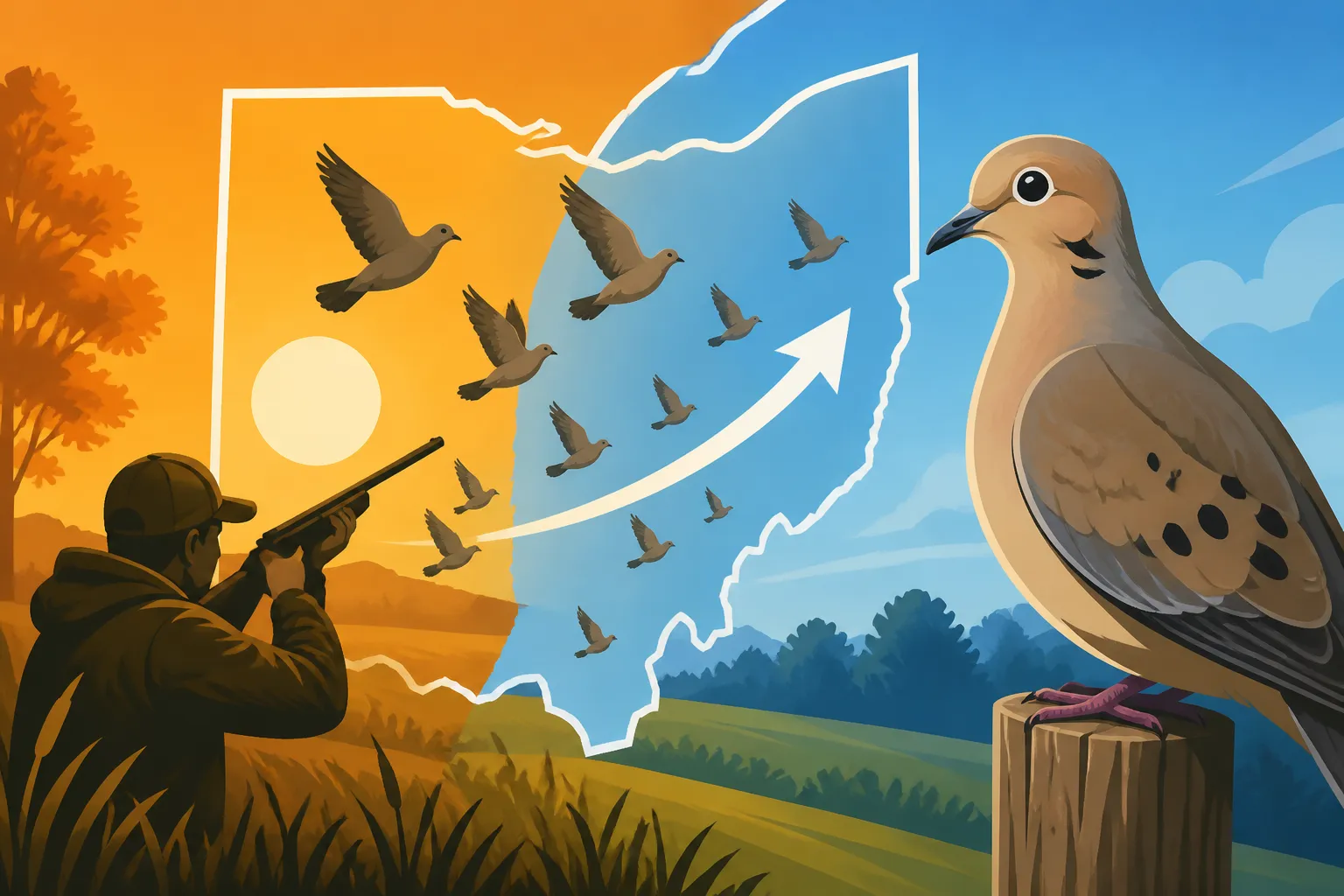
However, as the calendar inches towards fall, the migratory component becomes increasingly important. Doves are warm-weather birds, and while our resident populations are tough, their biological imperative is to head south when conditions dictate. The transition from a predominantly resident population to a mixed bag of residents and early migrants, and then to mostly migrants passing through, is a fluid process driven by a complex interplay of factors that we'll dive into. It's this dynamic that makes Ohio Mourning Dove Numbers a constantly fluctuating thing, challenging hunters to stay nimble and observant.
The season structure in Ohio is generally designed to capture both aspects of this dove population. The early portion of the season typically aligns with the presence of resident birds and the first waves of migrants, offering a fantastic opportunity for fast-paced action. Later in the season, particularly after a few cold fronts have pushed through, hunters might find themselves targeting birds that are genuinely just passing through, using Ohio's rich agricultural fields as a critical stopover point on their journey to warmer climes.
The Nuances of Early Fall Migration Timing
The precise timing of when those migratory mourning doves begin to seriously push through Ohio is rarely the same two years in a row. It's a dance dictated primarily by weather patterns, food availability, and the birds' inherent biological clock. Generally, hunters start to see the first noticeable influx of migratory birds in late August and early September, often coinciding with or just after the season opener. This initial wave usually consists of birds from further north, like Michigan or even Canada, that have already started their southward trek.
Think of it like this: A dove's world revolves around sustenance and survival. As summer starts to wane, even if the days are still warm, the subtle changes in daylight length trigger their migratory instincts. Then, the first significant cold front becomes a major catalyst. When a strong low-pressure system sweeps down from the north, bringing with it cooler temperatures and a blustery north wind, that's often the signal for many doves to move. If this happens right around opening weekend, hunters can be in for some incredible shooting. If it holds off, the resident birds might stick around longer, but the big push of new birds won't materialize.
For those planning early season hunts, keeping an eye on long-range weather forecasts is crucial. A warm, extended late summer can mean birds are more spread out and leisurely in their movements, leading to a more consistent but perhaps less spectacular hunt. Conversely, a sudden drop in temperature or a sustained period of northerly winds can concentrate birds and create those memorable "flights" that dove hunters dream about. Services like GoHunt can be invaluable for tracking these weather patterns and even looking at satellite imagery for potential feeding areas.
The Mid-Season Flux and Late-Season Holdouts
As we transition from the opening weeks into mid-September and early October, the migratory patterns really hit their stride. This is often when Ohio sees the heaviest passage of doves. By this point, many of the locally hatched birds that survived the early season might have dispersed, and the fields are dominated by a mix of transient birds and the hardier resident adults. The key during this period is finding fresh food sources. Doves are creatures of habit when it comes to feeding, and they will absolutely flock to the richest, most accessible buffets.
This mid-season can be feast or famine. If a particular field has been heavily hunted, birds might become wary and move to less pressured areas. That's why scouting throughout the season is so vital. A field that was hot on opening day might be quiet two weeks later if the food supply is depleted or pressure has pushed birds elsewhere. Conversely, a newly harvested corn or soybean field can suddenly become a magnet for hundreds, if not thousands, of doves, drawing in both local birds and new migrants. Hunting a Standing Soybean Field can be particularly fruitful if the beans are starting to dry down or have just been harvested, providing a bounty of seeds.
When late October and November roll around, Ohio dove hunting changes character entirely. Most of the truly migratory birds have long since passed through, heading for the southern states or even Mexico. What remains are the truly resilient local populations and perhaps a few stragglers that got "stuck" due to favorable conditions. These late-season birds are often larger, older, and incredibly wary. They've run the gauntlet of hunters all the way down the flyway. Finding them typically means locating consistent, sheltered food sources that haven't been picked clean and aren't subject to heavy hunting pressure. Think small, overlooked pockets of sunflowers, millet, or even weed seeds in forgotten corners of agricultural fields or near woodlots that offer protection from the elements.
Key Factors Influencing Dove Migration and Local Movement
Understanding the broad strokes of migration timing is one thing, but truly cracking the code of Ohio mourning dove movement requires delving into the specific factors that influence when and where they fly. It's a dynamic puzzle that keeps hunters on their toes year after year.
Weather Patterns and Cold Fronts
As mentioned, cold fronts are arguably the biggest drivers of dove migration. A strong push of cold air from the north, especially one accompanied by persistent northerly winds, will almost immediately spur doves to move south. They detect these atmospheric changes and respond accordingly. A series of weaker fronts might trigger a trickle of birds, while a single, intense Arctic blast can clear out fields overnight. This is why watching the forecast for significant temperature drops, not just daily averages, is so crucial. A mild fall will likely mean a longer, more drawn-out migration, while an early, harsh cold snap can dramatically shorten the window of prime dove hunting.
It's not just the temperature, though. Wind direction and speed play a huge role. Doves will often "ride" a strong tailwind south, covering significant distances quickly. Conversely, strong headwinds can ground them or force them to seek shelter, concentrating them in specific areas until conditions improve. Being aware of these elements can help you predict movements, even within a single day. Many hunters find that the best shooting often occurs a day or two after a strong front has passed, when birds are back on the wing and feeding actively before the next leg of their journey.
Food Availability and Agricultural Practices
Doves are seed-eaters through and through, and their movements are inextricably linked to food sources. Ohio's rich agricultural landscape provides an abundance of forage, but its availability changes throughout the season. Early in the season, naturally occurring weed seeds (like ragweed, foxtail, and smartweed) are prevalent, especially in disturbed soil. As crops mature and are harvested, new food sources emerge.
- Sunflower Fields: These are legendary for dove hunting. A mature, drying sunflower field, especially one that has been legally managed for doves (e.g., mowed, disked, or burned), is a magnet. The timing of these operations is crucial; doves will hit them hard for a week or two after the seeds become accessible.
- Wheat Stubble: After a wheat harvest, the fields are often covered with dropped kernels, making them prime dove feeding grounds. These fields tend to be most productive immediately after harvest and through the early part of dove season.
- Cut Corn and Soybeans: As farmers harvest corn and soybeans in late September and October, the spilled grain and seeds become highly attractive. Doves will work these fields tirelessly. This can provide excellent hunting later in the season, especially as other food sources dwindle. GoHunt's mapping tools can often show crop types, which helps with this kind of scouting.
- Millet and Other Small Grains: Some wildlife areas or private landowners plant millet specifically for doves. These fields offer a sustained food source throughout the season if properly managed.
Understanding the typical harvest schedule in your hunting area is like having a cheat sheet for dove movement. If you know when the wheat comes off, when the sunflowers are drying, or when the corn pickers start rolling, you can anticipate where the doves will concentrate.
Hunting Pressure and Roosting Habits
Doves, like all game birds, become increasingly wary with hunting pressure. Heavily hunted fields will see birds quickly change their patterns. They might feed earlier or later, or simply avoid areas where they've been shot at extensively. This often pushes them to less accessible or smaller, overlooked patches of cover. If a field has been bombarded, don't be surprised if the birds move to a neighboring property that isn't being hunted, or even to a different field across the road.
Their roosting habits are also tied to pressure. Doves typically roost in dense trees (pine groves are favorites) or even tall fencerows. They will fly from roosts to water, then to food, and back to roost. If their flight path from a popular roost to a feeding field becomes too dangerous due to hunting pressure, they will adjust, seeking new routes or entirely new roosts. This is where early morning and late evening scouting comes into play, observing flight lines to identify unpressured feeding areas.
| Factor | Effect on Dove Movement | Scouting/Hunting Strategy |
|---|---|---|
| Cold Fronts | Triggers large-scale southward migration; strong fronts can clear out areas quickly. | Monitor weather forecasts for significant temperature drops and northerly winds. Hunt actively immediately before/after a front, or seek sheltered feeding areas during very cold periods. |
| Wind Direction | Strong tailwinds (north) aid southbound migration, concentrating birds. Strong headwinds can hold birds in place or force them to seek cover. | Position yourself to intercept birds flying with the wind. Identify potential holding areas (sheltered valleys, thick cover) during strong headwinds. |
| Food Source | Doves gravitate towards abundant, accessible seeds (wheat stubble, sunflowers, corn/soybean fields, millet, weed patches). Movement follows agricultural harvest schedules. | Scout regularly to identify newly harvested fields or naturally abundant seed patches. Use maps (like those on GoHunt) to track crop types. Focus on fields managed for doves. Dove Hunting a Cut Ohio Field is a prime example. |
| Hunting Pressure | Can cause birds to become wary, change feeding times, or move to less pressured areas/neighboring properties. | Seek out less obvious or harder-to-reach fields. Scout private land (after obtaining Asking an Ohio Farmer for Permission). Focus on mid-day hunts when others might be gone, or early/late in the day for flight lines. |
| Water Sources | Essential for doves; they will make daily trips to water, especially during dry periods. Ponds, creeks, and even puddles can be hotspots. | Identify reliable water sources near feeding fields and roosts. These can be excellent ambush points, particularly in the afternoon, but be mindful of shooting too close to water to avoid contaminating it. |
| Roost Sites | Doves use dense cover (pine groves, thick woodlots, fencerows) for roosting. Flight paths between roosts, food, and water are predictable. | Locate roost sites through observation. Set up along flight corridors between roosts and feeding areas. Avoid pressuring roosts directly. Consider public land options like Ohio Wildlife Areas which may have designated roosts. |
Preparing for the Ohio Dove Season
Given the dynamic nature of dove migration, preparation is key. First and foremost, make sure your licenses are in order. You'll need an Ohio hunting license, and importantly, you must have an Ohio Migratory Bird Certification and be Ohio HIP Certification for Bird Hunters compliant. These are separate from your regular hunting license and crucial for hunting any migratory birds, including doves. While you don't need a federal duck stamp for doves, many bird hunters acquire one anyway if they plan on hunting waterfowl.
Secondly, scouting, scouting, scouting! Even with the best information about migration timing, local conditions are what matter most. Drive rural roads, look for doves perched on power lines or feeding in fields. Pay attention to agricultural activity. Those freshly cut wheat fields in late August, or the drying sunflower plots, are your best bets. Look for whitewash (dove droppings) on power lines or fences around potential feeding areas – it's a sure sign of consistent dove traffic.
Finally, be ready to adapt. The best dove hunters are flexible. If your chosen field is a bust one morning, be prepared to move to a different location you've scouted. The birds are there; you just have to find where they've decided to be on that particular day. Embrace the challenge, enjoy the fast shooting, and make some memories in the field before the serious deer season kicks off. GoHunt's scouting features, which allow you to mark potential spots and track observations, can be a great digital partner in this process.
Disclaimer
This article is for general informational purposes only and does not constitute professional advice. Laws, prices and regulations vary by location and change over time. Consult a qualified professional for guidance on your specific situation.