Dove Hunting a Cut Ohio Field
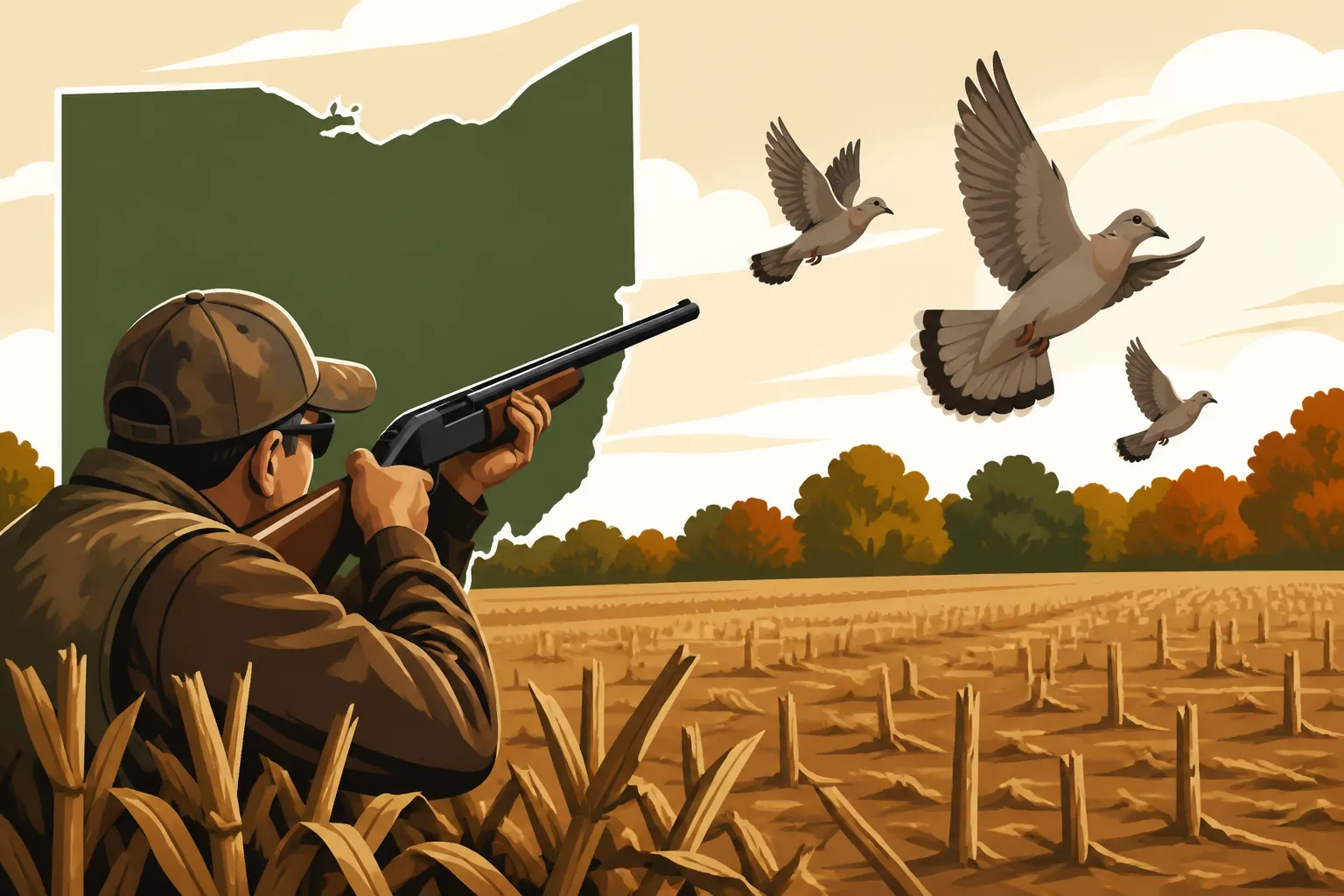
There's nothing quite like a crisp Ohio September morning, the sun just peeking over the horizon, and the sound of doves whistling past your ears. But if you’ve ever sat in a perfectly good-looking cut field only to see a grand total of zero birds, you know the frustration. Dove hunting in Ohio, especially in those prime cut agricultural fields, can be feast or famine. This guide is going to walk you through exactly how to identify, scout, and hunt those coveted Ohio cut fields to increase your chances of a successful and memorable hunt.
Navigating Ohio's Dove Season and Necessary Permits
Before you even think about stepping into a field, it's crucial to understand the foundational rules and requirements for dove hunting in the Buckeye State. Doves are migratory birds, which means they fall under specific state and federal regulations that differ from deer or small game hunting. Ignoring these can quickly turn a fun outing into a costly mistake.
Understanding Key Season Dates and Shooting Times
Ohio’s mourning dove season typically kicks off on September 1st, offering one of the earliest hunting opportunities of the year. This first segment usually runs for a generous stretch, often into late October, followed by shorter, often less-pressured segments in November and December. It's vital to check the current Ohio Department of Natural Resources (ODNR) hunting regulations annually, as dates can shift slightly. The early season is often the most productive, as birds are still local and haven't faced significant hunting pressure.
Legal shooting hours for migratory birds like doves are generally from sunrise to sunset. This is a hard-and-fast rule, and there's no wiggle room. You need to be aware of the exact sunrise and sunset times for your specific location on the day you plan to hunt. Many hunters use their phone's weather app or a dedicated hunting app to get precise times. Imagine showing up an hour before sunrise, thinking you're getting a jump on the birds, only to find out you're technically poaching. It’s a sure way to ruin your day and potentially incur fines. Conversely, wrapping up too early means missing those prime last-light flights. Being precisely aware of Ohio Legal Shooting Hours is not just about legality, but about maximizing your time in the field ethically.
Deciphering Bag Limits and Equipment Regulations
For mourning doves in Ohio, the daily bag limit is generous, typically 15 birds. This means you can harvest up to fifteen doves per day. The possession limit, which is the total number of doves you can have in your freezer or cooler at home from previous hunts, is usually three times the daily bag limit, or 45 birds. These limits are in place to ensure a sustainable harvest and prevent overhunting.
Equipment-wise, there are a couple of critical rules to remember for migratory bird hunting. Your shotgun must be plugged so that it cannot hold more than three shells total – one in the chamber and two in the magazine. This is a federal regulation, and most new shotguns come with a plug installed, but always double-check yours. Many hunters, especially those who also hunt deer or other game with the same shotgun, might remove the plug and forget to reinstall it. Make sure yours is in place. There are no restrictions on the type of shotgun beyond the three-shell capacity. Standard gauges like 12, 20, and even 28 gauge are all popular choices for dove hunting.
Securing Your Ohio Hunting License and Federal Stamp
To legally hunt doves in Ohio, you'll need a few pieces of paper. First, you must have a valid Ohio hunting license. This is your basic entry ticket to hunting any game in the state. The cost varies for residents and non-residents, and there are specific youth and senior discounts available. For a full breakdown, check out our guide on Ohio Hunting Licenses and What They Cost.
Beyond the general hunting license, because doves are migratory birds, you’ll also need two additional certifications. You need an Ohio Migratory Bird Certification, which is usually a small add-on fee to your regular hunting license and confirms you’re registered with the Harvest Information Program (HIP). This program collects data on migratory bird harvests, which is crucial for population management. Finally, you are required to purchase a Federal Migratory Bird Hunting and Conservation Stamp, often simply called a Federal Duck Stamp. Even if you're only hunting doves and have no intention of pursuing waterfowl, this stamp is mandatory. It's a small investment that contributes significantly to wetlands conservation. You can often purchase these stamps at post offices, sporting goods stores, or online through the ODNR's licensing system. Don't overlook these; conservation officers routinely check for all three during migratory bird seasons.
Mastering the Art of Scouting Productive Cut Fields in Ohio
Finding the birds is half the battle, and when it comes to doves in cut fields, it's almost the entire war. Doves are creatures of habit, driven by food, water, and security. Understanding their needs and how to spot the signs of their presence is paramount to a successful hunt.
What Makes an Ohio Field a Dove Magnet
Doves aren't just looking for any cut field; they're looking for a buffet. Their primary diet consists of small seeds, and certain crops are absolute magnets. In Ohio, you'll want to focus on fields that have been harvested of sunflowers, wheat, corn, millet, canola, sorghum, or buckwheat. Once these fields are cut, the dropped seeds become readily available. Sunflowers are often considered the holy grail of dove fields, as the birds absolutely devour the fallen seeds. Wheat stubble fields are also fantastic early in the season. Cornfields, especially those with smaller kernels or where equipment has shelled a lot of corn, can hold birds.
Beyond the food source, doves also need access to water for drinking and grit for digestion. Look for fields with a nearby pond, stream, or even temporary puddles after a rain. Gravel roads or bare patches of dirt within or bordering the field provide that essential grit. Finally, roosting and loafing cover is crucial. Doves often spend midday hours perched in tall trees, along power lines, or on the edges of woodlots bordering a feeding field. If you can find a cut field with ample food, close access to water, and good loafing trees or power lines, you've likely found a winner.
Strategic Scouting: Before and During Season
Scouting for doves isn't a one-and-done affair; it's an ongoing process. Ideally, you want to start before the season opens to identify what crops are planted in your target areas and get a feel for their harvest timelines. Many savvy hunters utilize mapping tools like GoHunt to pinpoint likely dove hotspots. These digital maps allow you to zoom in on agricultural areas, identify different crop types, and spot those critical water sources and power lines from the comfort of your home. You can often see the distinct patterns of recently cut fields.
Once you’re closer to season or during the early days, physical scouting is irreplaceable. Drive or walk the perimeters of promising fields, especially during the early morning and late afternoon. Use good binoculars to observe flight patterns. Are doves flying into a specific corner of the field? Are they dropping down along a particular fencerow? Are they congregating on a power line over a certain section? These are all clues. Pay attention to how the birds enter and exit the field and where they spend their time feeding. Look for white "splashes" on the ground or on power lines—sure signs of dove activity. Remember, doves are constantly on the move, so what was hot last week might be barren today, especially after hunting pressure. Continuous scouting, even day-of, is essential.
Finding Access: Public Land and Private Permission
Ohio offers both public and private land opportunities for dove hunting. Many Ohio Wildlife Areas manage fields specifically for doves, often planting sunflowers, millet, or wheat. These areas can provide excellent hunting, but they also tend to draw crowds, especially on opening day. You can use the Ohio HuntFish App to locate wildlife areas and view their specific regulations and maps. Be aware that competition can be fierce, and you might need to walk further to find less pressured spots.
For a more secluded experience, private land is often the answer. This requires asking for permission from landowners, which can feel intimidating, but many farmers are happy to grant access, especially if you're respectful and offer to help with any chores. Target those smaller, isolated woodlots or fencerows near cut fields that often get overlooked. A polite knock on the door, a clear explanation of what you'd like to do, and an offer to share some of your harvest can go a long way. Our guides on Getting Private Land Permission in Ohio and Asking an Ohio Farmer for Permission provide detailed advice on how to approach this effectively. Always carry proof of insurance if you have it, and offer to pick up any spent shells. Respect for the land and the landowner is key to repeat access.
Optimizing Your Setup for High-Volume Action
Once you've identified a promising field, the next step is setting up your ambush. Doves have excellent eyesight and are incredibly wary, so concealment and strategic placement of decoys are crucial. This isn't just about hiding; it's about positioning yourself for the best possible shots.
Selecting and Concealing Your Shooting Position
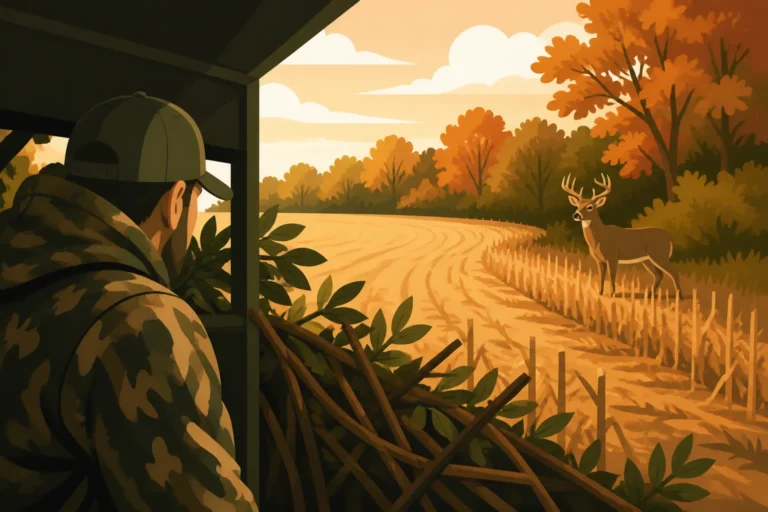
Your hide is your sanctuary in the field. Doves are quick to spot anything out of place, so you need to blend in seamlessly. Natural cover is often the best choice:
- Fencerows and Tree Lines: These provide excellent natural cover, breaking up your silhouette effectively. Position yourself slightly inside the cover, not directly on the edge, to avoid silhouetting against the open sky.
- Standing Corn or Tall Grass: If adjacent to a cut field, patches of standing corn or tall weeds can provide fantastic concealment. This can be especially good if you're hunting later in the season when more crops are harvested.
- Ditches or Depressions: Sometimes, a slight dip in the field or a drainage ditch can offer just enough cover to get low and out of sight.
If natural cover is sparse, a portable ground blind can be a lifesaver. Look for blinds with good camo patterns that match the local vegetation. Pop-up blinds from brands like Ameristep or Primos are popular choices. Remember to brush in your blind with local vegetation to make it look like part of the landscape. As we discuss in Using a Ground Blind on Ohio Public Land, it’s not enough to just set it up; you need to integrate it. The key is to be comfortable enough to stay still and hidden, but also mobile enough to adjust if the flight pattern changes.
The Power of Decoys: Types and Placement
Dove decoys might seem like overkill to some, but they can dramatically increase your success rate, especially on pressured birds or during slower periods. Doves are social birds, and seeing others on the ground or in flight is a strong attractant.
There are several types of dove decoys:
- Static Clip-on Decoys: These are simple plastic dove figures that clip onto fencerow wires, branches, or corn stalks. Place them in visible locations where doves might naturally perch. A few decoys strategically placed can make your area look safe and inviting.
- Full-Bodied Decoys: These are larger, more realistic decoys that you stake into the ground. Scatter these in small groups in the cut field, mimicking feeding birds.
- Spinning-Wing Motion Decoys: These are often the most effective. Brands like Mojo Outdoors make battery-operated doves with spinning wings that simulate a landing bird. The motion catches doves' eyes from a distance. Place these where they are highly visible, perhaps 15-20 yards in front of your blind, slightly upwind. The movement adds a level of realism that can often draw birds into shooting range that might otherwise pass by.
When setting up your spread, think about typical dove behavior. They often fly into the wind to land. Place your decoys slightly upwind of your shooting position, creating an inviting landing zone into which approaching birds will naturally turn. A mix of static and motion decoys often works best. Don't be afraid to experiment with your setup during the hunt.
Harnessing Wind, Sun, and Topography to Your Advantage
Understanding how wind, sun, and local topography affect dove flight is critical for optimal positioning.
- Wind: Doves, like most birds, prefer to land and take off into the wind. This gives them more lift and control. Position yourself so that incoming birds will be flying into the wind as they approach your decoys, offering you a more stable, slower target. If the wind is at your back, birds will often flare directly overhead or land quickly behind you, making for challenging shots.
- Sun: Always try to have the sun at your back. This does two things: first, it makes it difficult for doves to see you because they're flying directly into the glare; second, it illuminates the birds clearly for you, making them easier to spot and shoot. Hunting with the sun in your eyes is a recipe for frustration, as birds will appear as dark silhouettes against a bright sky.
- Topography: Look for natural funnels or pinch points. A gap in a fencerow, a low point in a ridge, or a bend in a creek might funnel doves along predictable flight paths. Power lines are also major attractants, as doves use them as loafing perches. Setting up near a favored power line where birds congregate before dropping into a field can be incredibly productive. Use your scouting observations to determine these preferred routes.
Effective Shooting Strategies and Ensuring Ethical Harvest
Dove hunting is often fast-paced, offering many shooting opportunities. But speed doesn't mean sacrificing accuracy or ethics. Making clean kills and ensuring every bird is retrieved is a hallmark of a responsible hunter.
Choosing the Right Shotgun and Ammunition
For dove hunting, speed and spread are more important than heavy hitting power.
- Shotgun Gauge: A 12-gauge is the most common and versatile, offering a good balance of pellet count and recoil. A 20-gauge is also an excellent choice, especially for younger hunters or those sensitive to recoil, and is perfectly adequate for doves. A 28-gauge can be effective but offers a smaller pattern and fewer pellets.
- Choke: For doves, an improved cylinder (IC) or modified (MOD) choke is generally ideal. Doves fly erratically and at varying distances, and these chokes provide a good balance between a wide enough pattern for fast, close shots and enough density for longer shots up to 35-40 yards. A full choke will be too tight for most dove scenarios, resulting in missed birds or overly shredded ones.
- Ammunition: Stick to lighter loads with smaller shot sizes. #7.5 or #8 shot is perfect for doves. These shells typically contain a large number of small pellets, creating a dense pattern ideal for hitting small, fast-moving targets. Brands like Winchester, Federal, or Remington offer excellent dove loads specifically designed for light recoil and good patterns. Avoid heavy target loads or large game loads, which are overkill and can damage the meat.
Mastering Your Lead and Follow-Through
Dove hunting is exceptional practice for all types of wing shooting because the birds are fast, agile, and come in at unpredictable angles.
- The Lead: This is perhaps the most challenging aspect. You need to shoot where the bird will be, not where it is. The amount of lead depends on the bird's speed, angle, and distance. For straight-away shots, lead the bird by a few feet. For crossing shots, you might need to lead by several feet, or even more, for a fast, close bird. The best way to learn lead is through practice, ideally with clay pigeons.
- Swing and Follow-Through: Mount your gun smoothly, swing with the bird, and continue to swing through the shot. Don't stop your swing the moment you pull the trigger. This "follow-through" is critical for consistent hits. Imagine painting a line in the air with the end of your barrel, continuing past the bird's flight path even after the shot.
- Practice: Seriously, hit the sporting clays or skeet range before the season. Even just a box or two of shells can dramatically improve your confidence and accuracy. Remember, the goal is a clean, ethical kill, not just to spray lead.
Swift Retrieval and Respectful Practices
With multiple birds falling, it's easy to lose track, especially in tall stubble or thick fencerows.
- Marking Your Bird: The moment you shoot, keep your eyes on the falling bird until you see exactly where it lands. Pick a landmark – a patch of weeds, a post, a distinctive clump of dirt – to help you pinpoint the spot.
- Retrieval Dogs: A well-trained bird dog is an invaluable asset for dove hunting. A good retriever can find dozens of birds you might otherwise lose, especially those that fall into heavy cover.
- Ethical Obligation: Every hunter has an ethical and legal obligation to make a reasonable effort to retrieve every downed bird. Not only is it wasteful to leave game in the field, but it's also illegal. Be prepared to walk, even crawl, to find your birds.
- Cleanliness: Always carry a small bag for your spent shotgun shells. Leave no trace. A clean field ensures you maintain a good relationship with landowners and uphold the image of responsible hunting. Nobody wants to see a field littered with plastic shells.
| Crop Type | Attractiveness to Doves | Typical Ohio Harvest Timing | Notes |
|---|---|---|---|
| Sunflowers | High | Late August – Early September | Often planted specifically for doves on public land; birds heavily feed on fallen seeds. |
| Wheat | High | Late June – Early July | Excellent early season food source as birds pick through stubble. |
| Corn | Medium-High | Late August – October | Especially good if fields have shelled kernels from harvest; doves prefer smaller varieties. |
| Millet | High | August – September | Smaller grains highly favored by doves; often used in wildlife plots. |
| Canola | Medium | June – July | Less common but can attract birds if seeds are present after harvest. |
| Sorghum (Milo) | High | September – October | Another excellent seed producer, often remaining attractive later into the season. |
| Buckwheat | Medium-High | August – September | Quick-growing crop that provides small, edible seeds for doves. |
Hunting doves in a cut Ohio field is an incredibly rewarding experience, combining fast-paced action with the simple beauty of an early autumn day. By understanding the regulations, putting in the effort to scout effectively, setting up strategically, and practicing ethical shooting, you'll greatly increase your chances of a successful hunt.
Disclaimer
Always consult the most current Ohio Department of Natural Resources (ODNR) hunting regulations before heading into the field. Regulations, season dates, and bag limits can change annually. This guide is for informational purposes only and does not supersede official state wildlife laws.