Running a Trapline in Rural Ohio
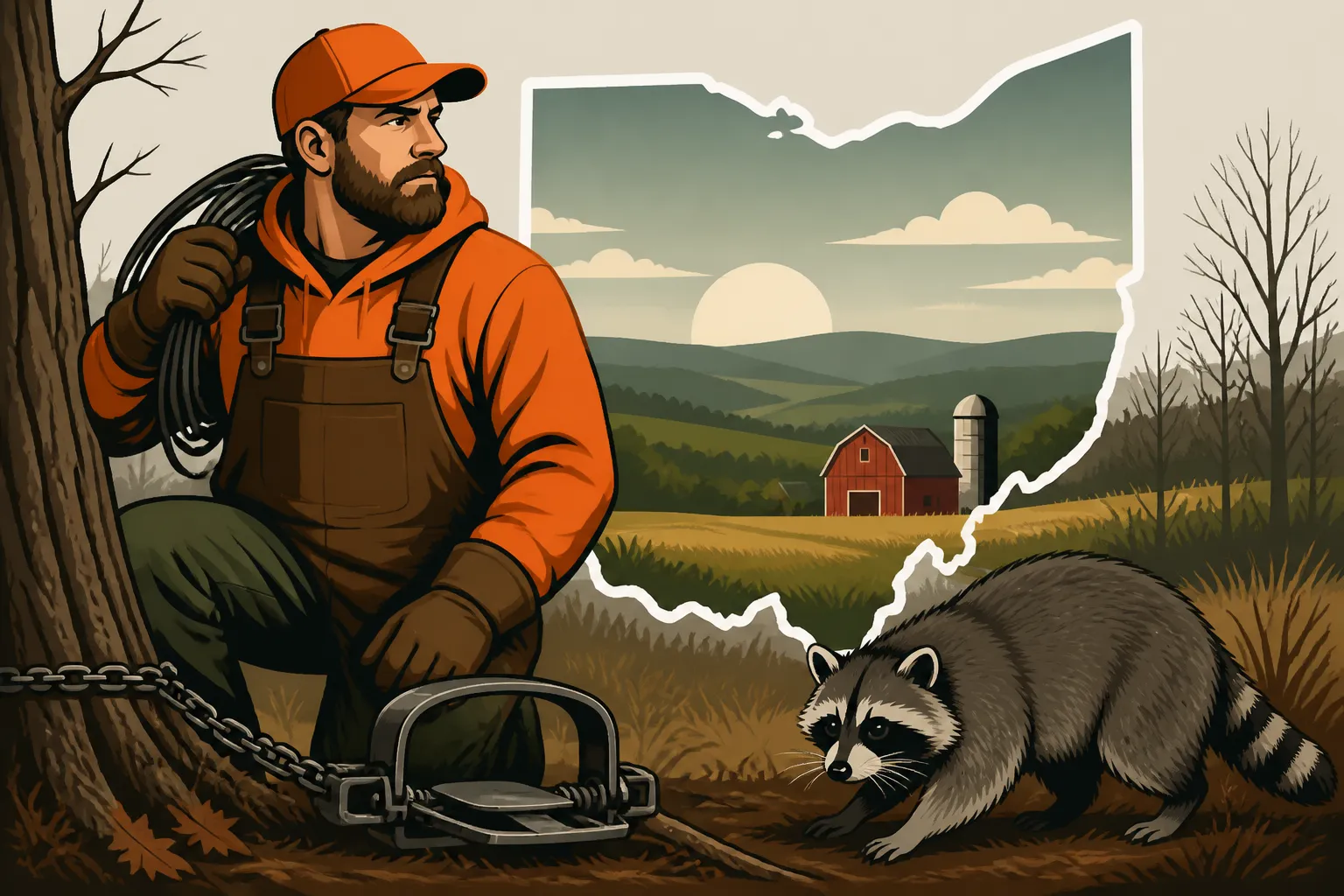
There’s a unique satisfaction that comes with running a trapline in rural Ohio, isn't there? It’s a connection to the land, a challenge of wits, and a tradition passed down through generations. But let’s be honest, it’s not always easy. From understanding complex regulations to battling unpredictable weather, a successful trapline demands dedication and knowledge. This guide is here to walk you through the ins and outs, offering practical advice to help you connect with Ohio's furbearers and carry on this age-old pursuit with confidence.
Understanding Ohio's Furbearer Landscape and Regulations
Diving into the world of trapping in Ohio means first getting a solid grasp on the critters you're after and the rules that govern how you pursue them. It's not just about setting a trap; it's about understanding the ecosystem and respecting the regulations that keep it healthy.
Key Species and Their Habitats in Rural Ohio
Rural Ohio is a mosaic of farmlands, woodlots, meandering creeks, and hidden ponds, all of which provide prime habitat for a variety of furbearers. Understanding which animals frequent which areas is fundamental to a successful trapline.
Raccoons, for instance, are absolute opportunists. You’ll find them almost everywhere, from the deepest timber to suburban backyards. In rural settings, they absolutely love creek bottoms, drainage ditches, and the edges of cornfields. They’re often found near old farmsteads or abandoned barns, always on the lookout for an easy meal. Their density can be quite high, especially in rich agricultural areas, making them a primary target for many Ohio trappers. You can often predict their movements by looking for natural funnels where they'd travel between water sources and food plots.
Muskrats are true water dwellers. If you have slow-moving creeks, ponds, marshes, or even larger drainage ditches on your property or public land, you've likely got muskrats. They build lodges of cattails and mud, or burrow into banks. Look for their "runs" – trails they create in the vegetation along the water's edge – and feeding platforms where they munch on aquatic plants. Areas around Killdeer Plains Wildlife Area, for example, with its extensive wetlands, are often hotbeds for muskrat activity. For more on targeting these aquatic animals, check out our guide on Trapping Ohio Muskrat and Beaver.
Beavers, the engineers of the animal kingdom, are also tied closely to water. They’ll colonize streams, rivers, and larger ponds, building impressive dams and lodges. Their presence is usually obvious, with chewed trees, mud slides, and distinct channels they create. Look for them in areas with plenty of woody vegetation along waterways, particularly in the Appalachian foothills of Southeast Ohio where timber is abundant. These guys can quickly alter a landscape, creating new wetland habitats in the process.
Mink, another semi-aquatic furbearer, are a bit more elusive but often found in the same areas as muskrats and beavers. They're sleek predators that patrol stream banks, pond edges, and marshy areas, often using log jams, rock piles, and culverts as their hunting grounds. They follow the scent of their prey, so setting traps along known travel routes near water can be highly effective.
Foxes, both red and gray, are denizens of diverse rural landscapes. Red foxes prefer open farmland, field edges, and brushy areas, often making dens in old woodpiles or groundhog burrows. Gray foxes, on the other hand, are more at home in dense woodlands and thickets, and are one of the few canids that can actually climb trees. You’ll find them moving along field edges, through thin woodlots, and sometimes crossing pastures. Their tracks in fresh snow can tell you a lot about their movements and preferred hunting grounds. For specific regulations regarding these cunning canids, you'll want to review Ohio Raccoon and Fox Season Dates.
Opossums are another incredibly adaptable creature, found almost anywhere. They’re often caught incidentally in sets targeting other furbearers, as they’re not particularly selective about their diet or travel routes. They frequent creek bottoms, dense brush, and even climb trees, making them a common sight in almost any rural Ohio habitat.
Navigating Ohio's Trapping Regulations and Seasons
Before you even think about putting a trap in the ground, you absolutely must understand Ohio's trapping regulations. The Ohio Department of Natural Resources (ODNR) sets these rules to ensure sustainable furbearer populations and safe trapping practices. Ignoring them isn't just irresponsible; it can lead to hefty fines and loss of trapping privileges.
First and foremost, you'll need the proper license. Every trapper, regardless of age, must possess a valid Ohio hunting license and a fur taker permit. This is your foundation. You can easily purchase these online through the ODNR's Wild Ohio customer portal or at authorized license vendors across the state. For a detailed breakdown of costs and options, consult Ohio Trapping License Requirements.
Season dates are incredibly important and vary by species. You can't just trap year-round; seasons are set to coincide with the best fur quality and to avoid disrupting breeding cycles. For example, raccoon and fox seasons typically open in early November and run through the end of January or mid-February, depending on the species. Water trapping for muskrat, mink, and beaver also has specific windows, usually opening around the same time and extending well into March. Always check the current year’s Ohio Hunting and Trapping Regulations booklet, available on the ODNR website or wherever licenses are sold. This is the definitive source for up-to-date information.
Trap types and setting restrictions are another critical area. Ohio has rules about the maximum jaw spread for foothold traps on land and in water, as well as size limitations for body-grip (conibear) traps. You can’t just use any trap you want, especially in certain environments. For instance, body-grip traps larger than certain sizes might be restricted to entirely submerged sets or specific types of cubby sets to prevent non-target captures.
Perhaps one of the most frequently misunderstood rules is the setback distance. On public land, you generally cannot set a trap within a certain distance (check current regulations for the precise measurement, often around 150 feet) of a public road or a dwelling without special permission. On private land, you need the landowner's permission, and even then, discretion is key when setting near homes or areas where pets might roam. Always err on the side of caution.
Lastly, properly checking and tagging your traps is non-negotiable. All traps must be checked at least once every 24 hours. This isn't just a rule; it's a humane practice to ensure any captured animal is handled promptly. Your traps must also be tagged with your name and address, or your ODNR customer identification number. This traceability is crucial for enforcement and for identifying lost or found traps. You can find comprehensive details about specific tag requirements, including any changes, in Ohio Furbearer Trapping Tag Requirements.
Ethical Trapping and Conservation Practices
Being a trapper in Ohio means being a steward of our wildlife. Ethical trapping isn't just about following the rules; it's about respecting the animals, the environment, and the public's perception of hunting and trapping.
One of the cornerstones of ethical trapping is humane treatment. This means using properly sized and maintained traps that are effective and cause minimal stress. It also means checking your trapline diligently, at least once every 24 hours, as mandated by Ohio law. This promptness is crucial for the welfare of any animal you catch. A trapper's commitment to minimizing suffering is paramount. You also need to know how to quickly and humanely dispatch any furbearer you intend to harvest.
Conservation practices extend beyond individual animal welfare. It's about ensuring healthy, sustainable populations for the future. Ohio's furbearer management is based on scientific data, and responsible trappers contribute to this by adhering to bag limits (where applicable, though many furbearers do not have them) and season dates. If you're targeting beaver, for example, and you see signs of a declining population in an area, a responsible trapper might ease up on their efforts there, even if the season is open. It’s about reading the landscape and making informed decisions.
Releasing non-target species is another critical aspect. Sometimes, you'll catch an animal you weren't targeting or one that isn't in season. Knowing how to safely and gently release these animals without causing harm is a skill every trapper must possess. This requires having release tools, like a "release pole" for foot-hold traps, and a calm demeanor. It's not uncommon to catch an opossum or a domestic animal, and knowing how to handle these situations responsibly builds goodwill and protects our non-target wildlife.
Furthermore, being discreet and respectful of private property and other outdoor enthusiasts is key. Trapping signs should be subtle, and trappers should always leave the land as they found it, if not better. This includes properly disposing of carcasses, filling in dirt holes, and removing all flagging or markers at the end of the season. Public perception of trapping is heavily influenced by the actions of individual trappers, so let’s ensure those actions are always positive and professional.
Essential Gear and Strategic Setup for an Ohio Trapline
Setting up a trapline is a lot like preparing for a wilderness expedition; you need the right tools, a solid plan, and a good understanding of your environment. Without these elements, you're just wandering aimlessly.
Choosing the Right Traps for Ohio Furbearers
Selecting the correct traps is a cornerstone of effective and ethical trapping. Different furbearers require different traps, and what works for a muskrat certainly won't be ideal for a fox. Ohio regulations guide trap choices, but understanding their function helps you make the best decisions.
For muskrats and mink, smaller body-grip traps (like #110 or #120 Conibears) are highly effective when placed in submerged runs or den entrances. These traps are designed to dispatch the animal quickly. For muskrats, compact foothold traps (e.g., #1 or #1.5 coil spring) can also be used, often in drowning sets in shallow water. For these smaller, more delicate aquatic furbearers, you're looking for traps that are fast and humane.
Raccoons, being sturdy and tenacious, require more robust traps. Many trappers favor #1.5 or #1.75 coil spring foothold traps for land sets, often paired with a chain and drag system to allow them to move a short distance and prevent injury. Dog-proof (DP) traps, such as those made by Duke Traps or Freedom Brand, are incredibly popular for raccoons in Ohio. These are tube-like traps that only allow a raccoon's paw to reach in for bait, making them very selective and reducing the chance of catching non-target animals like dogs. They are especially useful in agricultural areas where pets might be present. For water sets, larger body-grip traps (e.g., #220 Conibears) are effective when used in culverts or over logs in streams, always ensuring they are fully submerged to prevent non-target captures.
Beavers demand powerful traps due to their size and strength. Heavy-duty foothold traps (like #3 or #4 coil spring or long spring) are often set in drowning rigs in deep water. Large body-grip traps (like #330 Conibears) are also highly effective when placed in main channels or dam breaches where a beaver is sure to pass through. The key with beaver traps is strength and stability to hold such a powerful animal, always set in a way that leads to a quick, humane dispatch.
For foxes, both red and gray, discretion and subtlety are key. Foothold traps, typically #1.5 or #1.75 coil springs, are the standard. The trap itself is only part of the equation; the "set" (how the trap is bedded and camouflaged) is crucial for these wary animals. You need a trap that holds securely but is not overly powerful, causing minimal damage to the paw. Smooth jaw traps are often preferred.
When choosing any trap, consider the local regulations for jaw spread and trap type. Always inspect your traps regularly for rust, weak springs, and loose parts. A well-maintained trap is a humane and effective trap. It's an investment, and quality traps, from reliable manufacturers like Bridger or Sleepy Creek, will last you decades if cared for properly.
Essential Tools and Supplies for a Rural Trapper
Beyond the traps themselves, a successful trapline in rural Ohio requires a specific arsenal of tools and supplies. Think of your trapline pack as your mobile workshop – you need to be prepared for anything.
Firstly, a sturdy trapline pack or bucket is invaluable. It needs to be comfortable to carry, able to withstand mud and wet conditions, and large enough to hold multiple traps and tools. Many trappers opt for a five-gallon bucket with a lid, which doubles as a seat and can hold water for mixing dirt.
Setting tools are crucial for safely deploying and retrieving traps. For coil spring traps, a pair of setting pliers can save your fingers. For body-grip traps, especially larger ones, dedicated setting tongs are a must-have for compressing the powerful springs safely.
Gloves are not just for warmth; they're essential for scent control when making land sets for wary animals like fox. Rubber or nitrile gloves are excellent for keeping human scent off your traps and lures. A spare pair of work gloves is also good for protecting your hands from thorns and rough terrain.
Lures and baits are the irresistible draw for your target furbearers. For raccoons, sweet baits like marshmallows, sardines, or commercial paste baits work wonders. For foxes, a good curiosity lure (often a gland lure or a skunky scent) combined with a food lure and some fresh bait (like spoiled meat or commercial pellets) can be highly effective. For muskrats, a touch of musky lure or even a slice of apple can entice them. Beavers respond well to castor mound lures. Experimentation is key, but always purchase quality lures from reputable suppliers.
A dirt sifter, trowel, and hammer are indispensable for land sets. The sifter ensures you have fine, native soil to bed your trap and cover it naturally. The trowel is for digging the trap bed and preparing the lure hole, and a small hammer helps drive stakes.
Wire and fencing staples are useful for securing traps, drags, or making snare support systems (where legal). Flagging tape is helpful for marking trap locations (discreetly!) to easily find them the next day, especially in dense cover. Just remember to remove it at the end of the season.
Finally, navigation tools are absolutely vital, especially when scouting new areas or running a long trapline. Having a good GPS unit or a reliable mapping app like GoHunt on your phone is non-negotiable for plotting your route, marking trap locations, and ensuring you don't trespass. The ODNR's HuntFish Ohio app is also a fantastic resource for checking property boundaries on public land and even some private parcels. When you're running a line through miles of tangled creek bottoms and dense woodlots, knowing exactly where you are and where your next trap is located can save you hours of searching.
Planning Your Trapline Route and Set Locations
A successful trapline starts long before the season opens, with meticulous planning and scouting. You can't just randomly throw traps out and expect results.
Scouting is paramount. Just like deer hunting, you need to understand animal movement patterns. This means spending time in the woods and along waterways, looking for sign: tracks, scat, chewed vegetation, dens, slides, and runs. Focus on natural funnels where animals are concentrated. This could be a narrow strip of timber between two fields, a culvert under a road, a beaver dam, or a bend in a creek. For more on effective scouting techniques, even if focused on deer, you might find useful crossover advice in Scouting Ohio Public Land Before Season.
Identifying pinch points and crossings is crucial. Animals, just like people, take the path of least resistance. Find places where a stream narrows, where a log crosses a ditch, or where a fence line creates a natural travel corridor. These are prime locations for sets.
Using aerial maps is a game-changer for trapline planning. Platforms like GoHunt or the ODNR’s own interactive maps allow you to study topography, identify water sources, woodlots, field edges, and potential travel routes from the comfort of your home. You can mark potential set locations, plan the most efficient route for checking your traps, and identify difficult terrain to avoid. This strategic overhead view, similar to how one might analyze Reading Aerial Photos for Southeast Ohio Deer for deer, is incredibly powerful for furbearers too. It helps you visualize your trapline and maximize efficiency.
Landowner permission is a critical, often overlooked, aspect of planning. If you're trapping on private land (which most rural Ohio trapping happens on), you MUST have explicit permission. Always get it in writing if possible, specifying the areas you'll be trapping and the dates. Building a good relationship with landowners is essential for long-term access. Respect their property, leave no trash, and offer them some cleaned fur or meat from your harvest – it goes a long way.
Finally, efficiency is key when planning your route. Traps must be checked daily, often early in the morning. Plan a route that minimizes driving and walking time. Group your sets into logical sections. Consider where you can park, how you'll access each set, and how you’ll remove an animal. A well-planned route can turn a multi-hour chore into a manageable daily task.
Mastering Trapping Techniques for Ohio's Diverse Habitats
Ohio's landscape offers a variety of environments, each requiring slightly different trapping techniques. Adapting your approach to water, land, and the ever-changing weather is what separates a novice from a seasoned trapper.
Water Sets for Beaver, Muskrat, and Mink
Water trapping is a specialized art, effective for semi-aquatic furbearers like beaver, muskrat, and mink. These sets are often less visible to the public and can be incredibly productive when placed correctly.
For muskrats, shallow water sets are often employed. A common and highly effective method is the "feed bed set." Muskrats create small platforms of vegetation in the water where they eat. Placing a small foothold trap (#1 or #1.5) on one of these platforms, barely submerged, can be deadly. Another excellent option is a "run set," placing a body-grip trap (like a #110 or #120 Conibear) directly in a muskrat run or channel. These runs are narrow paths muskrats create just below the water's surface as they travel. Drowning sets, where a trap is anchored in shallow water but the animal is pulled into deeper water where it drowns quickly, are also very humane and effective for muskrats. Look for these signs along the banks of creeks, ponds, and drainage ditches in agricultural fields.
Mink are also often caught in water sets, frequently as a bycatch in muskrat sets, but targeted sets can be very effective. A "pocket set" or "cubby set" constructed from a hollow log or rocks along the bank, with a trap placed inside and bait (like fish or muskrat carcass) at the back, can lure in curious mink. Conibear traps (110/120) placed at culvert entrances or under bridges are also excellent, as mink frequently use these as travel routes. Always ensure these traps are fully submerged to target mink ethically and avoid non-target animals. The key with mink is understanding their inquisitive nature and their preference for tight spaces along waterways. You might even find them along the same river systems as you would look for Ohio River Otter Recovery signs, though otters are not typically a targeted furbearer for their fur in Ohio.
Beavers demand robust water sets due to their size and strength. The "castor mound set" is a classic: trappers create a small mound of mud and vegetation on a bank near the water, smear it with beaver castor lure, and place a large foothold trap (#3 or #4) in the water directly in front of the mound. The beaver swims up to investigate the scent and steps into the trap. Drowning sets are almost always used with beaver foothold traps to ensure a quick dispatch. "Channel sets" using large body-grip traps (#330 Conibears) placed in active beaver runs, dam breaks, or channels leading to their lodges are highly effective. These traps are powerful and must be securely anchored and placed in areas where only a beaver is likely to pass. Always prioritize the stability and secure anchoring of beaver traps.
Regardless of the target species, stability and camouflage are crucial. Traps in water should be firmly bedded so they don't shift when an animal steps on them. Wires and anchors should be discreet. When setting traps near beaver dams, make sure your presence doesn't alert the animals or damage the dam structure.
Land Sets for Raccoon, Fox, and Opossum
Land sets are the bread and butter for many Ohio trappers, especially those targeting raccoons and foxes in farm country and woodlots. These sets require careful attention to scent, blending, and lure placement.
For raccoons, the "dog-proof (DP) trap set" has revolutionized land trapping. These traps, as mentioned earlier, are designed with a pull-only trigger that raccoons easily manipulate but dogs typically cannot. You simply push the trap into the ground, bait the bottom with marshmallows, dog food, or commercial raccoon bait, and leave it. They are incredibly efficient and selective, perfect for the high Raccoon Density Near Ohio Farmland. For more traditional sets, a "dirt hole set" can work. This involves digging a small hole (3-6 inches deep, angled) and placing bait (sardines, sweet paste) at the back. A foothold trap (#1.5 or #1.75) is then carefully bedded in front of the hole, covered with sifted dirt, and blended in. "Cubby sets" using a natural hollow log or a constructed brush pile can also be effective, with a body-grip trap placed at the entrance and bait inside.
Foxes are notorious for their wariness, so land sets must be impeccably crafted. The dirt hole set is perhaps the most classic and effective for fox. Digging a small, natural-looking hole, placing a strong curiosity lure and a bit of bait (e.g., a mouse, commercial fox bait) at the back, and carefully bedding a clean foothold trap (like a #1.5 coil spring) in front of it is the standard. The trap should be covered with a thin layer of sifted, native soil, leaving no evidence of human disturbance. Scent control is absolutely critical for fox; wear clean gloves, use clean tools, and avoid stepping around the set unnecessarily.
Another effective fox set is the flat set. This involves creating a subtle disturbance on flat ground, perhaps by kicking away some leaves, and placing your trap on the disturbed area. A small blob of lure (a gland lure works well) or a piece of visual attractor (like a feather) is placed nearby to draw the fox's attention over the trap. Again, meticulous trap bedding and blending are key.
Opossums are often caught incidentally in sets targeting raccoons or foxes, as they are not particularly picky. They'll respond to almost any bait or lure used for other land furbearers. If specifically targeting them, a simple dirt hole or cubby set with strong-smelling bait will usually do the trick.
Scent control for land sets, especially for foxes, cannot be overstated. Use clean gloves, clean tools, and even wear clean clothes that haven't been washed in perfumed detergent. The goal is to make the set look and smell as natural as possible. Blending the trap into the surrounding environment is also crucial. Use natural materials like leaves, grass, or small twigs to cover the trap and chain, making it invisible to a keen-eyed fox. Remember, before setting a trap, always double-check your property boundaries using a mapping tool like GoHunt or the ODNR's official app to ensure you're on legal ground.
Adapting to Weather and Environmental Conditions
Ohio's weather can be notoriously unpredictable, and a successful trapper must be able to adapt their methods to whatever Mother Nature throws their way.
Freezing temperatures are a common challenge, especially from late November through February. Water sets can freeze solid overnight, rendering traps useless or even damaging them. To combat this, some trappers use non-freezing agents (like salt) mixed into the dirt for land sets, or ensure water sets are in deeper, faster-moving water that is less likely to freeze quickly. Another strategy is to simply pull water traps during extreme cold snaps and focus solely on land sets, or use specialized "anti-freeze" solutions designed for traps. For land sets, heavy frosts can make the ground hard, so preparing trap beds in advance or choosing softer ground is advisable. This adaptability is similar to how a hunter might prepare for a cold, wet sit by reviewing tips like Keeping a Muzzleloader Dry in Wet Snow, ensuring all gear remains functional.
Snow presents both challenges and opportunities. Fresh snow can beautifully camouflage land sets, making them almost undetectable. However, heavy snow can also bury traps, making them impossible to spring. A good strategy is to use waxed dirt for land sets, which resists freezing and shedding snow better than natural soil. After a heavy snowfall, you might need to carefully brush away snow from your trap pans. On the flip side, fresh snow makes tracking furbearers incredibly easy, revealing their travel routes and leading you to prime set locations.
Heavy rain and thawing conditions can turn your trapline into a muddy mess. Water levels can rise, washing out traps or making sets ineffective. For land sets, rain can compact the dirt over your trap, preventing it from firing. Using a waterproof trap pan cover or a layer of waxed dirt can help. For water sets, ensure your anchors are secure enough to withstand increased water flow. Thawing conditions can also bring mud, making travel difficult and adding to the challenge of keeping your gear clean.
The key to successful trapping in variable Ohio weather is constant observation and adaptability. Check forecasts regularly, and be prepared to adjust your trapline daily. This might mean pulling certain sets, reinforcing others, or even shifting your focus to different habitats that are less affected by the prevailing conditions. A flexible trapper is a successful trapper.
Post-Harvest Processing and Marketing Your Fur
The work doesn't end when you make a catch. Proper handling and processing of the fur are crucial for maximizing its value and honoring the animal. This is where your efforts translate into a tangible product.
Proper Skinning and Fleshing Techniques
The quality of your finished fur heavily depends on meticulous skinning and fleshing. Haste here can cost you value.
Skinning is the process of removing the hide from the animal. For most furbearers like raccoons, foxes, mink, and muskrats, the "cased" skinning method is used, meaning the hide is pulled off like a sock, leaving a tube shape.
- Preparation: Lay the animal on its back. Make a cut from one hind foot to the other, running across the vent (anus). Carefully cut around each hind leg, freeing the hide.
- Starting the Case: Begin carefully pulling the hide down the hind legs and over the tailbone. For raccoons and foxes, you'll need to cut through the base of the tail bone, leaving the bone attached to the carcass.
- Working Down the Body: Slowly pull the hide down the body, using your knife sparingly only when absolutely necessary to separate tough connective tissue. Avoid cutting into the hide. Work your way down past the front legs, skinning them out carefully.
- Head and Ears: This is the trickiest part. Take your time around the ears, carefully cutting them free close to the skull. Then skin around the eyes, being extremely careful not to cut the eyelids. Finally, sever the hide from the nose cartilage.
- Beaver Specifics: Beaver are "open skinned," meaning they are skinned flat rather than cased. Make an incision from the chin to the vent down the belly, then cut the hide free around the feet, tail, and head. This requires a larger work surface and more deliberate knife work.
Fleshing is the process of removing all fat, muscle, and membrane from the hide. This is arguably more important than skinning for fur quality, as leftover flesh and fat will cause the hide to spoil and the fur to "slip" (hair loss).
- Tools: A good fleshing beam (a rounded, wooden or plastic beam) and a dedicated fleshing knife are essential. The knife has two edges, one sharp for cutting through tougher areas, and one dull for pushing off fat and membrane.
- Technique: Drape the cased hide over the fleshing beam, fur-side down, starting from the tail end. Use steady, firm pressure with the dull edge of your fleshing knife, pushing the fat and membrane away from you. Work slowly, overlapping your strokes.
- Consistency: The goal is to get the hide uniformly clean, with no greasy spots. For raccoons, this is particularly important as they have a thick layer of fat. For smaller animals like muskrats, fleshing is less intensive but still necessary.
- Beaver Fleshing: Beaver hides have a thick, greasy layer of fat. They require significant fleshing to remove all this material, often involving scraping and careful knife work while the hide is stretched taut.
Proper skinning and fleshing will result in a clean, pliable hide that is ready for drying and stretching, setting the stage for a premium fur product.
Drying, Stretching, and Storing Furs
Once skinned and fleshed, the fur needs to be properly dried and stretched to achieve its final shape and preserve its quality. This is where you finalize the "presentation" of your harvest.
Stretching involves placing the cased hide onto a wire or wooden stretcher board. Each species has a specific stretcher shape and size that maximizes the fur's value.
- Placement: Slip the cased hide, fur-side in (leather out), onto the appropriate stretcher. Pull it taut but not overstretched. Overstretching can thin the leather and reduce fur density.
- Securing: Use small nails, tacks, or clips to secure the edges of the hide to the board, ensuring even tension. Make sure the hide's natural shape is maintained, especially around the leg holes and the head.
- Tail and Feet: For species like fox and mink, the tail is often split open and tacked flat to the board to dry. The small foot pads are sometimes left on or carefully removed, depending on market preference.
- Turning: Once the hide is partially dried (often after 24-48 hours, when the leather is "set"), some trappers "turn" the fur, pulling it off the board and replacing it with the fur side out. This helps dry the fur itself and gives it a fuller appearance.
Drying is a critical, often slow, process.
- Environment: Furs should be dried in a cool, well-ventilated area, away from direct heat sources (like a wood stove) and direct sunlight. A basement, shed, or dedicated fur room is ideal.
- Airflow: Good airflow is essential to prevent spoilage and mildew. Fans can be used to circulate air, but avoid pointing them directly at the fur, which can dry it too quickly and make it brittle.
- Time: Drying times vary by species and hide thickness. A muskrat might dry in a few days, while a large raccoon or beaver could take a week or more. The hide is dry when the leather is consistently pliable, not stiff, and has no damp spots.
- Removing from Stretcher: Once fully dry, carefully remove the hide from the stretcher. At this point, it should hold its shape and feel smooth.
Storing your finished furs properly protects your hard work until sale.
- Pest Control: Furs are susceptible to insect damage (moths, dermestid beetles). Store them in airtight containers, heavy-duty plastic bags, or dedicated fur storage units. Cedar shavings or mothballs (in separate containers, not directly on fur) can offer some protection, but complete sealing is best.
- Temperature and Humidity: Store furs in a cool, dry, dark place. High humidity can lead to mildew, and warmth can attract pests.
- Avoid Folding: For long-term storage, try to avoid folding furs tightly, as this can create permanent creases. Roll them loosely if necessary, or hang them.
Proper attention to these steps ensures that your harvested furs are preserved in their best possible condition, ready for market.
Selling Your Furs: Options and Considerations
After all your hard work on the trapline and in the fur shed, it's time to sell your furs. The fur market is dynamic and can fluctuate based on fashion trends, global economies, and even political sentiments. Understanding your options and what influences prices is key.
Fur Buyers: The most common way for trappers in rural Ohio to sell their furs is to a local or regional fur buyer. These buyers travel throughout the state during and after the trapping season, purchasing raw (dried and stretched) furs. They typically have established routes and might even come to your area. The advantages of selling to a fur buyer are convenience and immediate payment. The disadvantage is that you might not get the absolute top dollar, as the buyer needs to make a profit. Research reputable buyers and ask around for recommendations from other trappers.
Fur Auctions: Another option is to consign your furs to a fur auction house. These are typically larger, international auctions that bring together buyers from around the world. The North American Fur Auctions (NAFA) or the Fur Harvesters Auction (FHA) are well-known examples, though the landscape of these major auctions changes. You ship your furs to them, and they grade, prepare, and sell them on your behalf, taking a commission. The potential upside is higher prices if the market is strong, as you're exposed to a wider pool of buyers. The downsides include delayed payment (sometimes months), shipping costs, and the risk that if the market is low, your furs might not sell for what you hoped.
Direct Sales to Crafters or Tanners: Some trappers find success selling directly to crafters, artists, or small tanneries. This often involves more marketing on your part, but you can potentially command higher prices, especially for unique or high-quality furs. This could involve online marketplaces, local craft fairs, or simply word-of-mouth. This method allows you to connect directly with consumers who value sustainably harvested, local fur.
Factors Influencing Fur Prices:
- Quality: This is paramount. A well-skinned, fleshed, and dried fur with no rubs, holes, or slip will always fetch a better price.
- Size: Larger furs, especially for species like raccoon and beaver, often command a premium.
- Color/Guard Hair: For fox, specific color phases or the quality of the guard hair can impact value.
- Market Demand: International demand, fashion trends, and the strength of the global economy significantly influence prices. What's hot one year might be cold the next.
- Legislation/Public Perception: Anti-fur sentiment or new legislation in key markets can also depress prices.
It's important to approach the fur market with realistic expectations. Prices can be cyclical, and what you see one year might not be what you get the next. Keep good records of your harvest and sales, and stay informed about market trends by reading trapping publications or talking to experienced trappers. While the monetary reward is part of it, the true value of running a trapline in rural Ohio often lies in the experience, the tradition, and the connection to the wild.
| Furbearer | Primary Habitat | Common Trap Types | Season Dates (General) | Notes |
|---|---|---|---|---|
| Raccoon | Woodlots, field edges, creek bottoms | DP traps, #1.5-1.75 coil spring foothold, #220 conibear (water) | Early Nov – Mid-Feb | Very adaptable, high numbers in farm country. |
| Muskrat | Ponds, marshes, slow-moving creeks | #110/120 conibear, #1-1.5 coil spring foothold | Early Nov – Mid-March | Aquatic, look for runs and feeding platforms. |
| Beaver | Streams, rivers, larger ponds with woody vegetation | #330 conibear, #3-4 coil/long spring foothold | Early Nov – Mid-March | Dam builders, require strong traps and drowning sets. |
| Mink | Stream banks, pond edges, culverts | #110/120 conibear, #1.5 coil spring foothold | Early Nov – Mid-Feb | Sleek predators, often caught near muskrat habitat. |
| Red Fox | Open farmland, field edges, brushy areas | #1.5-1.75 coil spring foothold | Early Nov – Mid-Feb | Wary, requires subtle land sets and scent control. |
| Gray Fox | Dense woodlands, thickets | #1.5-1.75 coil spring foothold | Early Nov – Mid-Feb | More arboreal than red fox, found in deeper cover. |
| Opossum | Diverse, anywhere | #1.5 coil spring foothold, DP traps | Early Nov – Mid-Feb | Opportunistic, often incidental catch. |
Disclaimer
The information provided in this article is for general guidance only and is not a substitute for checking the official Ohio Department of Natural Resources (ODNR) hunting and trapping regulations. Regulations can change annually, and it is the individual trapper's responsibility to know and comply with all current state laws and local ordinances. Always prioritize safety, ethical practices, and responsible land stewardship.