Habitat Loss Behind Ohio’s Grouse Decline
It’s a heartbreaking reality for many Ohio hunters who remember the good old days: the drumming of a ruffed grouse in a thicket, the sudden explosion of wings as a bird flushes from underfoot. Those memories are becoming rarer, a cherished ghost of hunts past. Many of us have felt that pang of disappointment after walking miles of promising-looking woods, only to hear nothing but silence. This guide will explore the profound and often misunderstood reasons behind the dwindling numbers of Ohio's ruffed grouse, focusing squarely on the critical role that habitat loss has played in their decline.
The Vanishing Drummer: A Historical Perspective
For generations, the ruffed grouse was a quintessential Ohio game bird, particularly throughout our rugged southeastern hills. Hunters knew that where you found thick, regenerating forests, you'd likely find grouse. But the forests have changed, and with them, the grouse have faded. It's a tough pill to swallow for anyone who loves the thrill of chasing these elusive birds.
What Ruffed Grouse Need: Ideal Habitat
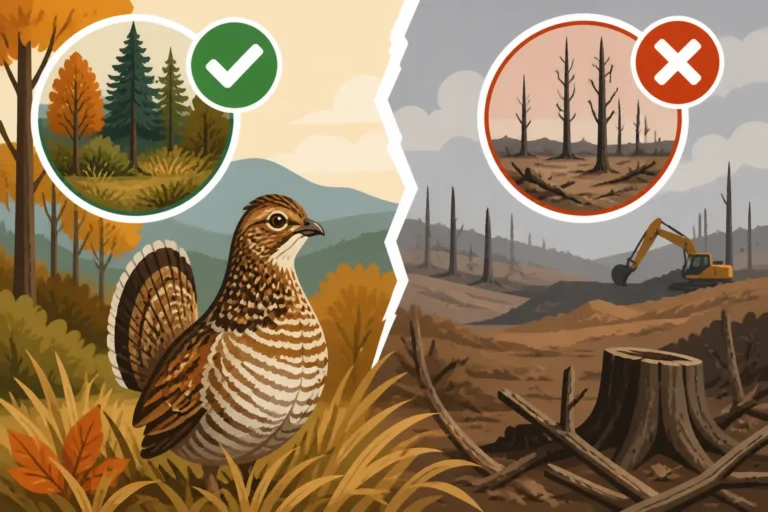
To understand why grouse are disappearing, we first have to understand what makes a ruffed grouse happy, which mostly comes down to very specific habitat. Unlike deer, which can adapt to a wider range of woodland types, grouse are extremely particular. They thrive in what we call "early successional forest" – essentially, young, dense woods. Think about clear-cuts that are 5-20 years old, areas recovering from timber harvests, or thickets of briars and saplings. These aren't the majestic, open mature forests we often picture.
What do these thick, tangled areas provide? First and foremost, cover. Protection from airborne predators like hawks and owls, and ground predators like coyotes and foxes. This dense understory is virtually impenetrable, offering a safe haven for grouse to roost, feed, and raise their broods. Second, it provides food. Young forest stands burst with soft mast like berries, buds, catkins, and insects, all vital for a grouse's diet, especially for growing chicks. Without this specific blend of dense cover and food-rich undergrowth, grouse simply cannot survive, let alone flourish.
Ohio's Changing Landscape: From Forest to Farm and Back (Differently)
Ohio's landscape has gone through dramatic transformations since European settlement. Initially, much of the state was old-growth forest. As settlers arrived, vast tracts were cleared for agriculture. By the early 20th century, Ohio was largely deforested, a stark contrast to its original state. However, as farming practices shifted and some marginal lands were abandoned, forests began to reclaim the landscape. This period of widespread forest regeneration, often through natural succession or early logging practices, inadvertently created a boom in prime grouse habitat across much of the state, particularly in the unglaciated Appalachian foothills.
For decades, this returning forest provided ample space for grouse. But the nature of that regrowth is key. Early logging, often less selective and more about raw timber extraction, created significant patches of young, regenerating forest. As these areas aged, new logging or natural disturbances like fires or severe storms would cycle in new patches of thick growth. This constant renewal of early successional habitat was the engine of Ohio's grouse populations. Unfortunately, that cycle has been broken, leading us to our current situation.
Understanding the Decline: Why Habitat Disappeared
The reasons for the disappearance of critical grouse habitat are complex and multi-faceted. It's not one single culprit but a confluence of factors that have slowly but surely chipped away at the places grouse call home. It’s tough to pinpoint one thing because it’s really a death by a thousand cuts for these birds.
Maturing Forests and Lack of Active Management
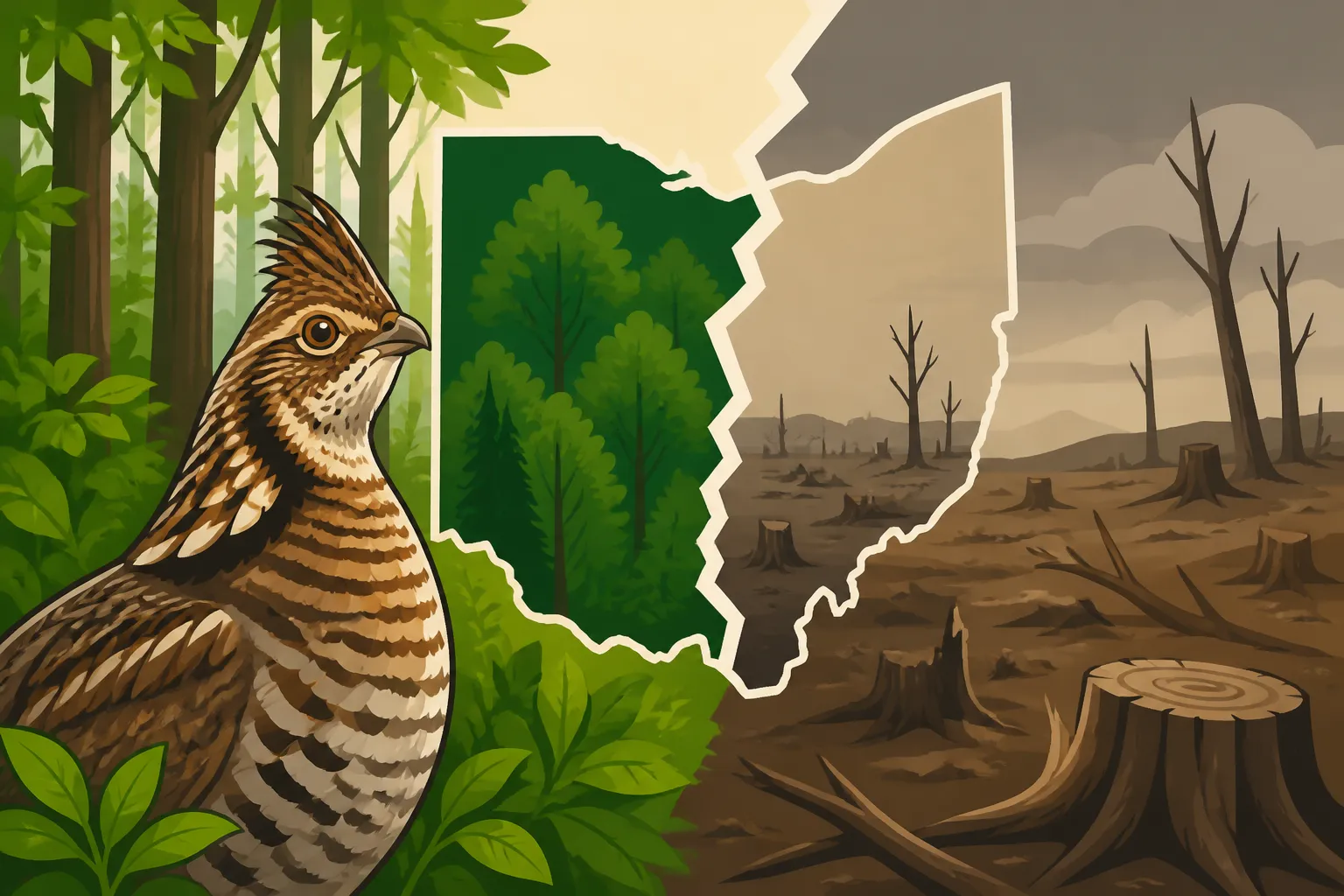
One of the biggest factors is simply forest maturity. Many of Ohio's forests, especially those that regenerated after the widespread deforestation of the last century, have now grown into mature, unbroken canopies. While beautiful and vital for many species, these older forests lack the dense understory that grouse depend on. Imagine walking through an old oak stand – the ground might be relatively open, with tall trees and little brush. That's great for still-hunting deer, but terrible for grouse trying to hide from a hawk. The sunlight just can't penetrate to grow the thick ground cover they need.
The decline in active forest management, particularly timber harvesting practices that create young forest, has exacerbated this. Modern forestry often focuses on selective cutting or managing for sawtimber, which doesn't always produce the expansive, dense clear-cuts that grouse thrive in. On both private and public lands, the political and economic pressures often lean away from large-scale, early-successional habitat creation. This isn't necessarily anyone's fault; it's just a shift in priorities and practices that has unintended consequences for species like the ruffed grouse.
Development and Fragmentation
Another significant blow to grouse habitat comes from development and fragmentation. As Ohio's population grows, homes, roads, and infrastructure spread, even into once-wild areas. This directly destroys habitat and, perhaps more insidiously, fragments what remains. When large blocks of forest are broken up by roads or housing, the remaining patches become smaller and more isolated. Grouse, like many forest-dwelling creatures, don't do well crossing open spaces, making it harder for them to move between suitable areas, find mates, and establish new territories.
This fragmentation also leads to increased edge habitat, which can favor generalist predators like raccoons, opossums, and domestic cats, putting more pressure on already struggling grouse populations. You can see this effect even with a quick look at aerial maps, sometimes even with advanced tools like those found on GoHunt, where once-contiguous blocks of timber are now dissected by new roads or housing developments. It’s not just about losing acres, it’s about losing connection.
Competing Land Uses and Shifting Priorities
Land management is a balancing act, and often, what's good for one species or land use isn't necessarily good for another. Many public and private landowners prioritize things like recreation (hiking, mountain biking), scenic beauty, or growing large, high-value timber for sawlogs. While these are all valid and important goals, they often conflict with the aggressive, sometimes visually "messy" habitat creation that benefits ruffed grouse. Cutting down trees, even for a good cause like wildlife habitat, can be unpopular.
Furthermore, some areas that might be suitable for grouse management are also prime areas for White-Tailed Deer Across Ohio or Wild Turkeys in Ohio, which can thrive in more mature forest settings. It becomes a challenge for agencies like the Ohio Department of Natural Resources to balance the needs of multiple species, especially when the species like grouse require such a specific and often controversial type of habitat management. The difficulty lies in getting enough contiguous land under the right kind of management for long enough to make a difference.
The Impact on Grouse Hunting and What Hunters Can Do
The profound loss of habitat has made Ohio grouse hunting a shadow of its former self. For many, it's transitioned from a regular pursuit to a nostalgic quest, often ending with empty game bags and heavy hearts.
The Reality of Ohio Grouse Hunting Today
Let's be blunt: Ohio grouse hunting is tough, really tough. Hunters who remember flushing a dozen birds in a day now consider themselves lucky to see one. The days of consistent flushes across wide swathes of the state are, sadly, over. What remains are isolated pockets, typically in specific areas of southeastern Ohio's Appalachian foothills, where some semblance of early successional habitat still exists, often on public lands like Wayne National Forest Hunting or Zaleski State Forest Hunting. Even there, the birds are sparse, requiring immense effort and a deep understanding of very particular covert types.
The challenge isn't just finding birds, but finding enough birds to sustain a population. When populations are low and fragmented, even minor pressures can have significant impacts. This means hunters have to manage their expectations, adapt their tactics, and accept that success might mean simply hearing a distant drumming or seeing a single bird flush, rather than filling a limit. It’s about the experience now, more than the harvest, for most of us. You can read more about the general picture in Ruffed Grouse in Decline Across Ohio and Why Ohio Grouse Numbers Fell So Far.
Supporting Habitat Initiatives
Despite the grim outlook, there are ongoing efforts to support ruffed grouse and their habitat, and hunters have a vital role to play. State agencies and conservation organizations are working on habitat management projects, often focused on creating or maintaining young forest. These efforts can be seen in various Ohio Wildlife Areas, where prescribed burns, timber sales, and brush clearing are used to create the dense, low cover grouse need.
Hunters can support these initiatives in several ways:
- Purchase Licenses and Stamps: A portion of hunting license fees and specialized conservation stamps directly funds wildlife management and habitat restoration efforts.
- Join Conservation Organizations: Groups like the Ruffed Grouse Society specifically advocate for and fund early successional habitat projects. Their work is critical in an environment where such habitat is often overlooked.
- Volunteer: Some organizations and state agencies offer volunteer opportunities for habitat work, providing hands-on ways to contribute.
- Advocate: Speak up for responsible forest management that includes early successional habitat creation. Educate others on the importance of this specific type of environment.
It takes a concerted effort, but by putting our dollars and our time into these efforts, we can at least help create small havens for these incredible birds.
Adapting Your Hunting Strategy
For those determined to chase Ohio grouse, adaptation is key. You can't hunt them like you used to, because the habitat simply isn't there in the same abundance. It requires meticulous Scouting Ohio Public Land Before Season and a willingness to explore areas others might overlook.
Here’s a comparison of what grouse prefer versus what's common in Ohio now:
| Habitat Feature | Ideal Ruffed Grouse Habitat | Typical Ohio Forest Today |
|---|---|---|
| Forest Age Structure | Diverse age classes, heavy on young (5-20 years old) growth | Dominated by mature (50+ years old) and mid-aged forests |
| Understory Density | Very dense, often impenetrable brush, briars, saplings | Often open, sparse undergrowth in mature timber |
| Canopy Cover | Openings and patches of full sun, allowing ground growth | Continuous, closed canopy, shading out ground vegetation |
| Food Sources | Abundant soft mast, buds, catkins, insects from young plants | Primarily hard mast (acorns), less diverse understory food |
| Predator Cover | Excellent visual and physical obstruction from predators | Limited protection from aerial and ground predators |
| Human Disturbance | Lower, often remote, less fragmented | Higher, fragmented by roads, development |
You'll need to focus your efforts on areas that do still have those dense thickets and young clear-cuts. This often means hunting areas that have been recently logged (with permission on private land, or on public land where timber sales have occurred). Using mapping tools from companies like GoHunt can be incredibly useful here. These tools allow you to study aerial imagery, identifying areas of recent disturbance or younger tree growth that might not be obvious from the ground. Look for those dense, impenetrable spots, particularly on north-facing slopes or in stream bottoms where moisture allows for vigorous undergrowth. Remember, these birds don't often tolerate much pressure, so Hunting Southeast Ohio Appalachian Foothills might require you to push deeper into rough terrain than you're used to. It's a grueling hunt, but the reward of a flush is truly something special.
Disclaimer
This article is for general informational purposes only and does not constitute professional advice. Laws, prices and regulations vary by location and change over time. Consult a qualified professional for guidance on your specific situation.