White-Tailed Deer Across Ohio
Hunting white-tailed deer in Ohio can feel like a game of constantly shifting rules and landscapes. From the rugged hills of Appalachia to the sprawling crop fields of the flatlands, understanding the nuances of the Buckeye State's deer herd, its health, and the best ways to ethically pursue them can be a real challenge. This comprehensive guide is designed to cut through the confusion, providing you with an in-depth look at Ohio's white-tailed deer, empowering you with the knowledge needed for a more successful and rewarding hunting experience.
The Robust Comeback Story of Ohio's White-Tailed Deer
It’s hard to imagine now, but Ohio’s deer population wasn’t always the thriving herd we see today. For those of us who grew up hearing tales of endless deer in the woods, it can be surprising to learn just how close we came to losing them entirely. But through dedicated efforts and a bit of natural resilience, they've made an incredible return.
Historical Decline and Resurgence
Before European settlement, Ohio was teeming with white-tailed deer. Vast forests and rich river bottoms provided ideal habitat, supporting a robust population that was a vital food source for native peoples. However, as pioneers pushed westward, bringing widespread deforestation for agriculture and unchecked market hunting, deer numbers plummeted dramatically. By the early 1900s, white-tailed deer were virtually extirpated from Ohio – a stark reminder of how quickly human impact can devastate wildlife. It wasn't until the 1920s and beyond that serious conservation efforts began, spearheaded by agencies like what would become the Ohio Department of Natural Resources (ODNR).
The reintroduction of deer, often sourced from states with healthier populations like Wisconsin and Pennsylvania, along with strict hunting regulations and habitat recovery, slowly but surely brought the deer back. The 20th century saw a monumental shift, as abandoned farmlands reverted to timber and brush, creating prime deer habitat once again. It was a testament to persistent conservation work and the deer's adaptability, transforming them from a nearly forgotten species to an integral part of Ohio's landscape.
Current Population Estimates and Trends
Today, Ohio boasts a healthy and robust deer herd, often exceeding hunter expectations in both quantity and quality. The ODNR utilizes a multi-faceted approach to estimate population numbers, which is crucial for setting sustainable harvest quotas. This isn't just a simple deer count; it involves sophisticated methods like analyzing hunter harvest data, conducting spotlight surveys at night to directly count deer, and even utilizing public sightings reported by landowners and wildlife enthusiasts. These data points, combined with information on fawn recruitment and disease prevalence, provide a comprehensive picture of the herd's health and density.
While the overall trend in Ohio shows a stable to slightly increasing deer population statewide, it’s important to remember that these numbers can fluctuate significantly at a local level. For instance, some rural agricultural counties might see a slight decrease due to increased harvest or localized habitat changes, while urban fringe areas might experience an uptick. The ODNR carefully monitors these localized shifts to ensure that management strategies remain responsive and effective, aiming for a balance that supports both the deer and the human communities they interact with.
Understanding Ohio's Deer Management Philosophy
Ohio's approach to deer management is a delicate balancing act, designed to maximize hunting opportunities, minimize agricultural and property damage, and maintain a healthy, sustainable deer population. It's a complex task, especially in a state with such diverse landscapes and human populations. The ODNR works hard to use science-backed strategies to keep the herd in check, which often means adjusting permit allocations each year based on the data they collect.
A cornerstone of this philosophy is the strategic use of deer management permits and antlerless tags. In areas where deer populations are high and damage concerns are prevalent, such as many of the agricultural counties or suburban-rural interfaces, hunters are often encouraged to harvest more does through these additional permits. This helps control population growth, reduces impacts on crops and property, and can lead to a healthier herd overall by ensuring adequate resources for all deer. Conversely, in areas where deer numbers are lower or growth is desired, antlerless harvest might be more restricted. It’s a dynamic system, constantly evaluated and adjusted to meet specific regional goals.
Regional Deer Dynamics: Appalachian Hills vs. Farm Country
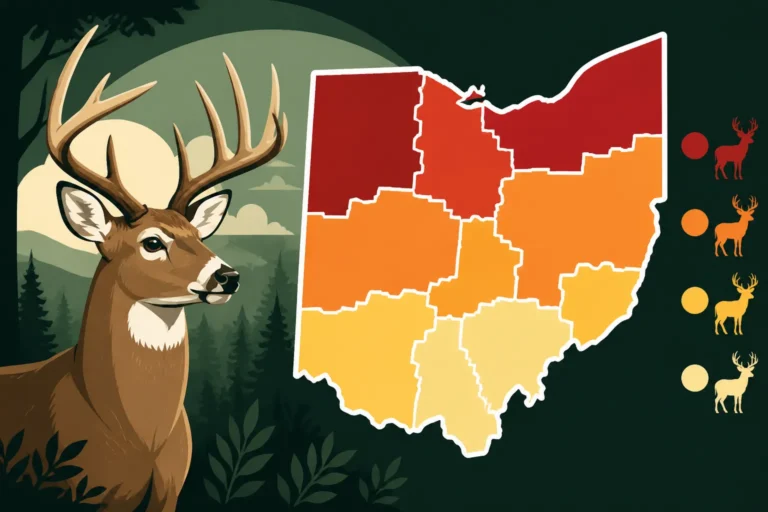
Hunting deer in Ohio isn't a one-size-fits-all endeavor. The state's geography is remarkably diverse, and with that diversity comes distinct deer populations and behaviors. What works in the rugged southeast might be completely ineffective in the flat, agricultural northwest. Understanding these regional differences is key to becoming a more adaptable and successful hunter.
Southeast Ohio's Big Woods Bucks
Venturing into Southeast Ohio feels like stepping into a different world compared to the rest of the state. Here, the landscape is dominated by dense hardwood forests, steep ridges, and deep hollows. Think of sprawling tracts like the Wayne National Forest or Shawnee State Forest, where public land stretches for miles. This kind of terrain naturally fosters a different kind of deer behavior. Bucks in these "big woods" areas often have larger home ranges, traversing vast distances across rugged terrain in search of food, water, and does. They can be incredibly elusive, accustomed to navigating dense cover and utilizing elevation to their advantage.
The challenging topography also means that hunting pressure is often less concentrated in the deepest recesses of these public lands. Bucks here tend to live longer and reach older age classes, increasing the potential for truly mature animals. However, you'll work for them. Hunting in these areas demands physical fitness, excellent woodsmanship, and a deep understanding of how deer use topography to move and bed. Finding a buck in this expansive habitat often requires extensive scouting and a willingness to put in miles on foot, paying close attention to features like ridge-top saddles, benches, and creek bottoms. It's a truly rewarding challenge, and it's why many hunters believe this region is where "Why Southeast Ohio Grows Older Bucks" really shines through.
Northwest and Central Ohio Farmland Deer
Shift gears dramatically, and you’re in the flat, fertile plains of Northwest and Central Ohio. Here, agriculture reigns supreme, and the landscape is a patchwork of vast corn and soybean fields interspersed with small woodlots, fencerows, and drainage ditches. The deer in these regions are masters of adapting to this agricultural mosaic. Their home ranges are often smaller, as abundant food sources are never far away. Deer here frequently bed in thick fencerows, small woodlots, or even standing crops, venturing out to feed in the fields primarily under the cover of darkness.
Hunting these farmland deer requires a different set of tactics. You're often dealing with more nocturnal patterns, and the key is to intercept deer as they move between bedding and feeding areas. This means focusing on field edges, pinch points created by woodlots, and natural funnels. Access to private land is often more crucial here, as many prime hunting spots are on privately owned farms. Success often comes down to careful observation, understanding crop rotations, and knowing how deer transition between different food sources throughout the season. For a deeper dive into these strategies, check out "Hunting Northwest Ohio Farmland Deer".
Urban and Suburban Deer Challenges
Beyond the wild forests and agricultural fields, Ohio also faces a unique set of deer management challenges in its rapidly expanding urban and suburban areas. As development encroaches on traditional deer habitat, populations can explode in green spaces, parks, and even residential neighborhoods. While this might sound like a hunter's dream, it brings its own set of frustrations: increased deer-vehicle collisions, extensive landscaping damage, and concerns about herd health in confined areas.
Many municipalities and the ODNR have implemented special hunting opportunities to manage these localized populations. These often take the form of archery-only zones within city limits, extended seasons, or special permits. These hunts usually come with strict regulations regarding safety zones, hunting hours, and approved equipment, reflecting the need to coexist with non-hunting residents. Participation often requires specific orientations or permissions from local authorities, as the goal is population control with minimal disruption to the community. These programs, like many of the "Ohio Urban Deer Hunt Programs", offer unique challenges and ethical considerations, but they are vital for managing deer populations in these increasingly human-dominated landscapes.
Key Factors Influencing Ohio's Deer Herd Health
A healthy deer herd isn't just about high numbers; it's about the overall well-being of the animals, their ability to reproduce, and their resilience to environmental pressures. Several critical factors constantly influence the health and vitality of Ohio's white-tailed deer, from what they eat to the diseases they encounter.
Habitat Quality and Food Availability
The availability and quality of food are fundamental drivers of deer health, body size, and antler development. In Ohio, this means a dynamic interplay between natural browse, mast crops, and agricultural offerings. During spring and summer, deer rely heavily on lush green vegetation, forbs, and young woody browse found in regenerating timber cuts, natural forest openings, and along field edges. A good spring and summer translate to healthy does and strong fawn growth.
As fall approaches, mast crops become paramount. Acorns, hickories, and beechnuts are high-energy foods that help deer pack on fat reserves for the lean winter months. A bumper acorn crop can mean healthier deer going into winter, potentially better fawn survival, and even better antler growth for bucks the following year. Conversely, a poor mast year can stress the herd, making them more vulnerable. Then there’s agriculture: corn, soybeans, and alfalfa fields provide an undeniable super-food buffet, especially in the state’s farm belt. Deer in these areas often exhibit larger body sizes due to the consistent access to high-calorie food. Knowing your local mast crop and agricultural patterns can be a huge advantage for hunters, especially when considering tactics for "Hunting After a Poor Acorn Year".
Disease Management: Chronic Wasting Disease (CWD) and EHD
Wildlife diseases pose a constant threat to deer populations, and Ohio actively monitors for several. Chronic Wasting Disease (CWD) is a neurological disease that is always a major concern. While Ohio has a relatively low prevalence compared to some other states, it has been detected, primarily in the Disease Surveillance Area (DSA) in counties like Wyandot, which has seen the highest number of confirmed cases. CWD is always fatal for infected deer and can spread through direct contact or environmental contamination.
To combat CWD, the ODNR implements mandatory testing during specific periods (like opening weekends of gun season) within the DSA and enforces strict carcass movement restrictions to prevent the spread of the disease outside affected areas. This means hunters harvesting a deer in a DSA county have specific rules to follow regarding processing and transport. Another significant disease is Epizootic Hemorrhagic Disease (EHD), a viral disease spread by biting midges. EHD outbreaks are more common in late summer and early fall, often associated with drought conditions. While EHD can cause significant localized die-offs, especially near water sources where midges breed, it rarely impacts the entire statewide herd and typically isn't a long-term population threat. Hunters often find deer that have succumbed to EHD near water, a grim reminder of nature’s harsh realities. For detailed information on specific regulations, refer to the ODNR’s guidelines on "Ohio's Chronic Wasting Disease Surveillance Area".
Predator Impact and Fawn Survival
The role of predators in deer populations is a topic often debated among hunters and wildlife managers alike. In Ohio, coyotes are the primary predator of white-tailed deer, particularly targeting fawns. While adult deer are generally too large and agile for coyotes to consistently prey upon, young fawns, especially in their first few weeks of life, are vulnerable. Studies show that coyote predation can impact fawn recruitment rates, meaning fewer fawns survive to adulthood.
However, it's important to understand that in a healthy, well-managed deer population, fawn predation by coyotes typically does not lead to a significant decline in overall deer numbers. Instead, it often acts as a natural thinning mechanism, removing weaker or less vigilant fawns, which can, in turn, contribute to a healthier, more robust herd in the long run. The impact of predators tends to be more pronounced in areas where deer populations are already stressed by poor habitat or other factors. The ODNR monitors fawn survival rates closely as part of its overall deer management strategy, taking into account the natural balance of predator and prey within Ohio's ecosystems.
Navigating Ohio's Deer Season Structure and Regulations
Understanding Ohio's deer season structure can sometimes feel like trying to untangle a bowl of spaghetti – there are a lot of strands, and they all connect in different ways. But once you get the hang of it, you realize it's designed to offer diverse opportunities while effectively managing the herd. Staying informed about the rules is paramount for any hunter in the Buckeye State.
Understanding Ohio's Deer Season Segments
Ohio's deer season is thoughtfully segmented to provide a variety of hunting experiences and spread out hunter pressure. It kicks off with the long archery season, which traditionally opens in late September and often runs all the way through the first weekend of February. This extended period offers bowhunters ample opportunity to pursue deer across various phases, from early season patterns to the thrilling rut, and into the challenging late season. Following archery, we transition into the much-anticipated Ohio gun season, which is typically split into two weekends: the main, week-long segment in late November/early December, followed by a shorter, two-day weekend in mid-December. These gun seasons are historically when the majority of Ohio’s deer harvest occurs.
Finally, the muzzleloader season typically provides a dedicated week of hunting in early January, offering a unique challenge when the landscape is often covered in snow. Additionally, there’s a special youth gun weekend in November, designed to give younger hunters a dedicated, less pressured opportunity. Each segment has its own quirks and requires different tactics. For a complete overview of all these dates and specific rules, checking the ODNR’s current regulations is always the first step, or you can dive deeper into the "Ohio Deer Season Structure Explained" for more detailed information.
License and Permit Requirements
Before you even step foot in the woods, ensuring you have the correct licenses and permits is non-negotiable. For Ohio residents, a basic hunting license is required, along with a deer permit. Nonresidents also need a hunting license, but their fees are significantly higher. The general deer permit allows for the harvest of one antlered deer statewide, or one antlerless deer in most counties. However, Ohio also utilizes "Deer Management Permits" (DMPs) or antlerless-only permits, which are crucial for managing local populations. These permits often allow hunters to take additional antlerless deer in specific counties, typically those with higher deer densities or agricultural damage concerns.
The number of DMPs available, and the counties where they are valid, can change annually based on ODNR's population assessments. Some counties may have unlimited antlerless permits, while others might have very few or none. It’s absolutely vital to check the current year’s regulations on the Wild Ohio website or through the GoHunt app to understand what permits are required for the county you plan to hunt. Never assume last year's rules apply! For a detailed breakdown of how these additional tags work, explore the specifics of "Ohio Deer Management Permits".
Mandatory Deer Checking and Reporting
One of the most important responsibilities for any Ohio deer hunter is the mandatory deer checking and reporting. This isn't just a formality; it's how the ODNR gathers essential data to manage the herd effectively. Every deer harvested in Ohio, regardless of the season or permit type, must be checked within specified deadlines. Failing to check your deer is a violation and can result in penalties.
Ohio provides several convenient methods for checking deer. The easiest and most common way is online through the ODNR's website or via their mobile app, where you input information about your harvest (date, county, sex, antler points). You can also call a toll-free number or visit an authorized checking station, though these are becoming less common with the prevalence of online options. The deadline is usually 12:00 PM (noon) the day after the kill, but always double-check the current regulations. Accurate and timely reporting by hunters directly contributes to the ODNR's ability to make informed decisions about future deer seasons and bag limits. Understanding "Ohio Deer Checking and Reporting Rules" is a critical part of being a responsible Ohio hunter.
Hunting Strategies for Ohio Whitetails
Successfully hunting white-tailed deer in Ohio, whether in the rolling Appalachian foothills or the flat farmlands, requires more than just luck. It demands a thoughtful approach, a keen understanding of deer behavior, and the right strategies for the conditions.
Scouting and Stand Placement
Effective scouting is the bedrock of successful deer hunting. It’s not just about finding fresh sign; it’s about piecing together the puzzle of deer movement. Year-round scouting is ideal, especially for locating rub lines, scrape lines, and bedding areas when the woods are open and easier to navigate. During the pre-season, focus on identifying key travel corridors, natural funnels (like narrow strips of timber between fields or saddles on a ridge), and pinch points where deer are forced into a smaller area. Food sources are dynamic, so understanding crop rotations in agricultural areas or mast crop production in timber is crucial. Tools like GoHunt's mapping features can be incredibly powerful for analyzing aerial photos, identifying topography, and pinpointing potential hotspots before you even step foot in the woods.
Once you’ve identified promising areas, careful stand placement is critical. Consider prevailing wind directions for your hunting spot and plan your entry and exit routes to minimize disturbance. Think about the sun's position during your hunting hours and how it might impact your visibility or glare on your optics. Also, always have multiple stand locations for different wind scenarios, ensuring you can hunt a spot without leaving your scent directly in the deer's path. Remember, an ill-placed stand, no matter how good the sign, will likely educate deer. For more detailed tips on locating prime hunting areas, consider the advice in "Scouting Ohio Public Land Before Season".
Rut Tactics and Calling Strategies
The Ohio rut, typically peaking in early November, is a period of heightened deer activity and an electrifying time to be in the woods. During this frenzy, bucks are actively seeking does, often throwing caution to the wind, which presents unique opportunities for hunters. Knowing the different phases of the rut – the pre-rut, the peak, and the post-rut – can greatly inform your tactics. In the early stages, bucks are "testing" does, making rattling and grunting calls highly effective for mimicking competition.
As the rut intensifies and does become receptive, bucks will be on the move almost constantly. This is a time for patience, long sits, and targeting travel corridors. Doe bleats can sometimes lure in curious bucks looking for a receptive female. When calling, consider the cover and topography; in dense timber, softer, shorter calls are often more effective, while in open areas, you might get away with more aggressive sequences. But always read the deer's response. Sometimes, silence is your best call. For a comprehensive look at maximizing your chances during this exciting time, check out "Hunting the Ohio Rut in Early November".
Late Season and Cold Weather Approaches
After the rut winds down and the gun seasons have passed, Ohio’s late season (often the muzzleloader and extended archery periods) can be incredibly productive, but it requires a strategic shift. The primary driver for deer in December and January is food and thermal cover. Deer are focused on replenishing lost weight from the rut and surviving the cold, often leading them to congregate around the most attractive food sources. This means focusing your efforts on standing crops like corn and soybeans, food plots, unpressured mast crops, or areas with persistent green browse.
Thermal cover, such as thick cedar thickets, dense pine plantations, or south-facing slopes that catch more sun, also becomes crucial. Deer will bed in these areas to conserve energy. Hunting strategies should revolve around these resources: setting up between bedding and feeding areas, being patient for deer to move in daylight, and being prepared for long, cold sits. Wearing appropriate layers, like those recommended by GoHunt for extreme conditions, is essential to stay comfortable and focused. Fresh snow can also be a game-changer, revealing fresh tracks and helping you locate concentrated deer activity.
Ethical Harvesting and Meat Care
The hunt doesn't end when the shot is fired. Ethical harvesting and proper meat care are integral parts of responsible hunting, ensuring both a swift, humane kill and high-quality venison for the table. It's about respecting the animal and maximizing the value of your harvest.
Shot Placement and Tracking Best Practices
Making an ethical shot is paramount. For bowhunters, this means waiting for a broadside or slightly quartering-away shot that targets the vital organs (heart and lungs). For firearms hunters, the vitals or a neck/head shot (if you're confident and within your effective range) are the goals. Patience is key – never rush a shot. It’s better to let a deer walk away than to take a risky shot that results in a wounded animal. After the shot, take a moment to compose yourself and observe the deer's reaction. Did it kick, stumble, or run off quickly? Mark the exact spot of the shot, noting any visual landmarks.
Even if you saw the deer drop, give it some time, especially if it's a marginal hit or you're unsure. For a suspected vital hit, a 30-minute wait is often sufficient. For anything less, waiting an hour or more, or even several hours for a gut shot, significantly increases your chances of recovery. When tracking, move slowly and deliberately, looking for blood, hair, bone fragments, and disturbed vegetation. If the trail goes cold, expand your search pattern in ever-widening circles from the last confirmed sign. If darkness falls, consider calling a tracking dog or returning in the morning. For difficult situations, understanding "Blood Trailing After Dark in Ohio" can provide invaluable guidance.
Field Dressing and Processing Considerations
Once you've recovered your deer, prompt field dressing is crucial, especially in warmer weather. The goal is to rapidly cool the carcass to prevent bacterial growth and spoilage. This involves carefully removing the internal organs to allow air circulation. Make sure you have a sharp, reliable field dressing knife and wear gloves for hygiene. If you're on public land or a long way from your vehicle, consider the gutless method for easier transport, especially in rugged terrain like the Appalachian hills.
After field dressing, get the deer cooled down as quickly as possible. In cold weather, hanging the deer in a shaded, well-ventilated area can be sufficient. In warmer temperatures, you might need to pack the body cavity with ice or transport it immediately to a cooler or processing facility. Whether you process the deer yourself or take it to a professional butcher, proper care during this stage will directly impact the flavor and quality of your venison. Remember, a deer harvested and handled well is a delicious reward.
Venison Storage and Usage
Congratulations, you've successfully harvested and processed your deer! Now it's time to ensure that delicious venison makes it to your plate in prime condition. Proper storage is key to preserving its quality for months, or even a year. The most common method for long-term storage is freezing. Before freezing, venison should be cut into manageable portions, wrapped tightly in butcher paper, vacuum-sealed, or placed in freezer bags to prevent freezer burn. Vacuum sealing is often considered the gold standard as it removes air, significantly extending the meat's freshness.
Venison is incredibly versatile in the kitchen. From steaks and roasts to ground meat for burgers, chili, and sausages, the possibilities are endless. Don't be afraid to experiment with different recipes and cooking methods. For tougher cuts, slow cooking, stewing, or marinades can work wonders. Many hunters enjoy sharing their venison with friends and family, and it’s a healthy, lean protein source that represents the culmination of a successful hunting season. Enjoying the fruits of your labor is truly the final, and perhaps most satisfying, part of the entire Ohio hunting experience. You can even check the "Ohio Deer Harvest Records" to see how your harvest compares!
| Feature / Region | Appalachian Ohio (Southeast) | Farm Country (Northwest/Central) | Urban/Suburban Fringes |
|---|---|---|---|
| Habitat | Steep ridges, dense hardwoods, public forests | Crop fields, small woodlots, fencerows, ditches | Parks, green spaces, residential areas |
| Deer Density | Moderate to high | High | Very High |
| Buck Age Class | Tends to be older, more mature bucks | Mix of ages, often younger due to high pressure | Older bucks common due to reduced pressure, archery only zones |
| Primary Food Source | Mast crops (acorns), natural browse | Corn, soybeans, alfalfa, natural browse | Landscaping, gardens, limited natural browse |
| Hunting Style | Scouting-intensive, physical, often public land focused | Private land access crucial, ambush points on field edges | Archery-only, special permits, safety zones, close-range |
| Challenges | Rugged terrain, vastness, lower overall density | Nocturnal deer, private land access, high pressure | Public perception, safety restrictions, limited zones |
| Typical Harvest | Fewer deer, but potential for mature bucks | Higher deer numbers, good antlerless opportunities | Focused on population control, often antlerless |
Disclaimer
Hunting is an inherently dangerous activity. Always prioritize safety, understand and follow all Ohio Department of Natural Resources regulations, and obtain proper landowner permission. The information provided in this guide is for informational purposes only and should not be considered legal advice. Always consult the most current Ohio hunting regulations before heading afield.