How Early Season Squirrels Give Themselves Away
Early season squirrel hunting can be incredibly rewarding, but let's be honest, those little bushy-tailed critters seem to have a knack for disappearing the moment you step into the woods. The dense foliage of late summer and early fall makes spotting them a real challenge, leaving many hunters frustrated and wondering how to even get started. This guide will walk you through the subtle, and not-so-subtle, signs that early season squirrels give away, helping you pinpoint their locations and increase your success in the Ohio woods.
The Subtle Sounds of Squirrel Activity
When the leaves are still thick on the trees and the undergrowth is lush, your ears become your most valuable hunting tool. Early season squirrels, often more relaxed before heavy hunting pressure sets in, tend to be quite vocal and active. Learning to decipher these forest sounds is paramount.
The Tell-Tale Bark and Chatter
Squirrels are surprisingly chatty creatures, and their vocalizations are often the first clue to their presence. You’ll hear a range of sounds, from an indignant "chuckle" when they spot you, to a rapid, sharp bark that signals an alarm to their kin. It's not just a random noise; each sound carries meaning. An alarm bark, often accompanied by a tail flick, is a clear sign that a squirrel has seen or heard something it doesn't like – which might be you. If you hear this, freeze. The squirrel is likely watching you, and if you move, it will bound off.
Beyond alarm calls, listen for the more general chatter, especially when multiple squirrels are interacting. This usually means they are comfortable, feeding, or playing, and less likely to be on high alert. Early in the season, before the mast crops truly drop, squirrels might be more vocal as they establish territories or squabble over budding nuts still on the branch. If you're out in the deep woods, trying your hand at Squirrel Hunting Ohio Hardwoods, these vocal cues are often the only indication that you're in the right spot. Pay close attention to the direction and intensity of the sound; it’s a living GPS leading you to your quarry.
Rustling Leaves and Falling Nuts
One of the most classic sounds of squirrel activity is the rustle of leaves. In the early season, when the ground might still be damp from morning dew or recent rain, this sound can be amplified. Squirrels are constantly on the move, especially when foraging, and their quick, scurrying movements through dried leaves are distinct. It's a different sound than a deer's deliberate footsteps or a rabbit's lighter hop. A squirrel's rustle tends to be more erratic, stop-and-go, with bursts of speed followed by sudden stillness as they pause to scan or chew.
Even more indicative is the sound of falling nuts or nut cuttings. Early season hunting often coincides with the earliest mast dropping. Picture yourself under a towering oak or hickory, and suddenly, a small object hits the forest floor. That "plink" or "thud" is almost certainly a squirrel actively cutting or dropping nuts from above. Sometimes, you'll hear the "patter" of multiple shell fragments raining down. This is an absolute goldmine of information, telling you exactly where a squirrel is feeding, and often, that it's stationary and focused on its meal. These sounds are critical clues when you are Squirrel Hunting Ohio Oak Ridges or aiming for a productive outing in prime Ohio Squirrel and Rabbit Seasons.
Chewing and Gnawing Noises
This is perhaps the most subtle, yet incredibly rewarding, sound to pick up on. Once a squirrel has located a nut, particularly a hard-shelled variety like a hickory or a walnut, it will settle down to chew. The sound is a distinct, repetitive gnawing, almost like tiny wood chips being broken apart. You won't hear this from a great distance, which means if you do, you're already quite close to an actively feeding squirrel. This noise tells you the squirrel is probably focused on its meal, less aware of its surroundings, and possibly in a good position for a shot.
The challenge is to differentiate it from other ambient forest noises. It's not a loud crunch, but rather a persistent, almost rasping sound. If you're hunting in an area rich with Squirrel Hunting Ohio Hickory Groves, listen closely. Often, squirrels will sit on a fallen log, a low branch, or even the base of a tree to process their food. A good strategy is to move slowly, stopping often, and allowing your ears to do the work. The moment you hear that subtle gnawing, freeze, scan the area intently, and try to pinpoint the exact location. This level of auditory detection often spells the difference between an empty game vest and a successful hunt.
Visual Cues that Give Them Away
While sounds are often the first indicators, visual cues are what confirm a squirrel's presence and location. Early season woods can make spotting tough, but knowing what to look for can turn a frustrating hunt into a productive one.
Flicking Tails and Darting Movements
A squirrel's tail is more than just a bushy appendage; it's a critical communication tool and a dead giveaway for hunters. Even when the squirrel itself is mostly obscured by leaves, a rapid, jerky flick of its tail can catch your eye. This is especially true when they are agitated or assessing a potential threat, often signaling to other squirrels that danger is near. The flicking is often accompanied by a quick darting movement up a tree trunk or along a branch.
These darting movements are also key. Squirrels don't tend to move slowly and smoothly like a deer. Instead, their locomotion is characterized by quick bursts of energy, pausing, and then another dash. This stop-and-go behavior, combined with their relatively small size, can make them incredibly hard to spot if you're just looking for a static form. Instead, train your eyes to look for movement – any quick, unnatural twitch or shift in the foliage. Scan the trunks of trees, the larger branches, and even the forest floor around potential mast trees. If you're patient and your eyes are disciplined, you’ll often pick up that tell-tale twitch of a tail or the blur of a quick sprint long before you see the whole animal. On a cool Ohio Squirrel Season Opening Day, when morning mist still hangs heavy, these subtle movements become even more crucial to detect.
Cut Nuts and Droppings
Squirrels leave behind plenty of physical evidence of their presence, and learning to interpret these signs is a cornerstone of effective early season hunting. The most common sign is the presence of "cuttings" – the discarded fragments of nutshells. Squirrels have incredibly strong teeth, and they leave distinct chew marks. For acorns, you'll often find the cap separated, and the nut itself will be gnawed open, sometimes with a neat, almost surgical precision. Hickory nuts and walnuts will be torn apart, often leaving piles of broken shell fragments on a favored log or stump where the squirrel sat to feed.
The freshness of these cuttings is vital. Fresh cuttings will appear lighter in color, sometimes still damp if it has rained recently, and will not have begun to degrade or mold. Old cuttings will be darker, potentially covered in mildew, or show signs of insect activity. Combined with droppings, which are small, cylindrical pellets, these signs confirm recent squirrel activity. Look for these signs around the base of oak and hickory trees, on fallen logs, or on large roots. Learning to distinguish fresh Reading Cuttings Under an Oak can tell you if an area is currently productive or if the squirrels have moved on.
Nesting and Travel Lanes
Squirrels build two main types of nests: cavity nests (in tree hollows) and dreys (leaf nests). While cavity nests are harder to spot, dreys are quite visible, especially later in the season when deciduous trees start to shed their leaves. In the early season, a large, messy ball of leaves and twigs tucked high in the crotch of a tree is a clear indicator of a squirrel's home range. The presence of multiple dreys in an area suggests a healthy, established population.
Beyond nests, squirrels also tend to use predictable travel lanes. They aren't just randomly bouncing through the woods. They'll often follow the same major branches between trees, use fallen logs as natural bridges, or even create subtle trails along fencerows or game trails. In areas with dense ground cover, look for slight depressions or disturbed leaves that indicate a frequently traveled path. Identifying these "squirrel highways" allows you to set up strategically, anticipating where a squirrel might appear next. For example, if you're planning on Hunting Northwest Ohio Farmland Deer but also carrying a .22 for small game, recognizing these squirrel thoroughfares can lead to unexpected opportunities.
Using Technology and Patience to Your Advantage
Early season squirrel hunting, especially in dense Ohio cover, requires more than just keen senses. Leveraging modern tools and practicing strategic hunting techniques can significantly tip the odds in your favor.
Optics for Detailed Observation
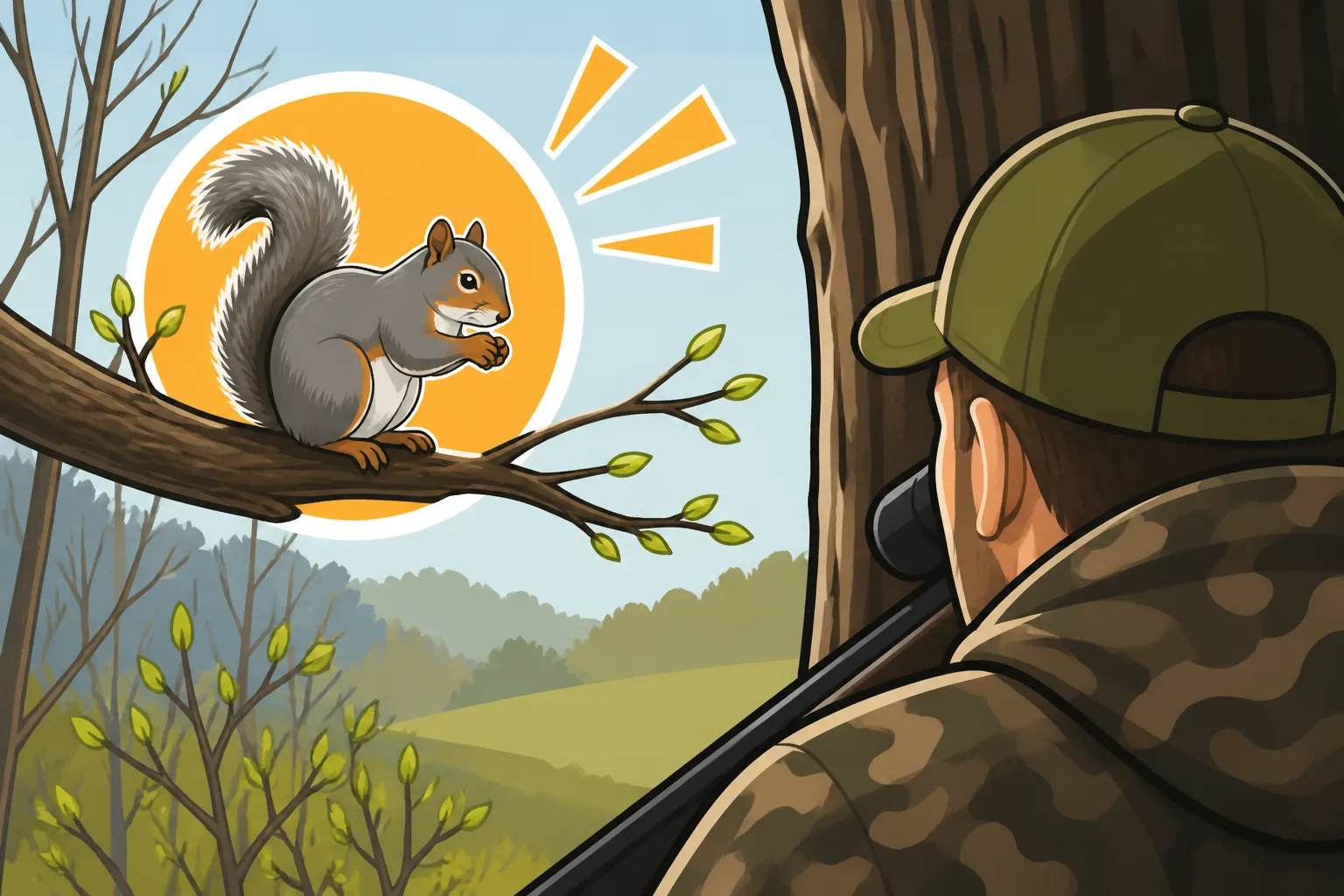
In the thick, green canopy of early autumn, even a squirrel’s distinct movements can be hard to pick out with the naked eye. This is where a good pair of binoculars becomes indispensable. An 8x or 10x magnification is usually perfect for squirrel hunting, allowing you to scan tree limbs and dense foliage for subtle movements without being overly shaky or having too narrow a field of view. Instead of trying to find the whole squirrel, use your binoculars to systematically examine sections of trees and the ground. Look for that flicking tail, a twitching ear, or the silhouette of a squirrel against the sky.
Quality optics allow you to patiently sit and observe, letting the forest "settle" around you. After a few minutes of stillness, squirrels that were spooked or laying low will often resume their activity. With binoculars, you can spot them before they spot you, giving you time to plan your approach or get into a shooting position. Brands like Vortex, Leupold, and Bushnell offer excellent options that provide clear, bright images even in the dappled light of the deep woods. For someone trying out a new setup, say a Best Shotgun Gauge for Ohio Squirrel for the first time, spotting your target clearly is half the battle.
Still Hunting and "Stop and Go" Tactics
Patience is a virtue in all hunting, but it's especially critical for early season squirrels. The "still hunting" or "stop and go" method is incredibly effective. Instead of crashing through the woods, move slowly, taking only a few steps at a time. Then, stop. Remain completely motionless for several minutes – five to ten minutes is ideal. During this time, actively listen and scan the environment.
When you move, the forest goes silent. Squirrels freeze, birds stop singing, and the natural rhythm of the woods is interrupted. By stopping and remaining still, you allow that natural rhythm to resume. Squirrels that were hiding will often start moving again, resume their chatter, or continue feeding. This is when you'll pick up on those subtle sounds of rustling leaves, falling nuts, or the visual cues of a flicking tail. This methodical approach might feel slow, but it vastly increases your chances of encountering squirrels that are unaware of your presence, leading to closer, higher-percentage shots. Consider this tactic when you're targeting specific areas with high mast crop potential, aiming to understand Gray Versus Fox Squirrels in Ohio in their natural habitat.
Leveraging Hunt Planning Tools and Apps
Modern technology, surprisingly, can be a great asset in traditional squirrel hunting. Apps like GoHunt, OnX Hunt, or the Ohio HuntFish app offer detailed aerial and topographic maps that can help you scout and plan your hunt before you even set foot in the woods. Use these tools to identify areas with a high concentration of mast-producing trees like oaks, hickories, and walnuts. Look for natural funnels, creek bottoms, or ridges that might concentrate squirrel movement.
You can mark potential squirrel hotspots, travel corridors, or even specific trees where you've seen activity in previous seasons. When you're on the ground, these apps can help you navigate quietly, ensuring you don't blunder into an area without forethought. They can also help you understand property boundaries, which is crucial when hunting near private land. Think of it as a digital advantage for an old-school pursuit. Knowing where to focus your efforts for a better Ohio Squirrel Harvest Numbers starts with smart scouting, and these apps are powerful tools for that. Whether you’re carrying a specialized .22 Rifles for Early Season Squirrels or your trusty shotgun, good planning makes all the difference.
Table: Common Early Season Squirrel Signs
| Sign Type | Specific Sign | What It Sounds/Looks Like | Indication | Best Response |
|---|---|---|---|---|
| Auditory | Alarm Bark/Chatter | Sharp, rapid barks; indignant "chucks." | Squirrel is aware of something; possibly you. | Freeze, listen, scan cautiously. |
| Rustling Leaves | Erratic, stop-and-go scurrying through dry leaves. | Squirrel is moving/foraging. | Stop, listen intently, pinpoint direction. | |
| Falling Nuts/Cuttings | "Plink" or "thud" of nuts hitting ground; rain of shell fragments. | Squirrel is actively feeding in a tree. | Locate the feeding tree, approach quietly. | |
| Chewing/Gnawing | Repetitive, rasping sound of breaking nutshells. | Squirrel is stationary, focused on a meal, close. | Move slowly and quietly to a shooting position. | |
| Visual | Flicking Tail | Quick, jerky movement of the bushy tail. | Agitated or aware squirrel, often hidden. | Use binoculars, scan foliage for the body. |
| Darting Movement | Rapid, short bursts of motion up trunks or along branches. | Squirrel is active, moving between feeding spots. | Focus on the point of disappearance, anticipate. | |
| Fresh Cuttings | Light-colored, distinctively chewed nutshell fragments on ground. | Recent feeding activity, area is productive. | Hunt the immediate area, look for more signs. | |
| Dreys (Leaf Nests) | Large, messy leaf balls high in tree crotches. | Established squirrel population in the area. | Good general area to focus hunting efforts. | |
| Travel Lanes/Rub Marks | Worn paths on logs or subtle disturbances along branches. | Predictable movement routes for squirrels. | Set up near a lane, wait for squirrels to use it. |
Disclaimer
Please remember that hunting regulations and seasons can change. Always consult the latest Ohio Department of Natural Resources (ODNR) hunting regulations before heading out into the field to ensure compliance with all current laws and safety guidelines.