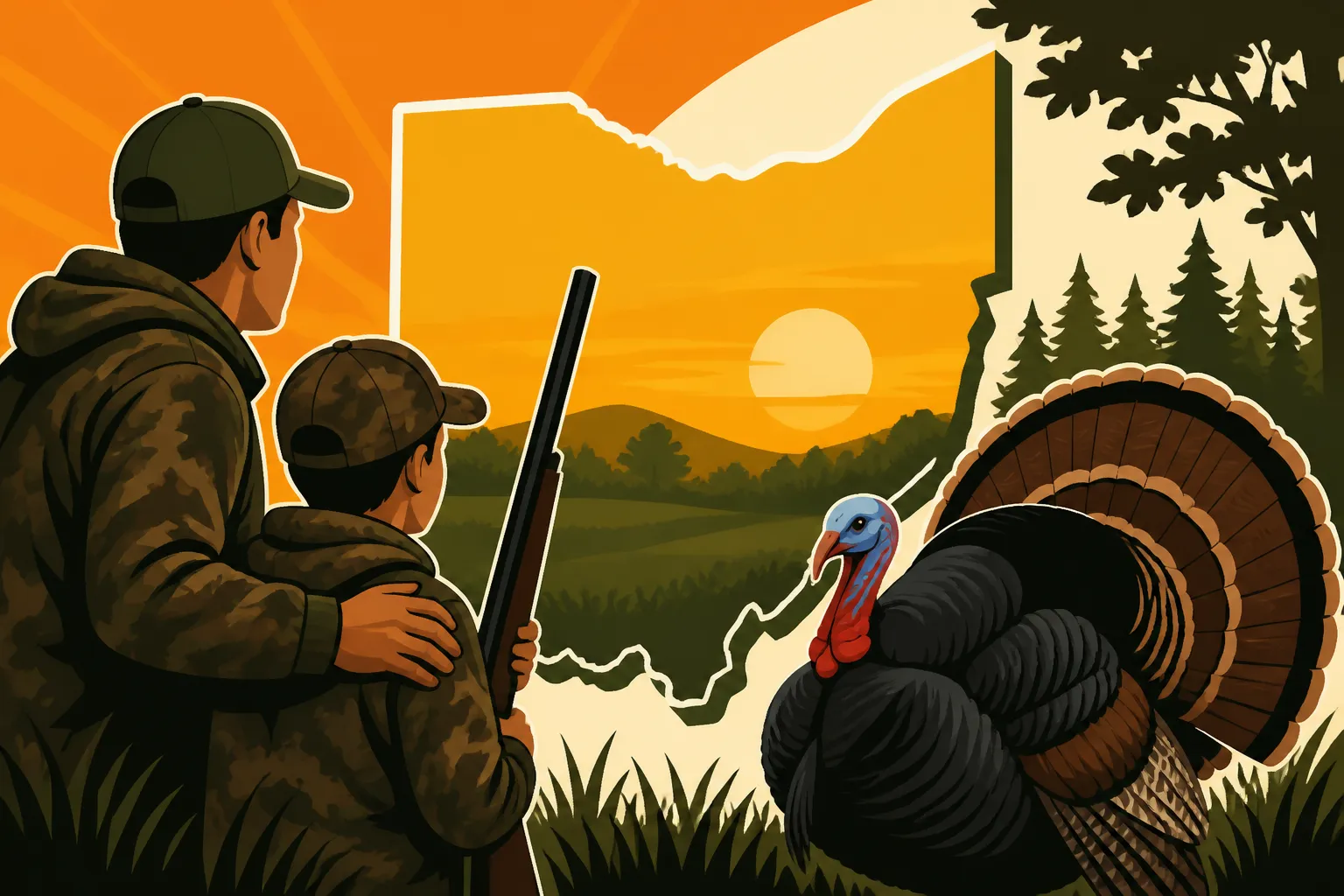
Hunting the Northeast Zone Youth Turkey Weekend
The excitement of a youth turkey hunt is something truly special, but let's be honest, trying to navigate the specific rules and dates for a particular zone in Ohio can feel like deciphering ancient scrolls. It's tough enough for experienced hunters, let alone when you're trying to set up a young person for success. This guide is all about breaking down the nuances of hunting the Northeast Zone Youth Turkey Weekend in Ohio, offering practical advice and setting expectations so you and your young hunter can make lasting memories.
Understanding Ohio's Northeast Zone Youth Turkey Weekend
For many of us, the spring turkey season is a highlight of the year. But for young hunters, that dedicated youth weekend offers a fantastic, often less pressured, opportunity to experience the thrill. Ohio divides its spring turkey hunting into two main zones: the South Zone and the Northeast Zone, each with its own set of opening dates, including distinct youth weekends. It can be confusing trying to keep them straight, especially when you're planning a trip.
The Northeast Zone generally covers the northeastern quadrant of Ohio, encompassing counties like Ashtabula, Trumbull, Mahoning, Columbiana, Portage, Summit, Geauga, Lake, and others. The key distinction for this zone is that its season, including the youth weekend, opens a bit later than the South Zone. This later timing is a management decision by the Ohio Department of Natural Resources (ODNR) to account for differences in spring green-up and turkey breeding cycles across the state. For a complete breakdown, it's always smart to review the Ohio Spring Turkey Zones and Dates directly from the ODNR.
Navigating Specific Northeast Zone Regulations
When you're out with a young hunter, knowing the rules isn't just about compliance; it's about setting an example for responsible hunting. The Northeast Zone Youth Turkey Weekend typically kicks off a few days before the regular spring turkey season opens in that zone. This window provides an exclusive opportunity for youth hunters aged 17 and under.
One of the most important regulations to remember for any Ohio turkey hunt, including the youth weekend, is the bag limit. In Ohio, the statewide bag limit for spring turkey is one bearded turkey per hunter. This limit applies equally to youth hunters. You can't go over that one bird, regardless of how many days you hunt or which zone you're in. This information is vital, and you can always double-check the Ohio Spring Turkey Bag Limit on the ODNR's official site. Remember, a bearded turkey means just that – a bird with a visible beard. This typically means gobblers, but occasionally a hen can have a beard, and they are legal to harvest during the spring season.
Another crucial aspect involves permits. Any youth hunter needs a valid Ohio hunting license and a spring turkey permit. These are often discounted for youth, making it more accessible for families to get out into the field. Understanding the Ohio Spring Turkey Permit Cost can help you budget and plan ahead. Make sure these are purchased and validated before you head out. Having proof of license and permit on hand is not just a formality; it's a necessity, whether it's a physical copy or stored digitally on your phone through the Ohio HuntFish app.
Typical Season Dates and Their Implications
While specific dates shift slightly year to year, the Northeast Zone Youth Turkey Weekend typically falls in late April, after the South Zone's youth opener. This timing can have a significant impact on turkey behavior and the hunting experience. A later opening often means more foliage has popped out, making visibility a bit trickier but also providing more cover for hunters. It can also mean that the gobblers are already well into their breeding cycles, often responding well to calls as they search for hens.
For example, if you're planning a trip to a public land spot like Killdeer Plains Wildlife Area, which straddles the zone line, you'd need to be very careful about knowing exactly which zone you're in. While Killdeer is mostly South Zone, understanding which counties are definitively in the Northeast Zone, like Ashtabula or Geauga, is critical for legal hunting. The ODNR website offers detailed maps, and online mapping tools can help confirm zone boundaries, ensuring you're compliant with the Ohio Northeast Zone Turkey Rules. The later season can mean cooler mornings are less common, and more aggressive bug populations might be out, so packing insect repellent could be a good idea.
Scouting and Pre-Season Preparation for Youth Hunters
The key to a successful youth hunt often lies in preparation. Rushing into the woods on opening morning without any prior knowledge can lead to frustration for both the young hunter and the mentor. Turkeys are smart, and getting them to commit, especially for a new hunter, requires some homework. This isn't just about finding birds; it's about building excitement and teaching valuable lessons before the hunt even begins.
Locating Roosting Areas and Feeding Sites
One of the best ways to prepare is by scouting. Before the season even thinks about opening, you should be out there looking for sign. Turkeys often roost in the same general areas, typically in tall trees along ridge lines, near water, or in areas offering good visibility. Look for droppings, feathers, and faint dustings of white wash under potential roost trees. This is a crucial step for setting up before daylight, especially when you're with a young hunter who might struggle with long waits or difficult movements in the dark.
During your scouting trips, pay close attention to recent turkey activity on the ground. Are there fresh tracks in soft soil near creek beds or field edges? Are there distinct scratch marks where they've been foraging for insects, seeds, and acorns? Turkeys are always looking for food, and identifying these feeding areas can give you a significant advantage. If you can find a travel corridor between a roost site and a feeding area, you’ve got a prime setup. Using mapping tools like a robust GPS or apps like GoHunt can be incredibly useful here. You can mark potential roost trees, feeding areas, and even optimal setup locations from afar, saving you precious time and quiet movement on hunt day.
Incorporating Pre-Season Calling Practice
Another critical piece of preparation is calling practice. For a young hunter, making a turkey call can be incredibly empowering. Start with the basics: a simple yelp, cluck, or purr on a box call or slate call. The goal isn't to become a world champion caller, but to learn to make consistent, realistic sounds. Practice in the car, in the living room, anywhere you can spend a few minutes without bothering the neighbors too much.
Teach them why turkeys make these sounds. Explain that a yelp is often a hen looking for a gobbler, and a cluck is usually a contented sound. This understanding builds confidence and also helps them learn to "read" the woods when they hear real turkeys. Having a diverse set of calls, as discussed in "Turkey Calls Worth Carrying in Ohio", can make a big difference, allowing you to adapt to what the birds respond to. Even if your young hunter isn't making the calls during the hunt, understanding the language of the birds makes them a more engaged participant.
Safety and Comfort Checklist
Beyond finding birds, ensuring the youth hunter's safety and comfort is paramount. Before the season, go over gun safety rules repeatedly. Practice mounting the shotgun, aiming, and understanding its safety features. Make sure the shotgun fits them properly, not just in length of pull but also in weight and recoil. A youth model shotgun is often a wise investment for a new hunter. This could include checking out different Turkey Shotguns and Chokes to find the best fit.
A comfortable hunter is a happy hunter. Pack plenty of snacks, water, and warm layers, even if the forecast looks mild for the Northeast Zone's later season. Early mornings can still be chilly, and sitting still for long periods can make anyone cold. A comfortable seat, like those found in a good Turkey Vests With a Kickstand Seat, can make a world of difference for a young person. Don't forget bug spray, especially if the weather has been warm, as ticks and mosquitoes can be quite active. A detailed checklist, like the one below, can help keep everything organized.
| Item | Purpose | Notes |
|---|---|---|
| Hunting License | Required by law | Physical card or digital on phone |
| Spring Turkey Permit | Required for spring turkey | Physical card or digital on phone |
| Shotgun | Primary hunting tool | Youth model for proper fit, low recoil |
| Ammunition | Enough for the hunt | Turkey-specific loads, appropriate shot size |
| Calls (Box/Slate) | Attracting gobblers | Practice beforehand, bring multiple types |
| Decoy | Visual attractant | Lightweight hen or jake, helps bring birds closer |
| Camouflage Clothing | Blending into environment | Layers for warmth and comfort, full camo head-to-toe |
| Blaze Orange/Pink | Required when moving on public land | Carry for safety when walking, remove when sitting |
| Face Mask/Paint | Concealing face, critical for close shots | Breathable material, easy to apply paint |
| Gloves | Concealing hands | Lightweight, good grip |
| Turkey Vest | Carrying gear, comfortable seat | Look for integrated kickstand or cushion |
| Water & Snacks | Staying hydrated and energized | Essential for long waits, quiet wrappers |
| Compass/GPS/App | Navigation, marking locations | Learn to use it before the hunt, GoHunt is a good option |
| First-Aid Kit | Minor injuries, emergencies | Small, accessible kit for cuts, scrapes, blisters |
| Bug Spray | Repelling insects | Especially in warmer weather, Northeast Zone |
| Headlamp | Walking in and out in the dark | Red light option is less disruptive to game |
Effective Tactics for Northeast Zone Youth Turkey Weekend
Once you've done your homework and gathered your gear, it's time to talk tactics. Turkey hunting, especially with a young person, requires patience, smart setup, and the ability to adapt. The Northeast Zone's typically later spring means more foliage, which can both help and hinder.
Early Morning Roost Setups
The absolute best chance you have at connecting with a gobbler during the youth weekend is often right off the roost. Turkeys are creatures of habit, and if you've done your scouting, you should have a good idea of where they'll be. The goal is to get as close as safely possible to that roost tree before dawn, without spooking the birds. This means a quiet, slow approach in the dark, using a headlamp with a red light setting if necessary.
Once you're in position, ideally within 100-150 yards of the roost, you need to set up. Choose a spot with good cover, like the base of a large oak or behind a thick cedar. Make sure your young hunter has a clear shooting lane in the direction you expect the birds to come from. Place your decoys, if using them, out in front. Then, you wait for daylight. As the woods wake up, a subtle tree yelp can sometimes get a gobbler to shock gobble, confirming his location. The goal is to entice him to fly down in your direction, thinking there's a hen waiting. For more on this, check out Calling an Ohio Gobbler Off the Roost.
Strategic Decoy Placement
Decoys can be a game-changer, especially for youth hunts where getting a bird to commit visually can make all the difference. In the Northeast Zone, with potentially more brush and leaves, visibility is often reduced. This means your decoy placement needs to be strategic. The general rule is to place your decoy where the gobbler will see it as he comes in, ideally within easy shooting range (20-30 yards).
For youth hunters, a single hen or a jake decoy is usually enough. A jake decoy can sometimes draw in dominant gobblers who want to challenge the younger bird. Position the decoy so the gobbler will approach it, presenting a good broadside shot for your young hunter. Always set up your actual hunting position 15-20 yards behind the decoy, using the decoy to draw the gobbler's attention away from your concealed position. If you're on public land, where birds might be a bit more call-shy, the visual element of a decoy can be especially effective. Find more tips in Decoy Placement for Pressured Birds.
Adaptability: Run-and-Gun or Sitting Tight
Turkey hunting is rarely a static endeavor. Sometimes, that gobbler on the roost just won't commit, or he pitches down in the opposite direction. This is where adaptability comes in. If the birds aren't responding after an hour or two, you have two main options: sit tight or go mobile.
Sitting tight might mean staying put for a while, letting the woods calm down, and trying a few more calls every 15-20 minutes. Sometimes, silent gobblers will cruise by. This is often the best option with very young hunters who might struggle with continuous movement. For older, more experienced youth, or if you know the terrain well, a "run-and-gun" approach can be effective. This involves packing up quickly and quietly, moving to a new location, setting up, and trying to call again. This works especially well on larger tracts of public land, allowing you to cover more ground and find more receptive birds. Think about how to effectively employ Run-and-Gun Turkey Tactics on Public Land if the initial setup fails. Using a mobile app on a device or even a standalone GPS from a brand like Garmin can help you navigate quickly and efficiently between potential spots.
Gear and Safety Considerations for Young Turkey Hunters
Hunting with youth is not just about the harvest; it’s about fostering a love for the outdoors and instilling responsible hunting ethics. The right gear and a strong emphasis on safety are paramount to making their experience positive and memorable.
Choosing the Right Shotgun and Ammunition
The single most important piece of gear for a youth turkey hunter is a shotgun that fits them well. A standard 12-gauge can be too long, heavy, and have excessive recoil for a smaller framed individual, leading to flinching and a negative shooting experience. A youth model 20-gauge shotgun is often the perfect solution. They are lighter, shorter, and have significantly less recoil, making them much more manageable.
When selecting ammunition, opt for turkey-specific loads. These loads are designed to deliver a dense pattern of shot at effective turkey ranges. While 12-gauge offers heavier payloads, modern 20-gauge turkey loads from brands like Federal Premium or Winchester are incredibly effective and more than capable of cleanly harvesting a gobbler at typical ranges of 20-40 yards. Always pattern the shotgun with the chosen ammunition before the hunt. This involves shooting at a paper target at various distances to see how the shot spreads. This is not only a safety practice but also helps the young hunter understand their effective range. Ensuring the gun is properly choked for turkey hunting is also critical, typically a full or extra-full choke will deliver the tight pattern needed.
Essential Comfort and Concealment Gear
Comfort directly impacts a youth hunter's enjoyment and patience. A full camouflage outfit is crucial, covering them from head to toe. This includes a camo jacket, pants, gloves, and perhaps most importantly, a face mask or face paint. Turkeys have incredible eyesight, and a bare face will stick out like a sore thumb. Layering is key for the often-unpredictable Ohio spring weather. Start with moisture-wicking base layers, add insulating layers, and top it off with a waterproof outer shell. Even in the Northeast Zone's later season, mornings can be cool, while midday can warm up considerably.
Beyond clothing, a good turkey vest is indispensable. It allows for organized storage of calls, water, snacks, and extra layers, but critically, it provides a comfortable, built-in seat cushion. Sitting still against a tree for an hour or more can be tough for anyone, especially a child, and a comfortable seat makes a huge difference. Don't forget a lightweight pair of waterproof boots to navigate potentially muddy terrain, especially after spring rains.
Emphasizing Safety Protocols
Safety is not just a rule; it's a culture you instill. Before, during, and after every hunt, reiterate gun safety fundamentals:
- Always point the muzzle in a safe direction.
- Treat every firearm as if it were loaded.
- Keep your finger off the trigger until ready to shoot.
- Be sure of your target and what is beyond it.
Before the hunt, take the time to review the Ohio Hunter Education Requirements to ensure all necessary courses are completed. During the hunt, ensure the young hunter knows to only shoot at a clearly identified gobbler that is within safe range and presents an ethical shot. Never allow them to point their gun in the direction of another hunter or to shoot at sounds or movement.
Additionally, carrying blaze orange or blaze pink is a safety requirement when moving through public hunting land in Ohio, even during archery-only segments for deer, and it's a good practice when walking in and out for turkeys. While you take it off when actively hunting, having it visible when transitioning between spots, especially on crowded public lands, is non-negotiable. Finally, make sure both you and your young hunter understand how to properly tag and check their turkey immediately after harvest, following Ohio's specific regulations for reporting game. This is another crucial aspect of responsible hunting that the Ohio Department of Natural Resources (ODNR) takes very seriously.
Disclaimer
Please remember that hunting regulations, season dates, and permit requirements can change. Always consult the most current Ohio Department of Natural Resources (ODNR) hunting regulations before heading afield. This guide is for informational purposes only and does not supersede official state regulations.