Shotgun Slug Guns for Ohio Deer
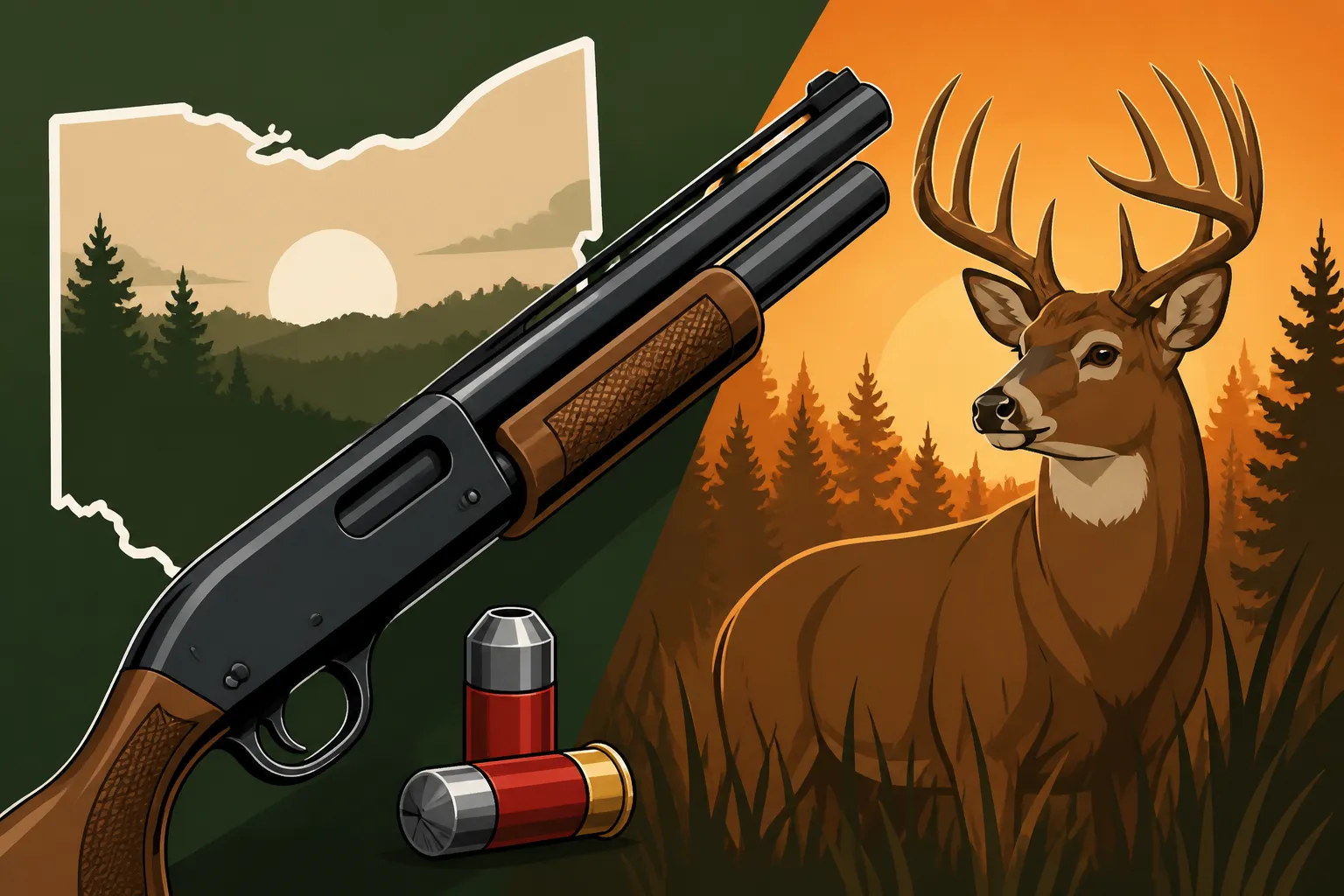
For so many of us Ohio hunters, the shotgun slug gun isn't just a choice; it's a legacy. For generations, these powerful firearms were the only option for taking deer with a conventional firearm in much of the state, and while times have changed and other options have emerged, the slug gun still holds a special place in the deer woods. If you're looking to understand these versatile tools better, whether you're a seasoned veteran or just starting out and feeling overwhelmed by all the choices, this guide will walk you through everything you need to know about effectively using a shotgun slug gun for deer hunting in Ohio, from legalities to ballistics and field tactics.
The Enduring Role of Shotgun Slugs in Ohio Deer Hunting
It wasn't that long ago that if you wanted to hunt deer in Ohio with a firearm, you were pretty much limited to a shotgun. This wasn't some arbitrary decision; it was deeply rooted in the state's history, balancing hunting opportunities with safety concerns in a relatively densely populated state. While many of us have fond memories (and perhaps a few bruising ones!) of our first deer taken with a slug gun, the landscape of Ohio deer hunting regulations has certainly evolved.
A History of Shotgun-Only Regulations
For decades, Ohio, like several other Midwestern states, maintained "shotgun-only" regulations for deer hunting with conventional firearms. The reasoning was primarily safety-driven. Slugs, especially the traditional Foster-type slugs, were considered to have a shorter effective range and less propensity for over-penetration compared to high-powered rifle cartridges. This was seen as a crucial measure in areas with mixed public and private land, numerous small woodlots, and proximity to residential areas. Hunters were effectively encouraged to stick to shorter, safer shots. This historical context is vital to understanding why so many Ohio hunters still gravitate towards their trusted slug guns. It was what we grew up with, what our fathers and grandfathers used.
The regulations were a direct response to a need for public safety, given Ohio's population density and the patchwork nature of its hunting lands. The idea was that a shotgun slug would "lose energy" quicker and drop faster, posing less of a risk if it missed its target or passed through an animal. This led to generations of hunters perfecting their skills with these firearms, learning to close the distance and make precise shots within the slug gun's effective range. It certainly taught us patience and woodsmanship!
Why Slugs Remain a Viable Option Today
Even with the introduction of straight-wall cartridge rifles, shotgun slug guns are far from obsolete in Ohio's deer woods. Many hunters continue to choose them for several excellent reasons. For one, if you already own a shotgun that doubles for turkey or waterfowl, investing in a dedicated slug barrel or a new slug gun can be a cost-effective way to get into deer hunting without buying an entirely new firearm platform. Plus, the sheer stopping power of a well-placed slug is undeniable.
Moreover, in thick cover, dense woods, or areas where shot distances are consistently short, a slug gun is often more than enough firearm. The kinetics of a heavy slug hitting a deer are devastating, and within its effective range, it's incredibly efficient. Many hunters simply prefer the feel and familiarity of their shotgun. There's a certain satisfaction that comes from mastering a slug gun, knowing its limitations, and hunting within them. Plus, for those hunting heavily pressured public land, sometimes a quick, close-range shot is all you get, and a slug gun is perfectly suited for that.
Adapting to New Firearm Laws
The hunting landscape in Ohio changed significantly with the legalization of straight-wall cartridge rifles for deer hunting. This expanded the options available to hunters, particularly extending effective ranges for many. While some hunters embraced these new rifle options, many others stuck with their shotguns. The beauty of the current regulations is that hunters now have a choice tailored to their specific hunting style, terrain, and comfort level. You can read more about the evolution of these rules in Why Ohio Once Required Shotguns for Deer.
For those accustomed to slug guns, the transition to straight-wall cartridges might feel unnecessary, or even a bit too much gun for their typical hunting scenarios. The key is understanding that both are legal and effective tools. Some hunters might find that a slug gun is actually more accurate for them at closer ranges than a straight-wall, especially if they're used to it. The decision often comes down to personal preference, the type of land you hunt, and the maximum distance you anticipate shooting. Don't feel pressured to switch if your slug gun continues to serve you well.
Understanding Ohio's Legal Framework for Slug Guns
Navigating the regulations for deer hunting in Ohio can sometimes feel like trying to solve a puzzle, especially with the changes over the years. When it comes to slug guns, understanding the specific rules is crucial for staying legal and safe in the field. Rest assured, shotguns firing slugs are still a completely legal and highly effective method for taking deer across the state.
Key Regulations for Shotguns in Ohio
In Ohio, shotguns used for deer hunting must be 10 gauge or smaller, and they must fire a single projectile (slug). This means no buckshot or birdshot for deer, which makes perfect sense for humane harvesting. The firearm can be a smoothbore or have a rifled barrel, and there are no restrictions on magazine capacity for deer hunting, although common sense and ethical considerations usually dictate what you need. Most hunters use pumps or semi-automatics, often with a 2 or 3-round capacity in the magazine and one in the chamber.
It's also important to remember general hunting safety rules, such as having a proper Ohio Resident Hunting License Cost and carrying proof of it, along with your deer permits. All deer harvested must be properly checked in through the state's system, typically within 24 hours. Always double-check the current year's Ohio Deer Season Structure Explained and specific county regulations, as rules can sometimes have subtle variations or updates. Being informed is not just about avoiding a citation; it's about being a responsible hunter.
Comparing Shotgun Rules to Straight-Wall Cartridges
The big change in Ohio's deer firearm regulations came with the inclusion of straight-wall cartridge rifles. These firearms, chambered in cartridges like the .450 Bushmaster, .350 Legend, or .44 Magnum, offer increased range and flatter trajectories compared to traditional shotgun slugs. However, they come with their own set of specific legal requirements, often regarding minimum and maximum case length, and projectile diameter. You can learn more about these in Ohio Legal Firearms for Deer Hunting.
The key distinction for a slug gun hunter is often the effective range. While a straight-wall rifle might push accurate ethical shots out to 200 yards or more with the right setup and practice, a slug gun, even a highly optimized one, typically performs best within 100-150 yards. This difference influences hunting tactics and where you choose to set up your stand. The choice between the two often boils down to terrain and personal preference. If you're hunting dense woods where shots beyond 75 yards are rare, a slug gun is perfectly adequate and often easier to maneuver.
Safe Zones and Discharge Setback Rules
Understanding discharge setback rules is paramount for safety, especially when hunting close to populated areas or property lines. Ohio law generally states that you cannot discharge a firearm within 150 yards of a habitation or an occupied building without permission from the owner or occupant. This applies whether you're using a slug gun or a straight-wall rifle. It's not just a guideline; it's a legal requirement designed to protect property owners and ensure public safety.
Furthermore, if you're hunting on public land, be acutely aware of designated safety zones, parking areas, and boundary lines. Using a tool like GoHunt or the Ohio HuntFish app can be incredibly helpful for identifying these boundaries and setback distances on your phone, even without cell service in some cases. Always know what's beyond your target. This diligence is why slug guns, with their generally shorter effective range, have historically been favored in areas with mixed-use land. It's about being responsible and ensuring your slug impacts only what you intend.
Choosing Your Slug Gun: Rifled vs. Smoothbore
When you decide to hunt deer with a shotgun slug, one of the most critical decisions you'll face is whether to use a smoothbore barrel or a rifled barrel. This choice profoundly impacts the type of ammunition you'll use, your effective range, and ultimately, your accuracy in the field. It's not just a matter of preference; it's a matter of physics and how slugs interact with barrels.
Smoothbore Shotguns and Foster Slugs
The classic deer slug setup involves a smoothbore shotgun barrel paired with a Foster-style slug. These slugs are designed with a hollow base and often feature shallow "rifling" on the exterior. It's a bit of a misnomer, as this external rifling doesn't actually impart spin. Instead, it allows the slug to compress slightly when passing through a choke and helps reduce friction. The hollow base is key: it acts like the skirt of a shuttlecock, shifting the center of gravity forward and helping the slug fly nose-first, albeit without true spin stabilization.
Smoothbore shotguns, often your trusty bird or turkey gun, are perfectly capable of harvesting deer at closer ranges, typically out to 75-100 yards. They are generally more affordable, as you might already own one, and Foster slugs are less expensive than sabot slugs. However, their accuracy limitations beyond those distances are significant. The lack of true spin stabilization means that while they might be "minute of deer" at 50 yards, groups tend to open up dramatically as distance increases. This makes careful range estimation and disciplined shooting all the more vital.
Rifled Barrel Shotguns and Sabot Slugs
For hunters seeking increased accuracy and extended range from their slug gun, a rifled barrel is the way to go. These barrels feature spiraling grooves, just like a rifle barrel, that impart a true spin on the projectile. This spin stabilizes the slug in flight, much like a football thrown with a spiral, leading to significantly improved accuracy and a flatter trajectory. Rifled barrels are specifically designed to be used with sabot slugs.
Sabot slugs are a marvel of ballistic engineering. Instead of the slug itself engaging the rifling, the projectile (which is typically a smaller diameter, aerodynamic bullet, often jacketed lead or copper) is encased in a plastic "sabot" (French for "shoe"). As the slug travels down the rifled barrel, the sabot engages the rifling, spinning the bullet. Once the slug leaves the muzzle, the sabot falls away, leaving the aerodynamic bullet to continue its stabilized flight. This system can push ethical shot distances out to 150 yards, and even further with practice and a good setup, rivaling some straight-wall cartridges in terms of flat trajectory at those distances.
The Cost-Benefit of Each System
The choice between smoothbore and rifled barrel often boils down to a balance of cost, intended range, and versatility.
| Feature | Smoothbore Shotgun (with Foster Slugs) | Rifled Barrel Shotgun (with Sabot Slugs) |
|---|---|---|
| Cost (Firearm) | Often lower, may use existing shotgun (add slug sights) | Higher, may require dedicated slug gun or barrel |
| Cost (Ammunition) | Generally more affordable slugs | Significantly more expensive slugs |
| Accuracy (Typical) | Adequate to 75-100 yards, groups open quickly beyond | Excellent to 150+ yards, tighter groups at range |
| Versatility | Can swap barrels for bird/turkey hunting if interchangeable | Dedicated deer hunting setup, less versatile for other game |
| Recoil | Often perceived as harsher due to lighter guns | Can be significant, but heavier guns or specific designs help |
| Ideal Use | Thick cover, short-range woods, budget-conscious | Open woods, field edges, longer range shots, accuracy prioritized |
As you can see, each option has its place. If your budget is tight, and you primarily hunt small woodlots or thick creek bottoms where shots are always inside 75 yards, a smoothbore with a good set of rifle sights is a perfectly viable and economical choice. However, if you hunt larger fields, power line cuts, or big timber where you might get a 100-150 yard shot, investing in a rifled barrel and sabot slugs will pay dividends in accuracy and confidence. Many hunters choose to buy a dedicated slug barrel for their existing shotgun, giving them the best of both worlds. For more on this, check out Rifled Versus Smoothbore Slug Barrels.
Ammunition Matters: Slugs for Every Scenario
Choosing the right slug for your specific shotgun setup is just as important as choosing the firearm itself. There's a common misconception that "a slug is a slug," but the reality is that different types of slugs are designed for different barrel types and intended uses. Matching your ammunition to your gun is critical for both accuracy and ethical performance in the field.
Foster Slugs for Smoothbores: Performance and Limitations
Foster slugs are the classic option for smoothbore shotguns. They are essentially hollow-based lead projectiles, often with some external "ribs" or "rifling" (again, not true rifling in the sense of imparting spin). Their design relies on aerodynamics to maintain a nose-forward flight, with the heavier front end pulling the lighter, hollow base behind it. They are typically made of soft lead, which allows them to deform readily upon impact, creating a large wound channel and transferring a lot of energy quickly.
The performance envelope for Foster slugs is generally limited to about 75-100 yards for ethical deer hunting. Beyond this range, their accuracy deteriorates significantly due to the lack of spin stabilization. They tend to drop rapidly and become increasingly unpredictable. However, within their effective range, they are incredibly destructive, delivering a massive blow. They are also considerably less expensive than sabot slugs, making them a budget-friendly option for close-range hunting. When using Foster slugs, focusing on shot placement and understanding your shotgun's maximum accurate range is paramount. They are fantastic for dense timber where shots are rarely long, but you need quick, decisive stopping power.
Sabot Slugs for Rifled Barrels: Precision and Range
Sabot slugs are a completely different animal, designed specifically for rifled shotgun barrels. As mentioned, they consist of a smaller, aerodynamic bullet (often a Spitzer or conical shape) encased in a plastic sabot that engages the barrel's rifling. This imparts true spin on the bullet, stabilizing it for much greater accuracy and range, akin to a traditional rifle bullet. Common examples include various offerings from Remington, Hornady, and Federal, each with slightly different bullet designs optimized for expansion and penetration. For a deep dive into specific options, look into Shotgun Slug Choices for Ohio Deer.
The performance of sabot slugs in a rifled barrel can be quite impressive, extending ethical deer hunting ranges out to 150 yards, and in some highly tuned setups, even beyond. They offer a much flatter trajectory than Foster slugs, requiring less holdover at moderate distances. However, this increased performance comes at a cost: sabot slugs are significantly more expensive than Foster slugs, often comparable to premium rifle ammunition. The key benefit is the increased confidence in taking longer shots, knowing your bullet is flying true. When selecting sabot slugs, it's worth trying a few different brands and bullet weights with your specific rifled barrel, as each gun can show a preference for certain ammunition. This trial and error can dramatically improve your accuracy.
Understanding Energy and Ballistics
Regardless of whether you choose Foster or sabot slugs, understanding the ballistic characteristics and energy transfer is crucial for ethical hunting. A slug's primary job is to deliver enough kinetic energy to humanely harvest the animal. Shotgun slugs, by their very nature, are heavy projectiles moving at moderate velocities. They don't typically achieve the blistering speeds of some rifle rounds, but their sheer mass carries a tremendous amount of energy.
For instance, a 12-gauge slug might weigh anywhere from 3/4 oz to 1 1/4 oz (around 328 to 547 grains) and travel at velocities between 1,500 and 1,900 feet per second. Upon impact, this heavy projectile creates a large temporary and permanent wound cavity, leading to rapid energy dump and often a quick, humane kill. This is particularly true of soft-lead Foster slugs that deform dramatically. Sabot slugs, often with controlled expansion designs, will mushroom reliably and penetrate deeply, damaging vital organs and leading to effective blood trails. Knowing the ballistic chart for your chosen slug, especially its drop at various distances, is essential, whether you're using a simple bead sight or a sophisticated scope. GoHunt and other online resources often provide detailed ballistics data for various slug types, helping you understand trajectory.
Optimizing Accuracy: Sights, Optics, and Zeroing
A slug gun, despite its reputation for being a "brush gun," can be remarkably accurate with the right setup and practice. The key is choosing the appropriate sighting system and meticulously zeroing it in. You can't just slap a scope on it or rely on a bead sight for long shots; each component plays a role in maximizing your chances of a clean harvest.
Open Sights and Bead Sights for Close Range
For traditional smoothbore shotguns, the simplest sighting system is often a single bead sight at the end of the barrel. While perfectly adequate for wingshooting, a single bead is notoriously difficult for precise deer hunting. It works best at very close ranges, say inside 30-40 yards, where the "pattern" of a slug is less critical, but it lacks the precision needed for consistent ethical shots.
A significant upgrade for a smoothbore is to add rifle sights (sometimes called "iron sights"). These consist of a front post sight and an adjustable rear sight, typically mounted on a rib or cantilever barrel. This setup allows for much finer aiming than a single bead, extending the effective range of a smoothbore with Foster slugs out to its practical limit of 75-100 yards. They are rugged, reliable, and don't require batteries, making them excellent for hunting in thick cover where close-quarters engagements are common. They can be a great option for Still-Hunting Shawnee State Forest Ridges where quick, close shots might present themselves.
Red Dot Sights for Fast Target Acquisition
Red dot sights have become increasingly popular on slug guns, and for good reason. They offer an illuminated reticle (typically a dot, but sometimes a circle-dot combination) that is parallax-free, meaning the point of impact is the same regardless of where the dot appears in the optic, as long as it's within the sight window. This makes them incredibly fast for target acquisition, which is a huge advantage when a deer suddenly appears in heavy cover.
Red dots excel in situations where shots are likely to be within 100 yards. They provide a clear, unobscured field of view and allow for shooting with both eyes open, enhancing situational awareness. While they don't offer magnification, which might be a downside for longer shots, their speed and simplicity make them formidable in the dense woods or on quick-moving deer. They are also generally durable and less prone to fogging than traditional scopes, a real plus during cold, damp Ohio deer seasons.
Scope Choices for Slug Guns
For maximum accuracy and extended range, especially with a rifled barrel and sabot slugs, a dedicated shotgun scope is often the best choice. These scopes are designed to withstand the heavy recoil of slugs and are often optimized for shorter ranges, typically with lower magnification (e.g., 1-4x, 2-7x, or fixed 2.5x or 3x). A variable power scope offers versatility, allowing you to dial down for close shots in thick cover and crank up the magnification for more precise aiming across a field.
When choosing a scope, look for good light-gathering capabilities (larger objective lenses can help), a clear reticle, and robust construction. Eye relief is also important, as slug guns can have significant recoil. Avoid scopes designed for high-powered rifles, as they might not hold up to the specific impulse of a slug gun's recoil or be optimized for shorter-range parallax settings. Some manufacturers, like Leupold or Nikon, offer lines of scopes specifically built for shotguns and muzzleloaders. Investing in quality mounts is also crucial to ensure the scope stays zeroed under recoil.
The Zeroing Process for Slugs
Zeroing your slug gun is perhaps the most critical step after choosing your firearm and ammunition. Unlike rifles, which might shoot various brands of ammunition with similar results, slug guns are notoriously finicky. They often show a strong preference for a particular brand, bullet weight, or sabot design. What shoots great in one gun might be wildly inaccurate in another, even of the same make and model.
- Start Close: Begin your zeroing process at a close range, say 25 yards. This ensures you're on paper quickly and saves you frustration and ammunition. Adjust your sights or scope to get centered at this distance.
- Move Back: Once consistently hitting the bullseye at 25 yards, move back to your primary zero distance, typically 50 or 75 yards for smoothbores, and 100-125 yards for rifled barrels with sabot slugs.
- Shoot Groups: Don't just shoot one shot and adjust. Shoot groups of 3 to 5 shots. This helps account for shooter error and gives you a true indication of your firearm's accuracy. Adjust your sights/scope based on the center of your group.
- Test Different Slugs: This is where the "finicky" part comes in. Buy a few different boxes of slugs (different brands, different grain weights if possible) and test them. You might be surprised at how one type shoots significantly better than others in your particular gun. The best group wins.
- Practice, Practice, Practice: Once zeroed, practice shooting from hunting positions (standing, kneeling, from a rest that mimics your treestand or ground blind). This builds confidence and muscle memory. Remember, slugs kick, so managing recoil is part of the accuracy equation. For tips on accurate shooting, especially at 100 yards, check out Zeroing at 100 Yards for Ridge Hunting.
Hunting Strategies with a Slug Gun in Ohio's Diverse Terrain
Ohio offers incredibly diverse deer hunting terrain, from the rolling hills and deep woods of Appalachia to the vast farmlands and woodlots of the northwest. A slug gun, with its effective range considerations, lends itself well to specific strategies depending on where you're hunting. Adapting your approach is key to success.
Timber Hunting in Appalachian Ohio
In the dense, often rugged timber of Hunting Southeast Ohio Appalachian Foothills like Wayne National Forest or Shawnee State Forest, shot distances tend to be shorter. Visibility is limited, and deer often appear suddenly at close range. Here, the traditional strengths of a slug gun truly shine. The quick handling of a pump or semi-auto shotgun, combined with the devastating stopping power of a slug, is perfect for these environments.
Hunters often focus on thick cover, ridge saddles, and creek bottoms where deer travel. Treestand Setups in Appalachian Ohio Hardwoods might involve lower stands to account for steep terrain, and shots will typically be within 70-80 yards. Focus on funnels and pinch points where deer are naturally constricted in their movement. A red dot sight can be a real asset here, allowing for rapid target acquisition when a buck slips through the thick stuff. Don't be afraid to still-hunt or slowly stalk through these areas, as close encounters are common. Your slug gun is an excellent tool for these intimate, close-quarters hunts.
Farm Country Edges and Woodlots
Moving into the agricultural heartland of Hunting Northwest Ohio Farmland Deer, the landscape shifts to open fields punctuated by small woodlots, fencerows, and river bottoms. Here, shots can sometimes be longer than in dense timber, as deer might cross open fields or be spotted at the edge of a distant woodlot. This is where a rifled barrel slug gun with sabot slugs, paired with a good scope, can really earn its keep.
When hunting farm country, consider setting up on pinch points between woodlots, field edges, or along thick fencerows that deer use as travel corridors. Hunting a Funnel Between Two Woodlots is a classic strategy. You might need to make a 100-125 yard shot across a bean field or into a standing cornfield. A ground blind, well brushed in, can be incredibly effective on a field edge, offering concealment and stability for those longer slug gun shots. Using a Ground Blind on Ohio Public Land can also be great for keeping a low profile near pressured deer. Just make sure you've practiced those longer shots and are confident in your ethical range.
Public Land Considerations with a Slug Gun
Hunting on Ohio's public lands, whether a Wildlife Area or State Forest, often means encountering more hunting pressure. This can make deer more skittish and nocturnal, and often pushes them into the thickest, nastiest cover available. A slug gun's suitability for close-range, heavy cover hunting makes it an excellent choice for these scenarios. You'll often be walking into areas that other hunters avoid due to difficulty, and a maneuverable slug gun is perfect for that.
When on public land, patience and persistence are your best friends. Scout thoroughly beforehand using tools like GoHunt or physical maps to identify overlooked pockets of cover, steep ravines, or natural funnels away from main trails. Focus on areas where you know shots will be within your slug gun's effective range. Deer drives can also be very effective on public land with slug guns, using a few hunters to slowly push deer through a woodlot to standers positioned strategically. Remember to always display adequate Ohio Blaze Orange Requirements during firearm seasons for safety on public ground.
Maintenance and Care for Your Slug Gun
Just like any other firearm, proper maintenance and care are essential for ensuring your slug gun remains reliable, accurate, and safe for years to come. Neglecting basic cleaning and storage can lead to rust, reduced accuracy, and even potential malfunctions when you least expect them – like that crucial moment a trophy buck steps out.
Cleaning Your Shotgun After Use
Shotguns, especially those firing slugs, tend to accumulate a fair amount of fouling. Lead and plastic wad residue from slugs can build up in the barrel, affecting accuracy. After every hunting trip, particularly if the weather was wet or damp, a thorough cleaning is highly recommended.
- Disassemble: Follow your manufacturer's instructions to safely disassemble your shotgun.
- Barrel Cleaning: Use a cleaning rod, bore brush, and appropriate bore solvent to scrub the inside of the barrel. Pay special attention to removing lead and plastic fouling, which can often be stubborn. Let the solvent work for a few minutes before brushing. Follow up with patches until they come out clean.
- Action and Trigger Group: Use a soft brush and cleaning solvent to remove dirt, grime, and powder residue from the action, bolt, and trigger group. Be careful not to over-lubricate these areas, as excess oil can attract more dirt.
- Wipe Down: Wipe down all exterior metal surfaces with a lightly oiled cloth to prevent rust.
- Reassemble and Test: Reassemble your shotgun, ensuring all parts move freely. A quick dry-fire (if safe to do so) can confirm function.
Storage and Rust Prevention
Proper storage is crucial for the long-term health of your slug gun. When not in use, firearms should be stored in a secure, dry place, ideally in a gun safe or cabinet. Humidity is the enemy of firearms, leading to rust.
- Humidity Control: Consider using a desiccant or a dehumidifier rod in your gun safe, especially in Ohio's often humid climate.
- Gun Socks: Silicone-treated gun socks can provide an additional layer of protection against moisture and minor dings when firearms are stored close together.
- Avoid Foam Cases for Long-Term: While soft cases are great for transport, avoid storing firearms in soft, closed-cell foam cases for extended periods, as they can trap moisture and accelerate rust. Hard cases with form-fitting foam can also sometimes trap moisture, so ensure the gun is thoroughly dry and oiled before long-term storage in such a case.
Pre-Season Checks and Tune-ups
Before deer season kicks off, it's a wise idea to give your slug gun a thorough once-over. This pre-season check can save you a lot of heartache in the field.
- Function Test: Cycle actions, check safeties, and ensure the trigger pull is consistent.
- Optics Check: If you use a scope or red dot, ensure it's securely mounted and that all screws are tight. Check for any loose parts or signs of damage.
- Barrel Inspection: Look down the barrel from both ends (with the action open and unloaded!) to ensure it's clear of obstructions and free of rust or pitting.
- Test Fire: Most importantly, take your slug gun to the range and confirm your zero. Even if it was stored perfectly, a bump or simply the passage of time can sometimes shift a zero. Confirming your zero gives you immense confidence on opening day. This is also a good time to run through any new ammunition you might be considering.
Comparing Slug Guns to Other Ohio Legal Deer Firearms
While this guide focuses on slug guns, it's helpful to understand how they stack up against other legal deer firearms in Ohio. Each type of firearm has its own advantages and disadvantages, and the "best" choice often depends on individual hunting style, preferred terrain, and comfort level.
Shotgun Slugs Versus Straight-Wall Cartridges
The most direct comparison for a slug gun is often with the relatively newer straight-wall cartridge rifles. Straight-Wall Rifles for Ohio Deer have changed the game for many hunters, offering flatter trajectories and extended effective ranges.
- Range & Trajectory: Straight-walls generally offer significantly extended effective ranges (150-250+ yards) and much flatter trajectories than even sabot slugs, making longer shots more manageable. Sabot slugs typically perform best out to 150 yards, while Foster slugs are limited to 100 yards or less.
- Recoil: Both can produce significant recoil, but straight-wall rifles, especially lighter models, can be sharper. Heavier slug guns can absorb recoil well.
- Cost: Ammunition for straight-wall cartridges can be pricey, but often less than premium sabot slugs. Foster slugs are usually the most economical option.
- Accuracy: A well-tuned straight-wall rifle is typically more inherently accurate at longer ranges than a slug gun. However, within 100 yards, a good slug gun can easily hold its own.
- Maneuverability: Slug guns, especially those built on traditional shotgun platforms, can sometimes be shorter and handier in thick cover.
For hunters who mostly hunt wide-open fields or areas where 150+ yard shots are common, a straight-wall rifle offers a distinct advantage. But for those who stick to thick woods or are comfortable with closer shots, a slug gun remains a powerful and ethical choice.
Muzzleloaders: A Different Kind of Single-Shot
Another popular choice for Ohio deer hunters is the muzzleloader. Muzzleloader Deer Hunting in Ohio offers a specific season (typically in early January) that provides unique hunting opportunities, often in colder weather and sometimes with less pressure.
- Operation: Muzzleloaders are generally single-shot firearms, requiring a slower, more deliberate reloading process compared to a repeating slug gun or straight-wall rifle.
- Range & Accuracy: Modern inline muzzleloaders, especially with sabots and scopes, can be surprisingly accurate out to 150-200 yards, rivaling some straight-wall performance. Traditional side-lock muzzleloaders have shorter effective ranges.
- Recoil: Muzzleloaders, especially those firing heavier conical bullets or sabots, can have substantial recoil.
- Cleaning: Muzzleloaders require specific and often more involved cleaning processes due to the corrosive nature of black powder or black powder substitutes.
- Season Specificity: Muzzleloaders have their own dedicated season, which can be a major draw for hunters seeking additional time in the woods.
A muzzleloader is a fantastic option for hunters who enjoy the challenge and tradition of black powder hunting, or who want to extend their hunting season into January. It offers a different pace and experience than a modern slug gun.
Making the Right Choice for Your Hunting Style
Ultimately, the "right" choice of firearm for Ohio deer hunting is a deeply personal one. It hinges on several factors:
- Terrain: Do you hunt dense timber, open fields, or a mix of both? This dictates potential shot distances.
- Personal Preference: What are you most comfortable and confident shooting accurately?
- Budget: What can you realistically afford for the firearm, optics, and ammunition?
- Versatility: Do you want a dedicated deer gun, or something that can pull double-duty for other species?
- Tradition: Is there a family tradition or personal connection to a particular firearm type?
A shotgun slug gun has proven its worth for generations of Ohio hunters. It's powerful, effective within its range, and for many, a familiar and trusted companion in the deer woods. Don't let the new options diminish the value of a well-used and well-understood slug gun. When used correctly and within its capabilities, it will continue to fill freezers and create lasting hunting memories.
Disclaimer
This article is for general informational purposes only and does not constitute professional advice. Laws, prices and regulations vary by location and change over time. Consult a qualified professional for guidance on your specific situation.