Saddle Hunting in Ohio Hardwoods
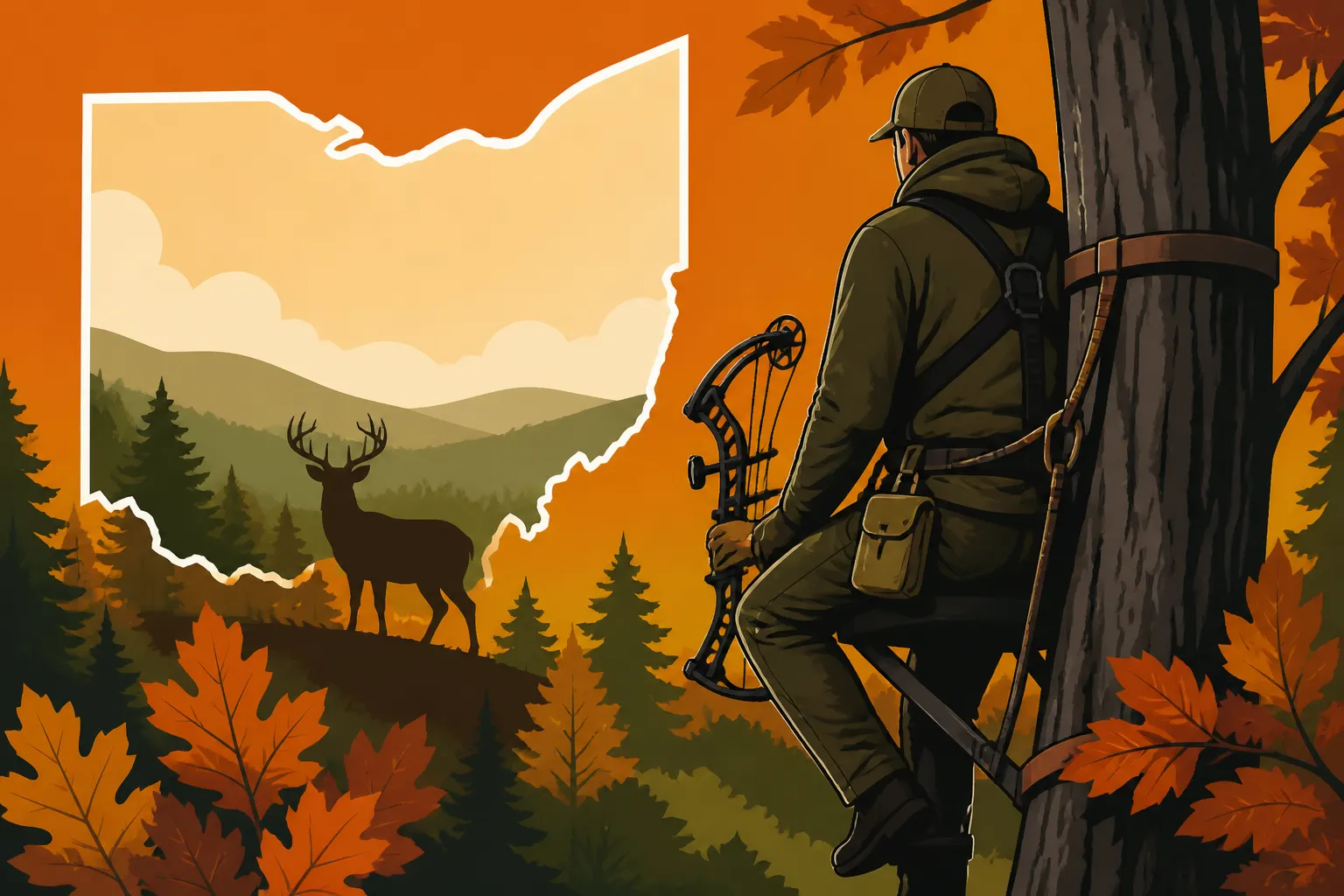
For years, many Ohio deer hunters have felt chained to heavy, cumbersome treestands, lugging them deep into the big woods of places like Wayne National Forest or even just those elusive woodlots tucked into farmland. Setting up a ladder stand or even a traditional hang-on often meant sacrificing mobility or making a ton of noise. But what if there was a way to hunt from an elevated position with unparalleled stealth and the freedom to literally hang anywhere a suitable tree stands? That's exactly what saddle hunting brings to the table, and it's a game-changer for navigating the challenging, diverse terrain of Ohio's hardwoods.
The Appeal of Saddle Hunting for Ohio's Hardwood Terrain
Ohio's hunting landscape is incredibly varied, from the rolling, rugged Appalachian foothills in the southeast to the flat, open farmlands dotted with small woodlots in the northwest. Traditional treestands, while effective in their niche, often fall short when you need to be dynamic. Saddle hunting, however, shines precisely because it offers a level of adaptability that static stands just can't match, especially when you're dealing with the specific challenges of Ohio's dense timber.
Unmatched Mobility for Appalachian Ohio
If you've ever spent time hunting the steep ridges and deep hollows of southeastern Ohio, you know the struggle of packing gear. A traditional treestand, especially if you want something comfortable for an all-day sit, can feel like a lead weight after miles of traversing broken terrain. Saddle hunting completely changes this dynamic. Your entire setup – saddle, climbing sticks, ropes, and platform – is incredibly lightweight and compact. This means you can hike further, deeper, and into those forgotten pockets of public land that other hunters won't touch with a heavy stand.
Imagine Hunting Southeast Ohio Appalachian Foothills and finding that perfect pinch point or a rub line miles from the nearest road. With a saddle, you can get there silently, set up quickly, and be ready to hunt within minutes, rather than spending an hour or more wrestling a bulky stand into position. This mobility allows you to truly "run and gun" like a turkey hunter, but from a deer stand, following fresh sign or adapting to shifting deer patterns with ease. It's about being where the deer are, not where it's convenient to hang a stand.
Furthermore, the natural topography of the Appalachian region often presents trees that aren't perfectly straight or have low branches that make traditional stand hanging difficult or impossible. A saddle hunter, however, can often utilize these "imperfect" trees by simply adjusting their tether height and angle. This opens up a whole new world of potential ambush sites that might be overlooked by others.
Adapting to Pressure on Public Land
Ohio's public lands, particularly during the early archery season or the gun seasons, can feel like Grand Central Station. Deer get bumped, pushed, and become incredibly wary very quickly. When you're stuck in a fixed stand location, you're at the mercy of whatever pressure is happening around you. Saddle hunting provides a crucial advantage: the ability to move with the deer. If your spot gets blown out by other hunters, or if a new food source suddenly becomes active a half-mile away, you're not committed to a single location.
This adaptability is particularly valuable in areas like the Wayne National Forest or state wildlife areas where Hunting Pressure on Ohio Public Land can be significant. Deer learn quickly where the fixed stands are and will often skirt those areas. By being mobile, you can scout in the morning, find fresh sign, and set up a new ambush point by the afternoon, staying one step ahead of both the deer and other hunters. This "find the sign, hunt the sign" approach is far more effective than hoping deer come to your predetermined location.
Moreover, the low-impact nature of a saddle setup means you leave minimal disturbance. You're not cutting shooting lanes or leaving a permanent fixture that screams "hunter was here." This stealth, combined with the ability to set up in less obvious trees, helps you blend into the environment and reduce the chances of educating wary bucks. Many experienced hunters use tools like the GoHunt app to scout aerial photos for potential tree setups and assess pressure points before even stepping foot in the woods.
Versatility in Diverse Tree Species
Ohio's hardwoods are home to a wide variety of tree species: towering oaks in the southern hills, maples and beeches across the central belt, and even some scattered pines. Traditional stands sometimes struggle with certain tree types – very rough bark, leaning trunks, or trees with significant taper. Saddle hunting, by its very design, offers greater versatility. Because you're essentially "hugging" the tree and can adjust your position around the trunk, you're less dependent on a perfectly straight, smooth section.
Consider hunting an old oak flat where a prime rut stand would be. That huge, gnarled oak might be perfect for concealment but a nightmare to hang a traditional stand on. A saddle hunter can often shimmy up such a tree, finding a comfortable position where a hang-on would be precarious. This ability to hunt almost any mature tree with sufficient trunk diameter means you have more options for concealment and better shot angles.
This versatility also extends to Treestand Setups in Appalachian Ohio Hardwoods where trees often grow at odd angles on steep slopes. A saddle allows you to level yourself even on a leaning trunk, ensuring a stable and comfortable shooting platform. You can hunt from the "downhill" side of a tree, giving you a wider field of view into the hollows below, or tuck tightly into a cluster of smaller trees that would never support a larger stand.
Essential Gear for Your Ohio Saddle Hunting Rig
Switching to saddle hunting involves a different set of tools than traditional treestand hunting. While the core concept is simple – you wear your stand – the specific components are crucial for safety, comfort, and effectiveness, especially when navigating Ohio's varied terrain. Don't skimp on quality here; your life literally hangs in the balance.
The Saddle, Lineman's Belt, and Tree Tether
At the heart of the system is the saddle itself. This isn't just a climbing harness; it's a carefully designed piece of gear that distributes your weight, allowing you to comfortably lean back against the tree. Look for saddles that offer good adjustability and breathability, especially for those warmer early season archery hunts in Ohio. Comfort is paramount, as you'll be spending hours in it. You'll want to try different models to find one that fits your body type and allows for free movement when drawing your bow or shouldering a gun.
Next up is the lineman's belt. This short rope or strap goes around the tree and clips into loops on either side of your saddle, allowing you to remain tethered to the tree at all times during ascent and descent. It's your primary safety line while you're putting up your climbing method. A good lineman's belt should be easily adjustable with one hand, allowing you to cinch it tight as you climb, keeping you close to the tree for stability and safety.
Finally, the tree tether is what connects your saddle to the tree once you're at hunting height. This rope runs around the tree, above your head, and connects to the bridge of your saddle. It's what you lean into while hunting. The tether's length is adjustable, allowing you to rotate around the tree for 360-degree shots and to adjust your height and angle relative to your platform. A high-quality rope and reliable hardware are non-negotiable here. Many hunters, including those using the mapping features of GoHunt to pinpoint ideal tree locations, will carry a spare tether or rope for added redundancy, especially when hunting alone.
Climbing Methods: Sticks and Aiders
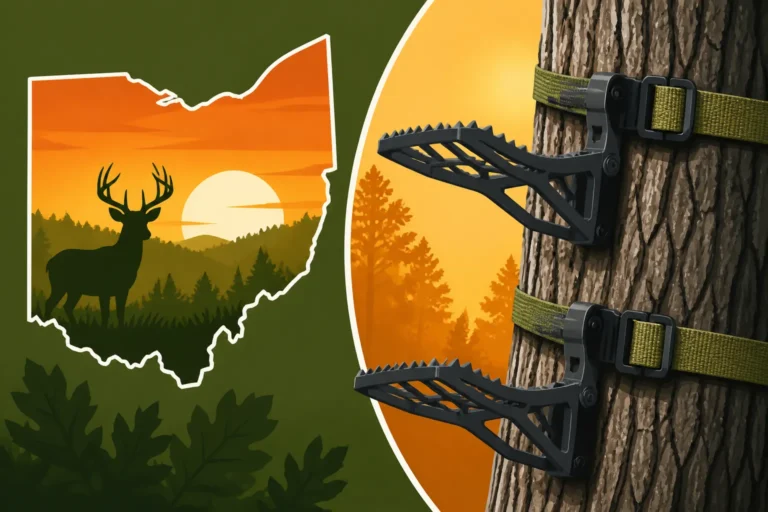
Getting up the tree is where saddle hunting truly diverges from traditional methods. While some hardcore minimalists free-climb short distances, the most common and safest method involves climbing sticks. These are short, lightweight sections that strap to the tree, providing steps. You typically carry 3-5 sticks, depending on your desired hunting height. Look for sticks that are quick to deploy, quiet, and have sturdy steps. Some popular options feature single steps on alternating sides, while others offer double steps for easier climbing.
For an even lighter and more compact setup, many saddle hunters incorporate aiders. These are webbing loops that attach to your climbing sticks, effectively extending your reach between steps. By using aiders, you can often achieve the same hunting height with fewer sticks, reducing your pack weight significantly. Mastering the technique of using sticks with aiders takes practice, but the weight savings can be substantial, especially when you're making long treks into remote areas. For instance, if you're hiking into the deep timber of Wayne National Forest Hunting, every ounce saved in your pack makes a difference on the hike in and out.
When choosing climbing sticks, consider the attachment method. Some use cam buckles, others have more traditional straps. Quietness during attachment and detachment is key; a noisy setup can easily alert nearby deer.
Carrying Your Setup Through Thick Timber
One of the biggest advantages of saddle hunting is how packable the entire system is. Unlike traditional stands that often require external carrying frames or are simply awkward to carry, a saddle setup fits neatly into or onto a well-designed hunting pack. When hunting Ohio's diverse landscapes, from the thick fencerows of the farmlands to the dense understory of state forests, a compact, quiet carry is essential.
Your pack needs to be able to comfortably hold your climbing sticks, platform, and any other gear like calls, rangefinders, and food. Look for packs with external compression straps or designated pockets for sticks. A well-designed pack, like those often recommended by users on platforms like GoHunt for their robust construction and thoughtful organization, will keep your gear secure and silent, preventing rattles and clanks that can spook game. Think about packs for a day on public land, like those often seen in Packs for a Day on Wayne National Forest, where you might be covering significant ground.
Furthermore, consider how your platform attaches. The platform is a small, lightweight extension that provides a stable place for your feet while you're in the saddle. Some integrate directly into your climbing sticks, while others are separate pieces. It's crucial that it attaches securely and silently to the tree. Practice packing and unpacking your entire system at home before hitting the woods to ensure you can do it quickly and quietly in the dark.
Mastering Saddle Hunting Techniques in Ohio's Woods
Saddle hunting isn't just about the gear; it's about a different approach to elevated hunting. To truly maximize its benefits in Ohio's specific hunting environments, you need to understand how to apply strategic setup, shot angles, and environmental factors like wind and thermals to your advantage.
Strategic Setup and Entry Routes
The beauty of saddle hunting lies in its flexibility, which means your setup strategy can be highly dynamic. Instead of relying on a single, permanent stand location, you can choose the perfect tree based on real-time intel – fresh tracks, new scrapes, or active feeding areas. When you're scouting, especially in areas like Shawnee State Forest or Zaleski State Forest, look not just for deer sign, but for trees that offer natural cover and good climbing potential. A tree that might be too small for a hang-on stand could be ideal for a saddle.
Your entry and exit routes are just as critical, if not more so, with a mobile setup. Since you're often hunting highly pressured public land or sensitive private tracts, approaching your stand silently and undetected is paramount. Plan your routes to use terrain features like creek bottoms, ravines, or ridges to mask your approach. Pay close attention to Finding Ground Others Walk Past and plan your access through areas less traveled. Use tools like GoHunt's mapping features to identify contour lines and potential cover for your walk in and out. Always prioritize stealth, wearing quiet clothing and taking slow, deliberate steps.
Once you've identified your tree, climb efficiently and quietly. Your goal is to be up and settled long before daylight or a deer moves through. Many hunters practice their setup at home, even blindfolded, to build muscle memory and ensure a silent, fluid process in the field.
Shooting Lanes and Shot Angles
One common misconception about saddle hunting is that it limits your shot opportunities. In reality, it often enhances them. Because you can literally rotate 360 degrees around the tree and adjust your height relative to your platform, you can achieve a wide variety of shot angles. Instead of being locked into a forward or side shot from a platform, you can twist, pivot, and lean to accommodate deer moving behind or directly beneath you. This is especially advantageous when a buck sneaks up the side of a ridge in the Hunting the Rut in Early November when they're less predictable.
However, just like with any treestand, planning your shooting lanes is crucial. While you don't need to clear massive swaths of branches, identify key corridors where deer are likely to pass and ensure you have a clear path for your arrow or bullet. A benefit of saddle hunting is that you can often use a slightly smaller tree, or tuck into a cluster of trees, which provides more natural concealment without needing to trim as much. This is particularly true when hunting in Finding Sign in Big Appalachian Timber where mature hardwoods can have significant undergrowth.
Practice shooting from your saddle at various angles. It feels different than shooting from a static platform, so get comfortable with leaning, twisting, and finding your anchor points. Understanding your ethical shot limits from this unique position is vital before hunting season opens.
Wind, Thermals, and Scent Control
In Ohio, just like anywhere, wind and thermals are your constant companions and biggest challenges. Saddle hunting doesn't magically eliminate these factors, but its mobility allows you to adapt to them more effectively. When Wind and Thermals on an Appalachian Ridge shift, you have the option to pack up and move to a new location that offers a more favorable wind direction or thermal current, rather than being stuck with a bad wind all day. This is a huge advantage, especially during those unpredictable early fall days.
Always check the forecast and have a solid understanding of how thermals work in your specific hunting area. In the morning, thermals typically fall down into the hollows; in the afternoon, they rise. Positioning yourself accordingly, perhaps mid-slope on a ridge, can help you manage your scent.
Scent control remains paramount. Wear clean clothes, use scent-eliminating sprays, and store your hunting gear in airtight containers. With saddle hunting, you're often closer to the trunk of the tree, and sometimes a little lower than a traditional stand, which can make managing your scent cone even more critical. Consider wind-direction specific entry and exit routes to minimize leaving scent trails where deer are likely to be. Platforms like GoHunt provide real-time wind data and mapping layers that can help you plan your approach and stand location based on wind direction.
Staying Safe While Elevated in the Buckeye State
Safety is non-negotiable when hunting from an elevated position, and saddle hunting is no exception. While the system is inherently safe when used correctly, understanding the best practices and preparing for potential issues is critical for every hunter in Ohio's woods.
Pre-Season Practice and Gear Checks
Just like you wouldn't head into the woods with an un-sighted bow or rifle, you shouldn't hunt from a saddle without extensive pre-season practice. This means more than just setting it up in your backyard once. Practice climbing, transitioning from your lineman's belt to your tree tether, and moving around the tree in your saddle. Do it in the dark, with all your hunting gear on, to simulate real-world conditions. Get comfortable with every aspect of the system. This practice builds confidence and, more importantly, ensures that when the moment of truth arrives, your focus is on the deer, not on your gear.
Regular gear checks are also crucial. Before each season, and ideally before each hunt, inspect every component of your saddle system. Look for fraying ropes, worn webbing, cracked plastic parts on your climbing sticks, or bent metal on your platform. Ensure all buckles, carabiners, and knots are secure and functioning correctly. Over time, UV exposure, moisture, and normal wear and tear can degrade materials. Replacing worn components proactively is a small investment compared to the potential consequences of a gear failure.
Here’s a quick checklist for your pre-season saddle gear inspection:
| Component | Check Item | Action if Issue Found |
|---|---|---|
| Saddle | Stitching integrity, buckle function, webbing for fraying | Replace saddle or contact manufacturer |
| Lineman's Belt | Rope condition, knot security, carabiner function | Replace rope/belt, ensure proper knots |
| Tree Tether | Rope condition, knot security, carabiner function | Replace rope/tether, ensure proper knots |
| Bridge | Webbing for fraying, connection points | Replace bridge or contact manufacturer |
| Climbing Sticks | Straps/attachment points, steps for bends/cracks | Replace damaged sticks or components |
| Platform | Connection points, structural integrity, anti-slip surface | Repair or replace platform |
| Ropes/Knots | Any rope in system for wear, all knots for tightness | Retie knots, replace worn rope |
| Carabiners | Gate function, wear on metal, lock mechanism | Replace worn or faulty carabiners |
Understanding Weight Limits and Redundancy
Every piece of manufactured hunting gear has a weight limit, and your saddle components are no different. It’s absolutely vital to know and adhere to these limits, especially considering your own body weight plus all your gear, clothing, and weapon. Never exceed the manufacturer's stated weight capacity for your saddle, climbing sticks, or platform. Pushing these limits can lead to catastrophic failure. If you're near the upper end of a product's rating, consider investing in gear designed for heavier capacities or look for models known for their robust construction.
The concept of redundancy is another cornerstone of saddle hunting safety. This means having backup systems or using multiple points of contact whenever possible. For example, when climbing, your lineman's belt is your primary safety. Once you're at hunting height, your tree tether is your primary. Many hunters carry a second, shorter tether or a small "dump rope" that can act as an emergency tether or haul line. This redundancy ensures that if one component unexpectedly fails, you have another to prevent a fall. Always remember the "three points of contact" rule when climbing: two hands and one foot, or two feet and one hand, should always be in contact with the tree or your sticks.
Furthermore, consider carrying a small, easily accessible cutting tool, such as a sharp knife or hook cutter, specifically for emergencies. In the unlikely event of a rope entanglement or gear malfunction, being able to quickly cut yourself free could be life-saving.
Planning for the Unexpected
Hunting in Ohio's diverse environments, from dense timber to remote public lands, means you always need to plan for the unexpected. This isn't just about gear; it's about preparedness. Always tell someone exactly where you are going and when you expect to return. Share your specific stand location if possible. This simple step can be a lifesaver if you have an accident or encounter an unforeseen issue. Scouting Ohio Public Land Before Season isn't just for deer, it's for familiarizing yourself with potential emergency routes.
Carry a fully charged cell phone, but don't rely solely on it, especially in areas with spotty service like some of Ohio's deeper woods. A personal locator beacon (PLB) or satellite messenger, while an investment, can provide peace of mind and direct communication in areas without cell signal. A basic first-aid kit is also a must, capable of handling minor injuries like cuts or sprains.
Finally, dress appropriately for the weather, and then add another layer. Ohio weather can be notoriously unpredictable, swinging from mild to bone-chilling cold in a matter of hours. Being prepared for sudden temperature drops or unexpected rain can prevent hypothermia and keep you alert and safe in your saddle. Cold-Weather Sitting Strategy in Ohio for example, would include warm layers, hand warmers, and insulated boots – all critical for comfort and safety during those late-season archery or muzzleloader hunts. Remember, an uncomfortable hunter is a distracted hunter, and distraction can lead to mistakes.
Disclaimer
This article is for general informational purposes only and does not constitute professional advice. Laws, prices and regulations vary by location and change over time. Consult a qualified professional for guidance on your specific situation.