Illuminated Reticles for Dark Timber
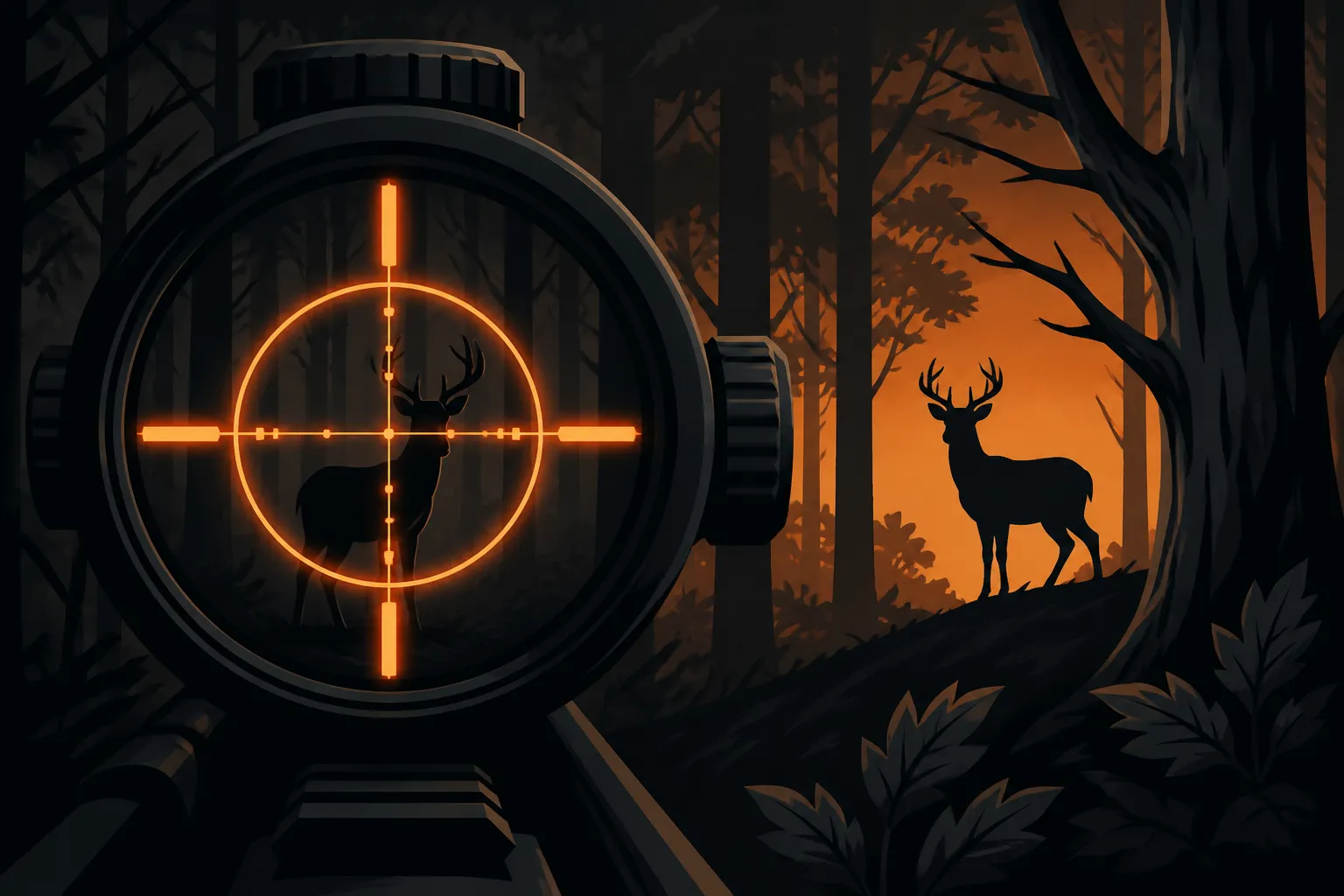
We've all been there: sitting on stand as the last sliver of daylight fades, the woods around you turning into a canvas of shifting shadows. Suddenly, that buck you've been dreaming of steps out into a thick tangle of evergreens, just on the edge of legal shooting light. You shoulder your rifle, find him in your scope, but then it hits you – your black reticle has completely disappeared against his dark hide and the dim background. That sinking feeling in your gut, the missed opportunity because you couldn't get a precise aiming point, it's a frustration many Ohio hunters know all too well. This guide is here to shed some light on a solution that can turn those nearly impossible shots into confident opportunities: illuminated reticles for dark timber hunting.
Understanding Illuminated Reticles
Imagine a tiny, glowing dot or crosshair right in the center of your rifle scope, bright enough to be seen clearly against any background, yet subtle enough not to overpower your vision. That's the magic of an illuminated reticle. It's not just a fancy gadget; it's a game-changer for extending your effective hunting time and boosting your confidence when light conditions are less than ideal, which happens often in Ohio's diverse hunting landscapes.
How They Work and Their Purpose
At its core, an illuminated reticle integrates a small light source, often an LED, directly into the scope's reticle system. This light projects onto a portion of the reticle – sometimes just the center dot, other times the entire crosshair or a specific aiming point – making it glow. This isn't just for show; its primary purpose is to provide a clear, contrast-rich aiming point when your traditional black reticle would otherwise vanish. Think about trying to find a black thread on a black sweater in a dimly lit room – that's what a non-illuminated reticle can feel like in deep shadows or against a dark animal. The illumination changes that entirely.
The light is typically powered by a small battery, and you'll find a control knob or buttons on the scope's exterior to adjust the brightness. Many scopes offer multiple intensity settings, allowing you to fine-tune the glow to match the ambient light conditions. This adjustability is crucial because what works for a bright overcast day might be blinding in the deep gloom of a cedar swamp at dusk. The goal is to have an aiming point that stands out without washing out the target itself.
Types of Illumination and Color Options
When you start looking at scopes with illuminated reticles, you'll notice a few different approaches to how they illuminate. Some might offer a simple red dot at the center, while others illuminate a full crosshair, or even a specialized ballistic reticle. The choice often comes down to personal preference and hunting style. Red is the most common color for illumination, largely because it's less disruptive to your natural night vision. Our eyes are generally less sensitive to red light, which means you can use a red illuminated reticle without completely losing your ability to see in the surrounding low light.
However, some manufacturers also offer green illumination. Green can be perceived as brighter by the human eye in certain low-light conditions, and some hunters find it provides a sharper contrast against brown or gray fur. While red is often the go-to, experimenting with both, if possible, can help you decide which works best for your eyes and the specific hunting scenarios you encounter. No matter the color, the ability to control the brightness is paramount, allowing you to adapt to everything from a foggy morning on a field edge to a deer moving through dense hardwoods right before legal shooting hours close.
Benefits for Ohio Hunters
Ohio's hunting seasons throw a little bit of everything at us: bright, crisp autumn days, drizzly, overcast November ruts, and bitter, gray January stretches. Our woods range from wide-open farmlands with sparse woodlots to the deep, dark hollers of Appalachia. An illuminated reticle isn't just a luxury; it’s a practical tool that directly addresses many of the challenges unique to hunting in the Buckeye State, especially when you're dealing with those tricky, low-light moments.
Extending Effective Shooting Light
One of the most obvious, and most crucial, advantages of an illuminated reticle is its ability to extend your effective shooting light. We’ve all felt that agonizing moment when a legal buck steps out a minute before legal shooting time, or just a minute after, and you realize you just can't make a confident shot because your reticle has blended completely into the background. In Ohio, especially during the archery and gun seasons that stretch into late fall and early winter, legal shooting hours can mean very dim light at dawn and dusk.
Whether you're perched in a Treestand Setups in Appalachian Ohio Hardwoods or patiently waiting in a ground blind tucked into a fencerow, that extra visibility on your aiming point can be the difference between a clean harvest and a missed opportunity. Imagine a big whitetail buck picking its way through the thick undergrowth in Wayne National Forest just as the sun dips below the horizon. Without illumination, that black reticle might as well be invisible against the dark trees and the deer’s hide. With a subtle glow, you can still place your shot precisely, taking advantage of every legal second of hunting time. This isn't about pushing limits illegally, but about maximizing your ethical opportunities within those legal windows.
Enhancing Target Acquisition in Dense Cover
Ohio has its fair share of dense cover. From the cedar thickets in the state's central counties to the rhododendron patches in the southeast, and even the standing cornfields in the northwest, deer love to use thick stuff for bedding and travel. When a deer slips through these areas, especially during a Deer Drives on Ohio Public Land or while still-hunting, they often appear suddenly and briefly in small, dark windows. These aren't always broadside, open-field shots.
An illuminated reticle significantly speeds up target acquisition in these scenarios. You don’t have to waste precious seconds trying to differentiate your reticle from the busy, dark background of branches, shadows, and deer hair. The glowing reticle immediately draws your eye to the center, allowing you to quickly find your aiming point and focus on the shot. This is particularly valuable if you're hunting during the Hunting the Rut in Early November when deer movement is unpredictable, or during a cold, gray Muzzleloader Tactics in January Cold hunt where conditions are often challenging. The confidence you gain from knowing you'll have a clear aiming point, even when that buck bursts out of a hidden ravine, is invaluable.
Adapting to Variable Weather and Light
Ohio weather is notoriously unpredictable. One morning might be clear and bright, and the next can bring heavy fog, drizzle, or a thick blanket of clouds that makes the woods feel like perpetual twilight. These shifting conditions can wreak havoc on your visibility, making traditional reticles a real challenge. An illuminated reticle, with its adjustable brightness settings, offers a dynamic solution.
Consider a hunt in a deep, sheltered hollow in the Shawnee State Forest on a heavily overcast day. The natural light penetration is already minimal, and if a sudden rain shower moves in, the gloom deepens even further. In these conditions, you can dial up the illumination slightly to maintain a clear aiming point. Conversely, if the clouds break and the sun suddenly bursts through, you can dial it down or even turn it off entirely to avoid a distracting glare. This adaptability ensures that your optics are always performing optimally, regardless of what Mother Nature throws your way. It allows you to stay focused on the hunt rather than battling your equipment, which can make all the difference on those challenging Optics for Appalachian Ohio Ridges hunts.
Choosing an Illuminated Reticle Scope
The market for rifle scopes is vast, and illuminated reticles are becoming increasingly common. But not all illuminated reticles are created equal. When you're looking to invest in a scope for those tricky Ohio hunting conditions, there are several key features and considerations you'll want to weigh carefully to ensure you get the best tool for your specific needs. Researching on sites like GoHunt can provide a good starting point for comparing models and reading user reviews tailored to hunting experiences.
Brightness Settings and Adjustability
One of the most critical aspects of an illuminated reticle is its brightness settings and how easily you can adjust them. A good illuminated reticle will offer a wide range of intensity levels, from very dim settings suitable for deep twilight to brighter settings that can be useful on overcast days or in heavy cover. The adjustment mechanism should be intuitive and easy to operate, even with gloves on, and ideally, it should have distinct clicks or stops between settings so you can feel the change without having to take your eye off the target.
Some scopes feature an "off" position between each brightness setting, which is a fantastic feature for battery conservation. It allows you to quickly turn the illumination off and on at your preferred setting without having to cycle through all the other levels. Think about those moments when a deer pauses briefly, you need to turn the reticle on, make the shot, and then turn it off to save power. Having a scope with precise and easily accessible brightness control will make a tangible difference in the field. When looking for models, I'll often check out specific reviews on GoHunt to see what other hunters say about the tactile feel and range of the illumination dial.
Battery Life and Power Management
Since illuminated reticles rely on a battery, power management is a significant consideration. There's nothing worse than getting to your stand in the pre-dawn dark, switching on your reticle, and finding the battery dead. Look for scopes that boast long battery life, and if possible, use common battery types that are easy to find and carry spares of. CR2032 coin cells are very popular and widely available.
Some advanced scopes incorporate motion sensors that automatically shut off the illumination after a period of inactivity and then turn it back on when the rifle is moved. This "shake awake" feature is a fantastic battery saver. Always carry spare batteries, and make it a habit to check your battery before each hunting trip. Some hunters even swap out their batteries at the start of each season, just for peace of mind. Remember, a dead battery turns your illuminated reticle into a standard one, so a little foresight can prevent a big headache, especially if you're deep in the Wayne National Forest Hunting and far from a store.
Durability and Optical Clarity
While the illumination is a key feature, it's vital not to compromise on the fundamental qualities of a good hunting scope: durability and optical clarity. An illuminated reticle is only as good as the glass and construction surrounding it. Your scope needs to be rugged enough to withstand the bumps, drops, and harsh weather conditions that come with hunting in Ohio. Look for scopes that are waterproof, fogproof, and shockproof.
Optical clarity is paramount for low-light performance, regardless of illumination. Even with a glowing reticle, if the glass isn’t transmitting enough light or if the image is blurry, you won’t be able to make an ethical shot. High-quality glass, good lens coatings, and a decent objective lens size will contribute to a bright, clear image at dawn and dusk. When comparing different options, always prioritize optical quality in conjunction with the reticle features. Reviews often discuss how well a scope gathers light, which is directly tied to Low-Light Performance in a Scope. This combination of illumination and clarity is what allows you to confidently make that shot on a deer ghosting through Hunting a Funnel Between Two Woodlots.
| Feature | Low-End Illuminated Reticle Scope | Mid-Range Illuminated Reticle Scope | High-End Illuminated Reticle Scope |
|---|---|---|---|
| Brightness Settings | Few, noticeable jumps, limited range | Several, smooth adjustment, good range | Many, fine tuning, auto-off/on features |
| Reticle Colors | Often Red only | Red or Green options | Red/Green with multiple designs |
| Battery Life | Moderate, manual shut-off | Good, often with auto-off | Excellent, motion-activated, long-lasting |
| Battery Type | Less common, harder to find | Common (e.g., CR2032) | Common (e.g., CR2032) |
| Optical Clarity | Decent, may struggle in deep gloom | Good, clear in most conditions | Excellent, exceptional low-light transmission |
| Durability | Adequate, may show wear over time | Very good, rugged | Exceptional, built for extreme conditions |
| Weight & Bulk | Can be heavier or bulkier | Balanced, good ergonomics | Optimized, sleek design |
Practical Tips for Field Use
Having an illuminated reticle is one thing; using it effectively in the field is another. Like any piece of hunting gear, it requires a little understanding and a few good habits to ensure it performs when you need it most. These practical tips will help you maximize the advantages of your illuminated reticle scope during your Ohio hunts.
Zeroing and Testing in Various Conditions
Just like any new scope, you'll need to properly zero your rifle with your illuminated reticle. But don't stop there. Take the time to test your illuminated reticle in various lighting conditions. Try it at dawn, at dusk, on a heavily overcast day, and even under different types of cover. This helps you get a feel for which brightness settings work best in different scenarios. You might find that a lower setting is perfect for the absolute last minutes of shooting light, while a slightly brighter setting is ideal for a dark, foggy morning.
Practice acquiring targets quickly in low light with the illumination on. Set up targets in shaded areas of your range or property and simulate actual hunting conditions. This practice will build muscle memory and confidence, ensuring that when that trophy buck steps out of the shadows, you won't hesitate. Familiarity with your equipment is key, and understanding how your Rifle Scopes for Low-Light Timber perform across the full range of Ohio's conditions is invaluable. Don't just zero for distance; zero for confidence in variable light.
Battery Management and Maintenance
Battery failure in the field is a headache you can easily avoid. Always carry at least one spare battery (or two!) for your scope. Store them in a small, waterproof container in your hunting pack. Many experienced hunters swap out their scope battery at the beginning of each season, just as a preventative measure, even if the old one still seems good. This ensures you're starting fresh with maximum power.
Additionally, regularly inspect your scope for any signs of wear or damage, especially after a tough hunt in wet or snowy conditions. Cleaning a Rifle After a Wet Sit should always extend to your optics as well. Keep the lenses clean, and make sure all caps and covers are secure. While illuminated reticles are generally robust, a well-maintained scope will always perform better and last longer. If your scope has a "shake awake" feature, verify it's working properly, but don't rely on it exclusively; always manually check the reticle before heading out.
Ethical Considerations and Legal Shooting Hours
It’s crucial to remember that an illuminated reticle is a tool to enhance your ability to make an ethical shot within legal shooting hours, not to extend those hours. Always be mindful of Ohio's legal shooting hours for whatever game you are pursuing. An illuminated reticle can help you confirm that you have a clear, precise aiming point during those last legal minutes, preventing a rushed or poorly aimed shot.
Never attempt to take a shot if you can’t clearly identify your target, confirm it’s a legal animal, and have a clear, safe backdrop, even if your reticle is glowing brightly. An illuminated reticle helps you see your aiming point, but it doesn't magically make the rest of the woods brighter. Always err on the side of caution. Your ethical responsibility as a hunter always comes first. This applies whether you're chasing squirrels in Squirrel Hunting Ohio Hardwoods or focusing on a mature buck during Ohio's Two-Weekend Gun Deer Season. Always double-check the current Ohio legal shooting hours before each hunt, as they can sometimes vary slightly with sunrise and sunset times throughout the season.
Disclaimer
This article is for general informational purposes only and does not constitute professional advice. Laws, prices and regulations vary by location and change over time. Consult a qualified professional for guidance on your specific situation.