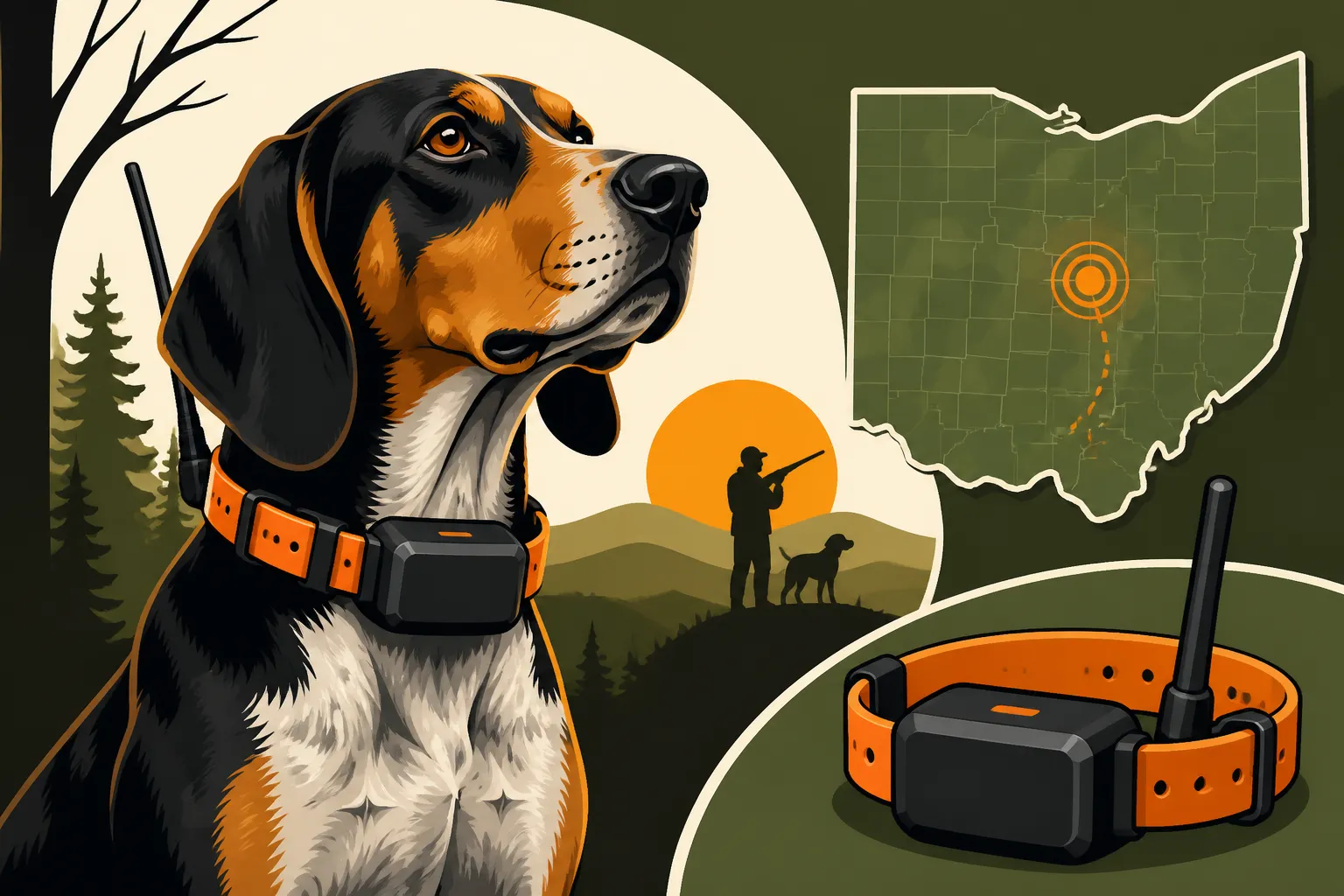
GPS Collars for Ohio Coon Hounds
There’s almost nothing more heart-stopping for an Ohio coon hunter than hearing your dogs bark treed, only to realize the sound is fading fast or coming from a direction you can’t quite place in the thick, inky blackness of a country night. The anxiety of not knowing where your valuable hound is, especially when they're pushing hard into unfamiliar woods or across property lines, is a frustration every hunter can relate to. This guide is all about how GPS collars can eliminate that worry, giving you real-time confidence and control over your coon hounds, no matter how far they range on those long, dark nights.
Why GPS Collars Are Essential for Ohio Coon Hunters
Night hunting in Ohio, especially for raccoons, presents a unique set of challenges that can easily lead to a lost dog and a lot of sleepless nights for a hunter. The terrain changes quickly, property lines can be vague, and the darkness itself is a formidable obstacle. GPS collars have revolutionized the sport, transforming guesswork into precise, actionable information, making them as crucial as a good headlamp or reliable shotgun.
The Challenge of Night Hunting and Terrain
Ohio's landscape is incredibly diverse, from the rolling Appalachian foothills in the southeast to the vast, flat farmlands of the northwest, all interspersed with dense woodlots, winding creeks, and thick fencerows. When you're running hounds after dark, these features become magnified. A deep ravine can mask the sound of a treed dog, a dense thicket can hide them from sight, and a sudden bend in a creek can lead them miles from your starting point. Without visual cues, relying solely on your ears or traditional bells is a recipe for trouble. The sheer distance a determined coon hound can cover in pursuit, often several miles, makes conventional tracking nearly impossible once they're out of earshot. It's a constant battle against the unknown, a feeling of helplessness as you strain to hear that distant bark in the vast quiet of the night.
Protecting Your Investment in a Good Hound
Let's be honest, a well-trained coon hound is more than just a pet; it's an investment of time, money, and emotional connection. Hunters spend countless hours in the woods, training their dogs, building their drive, and refining their treeing abilities. Losing such a dog, whether to getting truly lost, being hit by a car, or even worse, running onto another property where they might be mistaken for a nuisance, is a devastating thought. GPS collars act as an insurance policy, allowing you to monitor your hound's every move. You know if they're still moving, if they've stopped and are barking treed, or if they've veered unexpectedly towards a road or a neighbor's yard. This peace of mind is invaluable, ensuring that the years you've poured into your hunting partner are protected. Understanding the Running Hounds for Ohio Raccoon tradition also highlights the deep connection hunters have with their dogs.
Safety for Both Dog and Hunter
The safety aspect extends beyond just keeping your dog from getting lost. Imagine your hound has treed a raccoon on a steep, icy hillside in January, or deep in a tangle of briars near a dangerous drop-off. Knowing their exact location via GPS allows you to approach cautiously, plan a safe route, and avoid putting yourself in harm's way in the dark. Conversely, if your dog gets into a difficult situation, like falling into a creek or getting stuck in a brush pile, you can pinpoint them quickly and provide assistance. For the dogs themselves, GPS collars often come with LED lights that can be activated remotely, making them visible to you and other potential parties, like landowners, if they do stray. It's about minimizing risks for everyone involved in those thrilling, but often unpredictable, night hunts.
Understanding the Types of GPS Tracking Systems
When it comes to outfitting your coon hounds with GPS collars, you'll generally encounter two main categories of systems: dedicated handheld units paired with collars, and those that integrate primarily with your smartphone. Each has its own strengths and weaknesses, and understanding these differences is key to choosing the right setup for your Ohio hunting adventures.
Handheld GPS and Collar Combos
These are the traditional, robust systems that have been the backbone of dog tracking for years. Brands like Garmin have established a strong presence in this market with their Alpha and Astro series, though it's important to note that many excellent options exist. The core idea is a dedicated handheld receiver unit that communicates directly with the GPS collars worn by your dogs, often via radio frequency (RF) signals augmented by GPS satellite data. This means they don't rely on cellular service, which is a massive advantage in many of Ohio's more remote public lands like those in Wayne National Forest or Shawnee State Forest, where cell signal can be spotty at best.
The handheld unit typically displays a map with your dogs' positions, often showing their track history, speed, and distance from you. You get real-time updates directly on the screen, allowing you to navigate to them or monitor their progress. These units are built tough, designed to withstand drops, mud, and water – all common occurrences during a night of coon hunting. Many also include features like compasses, barometric altimeters, and the ability to mark waypoints, making them comprehensive navigation tools. While the upfront cost for these dedicated systems can sometimes be higher, their reliability in off-grid situations and rugged construction make them a favorite among serious hunters. When you're out Running a Raccoon Hound After Dark, you need gear you can trust completely.
Smartphone-Integrated GPS Collars
On the other end of the spectrum are GPS collars that leverage the power and familiarity of your smartphone. These systems typically consist of a GPS-enabled collar that transmits its location data to a smartphone app, usually via cellular data or sometimes Bluetooth for very short ranges. The major advantage here is that you're using a device you already carry and are comfortable with. The mapping capabilities can be incredibly rich, often utilizing high-resolution satellite imagery or detailed topographic maps available through apps like GoHunt, providing an immersive view of your dogs' whereabouts.
However, the reliance on cellular service is their primary limitation. If you're hunting in a remote hollow in Appalachia where cell towers are distant, these systems might struggle or fail entirely to provide real-time updates. This can be a significant drawback when your dog is deep in the woods or has crossed into an area with no signal. On the flip side, for hunters who primarily stick to areas with good cell coverage, or those hunting smaller, well-covered private tracts, these systems can be very cost-effective and offer a user-friendly interface. Some advanced versions might even include features like virtual fences or the ability to communicate with the collar through the app, offering a modern twist on dog tracking.
Hybrid Systems: Best of Both Worlds
Recognizing the strengths and weaknesses of both dedicated and smartphone-based systems, some manufacturers have started offering hybrid solutions. These systems often feature a handheld unit that can track dogs via RF signals without cell service, but also have Bluetooth or Wi-Fi capabilities to pair with a smartphone. This allows you to view the dog's position on a larger, more detailed screen using your phone's mapping apps (like GoHunt often provides) when cell service is available, while still having the robust, off-grid tracking of the handheld unit for remote areas.
This approach offers maximum flexibility. You get the rugged reliability and independence from cell service of a dedicated unit, combined with the enhanced mapping and user interface experience of your smartphone. For Ohio coon hunters who might hunt diverse terrains – from wide open fields in Northwest Ohio to dense timber in the southeast – a hybrid system can provide the versatility needed to confidently track hounds no matter where they roam. It mitigates the risk of losing signal while still offering the advantages of modern digital mapping.
Key Features to Look for in a Coon Hound GPS Collar
Choosing the right GPS collar for your coon hounds isn't just about picking a brand; it's about matching the features to the specific demands of Ohio's hunting environment and your personal hunting style. Several key characteristics will dictate a collar's effectiveness and your satisfaction with it.
Range and Signal Reliability in Ohio Cover
Ohio's dense cover and varied topography can be notorious for interfering with radio signals. When your dog is out of sight in a thick stand of pines, or barking treed in a deep creek bottom, you need a system that can punch through that interference. Dedicated handheld units often boast impressive range, sometimes several miles, due to their robust RF transmitters. This is crucial when a coon hound is truly pushing the limits of your pursuit, especially when you consider Hunting Ohio River Valley Ridges or tracking through the expansive Wayne National Forest Hunting areas.
Consider how the system handles line-of-sight versus non-line-of-sight communication. Some systems are better at maintaining a signal even when there are hills, dense foliage, or structures between you and your dog. Reading user reviews specific to challenging terrain can be very insightful here. If the system relies on cellular data, assess the coverage in your typical hunting areas. Some areas, particularly deep in state forests or certain rural pockets, might have significant cellular dead zones, rendering a cell-dependent collar useless precisely when you need it most. Reliable signal in these challenging conditions is paramount for effectively running dogs on Ohio Public Land Hunting Hours.
Battery Life and Durability
Night hunting means long hours, often from dusk until the wee hours of the morning. Your GPS collar needs a battery that can keep up. Look for collars with extended battery life, ideally rated for 20-40 hours or more on a single charge. Factors like how frequently the collar updates its position can impact battery drain, so some systems offer adjustable update rates. A faster update rate gives you more real-time tracking but uses more battery. Consider collars that use rechargeable lithium-ion batteries, as they are generally more robust in cold weather than other types.
Beyond battery life, the collar's physical durability is non-negotiable. Coon hounds are tough on their gear. Collars will be dragged through briar patches, submerged in creeks, rubbed against trees, and subjected to all sorts of impacts. Look for collars constructed from heavy-duty polymers, with sealed components that are waterproof (not just water-resistant) and impact-resistant. Check the antenna design – is it internal and protected, or external and prone to snagging or breaking? The last thing you want is a broken collar halfway through a hunt because it couldn't stand up to the rigors of the chase.
Mapping Capabilities and Geo-Fencing
Good mapping is more than just a dot on a screen; it's about context. Look for systems that offer detailed topographic maps, satellite imagery, and the ability to overlay property lines. Knowing if your dog is about to cross onto private land is invaluable, both for avoiding trespass issues and ensuring your dog's safety. Many modern GPS units and apps, including sophisticated platforms like GoHunt, allow you to download maps for offline use, which is critical if you lose cell signal but are using a smartphone-integrated or hybrid system.
Geo-fencing is another powerful feature. This allows you to set virtual boundaries on your map. If your dog crosses these boundaries, your handheld unit or phone will alert you. This can be incredibly useful for keeping dogs out of known dangerous areas (like busy roads) or simply for being notified if they've strayed further than you'd like. Some systems even allow you to create "safe zones" around your truck or camp, alerting you if a dog leaves or returns. This proactive approach to managing your dogs' movements can save you a lot of trouble and worry. It's especially useful when you're hunting properties where you need to be mindful of Ohio Trespass and Permission Law.
Voice/Tone Commands and Training Integration
While the primary function of a GPS collar is tracking, some advanced models incorporate features that can aid in training and managing your dogs during the hunt. This often includes the ability to send a tone or vibration command to the collar. These can be used to recall a dog, or to reinforce specific behaviors, much like an e-collar. Some even allow for momentary or continuous stimulation, typically at varying levels, though hunters should always use these features responsibly and ethically, with proper training beforehand.
The integration of these training tools into the tracking system means you carry one less device, streamlining your gear for those long nights. Being able to give a remote command to a dog that's barking treed on the wrong side of a property line, or to encourage a hesitant hound, can be a game-changer. However, if you're primarily interested in tracking, ensure these features don't come at the expense of core reliability or battery life. For most coon hunters, real-time location data is the absolute priority, but the added ability to communicate with your hounds remotely can offer significant advantages.
Integrating GPS Collars with Your Hunting Style
GPS collars aren't just gadgets; they're integral tools that, when properly utilized, can significantly enhance your raccoon hunting success and overall experience. Integrating them seamlessly into your hunting style means more than just strapping them on; it involves pre-hunt preparation, effective in-the-field use, and even post-hunt analysis.
Pre-Hunt Setup and Familiarization
The success of any hunting trip often hinges on preparation, and using GPS collars is no exception. Before you even leave the house, fully charge all your collars and handheld units. It sounds basic, but a dead battery equals a lost signal, and that's the fastest way to ruin a hunt. Next, ensure your maps are updated and downloaded for offline use if your system requires it. This is especially important if you're exploring new territory, perhaps an unfamiliar tract of Public Hunting Land in Ohio. Use mapping apps like GoHunt to scout the area beforehand, identifying potential hazards, property lines, and likely travel corridors for raccoons.
Take the time to familiarize yourself with your system's interface. Know how to switch between different map views, how to mark waypoints, and how to interpret your dog's status (moving, treed, stopped). Practice navigating to a simulated dog location in your backyard or a local park. The heat of the moment during a hunt is not the time to be fumbling with unfamiliar controls. Setting up geo-fences around known boundaries or dangerous areas can also be done pre-hunt, giving you an extra layer of protection once the chase begins.
Tracking During the Hunt: Real-Time Monitoring
Once your hounds are on the ground and the hunt is underway, your GPS collar system becomes your eyes and ears in the dark. Resist the urge to constantly stare at the screen; instead, learn to glance at it strategically. Monitor your dogs' direction and speed. If a dog suddenly changes direction or speeds up, they might be on a hot track. If they slow down and start circling, they could be trying to figure out a puzzle or locate the coon. When you hear that distinct "treed" bark, a quick check of the GPS can confirm their exact location, saving you valuable time and preventing a long, aimless trek through the woods.
Pay close attention to property lines, especially in areas with a high density of landowners. If your dog approaches a boundary, the geo-fence alert will be your cue to react, potentially cutting off the chase to retrieve them before they trespass. Remember that many GPS collars also have remotely activated lights, which can be invaluable once you're closing in on a treed dog. Activating the light makes it easier to spot them in the dark, and can also help you track them Treeing a Raccoon With a GPS Collar. This constant, real-time feedback allows for dynamic decision-making, helping you guide the hunt, manage your dogs, and retrieve them efficiently and safely.
Post-Hunt Data Analysis and Improvement
The utility of GPS collars doesn't end when the coons are in the bag or the dogs are loaded back into the truck. Many modern systems allow you to review your dogs' tracks and performance after the hunt. This data can be an incredibly powerful tool for understanding your dogs' habits, identifying productive areas, and refining your hunting strategy.
For example, by reviewing the tracks, you might notice that your hounds consistently struggle to tree raccoons in a certain type of cover, or that they tend to favor a particular creek bottom. You can identify specific trees where they've treed coons, building up a valuable database of hotspot locations for future hunts, especially relevant for understanding Raccoon Density Near Ohio Farmland. Analyzing their movement patterns can also help you identify areas where they might be crossing roads unnecessarily or getting hung up on property lines, allowing you to focus your future training efforts. Platforms like GoHunt often offer advanced analytics features that can help you visualize and interpret this data, transforming raw track lines into actionable intelligence that makes you a more effective and knowledgeable coon hunter season after season.
Care and Maintenance for Longevity
Investing in quality GPS collars for your coon hounds is a smart move, but like any piece of hunting gear, they require diligent care and maintenance to ensure they perform reliably season after season. Neglecting these steps can lead to premature failure, leaving you in the dark and your hounds potentially lost.
Cleaning and Storage Best Practices
After every hunt, especially those wet, muddy nights common in Ohio, your GPS collars are going to be dirty. Don't just toss them in the truck. Take a few minutes to wipe them down with a damp cloth, removing any mud, dirt, or debris. Pay special attention to the charging ports and any external buttons, ensuring they are free of grit. If your collar has a removable battery, check the compartment for moisture or corrosion. Avoid harsh chemicals for cleaning, as these can degrade the plastic or rubber components over time.
Once clean, make sure the collars are thoroughly dry before storage. Storing wet electronics can lead to corrosion and mildew, especially in humid environments. Ideally, store them in a cool, dry place, away from direct sunlight or extreme temperatures. A dedicated gear bag or box can protect them from accidental damage or getting tangled with other equipment. Proper storage not only prolongs the life of the collar but also ensures it's ready for action the next time you hit the woods, whether you're out Raccoon Hunting at Night in Ohio or just training.
Battery Management and Replacement
The battery is the heart of your GPS collar. Proper battery management is crucial. Always aim to fully charge your collars before a hunt. While many modern lithium-ion batteries don't suffer from a "memory effect" like older battery types, consistently running them down to zero can still shorten their overall lifespan. If you know you won't be hunting for an extended period (like in the off-season), charge the batteries to about 50-70% capacity before storing them, as this is often optimal for long-term health. Avoid leaving batteries completely drained for months on end.
Over time, even with the best care, rechargeable batteries will eventually lose their capacity. If you notice a significant drop in battery life – for instance, your collar used to last 30 hours but now only gets 10 – it might be time to consider a battery replacement. Some manufacturers offer replacement battery packs, while others might require professional servicing. Being proactive about battery health ensures your collar won't die on you mid-chase, leaving you guessing your dog's location.
Firmware Updates and Troubleshooting Common Issues
Just like your smartphone or computer, many GPS collars utilize firmware, which is the internal software that controls their functions. Manufacturers regularly release firmware updates that can improve performance, add new features, fix bugs, or enhance battery efficiency. Make it a habit to check for and install these updates periodically. This is often done by connecting your handheld unit or collar to your computer via USB and using a dedicated software application from the manufacturer. Staying current with firmware can prevent many common issues and optimize your device's capabilities.
If you encounter a problem, start with basic troubleshooting. Is the battery charged? Is the collar properly powered on and linked to the handheld unit or app? Check for any physical damage to the antenna or charging port. Sometimes, a simple factory reset (refer to your manual for instructions) can resolve software glitches. If problems persist, consult the manufacturer's support resources or online forums. Often, other hunters have experienced similar issues and found solutions. Investing a little time in care and updates can save you significant frustration and expense down the road. This diligence is similar to Cleaning a Rifle After a Wet Sit – it's about making sure your gear is always ready for peak performance.
Legal and Ethical Considerations
While GPS collars are an incredible tool, using them responsibly involves understanding both the legal framework and the ethical implications within Ohio's hunting culture. Hunters are stewards of the land and wildlife, and that responsibility extends to how we manage our dogs in the field.
Ohio Hunting Regulations and GPS Use
Currently, GPS collars for dog tracking are generally legal for hunting in Ohio, particularly for furbearers like raccoons and coyotes where dogs are commonly used. Unlike some states that might have specific restrictions on electronic devices during big game seasons (e.g., electronic calls for deer), dog tracking devices typically fall outside these prohibitions. The Ohio Department of Natural Resources (ODNR) is primarily concerned with fair chase principles and preventing harassment of wildlife. A GPS collar merely assists in locating your dog, not directly locating game or giving you an unfair advantage over the animal itself.
However, it's always prudent to check the current Ohio hunting regulations each year, as laws can change. Pay attention to rules regarding night hunting, specific dog training seasons, and any potential restrictions on electronic devices for particular game species or in certain areas. For instance, while you might use a GPS collar to track your dog chasing a raccoon at night, the regulations for Ohio Coyote Hunting Season Rules might have slightly different nuances regarding specific tools or methods. Always ensure your use of a GPS collar aligns perfectly with current state law to avoid any citations or penalties.
Respecting Private Land Boundaries
This is perhaps the most critical ethical and legal consideration for coon hunters, and where GPS collars truly shine as a preventative tool. Ohio is a patchwork of public and private lands, and while there's great Public Hunting Land in Ohio, much of the state's prime raccoon habitat is privately owned. Losing a dog onto private property, especially in the middle of the night, can lead to serious issues, including trespass charges, strained landowner relations, or even the dog being harmed.
GPS collars with accurate mapping and geo-fencing capabilities are indispensable here. By pre-loading property boundaries into your device or app (like those available through GoHunt), you can receive instant alerts if your dog approaches or crosses a line. This allows you to intercept your dog, call them back, or adjust your pursuit before any trespass occurs. It shows respect for landowners and helps maintain the positive image of hunters. Always seek permission before hunting private land, and use your GPS to honor those boundaries meticulously. Being able to retrieve your dog quickly and politely from a neighbor's field, knowing exactly where they are, is far better than having to explain why your dog was barking in their backyard.
Ensuring Your Dog's Well-being
The ethical use of GPS collars also ties into the well-being of your hound. While powerful tracking tools, they don't replace responsible dog ownership. Ensure the collar fits properly – snug enough not to slip off, but not so tight as to cause chafing or discomfort. Regularly inspect your dog's neck for any rubs or sores that might develop from the collar. Consider the weight of the collar, especially for smaller or younger dogs; some heavy-duty collars might be too much for certain breeds.
Furthermore, while remote training features (like tone or stimulation) can be integrated, they must be used judiciously and as part of a comprehensive training program. They are not a substitute for proper command training and positive reinforcement. The goal is to enhance your dog's safety and your hunting efficiency, not to rely solely on technology to manage them. Ultimately, the GPS collar is a tool to help you be a more responsible and effective hunter, ensuring your valued companion is safe and accounted for, no matter the challenges of the Ohio night.
Table: Comparison of GPS Collar System Types
To help you decide which type of GPS collar system might be best suited for your Ohio coon hunting needs, here's a quick comparison of the main categories:
| Feature/System Type | Dedicated Handheld Systems (e.g., Garmin Alpha/Astro type) | Smartphone-Integrated Systems (App-based) | Hybrid Systems (Best of Both Worlds) |
|---|---|---|---|
| Primary Tracking Method | RF signals + GPS satellites | Cellular data + GPS satellites (or Bluetooth) | RF signals + GPS, connect to phone via BT/Wi-Fi |
| Cell Service Dependency | Low (only for map downloads on some units) | High (critical for real-time tracking) | Low for core tracking, optional for enhanced maps |
| Ruggedness/Durability | Very High (built for demanding outdoor use) | Moderate (depends on phone case/collar build) | High (dedicated unit is rugged, phone optional) |
| Upfront Cost | Generally Higher | Generally Lower (leverages existing smartphone) | Mid to High |
| Mapping Quality | Good built-in maps, some customizable | High-res maps via apps (GoHunt), often detailed | High (leverages both dedicated and phone maps) |
| Range in Dense Cover | Excellent, designed to penetrate | Varies greatly with cell signal strength | Excellent (relies on RF signal) |
| Battery Life (Collar) | Often excellent (20-40+ hours) | Good to moderate (15-30 hours) | Often excellent (20-40+ hours) |
| Training Features | Often integrated (tone, vibration, stimulation) | Varies (some offer tone/vibration) | Often integrated (tone, vibration, stimulation) |
| Typical User | Serious hunters in remote areas | Casual hunters, areas with good cell coverage | Versatile hunters in diverse terrain |
Disclaimer: This article is for general informational purposes only and does not constitute professional advice. Laws, prices and regulations vary by location and change over time. Consult a qualified professional for guidance on your specific situation.