Layering for an Ohio Deer Stand
There's nothing quite like that crisp, pre-dawn chill as you settle into your Ohio deer stand, but that comfort can quickly vanish when the temperature plunges, a cold rain starts to fall, or even worse, you've hiked in so hard you're sweating bullets only to freeze once you sit still. Being truly comfortable and prepared for the unpredictable weather swings in the Buckeye State is absolutely critical for staying focused and extending your time in the woods. This comprehensive guide will walk you through the art and science of layering for an Ohio deer stand, ensuring you stay warm, dry, and ready for whatever Mother Nature throws your way.
Why Layering is Crucial for Ohio Deer Hunting
Ohio's weather is notoriously fickle, capable of throwing three seasons at you in a single day, especially during prime deer hunting months. What starts as a frosty morning can easily turn into a mild afternoon, or a calm sunny day can be interrupted by a sudden, biting wind and a squall line. Without a strategic layering system, you're either going to be sweating profusely, getting chilled to the bone, or, most likely, both at different points throughout your hunt. Effective layering isn't just about comfort; it's about hunter safety, focus, and increasing your odds of success by staying on stand longer.
Ohio's Unpredictable Climate
Imagine this: it's early November, the rut is on, and you wake up to a heavy frost coating everything. The forecast said "cold," so you bundle up in your heaviest insulated jacket. You make the half-mile trek to your stand, and by the time you're 100 yards in, you're already feeling clammy. You climb into your stand, the sun breaks through, and suddenly it's 55 degrees with no wind, but you're soaked in sweat under your heavy gear. This isn't just uncomfortable; it's dangerous. That sweat will turn ice-cold as soon as the sun dips or a breeze picks up, drawing heat directly from your body.
Ohio can see temperatures swing from the 60s in October to single digits in January, often within days, sometimes within hours. We experience everything from humid Indian summers to brutal arctic blasts, often accompanied by freezing rain, sleet, or heavy, wet snow. A proper layering system allows you to adapt to these rapid changes, shedding layers during exertion or warming periods, and adding them back when activity ceases or the cold intensifies. It’s about being proactive, not reactive, to the weather around you.
The Stillness of the Stand
Unlike active hunting methods like still-hunting or deer drives where you're constantly moving and generating body heat, sitting on a deer stand demands an entirely different approach to warmth. When you're motionless for hours on end, often pre-dawn until well after sunrise, or mid-afternoon until dark, your body's heat production drops significantly. The cold seeps in, starting from your extremities and slowly creeping inward. This stillness exacerbates the effect of wind chill and any dampness in your clothing.
This is where the magic of layering truly shines. Each layer traps air, creating pockets of insulation that help retain your body's natural heat. More importantly, it allows you to manage moisture. That sweat from your hike in needs to be wicked away from your skin immediately, or it will become your worst enemy. By choosing the right materials and adjusting your layers throughout the hunt, you can maintain a consistent core body temperature, keeping you alert and focused on the deer, not on your shivering. A strategic approach to layers is the difference between a miserable two-hour sit and a productive all-day hunt.
The Foundational Layers: Base Layers
Your base layer is arguably the most critical component of your entire system. It's the layer that sits directly against your skin, and its primary job is to manage moisture. Many new hunters make the mistake of wearing cotton against their skin. Cotton is cheap and comfortable, but it's a terrible choice for cold-weather hunting because it absorbs moisture and holds it there, making you cold once you stop moving. The right base layer will wick sweat away from your skin, transferring it to outer layers where it can evaporate, keeping you dry and warm.
Material Matters: Synthetics vs. Merino Wool
When it comes to base layers, you're generally looking at two main contenders: synthetics or merino wool. Both excel at moisture-wicking but have distinct characteristics that make them suitable for different preferences and conditions.
Synthetics, typically made from polyester blends, are fantastic at rapidly moving moisture away from your skin. They dry incredibly fast, which is a huge advantage if you're prone to sweating heavily or if you anticipate getting wet from rain or snow. They are also usually more durable and often more affordable than merino wool. However, a common complaint with synthetics is that they tend to retain body odor more readily over time, meaning you might feel the need to wash them more frequently, or carry multiple sets for multi-day hunts. They can also feel a bit clammy if you do sweat a lot, even if they're wicking well. When considering synthetics, look for options specifically designed for active outdoor use, as they often have antimicrobial treatments to combat odor.
Merino wool, on the other hand, is a natural fiber renowned for its exceptional warmth-to-weight ratio and incredible ability to regulate temperature. It excels at wicking moisture, but unlike synthetics, it also retains much of its insulating properties even when damp. This is a huge benefit if you get caught in a drizzle or work up a sweat and can't immediately dry out. One of merino's biggest selling points for hunters is its natural odor resistance; you can wear merino base layers for several days in a row without them smelling ripe, which is a game-changer on extended hunting trips. The downside is that merino tends to be more expensive than synthetics and can be less durable, especially when it comes to snags or abrasion. It also takes longer to dry than synthetics if it gets thoroughly soaked. For those long, still sits in chilly Ohio timber, merino wool is often considered the gold standard for its superior comfort and warmth retention. Wool Versus Synthetics in Wet Cold delves deeper into this comparison.
Fit and Functionality
The fit of your base layer is just as important as the material. For optimal performance, your base layer needs to be snug against your skin, but not so tight that it restricts movement or circulation. This close contact is essential for the fabric to effectively wick moisture away from your body. A baggy base layer will create air gaps between the fabric and your skin, reducing its ability to transfer moisture and insulate.
Beyond fit, consider the weight of your base layer. They typically come in lightweight, midweight, and heavyweight options. For early season archery hunts in Ohio, a lightweight synthetic might be perfect. As the season progresses into late October and November, a midweight merino or synthetic is often ideal. For the brutal cold of late-season muzzleloader hunts in December or January, a heavyweight base layer is a non-negotiable. Think about the activity level you expect and the coldest temperatures you might encounter. If you're hiking a long way to your stand in the Appalachian foothills, a lighter base layer might be suitable for the exertion, with heavier outer layers to add once you cool down. If you're simply walking a short distance to a blind on a flat farm field, you might start with a heavier base layer.
The Core Warmth: Mid-Layers
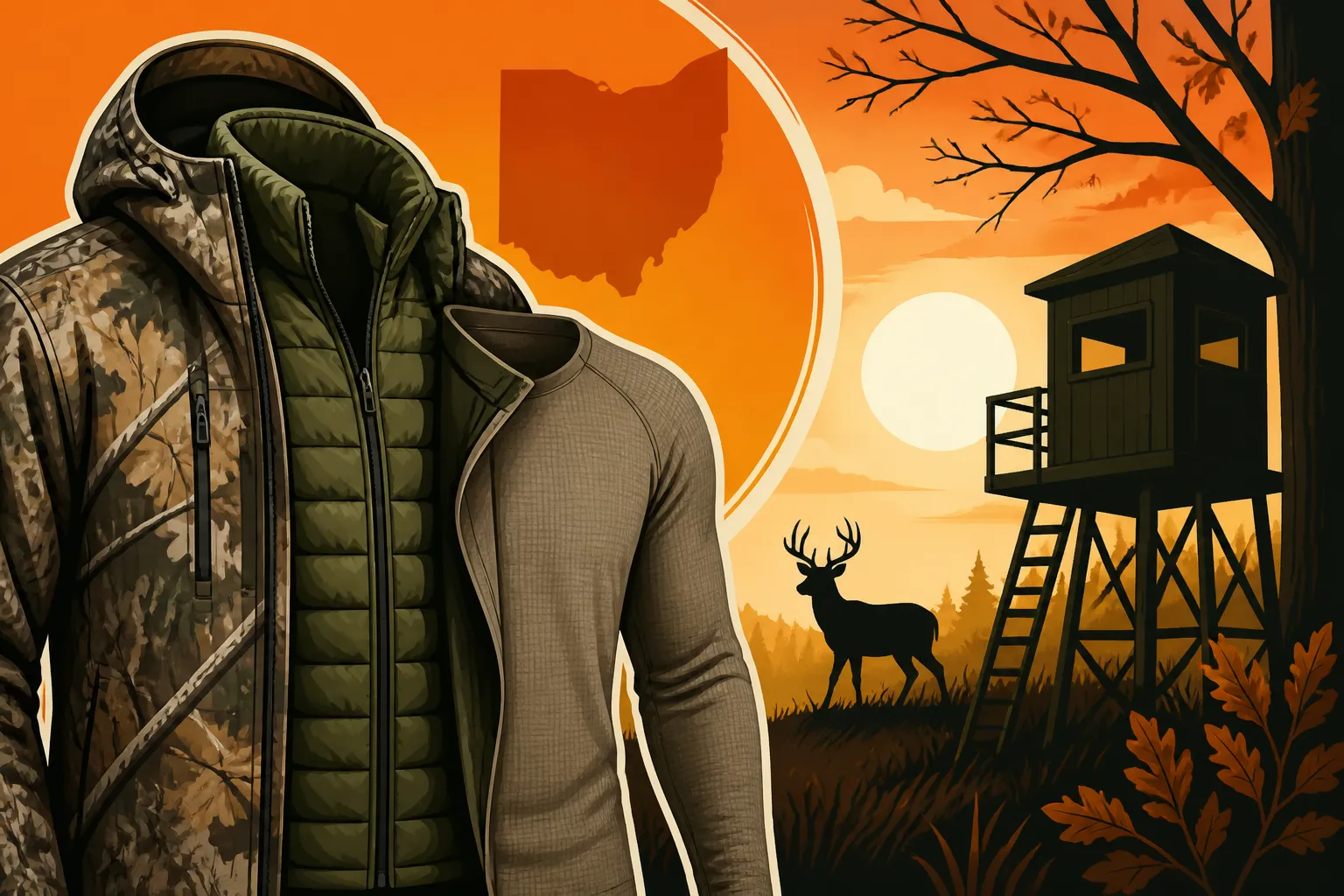
Once your base layer is handling moisture, your mid-layers step in to provide the bulk of your insulation. These layers are designed to trap warm air close to your body, keeping you cozy even when the thermometer drops. This is where you really start to customize your warmth for the day's hunt, adding or subtracting insulation based on the forecast and your personal comfort level.
Fleece and Down/Synthetic Blends
Fleece is a perennial favorite for mid-layers, and for good reason. It's relatively inexpensive, lightweight, breathable, and provides excellent warmth. Fleece comes in various weights (100-weight, 200-weight, 300-weight), allowing you to tailor your insulation. A 100-weight fleece jacket might be a great addition for a crisp October morning, while a 200 or 300-weight would be better suited for colder November days. Fleece also has the benefit of being relatively quiet, which is crucial for deer hunting. Its main drawback is that it can be bulky and doesn't offer much wind or water resistance, so it needs a good outer shell.
For ultimate warmth-to-weight, down or synthetic insulated jackets are hard to beat. Down is incredibly warm, lightweight, and compresses wonderfully, making it easy to pack into your backpack. The downside of down is that it loses its insulating properties when wet, so it needs to be protected by a waterproof outer layer. Synthetic insulation, often found in brands like Primaloft or Thinsulate, mimics many of down's properties but retains warmth even when wet. It's often slightly heavier and bulkier than down for the same warmth but offers superior performance in damp conditions. Many hunters will carry a packable synthetic or down "puffy" jacket and only put it on once they are in their stand and settled, especially during colder hunts or when using strategies like Cold-Weather Sitting Strategy in Ohio.
Layering for Activity Versus Stillness
This is a critical distinction in your mid-layer strategy. If your hunt involves a significant amount of walking, hiking, or even dragging a deer, you'll want mid-layers that are breathable and allow excess heat to escape. You might start with a lighter fleece or even just your base layer and outer shell, packing your heavier insulation in your backpack. The goal is to avoid overheating and sweating, which as we discussed, leads to getting cold once you stop.
Once you reach your stand or blind and settle in for a long sit, your activity level plummets. This is the moment to pull out those insulating mid-layers that you packed in. A heavy fleece vest, a down or synthetic puffy jacket, or even a specialized insulated hunting garment like a "heater body suit" can make all the difference. Many experienced Ohio hunters will wear just a base layer and a light outer shell for the walk to their stand, then pull a heavy insulated jacket over everything once they're in place. This helps manage moisture and ensures you're generating heat while moving, then trapping it efficiently when still. This adaptability is key, especially when you're scouting an area with varied terrain or planning a hunt in regions like the Treestand Setups in Appalachian Ohio Hardwoods where the walk in can be strenuous.
The Outer Shell: Protection From the Elements
Your outer shell is your first line of defense against the unforgiving elements: wind, rain, and snow. This layer doesn't necessarily provide much warmth on its own, but it protects your insulating layers beneath, preventing heat loss due to convection (wind) and conduction (wetness). A compromised outer shell means your entire layering system fails, leaving you miserable and cutting your hunt short.
Waterproof/Windproof Fabrics
The ideal outer shell for Ohio deer hunting needs to be both waterproof and windproof. Brands like Gore-Tex, Perma-Dry, and similar proprietary technologies offer excellent protection from precipitation while still allowing some breathability to let moisture vapor from your body escape. This balance is crucial; if a shell is completely impermeable, you'll quickly become soaked from your own sweat, even in dry conditions. Look for shells with taped seams and durable water repellent (DWR) coatings that cause water to bead up and roll off.
Windproofing is equally important. A biting Ohio wind can strip away your body heat alarmingly fast, even if you have excellent insulation. A good windproof membrane in your outer shell acts as a barrier, preventing that heat loss. Remember, comfort on stand directly correlates to how long you can stay focused. If you're constantly fighting the wind and dampness, you're not focusing on the deer sign or that subtle flicker of movement. Rain Gear for an Ohio Downpour offers more specific advice on choosing waterproof clothing.
Quietness and Durability
While waterproofing and windproofing are paramount for comfort, the ultimate silent approach demands a shell that doesn't make a racket every time you shift or raise your bow. Many highly technical waterproof fabrics, especially those with harder face fabrics, can be noisy. Imagine trying to draw your bow on a wary buck when your jacket sounds like crinkling potato chips. Hunting-specific outer shells often employ softer, brushed face fabrics that are much quieter, even if they sometimes sacrifice a tiny bit of absolute waterproofing or extreme durability found in mountaineering gear. This is a trade-off many deer hunters are willing to make.
Durability is another key factor. You're going to be pushing through briars, rubbing against tree bark, and navigating dense cover. Your outer shell needs to withstand this abuse without tearing or developing leaks. Reinforced stress points, robust zippers, and quality stitching are indicators of a durable garment. Think about the terrain you primarily hunt. If you're busting through thick briar patches in Hunting Northwest Ohio Farmland Deer, you'll need something more robust than if you're primarily hunting open hardwoods.
Beyond the Core: Extremities and Accessories
Even with a perfect layering system for your torso, neglecting your head, hands, and feet is a recipe for misery. These extremities are notorious for losing heat rapidly, and once they get cold, your entire body will feel it. Specialized gear for these areas is just as important as your base and mid-layers.
Headwear for Heat Retention
Your head is a major source of heat loss. While the old adage about losing 80% of your body heat through your head is an exaggeration, you can still lose a significant amount, especially if your head is exposed to cold and wind. A good quality hat or beanie is essential. For milder days, a simple fleece beanie or a baseball cap might suffice. As temperatures drop, consider a warmer merino wool beanie or a hat with a windproof membrane. For truly bitter cold, a full balaclava that covers your face and neck can be a game-changer, protecting exposed skin from frostbite and windburn. Some balaclavas even incorporate mouth/nose vents to prevent breath moisture from freezing. Don't forget ear protection, as cold ears can be excruciating.
Hand Protection for Dexterity
Keeping your hands warm while maintaining the dexterity needed to handle your bow, gun, or calls is a constant challenge for deer hunters. Often, a multi-layer approach works best here too. Start with a thin pair of merino or synthetic liner gloves. These provide a surprising amount of warmth, can be worn alone on warmer days, and allow for excellent feel and finger dexterity for tasks like operating a rangefinder or checking your phone (perhaps using the Scouting With the Ohio HuntFish App!). Over these liners, you can wear a thicker pair of insulated gloves or mittens. Mittens are generally warmer than gloves because your fingers share warmth, but they sacrifice dexterity. Many hunters opt for fingerless gloves or convertible mittens that allow you to expose your fingers when needed, then cover them back up for warmth. Carrying a few chemical hand warmers for those truly frigid sits is also a smart move. Hand Warmers That Last a Full Sit can be a lifesaver when the mercury really drops.
Footwear for Extreme Cold
Cold feet are the quickest way to end an Ohio deer hunt prematurely. Just like your core, your feet need a layering system. Start with a good quality pair of moisture-wicking socks, again, merino wool or synthetic are best. Avoid cotton at all costs. For colder weather, a thicker pair of insulated hunting socks over a thin liner sock can provide excellent warmth. The key is to avoid cramming your feet into boots that are too tight, as this restricts circulation and will make your feet colder. Ensure there's enough room for your toes to wiggle, even with thick socks on.
Your boots themselves need to be insulated and waterproof. Look for boots with a high gram rating of insulation (e.g., 800g, 1200g, 2000g Thinsulate equivalent) for late-season hunting. Rubber boots are excellent for keeping your feet dry in muddy or wet conditions, but they need sufficient insulation for cold weather. Leather or synthetic insulated boots are also great options. Always ensure your boots are comfortable for walking, even if it's just a short distance, and check for any potential pressure points. A dry pair of boots and socks to change into after the hunt can also do wonders for your morale. Insulated Boots for All-Day Sits are essential for long stretches in the stand.
Putting It All Together: Dressing for the Hunt
Now that we've broken down each component, let's talk about the practical application. Effective layering isn't just about owning the right gear; it's about understanding how to use it dynamically throughout your hunt. Planning your layers before you even leave the house is paramount, but so is the ability to adjust on the fly.
Pre-Hunt Preparation
Before every hunt, take a moment to check the detailed weather forecast for your specific hunting area. Look beyond just the temperature. What's the wind chill factor? Is there a chance of precipitation? Will the temperature rise or fall significantly throughout the day? Tools like the weather feature within the GoHunt platform or the Scouting With the Ohio HuntFish App can give you invaluable real-time and projected conditions that help you make informed decisions about your layers. Knowing the precise conditions for the Ohio Archery Season Opening Day versus the Ohio Muzzleloader Season Dates will dictate entirely different layering strategies.
Lay out your planned layers the night before. This helps you visualize your system and ensures you don't forget anything crucial. Consider if you'll be actively walking to your stand or taking a short, easy stroll. This determines what you wear for the walk in versus what you pack. For instance, if you have a long hike to your stand, you might wear only your base layer and a very light outer shell, carrying your heavier mid and outer layers in your pack. This prevents overheating and sweating on the way, ensuring you're dry when you settle into your stand.
| Layer Type | Primary Function | Common Materials | Ohio Hunting Application |
|---|---|---|---|
| Base Layer | Wicks moisture from skin | Merino Wool, Synthetic | Worn snug to skin; crucial for warmth and dryness on stand. |
| Mid-Layer | Provides insulation | Fleece, Down, Synthetic | Adds warmth; adaptable for varying temps and activity levels. |
| Outer Shell | Protects from elements | Gore-Tex, Perma-Dry | Blocks wind and rain; durable and quiet for silent movement. |
| Extremities | Head, Hands, Feet warmth | Wool, Fleece, Synthetic | Prevents major heat loss; dexterity for hands, warmth for feet. |
Adjusting in the Field
The true art of layering comes in your ability to adapt once you're in the woods. You might start your walk in with a light setup, shedding your outer shell if you begin to feel warm. Once you reach your stand, before you even climb up, put on those extra insulating layers you packed. This prevents the initial chill that sets in once your body stops moving.
Throughout the day, pay attention to how you feel. If the sun comes out and you start to feel too warm, silently shed a mid-layer. If a cloud cover rolls in and the wind picks up, quickly add back that fleece or puffy jacket. The key is to make these adjustments before you get too hot or too cold. It's much easier to maintain a comfortable temperature than it is to recover from being thoroughly chilled or drenched in sweat. Using specialized gear designed for quick on/off, such as vests or jackets with full-length zippers, can make these in-field adjustments seamless and quiet, crucial during critical hunting hours. Remember, even little things like pulling a beanie down over your ears or slipping on a pair of warmer gloves can make a huge difference in your overall comfort and willingness to stay on stand longer.
Disclaimer
This article is for general informational purposes only and does not constitute professional advice. Laws, prices and regulations vary by location and change over time. Consult a qualified professional for guidance on your specific situation.